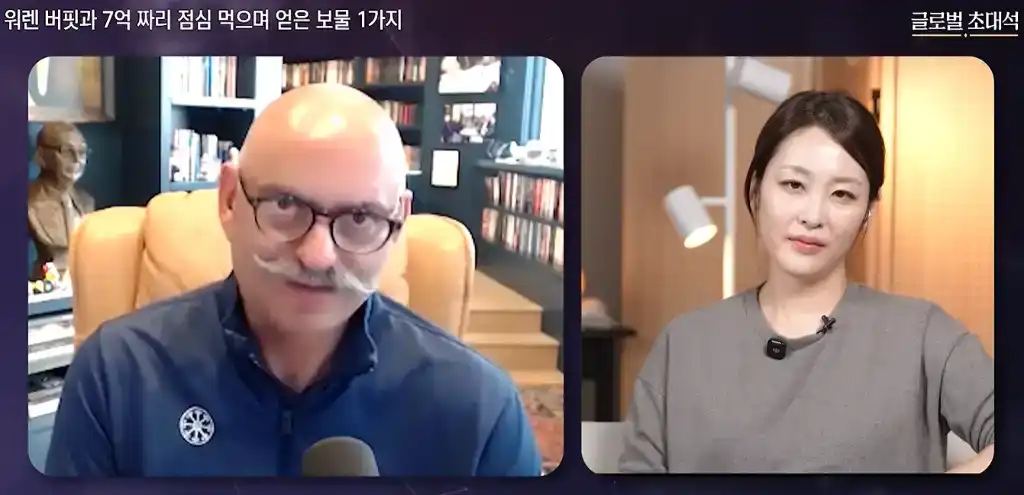
Known as India's 'Buffett,' Pabrai had heavily invested in Micron for six years. After selling, the stock price surged more than 15 times in two years, causing him to miss out on roughly two billion dollars. He also sold SK Hynix too early. Recently, he personally reviewed his most painful trading error in a media interview: "I visited Samsung multiple times and also held investments in SK Hynix. But to my great regret, I violated my own principles and sold companies I should have held forever."
Having spent nearly $500,000 for a lunch with Buffett, this Indian 'Buffett' missed out on $2 billion from Micron.
'Disciple of Buffett' and globally renowned value investor Mohnish Pabrai initiated a position in Micron in 2017 and sold it in September 2023, making only about double; in the two years after selling, Micron's stock price soared over 15 times, resulting in an estimated $2 billion in missed gains. With SK Hynix, he also sold too early.
On June 22, in a Korean interview program called "지식인사이드 (Information Inside)," he reviewed his most painful trading errors: Very regrettable. I violated my own principles and sold companies I should have held forever.
The Pain of Selling: Held for Six Years, Sold Before Takeoff
Pabrai started his Micron position in 2017, and at one point it constituted up to 77% of his portfolio. When asked about the Korean stock market in the interview, Pabrai expressed his regret.
Although he didn't directly detail his specific trades in Micron, Pabrai mentioned in the program that he had done extensive homework—personally traveling to Seoul to meet with SK Hynix management, visiting Samsung executives, and having in-depth discussions with Micron's Indian-born CEO. His core logic was: the global memory market would eventually be left with three players—Samsung, SK Hynix, and Micron—with a stable oligopoly structure, competition becoming more rational, and profits becoming promising.
He even specifically sought advice from Buffett and Munger on this. Pabrai recalled: "Munger and Buffett told me that we studied Coca-Cola bottlers worldwide. In 95% of regions, if only two remain, they make huge money. Only in a minority 3%-5%, where they are natural enemies, will they fight until no one makes any money."
In 2023, when Samsung announced capacity expansion, Pabrai judged that the supply-side logic was broken and subsequently sold out.
But by then, ChatGPT had already been released, and the explosion in HBM (High Bandwidth Memory) demand was on the horizon.
In the two years after selling, Micron's stock price rose more than 15 times.
"I Shouldn't Have Sold Them"
Micron wasn't his only regret.
He also sold SK Hynix too early. He stated directly in the interview: "I visited Samsung multiple times and also held investments in SK Hynix. To my great regret, I violated my own rules and sold these companies when I should have held them forever."
However, his assessment of the Korean semiconductor industry remains clear: "The memory businesses of SK Hynix and Samsung are highly protected businesses." He explained that the memory industry once had up to 20 companies fiercely competing and undercutting prices, all eventually losing money and exiting, leaving only three. "It's almost impossible for new entrants to come in—patent barriers, engineer reserves, process complexity; it would take 10, 15, or even 20 years to enter."
For current investors still holding Korean semiconductors, his advice is direct: "If you already hold them, don't sell. The party has just begun."
This statement is, in a way, also directed at himself.
What Did Buffett's Lunch Buy
In 2007, Pabrai won the charity auction to have lunch with Buffett for $650,000 (at the exchange rate that year, approximately 7.6, roughly equivalent to RMB 4.94 million)—less than one-third of his mental budget of $2 million.
He said his only agenda at the time was: "My entire agenda was to thank Mr. Buffett in person."
But the lunch exceeded expectations. He told Buffett that his wife actually admired Munger more. Buffett immediately "took on the challenge," claiming he would arrange a lunch with Munger for them so they could understand he was the better dining companion. Two days later, Pabrai actually received an arrangement email from Buffett's assistant.
"I'd rate that lunch a 15 out of 10. One reason is that he made it happen."
A relationship with Munger was thus established, and thereafter Pabrai would visit him with his family every three or four months.
Three Bottom Lines, A 213-Point Checklist
Pabrai employs an investment checklist method derived from the aviation industry—after a plane crash, regulatory agencies review the causes and revise procedures; he analogizes investment losses to a crash, turning each loss into a new checklist item.
His checklist currently has 213 questions. For ordinary investors, he distilled three core principles:
First, no leverage. "The number one reason investors lose money is leverage—either the company has too much debt, or the investor borrows money to buy stocks." He cited the founder of IKEA as an example: operating for 70 years without ever borrowing a single euro, "because we owe no one money, no one can stop us."
Second, the durability of the moat. It's not just about whether there is a competitive advantage, but how long that advantage can last. He used Amorepacific as an example: the brand has recognition, but there are many competitors, and consumers continuously seek better products, so the moat is not solid.
Third, the character of management. "Do they love money, or do they love the business? It's okay to love money, but they must not be greedy for money."
For the vast majority of people, his conclusion is simpler—"For over 99% of investors, just buy an index."
"Wealth Lost, Nothing Lost"
At the end of the interview, Pabrai talked about his ultimate goal: to donate all the money in his hands the day before he dies on June 11, 2054 (the date of his death estimated by AI). He said, "I don't really care about money because beyond a certain point, it has no practical meaning for you. I'm playing a game."
"Wealth lost, nothing lost; health lost, something lost; character lost, everything lost. So, don't worry too much about wealth, pay a little attention to health, and put all your energy into character."