MegaETH 如何让 TVL 在 TGE 一周内达到 700m?拆解包装手法

marsbitPublished on 2026-05-06Last updated on 2026-05-06

作者:Van1sa

MegaETH、Monad之间的争议持续了很久,在我眼里,它们简直是教科书级别的,可以用来讲解“如何分析TVL”、“如何让新链冷启动”的两个极端例子。

本篇文章结构:

  • 对比两条链的Defi TVL、稳定币、Bridged TVL数据
  • 拆解MegaETH包装TVL的手法
  • Mega的TVL有水分,那Monad赢了吗?对新链冷启动的思考

一、Defi TVL、稳定币、Bridged TVL数据对比
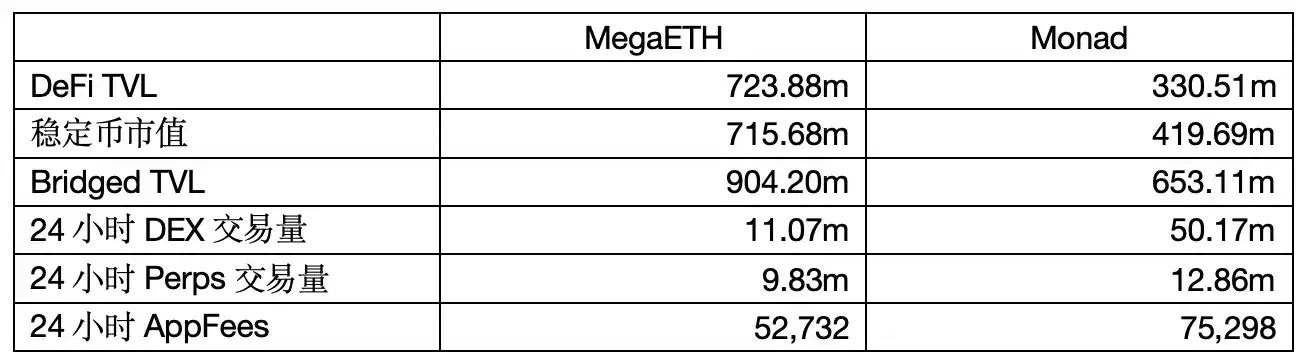
数据来源:defillama 截取时间:2026 年 5 月 6 日 12:00

1.Defi TVL

真正“放进DeFi协议里”的钱,用户把加密资产放进DEX的流动性池、借贷协议、质押协议等,才会被算进TVL。

MegaETH的TVL是Monad的两倍多,但有两个问题:

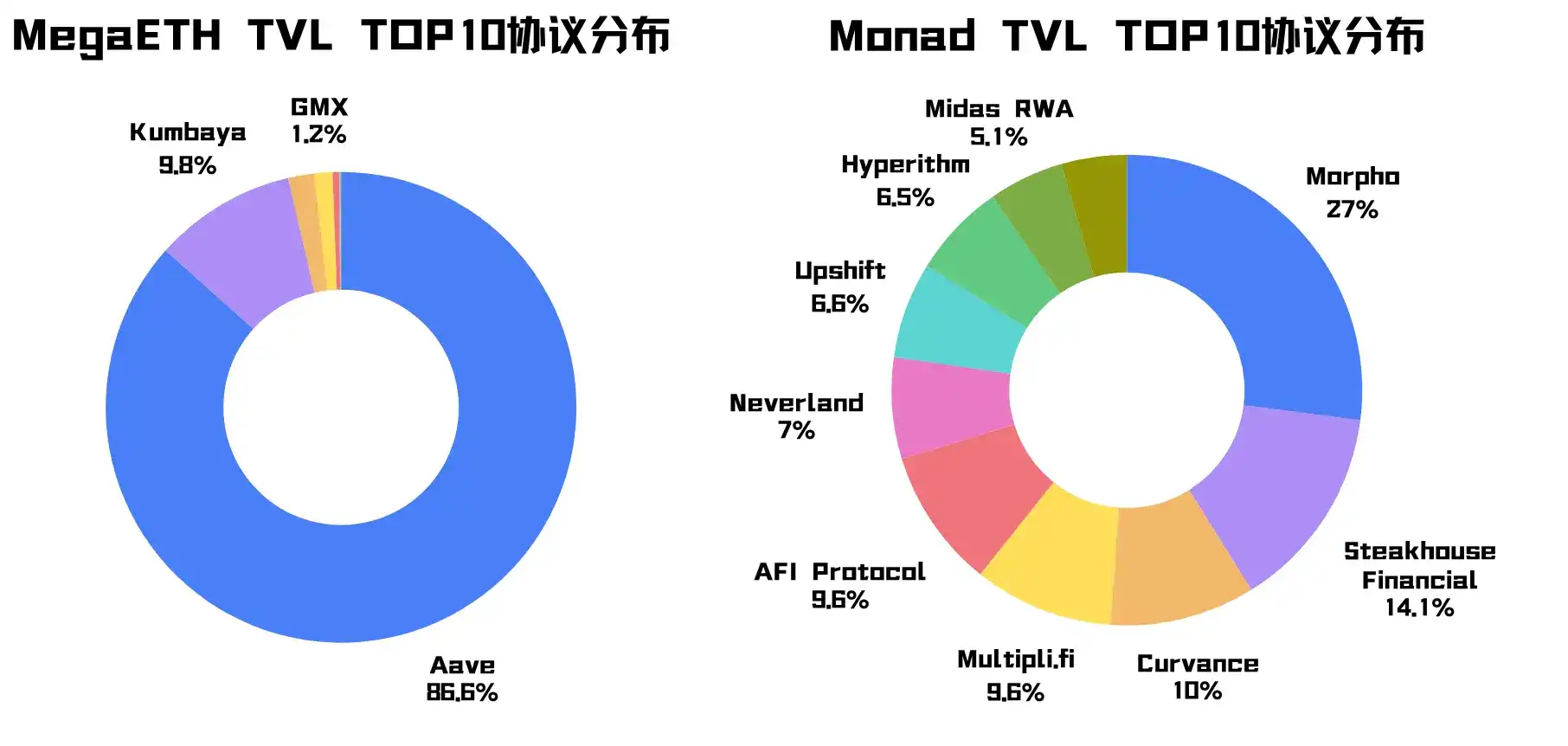
第一个问题是,Mega的TVL高度集中于Aave协议(记住这条线索),除了原生协议Kumbaya占比较高,其它Top10协议占比几乎不到1%。Monad的TVL则分散于各个协议。
第二个问题是,Mega的TVL特别高,但24小时DEX交易量、APP Fees却逊色于Monad,这说明Mega的钱“转得比较慢”。就像看财务报表,不能只看资金,资金周转率更能说明问题。

2.稳定币市值

这条链上发行或流通的稳定币总价值,只能说明链上有多少美元流动性,不能直接代表生态的活跃度。

MegaETH的稳定币市值约为715.68m,一周前还不到100m,这和Mega TGE、Terminal Points farming这些因素高度相关。
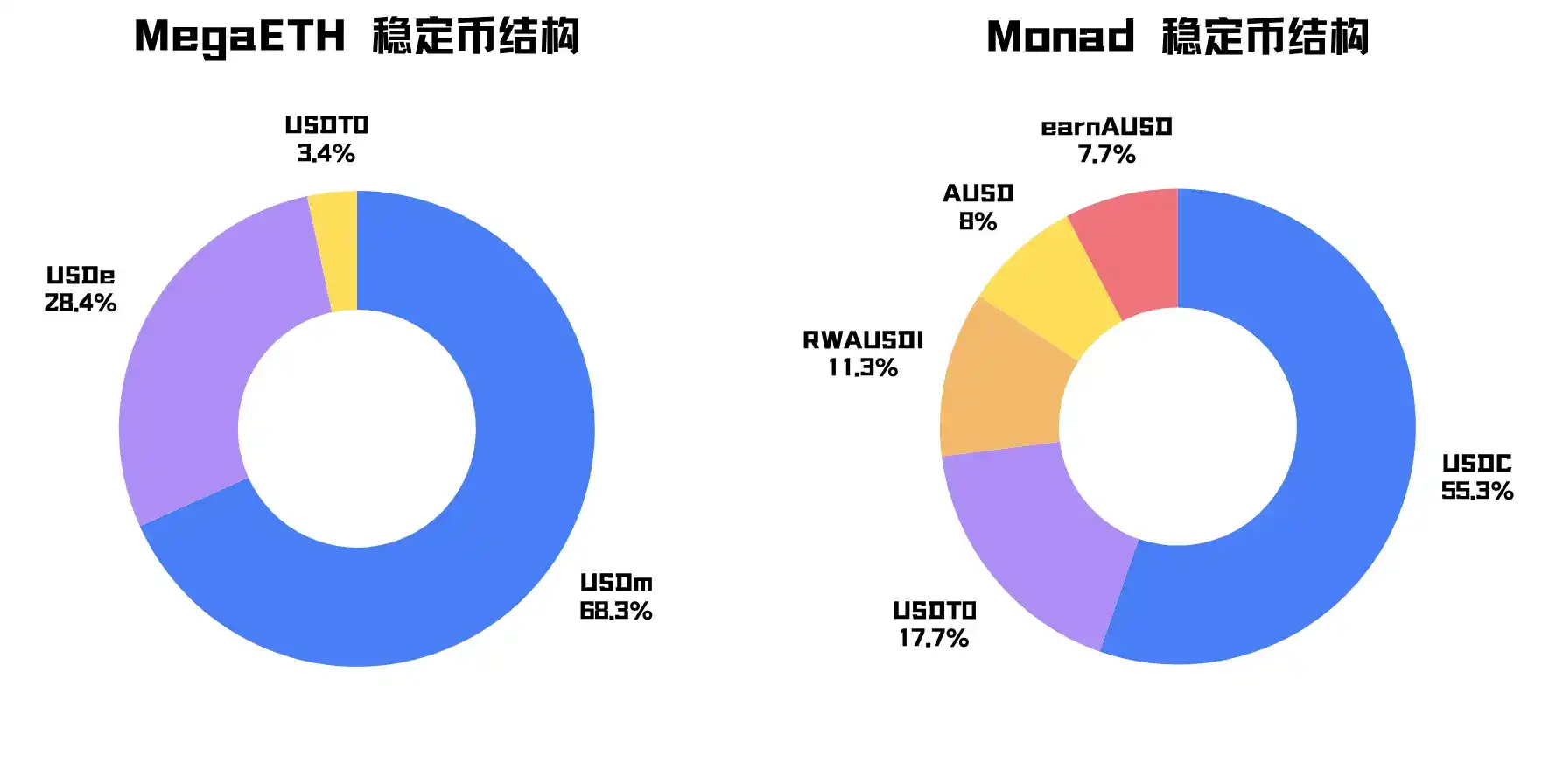
Mega的核心稳定币是USDm,占比高达68.3%(记住这条线索)。USDm是Mega的原生稳定币,由Ethena的stablecoin stack发行。次要稳定币为USDe,是Ethena在以太坊上发行的一种合成稳定币,被桥接进来。

Mega的稳定币规模更大,但结构非常集中。

Monad的稳定币主导资产是USDC,次要稳定币为USDT0,几乎都是通用美元资产,分布也更自然。

3.Bridged TVL:

从其他链跨链桥接进来的资产总价值。这个数经常会比DeFi TVL大,因为很多资产桥进来之后,并没有马上进入协议,可能只是停在钱包里,或者等空投、等活动、等生态上线。

我发现Defillama上对两条链的Bridged TVL统计口径不一致,Mega的数据包含了Native Token $MEGA,而Monad的数据没有包含$MON,而且把Mega的原生稳定币USDm也算进Bridged TVL了。

所以这里我们只看Third Party的占比:

剔除Native Token后,通过第三方桥和特定资产通道进入Mega的外部资产占比约为57.0%,而Monad为30.6%。

第三方桥带来的流动性,可以帮助新链快速冷启动。但在分析TVL的含金量时,Third Part的占比过高,意味着资金更策略化、更不稳定,主要跟着短期激励走。(后面会详细证明)

总结:从这些数据来看,MegaETH太有钱了,但钱的来源、资产类型、协议承接方式都过于集中,有一种强烈的包装感。

质疑包装,证明包装。

二、MegaETH 包装 TVL 的手法

我之前提供过两个线索:Aave协议为Mega贡献了86.6%的TVL,USDm、USDe为Mega贡献了96.7%的稳定币市值。我们继续分析:

1.Mega 上 Aave 的供应、借款构成
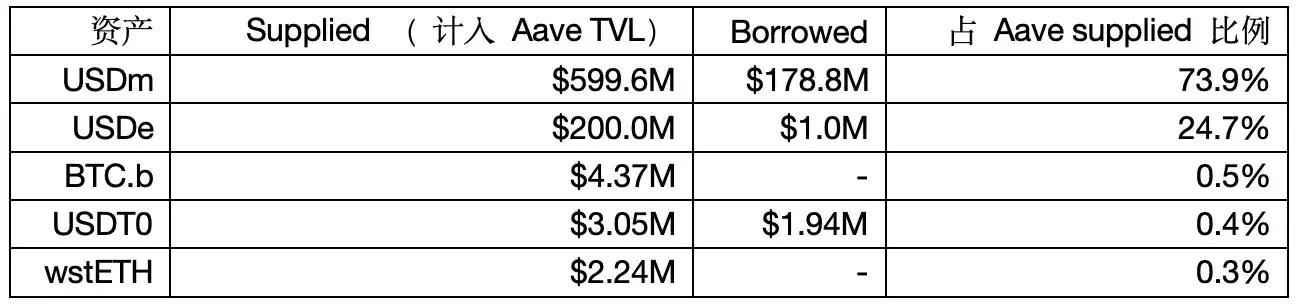
数据来源:Aave V3

注:DefiLlama用了净值法来统计Aave的TVL,和前文的数字会有出入

“Aave风险团队LlamaRisk指出,MegaETH存在稳定币杠杆循环的行为”

先说结论:USDe被桥接进Mega,目的就是作为抵押物,借出USDm,再存入Aave,形成稳定币杠杆循环,推高Aave supply、borrow数据。

证据1:在Aave治理提案里,明确建议为Mega上USDe设置专门的E-Mode,并将LTV设为90%、LT设为93%。如果在Aave里质押了200m USDe,理论上最大可借出200*90% = 180m USDm,这和数据中178.8m的借款对应上了。

证据2:用健康因子反推,如果200m USDe借了178.8m USDm,健康因子 = 200m*93%/178.8m ≈ 1.04。这和 LlamaRisk 报告里说的活跃借款人健康因子集中在1.03-1.05也完全吻合。

证据3:MegaETH Etherscan显示,USDm的总供应约4.995亿枚,单Aave合约就持有约4.20亿枚,占USDm总供应约84%。用Aave里USDm的Supplied数额599.6m减去420m,也刚好是179.6m。

到这里你还可以说是用户的激励行为,而且杠杆循环的178m并没有被DefiLlama计入TVL,但还是不对劲!

2.借贷协议的 TVL 越高,可能意味着,你的代币没人需要。

净值法下,借贷协议的TVL = Total Supplied - Total Borrowed = 还可以借出的资金

借贷协议的TVL越高,不一定是好事,所以我们还要看利用率。

除去循环杠杆借出的USDm,你会发现,Mega上Aave里的资金利用率几乎是零。

USDm的Supply APY为5.12%,其中4.76%是Mega自己补贴的,而Borrow APY只有1.34%,依然没人愿意借,因为借了不知道可以干嘛。

所以USDm、USDe更像是放在Aave的展示品,对协议收入、链上活动真实需求的贡献有限。Mega的App Fee等数据也说明了这一点。

3.这些 USDm、USDe 的存入、质押、借出行为,实际上是由大户主导的。

“LlamaRisk称:USDm的供应端高度集中,单一地址占80%。”

通过前文的分析,我们知道,USDe的供应由稳定币循环策略主导,且增长速度和健康因子分布都显示,这是高度资本效率化的策略资金,不是普通用户自然存款。

除去水分后,USDm和USDe通过Aave贡献了620m的TVL,但这些资金是由大户主导的,且非常有策略性。

总结:Mega的TVL需要打折再看,它的钱分布太集中、目的性太强、太依赖少数大户和借贷市场,而且没有真实需求。

不是说它造假,而是Mega的TVL不是通过生态自然增长的,而是由USDm、USDe“精心包装”出来,“展示”在最基础的借贷协议里。

三、对新链冷启动的思考

MegaETH的TVL有水分,但不代表Monad赢了。我写这些也不是为了diss Mega,毕竟它让早期参与的散户都挣钱了,但一些人无脑用TVL来diss Monad,才催生了这篇文章。

客观来说,Monad的资金结构更健康、来源更分散。

但它也有致命问题:链上应用还没有接住这些资金。

主网上线5个月,依然没有Killing App跑出来,24小时DEX交易量、App Fees,还是不够理想。Monad的核心叙事是高性能EVM,这种叙事真正需要证明的,不是“我能承载很多应用”,而是“已经有很多应用必须用到我的性能”,但在现阶段,这还是个伪命题。

两条链的冷启动方式是两个极端:

MegaETH用USDm造了个飞轮,想在短期内吸引大量的用户、资金进来。

Monad的重心还放在建设基础设施、铺资产入口、培养开发者上,让用户、资金自己选择要不要长期留下来。

这两种方式,没有绝对好坏,但风险完全不同:

MegaETH要在未来证明“这些资金不会一直依靠包装”;Monad需要想好“钱进来之后,怎么长期留住”。

新链早期的资金往往都有预期属性。用户桥资产到新链,可能是为了体验应用,也可能是为了生态任务、潜在空投、早期收益。

所以,我们不应该把问题focus在“包装”,而是“消化”。资金进来之后,如果没有足够好的应用承接,它就会停留在钱包、桥、少数DeFi协议、基础LP里。

虽然把一条以太坊的Layer2,和一条独立的Layer1放在一起比较很不公平,但我认为,它们之间的“比赛”还远远没到精彩的时候。

大家也别再拿TVL说事了,应该看的是:DEX交易量能不能持续,借贷需求是不是自然增长,Perps、游戏、消费应用有没有起来,App Fees能不能稳定提高,TVL会不会从少数基础DeFi扩散到更多应用。

如果这些指标跟不上,不管是哪种冷启动方式,都会变成鬼链。

Related Reads

DeFi Has Reached Its Most Dangerous Moment: The Real Vulnerabilities Are Not in the Code

DeFi in Peril: The Real Vulnerability Isn't in the Code April 2026 marked a paradigm shift in DeFi security, with over $625 million lost across 30 incidents—the worst month in crypto history by event count. Crucially, none of the major exploits (Drift Protocol: $285M, KelpDAO: $292M, Wasabi Protocol: $4.5M) resulted from smart contract vulnerabilities. Instead, failures occurred in the operational "plumbing": social engineering to compromise multi-signature councils, a single-point-of-failure 1-of-1 bridge validator, and stolen admin private keys. These events expose a fundamental misalignment: the industry's security model has long focused on code audits, while the actual attack surface has shifted to privileged access points and off-chain infrastructure. The article introduces the term "OpenFi" to describe this reality: permissionless, on-chain, yet operationally dependent on trusted third parties (admins, validators, oracles) at key junctures. The KelpDAO exploit vividly demonstrated asymmetric "contagion risk." A configuration error in a smaller protocol triggered a panic, causing approximately $13.2 billion in outflows from larger, unaffected protocols like Aave within 48 hours, as users fled uncertain collateral. The core dilemma is the double-edged sword of centralization. Operational levers like emergency councils (e.g., Arbitrum freezing stolen funds post-KelpDAO) enable crisis response but also create catastrophic attack surfaces if compromised (e.g., Drift). The path forward demands radical honesty: protocols must clearly disclose their trust assumptions, operational levers, and failure modes. The industry must treat operational security (key management, configurations, incident response) with the same rigor as code security. Survival depends on building systems whose risks can be understood, priced, and insured, moving beyond the outdated "code is law" mantra to a mature model of disclosed and managed trust.

链捕手8h ago

DeFi Has Reached Its Most Dangerous Moment: The Real Vulnerabilities Are Not in the Code

链捕手8h ago

Vitalik's Article Emphasizes Ethereum Must Be 'Amazing', But Foundation Is Not the Center

Vitalik Buterin has published a lengthy response to recent community criticism directed at the Ethereum Foundation (EF). Acknowledging a sense of "unease," he addresses concerns about the EF's strategic direction, its perceived disconnect from ETH's price performance, and calls for its reduced central role. Vitalik rejects the notion that the EF should be the central governing body of Ethereum, framing it instead as one "node with a clear mandate" among many within the ecosystem. He highlights the EF's limited ETH holdings (≈0.16% of supply) compared to other blockchain foundations and states it will no longer sell significant amounts of ETH. Its future focus will be on long-term, critical projects that align with Ethereum's core values of censorship-resistance and decentralization, which might not otherwise happen. A core argument is that Ethereum must be "amazing," but not by merely chasing higher transaction speeds at the cost of decentralization. He proposes focusing on the "CROPS" dimensions: creating a Cryptographically provable, Reliable, Open, Private, and Secure network. This includes pursuing goals like a formally verifiable, bug-free Ethereum client and minimizing protocol-level reliance on intermediaries. The article concludes by noting that while Vitalik clarifies the EF's refocused role, he does not directly address community suggestions for creating a new organization explicitly aligned with ETH's economic interests. This "alignment gap" is presented as a key challenge for Ethereum's future.

链捕手9h ago

Vitalik's Article Emphasizes Ethereum Must Be 'Amazing', But Foundation Is Not the Center

链捕手9h ago

Trading

Spot
Futures

Hot Articles

What is DOGE M

Doge Matrix ($doge m): The New Breed of Community-Driven Cryptocurrency Introduction In the ever-evolving landscape of cryptocurrency, new projects constantly emerge, each aiming to capture the interest of investors and enthusiasts alike. One of the latest entrants to this domain is Doge Matrix, represented by the ticker symbol $doge m. This project has attracted attention thanks to its roots in the popular meme culture surrounding Dogecoin, establishing its place within the web3 space. This article aims to provide a comprehensive analysis of Doge Matrix, covering its overview, creator, investors, functionality, timeline, and notable aspects. What is Doge Matrix ($doge m)? Doge Matrix is a community-driven cryptocurrency project that seemingly builds upon the widespread appeal of Dogecoin, a digital currency known for its Shiba Inu mascot and its meme origins. While the overarching objectives of Doge Matrix are not extensively defined, it is characterised by a commitment to harnessing community involvement and support. Unlike traditional cryptocurrencies that often emphasise utility or intrinsic value through underlying technologies, Doge Matrix positions itself within a space that embraces the cultural phenomenon of cryptocurrencies, particularly appealing to those who resonate with the ethos of meme-based assets. Drawing on the strengths of the Dogecoin community, Doge Matrix operates as part of a broader ecosystem, inviting participation and engagement from users who share an interest in cryptocurrency and the digital landscape. Who is the Creator of Doge Matrix ($doge m)? The identity of the creator of Doge Matrix remains unknown. This lack of transparency is not an uncommon occurrence in the cryptocurrency space, where some projects are launched without revealing the identities of their founders. The absence of information regarding the founding team can raise questions among potential investors about the project’s accountability and direction. Who are the Investors of Doge Matrix ($doge m)? As it stands, there is no publicly available information detailing the investors or investment foundations that back Doge Matrix. The project appears to rely primarily on community support rather than institutional investment. This model aligns with the community-driven nature of the initiative, fostering an environment where the direction of the project is shaped by its participants rather than being dictated by a select few financial backers. How Does Doge Matrix ($doge m) Work? The specifics regarding the operational mechanisms of Doge Matrix are somewhat vague, reflecting a broader trend of projects in the meme coin space where innovative functionalities are not always clearly articulated. Nonetheless, Doge Matrix seems designed to tap into the existing cryptocurrency ecosystem by encouraging user participation while tapping into the familiar cultural references associated with Dogecoin. Its potentially unique characteristics derive from community interactions rather than technological advancements, emphasising shared experiences and collaboration among token holders. While the exact innovations have not been explicitly outlined, the project appears to create a space where community members can engage, share ideas, and propel the project's potential forward. Timeline of Doge Matrix ($doge m) Reflecting on the project’s timeline reveals notable events that have defined its journey thus far: November 25, 2024: Doge Matrix reached its all-time high value, marking a significant milestone in its early history. January 1, 2025: Conversely, Doge Matrix hit its all-time low value, illustrating the volatility often associated with cryptocurrencies, especially in the early stages of a project's lifecycle. Ongoing: The project continues to be actively traded and supported by its community, although specific future milestones or objectives have yet to be disclosed. Key Points About Doge Matrix ($doge m) Community Focus At the heart of Doge Matrix is a commitment to community engagement. The project thrives on the premise of collaboration and shared objectives among its members, emphasising the importance of collective effort. Unlike centralised projects that often have a defined leadership structure, Doge Matrix at present showcases a more fluid approach to governance, where every community member's voice matters. Volatility The cryptocurrency market is notorious for its volatility, and Doge Matrix is no exception. Its price history reflects significant fluctuations between high and low values, which is typical of many new cryptocurrencies but underscores the risks associated with investment in emerging tokens. Lack of Detailed Information One of the most striking features about Doge Matrix is the scarcity of detailed information regarding its technological underpinnings and operational mechanisms. This ambiguity necessitates that potential investors conduct thorough due diligence before engaging with the project. Conclusion In summary, Doge Matrix ($doge m) illustrates a new wave of cryptocurrency projects that lean heavily on community engagement and cultural relevance. While lacking in certain specifics—such as clear leadership, defined objectives, and detailed functionality—the project has managed to generate interest within the crypto community, leveraging the established appeal of meme culture. As with any investment in the cryptocurrency space, understanding the inherent risks and conducting comprehensive research is essential for potential participants. Doge Matrix stands as a reminder of the dynamic, sometimes unpredictable nature of the crypto industry, marked by constant evolution and enthusiasm for community-driven initiatives.

495 Total ViewsPublished 2025.02.03Updated 2025.02.03

What is DOGE M

What is $M

Understanding Mantis ($M): A New Era in Cross-Chain Interoperability In the continually evolving landscape of Web3 and cryptocurrency, new projects strive to offer innovative solutions aimed at enhancing the user experience and expanding functional possibilities within the decentralised financial ecosystem. One such project garnering attention is Mantis ($M), a pioneering protocol founded on the principles of cross-chain interoperability and intent-based settlements. This article delves into the essential aspects of Mantis, including its core functionality, creators, investment backing, innovative features, and critical milestones. What is Mantis ($M)? Mantis is described as a multi-domain intent settlement protocol that simplifies cross-chain interactions, enabling users to execute complex financial transactions across various blockchain platforms seamlessly. The protocol operates through three primary layers: Intent Expression: Users can articulate their transaction goals using natural language facilitated by the DISE LLM, an advanced AI language model. For instance, a user might express a desire to swap Ethereum (ETH) for Solana (SOL) with a specific slippage tolerance of 1%. Execution: This layer employs a network of solvers that compete to fulfil user intents. Transactions are executed using mechanisms such as Coincidence of Wants (CoWs) and Order Flow Auctions (OFAs), which ensure that user demands are met optimally. Settlement: Leveraging the Inter-Blockchain Communication (IBC) protocol, Mantis enables atomic cross-chain transactions, allowing users to operate across various supported chains, including Ethereum, Solana, and Cosmos. Mantis is engineered to introduce native yield generation for idle assets, employing cryptographic proofs to maintain the integrity of transactions throughout the entire process. Creators & Development Team Mantis was conceived by the Composable Foundation, a research-driven organisation notable for its emphasis on blockchain interoperability solutions. This foundation collaborates with esteemed academic institutions, including Harvard University and the University of Lisbon, contributing to extensive research and development efforts that inform Mantis's architecture and functionality. The Composable Foundation’s commitment to fostering innovation in the blockchain space positions Mantis as a robust solution for the growing demand for interoperability among multiple blockchain networks. Investors & Backing While specific details about individual investors have not been publicly disclosed, Mantis enjoys substantial backing from various entities, including: Ecosystem grants from IBC-enabled chains, which support the protocol's growth and integration within decentralised finance ecosystems. Strategic partnerships with infrastructure providers that enhance Mantis's network capabilities and deployment strategies. Funding through the Composable Foundation's treasury, ensuring sustained financial support for ongoing development and operational costs. These collaborative efforts reflect a consensus among stakeholders about the importance of enhancing cross-chain functionality and the potential utility of Mantis's infrastructural innovations. Key Innovations Mantis sets itself apart through several pioneering innovations that enhance its functionality and utility: Chain-Agnostic Intents: Users can initiate transactions from any supported chain while settling on another. This flexibility empowers users, driving increased interaction among different platforms. AI-Powered Interface: The integration of DISE LLM allows users to conduct complex DeFi operations using natural language, thereby simplifying interactions and making blockchain technology accessible to a broader audience. Cross-Domain MEV Capture: Mantis creates an internal market for maximal extractable value (MEV) through competitions among solvers. This innovative approach allows for greater efficiency and value extraction in complex transactions. Modular Settlement Layer: The protocol supports various verification methods, including zero-knowledge proofs and optimistic rollups, providing a versatile framework that can adapt to emerging blockchain technologies. Historical Timeline Mantis's development is marked by several critical milestones that chart its trajectory and growth: | Year | Milestone | |————|————————————————————————-| | 2022 | Initial concept development within the Composable Foundation's research division. | | Q3 2024 | Launch of the testnet with bridging capabilities between Solana and Ethereum. | | Q1 2025 | Anticipated Token Generation Event (TGE) alongside the mainnet launch. | | Q2 2025 | Expected integration of DISE LLM and expansion of cross-chain capabilities. | | 2025 H2 | Planned support for over 15 chains through further IBC upgrades. | This timeline outlines Mantis's evolution, from conceptual discussions to active implementation and future growth phases. Ecosystem Growth Strategy Mantis's strategy for ecosystem growth includes several initiatives designed to encourage user participation and developer engagement: Credits System: Users can earn protocol credits by providing liquidity and engaging in referral programmes. These credits are redeemable for incentives in the future, fostering a robust user community. Modular Software Development Kit (SDK): This toolkit empowers developers to create applications based on intent-driven models utilising Mantis's infrastructure, thus promoting innovation within its ecosystem. Governance Model: As the protocol matures, $M token holders will have a voice in protocol governance, allowing them to vote on proposed upgrades and changes, thereby enhancing community engagement and decentralisation. Mantis represents a significant advancement in the realm of cross-chain architecture. By seamlessly integrating advanced AI algorithms with a robust settlement framework, Mantis seeks to tackle the problems of fragmentation within multi-chain ecosystems. Its innovative approach prioritises improved user experiences while adhering to the foundational principles of decentralisation and security, setting a new standard for the future interoperability of blockchain technologies. As Mantis continues its journey of growth and implementation, it promises to be a project to watch closely in the competitive landscape of Web3 and decentralised finance. With its focus on crossing boundaries and elevating user engagement, Mantis is poised to be an integral part of the future developments in the cryptocurrency space.

41 Total ViewsPublished 2025.03.18Updated 2025.03.18

What is $M

Discussions

Welcome to the HTX Community. Here, you can stay informed about the latest platform developments and gain access to professional market insights. Users' opinions on the price of M (M) are presented below.

活动图片