MARA swings to Q2 loss as Bitcoin’s slump masks higher output

cointelegraphPublished on 2026-08-07Last updated on 2026-08-07

Abstract

Bitcoin miner MARA reported a net loss of $611.3 million in Q2 2026, a sharp reversal from an $808.2 million profit a year earlier. The loss was primarily driven by a 28% decline in the average Bitcoin price, which overshadowed a 3% increase in production to 2,422 Bitcoin. Despite the loss, MARA holds 35,577 Bitcoin, valued at $2.1 billion, making it the fourth-largest public holder. The company is aggressively expanding into AI and high-performance computing (HPC). Recent moves include acquiring a stake in Exaion SAS, partnering with Starwood Capital to convert mining sites for AI customers, and acquiring land in Texas with significant future power capacity. MARA aims to sign at least two AI/HPC leases by year-end. CEO Fred Thiel emphasized that Bitcoin mining remains the core cash-generating business, stating that the company will allocate megawatts to their highest-value use, whether for mining, AI, or other computing infrastructure.

Bitcoin miner MARA swung to a net loss of $611.3 million from a year-earlier profit in the second quarter of 2026, driven primarily by a change in the value of its Bitcoin holdings, despite reporting its highest quarterly Bitcoin production in more than a year.

The net loss, equivalent to $1.60 per diluted share, is down compared to a net income of $808.2 million, or $1.84 per diluted share, in the second quarter of 2025, according to the company’s 10-Q SEC filing. MARA mined 2,422 Bitcoin in the quarter, 3% more than the prior year period, but higher production was more than offset by a 28% decline in the average Bitcoin price.

“Two things defined Q2 for MARA. Bitcoin prices created a challenging revenue environment [and] we used the quarter to fundamentally transform our power portfolio and capital structure,” said MARA chief financial officer Salman Khan during an earnings call on Thursday.

The quarter highlights MARA’s exposure to Bitcoin prices even as it expands mining capacity and pursues AI and high-performance computing infrastructure. As of June 30, MARA held a total of 35,577 Bitcoin, with a total fair value of $2.1 billion, making it the fourth-largest public Bitcoin holder after Strategy, Twenty One Capital and Metaplanet.

MARA eyes continued AI expansion

In February, the company acquired a majority stake in Exaion SaS, which operates high-performance computing (HPC) data centers and secure cloud and AI infrastructure.

In the same month, MARA also announced a partnership with Starwood Capital Group and its data center development platform Starwood Digital Ventures to enable the conversion of select MARA sites to meet demand from “enterprise, hyperscale and AI customers.”

Related: Bitcoin miners’ AI pivot loses Wall Street’s wow factor

MARA said it is targeting at least two AI/HPC lease signings by year-end.

“Working alongside Starwood, we are progressing lease discussions across multiple sites, and we remain confident in our ability to sign at least 2 leases before year-end,” MARA CEO Fred Thiel said on Thursday.

In July, MARA also agreed to acquire a 1,200-acre powered land site in Matagorda County, Texas, with expected access to up to 2 gigawatts of grid capacity by April 2028. The company said it intends to develop the site for AI and HPC workloads as well as Bitcoin mining.

MARA’s expansion plans also include its pending acquisition of Long Ridge Energy & Power in Ohio, a $1.5 billion deal that MARA has said could support up to 600 megawatts of AI and critical-IT load over time.

Related: Galaxy, MARA Holdings deepen Texas expansion with land acquisitions

Bitcoin mining remains foundational

In a letter to shareholders on Thursday, Thiel said Bitcoin mining still represents the core of MARA’s business and will continue to generate cash flow that supports its other investments.

“Ultimately, we do not view Bitcoin mining and AI infrastructure as competing businesses,” said Thiel.

“Our capital allocation philosophy remains straightforward. Every megawatt should be deployed into its highest-value application. In some markets, that will continue to be Bitcoin mining. In others, it will be AI infrastructure, sovereign cloud, or enterprise computing.”

Magazine: 10 weirdest things ever tokenized... including farts

Trending Cryptos

Related Questions

QWhy did MARA report a net loss in Q2 2026 despite reaching its highest Bitcoin production in over a year?

AMARA reported a net loss of $611.3 million in Q2 2026 primarily due to a significant change in the value of its Bitcoin holdings. While Bitcoin production increased by 3% year-over-year, a 28% decline in the average Bitcoin price more than offset the gains from higher production.

QWhat strategic moves did MARA make during Q2 2026 to transform its business?

ADuring Q2 2026, MARA focused on fundamentally transforming its power portfolio and capital structure. The company also progressed its expansion into AI and high-performance computing (HPC) infrastructure, including partnerships and site conversions aimed at serving enterprise and AI customers.

QHow many Bitcoin did MARA hold as of June 30, and what was its ranking among public companies?

AAs of June 30, MARA held 35,577 Bitcoin with a total fair value of $2.1 billion. This made it the fourth-largest public Bitcoin holder, after Strategy, Twenty One Capital, and Metaplanet.

QWhat are MARA's specific goals for its AI and HPC business expansion by the end of the year?

AMARA is targeting to sign at least two AI/HPC lease agreements by the end of the year. The company is progressing lease discussions across multiple sites in partnership with Starwood Capital Group.

QAccording to CEO Fred Thiel, how does MARA view the relationship between its Bitcoin mining and AI infrastructure businesses?

ACEO Fred Thiel stated that MARA does not view Bitcoin mining and AI infrastructure as competing businesses. Bitcoin mining remains the core cash flow generator. The company's capital allocation philosophy is to deploy every megawatt into its highest-value application, which could be Bitcoin mining, AI infrastructure, sovereign cloud, or enterprise computing depending on the market.

Related Reads

Google's Decade-Long AI Power Struggle Concludes, Pichai Gracefully Consolidates Control

A decade of internal AI rivalry at Google has concluded with CEO Sundar Pichai consolidating power through a masterful, bloodless reorganization. The key moves saw Demis Hassabis, DeepMind's visionary founder, step down as CEO of Google DeepMind to become Alphabet's Chief Scientist, focusing on long-term AGI. Concurrently, Google's legendary technical leader Jeff Dean departed with his team to start a new venture, in which Google invested. This restructuring marks the end of a long-standing divide between the research-focused DeepMind and the product-oriented Google Brain. Pichai's strategy, beginning with their 2023 merger under Hassabis, gradually centralized control. While Hassabis gained public acclaim for Gemini's progress and a Nobel Prize, Pichai quietly elevated Koray Kavukcuoglu, a pragmatic engineering veteran, to oversee daily operations. The catalyst was mounting pressure in 2026 as Gemini's development timelines slipped, causing stock declines. Hassabis, more passionate about pure research and his AI drug discovery company Isomorphic Labs, grew weary of the commercial grind. His graceful "promotion" effectively removed him from operational control. Pichai handled both transitions with characteristic finesse: granting Hassabis a prestigious, future-focused role to prevent a defection to rivals (as happened with former DeepMind co-founder Mustafa Suleyman), and investing in Dean's new company to keep his pioneering work within Google's orbit. The outcome is a fundamental shift: control of Google's AI future has passed from brilliant scientist-visionaries to professional managers and engineers like Kavukcuoglu and Pichai himself. It signals Pichai's bet that the AI race has entered an industrial phase won by systemic execution, organizational efficiency, and stable delivery, rather than lone genius. The era of scientists directly managing core AI is over at Google, replaced by a machine-like division of labor where the CEO decides who decides.

marsbit1h ago

Google's Decade-Long AI Power Struggle Concludes, Pichai Gracefully Consolidates Control

marsbit1h ago

Conversation with Blockchain Capital Partners: The Next Bull Market May Be Right in Front of Us

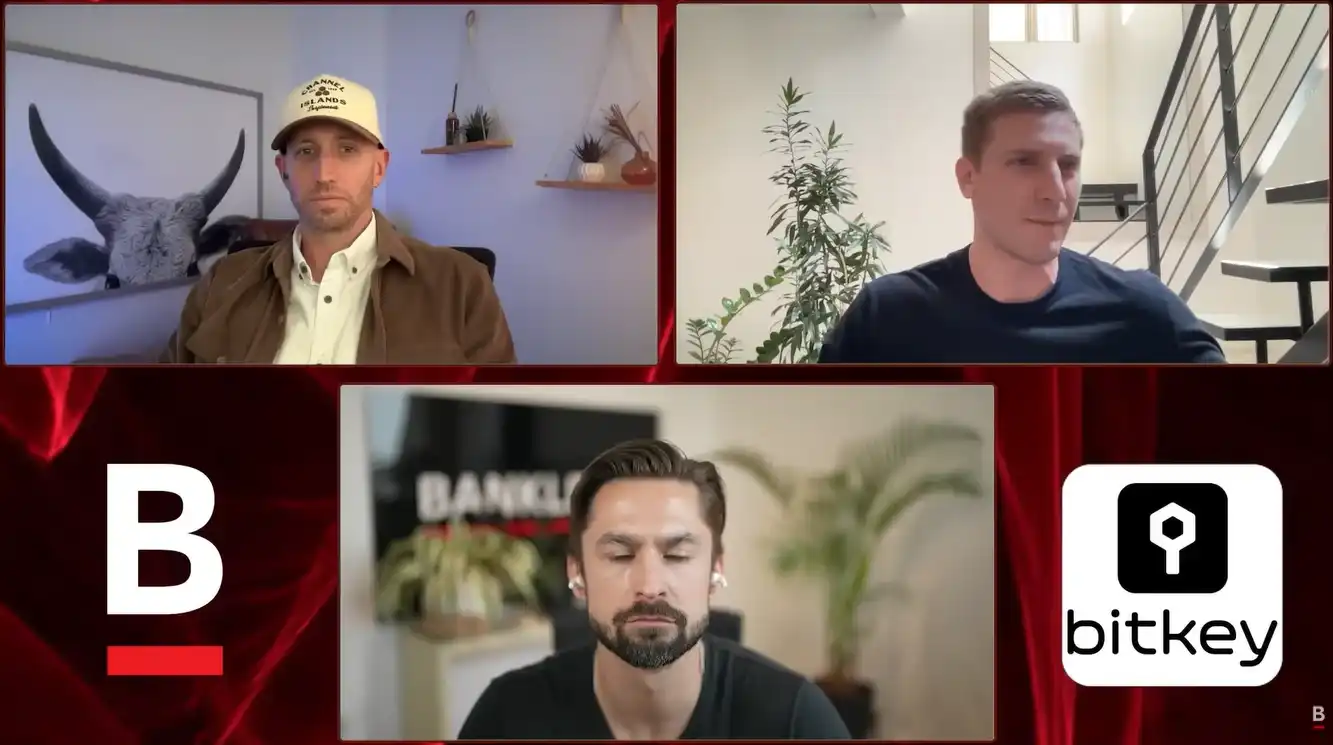
In a recent Bankless podcast, Blockchain Capital partners Aleks Larsen and Spencer Bogart discussed the crypto market's evolution from infrastructure to applications. They noted that widespread stablecoin adoption has built significant on-chain liquidity, boosting revenues for lending and trading protocols. The partners defended the "buyback and burn" token model, explaining its current effectiveness in aligning incentives and establishing credibility with holders, despite past debates on capital efficiency. Addressing the sentiment divide in crypto, they highlighted positive catalysts like regulatory clarity and institutional entry, even during the bear market. Aleks compared the industry's current state to the 2003-2004 internet era—post-"broadband transition" with cheap block space, awaiting mainstream adoption through applications like stablecoins and prediction markets. They observed a shift from "fat protocol" to "fat application," where value now accrues more at the application layer than the base infrastructure, a sign of a maturing ecosystem. Drawing parallels to AI, they noted similarities in early hype cycles but emphasized crypto's transparent, token-driven market corrections versus AI's private market adjustments. On Real World Assets (RWA), Spencer projected stablecoin market cap to reach trillions by 2030, detailing its multiplier effect on on-chain economic activity. For stock tokenization, he outlined two approaches: permissionless but legally indirect models and compliant, direct ownership channels, suggesting they can coexist in "sidecar" models alongside pure DeFi. The conversation concluded that while the industry's ethos evolves with institutional adoption, crypto's core promise of upgrading global financial infrastructure for greater efficiency remains intact and is steadily progressing.

marsbit3h ago

Conversation with Blockchain Capital Partners: The Next Bull Market May Be Right in Front of Us

marsbit3h ago

Trading

Spot

Hot Articles

What is $BITCOIN

DIGITAL GOLD ($BITCOIN): A Comprehensive Analysis Introduction to DIGITAL GOLD ($BITCOIN) DIGITAL GOLD ($BITCOIN) is a blockchain-based project operating on the Solana network, which aims to combine the characteristics of traditional precious metals with the innovation of decentralized technologies. While it shares a name with Bitcoin, often referred to as “digital gold” due to its perception as a store of value, DIGITAL GOLD is a separate token designed to create a unique ecosystem within the Web3 landscape. Its goal is to position itself as a viable alternative digital asset, although specifics regarding its applications and functionalities are still developing. What is DIGITAL GOLD ($BITCOIN)? DIGITAL GOLD ($BITCOIN) is a cryptocurrency token explicitly designed for use on the Solana blockchain. In contrast to Bitcoin, which provides a widely recognized value storage role, this token appears to focus on broader applications and characteristics. Notable aspects include: Blockchain Infrastructure: The token is built on the Solana blockchain, known for its capacity to handle high-speed and low-cost transactions. Supply Dynamics: DIGITAL GOLD has a maximum supply capped at 100 quadrillion tokens (100P $BITCOIN), although details regarding its circulating supply are currently undisclosed. Utility: While precise functionalities are not explicitly outlined, there are indications that the token could be utilized for various applications, potentially involving decentralized applications (dApps) or asset tokenization strategies. Who is the Creator of DIGITAL GOLD ($BITCOIN)? At present, the identity of the creators and development team behind DIGITAL GOLD ($BITCOIN) remains unknown. This situation is typical among many innovative projects within the blockchain space, particularly those aligning with decentralized finance and meme coin phenomena. While such anonymity may foster a community-driven culture, it intensifies concerns about governance and accountability. Who are the Investors of DIGITAL GOLD ($BITCOIN)? The available information indicates that DIGITAL GOLD ($BITCOIN) does not have any known institutional backers or prominent venture capital investments. The project seems to operate on a peer-to-peer model focused on community support and adoption rather than traditional funding routes. Its activity and liquidity are primarily situated on decentralized exchanges (DEXs), such as PumpSwap, rather than established centralized trading platforms, further highlighting its grassroots approach. How DIGITAL GOLD ($BITCOIN) Works The operational mechanics of DIGITAL GOLD ($BITCOIN) can be elaborated on based on its blockchain design and network attributes: Consensus Mechanism: By leveraging Solana’s unique proof-of-history (PoH) combined with a proof-of-stake (PoS) model, the project ensures efficient transaction validation contributing to the network's high performance. Tokenomics: While specific deflationary mechanisms have not been extensively detailed, the vast maximum token supply implies that it may cater to microtransactions or niche use cases that are still to be defined. Interoperability: There exists the potential for integration with Solana’s broader ecosystem, including various decentralized finance (DeFi) platforms. However, the details regarding specific integrations remain unspecified. Timeline of Key Events Here is a timeline that highlights significant milestones concerning DIGITAL GOLD ($BITCOIN): 2023: The initial deployment of the token occurs on the Solana blockchain, marked by its contract address. 2024: DIGITAL GOLD gains visibility as it becomes available for trading on decentralized exchanges like PumpSwap, allowing users to trade it against SOL. 2025: The project witnesses sporadic trading activity and potential interest in community-led engagements, although no noteworthy partnerships or technical advancements have been documented as of yet. Critical Analysis Strengths Scalability: The underlying Solana infrastructure supports high transaction volumes, which could enhance the utility of $BITCOIN in various transaction scenarios. Accessibility: The potential low trading price per token could attract retail investors, facilitating wider participation due to fractional ownership opportunities. Risks Lack of Transparency: The absence of publicly known backers, developers, or an audit process may yield skepticism regarding the project's sustainability and trustworthiness. Market Volatility: The trading activity is heavily reliant on speculative behavior, which can result in significant price volatility and uncertainty for investors. Conclusion DIGITAL GOLD ($BITCOIN) emerges as an intriguing yet ambiguous project within the rapidly evolving Solana ecosystem. While it attempts to leverage the “digital gold” narrative, its departure from Bitcoin's established role as a store of value underscores the need for a clearer differentiation of its intended utility and governance structure. Future acceptance and adoption will likely depend on addressing the current opacity and defining its operational and economic strategies more explicitly. Note: This report encompasses synthesised information available as of October 2023, and developments may have transpired beyond the research period.

1.7k Total ViewsPublished 2025.05.13Updated 2025.05.13

What is $BITCOIN

Discussions

Welcome to the HTX Community. Here, you can stay informed about the latest platform developments and gain access to professional market insights. Users' opinions on the price of BTC (BTC) are presented below.

活动图片