Google's Decade-Long AI Power Struggle Concludes, Pichai Gracefully Consolidates Control

marsbitPublished on 2026-08-09Last updated on 2026-08-09

Abstract

A decade of internal AI rivalry at Google has concluded with CEO Sundar Pichai consolidating power through a masterful, bloodless reorganization. The key moves saw Demis Hassabis, DeepMind's visionary founder, step down as CEO of Google DeepMind to become Alphabet's Chief Scientist, focusing on long-term AGI. Concurrently, Google's legendary technical leader Jeff Dean departed with his team to start a new venture, in which Google invested. This restructuring marks the end of a long-standing divide between the research-focused DeepMind and the product-oriented Google Brain. Pichai's strategy, beginning with their 2023 merger under Hassabis, gradually centralized control. While Hassabis gained public acclaim for Gemini's progress and a Nobel Prize, Pichai quietly elevated Koray Kavukcuoglu, a pragmatic engineering veteran, to oversee daily operations. The catalyst was mounting pressure in 2026 as Gemini's development timelines slipped, causing stock declines. Hassabis, more passionate about pure research and his AI drug discovery company Isomorphic Labs, grew weary of the commercial grind. His graceful "promotion" effectively removed him from operational control. Pichai handled both transitions with characteristic finesse: granting Hassabis a prestigious, future-focused role to prevent a defection to rivals (as happened with former DeepMind co-founder Mustafa Suleyman), and investing in Dean's new company to keep his pioneering work within Google's orbit. The outcome is a f...

Article | Beyond the Layout, Authors: Ban Jun, Huahua

Google has just completed a personnel adjustment without any losers.

At least it appears that way.

On August 6th, Google bid farewell to two of the most important figures of the AI era in a single day.

One is DeepMind founder Demis Hassabis.

The other is Google Chief Scientist Jeff Dean.

The dramatic twist is that no one actually left Google. They were both promoted, receiving the most dignified arrangements, each posting perfect official smiles on their social platforms.

A giant company worth over $4 trillion conducted an organizational reshuffle without generating any shockwaves or grievances.

This event is more worthy of careful scrutiny than the AI models themselves.

I. Google AI: A Decade of Internal Warfare

To understand what happened on August 6th, we must go back further in time.

In 2014, Google acquired DeepMind for £400 million. At the time, the company had only a few dozen people, no products, and no revenue.

Google saw potential in Hassabis himself—an AGI obsessive who played chess at four, became a master at thirteen, sold his gaming company to pursue a PhD in neuroscience.

To guard against Google's commercial influence, Hassabis even signed exceptionally strict terms in the acquisition agreement: DeepMind retained its London headquarters, established an independent ethics committee, and vowed never to directly serve Google's search advertising business.

Post-acquisition, Hassabis reported directly to Google CEO Sundar Pichai, but remained far from the commercial bustle of Mountain View.

Meanwhile, at the Mountain View headquarters, there was another loyal force—Google Brain, led by Google's legendary technical guru Jeff Dean.

Two teams, two cultures, waged a decade-long internal war within Google.

Google Brain was the native, hardcore engineering faction. They fought on the front lines of search, ads, and products, focused on whether technology could be deployed and how it could make money for the company. DeepMind was an elite laboratory in an ivory tower. They didn't care about product cycles or commercialization, focusing solely on pure AGI.

Google Brain viewed DeepMind as a spoiled money-burning machine, consuming hundreds of millions in annual losses, supporting scientists who published papers in Nature/Science daily but couldn't deliver a simple app.

DeepMind viewed Google Brain as fundamentally missing the poetry of AGI. Although Google Brain participated in or led foundational technologies of the large model era like sequence-to-sequence models (Seq2Seq) and the Transformer's attention mechanism, they merely treated hard tech as screws to improve search experience.

The sudden emergence of ChatGPT delivered a resounding slap to such arrogance.

Mutual disdain, yet mutual necessity. This immense internal friction tore at Google for ten years.

During this process, some cleared the field early and left, like DeepMind co-founder Mustafa Suleyman.

Suleyman and Hassabis go way back. He was the best friend of Hassabis's younger brother; the two met in their teens, with a friendship spanning over 20 years. But this co-founder, with his strong desire for control and eagerness to push AI into social governance and commercial application, was forced to leave Google in 2019.

At the time, external rumors attributed it to overly aggressive management style causing internal backlash, but the deeper reason was a clash of visions between the two. Suleyman was eager to ground AI in practical reality, while Hassabis stubbornly guarded academic purity.

Pichai's management team at the time exploited the strategic rift and information asymmetry between the two, coupled with Suleyman's troubles with privacy allegations in the DeepMind Health project, to smoothly marginalize him.

After leaving Google, Suleyman founded Inflection AI, later recruited by Microsoft CEO Satya Nadella, and now reigns as the head of Microsoft AI.

This incident didn't cause major waves back then. But looking back today, a hidden thread was already laid. Google's greatest strength has never been desperately retaining geniuses; it's using refined tactics to make geniuses willingly hand over their positions.

Suleyman wanted to build applications, couldn't do it at Google, so he went to Microsoft. Years later, the same playbook landed on Hassabis. He chose to focus on AI drug discovery; Google's official line was focusing on long-term AGI breakthroughs.

Two DeepMind founders, one left Google, one left Google DeepMind. The logic is startlingly consistent, except the latter's exit was packaged more gloriously and dignifiedly.

II. 2023: Who Swallowed Google Brain?

ChatGPT launched at the end of 2022; GPT-4 became ubiquitous in 2023. Google's internal chaos ensued, hastily launching the Bard model, which flopped during its debut demo, wiping $100 billion off its market value overnight.

Larry Page and Sergey Brin, who had retreated behind the scenes for years, couldn't sit still, frequently storming back into Mountain View conference rooms. What ChatGPT truly shattered in Google was not just the technology gap, but organizational rigidity.

OpenAI was a single army, a single voice; Google had two top-tier teams, two sets of roadmaps, two completely overlapping computing budgets.

According to disclosures by The New York Times, founders Page and Brin gave management a final command: AI must regroup.

The decision was made by the two founders, but the executor of this grand play was Pichai.

Pichai faced a deadly choice: when merging two top teams who despised each other, who would lead?

Pichai chose Hassabis.

In April 2023, Google DeepMind was established, with Hassabis as CEO, and Jeff Dean given the honorary title of Chief Scientist. The media at the time overwhelmingly concluded: Hassabis's complete victory, Google Brain thoroughly swallowed, the unified era has arrived.

But everyone overlooked a fundamental power dynamic. In this merger, who eliminated whom?

Before the merger, Google AI was a fragmented entity Pichai couldn't effectively manage. Google Brain reported to him but had become a cumbersome tail; DeepMind was secluded in London.

After the merger, computing power, budgets, and personnel authority scattered across two locations were forcibly integrated into a single system.

Hassabis achieved a nominal victory, but Pichai gained actual control. This was the first time in Google's 20+ year history that the CEO truly held the reins of the entire AI system in his hands.

Everyone cheered Hassabis's ascent; no one noticed Pichai quietly completing his consolidation behind the scenes.

III. Hassabis Takes Center Stage, Pichai Begins to Maneuver

From 2024 to around 2025, Google's AI narrative was almost entirely dominated by Hassabis alone.

Gemini 2.0 caught up with GPT-4; version 2.5 surpassed it on several benchmarks; the sixth-generation TPU chips powered the computing engine. Coincidentally, Hassabis, with his AlphaFold protein prediction achievement, won the 2024 Nobel Prize in Chemistry, further solidifying his public-facing central role in Google's AI system.

Silicon Valley began wildly spreading the narrative of the king's return; Hassabis became the lone hero saving Google AI.

What was Pichai doing during this period?

He remained low-key, only reading routine scripts on earnings calls, occasionally appearing on podcasts, completely outside the hero narrative.

But in the shadows untouched by the spotlight, Pichai laid down a crucial piece: the silent promotion of Koray Kavukcuoglu.

As early as the 2023 merger, Koray was appointed CTO of the new group. This technical veteran who joined DeepMind in 2012 was a core contributor to hardcore achievements like DQN and WaveNet. Unlike the world-famous Hassabis, Koray was extremely low-profile, a pragmatic figure excelling in engineering delivery and team coordination.

Pichai quietly handed the daily command of the entire R&D army to Koray just as Hassabis's prestige peaked.

He buried this hidden line, quietly waiting for the day of organizational transition.

IV. When Gemini Begins to Lag

Under the spotlight, underlying issues finally erupted.

Entering 2026, Google's AI rhythm began to falter. The Gemini 3.5 Pro, originally slated for a June release, was delayed repeatedly, with no news throughout July. At the August earnings call, Pichai had to announce further increases in AI capital expenditure, with the burn rate over the past four quarters hitting a record high.

Yet, facing analysts' repeated inquiries about the new model's release timeline, management hemmed and hawed, unable to provide any concrete schedule.

The capital market voted with its feet; Google's stock price plunged 11% within two weeks.

Simultaneously, internal friction between research ideals and engineering delivery quietly evolved into a nightmare once again.

According to disclosures by the emerging US tech media Semafor, sources familiar with Hassabis revealed that his idea of stepping down as CEO had been brewing for a full year. During this year, what ignited his passion most wasn't Gemini's parameter tuning or rush releases, but breakthroughs at his AI drug discovery company, Isomorphic Labs.

Forcing someone whose ultimate dream is to change the paradigms of human science to constantly monitor adjustments to AI customer service and search ad interfaces is torture in itself.

He didn't lose focus; he simply grew weary of the endless engineering arms race before him.

On August 6th, the shoe dropped.

Hassabis stepped down as CEO, transitioning to Alphabet Chairperson and Chief Scientist, nominally responsible for long-term AGI strategy. Jeff Dean left entirely, taking his team to start a new venture, with Google swiftly following up with seed-round investment.

Meanwhile, the ever-stealthy Koray was formally promoted to Senior Vice President, taking full charge of all Gemini business lines, reporting directly to Pichai.

Some lamented Google losing the soul of its AI; others praised it as a textbook-level handover.

But if you place these three individuals' positions on a chessboard, you'll see that each of these three moves bears the signature of Pichai's intensely cold and precise style.

V. Pichai Begins to Reclaim Google AI

Hassabis's resignation was packaged as a rather glorious promotion.

Alphabet Chief Scientist—sounds lofty; moving into DeepMind's brand-new Platform 37 office in London's King's Cross, a beautifully appointed space; Pichai personally tweeted thanks; Hassabis posted warm, heartfelt remarks on X.

But strip away this exquisite packaging, and the truth is brutally stark. Teams, budgets, development leadership of Gemini—all went to Koray. Hassabis was sidelined into a dimension called "the future."

This is a near-perfect organizational adjustment. Extracting the spiritual icon of Google AI from the operational hub, bestowing supreme honor, pushing them onto a track grand enough and distant enough—so distant it no longer impacts the current core business race.

Remember Suleyman, who left back then?

Suleyman wanted to build applications, had a falling out, and left—that was a story of departure. With Hassabis, Google gave him an independent Isomorphic Labs and a high-profile title—it became a story of a hero retreating behind the scenes.

Their essence is no different at all: they no longer hold the substantive power over Google AI.

The only difference is that Pichai learned from the Suleyman incident. He no longer gives geniuses the chance to leave in a huff, bearing resentment, to join rival camps. He prepares the most dignified exit for geniuses, letting them retire gracefully with gratitude and glory.

No bloody conflict, only through restructuring—this is Pichai-style management at its most authentic.

VI. Jeff Dean Voices Google's Biggest Problem

As for Jeff Dean's departure, it symbolizes the end of another era.

Jeff Dean, rooted at Google for 27 years, along with his lifelong partner Sanjay Ghemawat, is a Silicon Valley legend. The two are celebrated for writing MapReduce on a single computer, laying the foundation for the modern internet with BigTable, Spanner, and other infrastructures.

In the AI era, they personally built TensorFlow and TPU.

Leaving with him this time are Gemini co-technical lead Oriol Vinyals and Google Brain founding core member Quoc Le. The combined resumes of these four Google Fellows constitute almost half the history of Silicon Valley AI technology.

Jeff Dean was incredibly candid in his departure interview:

Google's infrastructure was born for billion-user products like search and ads, with stability and longevity as core tenets; but AI exploration (Discovery Loop) is entirely different, requiring rapid overturning of foundations, frequent experimentation, and running hundreds of parallel exploration lines simultaneously.

The architect of this legendary system admitted that the system he built could no longer adapt to the fast-paced rhythm of the new era.

Facing the departure of this veteran, Pichai's tactics were once again fully displayed.

He didn't invoke non-compete agreements, nor did he deploy legal teams to fight. After multiple failed attempts to retain him, Pichai simply wrote a check, directly entering Jeff Dean's new company as a founding investor and cloud services partner.

This wasn't generosity; it was an extremely shrewd calculation.

Let Jeff Dean conduct the most cutting-edge, high-risk experiments outside the system, with Google binding him through capital and computing power. If Koray's engineering roadmap ever hits a ceiling, Pichai has a top-tier backup outside the system, ready to be reabsorbed at any time.

He doesn't put all his eggs in one basket; he doesn't even keep the baskets on the same vehicle.

VII. Who Manages AGI?

Reading this far, a clear historical picture emerges.

Those who once controlled Google AI were uniformly top scientists. Hassabis, Jeff Dean, Suleyman—their paper citation counts and academic prestige were enough to command reverence from any tech company.

And who truly controls Google AI today?

One is Koray, a 13-year engineering veteran at DeepMind, familiar with every pitfall in the R&D chain, eschewing grand narratives for delivery timelines.

The other is Pichai—a CEO long underestimated, even mocked in Silicon Valley as merely maintaining the status quo. He doesn't write code, doesn't publish papers; he does one thing: decides who gets to decide.

Control over AI has formally passed from scientists' hands into the hands of professional managers. This is the most profound organizational change in Google AI's nearly 30-year history.

When Pichai issued that seemingly ordinary announcement, he was actually declaring the end of an old era.

But, if tomorrow, another paradigm-shifting revolution like the Transformer emerges in AI, requiring someone to bet on a non-consensus direction based on intuition, who will make that bet?

Rely on Koray's engineering assembly line? Or Pichai's financial statements?

This is the ultimate gamble Pichai has placed. He's betting that the AI race has moved beyond the artisanal stage where individual genius could rewrite fate, fully entering an industrialized era competing on systemic stability, engineering delivery, and organizational efficiency.

Zero enemies, zero grievances, zero negative public sentiment.

Pichai spent three full years quietly pulling an AI organization once beyond his control back into the palm of his hand.

Words from [Beyond the Layout]:

Many believe Google's biggest change today is Hassabis's exit.

I think it's something else.

For the past two decades, the tech industry adhered to a near-worshipful creed: the smartest geniuses should manage the most important technologies.

Today, Google, through an exceptionally dignified transition, tells everyone: the times have changed.

Scientists are responsible for outward exploration; engineers are responsible for grounding ideas; CEOs are responsible for deciding who sits where. AI R&D is becoming like a vast machine.

Not because the models have become simpler.

Precisely because it has become so complex that no single genius can驾驭 (control) it alone.

This might be the true sign of Google entering the second half of the AI era.

It's no longer about models taking the lead, but about the organization finally completing its evolution.

Trending Cryptos

Related Questions

QWho are the two key AI figures that were reassigned within Google on August 6th, according to the article?

AAccording to the article, the two key AI figures reassigned on August 6th are Demis Hassabis, co-founder of DeepMind, and Jeff Dean, Google's Chief Scientist. Hassabis stepped down as CEO of Google DeepMind to become Alphabet Chairman and Chief Scientist, while Jeff Dean left Google to start his own company, with Google investing in it.

QWhat is the main difference in culture and focus between Google Brain and DeepMind before their merger?

ABefore their merger, Google Brain was the in-house, product-focused team, emphasizing engineering and practical application of AI to enhance services like search and advertising. DeepMind, based in London, was more of an academic research lab focused on long-term, pure Artificial General Intelligence (AGI) goals, prioritizing scientific breakthroughs over immediate commercial products.

QWhat strategic move did CEO Sundar Pichai make to consolidate control over Google's AI organization?

ASundar Pichai's key strategic move was to merge the competing Google Brain and DeepMind teams in 2023 under the single entity 'Google DeepMind', with Demis Hassabis as the nominal CEO. This gave Pichai direct control over the consolidated AI budget and resources for the first time. He then quietly promoted the engineering-focused Koray Kavukcuoglu to manage daily operations, preparing for a future leadership transition that ultimately saw Koray take full control of Gemini.

QHow does the article describe Sundar Pichai's management style in handling the departure of key AI leaders?

AThe article describes Sundar Pichai's management style as calculating and diplomatic, avoiding public conflict. He orchestrates 'bloodless' organizational reshuffles, giving departing leaders (like Hassabis and Dean) prestigious new titles, grand offices, public praise, or strategic investments. This approach gracefully removes them from operational power while preventing them from leaving with resentment and potentially joining competitors, as happened with former DeepMind co-founder Mustafa Suleyman.

QWhat fundamental shift in AI development does the article suggest is symbolized by Google's recent leadership changes?

AThe article suggests the leadership changes symbolize a fundamental shift from the 'genius-led' era of AI to an 'industrialized' era. Control has moved from visionary scientists (like Hassabis and Dean) to professional managers and engineers (like Pichai and Koray) who focus on systematic execution, engineering delivery, and organizational efficiency. The belief is that AI development has become too complex for any single genius to manage, requiring a more machine-like, process-driven approach.

Related Reads

Conversation with Blockchain Capital Partners: The Next Bull Market May Be Right in Front of Us

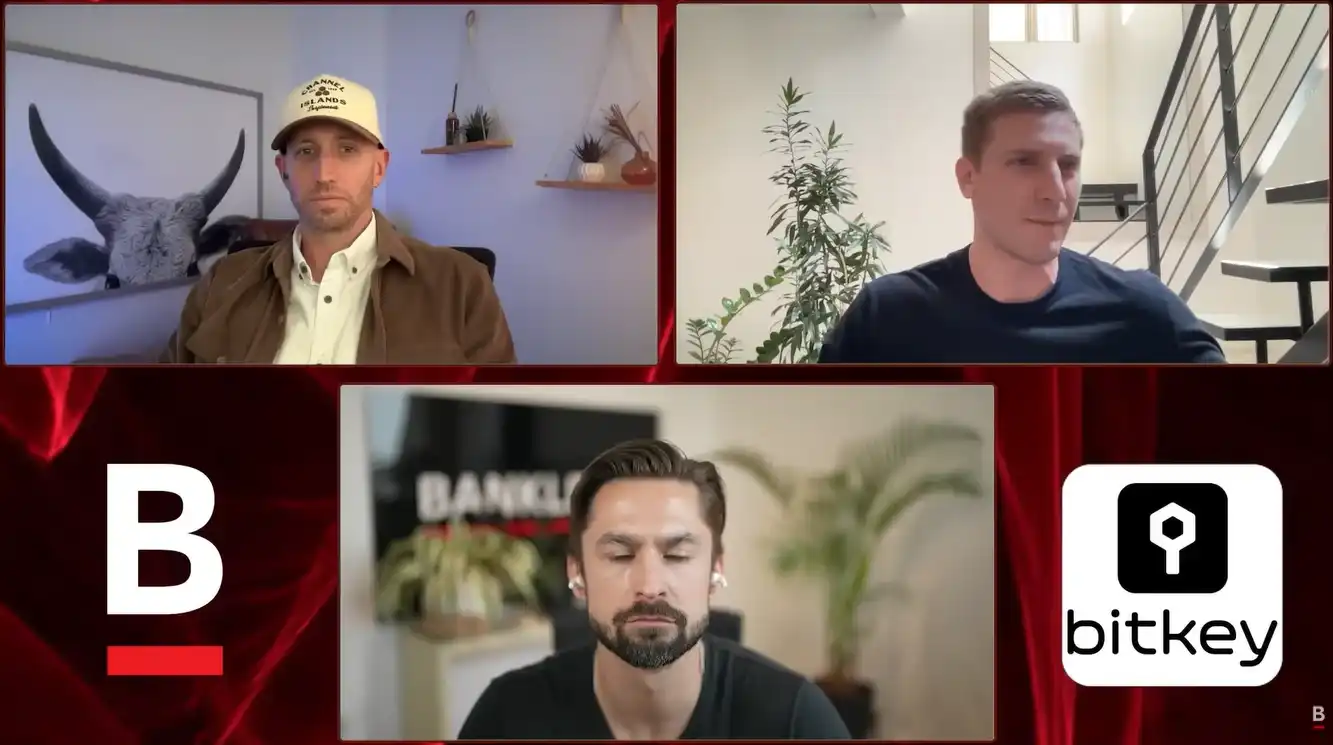
In a recent Bankless podcast, Blockchain Capital partners Aleks Larsen and Spencer Bogart discussed the crypto market's evolution from infrastructure to applications. They noted that widespread stablecoin adoption has built significant on-chain liquidity, boosting revenues for lending and trading protocols. The partners defended the "buyback and burn" token model, explaining its current effectiveness in aligning incentives and establishing credibility with holders, despite past debates on capital efficiency. Addressing the sentiment divide in crypto, they highlighted positive catalysts like regulatory clarity and institutional entry, even during the bear market. Aleks compared the industry's current state to the 2003-2004 internet era—post-"broadband transition" with cheap block space, awaiting mainstream adoption through applications like stablecoins and prediction markets. They observed a shift from "fat protocol" to "fat application," where value now accrues more at the application layer than the base infrastructure, a sign of a maturing ecosystem. Drawing parallels to AI, they noted similarities in early hype cycles but emphasized crypto's transparent, token-driven market corrections versus AI's private market adjustments. On Real World Assets (RWA), Spencer projected stablecoin market cap to reach trillions by 2030, detailing its multiplier effect on on-chain economic activity. For stock tokenization, he outlined two approaches: permissionless but legally indirect models and compliant, direct ownership channels, suggesting they can coexist in "sidecar" models alongside pure DeFi. The conversation concluded that while the industry's ethos evolves with institutional adoption, crypto's core promise of upgrading global financial infrastructure for greater efficiency remains intact and is steadily progressing.

marsbit3h ago

Conversation with Blockchain Capital Partners: The Next Bull Market May Be Right in Front of Us

marsbit3h ago

Trading

Spot

Hot Articles

What is SONIC

Sonic: Pioneering the Future of Gaming in Web3 Introduction to Sonic In the ever-evolving landscape of Web3, the gaming industry stands out as one of the most dynamic and promising sectors. At the forefront of this revolution is Sonic, a project designed to amplify the gaming ecosystem on the Solana blockchain. Leveraging cutting-edge technology, Sonic aims to deliver an unparalleled gaming experience by efficiently processing millions of requests per second, ensuring that players enjoy seamless gameplay while maintaining low transaction costs. This article delves into the intricate details of Sonic, exploring its creators, funding sources, operational mechanics, and the timeline of significant events that have shaped its journey. What is Sonic? Sonic is an innovative layer-2 network that operates atop the Solana blockchain, specifically tailored to enhance the existing Solana gaming ecosystem. It accomplishes this through a customised, VM-agnostic game engine paired with a HyperGrid interpreter, facilitating sovereign game economies that roll up back to the Solana platform. The primary goals of Sonic include: Enhanced Gaming Experiences: Sonic is committed to offering lightning-fast on-chain gameplay, allowing players and developers to engage with games at previously unattainable speeds. Atomic Interoperability: This feature enables transactions to be executed within Sonic without the need to redeploy Solana programmes and accounts. This makes the process more efficient and directly benefits from Solana Layer1 services and liquidity. Seamless Deployment: Sonic allows developers to write for Ethereum Virtual Machine (EVM) based systems and execute them on Solana’s SVM infrastructure. This interoperability is crucial for attracting a broader range of dApps and decentralised applications to the platform. Support for Developers: By offering native composable gaming primitives and extensible data types - dining within the Entity-Component-System (ECS) framework - game creators can craft intricate business logic with ease. Overall, Sonic's unique approach not only caters to players but also provides an accessible and low-cost environment for developers to innovate and thrive. Creator of Sonic The information regarding the creator of Sonic is somewhat ambiguous. However, it is known that Sonic's SVM is owned by the company Mirror World. The absence of detailed information about the individuals behind Sonic reflects a common trend in several Web3 projects, where collective efforts and partnerships often overshadow individual contributions. Investors of Sonic Sonic has garnered considerable attention and support from various investors within the crypto and gaming sectors. Notably, the project raised an impressive $12 million during its Series A funding round. The round was led by BITKRAFT Ventures, with other notable investors including Galaxy, Okx Ventures, Interactive, Big Brain Holdings, and Mirana. This financial backing signifies the confidence that investment foundations have in Sonic’s potential to revolutionise the Web3 gaming landscape, further validating its innovative approaches and technologies. How Does Sonic Work? Sonic utilises the HyperGrid framework, a sophisticated parallel processing mechanism that enhances its scalability and customisability. Here are the core features that set Sonic apart: Lightning Speed at Low Costs: Sonic offers one of the fastest on-chain gaming experiences compared to other Layer-1 solutions, powered by the scalability of Solana’s virtual machine (SVM). Atomic Interoperability: Sonic enables transaction execution without redeployment of Solana programmes and accounts, effectively streamlining the interaction between users and the blockchain. EVM Compatibility: Developers can effortlessly migrate decentralised applications from EVM chains to the Solana environment using Sonic’s HyperGrid interpreter, increasing the accessibility and integration of various dApps. Ecosystem Support for Developers: By exposing native composable gaming primitives, Sonic facilitates a sandbox-like environment where developers can experiment and implement business logic, greatly enhancing the overall development experience. Monetisation Infrastructure: Sonic natively supports growth and monetisation efforts, providing frameworks for traffic generation, payments, and settlements, thereby ensuring that gaming projects are not only viable but also sustainable financially. Timeline of Sonic The evolution of Sonic has been marked by several key milestones. Below is a brief timeline highlighting critical events in the project's history: 2022: The Sonic cryptocurrency was officially launched, marking the beginning of its journey in the Web3 gaming arena. 2024: June: Sonic SVM successfully raised $12 million in a Series A funding round. This investment allowed Sonic to further develop its platform and expand its offerings. August: The launch of the Sonic Odyssey testnet provided users with the first opportunity to engage with the platform, offering interactive activities such as collecting rings—a nod to gaming nostalgia. October: SonicX, an innovative crypto game integrated with Solana, made its debut on TikTok, capturing the attention of over 120,000 users within a short span. This integration illustrated Sonic’s commitment to reaching a broader, global audience and showcased the potential of blockchain gaming. Key Points Sonic SVM is a revolutionary layer-2 network on Solana explicitly designed to enhance the GameFi landscape, demonstrating great potential for future development. HyperGrid Framework empowers Sonic by introducing horizontal scaling capabilities, ensuring that the network can handle the demands of Web3 gaming. Integration with Social Platforms: The successful launch of SonicX on TikTok displays Sonic’s strategy to leverage social media platforms to engage users, exponentially increasing the exposure and reach of its projects. Investment Confidence: The substantial funding from BITKRAFT Ventures, among others, emphasizes the robust backing Sonic has, paving the way for its ambitious future. In conclusion, Sonic encapsulates the essence of Web3 gaming innovation, striking a balance between cutting-edge technology, developer-centric tools, and community engagement. As the project continues to evolve, it is poised to redefine the gaming landscape, making it a notable entity for gamers and developers alike. As Sonic moves forward, it will undoubtedly attract greater interest and participation, solidifying its place within the broader narrative of blockchain gaming.

2.2k Total ViewsPublished 2024.04.04Updated 2024.12.03

What is SONIC

What is $S$

Understanding SPERO: A Comprehensive Overview Introduction to SPERO As the landscape of innovation continues to evolve, the emergence of web3 technologies and cryptocurrency projects plays a pivotal role in shaping the digital future. One project that has garnered attention in this dynamic field is SPERO, denoted as SPERO,$$s$. This article aims to gather and present detailed information about SPERO, to help enthusiasts and investors understand its foundations, objectives, and innovations within the web3 and crypto domains. What is SPERO,$$s$? SPERO,$$s$ is a unique project within the crypto space that seeks to leverage the principles of decentralisation and blockchain technology to create an ecosystem that promotes engagement, utility, and financial inclusion. The project is tailored to facilitate peer-to-peer interactions in new ways, providing users with innovative financial solutions and services. At its core, SPERO,$$s$ aims to empower individuals by providing tools and platforms that enhance user experience in the cryptocurrency space. This includes enabling more flexible transaction methods, fostering community-driven initiatives, and creating pathways for financial opportunities through decentralised applications (dApps). The underlying vision of SPERO,$$s$ revolves around inclusiveness, aiming to bridge gaps within traditional finance while harnessing the benefits of blockchain technology. Who is the Creator of SPERO,$$s$? The identity of the creator of SPERO,$$s$ remains somewhat obscure, as there are limited publicly available resources providing detailed background information on its founder(s). This lack of transparency can stem from the project's commitment to decentralisation—an ethos that many web3 projects share, prioritising collective contributions over individual recognition. By centring discussions around the community and its collective goals, SPERO,$$s$ embodies the essence of empowerment without singling out specific individuals. As such, understanding the ethos and mission of SPERO remains more important than identifying a singular creator. Who are the Investors of SPERO,$$s$? SPERO,$$s$ is supported by a diverse array of investors ranging from venture capitalists to angel investors dedicated to fostering innovation in the crypto sector. The focus of these investors generally aligns with SPERO's mission—prioritising projects that promise societal technological advancement, financial inclusivity, and decentralised governance. These investor foundations are typically interested in projects that not only offer innovative products but also contribute positively to the blockchain community and its ecosystems. The backing from these investors reinforces SPERO,$$s$ as a noteworthy contender in the rapidly evolving domain of crypto projects. How Does SPERO,$$s$ Work? SPERO,$$s$ employs a multi-faceted framework that distinguishes it from conventional cryptocurrency projects. Here are some of the key features that underline its uniqueness and innovation: Decentralised Governance: SPERO,$$s$ integrates decentralised governance models, empowering users to participate actively in decision-making processes regarding the project’s future. This approach fosters a sense of ownership and accountability among community members. Token Utility: SPERO,$$s$ utilises its own cryptocurrency token, designed to serve various functions within the ecosystem. These tokens enable transactions, rewards, and the facilitation of services offered on the platform, enhancing overall engagement and utility. Layered Architecture: The technical architecture of SPERO,$$s$ supports modularity and scalability, allowing for seamless integration of additional features and applications as the project evolves. This adaptability is paramount for sustaining relevance in the ever-changing crypto landscape. Community Engagement: The project emphasises community-driven initiatives, employing mechanisms that incentivise collaboration and feedback. By nurturing a strong community, SPERO,$$s$ can better address user needs and adapt to market trends. Focus on Inclusion: By offering low transaction fees and user-friendly interfaces, SPERO,$$s$ aims to attract a diverse user base, including individuals who may not previously have engaged in the crypto space. This commitment to inclusion aligns with its overarching mission of empowerment through accessibility. Timeline of SPERO,$$s$ Understanding a project's history provides crucial insights into its development trajectory and milestones. Below is a suggested timeline mapping significant events in the evolution of SPERO,$$s$: Conceptualisation and Ideation Phase: The initial ideas forming the basis of SPERO,$$s$ were conceived, aligning closely with the principles of decentralisation and community focus within the blockchain industry. Launch of Project Whitepaper: Following the conceptual phase, a comprehensive whitepaper detailing the vision, goals, and technological infrastructure of SPERO,$$s$ was released to garner community interest and feedback. Community Building and Early Engagements: Active outreach efforts were made to build a community of early adopters and potential investors, facilitating discussions around the project’s goals and garnering support. Token Generation Event: SPERO,$$s$ conducted a token generation event (TGE) to distribute its native tokens to early supporters and establish initial liquidity within the ecosystem. Launch of Initial dApp: The first decentralised application (dApp) associated with SPERO,$$s$ went live, allowing users to engage with the platform's core functionalities. Ongoing Development and Partnerships: Continuous updates and enhancements to the project's offerings, including strategic partnerships with other players in the blockchain space, have shaped SPERO,$$s$ into a competitive and evolving player in the crypto market. Conclusion SPERO,$$s$ stands as a testament to the potential of web3 and cryptocurrency to revolutionise financial systems and empower individuals. With a commitment to decentralised governance, community engagement, and innovatively designed functionalities, it paves the way toward a more inclusive financial landscape. As with any investment in the rapidly evolving crypto space, potential investors and users are encouraged to research thoroughly and engage thoughtfully with the ongoing developments within SPERO,$$s$. The project showcases the innovative spirit of the crypto industry, inviting further exploration into its myriad possibilities. While the journey of SPERO,$$s$ is still unfolding, its foundational principles may indeed influence the future of how we interact with technology, finance, and each other in interconnected digital ecosystems.

332 Total ViewsPublished 2024.12.17Updated 2024.12.17

What is $S$

What is AGENT S

Agent S: The Future of Autonomous Interaction in Web3 Introduction In the ever-evolving landscape of Web3 and cryptocurrency, innovations are constantly redefining how individuals interact with digital platforms. One such pioneering project, Agent S, promises to revolutionise human-computer interaction through its open agentic framework. By paving the way for autonomous interactions, Agent S aims to simplify complex tasks, offering transformative applications in artificial intelligence (AI). This detailed exploration will delve into the project's intricacies, its unique features, and the implications for the cryptocurrency domain. What is Agent S? Agent S stands as a groundbreaking open agentic framework, specifically designed to tackle three fundamental challenges in the automation of computer tasks: Acquiring Domain-Specific Knowledge: The framework intelligently learns from various external knowledge sources and internal experiences. This dual approach empowers it to build a rich repository of domain-specific knowledge, enhancing its performance in task execution. Planning Over Long Task Horizons: Agent S employs experience-augmented hierarchical planning, a strategic approach that facilitates efficient breakdown and execution of intricate tasks. This feature significantly enhances its ability to manage multiple subtasks efficiently and effectively. Handling Dynamic, Non-Uniform Interfaces: The project introduces the Agent-Computer Interface (ACI), an innovative solution that enhances the interaction between agents and users. Utilizing Multimodal Large Language Models (MLLMs), Agent S can navigate and manipulate diverse graphical user interfaces seamlessly. Through these pioneering features, Agent S provides a robust framework that addresses the complexities involved in automating human interaction with machines, setting the stage for myriad applications in AI and beyond. Who is the Creator of Agent S? While the concept of Agent S is fundamentally innovative, specific information about its creator remains elusive. The creator is currently unknown, which highlights either the nascent stage of the project or the strategic choice to keep founding members under wraps. Regardless of anonymity, the focus remains on the framework's capabilities and potential. Who are the Investors of Agent S? As Agent S is relatively new in the cryptographic ecosystem, detailed information regarding its investors and financial backers is not explicitly documented. The lack of publicly available insights into the investment foundations or organisations supporting the project raises questions about its funding structure and development roadmap. Understanding the backing is crucial for gauging the project's sustainability and potential market impact. How Does Agent S Work? At the core of Agent S lies cutting-edge technology that enables it to function effectively in diverse settings. Its operational model is built around several key features: Human-like Computer Interaction: The framework offers advanced AI planning, striving to make interactions with computers more intuitive. By mimicking human behaviour in tasks execution, it promises to elevate user experiences. Narrative Memory: Employed to leverage high-level experiences, Agent S utilises narrative memory to keep track of task histories, thereby enhancing its decision-making processes. Episodic Memory: This feature provides users with step-by-step guidance, allowing the framework to offer contextual support as tasks unfold. Support for OpenACI: With the ability to run locally, Agent S allows users to maintain control over their interactions and workflows, aligning with the decentralised ethos of Web3. Easy Integration with External APIs: Its versatility and compatibility with various AI platforms ensure that Agent S can fit seamlessly into existing technological ecosystems, making it an appealing choice for developers and organisations. These functionalities collectively contribute to Agent S's unique position within the crypto space, as it automates complex, multi-step tasks with minimal human intervention. As the project evolves, its potential applications in Web3 could redefine how digital interactions unfold. Timeline of Agent S The development and milestones of Agent S can be encapsulated in a timeline that highlights its significant events: September 27, 2024: The concept of Agent S was launched in a comprehensive research paper titled “An Open Agentic Framework that Uses Computers Like a Human,” showcasing the groundwork for the project. October 10, 2024: The research paper was made publicly available on arXiv, offering an in-depth exploration of the framework and its performance evaluation based on the OSWorld benchmark. October 12, 2024: A video presentation was released, providing a visual insight into the capabilities and features of Agent S, further engaging potential users and investors. These markers in the timeline not only illustrate the progress of Agent S but also indicate its commitment to transparency and community engagement. Key Points About Agent S As the Agent S framework continues to evolve, several key attributes stand out, underscoring its innovative nature and potential: Innovative Framework: Designed to provide an intuitive use of computers akin to human interaction, Agent S brings a novel approach to task automation. Autonomous Interaction: The ability to interact autonomously with computers through GUI signifies a leap towards more intelligent and efficient computing solutions. Complex Task Automation: With its robust methodology, it can automate complex, multi-step tasks, making processes faster and less error-prone. Continuous Improvement: The learning mechanisms enable Agent S to improve from past experiences, continually enhancing its performance and efficacy. Versatility: Its adaptability across different operating environments like OSWorld and WindowsAgentArena ensures that it can serve a broad range of applications. As Agent S positions itself in the Web3 and crypto landscape, its potential to enhance interaction capabilities and automate processes signifies a significant advancement in AI technologies. Through its innovative framework, Agent S exemplifies the future of digital interactions, promising a more seamless and efficient experience for users across various industries. Conclusion Agent S represents a bold leap forward in the marriage of AI and Web3, with the capacity to redefine how we interact with technology. While still in its early stages, the possibilities for its application are vast and compelling. Through its comprehensive framework addressing critical challenges, Agent S aims to bring autonomous interactions to the forefront of the digital experience. As we move deeper into the realms of cryptocurrency and decentralisation, projects like Agent S will undoubtedly play a crucial role in shaping the future of technology and human-computer collaboration.

994 Total ViewsPublished 2025.01.14Updated 2025.01.14

What is AGENT S

Discussions

Welcome to the HTX Community. Here, you can stay informed about the latest platform developments and gain access to professional market insights. Users' opinions on the price of S (S) are presented below.

活动图片