Author: danny
It's hard to tell if it's true or false, but the numbers revealed in corruption cases in mainland China in recent years are truly staggering, reaching levels that seem utterly unbelievable, beyond any reasonable expectation. It's mind-blowing. A county chief often gets involved in embezzlement and bribery worth billions.
Li Jianping, former Party Secretary of the Hohhot Economic and Technological Development Zone, was confirmed by the Supreme People's Court to have illegally possessed over 1.437 billion yuan in state-owned company funds, accepted bribes exceeding 577 million yuan, and additionally misappropriated over 1.055 billion yuan in public funds.

When ordinary people see such cases, they're likely to ask: Just a local official, just a development zone, where do billions, tens of billions come from for him to embezzle?
Indeed, if we calculate based on salaries, he would have had to start working from the Three Kingdoms period, saving every penny without eating or drinking, to accumulate that kind of money. But from a political economy perspective, the value of a local position with real power is a different matter from its salary. Land, projects, state-owned enterprise funds, loans, demolitions, licenses, project approvals—this money isn't his, but a lot of it has to cross his desk. The annual salary might be a few hundred thousand, but a letter of introduction, an email, a piece of information could decide where tens of billions, hundreds of billions flow.
So local power is somewhat like a toll booth. The toll booth itself doesn't need to earn ten billion; it just needs that much value to pass through daily. (Kinda like a listing BD at an exchange, huh~)
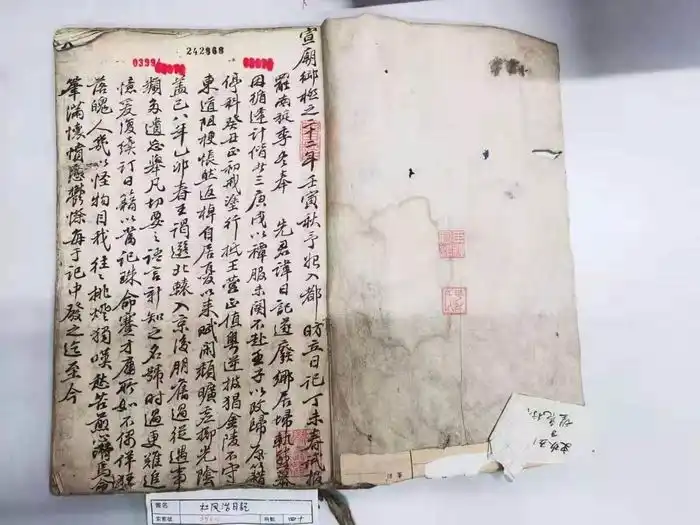
However, if this story of official corruption stops here, there's nothing fresh. What really intrigued me was a diary left by a late Qing county magistrate two hundred years ago.
His name was Du Fengzhi.
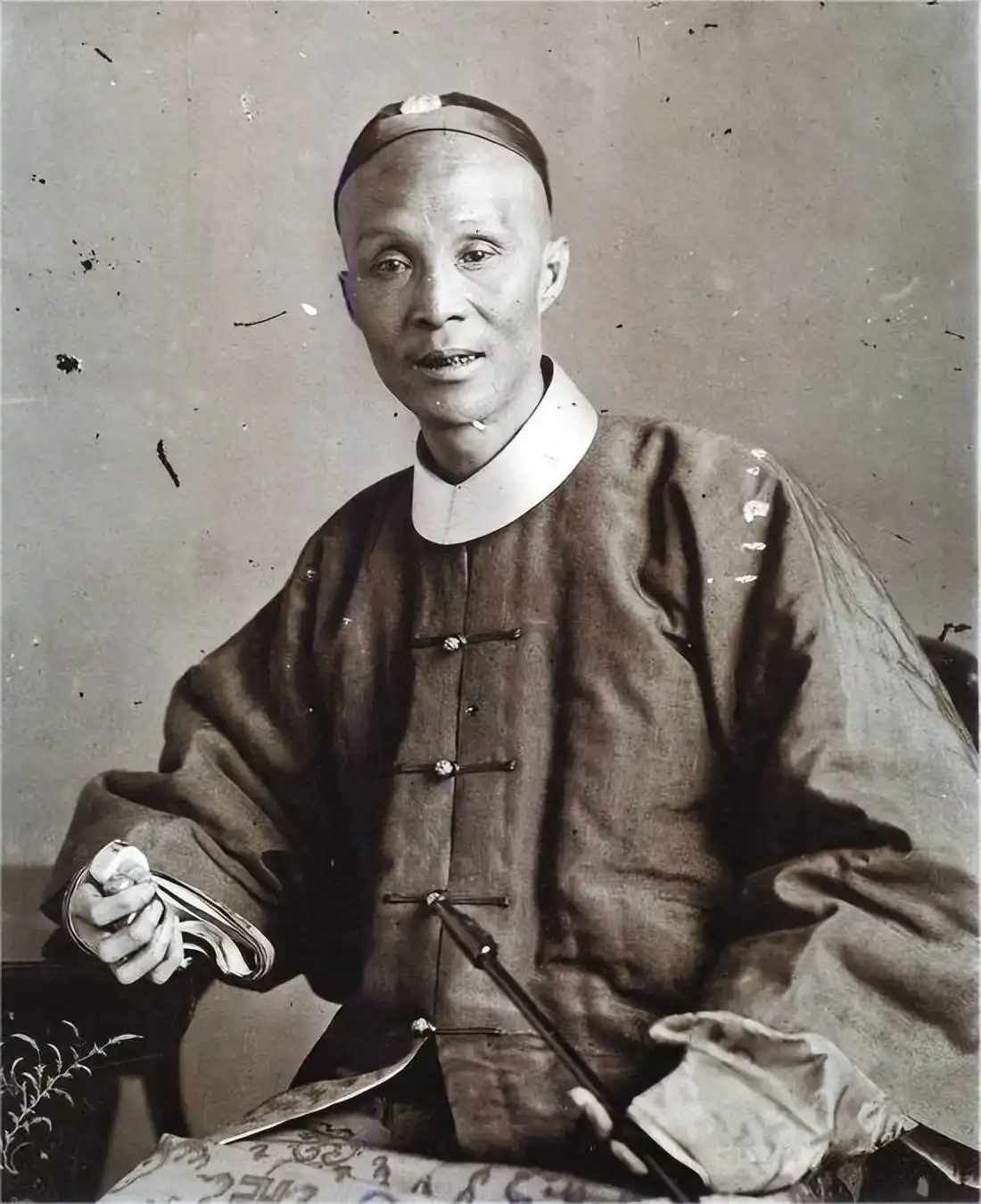
Du Fengzhi's story is about something else: As long as a position can generate income in the future, even before the person sits in it, people will discount that position's future cash flows into present value.
Modern cases like Li Jianping's tell us how large a cash flow a position can control; Du Fengzhi tells us that when everyone knows money will flow from that position later, those future cash flows can even be discounted *before* the official takes office.
Power may not yet be realized, but the future of an official career gets financialized first.
I. Passing the Provincial Exam Was Just Getting a Queue Ticket
Du Fengzhi, courtesy name Pingshu, style name Houshan, from Changtang, Shangyu County, Shaoxing Prefecture, Zhejiang, was born in Shaoxing, Zhejiang in 1814. He passed the provincial exam in 1844 at age 30. When we read 'Fan Jin Passes the Exam' as kids, it's easy to get the illusion that once the gongs and drums sound, you can start work at the county yamen the next day. But the real Qing bureaucracy wasn't so sweet. Passing the provincial exam (becoming a *juren*) only proved you were qualified to advance; when you actually got a position could be many years later.
Du Fengzhi's path roughly went like this: *Juren* → gained status to enter the bureaucratic system → entered the pool of waiting officials via channels like *Datiao* (grand selection), *Jianxuan* (selection) → queued for an actual vacancy → then used donations to buy faster selection priority → entered the priority queue → still had to wait for a real county vacancy to open up → only after drawing the lot did he get an official post.
After becoming a *juren*, Du kept failing the metropolitan exam. He remained on the waiting list. In 1855 he participated in *Datiao*. By 1863, he simply cancelled his original qualification and directly borrowed money to make a donation to jump the queue, securing an express lane: "Magistrate selected regardless of double or single month, non-accumulated class selection." After spending a fortune to finally enter the candidate sequence in 1864, it still wasn't over... He still had to wait... Until March 1866, among his batch of waiting officials, the person ahead of him had to observe mourning, so his turn came to draw for the magistrate post of Guangning County, Guangdong.
From passing the provincial exam in 1844 to getting the actual post in 1866: a full 22 years. How many 22-year periods does a person have?!
This is very much like crypto projects raising VC money today. VC is like the scholarly honor. You get backing from a few top funds, your status changes first; exchanges are more willing to meet you, next-round investors are more willing to talk, media pays more attention. But status isn't money. Du Fengzhi could chat with people using his honor, but couldn't buy rice with it; a project can make headlines with a $1 billion valuation, but still has to wait for the exchange listing.
So fundraising is sometimes like the imperial exams: first they let you in the door, then tell you: there's still a long line inside.
Want to cut the line? Heh~
II. The Court Gives You the Post, Travel Expenses Are Your Problem
In 1866, Du Fengzhi finally got the Guangning magistrate post. Anyone who watches historical dramas knows: at this point there should be lanterns and decorations, the ancestral hall opens its main gate, finally success after the struggle! But the Qing being the Qing, the Board of Personnel only gave you the appointment letter; they didn't cover transportation.
For these mid-to-low-level local officials, the Qing court didn't arrange travel or advance travel expenses. How to get from Beijing to Guangdong, whether to bring family, how to hire private secretaries, how to support servants, food and lodging on the road, boat and cart fares—all were his own business.
The Great Qing's onboarding arrangement: Congratulations on joining the court. Work location: Guangdong. Moving expenses, please handle yourself.
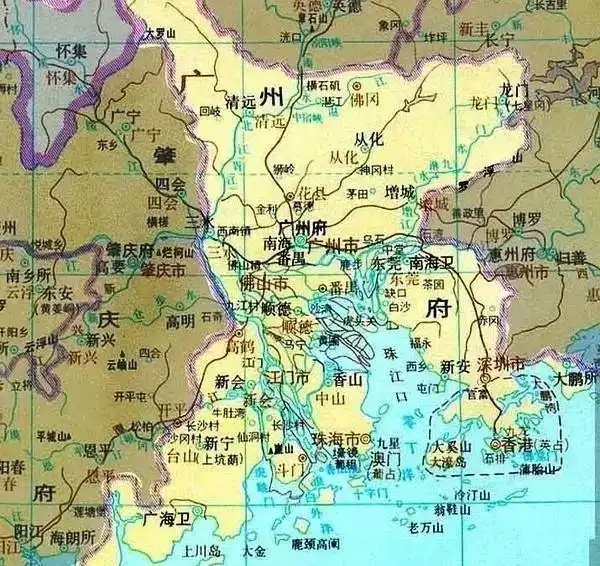
Du Fengzhi left Beijing in September 1866, passed through Tianjin, Shanghai, Hong Kong, and only reached Guangzhou in October, over thirty days on the road. Arriving in Guangzhou, he couldn't go directly to Guangning because he still had to run the gauntlet in the provincial capital. The Viceroy, Governor, Provincial Administration Commissioner, Provincial Surveillance Commissioner, Prefect—all required visits. The yamen's private secretaries, gatekeepers (aka security guards), and clerks all needed greasing.
The late Qing officialdom loved talking about networking and cooperation; put in today's Web3, crypto world, it's not inferior at all. When they know you're about to list on Binance, OKX, or Coinbase, some claiming to be VCs, incubators will come running, asking the project to allocate x% tokens at angel round valuation before listing, and with the most favorable lockup terms.
Problem was, Du Fengzhi had no money. Over twenty years spent on exams, odd jobs, waiting, no family backing him up. What was he to do?
Thus, a mature business had long developed in Beijing: official debt.
III. If an Ordinary Person is Poor, Money Shops Ignore Them; If a Future Magistrate is Poor, Money Shops Actively Welcome Them
An ordinary person poor, money shops pay no mind; a person about to become a county magistrate poor, money shops welcome them with open arms. Because an ordinary person has no money today, they might still have none in six months; a future magistrate has no money today, but will hold a county in six months.
More than a month after Du Fengzhi got the Guangdong post, people coming to introduce him to official debt were "no less than forty or fifty." A person so poor they couldn't even afford travel expenses suddenly became a hot customer in the financial market.
Reason simple. Creditors weren't looking at how much money Du Fengzhi had today, but at what position he was about to occupy. Superficially, the loan was to Du Fengzhi; in their hearts, they calculated how much grease Guangning County could produce.
That's also why the terms dared to be so harsh. By the fifth month of the Tongzhi reign's sixth year (1867), Du Fengzhi finalized an official debt: nominally borrowed 4000 taels, actually received 2000 taels; later borrowed 680 taels, received 340 taels — ever seen a haircut, a half-interest cut?
Today if someone tells a founder: "I'll lend you four million, you actually get two million, but the IOU is still for four million." A normal person's first reaction shouldn't be to sign, but to check if the other party is a scam.
Du Fengzhi had to sign.
He had waited 22 years, studied, took exams, waited, made extra donations—time and money invested. Now, just needed to go to Guangdong. At this point, if you tell the creditor the interest is too high, they'd probably just say: No problem, you don't have to borrow, go back and keep waiting.
Financing cost often isn't determined by interest rates, but by whether you have any other path.
In the late Qing, creditors, afraid you'd renege after reaching Guangdong, would either follow themselves or send a clerk to accompany you to the post, wait until you collected money locally, then return. So in the entourage of a Great Qing county magistrate taking office, there might be someone looking low-key. You think it's a private secretary, no; think it's a guard, also no—it's a debt collector.
Remember some crypto star projects had similar situations? A certain VC partner personally joined the team, setting sail together. Looking back now, doesn't it smell a bit similar?
IV. Reaching Guangzhou, the First Round of Money Still Wasn't Enough
Upon reaching Guangzhou, Du Fengzhi soon found the money borrowed in Beijing still insufficient. Various yamens to visit, gatekeeper tips (*menbao*) to give, documents needed delivering, miscellaneous fees. Going to the Viceroy's yamen to take leave, because the *menbao* wasn't prepared, the gatekeeper even refused to pass in his name card (*shouben*). Finally had to negotiate the price, money passed, gate opened.
So he continued borrowing in Guangzhou, borrowing over three thousand taels more from silver shops and private individuals.
More interestingly, why did Guangzhou silver shops dare continue lending? Because locals understood Guangdong counties better than Beijing creditors. Meng Yutang, manager of Xiechengqian Silver Shop, judged Guangning was a "lucrative post" (*youque*), believing one could make over ten thousand taels a year, thus willing to keep lending.
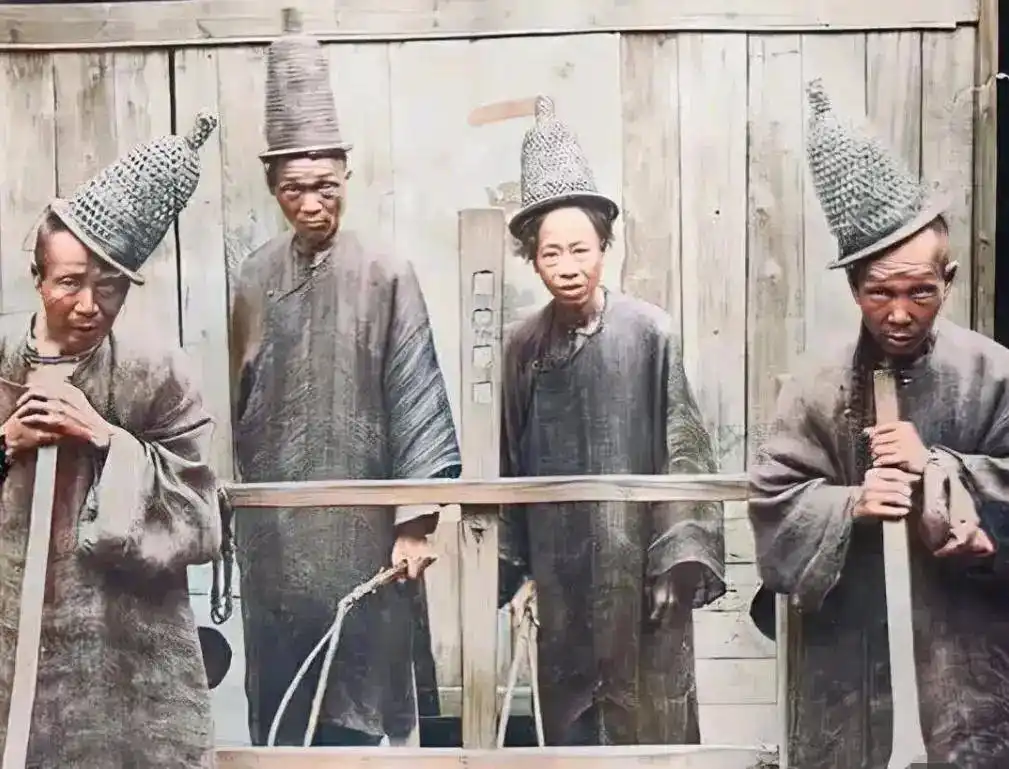
This picture is more important than official debt itself.
Before Du Fengzhi even sat in the Guangning county yamen, the Guangzhou silver shop owner had already done the math for this county. Tax sources, commerce, whether the post was good, roughly how much money per year, enough to repay debt—they had an estimate in mind.
What Du Fengzhi saw: Finally my turn to be an official.
What creditors saw: This position starts generating income.
Same thing, two valuations.
A person spending over twenty years studying hard finally sees a life's ideal; the financial market, at first glance, has already discounted that life's ideal into cash flow.
V. The Trickiest Part of a Late Qing County Yamen Was When Gray Was the Background Color
Our understanding today is simple: government money is government money, official salaries are official salaries, official business follows the budget. But the late Qing county yamen didn't distinguish so clearly.
County handling of cases, inspections, arrests, runners, private secretaries—all cost money, but the formal budget was never enough. The court certainly knew this, so in various aspects like levies, customary fees (*guifei*), fines, etc., they left a vast gray area. County tax and grain collection wasn't a state employee collecting and ending it; it was a whole batch of clerks, runners, and local people making a living around this process.
So why was there so much money in a county? Not because the magistrate's salary was especially high, but because taxes, judiciary, commerce, licenses, local governance—every transaction passed through here. The more functions a node bears, the more people surrounding the node naturally find ways to extract income from it.
That's also why just saying "late Qing officials had poor morals" can't explain this. It's not that systemic problems excuse individuals; they're still accountable. The problem is, if legal income and legal finances can't cover what the system requires you to do, and gray income is long tacitly used to fill the gap, eventually public and private inevitably stick together.
At the start, it might be "can't get this done without doing it this way"; later becomes "everyone's always done it this way"; then later becomes "since everyone takes, what's wrong with me taking a bit more."
Corruption often doesn't kick the door in. It first sits in the corner as "convenient for getting things done," but after sitting long, it doesn't leave.
If you pay close attention, you might be shocked: Isn't this somewhat similar to certain exchanges, DeFi protocol BDs (especially listing BDs), VCs taking deals, MM institution partners, etc.? Everything requires money, but the boss gives little, the official bill definitely can't cover it. Some even directly say don't use the official account, so what are you supposed to do?
VI. After Taking Office, Du Fengzhi Didn't Just Sit in the Yamen Waiting for Silver to Deliver Itself
After Du Fengzhi took office in Guangning, with such huge debts behind him, how was he to repay these usurious loans? Answer: Collection.
Before even warming his bed, Du Fengzhi had to rush nonstop to various places. Besides unfinished official debt from taking office, the county had tax and grain collection targets. He couldn't sit drinking tea in the yamen, waiting for villagers one day in a good mood to queue and pay owed grain. Diaries and later research show he personally went to the countryside to urge collection, spending considerable time on it.
At that time, urging grain in Guangdong counties wasn't like sending a reminder letter today. The county yamen would bring clerks, runners, caning personnel to the countryside. The area was large, population scattered; the government itself couldn't find every household, so had to rely on clans and local gentry. Which household owed grain? Couldn't find the person, find the clan; clan unresponsive, find the gentry. A gentry himself might have paid, but as long as the whole clan or village still had arrears, the government would still press him, because he was the node the government could grab and had ability to pressure. Analogy in crypto: when problems arise, the exchange finds market makers, project teams, KOLs taking ads, and so on.
This logic is actually very realistic. The county yamen couldn't reach every final payer, so had to rely on middle layers to transmit pressure. In today's crypto world, methods are completely different of course; projects won't arrest people or seal ancestral halls, but the organizational logic is somewhat similar: the project itself can't directly reach every user, so exchanges, market makers, communities, channels, partners, various BD people naturally grow in the middle. Projects need traffic, funds, users; these middle layers naturally become valuable.
VII. If Tax Grain Couldn't Be Collected, Du Fengzhi Really Would Seal the Ancestral Hall
The most fascinating part of "The Diary of Du Fengzhi" is seeing how far grain urging could go. If a clan owed tax grain, Du Fengzhi would seal the ancestral hall. Those with businesses, could seal shops. If the actual debtor in the clan couldn't be found, pressure clan members with status and influence who could be caught.
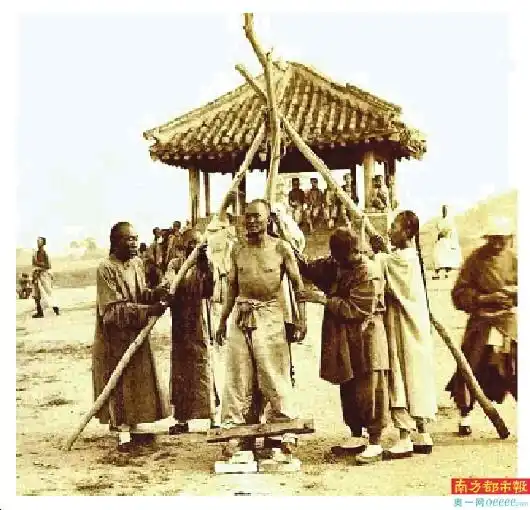
Why was this tactic powerful? Because the ancestral hall wasn't an ordinary building; it was the clan's public space, where ancestors, identity, face all converged.
In some Qing places, urging grain even involved seizing ancestral tablets first. You might not fear the county magistrate, but the whole village seeing ancestral tablets locked up by officials made it hard to pretend nothing happened. In today's terms, roughly like debt collectors pursuing your ancestral graves.
And there was the play of collective responsibility. In Guangning, there was a person surnamed Xie who had paid his own grain tax; what was owed was from ancestral jointly-owned property. Problem: too many brothers, troublesome for officials to find each one, so pressure first fell on the catchable person, letting him solve it with his brothers. Logic simple: I'm not unaware many truly owe, I just find someone enforceable first.
While collecting grain in Luoding, Du Fengzhi found some so-called "substantial households" (*yinding*) were actually poor as beggars; beating them to death wouldn't yield money. He judged in his diary, rather than pressuring these poor, "limiting gentry to investigate and press is more effective than limiting substantial households"—plainly, getting money from the rich is the way.
This is worth remembering. Because all hard targets eventually find someone enforceable. Higher-ups press the county yamen; the yamen presses down; too scattered below, press the gentry; gentry press within the clan. Pressure doesn't disappear, just transmits layer by layer downward.
And in crypto? Who can exchanges find?
Later, Du Fengzhi's grain urging methods became more direct. Debtors hiding, officials would find family, even use family pressure; sometimes sealing houses, sometimes threatening to tear down/burn dwellings, also prohibiting grain-owing households from holding operas to thank gods, harvesting late rice, forcing them to handle tax grain first.
Tax grain collection was a county magistrate's hard target; failure affected performance evaluations (*kaocheng*); Guangdong local governance itself was complex. Du Fengzhi's private debts, losses from first official post, family expenses, officialdom costs, plus the court's public duties requirements—all piled together, creating that state: public accounts need money, private accounts need money, the top only asks how much you deliver.
So Du Fengzhi became increasingly "diligent."
This diligence wasn't the inspirational kind of hard work, but the distress of interest chasing from behind.
VIII. So Project Teams Start Thinking of Every Way to Harvest the Future
Facing grain tax pressure, Du Fengzhi could go to the countryside, seal ancestral halls, pressure gentry, find clans, because feudal-era people couldn't run, ancestral halls were there, and Du had administrative (violent) power as backing.
What about those heavily indebted project teams? Know that balance sheet pressure is universal. Projects need to boost trading volume, increase liquidity, list on more platforms, create points, staking, airdrops, ecosystem incentives, constantly find new use cases. Done well, it's turning financing into real products, users, revenue; done poorly, start buying data with subsidies; worse, product fails, left only with stories, price, and financial engineering.
This also explains why some projects, after raising big money, enter an unstoppable state. One round talks infrastructure, next round starts talking ecosystem; ecosystem doesn't take off, talk consumption; consumption fails, hit AI hype, add AI; after a few months market hot topic changes, need another story. Not every pivot is fraud; startups adjust, but you must know, there's always a ledger chasing behind.
A completely unfunded small project can say, if it doesn't work out, forget it. A project that raised tens of millions, has dozens of funds in front, supports a large team, tokens ready to list—saying "forget it, let's stop"—how could it be that simple...
What to do? Project teams can only find all sorts of experts, whether market makers, communities, price callers, pump groups, whales, using various financial engineering methods to harvest unsuspecting market liquidity to recoup losses, repay debts.
Du Fengzhi himself later complained during career lows: debts, losses, family pressure all on him; if there was a way out, he'd rather have a few hundred *mu* of farmland than continue this "nine underworlds eighteen hells" business. Put this mindset today, many founders should understand: online every midnight, not necessarily all passion, sometimes just having walked this far, truly can't turn back.
This was common knowledge in the Qing, yet couldn't stop waves of young people taking exams, because everyone thought Du Fengzhi, a commoner, though his youthful hair turned white, ultimately succeeded. In one lifetime, as long as you can rise, achieve big results, do anything.
The imperial exam's most brilliant part wasn't its actual equality, but making society believe at least there was an upward path. Even if this path required twenty years studying, twenty years waiting, borrowing usury, networking, people still squeezed in. Because for many, the scariest wasn't this path being expensive, but besides this path, there simply was no other choice.
Epilogue
Finally, introducing another person: Du Lian, courtesy name Yaochuan, style name Lianqu, from Shangyu, Zhejiang, a Hanlin academician, later rose to Grand Secretary of the Neige and Vice Minister of Rites, official rank second-grade, served as Guangdong Education Commissioner (*Xuezheng*) during the Tongzhi reign. (The Education Commissioner was an imperial commissioner, high status in the province, second only to the General, Viceroy, Governor, above Provincial Administration and Surveillance Commissioners.)
Who was he? He was Du Fengzhi's "distant clan nephew" (distant relative of same clan). By clan seniority, Du Lian was actually a generation below Du Fengzhi, though Du Lian was over ten years older. Du Fengzhi studied under Du Lian in his youth; their relationship in Beijing during the waiting period was very close. Du Fengzhi's diary respectfully called him "Old Lian."
One story:
Later, Guangning had "examination disturbances." Du Fengzhi clashed with local gentry; things escalated potentially affecting his official hat. He quickly informed then Guangdong Education Commissioner Du Lian. Du Lian not only comforted him saying problem not big, but personally wrote to the Acting Provincial Administration Commissioner, helping smooth things. Finally, Du Fengzhi surprisingly wasn't dismissed. Though couldn't stay in Guangning, under Du Lian's "suggestion" and "arrangement," he was transferred to Sihui to continue as magistrate.