Israel-US-Iran Conflict Surpasses 100 Days, One Key to US-Iran Reconciliation Lies in Asset Unfreezing?

Odaily星球日报Published on 2026-06-10Last updated on 2026-06-10

Abstract

The U.S.-Israel-Iran conflict has surpassed 100 days, with peace talks remaining difficult. A key sticking point in U.S.-Iran negotiations is the approximately $24 billion in frozen Iranian assets, including around $1 billion in cryptocurrencies like USDT, BTC, and ETH seized by the U.S. Treasury. Iran demands at least 50% of its assets be unfrozen immediately upon any agreement, a condition U.S. President Trump has firmly rejected, insisting no sanctions will be lifted early. Trump's inconsistent statements about an imminent deal have complicated negotiations. Iran has proposed a four-phase peace plan, with the second phase focusing on core issues like asset unfreezing. Meanwhile, the U.S. is reportedly considering using the frozen Iranian funds to aid Gulf nations affected by the conflict. Analysts suggest the asset dispute and broader geopolitical tensions mean a pattern of "fighting while talking" is likely to continue, with the conflict having a general macro impact on crypto markets rather than causing direct sell-offs of specific assets.

Original | Odaily Planet Daily (@OdailyChina)

Author | Wenser (@wenser 2010 )
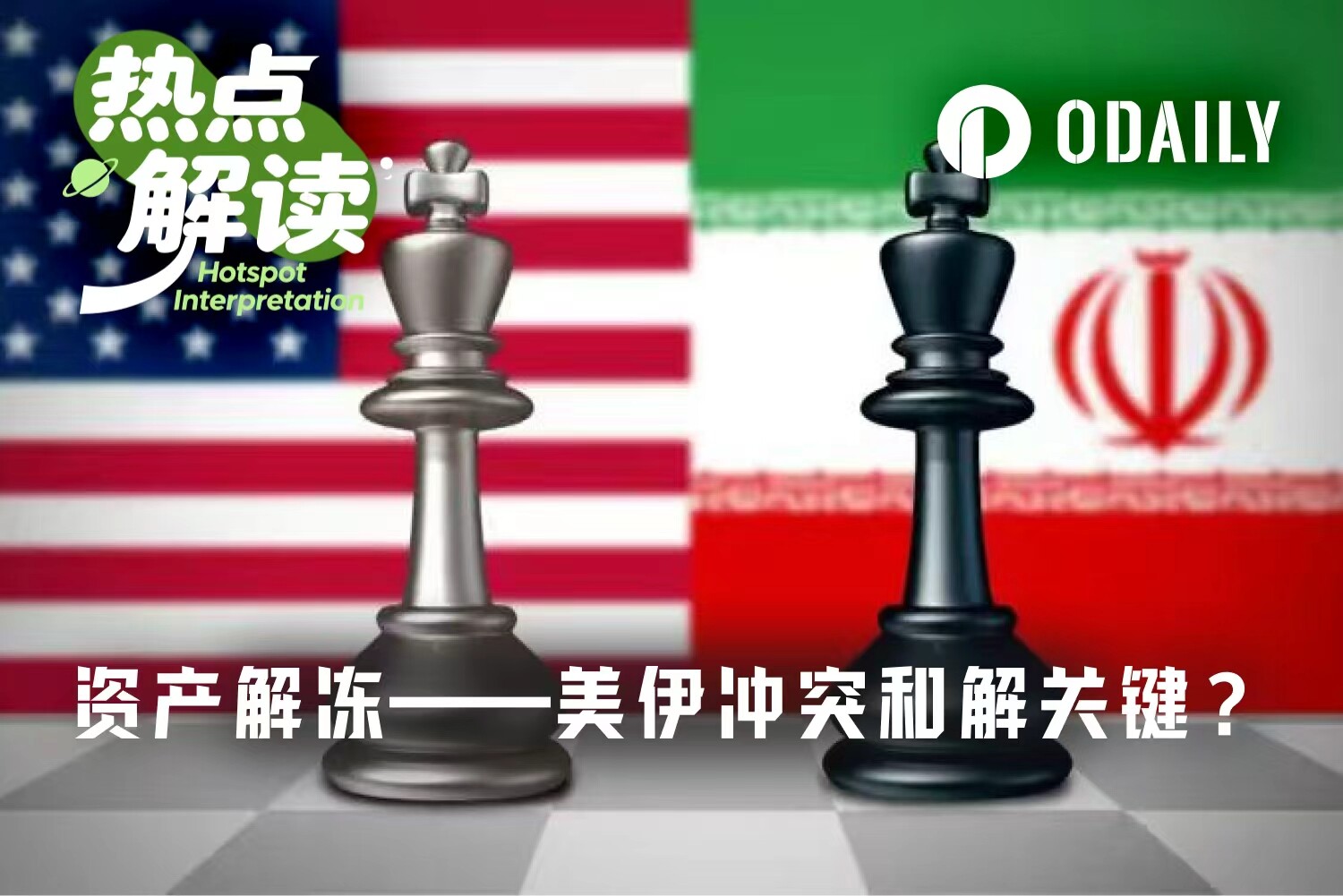
June 10th, the 103rd day since the outbreak of the US-Israel-Iran war, peace talks between the US and Iran remain arduous with no conclusion yet.

Today, following Israel's strike action against Iran, according to US officials, the US's third round of strikes against Iran has also commenced and swiftly concluded. Behind this century-defining conflict, the key to reconciliation is not only the deeper issues of Iran's nuclear weapons and uranium enrichment materials but also a current major sticking point between the two sides: the $24 billion worth of Iranian assets frozen by the US, including approximately $1 billion in crypto assets.

Where do these assets come from? What do the crypto assets include? Can the US and Iran reach an agreement on this matter going forward? These are the main topics we will explore in this article.

Trump's Laughably 'Hot-and-Cold' Duplicity: Coexisting Toughness and Compromise

Whether the US-Iran conflict can end through negotiations naturally hinges on the key figure, US President Trump. However, the businessman-turned-president Trump has a particularly flexible character and, compared to politician-type presidents, is more focused on practical interests. Therefore, his projected image is also extremely fragmented: on one hand, his public statements are sometimes tough, sometimes conciliatory; on the other hand, he is accustomed to setting up smokescreens, using pretexts like negotiations, reconciliation, and 'an agreement is about to be reached' to mislead Iran and even global news media, thereby achieving goals such as 'manipulating capital markets' and other undisclosed purposes.

According to CNN reports, since the outbreak of the Iran conflict on February 28th, Trump has made statements like 'a US-Iran agreement is about to be reached' more than 30 times (Odaily Planet Daily note: some say at least 37 times) on social media, in public appearances, and during phone interviews with reporters.

In view of this, Iran has also not harbored a 'quick-fix' fantasy about the peace talks, instead envisioning them as a four-stage plan.

On June 4th, according to reports from the Iranian media Fars News, Iran outlined a four-phase plan for an agreement with the United States:

  • The first phase focuses on a comprehensive cessation of military action on all fronts, including Iran, the United States, and the Axis of Resistance;
  • The core of the second phase is the implementation of measures for four key issues, including: the Strait of Hormuz and related mechanisms, lifting the blockade, canceling oil restrictions and sanctions, and unfreezing part of Iran's assets;
  • The third phase would initiate broader negotiations on sanctions and nuclear issues after objective and verifiable measures are implemented;
  • The fourth phase involves establishing a supervisory committee to monitor the implementation of the agreement and track the parties' compliance.

Previously, the US and Iran had ceased hostilities, but due to Israel attacking Iran again and the turbulent situation in Lebanon, the efforts of the first phase were temporarily thwarted; the second phase is now the main sticking point in the US-Iran talks.

Specific Amount of Frozen Iranian Assets: Iran Claims $24 Billion, US Confiscated $1 Billion in Crypto Assets

Previously, according to CNN, a US official familiar with the negotiations stated that one of the remaining key sticking points in the US-Iran negotiations is the issue of economic compensation, as Trump is eager to secure a deal perceived as superior to the agreement reached during the Obama administration.

The official said, Iran has informed mediators that once both sides agree on an initial Memorandum of Understanding, they want some form of economic compensation as soon as possible, not deferred to a future date. But officials in the Trump administration worry that unfreezing funds at such an early stage could alleviate the economic damage inflicted on Iran—this might eliminate, or at least weaken, a key leverage Washington holds over Tehran. This leverage would be crucial for the US entering the second phase of negotiations to discuss specific details of Iran's nuclear program. Trump has made clear to his team that he wants any deal to appear much tougher than the 2015 agreement and to avoid any action that could be interpreted as 'handing over large sums of cash'—a phrase Trump used to criticize Obama's decision to provide economic compensation to Iran.

On June 6th, media reports indicated that a potential US-Iran agreement depends on whether the US agrees to release $24 billion in frozen Iranian assets. This figure was later confirmed by Iranian officials.

That day, according to Iran's Tasnim News Agency, Iran's Deputy Foreign Minister for Legal and International Affairs, Kazem Gharibabadi, stated that at least 50% of Iran's frozen financial assets must be unfrozen immediately upon signing any Memorandum of Understanding with the US. He added that the remaining funds should be 'unfrozen within a limited time of one to two months after the agreement is signed.' Gharibabadi stated that these assets belong to Iran and were 'illegally frozen' by the US, and unfreezing them is a core requirement of any potential understanding. He said the remaining details of the access-to-funds mechanism, including technical and financial arrangements, would be negotiated further during the 60-day implementation period after the memorandum is signed.

However, this demand was immediately met with Trump's stern refusal: he stated he would not unfreeze Iranian assets or lift any sanctions in advance of any agreement.

In late May, US Treasury Secretary Scott Bessent stated in an interview with Fox News that the US had seized approximately $1 billion in Iranian crypto assets. Bessent said the action was part of sanctions against the Iranian regime and its proxy networks, and the funds had been frozen. This includes about $344 million worth of USDT stablecoin frozen by stablecoin issuer Tether in April this year, as well as other cryptocurrencies like BTC and ETH.

He stated that before the US Treasury Department intervened, the Iranian regime was stealing $400 to $500 million per month and distributing the money to dozens of senior officials. 'We are working with allies across Europe to seize various villas, houses, and properties,' Bessent explained. 'And this money was actually stolen from the Iranian people.' Additionally, according to Bitcoin News analysis, the figure Bessent initially disclosed in late April was 'close to $500 million,' while the latest figure as of May 29th has surpassed the $1 billion mark, indicating that the enforcement intensity of this operation, named 'Operation Economic Fury,' continues to increase.

It is worth mentioning that, according to Wikipedia, the US had previously even seized an Iranian government-owned skyscraper in Manhattan (valued at over $1 billion) and its accumulated rent (approximately $50 million).

Furthermore, according to the latest media reports, the US is considering using frozen Iranian assets to fund the reconstruction and repair work in Gulf countries affected by the 'US-Israel-Iran conflict.' According to informed sources, US Treasury Secretary Scott Bessent has directed relevant teams to assess the damage Iran has caused to Gulf allies. Additionally, the US is considering using frozen Iranian assets to compensate for potential future losses.

Considering all the above information, despite Trump stating last night that he was 'very close to a very good, strong, powerful agreement,' the US-Israel-Iran conflict will find it difficult to achieve reconciliation before the issues of compensation and the handling of frozen assets are determined.

As for the impact on crypto assets, it is largely confined to the macro landscape affecting the broader crypto market; the direct market-dumping impact on specific cryptocurrencies like BTC and ETH is relatively minor.

In the foreseeable future, although both sides hope to end this conflict quickly, constrained by conflicts of interest and the international situation, 'fighting while talking, talking while fighting' will likely remain the norm for the US, Iran, and even Israel.


Trending Cryptos

Related Questions

QAccording to the article, what is identified as a key obstacle in the US-Iran negotiations after the initial ceasefire?

AAccording to the article, a key obstacle in the US-Iran negotiations is the issue of Iran's frozen assets, specifically the process and timing of their unfreezing, with Iran demanding immediate access to at least 50% of the $24 billion in total.

QWhat are the four stages of the agreement plan outlined by Iran's Fars News, as mentioned in the article?

AAccording to Iran's Fars News, the four-stage plan is: 1) A comprehensive cessation of military operations on all fronts. 2) Addressing four key issues: mechanisms for the Strait of Hormuz, lifting the blockade, canceling oil restrictions/sanctions, and unfreezing part of Iran's assets. 3) Initiating broader talks on sanctions and nuclear issues after verifiable measures from stage 2 are implemented. 4) Forming a supervisory committee to oversee the implementation of the agreement.

QWhat amount of Iranian assets, particularly in cryptocurrency, did US Treasury Secretary Scott Bessent claim were seized by the United States?

AUS Treasury Secretary Scott Bessent stated that the United States had seized approximately $1 billion in Iranian cryptocurrency assets, which included around $344 million in USDT stablecoin frozen by Tether in April, as well as other cryptocurrencies like BTC and ETH.

QWhat was President Trump's reported reaction to Iran's demand for the immediate unfreezing of its assets?

APresident Trump reportedly rejected the demand, stating he would not unfreeze Iranian assets or lift any sanctions ahead of any agreement.

QHow does the article assess the potential impact of the US-Iran conflict on the cryptocurrency market, specifically on assets like BTC and ETH?

AThe article assesses that the impact of the conflict is primarily on the macro landscape of the cryptocurrency market, with minimal direct market 'dumping' pressure on specific coins like BTC and ETH.

Related Reads

Must-Watch Events Next Week|CLARITY Act Could Face Senate Vote; SpaceX, Circle to Report Earnings (8.3-8.9)

**Summary: Key Events and Developments to Watch (August 3-9)** The upcoming week is marked by significant financial disclosures, key legislative deadlines, and notable product updates. **Major Financial Events:** Several companies are scheduled to release their Q2 2026 earnings. American Bitcoin (ABTC) will report on August 3, followed by SpaceX and Hut 8 Mining Corp. on August 4, and Circle on August 5. Notably, a significant portion of SpaceX shares (up to 12% of total shares) will be unlocked on August 6 following their earnings release. **Key Legislative Deadline:** The U.S. Senate faces an August 7 deadline to secure 60 votes for the CLARITY Act, a bipartisan bill aiming to establish a federal regulatory framework for cryptocurrencies. The Senate may hold a full vote on the bill during the week. **Economic Data:** The U.S. July Non-Farm Payrolls report will be released on August 7, providing crucial labor market data. **Technology & Product Updates:** * **Shutdowns:** DeFi portfolio tracker Zapper and wallet app Ctrl Wallet will cease operations on August 3. * **Upgrades:** LayerZero will deprecate its v1 relayers on August 3. XRP Ledger's new version 3.3.0, featuring five new functions, is expected next week. * **AI:** Elon Musk announced that the advanced Grok 4.6 AI model is set for release around August 7. * **Bitcoin:** The BIP-110 forced signaling for a potential Bitcoin network change is scheduled to begin around August 8. **Other Notable Events:** Chinese robotics firm Unitree Tech has set its preliminary price inquiry for its IPO for August 5. South Korean exchange Upbit will delist AQT and AERGO tokens on August 3.

marsbit2h ago

Must-Watch Events Next Week|CLARITY Act Could Face Senate Vote; SpaceX, Circle to Report Earnings (8.3-8.9)

marsbit2h ago

Stocks Are Plummeting More Sharply Than Cryptocurrencies. Where Has the Money Gone?

Stock Markets Plunge Deeper Than Cryptocurrencies: Where Did the Money Go? In late July, Seoul's Kospi index triggered circuit breakers for two consecutive days, plummeting over 40% from its June high. The collapse was led by heavyweight stocks like SK Hynix, whose record profits still disappointed investors, and devastating leveraged ETFs, with one major product losing over 83% of its value. This signaled a global, forced deleveraging targeting the most crowded trades. Interestingly, while stocks exhibited extreme volatility akin to crypto markets, Bitcoin rose nearly 15% in July after a prior steep drop. Analysis shows the money fleeing equities did not flow into Bitcoin. Instead, Bitcoin had already absorbed its sell-off in May-June, when U.S. spot Bitcoin ETFs saw historic outflows. The true safe-haven beneficiary was gold, whose price rose over 20% year-on-year, highlighting a decoupling between Bitcoin and gold as "digital gold." The sell-off was a targeted unwinding of leveraged positions in tech and semiconductors, accelerated by broker-dealer risk management and shifts in the AI narrative, including new competition from Chinese memory chipmakers. The retreat path was clear: from high-valuation tech stocks to cash and U.S. Treasuries, then to gold. For Bitcoin to attract sustained institutional inflows, conditions like eased global liquidity pressure, a "soft-landing" Fed rate cut, and U.S. regulatory clarity via legislation like the stalled CLARITY Act are needed. Currently, Bitcoin is not a safe haven but an already-cleared asset. Its low correlation with tech stocks, however, makes it a potential diversification play for institutional portfolios once the storm passes. The money isn't here yet, but the positioning is underway.

marsbit2h ago

Stocks Are Plummeting More Sharply Than Cryptocurrencies. Where Has the Money Gone?

marsbit2h ago

In Conversation with Ray Dalio: We Are Currently in an AI Bubble, with 1% of My Portfolio in Bitcoin

Ray Dalio, founder of Bridgewater Associates, warns in an interview that the current AI boom shows classic bubble characteristics, which could lead to significant economic downturns as seen in past cycles like 1929 or 2000. He explains that speculative enthusiasm, fueled by debt and overvaluation, often precedes a crash when rising rates or taxation force asset sales, causing widespread losses and recession. Dalio also outlines his "Big Cycle" theory, describing an approximate 80-year pattern where widening wealth gaps, massive government deficits, and shifting geopolitical power (like China's rise) create internal conflict and global instability. He emphasizes that we are in a late-cycle, transitional phase where traditional powers like the US and UK face decline. For personal wealth protection, Dalio advises diversification beyond cash into assets like stocks, bonds, real estate, and particularly gold, which he prefers over Bitcoin. While he holds about 1% of his portfolio in Bitcoin as a non-printable hard asset, he views gold as more secure from technological or governmental threats. Regarding AI's impact, Dalio believes it will disproportionately benefit capital owners, worsening inequality by replacing both physical and cognitive labor. He suggests that human intuition and emotional intelligence, combined with AI, will be key for future workers. On taxation, Dalio argues that wealth taxes are impractical and risk triggering asset sell-offs, reducing productive investment. He points to the UK as a cautionary example of debt, low productivity, and political strife. Geopolitically, Dalio foresees a more regionalized world, with the US showing weakness in prolonged conflicts like with Iran, akin to past imperial declines. The ideal outcome, he suggests, is coexisting powerful blocs (e.g., Americas, China-Asia Pacific) without major war.

marsbit5h ago

In Conversation with Ray Dalio: We Are Currently in an AI Bubble, with 1% of My Portfolio in Bitcoin

marsbit5h ago

Trading

Spot

Hot Articles

How to Buy ONE

Welcome to HTX.com! We've made purchasing Harmony (ONE) simple and convenient. Follow our step-by-step guide to embark on your crypto journey.Step 1: Create Your HTX AccountUse your email or phone number to sign up for a free account on HTX. Experience a hassle-free registration journey and unlock all features.Get My AccountStep 2: Go to Buy Crypto and Choose Your Payment MethodCredit/Debit Card: Use your Visa or Mastercard to buy Harmony (ONE) instantly.Balance: Use funds from your HTX account balance to trade seamlessly.Third Parties: We've added popular payment methods such as Google Pay and Apple Pay to enhance convenience.P2P: Trade directly with other users on HTX.Over-the-Counter (OTC): We offer tailor-made services and competitive exchange rates for traders.Step 3: Store Your Harmony (ONE)After purchasing your Harmony (ONE), store it in your HTX account. Alternatively, you can send it elsewhere via blockchain transfer or use it to trade other cryptocurrencies.Step 4: Trade Harmony (ONE)Easily trade Harmony (ONE) on HTX's spot market. Simply access your account, select your trading pair, execute your trades, and monitor in real-time. We offer a user-friendly experience for both beginners and seasoned traders.

4.7k Total ViewsPublished 2024.03.29Updated 2026.06.02

How to Buy ONE

Discussions

Welcome to the HTX Community. Here, you can stay informed about the latest platform developments and gain access to professional market insights. Users' opinions on the price of ONE (ONE) are presented below.

活动图片