Interview with MicroStrategy CEO: Beyond the 32 BTC Selling Stir, 6 Trillion AI Agents are the Ultimate Endgame for Bitcoin

marsbitPublished on 2026-06-23Last updated on 2026-06-23

Abstract

Interview with Strategy CEO: Beyond the 32 BTC Sale, 6 Trillion AI Agents are Bitcoin's Ultimate Endgame Strategy CEO Phong Le discusses the recent sale of 32 BTC, clarifying it was a minor, strategic move to demonstrate operational liquidity and internal process robustness to creditors and rating agencies, not a reaction to market fears. He emphasizes Strategy's disciplined, data-driven decision-making framework involving its board and complex financial modeling, distancing the company from centralized "black box" operations seen elsewhere in crypto. Le outlines the company's resilience and long-term focus, citing the "doing nothing" strategy during the 2022 bear market as a testament to its conviction in Bitcoin's underlying value proposition for global sovereignty and freedom. He reveals that generative AI was instrumental in developing their Stretch (STRC) preferred stock product, cutting development time from years to months. The most visionary part of the discussion centers on Agentic AI. Le envisions a future with 6 trillion autonomous AI agents conducting commerce, particularly in off-world environments like Mars, which would naturally adopt decentralized crypto rails and seek yield-bearing assets like Bitcoin as a core store of value. Finally, Le addresses the STRC product, expressing confidence it will return to its $100 par value through reserve replenishment and the initiation of dividend payments, and dismisses concerns about competition with stablecoins. He ...

Author|Coinage

Compilation| WuBlockchain

Market Reaction and Long-term Logic: In the Short Term It's a Voting Machine, in the Long Term It's a Weighing Machine

Zack Guzman: This sale of 32 bitcoins has garnered global attention. Facing various market reactions, what's the one point you most want to clarify?

Phong Le:There's an old Wall Street saying: 'In the short run, the market is a voting machine, but in the long run, it is a weighing machine.' We are not seeking votes on 'how we increase our bitcoin per share,' we are just transparently providing KPIs and a long-term perspective. There will always be short-term overreactions, but I don't spend much time scrolling through every comment on X (Twitter). We make decisions through the lens of daily, annual, and long-term perspectives, and the long-term lens is the most important.

Our focus is whether we continue to create value for different classes of shareholders, such as common stock shareholders, preferred shareholders, debt holders, etc., while also advancing the Bitcoin ecosystem itself. This isn't even our first time selling bitcoin; we sold about $2.5 million worth of bitcoin in 2022 and bought back later. This time we similarly sold 32 bitcoins (about $2.5 million), bought back about $100 million last week, and bought back about $1.5 billion the week before. We voluntarily disclose this information weekly through our 8-K filings. As the world's largest corporate holder of bitcoin, bearing both positive and negative market feedback is the responsibility that comes with our transparency.

Proving Liquidity to the Market: Debunking the "Death Spiral" Narrative

Zack Guzman: Some view this sale as 'inoculating' the market. Others compare you to Terra, worrying that STRC (Strategy Preferred Stock, i.e., the preferred share product Stretch), when leveraged by other DeFi protocols, could trigger a cascading sell-off 'death spiral.' Were these the concerns you heard before selling?

Phong Le: That was not a driving factor at all. We are not worried about DeFi protocols built on STRC causing a cascading collapse because about 80% of STRC is held by retail investors, and a significant portion by long-term holding institutions. The proportion held by DeFi protocols is very small, less than 10%.

When we talk about 'inoculating the market,' it mainly has two meanings: First, our debt holders (digital credit and bond holders) wanted confirmation that, given nearly 100% of our assets are bitcoin, we have the capability and willingness to use these assets if needed to pay dividends or for other purposes. At the same time, rating agencies want to see that we won't sell bitcoin arbitrarily. So we made a small sale once, to prove to creditors that we *can* sell, and to prove to rating agencies that we have discipline. Second, to test internal business processes. We disclosed custodian information but not specific bitcoin addresses. Once we move bitcoin from cold storage to a hot wallet, countless people in the market will be watching, trying to guess which wallets are ours. We wanted to see how the entire selling process operates in a real environment and the market's reaction. Hopefully, in the future, the market won't make a fuss when we sell a few million dollars worth of bitcoin.

Farewell to the Black Box: Michael Saylor and MicroStrategy's Decision-Making Mechanism

Zack Guzman: We've seen all sorts of experiments in the crypto space. Frankly, we've also reported on founders with highly concentrated power like SBF and Do Kwon. But MicroStrategy is different. How exactly was a decision like 'selling 32 bitcoins' made internally?

Phong Le: As a well-known Nasdaq-listed company, Michael Saylor no longer holds a majority stake. We have 8 board members, and we have common shareholders, preferred shareholders, and debt holders. To some extent, we are also responsible to the broader crypto community.

At a macro level, every quarter we discuss the 'optionality' of capital with the board in earnings calls—we can issue stock, preferred shares, convertible bonds, buy or sell bitcoin, or repurchase bonds. After reaching consensus at this level, we move to the execution layer. At a micro level, we run extremely complex financial models every month, analyzing the impact of different actions on equity quality and credit quality; every week, Michael and I discuss the week's goals; every morning, we confirm daily instructions with the treasury team, investor relations team, and traders. We even use sentiment analysis from Grok on platform X, website traffic, and MicroStrategy App usage data to assist in decision-making. This is definitely not a whimsical decision; it's the rigorous approach expected from a data analytics company.

Funding Mechanisms and the Highest-Order Philosophy: "Doing Nothing"

Zack Guzman: Besides bitcoin, if STRC continues to trade below par value, what other funding mechanisms might you utilize in the future?

Phong Le: We have many options: issuing more stock (our stock trades $2.7 billion daily, one of the most liquid stocks globally), issuing other preferred shares, or issuing more convertible debt—the market is very open to us. But I want to emphasize one point: we currently hold 845,000 bitcoins. We can fully choose to 'do nothing.' This was our core strategy during the 2022 bear market: we repaid some senior secured notes and bitcoin-backed debt, and then just sat quietly on this massive bitcoin treasury. As bitcoin rebounded, the company's valuation and bitcoin per share naturally rose. In a bear market, the most dangerous temptation is often to 'do something,' like large-scale panic selling, but we would never do that. 'Doing nothing' is an extremely important strategic option for us.

Confronting Volatility and Conviction: Great Companies Have All Had "Near-Death Experiences"

Zack Guzman: When you choose to 'do nothing,' watching unrealized losses accumulate to billions of dollars, how do you personally feel?

Phong Le: People sometimes forget that this company, formerly known as MicroStrategy, was founded by Michael Saylor in 1989, went public in 1998, and we only added bitcoin to the balance sheet in 2020. In the 31 years from 1989 to 2020, our Executive Chairman has extensive experience leading the company through countless ups and downs. This is precisely the foundation of the company's resilience and strength. I've been CFO since 2015 and took over as CEO in 2022, so I've also weathered 11 years of storms. Michael's hair has turned a lot grayer, and so has mine.

Look at Amazon—it couldn't be what it is today without going through a few near-death experiences and intense volatility; Tesla also had its 'funding secured' tweet storm. 2022 was indeed a difficult period, but it also forged resilience for those who persevered. Why am I unwavering? Because I believe in the underlying logic. I believe bitcoin can create sovereignty and freedom for people worldwide, that it's a better way to move money digitally, a programmatically superior scarce asset. Just like Jeff Bezos believed Amazon could create real value for hundreds of millions of consumers, as long as you believe in the underlying logic, all other volatility will fall into place.

The Evolution of AI: From Creating STRC to 6 Trillion Agents Trading on Mars

Zack Guzman: Rumors suggest the STRC product was inspired by internal AI tool exploration. What other long-term plans do you have regarding the intersection of AI and finance?

Phong Le: Yes. When generative AI first appeared, people thought it could only write meeting minutes. But we discovered it could help us design revolutionary products that would normally take months or be outright rejected by lawyers and banks. AI helped us find relevant case law and financial KPIs, reducing STRC's development cycle from three years to eight months.

But this is just the beginning. What's more exciting is Agentic AI. Internally, we are deploying agents to automatically summarize information, fix code (self-healing code), etc. Ultimately, the world will evolve from 6 billion humans to 6 trillion autonomous decision-making agents—imagine SpaceX deploying a million humanoid robots on Mars and the Moon. When they engage in commercial interactions and value exchange, they absolutely will not use traditional financial networks like Visa, Mastercard, or SWIFT. Instead, they will use decentralized crypto rails and seek high-yield products with bitcoin as the underlying store of value. This is an immeasurably huge positive for the crypto world and bitcoin.

Bridging the Divide: Crypto Fundamentalism vs. Capital Markets

Zack Guzman: There's always been a sense of division in the crypto world: one faction are 'fundamentalists' who only believe in bitcoin, while another deeply understands the necessity of connecting to traditional capital markets. How does MicroStrategy balance these two?

Phong Le: When I deeply engaged with bitcoin, I wanted to promote it to everyone around me, but I never required them to pass an IQ test or a loyalty test, nor did I ask about their religion, nationality, sexual orientation, or professional background. If bitcoin is to win the world, it must allow as many people as possible to gain exposure in various ways. Whether through self-custody with a hard wallet, buying on Coinbase, holding MicroStrategy stock, holding STRC, or through DeFi protocols, ETFs—these are all good ways to spread bitcoin. Our philosophy is: 'Spread Bitcoin with love.'

Can STRC Return to Its $100 Par Value?

Zack Guzman: Will STRC compete with USDC/USDT in the stablecoin market? What's your roadmap for it returning to its $100 par value?

Phong Le: STRC is only 10 months old, while bitcoin is 18 years old. It's still in its infancy, and we are still learning and perfecting it. Our goal is for it to trade between $99 and $101. Recently, we used our dollar reserves to repurchase $1.5 billion in convertible bonds, which reduced reserves and temporarily put pressure on STRC's price. Next, we will replenish reserves, and with the first semi-monthly dividend payment mechanism starting on June 30th, it will gradually return to par value. The product is extremely over-collateralized; paying dividends is not a problem at all and doesn't keep me up at night.

Closing the Polymarket Controversy

Zack Guzman: There was huge controversy on Polymarket about whether you 'sold bitcoin before May 31st.' Did you really sell?

Phong Le: I followed the whole process. I can state clearly: We did sell bitcoin in the week before May 31st and truthfully recorded it in the 8-K filing released at 8 a.m. the following Monday. As for how prediction markets interpret contracts, that's their business, but I am very clear about what the company actually did internally.


Trending Cryptos

Related Questions

QWhat were the two main reasons behind Strategy's recent sale of 32 BTC, as explained by CEO Phong Le?

APhong Le stated there were two main reasons for the 32 BTC sale: 1. To demonstrate to their creditors (debt and bond holders) that the company is both willing and able to liquidate a portion of its Bitcoin holdings if needed for purposes like dividend payments, while simultaneously showing credit rating agencies that they exercise disciplined discretion in doing so. 2. To test their internal operational process for moving Bitcoin from cold storage and selling it in a live market environment, observing the market's reaction to better understand the dynamics for any future small-scale sales.

QHow does Strategy approach its decision-making process regarding Bitcoin and financial operations?

AStrategy employs a multi-layered, data-driven decision-making process. At the macro level, the board of directors (which includes 8 members, as Michael Saylor no longer holds a majority stake) discusses strategic financial options quarterly. Execution involves complex monthly financial modeling, weekly goal-setting discussions between the CEO and Executive Chairman, and daily instructions from teams. They also utilize data analytics, including AI tools like Grok for sentiment analysis, website traffic, and app usage data to inform decisions, contrasting with centralized, impulsive leadership models seen elsewhere in crypto.

QWhat is Phong Le's perspective on the role of AI, particularly 'Agentic AI,' in the future of Bitcoin and finance?

APhong Le views AI evolution as central to Bitcoin's long-term potential. He describes a future where the world evolves from 6 billion humans to 6 trillion autonomous decision-making AI agents. These agents, such as humanoid robots deployed on Mars or the Moon by companies like SpaceX, will require a decentralized financial network for value exchange. He argues they will naturally use cryptocurrency rails and seek high-yield products underpinned by Bitcoin as a store of value, representing a monumental, immeasurable benefit for the Bitcoin ecosystem.

QWhat is Strategy's philosophy for spreading Bitcoin adoption, and how does it relate to products like STRC?

AStrategy's philosophy is 'Spread Bitcoin with love.' They believe Bitcoin must be made accessible to as many people as possible in various ways, without imposing loyalty or 'purity' tests. Whether through self-custody, exchanges like Coinbase, holding Strategy stock, their STRC preferred shares, DeFi protocols, or ETFs, all are considered valid methods for gaining Bitcoin exposure. This inclusive approach aims to bridge the gap between crypto purists and traditional capital markets.

QHow does Phong Le respond to concerns about STRC's price being below its $100 face value, and what is the plan to address it?

APhong Le acknowledges STRC is a young product (10 months old) and they are still learning. He states the goal is for it to trade between $99 and $101. The recent price pressure was partly due to the company using its dollar reserves to repurchase $1.5 billion in convertible notes. The plan is to replenish those dollar reserves. Additionally, he highlights that the inaugural semi-monthly dividend payment mechanism beginning June 30th will contribute to the product gradually returning to its face value. He emphasizes that STRC is extremely over-collateralized, so dividend payments are not a concern.

Related Reads

After Missing the 20x, I've Found a 'Dumb' Method for AI Investing

**Missing the 20x Opportunity: A Simple 'Dumb' Approach to AI Investing** The AI boom, driving NVIDIA's revenue from $60B to $216B in two years, creates immense investment pressure. However, like the internet bubble of 2000, the largest AI opportunities likely lie ahead, perhaps after a correction. Instead of rushing in now or waiting paralyzed for a crash, the author proposes a third way: building a "knowledge warehouse" by systematically mapping the AI industry to be ready when opportunities arise. The core of the strategy is understanding AI's four-layer value chain: 1. **Compute Infrastructure (The "Engine"):** This foundational layer, where all money eventually flows, includes: a) **Chip Design:** NVIDIA's dominance via its CUDA ecosystem, b) **Chip Manufacturing/Packaging/Memory:** TSMC's near-monopoly in advanced manufacturing and SK Hynix's lead in High Bandwidth Memory (HBM), c) **Optical Interconnects:** Essential for large-scale AI clusters (e.g., Lumentum, Coherent), d) **Cooling & Power:** Critical for high-density AI data centers (e.g., Vertiv), e) **Servers/Data Centers & Cloud Platforms:** The physical and virtual wholesale providers. 2. **Models & Tools (The "OS"):** The competitive layer of foundation models (OpenAI, Anthropic, Google, Meta, xAI), now generating real revenue. A key shift is the center of gravity moving from **Training** models to **Inference** (running models), which demands different chip characteristics and could challenge NVIDIA's monopoly. 3. **Middleware & Platform ("The Glue"):** Connects models and applications (e.g., Scale AI, Hugging Face). This layer could explode if applications take off. 4. **Vertical Applications ("The Cash Register"):** Where AI meets end-users (e.g., enterprise AI, coding tools, medical AI, robotics). A critical cross-cutting constraint is **Energy**, as AI's massive power consumption drives investment in nuclear and other energy infrastructure. The author identifies four key questions for further research: 1) How will the shift from Training to Inference reshape the competitive landscape? 2) With tech giants spending over $600B on capex, where is the ROI from AI applications? 3) What are the under-the-radar opportunities in the "second" and "third" circles of the value chain (e.g., cooling, specialty foundries)? 4) How will geopolitics (e.g., U.S.-China chip restrictions) bifurcate the supply chain? The conclusion is that missed opportunities stem from insufficient research, not slow timing. By methodically studying each layer—its business models, competition, and valuations—investors can build the "killer intuition" needed to act decisively when the market presents its chance.

marsbit5m ago

After Missing the 20x, I've Found a 'Dumb' Method for AI Investing

marsbit5m ago

Rented Faith: How Much of the Bitcoin ETF Inflows Is Real Money?

"Rented Conviction: How Much of Bitcoin ETF Flows Is Real Money" The weekly inflows into Bitcoin ETFs are often interpreted as a gauge of institutional belief. However, a significant portion of this activity is driven by a hidden arbitrage trade, not directional conviction. The core mechanism is a cash-and-carry arbitrage: traders buy spot Bitcoin (often via ETFs) while simultaneously shorting CME futures to lock in the price difference, or "basis." This delta-neutral trade is essentially an interest rate play. In weekly data, about half the fluctuation in ETF flows can be explained by new short positions added by leveraged funds (hedge funds), with a correlation of 0.70. Bitcoin's price movement in a given week shows no statistical power in predicting these flows. While this arbitrage trade drives weekly *volatility*, it is not the main component of the cumulative *stock*. Of the total ~$55 billion in net ETF inflows, the current net arbitrage position is only about $1 billion. The remainder is steady, directional buying averaging ~$400 million per week, which constitutes the vast majority of the accumulated "mountain" over two years. Thus, ETF flow data overstates the *volatility* of conviction, not its *level*. This arbitrage trade has been unwinding for nearly two years. Leveraged fund short positions peaked at ~$14 billion in late 2024 and have since declined to ~$4.5 billion. When the basis compresses to unprofitable levels, ETF inflows and short positions retreat together. Recent outflows should not be mistaken for a loss of faith but rather the routine unwinding of this rate trade. For Ethereum ETFs, the pattern is weaker. Accounting for staking yield makes the basis often negative, so neither strong conviction buying nor robust arbitrage supports its flows. To interpret ETF flows correctly, monitor the CME basis versus T-bill rates and leveraged fund net shorts. They reveal how much of the next "demand" headline is real. The real, patient buy-and-hold demand is what constitutes the enduring bulk of ETF assets.

marsbit52m ago

Rented Faith: How Much of the Bitcoin ETF Inflows Is Real Money?

marsbit52m ago

Soaring Over Tenfold Within the Year: The Frenzy Over SK Hynix Leveraged Products

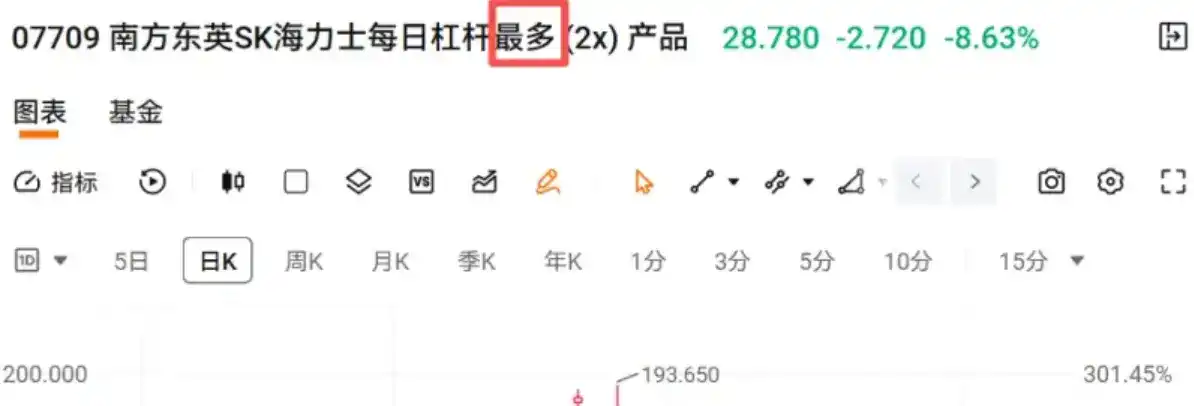
South China Morning Post The leveraged ETF tracking SK Hynix has surged over tenfold year-to-date, fueled by intense market speculation on the memory chip sector. By June 22, the value of the 'South Korea 2x Long SK Hynix ETF' listed in Hong Kong had skyrocketed by more than 1,061% since the start of the year, while its asset size exploded over twenty times from the end of last year. The rally is driven by AI-driven demand for high-bandwidth memory (HBM), with SK Hynix recently sampling its next-generation HBM4E product. However, industry professionals warn of significant risks. Leveraged ETFs magnify both gains and losses. During a recent market correction, while the underlying SK Hynix stock fell 19.1%, its double-leveraged ETF dropped nearly 38%. Korean regulators noted that such products could theoretically lose 60% in a single day. Additionally, these ETFs face risks like time decay in volatile markets, liquidity spirals during mass redemptions, and extreme price dislocations from market-making failures, as seen in early June when an ETF moved opposite to its underlying stock. The trading is predominantly driven by retail investors, with institutional capital largely absent due to the products' high volatility. Analysts caution that with the semiconductor sector at elevated valuations and facing geopolitical and supply chain uncertainties, leveraged ETFs pose a substantial threat of amplified losses for uninformed investors.

marsbit1h ago

Soaring Over Tenfold Within the Year: The Frenzy Over SK Hynix Leveraged Products

marsbit1h ago

Trading

Spot
Futures

Hot Articles

What is $BITCOIN

DIGITAL GOLD ($BITCOIN): A Comprehensive Analysis Introduction to DIGITAL GOLD ($BITCOIN) DIGITAL GOLD ($BITCOIN) is a blockchain-based project operating on the Solana network, which aims to combine the characteristics of traditional precious metals with the innovation of decentralized technologies. While it shares a name with Bitcoin, often referred to as “digital gold” due to its perception as a store of value, DIGITAL GOLD is a separate token designed to create a unique ecosystem within the Web3 landscape. Its goal is to position itself as a viable alternative digital asset, although specifics regarding its applications and functionalities are still developing. What is DIGITAL GOLD ($BITCOIN)? DIGITAL GOLD ($BITCOIN) is a cryptocurrency token explicitly designed for use on the Solana blockchain. In contrast to Bitcoin, which provides a widely recognized value storage role, this token appears to focus on broader applications and characteristics. Notable aspects include: Blockchain Infrastructure: The token is built on the Solana blockchain, known for its capacity to handle high-speed and low-cost transactions. Supply Dynamics: DIGITAL GOLD has a maximum supply capped at 100 quadrillion tokens (100P $BITCOIN), although details regarding its circulating supply are currently undisclosed. Utility: While precise functionalities are not explicitly outlined, there are indications that the token could be utilized for various applications, potentially involving decentralized applications (dApps) or asset tokenization strategies. Who is the Creator of DIGITAL GOLD ($BITCOIN)? At present, the identity of the creators and development team behind DIGITAL GOLD ($BITCOIN) remains unknown. This situation is typical among many innovative projects within the blockchain space, particularly those aligning with decentralized finance and meme coin phenomena. While such anonymity may foster a community-driven culture, it intensifies concerns about governance and accountability. Who are the Investors of DIGITAL GOLD ($BITCOIN)? The available information indicates that DIGITAL GOLD ($BITCOIN) does not have any known institutional backers or prominent venture capital investments. The project seems to operate on a peer-to-peer model focused on community support and adoption rather than traditional funding routes. Its activity and liquidity are primarily situated on decentralized exchanges (DEXs), such as PumpSwap, rather than established centralized trading platforms, further highlighting its grassroots approach. How DIGITAL GOLD ($BITCOIN) Works The operational mechanics of DIGITAL GOLD ($BITCOIN) can be elaborated on based on its blockchain design and network attributes: Consensus Mechanism: By leveraging Solana’s unique proof-of-history (PoH) combined with a proof-of-stake (PoS) model, the project ensures efficient transaction validation contributing to the network's high performance. Tokenomics: While specific deflationary mechanisms have not been extensively detailed, the vast maximum token supply implies that it may cater to microtransactions or niche use cases that are still to be defined. Interoperability: There exists the potential for integration with Solana’s broader ecosystem, including various decentralized finance (DeFi) platforms. However, the details regarding specific integrations remain unspecified. Timeline of Key Events Here is a timeline that highlights significant milestones concerning DIGITAL GOLD ($BITCOIN): 2023: The initial deployment of the token occurs on the Solana blockchain, marked by its contract address. 2024: DIGITAL GOLD gains visibility as it becomes available for trading on decentralized exchanges like PumpSwap, allowing users to trade it against SOL. 2025: The project witnesses sporadic trading activity and potential interest in community-led engagements, although no noteworthy partnerships or technical advancements have been documented as of yet. Critical Analysis Strengths Scalability: The underlying Solana infrastructure supports high transaction volumes, which could enhance the utility of $BITCOIN in various transaction scenarios. Accessibility: The potential low trading price per token could attract retail investors, facilitating wider participation due to fractional ownership opportunities. Risks Lack of Transparency: The absence of publicly known backers, developers, or an audit process may yield skepticism regarding the project's sustainability and trustworthiness. Market Volatility: The trading activity is heavily reliant on speculative behavior, which can result in significant price volatility and uncertainty for investors. Conclusion DIGITAL GOLD ($BITCOIN) emerges as an intriguing yet ambiguous project within the rapidly evolving Solana ecosystem. While it attempts to leverage the “digital gold” narrative, its departure from Bitcoin's established role as a store of value underscores the need for a clearer differentiation of its intended utility and governance structure. Future acceptance and adoption will likely depend on addressing the current opacity and defining its operational and economic strategies more explicitly. Note: This report encompasses synthesised information available as of October 2023, and developments may have transpired beyond the research period.

431 Total ViewsPublished 2025.05.13Updated 2025.05.13

What is $BITCOIN

Discussions

Welcome to the HTX Community. Here, you can stay informed about the latest platform developments and gain access to professional market insights. Users' opinions on the price of BTC (BTC) are presented below.

活动图片