Institutional Dawn and the End of Cycles: Deciphering the Core Narratives and Divergences of Eight Top Crypto Institutions for 2026

深潮Published on 2025-12-27Last updated on 2025-12-27

Abstract

The 2026 crypto market is shifting from a retail-driven, halving-based cycle to an institutional era, according to eight major crypto institutions. The traditional four-year cycle is breaking as Bitcoin ETFs shift demand from miners to institutional allocation. Bitcoin's volatility is predicted to drop below Nvidia's, signaling its maturation as a hedge against inflation. Key consensus narratives include: - Stablecoins surpassing $1T in market cap, potentially overtaking traditional payment networks like ACH. - AI agents driving micro-payments via protocols like Google’s AP2 and Coinbase’s x402, with "KYA" (Know Your Agent) replacing KYC. - Prediction markets growing to $100B+ in volume, fueled by regulatory advantages. Major divergences exist: - Digital Asset Treasuries (DATs) face a potential "great cleansing" with many failing, though some dismiss their impact. - Quantum computing is seen as an urgent threat by some but a non-issue by others. - Most Layer 2 chains may become "zombie chains" as liquidity consolidates to leaders. Non-consensus predictions include a privacy token resurgence, regulated ICOs returning, and crypto stocks outperforming tech giants. Investors must focus on blue-chip assets, real yields, and discerning long-term trends from short-term noise.

Author:Bruce

Introduction: From "Wild West" to "Wall Street Branch"

2026 may be recorded as a watershed moment in cryptocurrency history. If previous bull-bear cycles were "Wild West" stories dominated by retail sentiment and the Bitcoin Halving mechanism, then the latest research reports from eight top crypto institutions collectively point to a new narrative—the formal establishment of the institutional era.

Fidelity stated bluntly in its report that the market is entering a "New Paradigm." With the entry of sovereign national reserves (such as legislative attempts in Brazil and Kyrgyzstan) and traditional wealth management institutions, the "four-year cycle theory" based solely on historical data is becoming obsolete. This article will cut through the market noise and deeply analyze the certain opportunities and potential risks as seen by these top institutions.

I. Macro Outlook: The Demise of the Four-Year Cycle and New Asset Attributes

For a long time, the crypto market has been accustomed to making linear extrapolations based on Bitcoin's four-year halving cycle. However, this logic was collectively "dimensionally reduced" in the 2026 outlook.

1. Broken Cycle

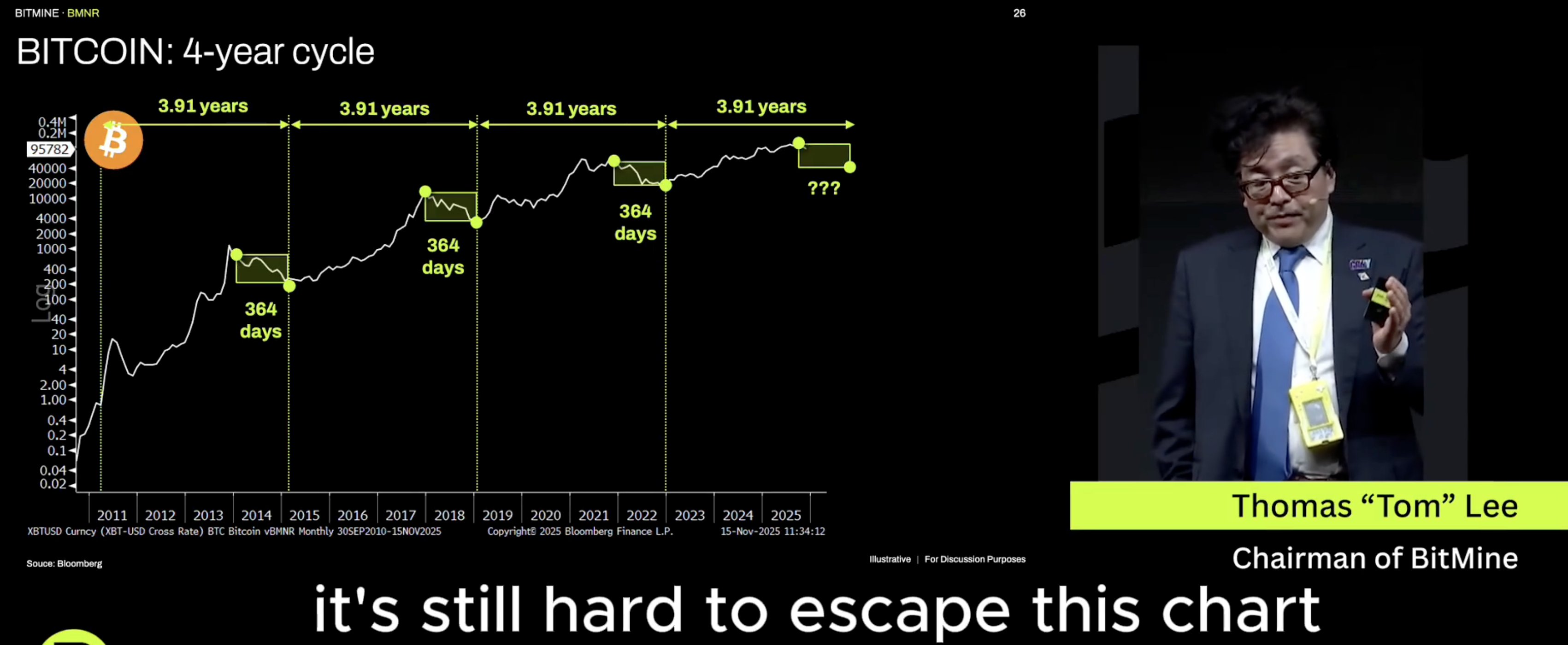
Bitwise, Fidelity, and Grayscale reached a consensus: the halving effect is diminishing at the margin.

21Shares used explicit wording—"Bitcoin's four-year cycle is broken." Their data model shows that the introduction of ETFs has fundamentally altered the demand structure, shifting the market's driving force from the supply side (miner halvings) to the demand side (institutional allocation). When BlackRock and Fidelity's clients begin allocating BTC quarterly, the story of a halving every four years is no longer compelling.
2. Asset Maturation: "Desensitization" of Volatility

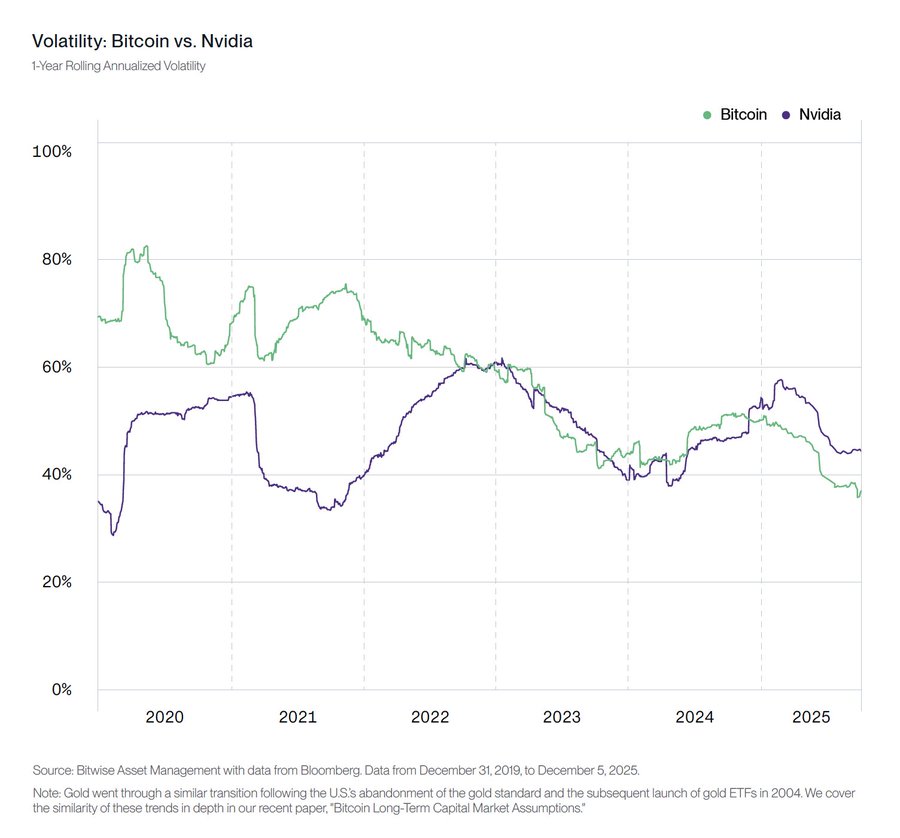
  • Bitwise's Bold Quantification: Bitwise made a highly impactful prediction—by 2026, Bitcoin's volatility will, for the first time, be lower than Nvidia's. This is not just a numbers game but marks Bitcoin's transformation from a "high-beta tech stock" to a "mature safe-haven asset."

  • Fidelity's Qualitative View: Although not providing specific numbers, Fidelity emphasized that against the backdrop of high global debt and fiat currency depreciation, Bitcoin will decouple its correlation with tech stocks and become an independent hedging tool against monetary inflation globally.
II. High-Confidence Narratives: Where Is the Money Flowing?

After excluding cycle interference, the institutions, while differing in details, highly align on the logic of capital flow.

1. Stablecoins: Challenging Traditional Financial Infrastructure (ACH)

If Bitcoin is digital gold, stablecoins are digital dollars. Multiple institutions believe stablecoins will no longer be limited to the crypto circle but will directly challenge traditional financial pipelines.

  • 21Shares Prediction: The total market capitalization of stablecoins will exceed $1 trillion by 2026.

  • Galaxy Digital Prediction: On-chain transaction volume of stablecoins will officially surpass that of the U.S. ACH (Automated Clearing House) network. This means stablecoins will replace traditional interbank clearing systems as a more efficient financial highway.

  • Coinbase Outlook: Predicts stablecoin market cap will reach $1.2 trillion by 2028.

  • a16z Perspective: Stablecoins are evolving into the "basic settlement layer" of the internet, fueling the prosperity of PayFi (Payment Finance), making cross-border payments as cheap and instant as sending an email.

2. AI Payments and KYA: A New Commercial Civilization

This is the biggest technological factor看好 by a16z and Coinbase, both描绘 the same picture from different angles.

  • Google AP2 & Coinbase x402: Coinbase's report highlighted Google's Agentic Payments Protocol (AP2) standard and noted that its developed x402 protocol will serve as a payment extension for AP2. This enables AI agents to conduct instant micro-payments directly via the HTTP protocol (HTTP Payment Required), closing the business loop between AIs.

  • From KYC to KYA: a16z creatively proposed the "KYA" (Know Your Agent) concept. They pointed out that among current on-chain transaction entities, the ratio of "non-human" to "human" has reached 96:1. Traditional KYC (Know Your Customer) will evolve into KYA. AI agents don't have bank accounts but can have crypto wallets; they will tirelessly make micro-payments 7x24 for data, computing power, and storage.

3. Prediction Markets: New Vessels for Information Freedom

This is a true "institutional consensus track," with multiple institutions simultaneously listing it as a breakout point for 2026.

  • Bitwise: Predicts that decentralized prediction markets (e.g., Polymarket) open interest will hit a record high, becoming a "source of truth" parallel to traditional media.

  • 21Shares: Provided a specific figure, predicting annual trading volume in prediction markets will exceed $100 billion.

  • Coinbase's "Tax-Driven Theory": Offered a unique perspective—the new U.S. tax law (limiting gambling loss deductions) will unexpectedly push users toward prediction markets. Because prediction markets may be classified as "derivatives" rather than "gambling" for tax purposes, offering a tax advantage.

III. Key Divergences: Alpha Often Lies in Disagreement

Consensus often means the price is already priced in, while divergence意味着超额收益 (Alpha) or potential risks.

1. Digital Asset Treasury (DAT): "Great Purge" vs "Red Herring"

Institutions are polarized on the "public companies hoarding coins" model initiated by MicroStrategy.

  • The Purge Camp (Galaxy Digital & 21Shares):

    • 21Shares, while predicting DAT total scale will grow to $250 billion, emphasized "only a few will survive." Small DAT companies trading long-term below net asset value (NAV) will be forced to liquidate.

    • Galaxy Digital specifically predicted: "At least 5 DAT companies will be forced to sell assets, be acquired, or directly go bankrupt." They believe the blind following in 2025 led many companies lacking capital strategy to enter, and 2026 will be the market's "clearing moment."

  • The Dismissive Camp (Grayscale):

    • Maintained its "Red Herring" view, believing that despite high media attention, DAT, constrained by accounting standards and disappearing premiums, will not be a core pricing driver in the 2026 market.

2. Quantum Computing: Requiring Attention vs Unfounded Worry

  • The Alert Camp (Coinbase): Dedicated a chapter to "The Quantum Threat" in its report, warning that migration to post-quantum cryptography standards needs to start now, and underlying signature algorithms must begin upgrading to quantum-resistant schemes—a necessity for infrastructure security.

  • The Calm Camp (Grayscale): Listed "quantum threat" as a "red herring." They believe the probability of quantum computers cracking elliptic curve encryption within the 2026 investment cycle is zero, and investors should not pay a "panic premium" for it.

3. L2's "Great Purge" (The Zombie Chain Apocalypse)

This is one of 21Shares' most犀利 predictions. They believe the vast majority of Ethereum Layer 2s will not survive 2026, becoming "Zombie Chains."

  • Reason: Liquidity and developer resources exhibit strong Matthew effects, ultimately concentrating towards leaders (e.g., Base, Arbitrum, Optimism) and high-performance chains (e.g., Solana).

  • Data Support: Galaxy Digital predicted "the ratio of application layer revenue to L1/L2 network layer revenue will double in 2026," validating the "Fat App Thesis"—value is shifting from the infrastructure layer to super apps with real users.

IV. Non-Consensus Predictions: Overlooked Corners

Beyond the mainstream views, some institutions proposed unique "under-the-radar" predictions worth noting:

  • Return of the Privacy Track (Galaxy Digital & Grayscale): Both看好 the privacy sector. Galaxy Digital predicted the total market cap of privacy coins will exceed $100 billion. They also specifically mentioned a rebound for Zcash ($ZEC), believing privacy will be repriced from a "crime tool" to an "institutional necessity" (Privacy as a Service).

  • Revival of Compliant ICOs (21Shares): 21Shares believes that with the落地 of regulatory frameworks (e.g., the U.S. Digital Asset Market Clarity Act), "Regulated Initial Coin Offerings" will return as a legitimate capital market financing tool.

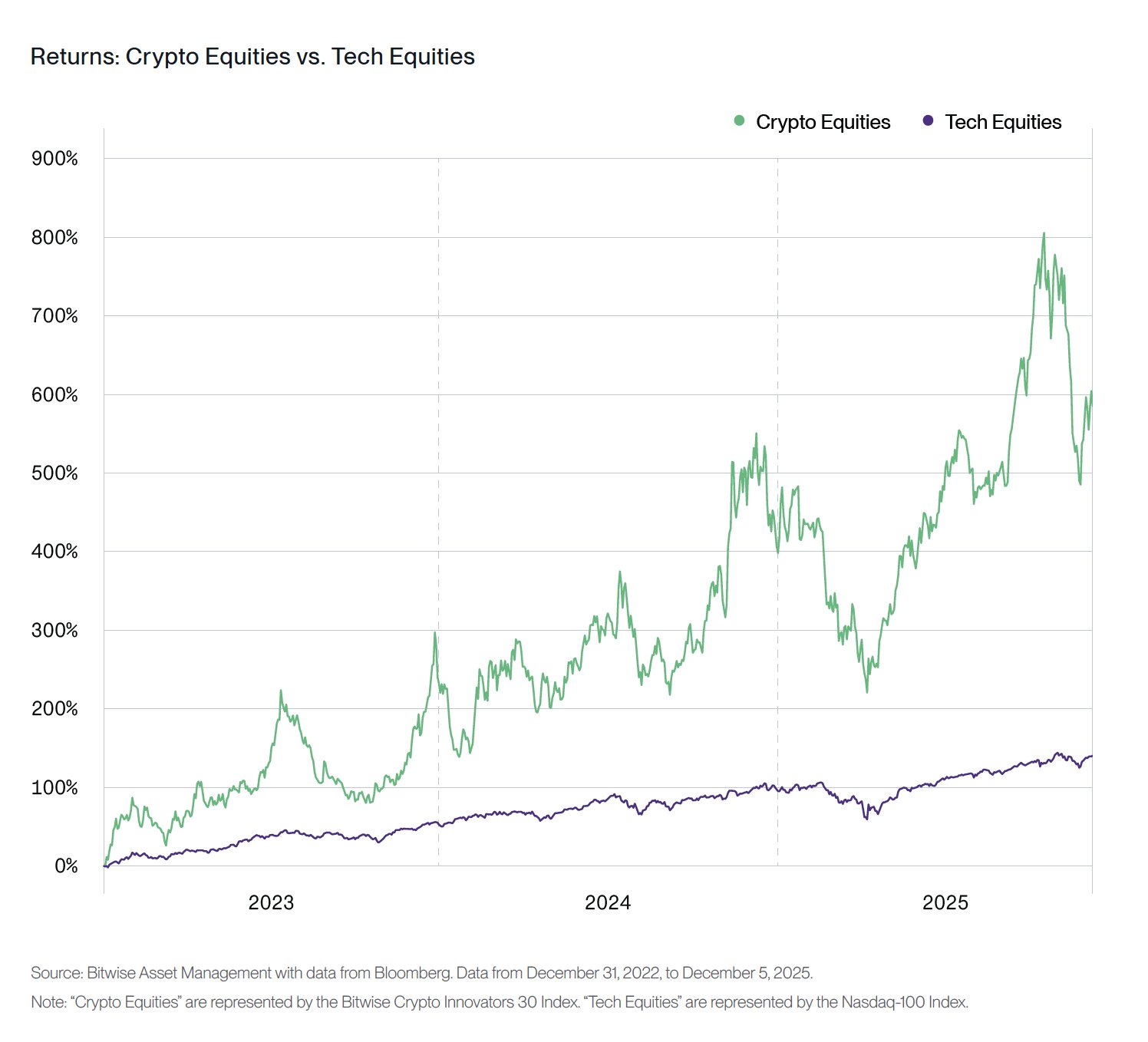
  • Outperformance of Crypto Stocks (Bitwise): Predicted that crypto-related stocks (e.g., miners, Coinbase, Galaxy) will outperform the traditional tech Magnificent 7.
Conclusion: The 2026 Investor's Survival Guide

Synthesizing the outlooks of the eight institutions, the market logic for 2026 has fundamentally changed. The simple model of "buying blindly and waiting for the halving" is a thing of the past.

For investors, the new survival guide can be summarized in three dimensions:

  1. Embrace Leaders and Real Yield: In the brutal清洗 of L2s and DATs, liquidity and capital structure are survival metrics; focus on protocols that generate positive cash flow.

  2. Understand "Tech Content": From the Google AP2 standard to KYA, upgrades in technical infrastructure will bring new Alpha; closely monitor the落地 of new protocols like x402.

  3. Beware of False Narratives: In the eyes of institutions, there are not only golden opportunities but also "red herrings." Distinguishing between long-term trends (e.g., stablecoins replacing ACH) and short-term hype will be key to outperforming in 2026.


Trending Cryptos

Related Questions

QAccording to the article, why is the traditional 4-year Bitcoin cycle considered 'broken' by 2026?

AThe traditional 4-year Bitcoin cycle is considered 'broken' because the introduction of ETFs has fundamentally altered the market's demand structure. The driving force has shifted from the supply side (miner halvings) to the demand side (institutional allocation), making the halving narrative less significant as institutions like BlackRock and Fidelity make quarterly BTC purchases.

QWhat major prediction do Galaxy Digital and Coinbase make about the future of stablecoins?

AGalaxy Digital predicts that on-chain stablecoin transaction volume will officially surpass the U.S. ACH (Automated Clearing House) network, while Coinbase predicts the total stablecoin market capitalization will reach $1.2 trillion by 2028, indicating they will challenge traditional financial infrastructure.

QWhat is the new concept 'KYA' proposed by a16z, and what does it signify?

AKYA stands for 'Know Your Agent'. It signifies a shift from the traditional KYC (Know Your Customer) as the proportion of 'non-human' to 'human' entities conducting on-chain transactions reaches 96:1. AI agents, which can own crypto wallets but not bank accounts, will use micropayments to autonomously purchase data, computing power, and storage, requiring a new framework for identification.

QWhat is the key disagreement among institutions regarding Digital Asset Treasuries (DAT)?

AThe key disagreement is between the 'Great Cleansing' view (Galaxy Digital & 21Shares) and the 'Red Herring' view (Grayscale). The former predicts a market shakeout where many DAT companies will fail or be forced to sell assets, while the latter believes DATs will not be a core pricing driver for the market in 2026 due to accounting constraints and disappearing premiums.

QWhich institution issued a stark warning about the 'Quantum Threat', and what was the opposing view?

ACoinbase issued a stark warning in a dedicated 'Quantum Threat' chapter, urging the migration to post-quantum cryptography standards. The opposing view came from Grayscale, which labeled the quantum threat a 'red herring', asserting the probability of quantum computers breaking elliptic curve encryption within the 2026 investment cycle is zero.

Related Reads

New Fire Research Institute: Inflation May Become a Stubborn Problem, Can Cryptocurrencies Achieve Independent Performance in the Short Term?

New Fire Research Institute argues that despite the recent U.S. June CPI decline to 3.5% year-on-year—primarily driven by energy—core goods inflation remains persistent, with core PCE likely showing slight growth. Federal Reserve Chairman Wash has emphasized the Fed's independence and a "zero tolerance" stance on inflation, suggesting a continued hawkish posture that will pressure risk assets, especially if energy prices rise again. Concurrently, the semiconductor memory sector faces structural pressures, as seen in significant sell-offs for Micron and SK Hynix. High leverage in markets like South Korea is triggering deleveraging, amplifying volatility. Investors are also questioning the sustainability of AI-related capital expenditures. In contrast, the crypto market showed relative stability last week, with BTC and ETH gaining slightly. Positive developments include a shift to net inflows for U.S. Bitcoin spot ETFs, a narrowing Coinbase discount, and strong activity on the Robinhood Chain ecosystem. The potential advancement of the U.S. CLARITY Act provides a policy catalyst. Overall, the probability of an independent crypto bull run in the short term is low, given overarching macro pressures. However, fundamentals are improving with ETF inflows and robust on-chain activity, providing solid support. Technically, BTC and ETH show strong support at key moving averages. New Fire Research maintains that Bitcoin around $60,000 represents a high-value allocation zone, with limited downside risk near current levels. The true bull market catalyst awaits a confirmed market bottom combined with a macro policy shift and legislative progress.

marsbit24m ago

New Fire Research Institute: Inflation May Become a Stubborn Problem, Can Cryptocurrencies Achieve Independent Performance in the Short Term?

marsbit24m ago

Base Under Pressure

**Title: The Pressure Mounts for Base** Base, the Ethereum Layer 2 scaling solution backed by Coinbase, is facing significant pressure and public scrutiny from its leadership following the launch of Robinhood Chain. Base co-founder Jesse Pollak recently acknowledged strategic missteps, admitting that the chain's past focus on social and creator tokens (e.g., through Farcaster, Zora) failed to deliver sustainable adoption. He has refocused on core infrastructure, handing leadership of the Base App back to Coinbase's Cobie. While Base remains a top L2 contender alongside OP Mainnet and Arbitrum, and boasts the highest TVL (nearly $12B), its weaknesses are being highlighted by the new competitor. Key criticisms include its slow progress on decentralization. Base has faced issues with its single sequencer causing block production halts, and L2BEAT is reportedly considering downgrading its decentralization rating from Stage 1 to Stage 0. This contrasts sharply with the rapid initial success of Robinhood Chain, whose DEX quickly entered the top five by volume. The leadership styles of the parent companies are also being compared: Robinhood's CEO actively engages with new projects, while a recent incident where Coinbase's Brian Armstrong briefly changed his profile picture—sparking and then crashing a related meme token—drew community ire and mockery. Pollak stated Base is working with Coinbase on tokenized stocks backed 1:1 by real equity, differentiating it from Robinhood's derivatives model. However, the article argues that Base's most urgent task is to address its long-standing technical and trust issues. With more traditional finance players likely to emulate Robinhood's path, Base must use this competitive pressure to solidify its position as long-term financial infrastructure.

Foresight News41m ago

Base Under Pressure

Foresight News41m ago

White House Concession Removes Ethical Hurdle, Clarity Act Races Against Final Window Before Recess?

On July 21st, industry sources reported that the Trump administration has agreed to include an ethics provision in the "Clarity Act" (Digital Asset Market Clarity Act of 2025). This concession addresses the long-standing conflict-of-interest concerns regarding government officials and the crypto industry, potentially removing the final major obstacle to the bill's progress. Additionally, Patrick Witt, the executive director of the White House's Digital Asset Advisory Committee, confirmed he will remain in his role to help finalize the bill, alleviating previous concerns about his potential departure. The Clarity Act aims to establish a unified federal regulatory framework for the U.S. digital asset market. Its core objective is to resolve regulatory ambiguity by defining different types of digital assets (digital commodities, investment contract assets, and permitted payment stablecoins) and clarifying the respective oversight roles of the SEC and CFTC. This would end the long-running jurisdictional dispute between the two agencies and provide clearer compliance paths for the industry. With the ethics issue moving toward resolution, the most urgent challenge now is time. The U.S. Congress is set to begin its August recess in mid-August, leaving only a few working weeks to finalize the text and advance the bill through the Senate. Industry advocates, like the Blockchain Association's Kristin Smith, stress that this is a critical moment. If negotiations conclude successfully in the coming weeks, the Clarity Act could pass a key hurdle before the recess; otherwise, it may face significant delays. If enacted, the Clarity Act could mark a historic turning point in crypto regulation. By providing a clearer and more predictable legal framework, it aims to reduce uncertainty for businesses, developers, and traditional financial institutions looking to enter the digital asset space, potentially setting a global benchmark for market structure regulation.

Odaily星球日报46m ago

White House Concession Removes Ethical Hurdle, Clarity Act Races Against Final Window Before Recess?

Odaily星球日报46m ago

Trading

Spot

Hot Articles

How to Buy TOP

Welcome to HTX.com! We've made purchasing TOP AI Network (TOP) simple and convenient. Follow our step-by-step guide to embark on your crypto journey.Step 1: Create Your HTX AccountUse your email or phone number to sign up for a free account on HTX. Experience a hassle-free registration journey and unlock all features.Get My AccountStep 2: Go to Buy Crypto and Choose Your Payment MethodCredit/Debit Card: Use your Visa or Mastercard to buy TOP AI Network (TOP) instantly.Balance: Use funds from your HTX account balance to trade seamlessly.Third Parties: We've added popular payment methods such as Google Pay and Apple Pay to enhance convenience.P2P: Trade directly with other users on HTX.Over-the-Counter (OTC): We offer tailor-made services and competitive exchange rates for traders.Step 3: Store Your TOP AI Network (TOP)After purchasing your TOP AI Network (TOP), store it in your HTX account. Alternatively, you can send it elsewhere via blockchain transfer or use it to trade other cryptocurrencies.Step 4: Trade TOP AI Network (TOP)Easily trade TOP AI Network (TOP) on HTX's spot market. Simply access your account, select your trading pair, execute your trades, and monitor in real-time. We offer a user-friendly experience for both beginners and seasoned traders.

3.7k Total ViewsPublished 2024.03.29Updated 2026.06.02

How to Buy TOP

Discussions

Welcome to the HTX Community. Here, you can stay informed about the latest platform developments and gain access to professional market insights. Users' opinions on the price of TOP (TOP) are presented below.

活动图片