Original | Odaily Planet Daily (@OdailyChina)
Author | CryptoLeo (@LeoAndCrypto)
As a die-hard League of Legends fan, I've spent many late nights grinding Ranked to climb the ladder. While I didn't reach a very high rank when I was younger, I did encounter many skilled players and streamers in the Canyon. Now that I'm older, I just play casual games for fun. After Polymarket went viral, I naturally shifted my focus to trading in the PM LOL section.
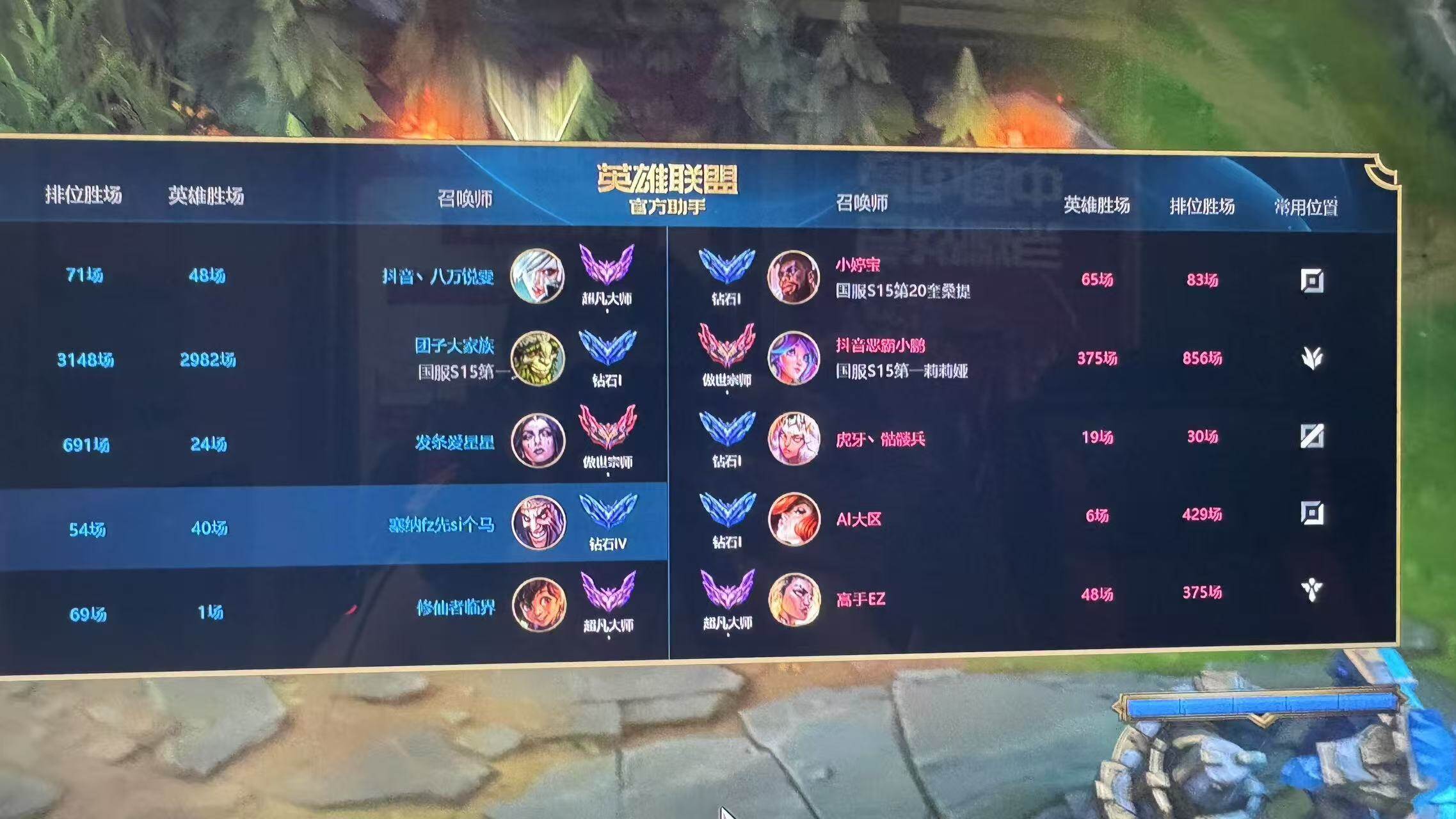
However, after the recent patch update, I feel like I know nothing about the matches anymore, and I've even started suspecting that the players are throwing games. After thinking about it carefully, it's not just me—friends who frequently trade in the Polymarket LOL section should be feeling quite 'weird/chaotic' lately. Miraculous comebacks have been occurring frequently in regions like LPL and LCK, and if you didn't sell your position on the leading side in time, your entire position could go to zero.
Therefore, I've done some research and analysis—based on this patch's ability to close out games, how can one trade LOL matches on Polymarket with a higher chance of success.
After the Patch Changes, a Significant Gold Lead Doesn't Guarantee Closing Out the Game
Recently, many League of Legends matches have seen teams lose despite having a gold lead of over 5000 in the early game, such as NIP vs IG, WE vs AL, BLG vs TES, and several matches in the LCK.
In previous League of Legends patches, teams with an early gold lead could easily 'snowball,' gaining a larger gold advantage and closing out the game effortlessly.
After the changes in this patch, the decisive weight of gold in closing out a game has decreased. The current patch emphasizes 'advantage conversion, resource trading, team composition strength, and teamfight execution' more than simply the early-game gold numbers.
Advantage conversion refers to a team turning a gold lead into pushing towers, securing kills, and taking objectives (Herald, Voidgrubs, Dragons, Baron, etc.);
Resource trading means a team makes decisions to compensate for resources they give up by securing other resources;
League of Legends champions are categorized as early-game or late-game champions. Early-game champions excel in early teamfights but become less effective later, while late-game champions are weak early but often decide the game's outcome in late-game teamfights. This has a decisive impact on overall team composition and strategy. A team with an early-game composition must end quickly, otherwise, there's a high probability of being overturned. A team with a late-game composition will usually win if the game goes late;
Teamfight execution involves preparation before fights, vision control, champion positioning, etc., all of which have a significant impact. A single operational mistake by someone can trigger a chain reaction leading to a major disadvantage.
The League of Legends system mechanics also give the disadvantaged side significant opportunities:
1. Bounty Shutdown Compensation: When a core champion from the leading team is killed, it grants the trailing team a large bonus bounty and experience, potentially instantly reducing the gold gap by a thousand or more;
2. Objective Bounties: The trailing team receives extra gold and experience compensation for destroying key objectives like turrets, dragons, and Baron, helping them catch up;
3. Baron Buff Nerf: The rewards for killing Baron have been reduced in the current patch, emphasizing the conversion of secured objectives into tower pushes and map control.
Many recent comebacks also stem from the fact that the current meta's bot lane choices are no longer traditional marksmen (ADC) but mages. Compared to marksmen, many mage-type heroes cannot achieve sustained damage output in teamfights and have lower fault tolerance, which is a factor in some teams losing their early leads and being overturned late game recently.
In summary: Previous patches were more about 'securing objectives to snowball.' The leading team could easily end the game by controlling key targets. The current patch relies more on mid-to-late-game decision quality than early-game gold differentials. The leading team pushes towers, controls vision, secures objectives, and avoids giving shutdowns. The trailing team stabilizes farm, looks for pick opportunities, and contests key objectives. In actual matches, execution and team composition synergy often determine the final outcome more than pure gold numbers. This is the fundamental reason for the frequent skirmishes, upsets, and difficulty in converting early advantages into victories in the current patch.
What Strategies Are Better
Based on my months of experience on PM, let me first introduce the matches I often play and the regions I suggest avoiding. We are now in the third split of the League of Legends competitive season. Many teams with a chance need points to compete for a spot in the 2026 World Championship. As long as there is a chance, these teams will strive to win their remaining matches. In terms of seriousness and the correspondence between 'strength and result,' this split might be slightly easier to predict than the first two.
For example, if a match has very low importance and doesn't affect the subsequent schedule, teams might not take it very seriously. For instance, in the recent LCK KeSPA Cup match between GENG and DNS, it was evident that the GENG players were particularly tired. They didn't need this win, so they weren't playing with full seriousness, or perhaps their desire to win was lower, leading to an upset.
One: Choosing the Right Region is Important
First, you need to choose the right matches you want to participate in. The filtering criteria are: whether it affects a team's points for qualifying for the League of Legends World Championship, whether there are substantial monetary prizes, and whether certain players need to perform well this split to secure better salaries next season.
My experience is as follows:
Major Regions: LPL, LCK, LEC, LCS, LCP, CBLOL. Prioritize LPL, LCK, LEC, LCS:
I think LPL matches are still relatively 'normal,' and particularly outrageous situations don't usually occur. Comebacks happen due to the patch and players' weak closing ability (picking an early-game composition and dragging it to late game), wasting early advantages through attempted macro play and getting overturned, or selecting poor compositions. So far, I haven't seen any LPL team clearly dominate others. Currently, BLG, TES, AL, and WE are considered strong teams, but some teams are 'godlike one game, clown-like the next';
LCK matches depend entirely on player form and drafting (champion select). Player form has a higher reference weight than draft. T1, HLE, GENG, KT, DK are still the stronger teams. You can watch the first game to assess player form and then buy/sell in the second game;
The LEC overlords are still G2 and KC. You can completely trust these two teams if they want to win;
The LCS overlord is still LYON (the kind that wins when they want to and can lose a game if they choose to). LYON's starting jungler Inspired is currently unavailable and is being replaced by a veteran player, but this likely won't significantly affect their record. The issue in the North American region is that sometimes there are teams that clearly don't want to win (intentionally picking poor compositions or not contesting objectives), requiring attention for selling;
It's advisable not to touch matches from the Brazilian region CBLOL. There's a saying, 'Brazilian stage, come if you dare.' It's so fake you'll suspect some pro players are bots. For example: Version one, a weak team gets early kills and an advantage, but once objective fights start, the strong team takes over and wins. Version two, the strong team plays well early, gets kills and objectives, but in the final teamfight, they suddenly misplay, get aced, and lose. There are many versions, so I won't list them all.
I rarely participate in the LCP region, so I won't discuss it.
For some smaller tournaments:
In LCK Challengers (CK), T1, DK, and Nongshim are the three strong teams, but T1 has a significant lead. The other two, DK and Nongshim, also 'frequently' lose to bottom-tier teams. Most CK matches are essentially a '1:1 league,' meaning in a BO3, each team wins one of the first two games (it's common for a team to seem completely uncoordinated in game one or pick champions they can't play, then become unstoppable like they're cheating in game two), with a decisive third game. My suggestion is to only play matches involving these three teams. Try to avoid the rest. If you must play, you can try entering at the lowest price betting on an upset. Also, some CK matches don't have a live stream, making prediction difficult without watching live;
In the French LFL, the top dogs are GAL and SLY. You can try playing matches involving these two teams. Among the remaining teams, the skill gap isn't huge. You might predict based on draft, but games are often lost despite having a good composition.
The German Prime League most frequently goes to a full three-game series, with the stronger team winning (if you don't know the strong/weak teams, you can judge based on the market price).
Circuito Desafiante is the Brazilian secondary league, also recommended to avoid.
Don't play the Turkish TCL. The fastest available live stream delay is over 3 minutes, making it hard to judge the outcome.
The North American Challengers league is basically hell-level difficulty; wins and losses are all about the 'script.'
Two: Trading Strategies
Before trading, you can generally analyze based on team composition and player form. Regarding composition, what's important for a team is their champion synergy: Do they have engage champions (frontline tanks with crowd control)? Do they have a sustained damage marksman? Do the damage dealers have mobility skills and space to deal damage? What is the power spike of key team champions? How is the AOE (area of effect) damage and burst of mages? Is there champion combo potential?
Assessing player form requires you to be someone who frequently watches matches and is familiar with a particular player's playstyle. This allows you to discern if their current performance differs significantly from their usual games and if they can effectively generate advantages for their team with a specific champion.
A small skirmish over an objective or one or two kills usually affects the price by 5-10 cents. My experience:
(1) Learn to Place Orders
1. For matches where you are certain one team has a significantly stronger lineup, place limit orders to buy at 5-15 cents below the market price, rather than buying at the current price. This minimizes your losses even if you're wrong;
2. For matches where the skill gap isn't that large, small reversals or major comebacks are common in this patch. A single small mistake can cause a 20-cent price swing for a team. If both teams are the type that likes to fight frequently, the prices for both sides will fluctuate considerably. Perhaps you can try placing limit orders for an equal number of shares on both sides simultaneously; as long as the total cost is below 100 cents, you profit. For example, A vs B. Team A has an early advantage, but Team B has a mid-to-late advantage. It's hard to confirm which team will close. In this case, soon after the match starts, you can place limit orders to buy 100 shares of A at 25-40 cents and 100 shares of B at 25-40 cents. Your total cost would be 50-80 cents, giving you a profit margin of 20-50 cents. If the price fluctuations are small, you might fail, but currently, for most major region matches without a huge skill gap, you can get fills for both A and B, depending on whether your bid prices are reasonable.
PS: I'm a relatively aggressive trader. I often place orders at 25 cents. Matches suitable for this strategy include CK matches (the first two games of a BO3), LFL matches (the first two games of a BO3), and German league matches (the first two games of a BO3). It's best to use this strategy in matches where the team gap isn't enormous.
3. As mentioned earlier, each team's composition has a power spike. Before this spike, they might be at a disadvantage. Once they hit their power spike, they can turn the tables. You can buy low during their weak phase and then place a sell order 20-40 cents above your purchase price, aiming for price swings rather than betting on the final outcome. Determining when a team's power spike occurs requires watching many matches to analyze.
(2) Sell in Time
Everyone has different playstyles. Some like to buy above 90 cents as a stable 'investment.' Some like to buy in the 50-80 cent range aiming for a big payout. In these cases, the selling price is extremely important.
Prediction markets are like crypto trading—the most important thing is learning to take profits (I still haven't mastered this). As mentioned, many matches see large early advantages wasted by dragging the game. If the team you favor gains an early advantage and your entry price was low, you should place sell orders in the 85-95 cent range. This is crucial. In many matches, I picked the correct early-game dominant side but often failed to sell in time, leading to a last-minute comeback and no chance to exit before my position went to zero.
My current selling habit is: For positions entered at 50-60 cents, I sell 75% at 85-90 cents. Even if the remaining 25% position goes to zero due to an upset, it's not too painful.
Another extreme method is: After buying the favored team low and selling high, immediately place an order for the opposing team (e.g., buy Team A at 30 cents, sell at 75 cents, then buy Team B at 25 cents, and finally Team B wins). This requires a zero-delay live stream and a deep understanding of the game's flow.
(3) Position Management
Learning position management is important. Don't tilt after losing a couple of matches and go all-in on the next one, as this can easily lead to a total loss. You can set a rule that the maximum amount per match does not exceed 5% or 10% of your principal. Most importantly, don't be affected by a few wins or losses. Some smaller region matches might have a day where all results are upsets (the last-place team crushing the first-place team). What you need to do most at such times is turn off the computer and find something else to do. Continuous tilt will lead to continuous losses.
Conclusion
When I started with prediction markets, it went smoothly, and I rarely lost. But recently, after the patch update, everything has become chaotic. Playing LOL predictions requires watching important matches and understanding how factors like gold, composition, team playstyle, and regional meta affect the game. This will help you quickly adapt to the patch.
The next patch update will be in August, where the influence of traditional marksmen is expected to increase. Many of the current mage bot lanes might disappear. If I have better insights for the next patch, I will promptly share them.
The above is merely my humble opinion, for reference only and not investment advice. Trading requires careful analysis and attention to risk. I also hope everyone develops their own strategies and theories to make more money. Furthermore, feel free to contact me anytime!(@LeoAndCrypto)