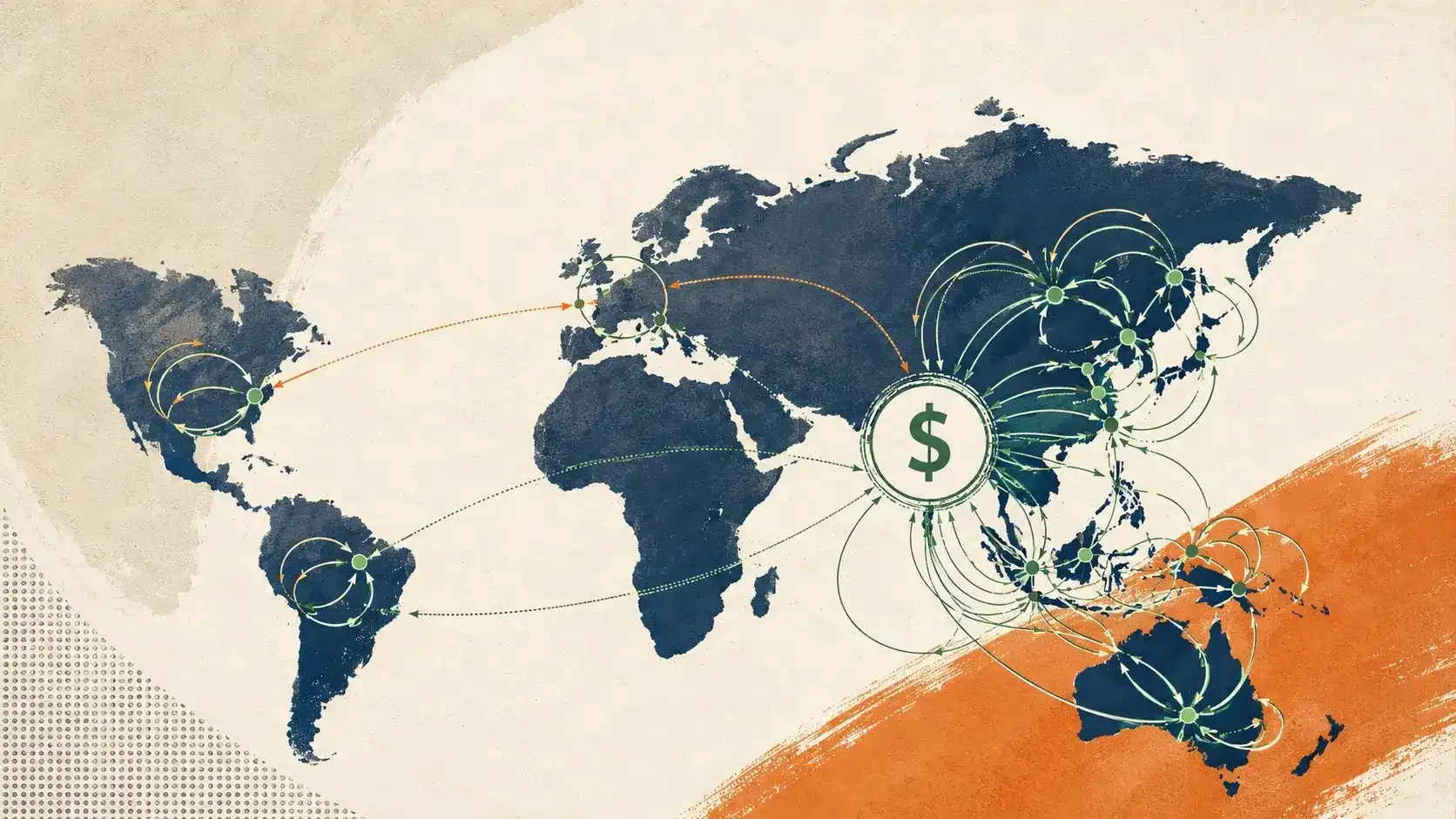
Having Raised $37 Million with a16z's Backing, Why Did Goldfinch Ultimately Fail?

Foresight NewsPublished on 2026-06-23Last updated on 2026-06-23

Abstract

The decentralized credit protocol Goldfinch, which raised $37.7 million in funding led by Andreessen Horowitz (a16z), is officially entering a shutdown process. After six years of operation and issuing approximately $100 million in loans, it faces widespread borrower defaults and frozen depositor funds. Depositors report an estimated actual loss rate of around 70%, with the protocol's governance token GFI having plummeted 99.8% from its all-time high. The current proposal involves winding down operations, halting new development, and establishing a trust to manage loan recovery over an estimated two-plus years. Founded by ex-Coinbase employees, Goldfinch aimed to channel crypto capital into loans for emerging markets via local lenders. However, it suffered significant defaults from major borrowers like Tugende Kenya, Stratos, and Lend East, leading to over $18 million in losses. The failure highlights the core challenge for DeFi-based Real-World Asset (RWA) lending: while blockchain technology improves capital fluidity, it cannot replace the critical offline components of credit underwriting, collateral management, and legal enforcement, especially in high-risk jurisdictions.


Written by: ChandlerZ, Foresight News


The decentralized credit protocol Goldfinch, which secured a total of $37.7 million in funding across two rounds led by Andreessen Horowitz (a16z), has officially entered the shutdown process.


The core development team, Warbler Labs, posted GIP-87 on the governance forum, proposing to "approve the operational maintenance of Goldfinch and the orderly liquidation of Goldfinch Prime," to shut down its product Goldfinch Prime in an orderly manner and transition the protocol into a maintenance mode retaining only collection functions. The Snapshot vote will close on June 23, and as of writing, it has received 100% approval (over 1.1 million GFI votes, far exceeding the 250,000 threshold).


After six years of operation and issuing approximately $100 million in loans, this protocol, which promised to transform emerging market credit with DeFi, ended with widespread borrower defaults and frozen depositor funds.


Depositor's Dilemma: 70% Actual Loss Rate, Token Down 99.8%


On June 19, a depositor named Edward Morra posted on X, stating that among the 8 borrowers in the protocol's loan book, 2 had defaulted and 6 were in restructuring, with funds essentially unrecoverable. This post received over 800 likes and 165 replies.


Morra said his first deposit was in September 2021, followed by two more deposits in 2022. After five years, he still hasn't recovered the full amount (and never will), let alone the promised 10% APY. Since requesting a withdrawal in August 2023, the user has only recovered 30% of the principal, with the best-case scenario being a possible recovery of 10% in the next 1 to 2 years.


He estimates the actual loss rate to be around 70%, far higher than the 20% displayed on the protocol dashboard.
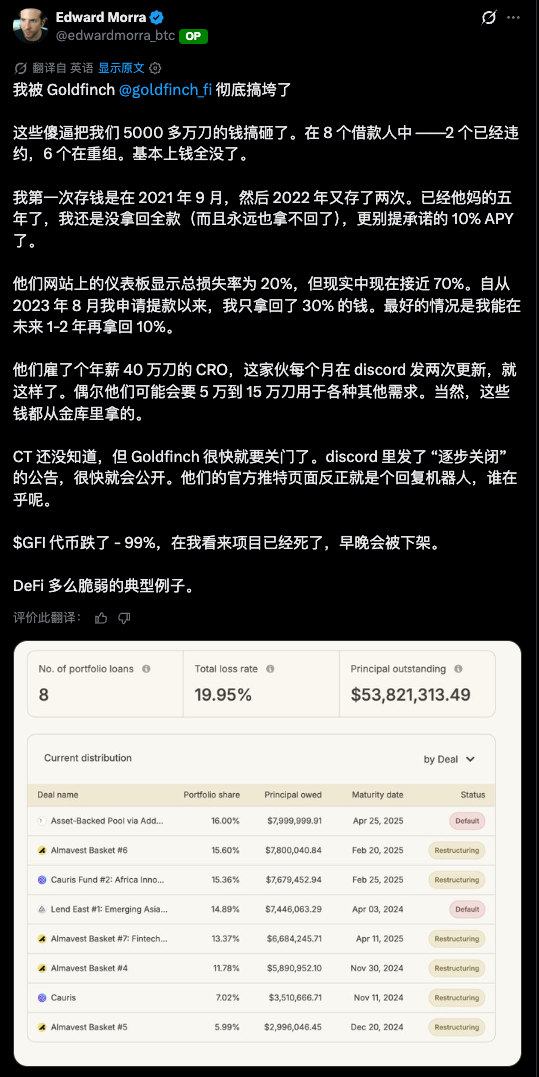


DefiLlama shows that Goldfinch still has $56.15 million in outstanding loaned capital, while the TVL on Ethereum is only $1.63 million, with almost all deposit funds locked in loans and unavailable for withdrawal.


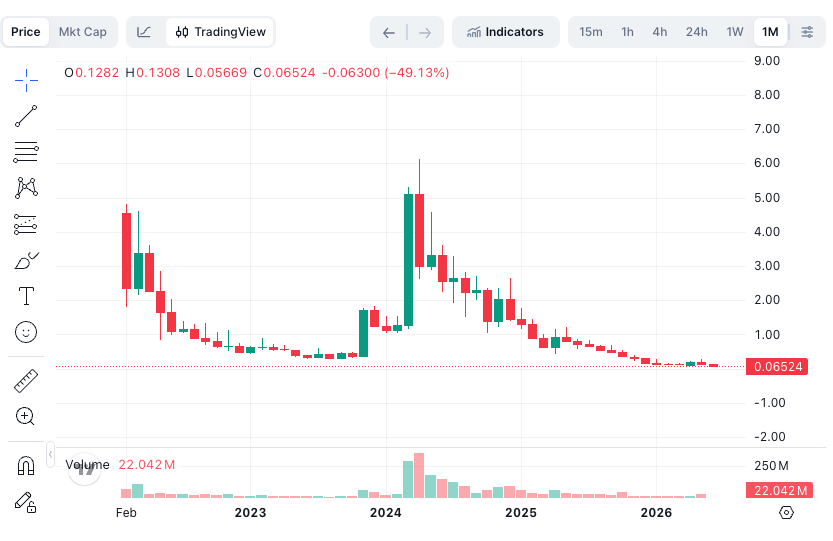
The protocol's governance token, GFI, has also suffered a severe decline. After reaching an all-time high of $32.94 on January 11, 2022, GFI is currently priced at $0.06524, a drop of 99.8%. Its market capitalization has shrunk from over $180 million in April 2024 to $5.7 million.


Shutdown Plan: Establish a Trust, Collection for at Least Two Years


The GIP-87 proposal was jointly signed by Mike Sall and Blake West of Warbler Labs. The core arrangements of the shutdown plan include: Warbler Labs immediately halting all new product development, growth initiatives, and marketing campaigns. The protocol will establish a new US trust entity, with the current Chief Restructuring Officer, Ted Gavin, serving as trustee, dedicated to collecting remaining borrower debts. Warbler Labs receives a $150,000 shutdown service fee ($100,000 from the DAO treasury, $50,000 transferred from existing operational budget). Legacy applications will be retained for at least 6 months after the final borrower repayment, allowing depositors to claim recoveries. The estimated recovery period is over 2 years.


Blake West responded to the community's anger in a Discord post on June 14, stating that the team spent six years from 2020 trying various on-chain private credit solutions but never found sustainable demand. The latest product, Goldfinch Prime, shifted towards tokenizing institutional-grade private credit funds (with partners including Apollo, Ares, KKR, etc., institutions managing over a trillion dollars in assets), launched on three chains, and partnered with Plume and R2 for promotion, but response was lukewarm, with no viable path to recovery within the existing financial runway.


West denied allegations of fraud, emphasizing that Warbler Labs contributed $7 million from its own pocket to repay depositors, returned over $1 million in revenue for repayments, and sold over $2 million worth of GFI for the same purpose. He stated that he personally lost money in V1 stage trades and emphasized that "average crypto investors don't actually want private credit products."


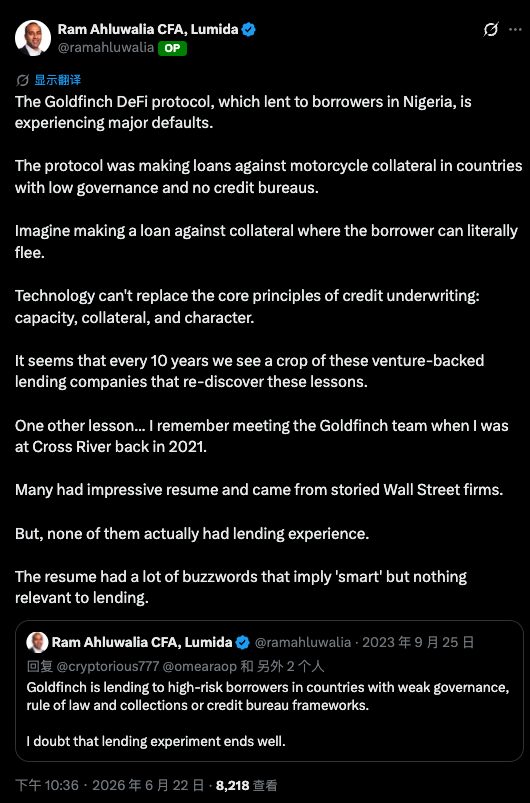
Regarding this project, former Cross River Bank employee Ramneek Ahluwalia offered his assessment, stating that Goldfinch essentially issued loans against physical assets like motorcycles in countries with weak governance and no credit systems. The team had impressive resumes but lacked actual lending experience. Technology cannot replace the core judgment in credit assessment regarding repayment ability, collateral, and borrower quality. He had issued the same warning as early as October 2023.


Starting from Coinbase, Using DeFi to Lend in Emerging Markets


Goldfinch was founded by Mike Sall and Blake West in 2020, both with backgrounds at Coinbase. Sall previously worked on data science at Coinbase and Earn.com, while West was part of the engineering team at Coinbase. The two left Coinbase at the end of 2019, subsequently established the development company Warbler Labs to incubate the Goldfinch protocol, which officially launched in 2021.


The protocol's core model was to channel crypto capital (USDC) through a two-tier structure of Backers and the Senior Pool to off-chain credit companies, which then issued real loans to small businesses and consumers in 18 countries like Nigeria, Kenya, and Southeast Asia. Collateral was held offline by borrowers locally, and the protocol promised depositors around 10% APY. This narrative was highly attractive in 2021, aiming to serve markets underserved by traditional banks using on-chain transparency and global liquidity.


In terms of funding, Goldfinch completed three rounds totaling $37.7 million. In February 2021, it completed an undisclosed amount seed round. In June of the same year, a16z led an $11 million Series A. In January 2022, a16z led another $25 million follow-on financing round, with participation from hedge fund manager Bill Ackman, Coinbase Ventures, BlockTower, Kingsway Capital, SV Angel, and Bain Capital. a16z general partner Arianna Simpson emphasized in the investment announcement that Goldfinch's outstanding loans had reached $38 million at the time, highlighting the enormous global demand for capital.


$100 Million in Loans, Three Major Defaults


Since launch, the protocol has issued approximately $100 million in loans, covering over 200,000 borrowers. However, starting in the second half of 2021, default events occurred one after another.


  • Tugende Kenya, a Kenyan motorcycle taxi financing company, received a $5 million loan from Goldfinch in October 2021 but later transferred $1.9 million of it to its struggling Ugandan parent company without authorization, constituting a contract breach. The loan was written down, with partial recovery after restructuring.


  • Stratos, a US credit fund, received a $20 million funding facility. According to a governance forum update in October 2023, among Stratos's three underlying investments, real estate tech company REZI and blockchain project POKT were highly likely to be worthless, resulting in approximately $7 million in impairments. Warbler Labs committed to covering these losses for Senior Pool investors.


  • Lend East, a Singapore-based borrower, received a loan of $10.15 million. In April 2024, Lend East informed Warbler Labs that it could only repay $4.25 million, with the remaining $5.9 million in default, representing a 58% principal loss rate. Sall stated in the governance forum that this shortfall was inconsistent with all prior communications from the borrower and far exceeded expectations.


The three major defaults resulted in cumulative losses exceeding $18 million.


The Dilemma of the RWA Credit Sector


Goldfinch's failure is not an isolated case. Between 2021 and 2022, a batch of RWA lending protocols, with the core thesis that DeFi could scale the intermediation of real-world credit, attracted significant crypto capital.


A common weakness of this model is that while the transparency and programmability of on-chain capital address liquidity issues, the core risks of credit business lie off-chain, including borrower qualification assessment, collateral valuation, and legal recourse after default. In emerging markets with weak legal systems and difficult asset recovery, these off-chain risks are further amplified. In a similar case, Centrifuge encountered about $5.8 million in loan delinquencies in 2023, primarily concentrated in a French consumer microloan pool, ultimately resolved through liquidation and litigation.


For RWA credit projects still in operation, the key lesson from the Goldfinch case is that on-chain tools can reduce the cost of capital pooling and distribution but cannot replace professional credit underwriting, offline due diligence, and legal enforcement capabilities. When these elements are missing, the technological infrastructure itself cannot prevent loans from turning into bad debt.


Trending Cryptos

Related Questions

QWhat is the main reason for the failure of the DeFi credit protocol Goldfinch, which secured $37.7 million in funding from a16z?

AThe primary reason for Goldfinch's failure is the breakdown of its core business model. Despite raising significant funds, the protocol could not overcome the inherent risks of real-world lending. Key issues include a high volume of borrower defaults (including three major ones totaling over $18 million), inaccurate risk assessment, and the inability to recover funds effectively in emerging markets with weak legal systems. The core team ultimately concluded they could not find a sustainable product-market fit for on-chain private credit.

QWhat was the financial impact on Goldfinch depositors, and what is the status of their funds?

ADepositors in Goldfinch have suffered significant financial losses. According to a major depositor's estimate, the actual loss rate is around 70%, much higher than the protocol's displayed 20%. Most depositor funds are locked in outstanding loans (approximately $56.15 million) and are largely unrecoverable, with only $1.63 million remaining in the protocol's on-chain TVL for withdrawals. Many depositors have only recovered a fraction of their principal since initiating withdrawals in 2023.

QWhat is the proposed shutdown plan for Goldfinch as outlined in GIP-87?

AThe shutdown plan in GIP-87 proposes an orderly wind-down. Warbler Labs will halt all new product development and marketing. A new US-based trust entity will be established, with the current Chief Restructuring Officer acting as trustee to manage the collection of remaining borrower repayments. The existing applications will be maintained for at least six months after the final borrower repayment. The entire recovery process is estimated to take two or more years.

QWhat underlying flaw did critics identify in Goldfinch's lending model?

ACritics identified a fundamental flaw: the team's strong technical and crypto backgrounds from Coinbase did not translate into real-world lending expertise. The protocol attempted to lend in high-risk emerging markets (e.g., for motorcycle assets) without robust local credit assessment systems, proper due diligence, or strong legal recourse for defaults. Technology could not replace the core judgments of credit underwriting, collateral valuation, and borrower quality assessment, which are critical offline components of lending.

QHow does Goldfinch's failure reflect broader challenges in the RWA (Real World Asset) DeFi lending sector?

AGoldfinch's failure highlights a systemic challenge in RWA lending: the decoupling of capital sourcing from risk management. While DeFi protocols excel at aggregating transparent, global capital cheaply, they often lack the specialized, localized expertise needed for credit underwriting, collateral management, and legal enforcement in the real world. Technology infrastructure reduces distribution costs but cannot prevent bad debt if these offline risk controls are missing, as seen in similar cases like Centrifuge.

Related Reads

Coin Stock Barometer丨BitMine's Total Assets and Investment Reach $10.7 Billion, Exceeding ~$9.3 Billion Floating Loss; Strategy Buys Only 520 BTC, Strive Adds Positions Against the Trend (June 23)

This article provides a weekly market update on "coin-equity" trends, focusing on listed companies holding major cryptocurrencies. Key highlights include: **General Market Trends:** Global equities, particularly in the US, Japan, and South Korea, faced significant sell-offs, led by large tech and AI-related stocks. Analysts cite profit-taking and a shift from hype-driven to performance-driven valuation for AI companies. Market focus is on upcoming Micron Technology's earnings. **Cryptocurrency Treasury Updates:** * **Bitcoin (BTC):** Net weekly BTC purchases by listed companies (excluding miners) totaled approximately $86 million, down 13.97% from the prior week. Strategy (formerly MicroStrategy) purchased only 520 BTC for ~$34.9 million, while Strive Asset Management increased its holdings by 759 BTC for ~$50 million. Other notable actions include Mara Holdings adding 1,000 BTC and Capital B shareholders approving a massive financing plan (up to ~$1.2 trillion) to potentially expand its Bitcoin reserves. * **Ethereum (ETH):** BitMine emerged as the largest corporate ETH treasury, holding 5.67 million ETH (4.7% of supply). It purchased an additional 52,203 ETH ($92 million) in the past week. Sharplink completed a $75 million private placement to fund further ETH accumulation and stock buybacks. * **Solana (SOL):** The top five listed companies hold over 15.7 million SOL combined. However, Solmate Infrastructure, a SOL treasury firm, faces a lawsuit from its largest external shareholder alleging board misconduct and self-dealing. * **Other:** Updates include Canton Strategic's $50 million stock buyback plan and Lite Strategy's $1 million strategic investment in LitVM, a Layer-2 network for Litecoin. The article notes that while crypto treasury firms continue fundraising and accumulation, their stocks may struggle to rise against the broader market downturn until Q4.

marsbit5m ago

Coin Stock Barometer丨BitMine's Total Assets and Investment Reach $10.7 Billion, Exceeding ~$9.3 Billion Floating Loss; Strategy Buys Only 520 BTC, Strive Adds Positions Against the Trend (June 23)

marsbit5m ago

OpenAI Partners with PE Firms, Investing $4 Billion. Let's Talk About Silicon Valley's Hottest New Role: FDE.

The hottest new role in Silicon Valley is the Forward Deployment Engineer (FDE), a hybrid of engineer and business consultant whose core mission is to transform AI demos into native, practical workflows within client organizations. The recent surge in demand is driven by a strategic shift from leading AI companies. OpenAI, partnering with 19 private equity firms in a $4 billion investment, formed a Deployment Company and acquired Tomoro along with its 150 FDEs. Anthropic also announced a $1.5 billion joint venture with financial institutions like Blackstone. The article, based on interviews with industry experts Jove (FDE lead at Cresta) and Oliver (VP at Invisible Technologies, ex-McKinsey), explores the FDE role and the rise of deployment-focused companies. Key insights include: **The FDE Role:** Jove describes an FDE as a "Forward Deployed CTO"—a technically strong engineer who works intimately with clients to implement AI solutions, learn from the process, and feed those insights back to improve the core product. They require expertise in AI agents, client-facing experience, resilience, and the ability to handle complex, imperfect systems. While AI tools enhance their efficiency, the role's complexity makes full automation a distant prospect. **Industry Shift:** Model companies are moving beyond selling tools to ensuring real-world adoption. This blurs the line between model and application companies. Collaborations with private equity (PE) firms are key, providing access to large portfolios of traditional businesses needing AI transformation. For PE firms, these partnerships offer signal value to LPs, create tangible value in portfolio companies, and provide exposure to high-growth AI assets. **Consulting & Transformation:** AI deployment involves deep, customized workflow redesign, moving beyond simple tool augmentation. Companies like Invisible Technologies build modular platforms to create bespoke, AI-native workflows for clients. While traditional consulting will see growth in helping businesses rethink their models for AI, the real value is captured by firms that leave behind transformed, operational systems. Critical success factors include building robust data foundations and strategically deciding which workflow steps should be deterministic versus AI-driven. The ultimate goal shifts from pure cost-cutting to unlocking new revenue opportunities previously impossible without AI-scale capabilities.

marsbit17m ago

OpenAI Partners with PE Firms, Investing $4 Billion. Let's Talk About Silicon Valley's Hottest New Role: FDE.

marsbit17m ago

Why Is DeFi Insurance Unpopular?

The article explores the core reasons why DeFi insurance remains largely unutilized despite its potential to eliminate traditional insurance inefficiencies and malicious claim denials through automated smart contracts. Key points include: 1. **Low Adoption & Minimal Payouts:** Leading provider Nexus Mutual has paid only ~$18M in claims since 2019, dwarfed by single hack losses (e.g., Kelp DAO's $292M loss). 2. **High Correlation Risk:** Unlike traditional insurance (e.g., house fires), DeFi risks (oracle failures, bridge hacks) are systemic and can simultaneously impact multiple protocols, threatening to drain entire insurance pools. 3. **Prohibitive Cost vs. Reward:** For many protocols (Aave, Morpho, Compound), insurance premiums (1.5%-6%) consume a significant portion or even all of the native yield (3%-4%), leaving investors with meager returns. In some cases (Maple Finance, Ethena), premiums can even result in net-negative yields. 4. **Inadequate Capacity:** The total DeFi insurance pool (e.g., Nexus Mutual's $81.56M) is minuscule compared to the hundreds of billions in total value locked (TVL), creating a massive supply-demand gap. 5. **Structural Flaws:** The claims assessment model (e.g., Nexus Mutual's member voting) creates a conflict of interest, as voters bear the loss if a claim is paid. There is also no regulatory mandate forcing DeFi protocols to obtain insurance. The industry is adapting by focusing on preventative measures (e.g., bug bounty coverage) and seeking external capital via reinsurance. However, the fundamental issues of small pool size, correlated risk, and misaligned economic incentives persist. The article concludes that DeFi insurance, like a public lighthouse, provides shared security benefits, but if everyone relies on others to pay for it, no one will, leaving the ecosystem vulnerable.

Foresight News31m ago

Why Is DeFi Insurance Unpopular?

Foresight News31m ago

Trading

Spot
Futures

Hot Articles

What is SONIC

Sonic: Pioneering the Future of Gaming in Web3 Introduction to Sonic In the ever-evolving landscape of Web3, the gaming industry stands out as one of the most dynamic and promising sectors. At the forefront of this revolution is Sonic, a project designed to amplify the gaming ecosystem on the Solana blockchain. Leveraging cutting-edge technology, Sonic aims to deliver an unparalleled gaming experience by efficiently processing millions of requests per second, ensuring that players enjoy seamless gameplay while maintaining low transaction costs. This article delves into the intricate details of Sonic, exploring its creators, funding sources, operational mechanics, and the timeline of significant events that have shaped its journey. What is Sonic? Sonic is an innovative layer-2 network that operates atop the Solana blockchain, specifically tailored to enhance the existing Solana gaming ecosystem. It accomplishes this through a customised, VM-agnostic game engine paired with a HyperGrid interpreter, facilitating sovereign game economies that roll up back to the Solana platform. The primary goals of Sonic include: Enhanced Gaming Experiences: Sonic is committed to offering lightning-fast on-chain gameplay, allowing players and developers to engage with games at previously unattainable speeds. Atomic Interoperability: This feature enables transactions to be executed within Sonic without the need to redeploy Solana programmes and accounts. This makes the process more efficient and directly benefits from Solana Layer1 services and liquidity. Seamless Deployment: Sonic allows developers to write for Ethereum Virtual Machine (EVM) based systems and execute them on Solana’s SVM infrastructure. This interoperability is crucial for attracting a broader range of dApps and decentralised applications to the platform. Support for Developers: By offering native composable gaming primitives and extensible data types - dining within the Entity-Component-System (ECS) framework - game creators can craft intricate business logic with ease. Overall, Sonic's unique approach not only caters to players but also provides an accessible and low-cost environment for developers to innovate and thrive. Creator of Sonic The information regarding the creator of Sonic is somewhat ambiguous. However, it is known that Sonic's SVM is owned by the company Mirror World. The absence of detailed information about the individuals behind Sonic reflects a common trend in several Web3 projects, where collective efforts and partnerships often overshadow individual contributions. Investors of Sonic Sonic has garnered considerable attention and support from various investors within the crypto and gaming sectors. Notably, the project raised an impressive $12 million during its Series A funding round. The round was led by BITKRAFT Ventures, with other notable investors including Galaxy, Okx Ventures, Interactive, Big Brain Holdings, and Mirana. This financial backing signifies the confidence that investment foundations have in Sonic’s potential to revolutionise the Web3 gaming landscape, further validating its innovative approaches and technologies. How Does Sonic Work? Sonic utilises the HyperGrid framework, a sophisticated parallel processing mechanism that enhances its scalability and customisability. Here are the core features that set Sonic apart: Lightning Speed at Low Costs: Sonic offers one of the fastest on-chain gaming experiences compared to other Layer-1 solutions, powered by the scalability of Solana’s virtual machine (SVM). Atomic Interoperability: Sonic enables transaction execution without redeployment of Solana programmes and accounts, effectively streamlining the interaction between users and the blockchain. EVM Compatibility: Developers can effortlessly migrate decentralised applications from EVM chains to the Solana environment using Sonic’s HyperGrid interpreter, increasing the accessibility and integration of various dApps. Ecosystem Support for Developers: By exposing native composable gaming primitives, Sonic facilitates a sandbox-like environment where developers can experiment and implement business logic, greatly enhancing the overall development experience. Monetisation Infrastructure: Sonic natively supports growth and monetisation efforts, providing frameworks for traffic generation, payments, and settlements, thereby ensuring that gaming projects are not only viable but also sustainable financially. Timeline of Sonic The evolution of Sonic has been marked by several key milestones. Below is a brief timeline highlighting critical events in the project's history: 2022: The Sonic cryptocurrency was officially launched, marking the beginning of its journey in the Web3 gaming arena. 2024: June: Sonic SVM successfully raised $12 million in a Series A funding round. This investment allowed Sonic to further develop its platform and expand its offerings. August: The launch of the Sonic Odyssey testnet provided users with the first opportunity to engage with the platform, offering interactive activities such as collecting rings—a nod to gaming nostalgia. October: SonicX, an innovative crypto game integrated with Solana, made its debut on TikTok, capturing the attention of over 120,000 users within a short span. This integration illustrated Sonic’s commitment to reaching a broader, global audience and showcased the potential of blockchain gaming. Key Points Sonic SVM is a revolutionary layer-2 network on Solana explicitly designed to enhance the GameFi landscape, demonstrating great potential for future development. HyperGrid Framework empowers Sonic by introducing horizontal scaling capabilities, ensuring that the network can handle the demands of Web3 gaming. Integration with Social Platforms: The successful launch of SonicX on TikTok displays Sonic’s strategy to leverage social media platforms to engage users, exponentially increasing the exposure and reach of its projects. Investment Confidence: The substantial funding from BITKRAFT Ventures, among others, emphasizes the robust backing Sonic has, paving the way for its ambitious future. In conclusion, Sonic encapsulates the essence of Web3 gaming innovation, striking a balance between cutting-edge technology, developer-centric tools, and community engagement. As the project continues to evolve, it is poised to redefine the gaming landscape, making it a notable entity for gamers and developers alike. As Sonic moves forward, it will undoubtedly attract greater interest and participation, solidifying its place within the broader narrative of blockchain gaming.

1.7k Total ViewsPublished 2024.04.04Updated 2024.12.03

What is SONIC

What is $S$

Understanding SPERO: A Comprehensive Overview Introduction to SPERO As the landscape of innovation continues to evolve, the emergence of web3 technologies and cryptocurrency projects plays a pivotal role in shaping the digital future. One project that has garnered attention in this dynamic field is SPERO, denoted as SPERO,$$s$. This article aims to gather and present detailed information about SPERO, to help enthusiasts and investors understand its foundations, objectives, and innovations within the web3 and crypto domains. What is SPERO,$$s$? SPERO,$$s$ is a unique project within the crypto space that seeks to leverage the principles of decentralisation and blockchain technology to create an ecosystem that promotes engagement, utility, and financial inclusion. The project is tailored to facilitate peer-to-peer interactions in new ways, providing users with innovative financial solutions and services. At its core, SPERO,$$s$ aims to empower individuals by providing tools and platforms that enhance user experience in the cryptocurrency space. This includes enabling more flexible transaction methods, fostering community-driven initiatives, and creating pathways for financial opportunities through decentralised applications (dApps). The underlying vision of SPERO,$$s$ revolves around inclusiveness, aiming to bridge gaps within traditional finance while harnessing the benefits of blockchain technology. Who is the Creator of SPERO,$$s$? The identity of the creator of SPERO,$$s$ remains somewhat obscure, as there are limited publicly available resources providing detailed background information on its founder(s). This lack of transparency can stem from the project's commitment to decentralisation—an ethos that many web3 projects share, prioritising collective contributions over individual recognition. By centring discussions around the community and its collective goals, SPERO,$$s$ embodies the essence of empowerment without singling out specific individuals. As such, understanding the ethos and mission of SPERO remains more important than identifying a singular creator. Who are the Investors of SPERO,$$s$? SPERO,$$s$ is supported by a diverse array of investors ranging from venture capitalists to angel investors dedicated to fostering innovation in the crypto sector. The focus of these investors generally aligns with SPERO's mission—prioritising projects that promise societal technological advancement, financial inclusivity, and decentralised governance. These investor foundations are typically interested in projects that not only offer innovative products but also contribute positively to the blockchain community and its ecosystems. The backing from these investors reinforces SPERO,$$s$ as a noteworthy contender in the rapidly evolving domain of crypto projects. How Does SPERO,$$s$ Work? SPERO,$$s$ employs a multi-faceted framework that distinguishes it from conventional cryptocurrency projects. Here are some of the key features that underline its uniqueness and innovation: Decentralised Governance: SPERO,$$s$ integrates decentralised governance models, empowering users to participate actively in decision-making processes regarding the project’s future. This approach fosters a sense of ownership and accountability among community members. Token Utility: SPERO,$$s$ utilises its own cryptocurrency token, designed to serve various functions within the ecosystem. These tokens enable transactions, rewards, and the facilitation of services offered on the platform, enhancing overall engagement and utility. Layered Architecture: The technical architecture of SPERO,$$s$ supports modularity and scalability, allowing for seamless integration of additional features and applications as the project evolves. This adaptability is paramount for sustaining relevance in the ever-changing crypto landscape. Community Engagement: The project emphasises community-driven initiatives, employing mechanisms that incentivise collaboration and feedback. By nurturing a strong community, SPERO,$$s$ can better address user needs and adapt to market trends. Focus on Inclusion: By offering low transaction fees and user-friendly interfaces, SPERO,$$s$ aims to attract a diverse user base, including individuals who may not previously have engaged in the crypto space. This commitment to inclusion aligns with its overarching mission of empowerment through accessibility. Timeline of SPERO,$$s$ Understanding a project's history provides crucial insights into its development trajectory and milestones. Below is a suggested timeline mapping significant events in the evolution of SPERO,$$s$: Conceptualisation and Ideation Phase: The initial ideas forming the basis of SPERO,$$s$ were conceived, aligning closely with the principles of decentralisation and community focus within the blockchain industry. Launch of Project Whitepaper: Following the conceptual phase, a comprehensive whitepaper detailing the vision, goals, and technological infrastructure of SPERO,$$s$ was released to garner community interest and feedback. Community Building and Early Engagements: Active outreach efforts were made to build a community of early adopters and potential investors, facilitating discussions around the project’s goals and garnering support. Token Generation Event: SPERO,$$s$ conducted a token generation event (TGE) to distribute its native tokens to early supporters and establish initial liquidity within the ecosystem. Launch of Initial dApp: The first decentralised application (dApp) associated with SPERO,$$s$ went live, allowing users to engage with the platform's core functionalities. Ongoing Development and Partnerships: Continuous updates and enhancements to the project's offerings, including strategic partnerships with other players in the blockchain space, have shaped SPERO,$$s$ into a competitive and evolving player in the crypto market. Conclusion SPERO,$$s$ stands as a testament to the potential of web3 and cryptocurrency to revolutionise financial systems and empower individuals. With a commitment to decentralised governance, community engagement, and innovatively designed functionalities, it paves the way toward a more inclusive financial landscape. As with any investment in the rapidly evolving crypto space, potential investors and users are encouraged to research thoroughly and engage thoughtfully with the ongoing developments within SPERO,$$s$. The project showcases the innovative spirit of the crypto industry, inviting further exploration into its myriad possibilities. While the journey of SPERO,$$s$ is still unfolding, its foundational principles may indeed influence the future of how we interact with technology, finance, and each other in interconnected digital ecosystems.

63 Total ViewsPublished 2024.12.17Updated 2024.12.17

What is $S$

What is AGENT S

Agent S: The Future of Autonomous Interaction in Web3 Introduction In the ever-evolving landscape of Web3 and cryptocurrency, innovations are constantly redefining how individuals interact with digital platforms. One such pioneering project, Agent S, promises to revolutionise human-computer interaction through its open agentic framework. By paving the way for autonomous interactions, Agent S aims to simplify complex tasks, offering transformative applications in artificial intelligence (AI). This detailed exploration will delve into the project's intricacies, its unique features, and the implications for the cryptocurrency domain. What is Agent S? Agent S stands as a groundbreaking open agentic framework, specifically designed to tackle three fundamental challenges in the automation of computer tasks: Acquiring Domain-Specific Knowledge: The framework intelligently learns from various external knowledge sources and internal experiences. This dual approach empowers it to build a rich repository of domain-specific knowledge, enhancing its performance in task execution. Planning Over Long Task Horizons: Agent S employs experience-augmented hierarchical planning, a strategic approach that facilitates efficient breakdown and execution of intricate tasks. This feature significantly enhances its ability to manage multiple subtasks efficiently and effectively. Handling Dynamic, Non-Uniform Interfaces: The project introduces the Agent-Computer Interface (ACI), an innovative solution that enhances the interaction between agents and users. Utilizing Multimodal Large Language Models (MLLMs), Agent S can navigate and manipulate diverse graphical user interfaces seamlessly. Through these pioneering features, Agent S provides a robust framework that addresses the complexities involved in automating human interaction with machines, setting the stage for myriad applications in AI and beyond. Who is the Creator of Agent S? While the concept of Agent S is fundamentally innovative, specific information about its creator remains elusive. The creator is currently unknown, which highlights either the nascent stage of the project or the strategic choice to keep founding members under wraps. Regardless of anonymity, the focus remains on the framework's capabilities and potential. Who are the Investors of Agent S? As Agent S is relatively new in the cryptographic ecosystem, detailed information regarding its investors and financial backers is not explicitly documented. The lack of publicly available insights into the investment foundations or organisations supporting the project raises questions about its funding structure and development roadmap. Understanding the backing is crucial for gauging the project's sustainability and potential market impact. How Does Agent S Work? At the core of Agent S lies cutting-edge technology that enables it to function effectively in diverse settings. Its operational model is built around several key features: Human-like Computer Interaction: The framework offers advanced AI planning, striving to make interactions with computers more intuitive. By mimicking human behaviour in tasks execution, it promises to elevate user experiences. Narrative Memory: Employed to leverage high-level experiences, Agent S utilises narrative memory to keep track of task histories, thereby enhancing its decision-making processes. Episodic Memory: This feature provides users with step-by-step guidance, allowing the framework to offer contextual support as tasks unfold. Support for OpenACI: With the ability to run locally, Agent S allows users to maintain control over their interactions and workflows, aligning with the decentralised ethos of Web3. Easy Integration with External APIs: Its versatility and compatibility with various AI platforms ensure that Agent S can fit seamlessly into existing technological ecosystems, making it an appealing choice for developers and organisations. These functionalities collectively contribute to Agent S's unique position within the crypto space, as it automates complex, multi-step tasks with minimal human intervention. As the project evolves, its potential applications in Web3 could redefine how digital interactions unfold. Timeline of Agent S The development and milestones of Agent S can be encapsulated in a timeline that highlights its significant events: September 27, 2024: The concept of Agent S was launched in a comprehensive research paper titled “An Open Agentic Framework that Uses Computers Like a Human,” showcasing the groundwork for the project. October 10, 2024: The research paper was made publicly available on arXiv, offering an in-depth exploration of the framework and its performance evaluation based on the OSWorld benchmark. October 12, 2024: A video presentation was released, providing a visual insight into the capabilities and features of Agent S, further engaging potential users and investors. These markers in the timeline not only illustrate the progress of Agent S but also indicate its commitment to transparency and community engagement. Key Points About Agent S As the Agent S framework continues to evolve, several key attributes stand out, underscoring its innovative nature and potential: Innovative Framework: Designed to provide an intuitive use of computers akin to human interaction, Agent S brings a novel approach to task automation. Autonomous Interaction: The ability to interact autonomously with computers through GUI signifies a leap towards more intelligent and efficient computing solutions. Complex Task Automation: With its robust methodology, it can automate complex, multi-step tasks, making processes faster and less error-prone. Continuous Improvement: The learning mechanisms enable Agent S to improve from past experiences, continually enhancing its performance and efficacy. Versatility: Its adaptability across different operating environments like OSWorld and WindowsAgentArena ensures that it can serve a broad range of applications. As Agent S positions itself in the Web3 and crypto landscape, its potential to enhance interaction capabilities and automate processes signifies a significant advancement in AI technologies. Through its innovative framework, Agent S exemplifies the future of digital interactions, promising a more seamless and efficient experience for users across various industries. Conclusion Agent S represents a bold leap forward in the marriage of AI and Web3, with the capacity to redefine how we interact with technology. While still in its early stages, the possibilities for its application are vast and compelling. Through its comprehensive framework addressing critical challenges, Agent S aims to bring autonomous interactions to the forefront of the digital experience. As we move deeper into the realms of cryptocurrency and decentralisation, projects like Agent S will undoubtedly play a crucial role in shaping the future of technology and human-computer collaboration.

738 Total ViewsPublished 2025.01.14Updated 2025.01.14

What is AGENT S

Discussions

Welcome to the HTX Community. Here, you can stay informed about the latest platform developments and gain access to professional market insights. Users' opinions on the price of S (S) are presented below.

活动图片