German Central Bank Chief Backs Stablecoins, CBDCs For Europe’s Payment Independence

bitcoinistPublished on 2026-02-18Last updated on 2026-02-18

Abstract

The President of the German central bank, Joachim Nagel, advocates for the adoption of euro-pegged stablecoins and a retail CBDC (digital euro) to enhance Europe's payment independence and reduce reliance on the US dollar. He emphasized that these digital assets could lower cross-border payment costs and support programmable transactions. However, he also warned of risks to European monetary sovereignty if foreign currency-denominated stablecoins, particularly those pegged to the US dollar, become widely used. Nagel noted that while the threat of economic "dollarization" is currently low, proactive measures—including the development of a wholesale CBDC and support for euro-denominated stablecoins—are essential to safeguard monetary policy effectiveness and strengthen European sovereignty in an increasingly fragmented geopolitical landscape.

The President of the German central bank has supported the use of euro-pegged stablecoins and Central Bank Digital Currencies (CBDCs) to protect the bloc’s payments independence.

Bundesbank Chief Pushes For Stablecoins, CBDCs

On Monday, Joachim Nagel, President of the Deutsche Bundesbank, touted euro-pegged stablecoins and CBDCs as strategic tools for reducing the European Union’s (EU) reliance on the US dollar (USD).

In a speech at the New Year’s Reception of the American Chamber of Commerce in Frankfurt, Nagel highlighted that Europe has been affected by geoeconomic fragmentation, which has slowed the bloc’s economic growth and decreased competitiveness over the last couple of years.

As a result, the German Central Bank’s chief affirmed that Europe must take “decisive” measures to boost its economic dynamic, focusing on supporting the international role of the euro and making the EU “more independent in terms of payment systems and solutions.”

He highlighted the bloc’s efforts with CBDCs, noting that “Currently, the Eurosystem is working hard on the introduction of the digital euro – a retail central bank digital currency, or CBDC. This will be the first pan-European retail digital payment solution, based solely on European infrastructures.”

Additionally, Nagel emphasized the role of stablecoins, reaffirming that he sees merit in euro-denominated stablecoins for cross-border payments by both individuals and firms at a lower cost.

Last week, he outlined the benefits of the fiat-pegged tokens at a dinner speech at the Euro50 Group meeting. The Bundesbank president noted that stablecoins open the door for programmable transactions and could facilitate cross-border payments by reducing the transaction costs and duration.

However, he also discussed the potential European monetary policy challenges in the new geopolitical environment, including central bank independence and the rise of US-denominated stablecoins.

European Sovereignty At Risk

According to Nagel, the rise of stablecoins could pose risks for the EU if the digital assets, particularly those denominated in a foreign currency, become widely used as means of payment and store of value in the euro area.

He noted that the US, under the Trump administration, has been promoting the development of the crypto industry by working on establishing a clear regulatory framework that protects customers and fosters innovation.

Notably, US President Donald Trump signed into law the Guiding and Establishing National Innovation for U.S. Stablecoins Act, also known as the GENIUS Act, last July, offering a legal framework for issuers to operate within the US.

Since then, the sector has seen strong growth, with its market capitalization rising nearly 50% last year from $205 billion at the start of the year to over $300 billion in late 2025. Nonetheless, most of the market is dominated by USD-denominated stablecoins, while the share of euro-pegged tokens accounts for less than 1%.

“Thus, if this market composition persists, a hypothetical replacement of a domestic currency with stablecoins would be equivalent to a dollarization of the corresponding economy,” the Bundesbank Chief explained. “In this scenario, the effectiveness of domestic monetary policy could be severely impaired, not to mention that European sovereignty could be weakened.”

Nagel asserted that the risk of this scenario materializing is small, but added that authorities are exploring ways to leverage new technological opportunities to reduce its likelihood.

He advocated for a wholesale CBDC to allow institutional actors on financial markets to execute programmable transactions in central bank money. In addition, they could support DLT-based payment instruments not directly related to central bank money, such as tokenized deposits and euro-denominated stablecoins.

To him, “these measures will allow us to utilise cutting-edge digital technologies to maintain our monetary policy effectiveness in an uncertain geopolitical future. Additionally, they will increase our sovereignty.”
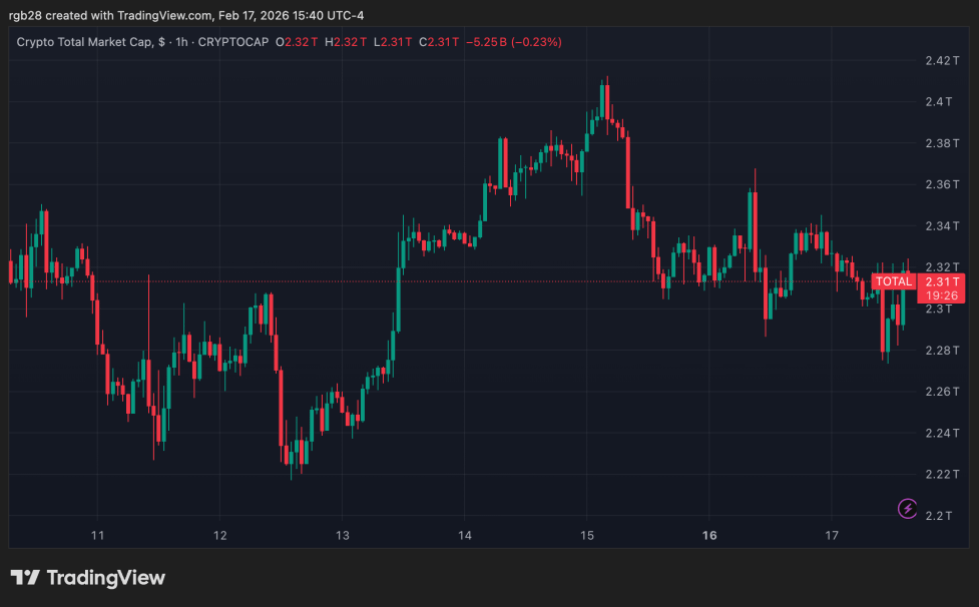
The total crypto market capitalization is at $2.31 trillion in the one-week chart. Source: TOTAL on Tradingview


Trending Cryptos

Related Questions

QWhat did the President of the German central bank support to protect Europe's payment independence?

AThe President of the German central bank, Joachim Nagel, supported the use of euro-pegged stablecoins and Central Bank Digital Currencies (CBDCs) to protect the bloc's payment independence.

QAccording to Nagel, what are the potential risks of stablecoins for the European Union?

ANagel stated that if stablecoins, particularly those denominated in a foreign currency like the US dollar, become widely used as a means of payment and store of value in the euro area, it could lead to a 'dollarization' of the economy, severely impair the effectiveness of domestic monetary policy, and weaken European sovereignty.

QWhat is the current market share of euro-pegged stablecoins compared to USD-denominated ones?

AThe market is dominated by USD-denominated stablecoins, while the share of euro-pegged tokens accounts for less than 1% of the total stablecoin market capitalization.

QWhat specific digital payment solution is the Eurosystem working on, as mentioned by Nagel?

AThe Eurosystem is working on the introduction of the digital euro, which Nagel described as 'the first pan-European retail digital payment solution, based solely on European infrastructures.'

QWhat US law did Nagel mention that provides a regulatory framework for stablecoin issuers?

ANagel mentioned that former US President Donald Trump signed the Guiding and Establishing National Innovation for U.S. Stablecoins Act, also known as the GENIUS Act, into law, which offers a legal framework for stablecoin issuers to operate within the US.

Related Reads

Ethereum Q1 2026 Report: Fees Decline, Users and Transaction Volume Hit New Highs

Ethereum Q1 2026 Report: Fees Down, Users & Transactions Hit New Highs Token Terminal's Q1 2026 report on Ethereum presents a pivotal development: the network achieved record highs in monthly active users (13.2M, +85.9% YoY), total transactions (200.4M, +81.5% YoY), and throughput (25.78 TPS), while transaction fees on the mainnet plummeted by 47.9% quarter-over-quarter. This shift is attributed to the network's strategic move into a "low fees for scale" phase, exemplified by the Fusaka upgrade which increased data capacity and lowered block space costs, releasing pent-up demand (a manifestation of Jevons's Paradox). The report highlights a core narrative shift for Ethereum: from a DeFi-centric blockchain to a global financial settlement layer. It maintains a dominant position in tokenized assets, holding majority market shares among top chains in stablecoins (61.8%), tokenized funds (73.0%), and tokenized commodities (84.0%). Growth in tokenized funds (+73.1% YoY) and commodities (+325.9% YoY) was particularly strong, driven by institutions like BlackRock and JPMorgan entering the space. Contrasting these usage gains, several USD-denominated value metrics declined in Q1: fully diluted market cap fell 30.3% QoQ, total value locked (TVL) dropped 11.0%, and ecosystem transaction volume decreased 24.0%. The report interprets this as Ethereum prioritizing long-term network expansion and cementing its role as the default settlement layer for finance over short-term fee capture. The commentary from Etherealize argues that, much like the early internet, Ethereum's open, permissionless model is poised to win over closed alternatives as institutional tokenization accelerates.

marsbit1h ago

Ethereum Q1 2026 Report: Fees Decline, Users and Transaction Volume Hit New Highs

marsbit1h ago

He Just Raised 2.7 Billion, and Li Fei-Fei Also Invested

Pete Florence, a former senior research scientist at Google DeepMind and a key contributor to the Vision-Language-Action (VLA) model architecture, is deliberately distancing his startup, Generalist AI, from the trendy "world model" label. He argues that the industry should prioritize concrete goals over buzzwords. His goal is to create robots that can perform a vast range of unseen tasks with high speed and success rates, without needing task-specific training data. Recently, his company raised $400 million (¥2.7 billion) at a $2 billion valuation. Notable investors include NVIDIA's NVentures, Bezos Expeditions, NFDG, as well as Xiaomi co-founder Lin Bin, Zoom founder Eric Yuan, and renowned AI scientist Fei-Fei Li. Florence's approach stems from his academic background at MIT under Professor Russ Tedrake, focusing on understanding the physical world. After joining DeepMind, he developed models like Transporter Network and co-created the VLA framework. He left in 2025 to found Generalist AI. The company has launched two models: GEN-0, which demonstrated that scaling laws apply to physical motion, and GEN-1. GEN-1 was trained on over 500,000 hours of physical interaction data collected via a specialized wearable device. It achieves a 99% success rate on precise mechanical tasks like folding boxes and maintains performance three times faster than its predecessor. Florence believes GEN-1 is reaching a commercial utility threshold similar to the GPT-3 inflection point. The substantial funding round, following GEN-1's release, signifies strong investor confidence in Generalist AI's practical, goal-driven path to creating versatile, useful robots, regardless of the "world model" terminology.

marsbit1h ago

He Just Raised 2.7 Billion, and Li Fei-Fei Also Invested

marsbit1h ago

Two Legends Lost in Three Days: Is Google's AI Talent Dam Cracking?

In three days, Google lost two AI legends. On June 18, Noam Shazeer, co-author of the seminal "Attention is All You Need" paper and Gemini co-lead, left for OpenAI. Just 48 hours later, John Jumper, 2024 Nobel laureate and AlphaFold lead, departed DeepMind for Anthropic. This follows Andrej Karpathy joining Anthropic in May. These moves highlight a structural trend: top AI talent is concentrating at mission-driven, pre-IPO firms like OpenAI and Anthropic, while Google becomes a primary source. The exodus stems from a core mission mismatch. Google's ad-centric model often subordinates AI research to product and revenue goals, creating friction for pioneers like Shazeer, who returned in 2024 only to leave again. In contrast, OpenAI and Anthropic offer singular focus on pushing AI boundaries, whether towards AGI or safety-aligned models, which deeply appeals to top researchers like Jumper. Financial incentives amplify the pull. With both OpenAI and Anthropic nearing IPO, employees stand to gain immensely from equity, an upside Google's mature stock cannot match. Furthermore, the 2023 merger of Google Brain and DeepMind, intended to consolidate strength, has instead created cultural tension and slowed the path from research to product, as evidenced by Gemini's pace. This talent redistribution is reshaping the AI landscape. While Google retains vast data and compute resources, its true crisis is the quiet, continuous loss of the people who define the field's future. The real moat in AI is not infrastructure, but the concentration of brilliant minds—a battle Google is currently losing.

marsbit3h ago

Two Legends Lost in Three Days: Is Google's AI Talent Dam Cracking?

marsbit3h ago

Behind the AI Report Card, Lies a Chinese 'Exam Setter'

Beyond the familiar performance charts like MMLU-Pro and MMMU, which major AI models strive to ace, stands a key "examiner": Chinese-Canadian researcher Wenhu Chen. An assistant professor at the University of Waterloo and founder of TIGERLab, Chen addresses the crucial need for more rigorous AI evaluation. As models like GPT-4 began scoring near-perfect results on older benchmarks like MMLU, it became difficult to distinguish their true capabilities. In response, Chen introduced MMLU-Pro in 2024, featuring harder, more reasoning-focused questions with more answer choices, successfully reintroducing meaningful performance gaps. His work extends to multi-modal evaluation with MMMU and its enhanced version, MMMU-Pro. These benchmarks test a model's ability to understand and reason with complex information from images, charts, and text across diverse academic subjects, exposing the significant challenges even top models face in genuine comprehension. Chen's background in complex QA, table reasoning, and his experience at Google DeepMind on projects like Gemini inform his approach. He understands that effective benchmarks must anticipate how models might "cheat" by memorizing data or avoiding visual analysis. His lab also actively researches video understanding and generation models (e.g., UniVideo, Vamba), ensuring his evaluation work is grounded in practical model-building challenges. Now at Meta's Super Intelligence Lab, Chen continues his focus on multi-modal data and evaluation, representing the deep yet often unseen contributions of Chinese talent in shaping the fundamental tools of the AI industry.

marsbit3h ago

Behind the AI Report Card, Lies a Chinese 'Exam Setter'

marsbit3h ago

Trading

Spot
Futures

Hot Articles

What is $BANK

Bank AI: A Revolutionary Step in the Future of Banking Introduction In an era marked by rapid advancements in technology, Bank AI stands at the intersection of artificial intelligence (AI) and banking services. This innovative project seeks to redefine the financial landscape, enhancing operational efficiency, security measures, and customer experiences through the power of AI. As we embark on this exploration of Bank AI, we will delve into what the project entails, its operational dynamics, its historical context, and significant milestones. What is Bank AI? At its core, Bank AI represents a transformative initiative aimed at integrating artificial intelligence into various banking operations. This project harnesses the capabilities of AI to automate processes, improve risk management protocols, and enhance customer interaction through personalised services. The primary objectives of Bank AI include: Automation of Banking Functions: By leveraging AI technologies, Bank AI aims to automate routine tasks, reducing the burden on human resources and enhancing efficiency. Enhanced Risk Management: The project utilises AI algorithms to predict and identify risks, thereby fortifying security measures against fraud and other threats. Personalisation of Banking Services: Bank AI focuses on offering tailored financial products and services by analysing customer data and behaviours. Improving Customer Experience: The implementation of AI-driven solutions, such as chatbots and virtual assistants, aims to provide users with more human-like interactions, revolutionising the way customers engage with banks. With these goals, Bank AI positions itself as a crucial player in rendering banking more efficient, secure, and user-centric. Who is the Creator of Bank AI? Details regarding the creator of Bank AI remain unknown. As such, no specific individual or organisation has been identified in the available information. The anonymity surrounding the project's inception raises questions but does not detract from its ambitious vision and objectives. Who are the Investors of Bank AI? Similar to the project's creator, specific information regarding the investors or supporting organisations of Bank AI has not been disclosed. Without this information, it is challenging to outline the financial backing and institutional support that might be propelling the project forward. Nevertheless, the importance of having a robust investment foundation is pivotal for sustaining development in such an innovative field. How Does Bank AI Work? Bank AI operates on several innovative fronts, focusing on unique factors that differentiate it from traditional banking frameworks. Below are key operational features: Automation: By applying machine learning algorithms, Bank AI automates various manual processes within banks. This results in reduced operational costs and allows human workers to redirect their efforts towards more strategic activities. Advanced Risk Management: The integration of AI into risk management practices equips banks with tools to accurately predict potential threats such as fraud, ensuring that customer information and assets remain secure. Tailored Financial Recommendations: Through continuous learning from customer interactions, the AI systems develop a nuanced understanding of user needs, enabling them to offer tailored advice on financial decisions. Enhanced Customer Interactions: Utilizing chatbots and virtual assistants powered by AI, Bank AI enables a more engaging customer experience, allowing users to have their queries resolved quickly, thus reducing wait times and improving satisfaction levels. Together, these operational features position Bank AI as a pioneer in the banking sector, establishing new benchmarks for service delivery and operational excellence. Timeline of Bank AI Understanding the trajectory of Bank AI requires a look at its historical context. Below is a timeline highlighting important milestones and developments: Early 2010s: The conceptualisation of AI integration into banking services began to gain attention as banking institutions recognised the potential benefits. 2018: A marked increase in the implementation of AI technologies occurred when banks started using AI tools like chatbots for basic customer service and risk management systems for improved security handling. 2023: The sophistication of AI continued to advance, with generative AI being introduced for more complex tasks such as document processing and real-time investment analysis. This year marked a significant leap in the capabilities afforded to banks by AI technology. 2024-Current Status: As of this year, Bank AI is on an upward trajectory, with ongoing research and developments poised to further enhance capabilities in banking operations. Continued exploration of AI applications hints at exciting developments yet to come. Key Points About Bank AI Integration of AI in Banking: Bank AI focuses on adopting artificial intelligence to streamline banking processes and improve user experiences. Automation and Risk Management Focus: The project strongly emphasises these areas, aiming to shift the burden of routine tasks while enhancing security frameworks through predictive analytics. Personalised Banking Solutions: By harnessing customer data, Bank AI enables tailored banking services that cater to individual user needs. Commitment to Development: Bank AI remains committed to ongoing research and development efforts, ensuring its adaptability and ongoing relevance as technology continues to evolve. Conclusion In summary, Bank AI exemplifies a crucial step forward in the banking industry, leveraging artificial intelligence to reshape operational paradigms, enhance security, and promote customer satisfaction. Despite gaps in information surrounding the creator and investors, the clear objectives and functional mechanisms of Bank AI provide a strong foundation for its ongoing evolution. As AI technology continues to advance and merge with the banking sector, Bank AI is well-positioned to significantly impact the future of financial services, enhancing the way we understand and interact with banking.

160 Total ViewsPublished 2024.04.06Updated 2024.12.03

What is $BANK

Discussions

Welcome to the HTX Community. Here, you can stay informed about the latest platform developments and gain access to professional market insights. Users' opinions on the price of BANK (BANK) are presented below.

活动图片