From Technology to Institutions: Analyzing the Four Core Turning Points of Ethereum in 2026

marsbitPublished on 2026-01-07Last updated on 2026-01-07

Abstract

This analysis examines four pivotal turning points for Ethereum in 2026, highlighting its potential transition into a structural bull market driven by institutional adoption and technical upgrades. 1. **Staking Reversal**: A dramatic shift in staking dynamics has emerged, with the exit queue dropping to only 80,000 ETH while the entry queue surged to nearly 1 million ETH—a 15-fold difference. This indicates reduced selling pressure and increased investor confidence, with whales accumulating over $3.1 billion in ETH since July 2025. 2. **Institutional Participation**: Institutions are shifting from passive holding to active staking. BitMine Immersion Technologies, holding over 4.11 million ETH, staked 590,000 ETH in just eight days, worth $1.8 billion. ETH spot ETFs saw cumulative inflows exceeding $125 billion, with single-day net inflows reaching $1.74 billion in early 2026. Major firms like BlackRock and Grayscale predict an "institutional era" for Ethereum. 3. **Technical Upgrades**: The Pectra and Fusaka upgrades in 2025 laid the groundwork for Ethereum’s evolution into a global settlement layer. Key improvements include increased validator staking limits, enhanced blob capacity, and PeerDAS for scalable data availability. Future upgrades like Glamsterdam aim to boost Layer 1 TPS beyond 12,000 and improve MEV capture. 4. **RWA Dominance**: Ethereum leads in real-world asset (RWA) tokenization with a 65.5% market share and $12.5 billion TVL. Traditional finance giants ...

Author: Nikka / WolfDAO (X: @10xWolfdao)

Market Status and Core Turning Points
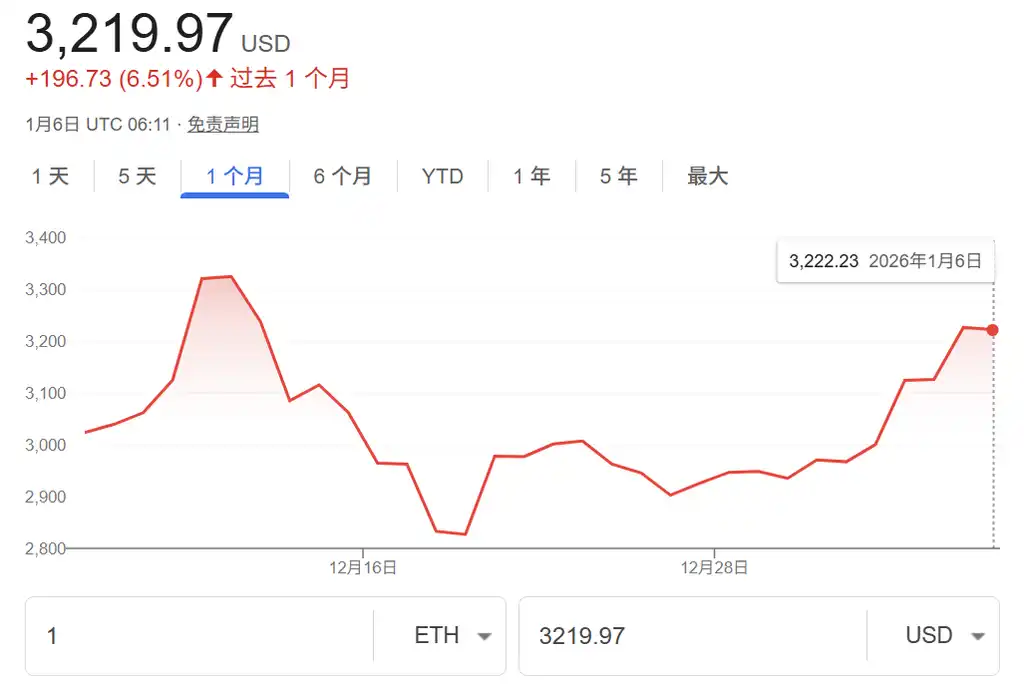
Entering 2026, the total market capitalization of the crypto market has returned to over $3 trillion, with Bitcoin's dominance briefly falling below 60%, sparking discussions about an "altcoin season." Ethereum stands at a critical turning point. In the short term, it has broken through $3,200, showing a significant rebound from the lows at the end of 2025. Although it is still 34% away from the high of $4,700 in September 2025, multiple early signals indicate that ETH may be brewing a structural rally.

1. Staking Queue Reversal: Selling Pressure Significantly Reduced
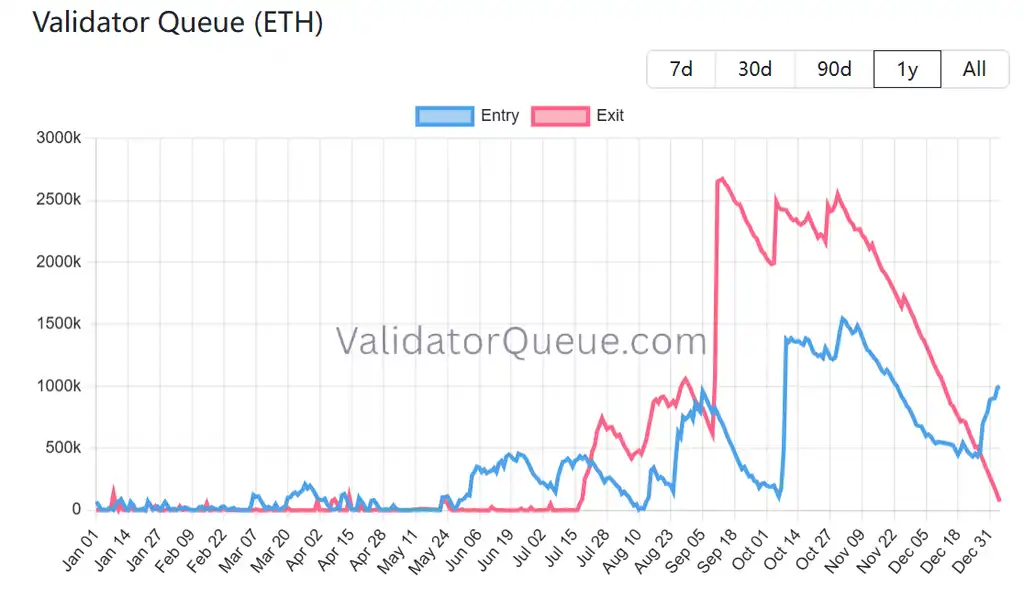
The most important catalyst in 2026 comes from the dramatic reversal of the staking queue. For the first time since July 2025, there has been a "shift in momentum," marking a change in investor confidence from retreating to locking in.

Specifically, when the ETH price surged to around $4,700 in mid-September 2025, a cumulative 2.66 million ETH chose to unstake, creating selling pressure that lasted for months. After three and a half months of digestion, only about 80,000 ETH remain waiting to be unstaked, meaning the source of selling pressure has largely been eliminated. Meanwhile, ETH waiting to enter staking has surged to 900,000–1 million, an increase of about 120% from 410,000 at the end of December. This number is 15 times that of the exit queue, causing the validator activation wait time to extend to 17 days.

Currently, the total staked amount of Ethereum has reached 35.5 million ETH, accounting for 28.91% of the circulating supply, with an annualized yield maintained at 3–3.5%. Historical data shows that when the entry queue significantly leads the exit queue, it often signals a price increase. This supply lock-up will significantly reduce the liquid ETH on the market. Combined with whales buying over $3.1 billion since July 2025, this forms a strong foundation for a rally.

2. Institutional Entry: From Passive Holding to Active Participation

If the staking reversal is a supply-side signal, then the frenzy of institutional entry is the core driver on the demand side. The world's largest Ethereum treasury company, BitMine Immersion Technologies, is rewriting the rules of the game. The company holds over 4.11 million ETH, accounting for 3.41% of the total supply, but more importantly, it is shifting from "passive holding" to "active yield generation."

In the last 8 days, BitMine staked over 590,000 ETH, worth over $1.8 billion. On January 3 alone, it staked 82,560 ETH in a single transaction, worth approximately $259 million. The company plans to stake 5% of Ethereum's total supply through its own validator network, MAVAN, in the first quarter, with an expected annualized revenue of $374 million. This aggressive action not only pushed up the staking queue but also caused BMNR's share price to surge by 14%.
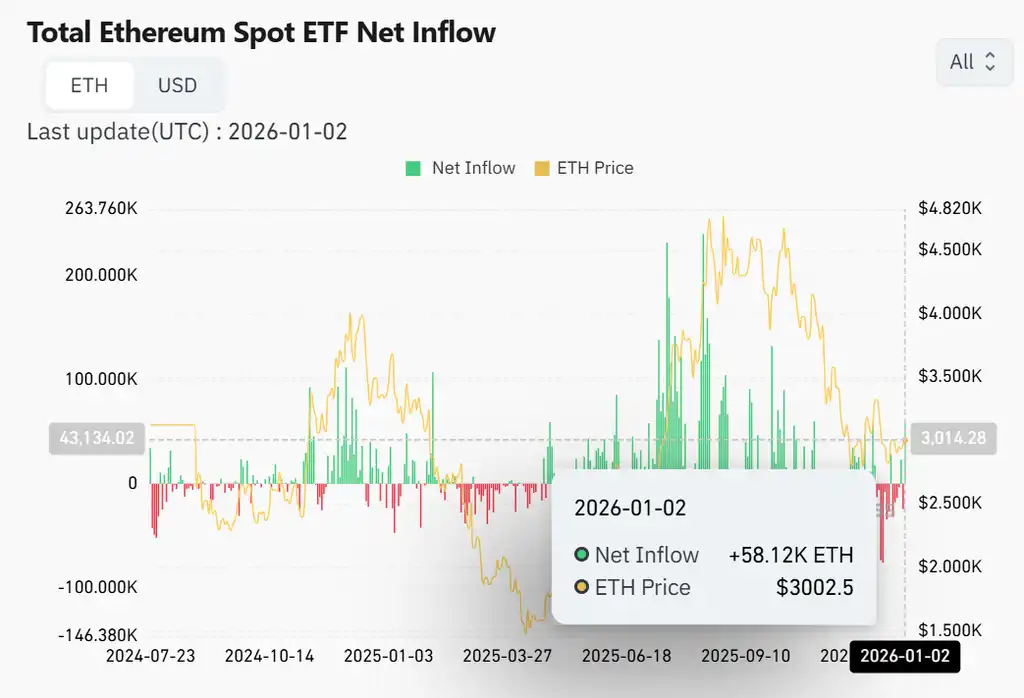
The broader institutional trend is equally remarkable. ETH spot ETFs accumulated inflows of over $9.6 billion in 2025, with historical total inflows exceeding $125 billion. At the beginning of 2026, single-day net inflows reached $1.74 billion. BlackRock's ETHA fund holds about 3 million ETH, worth nearly $9 billion. Institutions like Coinbase and Grayscale predict that 2026 will usher in an "era of institutions," with more ETP products and on-chain vaults expected to double the assets under management.

Meanwhile, on-chain accumulation addresses bought over 10 million ETH in 2025, setting a historical record. These data collectively point to one fact: institutions no longer view ETH as a purely speculative asset but as an infrastructure asset with yield potential.

3. Technical Updates: Evolving into a Global Settlement Layer

2025 was a big year for Ethereum's technology. The Pectra and Fusaka upgrades were successively implemented, laying a solid foundation for further growth in 2026. This is not just a simple performance optimization but a strategic transformation—turning Ethereum into a high-throughput, low-cost global settlement layer.

The Pectra upgrade was completed in the first half of 2025, with its core breakthrough being EIP-7251, which increased the validator staking limit from 32 ETH to 2,048 ETH, greatly facilitating large-scale institutional staking. It also increased blob capacity and optimized validator mechanisms, reducing network congestion. This cleared technical obstacles for aggressive staking actions by institutions like BitMine.

More critical is the Fusaka upgrade. Launched in December 2025, this upgrade introduced PeerDAS (Peer-to-Peer Data Availability Sampling), fundamentally changing the way Layer 2 data is stored. Full nodes no longer need to download all blob data, theoretically supporting an 8x or more increase in blob capacity. Layer 2 fees are expected to decrease by 40–90% in 2026. EIP-7892 allows for dynamic adjustment of blob parameters in the future, enabling continuous scaling without hard forks—this is an institutional guarantee for long-term scalability.

The roadmap for 2026 is even more aggressive. The planned Glamsterdam upgrade will introduce Verkle Trees, enshrined proposer-builder separation (ePBS), and block-level access lists, pushing Layer 1 TPS beyond 12,000+ and strengthening MEV extraction mechanisms, significantly improving network efficiency and revenue capture capabilities. These technical advancements are not just theoretical—smart contract deployments and call counts have hit historical highs, with on-chain activity reaching unprecedented levels.

4. RWA Monopoly: Dominating Trillion-Dollar Opportunities

Ethereum's dominant position in the tokenization of real-world assets is becoming the strongest narrative engine for 2026. This is not just hype within the crypto circle but a vote of confidence from traditional financial institutions with real money.
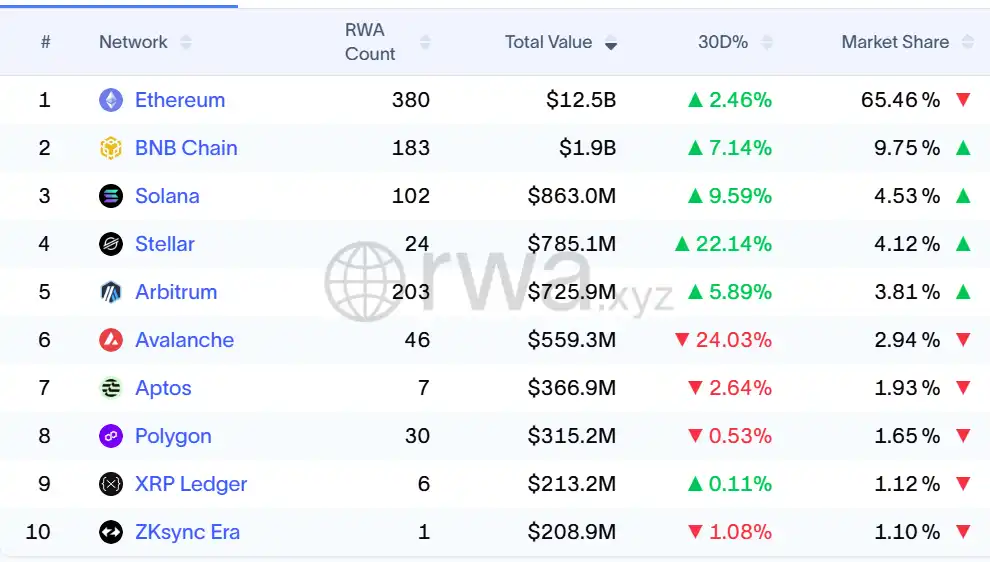
According to the latest statistics from RWA.xyz, the TVL of tokenized assets on Ethereum has reached $12.5 billion, with a market share of 65.5%, far surpassing BNB Chain's $2 billion, and Solana and Arbitrum's less than $1 billion each. Wall Street giants like BlackRock and JPMorgan have already tokenized treasury bonds, private credit, and fund products on a large scale. The RWA market grew by over 212% in 2025, with a total scale exceeding $12.5 billion, and institutional surveys show that 76% of asset management companies plan to invest in tokenized assets by 2026.

Institutions predict that the RWA market will expand by more than 10x in 2026. As the most mature and secure settlement layer, Ethereum will capture the vast majority of value from this trillion-dollar opportunity. The clarification of regulatory frameworks—especially the expected passage of the CLARITY Act and stablecoin legislation in the first half of the year—will further accelerate this process.

The stablecoin sector is similarly one-sided. Ethereum hosts over $62 billion in circulation, accounting for more than 62% of the market, and 68% of DeFi TVL. B2B payments, cross-border settlements, and other institutional-level scenarios are rapidly migrating on-chain. Artemis reports show that Ethereum's stablecoin B2B payment volume grew steadily between 2024 and 2025. This is not speculative capital but real demand from the实体经济.

Conclusion

Combining the three forces of supply, demand, and technology, Ethereum is highly likely to achieve a narrative shift from "follower" to "leader" in 2026. This will be an institution-driven structural bull market, not a speculative frenzy driven by retail sentiment.

For the ETH loyalists who have endured tough times over the past few years, 2026 may be the year of兑现. However, this is a possibility, not a certainty. Patience and rationality remain essential in this残酷 market.


Related Questions

QWhat are the four core turning points for Ethereum in 2026 as analyzed in the article?

AThe four core turning points are: 1. The dramatic reversal of the staking queue, which significantly reduces selling pressure. 2. Institutional entry, shifting from passive holding to active participation and staking. 3. Technical upgrades (Pectra and Fusaka), evolving Ethereum into a high-throughput, low-cost global settlement layer. 4. Dominance in the Real World Asset (RWA) tokenization market, capturing a trillion-dollar opportunity.

QWhat does the reversal of the staking queue indicate for Ethereum's market dynamics?

AThe reversal indicates a major shift in investor sentiment from withdrawing and selling to locking up their ETH. With the exit queue nearly empty (only ~80k ETH) and the entry queue surging to 90-100k ETH, it creates significant supply lock-up, reducing liquid ETH on the market and forming a strong foundation for price appreciation.

QHow is BitMine Immersion Technologies changing its strategy regarding its Ethereum holdings?

ABitMine is shifting from passive holding to active yield generation. The company, which holds over 4.11 million ETH, has staked over 590,000 ETH (worth over $1.8 billion) in just 8 days. It plans to stake 5% of Ethereum's total supply through its own validator network, MAVAN, in Q1, targeting an estimated annualized yield of $374 million.

QWhat were the key technical improvements introduced by the Pectra and Fusaka upgrades?

AThe Pectra upgrade introduced EIP-7251, which increased the validator staking limit from 32 ETH to 2048 ETH, facilitating large-scale institutional staking. The Fusaka upgrade introduced PeerDAS (Peer-to-Peer Data Availability Sampling), which allows for an 8x+ increase in blob capacity and is expected to reduce Layer 2 fees by 40-90% in 2026. It also included EIP-7892 for dynamic blob parameter adjustments.

QWhy is Ethereum considered the dominant platform for Real World Asset (RWA) tokenization?

AEthereum dominates with $12.5 billion in tokenized asset TVL, capturing a 65.5% market share. Major traditional financial giants like BlackRock and JPMorgan are using it to tokenize assets such as treasury bonds and private credit. Its mature, secure infrastructure and upcoming clear regulatory frameworks are expected to allow it to capture the majority of value from this rapidly expanding trillion-dollar market.

Related Reads

Near Returns to the AI Stage: Transformation into a Public Chain Due to 'Payroll Difficulties,' Agent and Privacy Emerge as New Growth Narratives

NEAR Returns to AI Origins: From Payroll Struggles to Blockchain, Now Focusing on AI Agents and Privacy NEAR Protocol's journey began not with grand blockchain ambitions, but from a practical hurdle: its AI startup founders, including Transformer paper co-author Illia Polosukhin, couldn't efficiently pay international developers in 2017. This led them to pivot and build a high-performance, scalable blockchain. After years navigating various crypto narratives like sharding and cross-chain interoperability, NEAR is now leveraging its AI roots to re-enter the AI arena. A key driver is its "NEAR Intents" layer, which abstracts complex cross-chain transactions. Users simply state their goal (e.g., swap BTC for ETH), and a solver network finds the optimal route. This system has processed over $20B in cross-chain volume, generating significant fee revenue. A major growth area is private transactions via "Confidential Intents/Swaps," which hide trade details until settlement to protect against MEV and front-running. Remarkably, private swaps recently accounted for over 40% of NEAR's transaction volume, highlighting strong demand but also potential regulatory scrutiny. With its AI-founder pedigree, NEAR is positioning itself at the intersection of blockchain, AI agents, and privacy, aiming to become infrastructure for the emerging agent economy while navigating the challenges of its rapid adoption.

marsbit1h ago

Near Returns to the AI Stage: Transformation into a Public Chain Due to 'Payroll Difficulties,' Agent and Privacy Emerge as New Growth Narratives

marsbit1h ago

From Ethereum to AI's 'CROPS': What Exactly is This Set of 'Slow Variables' That Vitalik Repeatedly Emphasizes?

In recent discussions, Vitalik Buterin has frequently emphasized the concept of "CROPS," a framework defining core values for Ethereum's development. CROPS stands for Censorship Resistance, Capture Resistance, Open Source, Privacy, and Security. Initially outlined in the Ethereum Foundation's "EF Mandate," it represents a commitment to user sovereignty, ensuring that the network resists external control, remains open, protects privacy, and prioritizes security. The relevance of CROPS extends beyond Ethereum's foundational principles, becoming crucial in the context of AI integration. As AI agents begin handling wallet operations and automated transactions, the risk increases that users may cede control over their digital assets, privacy, and intentions to centralized AI service providers. A "CROPS AI" would therefore emphasize local execution where possible, privacy-preserving remote model calls (e.g., using zero-knowledge proofs), and transparent, verifiable processes to maintain user agency. Vitalik highlights a significant convergence between "CROPS Ethereum access layer" and "CROPS AI." Both address the same fundamental challenge: how users can access powerful services—be it blockchain data via RPCs or AI models—without exposing sensitive information or relinquishing ultimate control. This intersection points toward a future digital entry point that is more private, secure, and user-controlled. Ultimately, CROPS is not merely an abstract ideal but a practical guidepost. It steers development—from protocol resilience and wallet design to AI agent safety—towards a future where users retain self-sovereignty even as digital systems grow more complex and powerful. In an era of accelerating AI adoption, these "slow variables" of censorship resistance, openness, privacy, and security may define Ethereum's enduring value.

marsbit1h ago

From Ethereum to AI's 'CROPS': What Exactly is This Set of 'Slow Variables' That Vitalik Repeatedly Emphasizes?

marsbit1h ago

Silicon Valley 'Startup Guru' Steve Hoffman: Web3 + AI Could Be a Trap

Silicon Valley investor and "Godfather of Startups" Steve Hoffman warns that combining Web3 with AI is likely a trap, not a promising venture. In an interview, Hoffman argues that while AI is a foundational technology touching all industries, Web3 adds complexity, friction, and regulatory risk without solving mainstream consumer or business needs. He advises founders to focus on deep, specialized applications where startups can out-iterate giants, rather than on generic features easily replicated by large tech companies. Hoffman observes that Silicon Valley will lead foundational AI research, while China excels at rapid, large-scale application and commercialization, particularly in robotics. He stresses that AI-driven autonomous agents capable of collaborative, multi-step tasks are 2-4 years away, which will cause significant job displacement. The solution is not to slow AI but to redesign business models around human-AI collaboration and reform social systems like education and retraining. For startups, Hoffman recommends focusing on vertical, expertise-heavy domains to build defensibility. He sees major opportunities in AI fraud detection and cybersecurity. Key founder mindsets include systemic thinking over feature-focus, relentless customer centricity, building adaptive teams, and deeply understanding AI's capabilities and limits. Hoffman is also leading a non-profit initiative to establish university centers aimed at training future leaders in responsible, human-value-aligned AI innovation.

marsbit2h ago

Silicon Valley 'Startup Guru' Steve Hoffman: Web3 + AI Could Be a Trap

marsbit2h ago

Token Inefficient, Economy Tokenless

The article "Tokens Aren't Economical, Economics Aren't Tokenized" analyzes a pivotal shift in the AI industry from a technology-driven narrative to one dominated by capital efficiency. It highlights two concurrent trends: a severe capital shortage due to the exorbitant and recurring costs of compute (e.g., OpenAI's high burn rate) and a wave of corporate spin-offs where major tech companies are separating their AI units (like Kuaishou's Kling and Baidu's Kunlunxin). The core argument is that AI's "anti-internet" business model, where user growth increases costs rather than profits, has created a disconnect between high valuations and actual cash flow. Spin-offs address this by allowing AI assets to be valued independently. Within a parent company, they are seen as cost centers, but as standalone entities, they are priced based on their growth potential and scarcity in the primary market, leading to massive valuation premiums (e.g., Kling's estimated value tripling post-spin-off). The industry is at an inflection point, moving from "model worship" to "value realization." The competition is evolving from a pure compute (GPU) race to a broader focus on systemic efficiency and full-stack engineering (involving CPUs and orchestration) to achieve viable commercialization. The year 2026 is framed as a critical moment where the industry must definitively answer how to economically translate AI capability into tangible business value, reshaping the sector's future power structure.

marsbit2h ago

Token Inefficient, Economy Tokenless

marsbit2h ago

Trading

Spot
Futures

Hot Articles

Discussions

Welcome to the HTX Community. Here, you can stay informed about the latest platform developments and gain access to professional market insights. Users' opinions on the price of ETH (ETH) are presented below.

活动图片