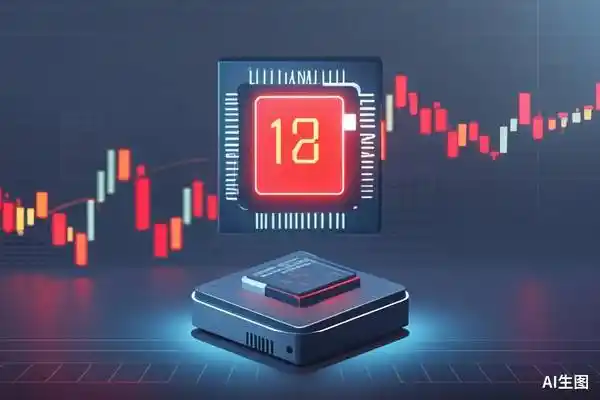
For the First Time in History: Bitcoin Spot Market ETF Decides to Close Down!

cryptonews.ruPublished on 2026-08-06Last updated on 2026-08-06

Abstract

Hashdex, a cryptocurrency asset management company, has announced the closure and liquidation of its U.S.-traded spot Bitcoin ETF, the Hashdex Bitcoin ETF (NYSE Arca: DEFI). This makes DEFI the first spot Bitcoin ETF to be shut down in the United States. According to filings with the SEC, the fund's assets under management were approximately $14.7 million as of July 30, 2026. Hashdex cited factors such as the fund's small size, low trading liquidity, operational costs, investor demand, and the company's overall product strategy for the decision. The low net assets relative to expenses made continuing the fund economically unviable. DEFI was designed to track the daily price movements of Bitcoin by holding physically stored Bitcoin. Investors can sell their shares on NYSE Arca until the close of trading on August 17, 2026. After this date, Hashdex will liquidate the fund's remaining Bitcoin holdings. Investors who have not sold their shares by then will receive a cash distribution around August 28, 2026, equivalent to their shares' net asset value on the liquidation date. The final payout amount will depend on the sale price of Bitcoin, closure-related fees, and potential price volatility during the liquidation process.

Cryptocurrency asset management company Hashdex has announced its decision to close and liquidate the Hashdex Bitcoin ETF (NYSE Arca: DEFI), which traded in the United States. Thus, DEFI will become the first U.S.-listed spot Bitcoin ETF to be shut down.

According to documents filed by the company with the U.S. Securities and Exchange Commission (SEC), the fund's assets under management as of July 30, 2026, were approximately $14.7 million. The total assets managed by Hashdex across other products offered to U.S. investors exceed $200 million.

Hashdex announced that the liquidation decision was made after evaluating factors such as the fund's size, trading liquidity, operating expenses, investor demand, and the company's overall product strategy. The liquidation plan indicated that the fund's low net assets relative to operating costs made it economically unviable for DEFI to continue operating in the long term.

What Was Included in the Hashdex Bitcoin ETF?

DEFI was an exchange-traded fund investing in Bitcoin on the spot market, designed to provide investors with direct access to the daily price fluctuations of Bitcoin. The fund's portfolio consisted solely of physically held Bitcoin and cash for operational needs, share creation and redemption operations, fees, and other obligations.

The fund did not hold any other cryptocurrencies, stocks, or financial assets besides Bitcoin. DEFI's primary objective was for the change in the net asset value of its shares, after expenses, to reflect the daily price movements of the Nasdaq Bitcoin Reference Price–Settlement index.

Investors can sell their DEFI shares on the NYSE Arca exchange until the close of trading on August 17, 2026. After this date, the fund will no longer accept new creation orders for shares from authorized participants. DEFI shares will be delisted from the exchange after the last trading day.

Hashdex will liquidate its portfolio by selling the Bitcoin remaining in the fund after August 17. Investors who have not sold their shares by the last trading day will receive a cash distribution equal to the net asset value of their shares on the liquidation date. According to the company's statement, distributions are expected around August 28, 2026.

The amount to be distributed to investors will depend on the sale price of the Bitcoin, fees associated with closing the fund, and potential Bitcoin price fluctuations during the liquidation process. Hashdex warned investors that price volatility during this period could be significant.

end-content
Trending Cryptos

Related Questions

QWhat is the name and ticker symbol of the Bitcoin spot ETF being closed down by Hashdex?

AThe ETF being closed is the Hashdex Bitcoin ETF, which trades under the ticker symbol DEFI on the NYSE Arca.

QAccording to Hashdex's filing, what was the primary reason for the decision to liquidate the DEFI ETF?

AThe primary reason was that the fund's low net assets compared to its operational expenses made it economically unfeasible to continue operating in the long term.

QUntil what date can investors sell their shares of the DEFI ETF on the open market?

AInvestors can sell their shares on the NYSE Arca up until the market close on August 17, 2026.

QWhat will happen to investors who still hold shares after the last trading day? When will they receive payment?

AInvestors who do not sell their shares before the last trading day will receive a cash payment equivalent to the net asset value of their shares on the liquidation date. Payments are expected to be made around August 28, 2026.

QWhat specific assets made up the portfolio of the Hashdex Bitcoin (DEFI) ETF?

AThe portfolio consisted exclusively of physically held Bitcoin and cash earmarked for operational needs, share creation/redemption, fees, and other obligations. It did not hold any other cryptocurrencies, stocks, or financial assets.

Related Reads

South Korean Stocks Plunge Again, Latest Response from the Blue House

Korean Stock Market Plummets Amid Global Sell-Off, Presidential Office Responds South Korea's stock market experienced a sharp decline on Thursday. The benchmark KOSPI index fell over 4%, with major components SK Hynix and Samsung Electronics dropping over 8% and 5%, respectively. The sell-off quickly spread to related Hong Kong ETFs. The trigger was weak forward guidance from U.S. memory chip giants SanDisk and Western Digital, whose revenue forecasts fell short of lofty market expectations despite strong prior-quarter results. Their subsequent stock plunge led to a sell-off in Asian semiconductor stocks, highlighting the region's dependence on U.S. market sentiment. Since hitting a record high in mid-June, the KOSPI has fallen over 21% in about a month. In response to market volatility, the South Korean government has implemented measures, including raising cash margin requirements for single-stock leveraged ETFs. This led to a significant drop in their trading volume. A senior presidential official stated the focus is on closely monitoring the situation and formulating appropriate countermeasures. Analyst views on the market outlook diverge: while Morgan Stanley sees the sell-off as a buying opportunity due to low valuations, others like China Securities warn of continued high volatility as leverage unwinds. Looking ahead, analysts expect the global memory chip sector to remain in a high-sensitivity phase. However, Goldman Sachs maintains a long-term bullish target of 12,000 for the KOSPI, citing unmet AI-driven demand, with JPMorgan also viewing the pullback as a chance to accumulate positions.

marsbit14m ago

South Korean Stocks Plunge Again, Latest Response from the Blue House

marsbit14m ago

Tiger Research: What Will the Crypto World Look Like in 2036?

Tiger Research envisions the crypto world of 2036 through four narrative vignettes. In a fictional nation with a hyperinflating currency, the local "Bucks" are nearly obsolete. Citizens and eventually the government itself—for taxes, bonds, and salaries—adopt dollar-pegged stablecoins like USDT and USDC, marking a fundamental shift in monetary sovereignty. In Singapore, a young trader named Lia operates in a borderless, 24/7 market. She trades tokenized versions of everything from NVIDIA stock to Korean real estate indices on decentralized platforms, representing a generation for whom constant, global asset exposure is the norm. An infrastructure engineer, Do-hyun, reflects on the consolidation of blockchain networks. The hundreds of independent chains and Layer 2 solutions that boomed in the 2020s, fueled by incentives, have largely collapsed under their own weight. By 2036, only a few major, efficient infrastructures remain, having absorbed liquidity and users. Finally, media entrepreneur Jae-hoon witnesses the end of the traditional web advertising model. With AI agents generating over half of web traffic by 2029, banner ads become irrelevant. The industry pivots to a new machine-to-machine economy, using protocols like the x402 standard to charge AI models micropayments for direct data access, creating a more reliable revenue stream than human eyeballs ever did. The article paints a picture of 2036 defined by stablecoin adoption as sound money, perpetual global trading of all assets, consolidation into few dominant blockchain infrastructures, and the restructuring of digital commerce around AI agents.

marsbit37m ago

Tiger Research: What Will the Crypto World Look Like in 2036?

marsbit37m ago

IOSG: How Can Blockchains Keep Secrets? Three Answers to On-Chain Privacy

**Title: IOSG: How Does Blockchain Keep Secrets? Three Answers to On-Chain Privacy** **Summary:** Public blockchains expose every transaction. To protect sensitive data like institutional balances or trade sizes, three main approaches have emerged: 1. **Native Privacy Networks:** Projects like Zcash (with optional privacy) and Monero (with mandatory privacy) build secrecy directly into their own blockchains. However, they exist as isolated "islands," limiting interaction with mainstream DeFi applications. Canton, a permissioned network, offers privacy by restricting data sharing only to transaction participants, which appealed to JPMorgan for its deposit token. 2. **Privacy as an Add-On Layer:** This approach adds privacy to existing chains like Ethereum. Tornado Cash was an early "mixer" but was sanctioned. Railgun provides private balances and payments via zero-knowledge proofs on Ethereum. Zama uses Fully Homomorphic Encryption (FHE) to encrypt balances and amounts on-chain, enabling confidential DeFi activities like private yield vaults and over-the-counter trading while keeping transaction graphs public. 3. **The Core Trade-off:** All solutions sacrifice some privacy for functionality. Truly private chains (Zcash, Monero) lack smart contract versatility. Add-on layers (Zama, Railgun) reveal some metadata to enable computation. "Perfect" privacy that hides everything while allowing full functionality remains elusive. **Market Reality:** Demand is validated, with institutions moving trades off-screen to avoid slippage. However, the sector's revenue (est. $6-7M/year across all protocols) is minuscule compared to the ~$25B market cap of privacy assets. Protocols like Zama charge minimal, usage-based fees, while others like Railgun take a small percentage. The key gap is a sustainable pricing model. The conclusion is bullish on the underlying demand but suggests value will accrue to the applications (trading venues, wallets) that successfully monetize privacy, not necessarily the foundational privacy layers themselves.

marsbit41m ago

IOSG: How Can Blockchains Keep Secrets? Three Answers to On-Chain Privacy

marsbit41m ago

Trading

Spot

Hot Articles

What is $BITCOIN

DIGITAL GOLD ($BITCOIN): A Comprehensive Analysis Introduction to DIGITAL GOLD ($BITCOIN) DIGITAL GOLD ($BITCOIN) is a blockchain-based project operating on the Solana network, which aims to combine the characteristics of traditional precious metals with the innovation of decentralized technologies. While it shares a name with Bitcoin, often referred to as “digital gold” due to its perception as a store of value, DIGITAL GOLD is a separate token designed to create a unique ecosystem within the Web3 landscape. Its goal is to position itself as a viable alternative digital asset, although specifics regarding its applications and functionalities are still developing. What is DIGITAL GOLD ($BITCOIN)? DIGITAL GOLD ($BITCOIN) is a cryptocurrency token explicitly designed for use on the Solana blockchain. In contrast to Bitcoin, which provides a widely recognized value storage role, this token appears to focus on broader applications and characteristics. Notable aspects include: Blockchain Infrastructure: The token is built on the Solana blockchain, known for its capacity to handle high-speed and low-cost transactions. Supply Dynamics: DIGITAL GOLD has a maximum supply capped at 100 quadrillion tokens (100P $BITCOIN), although details regarding its circulating supply are currently undisclosed. Utility: While precise functionalities are not explicitly outlined, there are indications that the token could be utilized for various applications, potentially involving decentralized applications (dApps) or asset tokenization strategies. Who is the Creator of DIGITAL GOLD ($BITCOIN)? At present, the identity of the creators and development team behind DIGITAL GOLD ($BITCOIN) remains unknown. This situation is typical among many innovative projects within the blockchain space, particularly those aligning with decentralized finance and meme coin phenomena. While such anonymity may foster a community-driven culture, it intensifies concerns about governance and accountability. Who are the Investors of DIGITAL GOLD ($BITCOIN)? The available information indicates that DIGITAL GOLD ($BITCOIN) does not have any known institutional backers or prominent venture capital investments. The project seems to operate on a peer-to-peer model focused on community support and adoption rather than traditional funding routes. Its activity and liquidity are primarily situated on decentralized exchanges (DEXs), such as PumpSwap, rather than established centralized trading platforms, further highlighting its grassroots approach. How DIGITAL GOLD ($BITCOIN) Works The operational mechanics of DIGITAL GOLD ($BITCOIN) can be elaborated on based on its blockchain design and network attributes: Consensus Mechanism: By leveraging Solana’s unique proof-of-history (PoH) combined with a proof-of-stake (PoS) model, the project ensures efficient transaction validation contributing to the network's high performance. Tokenomics: While specific deflationary mechanisms have not been extensively detailed, the vast maximum token supply implies that it may cater to microtransactions or niche use cases that are still to be defined. Interoperability: There exists the potential for integration with Solana’s broader ecosystem, including various decentralized finance (DeFi) platforms. However, the details regarding specific integrations remain unspecified. Timeline of Key Events Here is a timeline that highlights significant milestones concerning DIGITAL GOLD ($BITCOIN): 2023: The initial deployment of the token occurs on the Solana blockchain, marked by its contract address. 2024: DIGITAL GOLD gains visibility as it becomes available for trading on decentralized exchanges like PumpSwap, allowing users to trade it against SOL. 2025: The project witnesses sporadic trading activity and potential interest in community-led engagements, although no noteworthy partnerships or technical advancements have been documented as of yet. Critical Analysis Strengths Scalability: The underlying Solana infrastructure supports high transaction volumes, which could enhance the utility of $BITCOIN in various transaction scenarios. Accessibility: The potential low trading price per token could attract retail investors, facilitating wider participation due to fractional ownership opportunities. Risks Lack of Transparency: The absence of publicly known backers, developers, or an audit process may yield skepticism regarding the project's sustainability and trustworthiness. Market Volatility: The trading activity is heavily reliant on speculative behavior, which can result in significant price volatility and uncertainty for investors. Conclusion DIGITAL GOLD ($BITCOIN) emerges as an intriguing yet ambiguous project within the rapidly evolving Solana ecosystem. While it attempts to leverage the “digital gold” narrative, its departure from Bitcoin's established role as a store of value underscores the need for a clearer differentiation of its intended utility and governance structure. Future acceptance and adoption will likely depend on addressing the current opacity and defining its operational and economic strategies more explicitly. Note: This report encompasses synthesised information available as of October 2023, and developments may have transpired beyond the research period.

1.5k Total ViewsPublished 2025.05.13Updated 2025.05.13

What is $BITCOIN

Discussions

Welcome to the HTX Community. Here, you can stay informed about the latest platform developments and gain access to professional market insights. Users' opinions on the price of BTC (BTC) are presented below.

活动图片