Ethereum is Building an 'Economic Special Zone', the Archipelago Era is Over

marsbitPublished on 2026-03-31Last updated on 2026-03-31

Abstract

Ethereum is shifting from its fragmented "archipelago" model of Layer-2 solutions to a unified "Ethereum Economic Zone" (EEZ), a new initiative backed by the Ethereum Foundation and key protocols like Aave. This move aims to enable seamless, synchronous transactions across L2s, eliminating the delays and risks of bridges by allowing atomic cross-chain executions settled on Ethereum with ETH gas. However, this comes amid a significant decline in Ethereum’s activity and ETH price, which has dropped over 60% from its 2025 peak. While on-chain data shows Ethereum still holds the largest share of institutional capital—including $163.3B in stablecoins, 58% of real-world assets, and a $53B DeFi TVL—the economic model is struggling. With most activity moving to L2s, mainnet gas fees have collapsed, turning ETH inflationary and undermining its "ultrasound money" narrative. The article suggests Ethereum is becoming a "vault" or utility pipeline—secure and fundamental to global crypto finance, but increasingly boring and unable to capture value through fees. If Ethereum evolves into pure infrastructure like SWIFT, ETH may be revalued based on its utility as a settlement layer rather than speculative growth, challenging current investor expectations.

Author: David, Deep Tide TechFlow

Do you still care about Ethereum?

On February 3rd this year, Vitalik posted on X.

No long essay, just one sentence: The original vision of L2 and its role in Ethereum is no longer reasonable. We need a new path.

For the past five years, Ethereum's entire scaling roadmap has been built on L2. The mainnet is responsible for security and settlement, leaving all execution layer work to L2. Rollups, bridges, cross-chain messaging... The entire architecture was designed under the leadership of Vitalik himself.
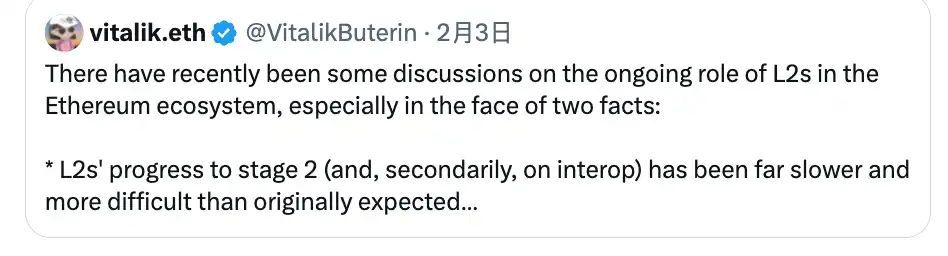
Now the designer himself says this path is wrong.

Less than two months later, at the EthCC Cannes conference on March 29th, Gnosis co-founder Friederike Ernst and zero-knowledge proof developer Jordi Baylina took the stage to announce something called EEZ:

Full name Ethereum Economic Zone.

Co-funded by the Ethereum Foundation, with protocols like Aave joining as founding members. What EEZ aims to do can be summed up in one sentence: make all L2s no longer isolated islands, but one connected continent.

The direction is certainly correct.

But the problem is, this archipelago has been built for five years... The islands were once prosperous, but surely no one is there now. Is it too late to start building tunnels now?

Closing the Stable Door After the Horse Has Bolted?

From the name EEZ, you can actually see what Ethereum wants to do.

The logic of an economic zone is well understood: unified rules within the zone, free flow of capital, no checkpoints. In the past, Ethereum's twenty-plus L2s were like twenty small economies, each with its own customs, currency, and clearance procedures. Moving money from Arbitrum to Base required finding a middleman to exchange currency and bridge.
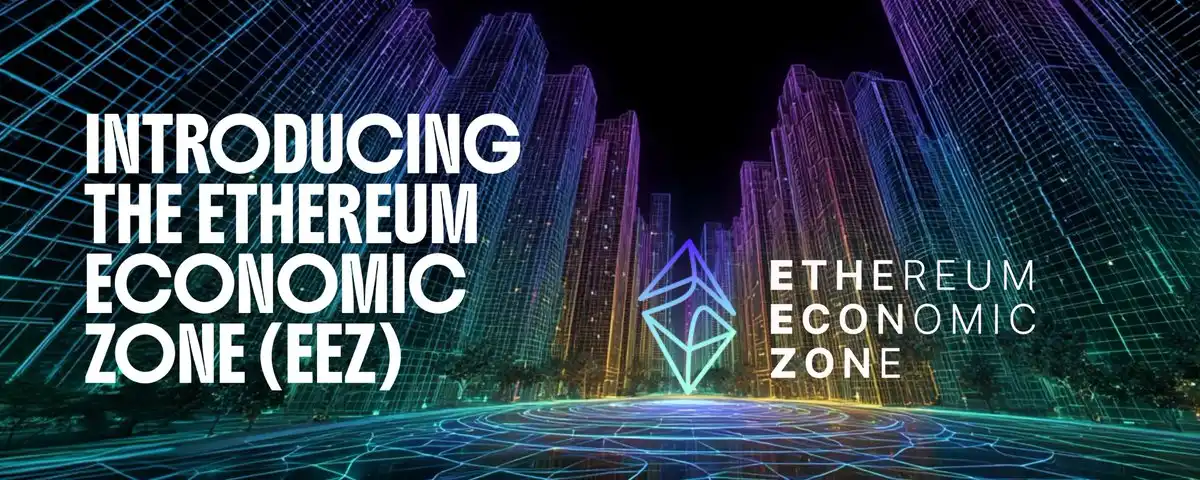
What EEZ aims to do is remove tariffs, unify the currency, and dismantle customs. Your operations on any chain can directly interact with contracts on another chain, settling back to the Ethereum mainnet, with Gas uniformly paid in ETH.

Does that sound familiar?

LayerZero and Wormhole told similar stories back in the day. Connect all chains, free flow of assets... all old tricks.

The difference here is that those cross-chain protocols are asynchronous. For example, you initiate an operation on chain A, and chain B executes it after a while; there's a delay in the middle, a risk of failure, and the bridge itself is a favorite target for hackers.

This EEZ is synchronous. Contracts on two chains execute simultaneously within one transaction, either both succeed or both roll back. The technical prerequisite for this is the real-time proving of Ethereum blocks.

This wasn't possible before. For two chains to operate synchronously, they need to be able to verify each other's ledgers in real-time. But Ethereum produces a new block every 12 seconds, and the speed of verifying the previous block couldn't keep up. The accounting wasn't finished before the next block arrived.

This year, this speed was technically achieved. Synchronous operation became an engineering reality for the first time, leading to the EZZ proposal.

The direction is fine. But if you check Twitter, who is still talking about Ethereum?

It's not just Ethereum that's cold; the whole industry is quiet. Last year there was meme coin frenzy, Solana's comeback, the AI Agent hype. From the start of this year until now, no narrative has taken off.

Ethereum is just colder—ETH dropped from $4800 at the end of 2025 to just over $2000 now, evaporating over 60%. There isn't even much anger in the community, more a kind of weary silence.

From Archipelago to Treasury Era

But if you look at on-chain data, you see a completely different picture.

According to AMBCrypto, the supply of stablecoins on the Ethereum mainnet is still about $163.3 billion. In the $16.5 billion on-chain real-world asset market, Ethereum accounts for 58%. Last year, Ethereum spot ETFs saw a net inflow of $9.9 billion. DeFi TVL is still the highest in the industry, about $53 billion.

The people left, but the money remains. And it's not retail money, it's institutional money.
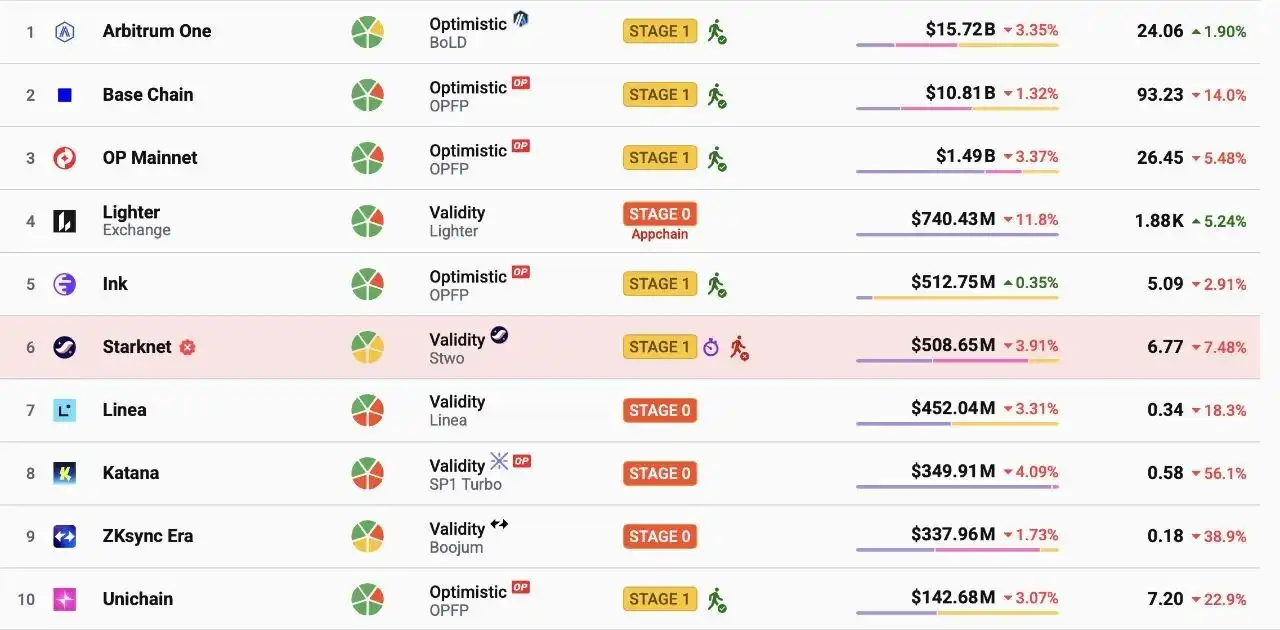
The Ethereum Foundation's own actions point in the same direction. It paused its public grants program in the middle of last year, reducing its burn rate to below 5% per year. But last week it completed its largest single staking event ever—22,517 ETH, worth about $46.2 million, locked into the Beacon Chain.

Cutting the budget while locking money into the treasury, and simultaneously funding an interoperability solution that's arriving last.

All these actions pieced together point to one judgment: Ethereum's archipelago era is indeed over. But what replaces it is not a bustling continent.

It's a treasury.

Quiet, sturdy, filled with institutional assets. Not many people live there, but it holds the most money in the industry.

Even Treasuries Don't Generate Tax Revenue, Ethereum Doesn't Make Money

Ethereum's economic model has a very simple cycle:

Users transact on the mainnet, transactions generate Gas fees, and a portion of the Gas fees (ETH) is permanently burned. The more users, the more burning, the more the ETH supply decreases.

When this mechanism first started running in 2022, the community gave it a name: ultrasound money. Meaning ETH is not only anti-inflation, but deflationary—harder than Bitcoin.

This narrative held for two years. Then L2 dismantled it.

When a large number of transactions moved from the mainnet to L2, the mainnet's Gas fee income collapsed. According to BitKE, Ethereum mainnet revenue has fallen by about 75% over the past two years. One week, the combined blob fees generated by L2s submitting data to the mainnet were only 3.18 ETH.

3.18 ETH, at the price then, was only about $5000.

A network locking $53 billion in TVL, with weekly blob revenue enough for a decent New Year's Eve dinner table in Shanghai.
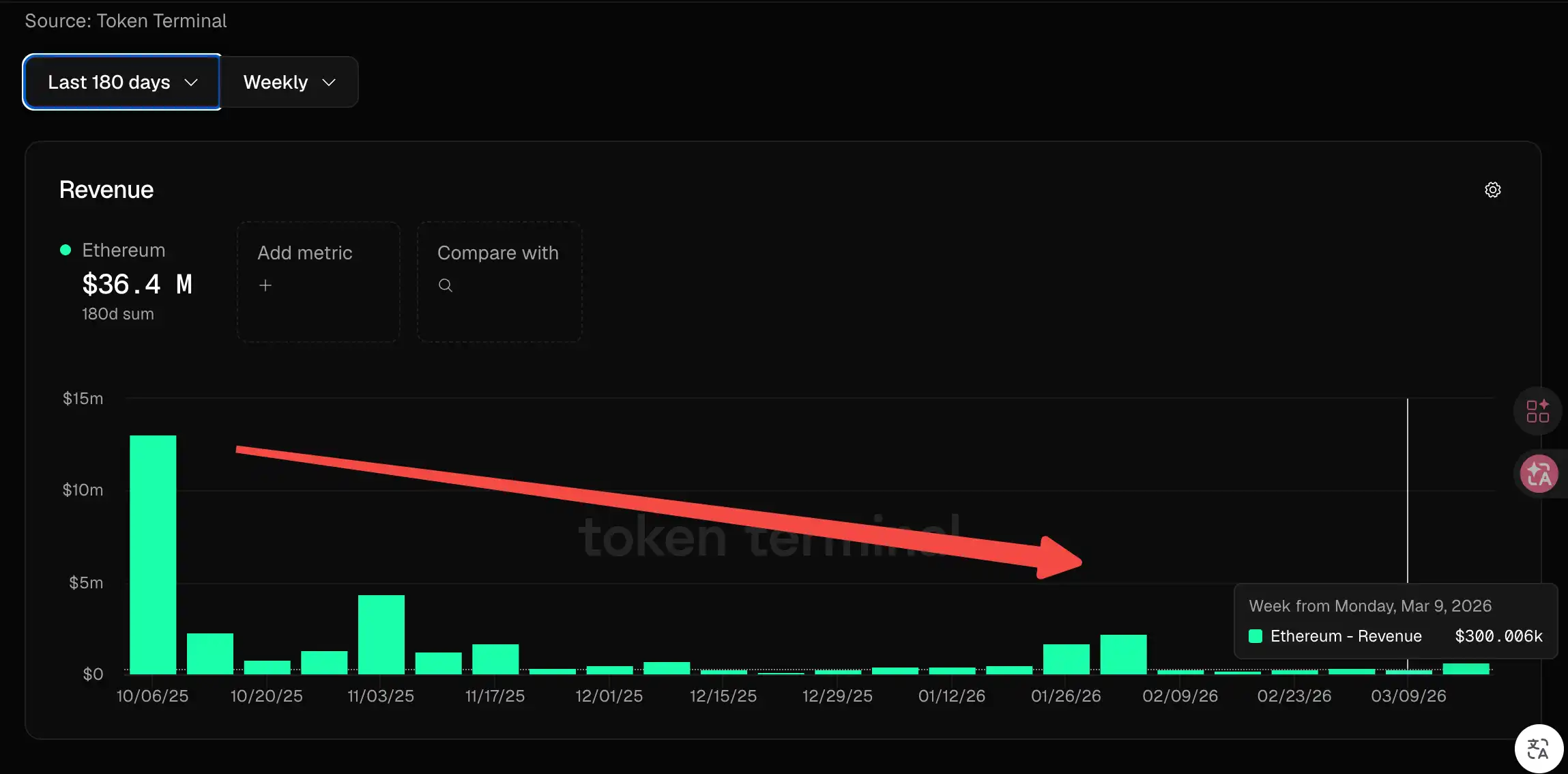
If it can't burn, the supply can't be suppressed. In February this year, ETH's supply officially turned to net growth, with an annualized inflation rate of about 0.74%. "Ultrasound money" became an expired marketing slogan.

This is the cost of the L2 roadmap. Users and transactions move to L2, L2s take the fee income, and the mainnet is left with only settlement work. Settlement is important, but settlement doesn't make money.

To use an analogy, Ethereum built an economic special zone, moved the factories and shops inside, and the zone is bustling. But the tax revenue goes to the zone itself, and the central government's fiscal revenue反而 decreases. The EEZ scheme mentioned in the previous chapter wants to reconnect the special zone to the center, but what it connects back is liquidity, not tax revenue.

The institutional money is locked in the treasury, very safe. But the treasury itself, the ETH asset, is becoming increasingly difficult to narrate because it has no income.

The price drop from $4800 to $2000 is not just an emotional issue. When an asset's core narrative shifts from "deflationary" to "actually still inflationary," the market reprices it.

The situation Ethereum faces now is:

The strongest in the industry in terms of infrastructure, the most institutional capital in the industry, but the economic model is leaking. EEZ fixes fragmentation, but it doesn't fix this.

Is an Uninhabited House Valuable?

Back to the opening question: Do you still care about Ethereum?

The honest answer for most people is probably not really. ETH isn't rising, the narrative is outdated, it's troublesome to use,还不如Solana next door.

But ask it another way: Do you care about the water pipes under your building?

No, you just turn on the tap and there's water. You don't research what purification technology the water plant uses, you don't care what material the pipes are made of, and you certainly don't post on social media because of the pipe brand.

Ethereum is becoming that water pipe.

$53 billion TVL, $163.3 billion in stablecoins, 58% of the industry's real-world assets, nearly $10 billion in annual ETF inflows... These numbers indicate one thing: most of the global crypto-financial on-chain clearing is still done on Ethereum.

Not because users like Ethereum, but because institutions can't find a second pipe as thick.

What the economic zone EEZ is doing now is essentially increasing the diameter of this pipe—allowing institutional funds to flow faster between L2s, reducing settlement friction. This is useful, even necessary.

But pipes have one characteristic: no one wants to pay a premium for a pipe.

Water companies are one of the most important infrastructures in a city, but have you ever seen a water company's P/E ratio higher than an internet company's? The global clearing giant DTCC processes over $2000 trillion in transactions annually, but almost no one discusses its stock price.

If Ethereum truly moves towards becoming a treasury, a pipe, it will become extremely important, and simultaneously extremely boring. Important enough that all institutional money passes through it, boring enough that no retail investor wants to hold ETH waiting for it to rise.

But most people holding ETH today are still pricing it according to the logic of a "city." Users will grow, the ecosystem will prosper, L2 will feed back to the mainnet, the coin price will hit new highs? This is the story the Ethereum community has been telling itself for the past five years.

The reality is, Ethereum is becoming SWIFT, not New York.

SWIFT handles over $150 trillion in cross-border payments annually, and the global financial system cannot do without it. But no one speculates on SWIFT's stock because the valuation logic of infrastructure is stability.

ETH's drop from $4800 to $2000 is not just emotion; the market is re-understanding what this asset actually is.

If Ethereum's future is a treasury, then ETH's reasonable pricing shouldn't be based on user numbers and ecosystem heat, but on how much value it can capture annually as a settlement layer. At the current level of $5000 weekly mainnet blob revenue, that answer isn't very pretty.

The archipelago era is over. EEZ is here, the institutional money remains. But for those holding ETH, there's really only one thing to figure out clearly:

Did you buy a house in a city, or the right to use a pipe.

Trending Cryptos

Related Questions

QWhat is the Ethereum Economic Zone (EEZ) and what problem does it aim to solve?

AThe Ethereum Economic Zone (EEZ) is a new initiative announced at EthCC Cannes, backed by the Ethereum Foundation and protocols like Aave. Its goal is to connect all Ethereum Layer 2s (L2s) into a unified economic zone, eliminating the current fragmentation where each L2 operates as an isolated 'island' with its own rules, currencies, and bridging processes. EEZ aims to enable synchronous operations across L2s, allowing transactions to interact with contracts on different chains simultaneously and settle on the Ethereum mainnet using ETH for gas, thereby improving capital efficiency and user experience.

QAccording to the article, why did Vitalik Buterin state that the original vision for L2s is 'no longer reasonable'?

AVitalik Buterin stated that the original vision for Layer 2s (L2s) and their role in Ethereum is 'no longer reasonable' because the five-year scaling roadmap, which relied on L2s for execution while the mainnet handled security and settlement, has led to significant unintended consequences. The main issue is that the economic model is 'leaking': transaction activity and fee revenue have largely moved to L2s, drastically reducing the mainnet's gas fee income and causing ETH's supply to become inflationary again, undermining its 'ultrasound money' narrative.

QWhat does the article mean by Ethereum entering a 'treasury era' or becoming a 'vault'?

AThe article uses the terms 'treasury era' and 'vault' to describe Ethereum's current state where a massive amount of institutional capital (e.g., $1633B in stablecoins, 58% of the on-chain real-world asset market, $99B ETF inflows) remains locked on the chain, but active user engagement and retail interest have significantly declined. It has become a secure, foundational settlement layer for global crypto finance—like a fortified vault storing immense value—but it is no longer a vibrant city with a growing ecosystem and users, making it 'important yet boring'.

QHow has the shift of activity to L2s impacted Ethereum's economic model and the ETH token?

AThe shift of user activity and transactions to L2s has severely damaged Ethereum's economic model. The mainnet's gas fee revenue, which was used to burn ETH and create deflationary pressure, has collapsed (e.g., reported blob fees as low as 3.18 ETH in a week). This has caused ETH's inflation rate to turn positive (approx. 0.74% annualized), ending the 'ultrasound money' narrative. Consequently, ETH's price has fallen over 60% from its peak, as the market reprices the asset based on its reduced capacity to capture value and generate fees.

QWhat is the fundamental valuation question the article poses for ETH holders?

AThe article poses a critical valuation question for ETH holders: are they investing in the potential of a growing, vibrant 'city' (with user growth, ecosystem expansion, and price appreciation) or are they merely buying a 'utility token' for a foundational financial 'pipe'? If Ethereum's future is that of a decentralized settlement infrastructure-like SWIFT or DTCC—essential but boring—then ETH should be valued based on the fees it captures as a结算层 (settlement layer), not on speculative ecosystem growth, which would imply a lower valuation multiple.

Related Reads

Michael Saylor: Bitcoin Halved, My Digital Credit is Making Money

Michael Saylor discusses Bitcoin, digital credit, and corporate treasury strategies in a recent roundtable. He explains that while Bitcoin remains "digital capital" with no counterparty risk, its ~40% annual volatility makes it unsuitable for most institutional and retail capital. To attract this capital, he advocates for Bitcoin-backed "digital credit" and "digital currency" products. These offer low volatility against fiat currencies, generate yield, and compete with traditional money market funds, stablecoins, and other yield-bearing crypto assets. Saylor clarifies that these products are not meant to replace direct Bitcoin ownership but to onboard capital that otherwise wouldn't enter the Bitcoin ecosystem. He provides examples: during a period when Bitcoin fell 50%, his company's digital credit products (STRC, SATA) delivered positive returns of 3-4%, demonstrating their ability to strip out ~90% of Bitcoin's volatility. He frames "digital currency" as a fiat-referenced, yield-bearing, stable-value asset backed by Bitcoin, designed to meet the needs of the global capital pool. This approach, he argues, can expand the Bitcoin network's reach by 10x to 100x more effectively than pure education. The discussion also covers corporate finance for Bitcoin treasury companies. Saylor argues that equity issuance is not inherently dilutive if done above net asset value per share and if the acquired asset (Bitcoin or cash) supports future value creation. He distinguishes between debt with maturity dates and hybrid capital like preferred shares (e.g., STRC), which offer issuer options and do not force liquidation. Evaluating these companies requires modeling based on future Bitcoin price and volatility assumptions, not relying on a single metric like mNAV (market-adjusted net asset value). The business models are still evolving, and investors must analyze full disclosures to form a complete view.

marsbit43m ago

Michael Saylor: Bitcoin Halved, My Digital Credit is Making Money

marsbit43m ago

Getting Ahead of the Tide and Drowning First: The Fall of 'Crypto x AI' Pioneer ai16z

"ai16z, an early pioneer of the 'crypto x AI' narrative, has officially shut down. In late 2024, its token launch sparked a massive speculative frenzy around AI Agent tokens, briefly propelling the project to a $2.6 billion valuation. However, by 2026, as functional AI agents from companies like Anthropic and OpenAI became mainstream reality, the crypto-native AI projects built largely on hype began to collapse. The founder of its underlying project, Eliza OS, announced the termination in a bitter post, citing legal threats from token holders and a depleted foundation. He expressed disillusionment with the crypto community, contrasting it with the 'optimistic' builders in pure AI. While the Eliza framework itself remains active as open-source software—ironically with contributions from AI like Claude—the token-dependent venture failed. The story highlights a core flaw: the crypto market often prices narratives far ahead of functional technology. When the promised AI future arrived, it was delivered by traditional tech companies with sustainable business models, not token projects. The episode suggests the initial path of 'tokenizing AI concepts' is broken. However, integration may still occur in reverse—with AI tools enhancing crypto analytics and trading—or in coordinating real resources like decentralized compute, as seen in projects like Bittensor and Render."

marsbit1h ago

Getting Ahead of the Tide and Drowning First: The Fall of 'Crypto x AI' Pioneer ai16z

marsbit1h ago

Changxin Rejects Apple's Price Pressure, Prices Not Lower Than Samsung and SK Hynix, Apple Loses Pricing Power

Apple recently attempted to negotiate lower-priced DRAM procurement deals with China's CXMT (ChangXin Memory Technologies) compared to its agreements with Samsung and SK Hynix but was rejected. CXMT stated its prices would not be lower, and could even be higher, than those of the South Korean suppliers. This refusal is attributed to CXMT's production capacity being largely secured by long-term contracts with major domestic clients like Huawei, Xiaomi, OPPO, Vivo, and Chinese internet giants. Consequently, CXMT feels no pressure to meet Apple's stringent terms. The backdrop is a significant surge in memory prices driven by the AI boom. As Samsung and SK Hynix shift more production capacity towards high-margin High Bandwidth Memory (HBM) for AI servers, the supply of conventional DRAM has tightened, causing prices to skyrocket. This has drastically increased the bill-of-materials cost for devices like iPhones, pressuring Apple's profits. Apple's traditional strategy of leveraging multiple suppliers for price competition has weakened, as memory makers prioritize more profitable AI-related orders. CXMT's confidence stems from achieving technological parity. Its DDR5 and LPDDR5X products have reached mass-production yields above 90%, closely matching Samsung's performance. With technical gaps closed, CXMT no longer competes solely on low prices. Furthermore, Chinese companies are wary of the risks associated with over-reliance on Apple's supply chain, citing cases like OFILM and Wingtech, which suffered severe losses after being removed from or impacted by US sanctions. This event signals a shift in the semiconductor industry's power dynamics. The AI-driven demand has transformed the market from buyer-centric to supplier-centric, where control over scarce, advanced production capacity grants pricing power. For Chinese semiconductor firms, the episode marks a transition from being low-cost alternatives to becoming equal suppliers with their own pricing authority, backed by domestic demand and technological advancement. Apple's loss of leverage with a mainland supplier underscores this changing era.

marsbit1h ago

Changxin Rejects Apple's Price Pressure, Prices Not Lower Than Samsung and SK Hynix, Apple Loses Pricing Power

marsbit1h ago

Trading

Spot

Hot Articles

Discussions

Welcome to the HTX Community. Here, you can stay informed about the latest platform developments and gain access to professional market insights. Users' opinions on the price of ETH (ETH) are presented below.

活动图片