Ethereum Foundation locks $46 mln in ETH – Here’s why the market isn’t reacting

ambcryptoPublished on 2026-03-30Last updated on 2026-03-30

Abstract

The Ethereum Foundation has staked 15,000 ETH (worth approximately $46.2 million) to generate on-chain yield, marking a significant step toward its goal of staking 70,000 ETH. Unlike typical large staking moves that impact asset prices, this action is expected to reduce short-term selling pressure rather than directly affect ETH’s value. At the time of the announcement, ETH was trading at $2,059, up 2.8% in 24 hours, with technical indicators like the RSI near neutral and volatility declining—suggesting a market in equilibrium. Despite this, the Crypto Fear and Greed Index remains in "Extreme Fear," reflecting ongoing uncertainty. The trend is part of a broader pattern where long-term holders, including Bitcoin stakeholders, continue staking to maximize returns despite short-term market fluctuations.

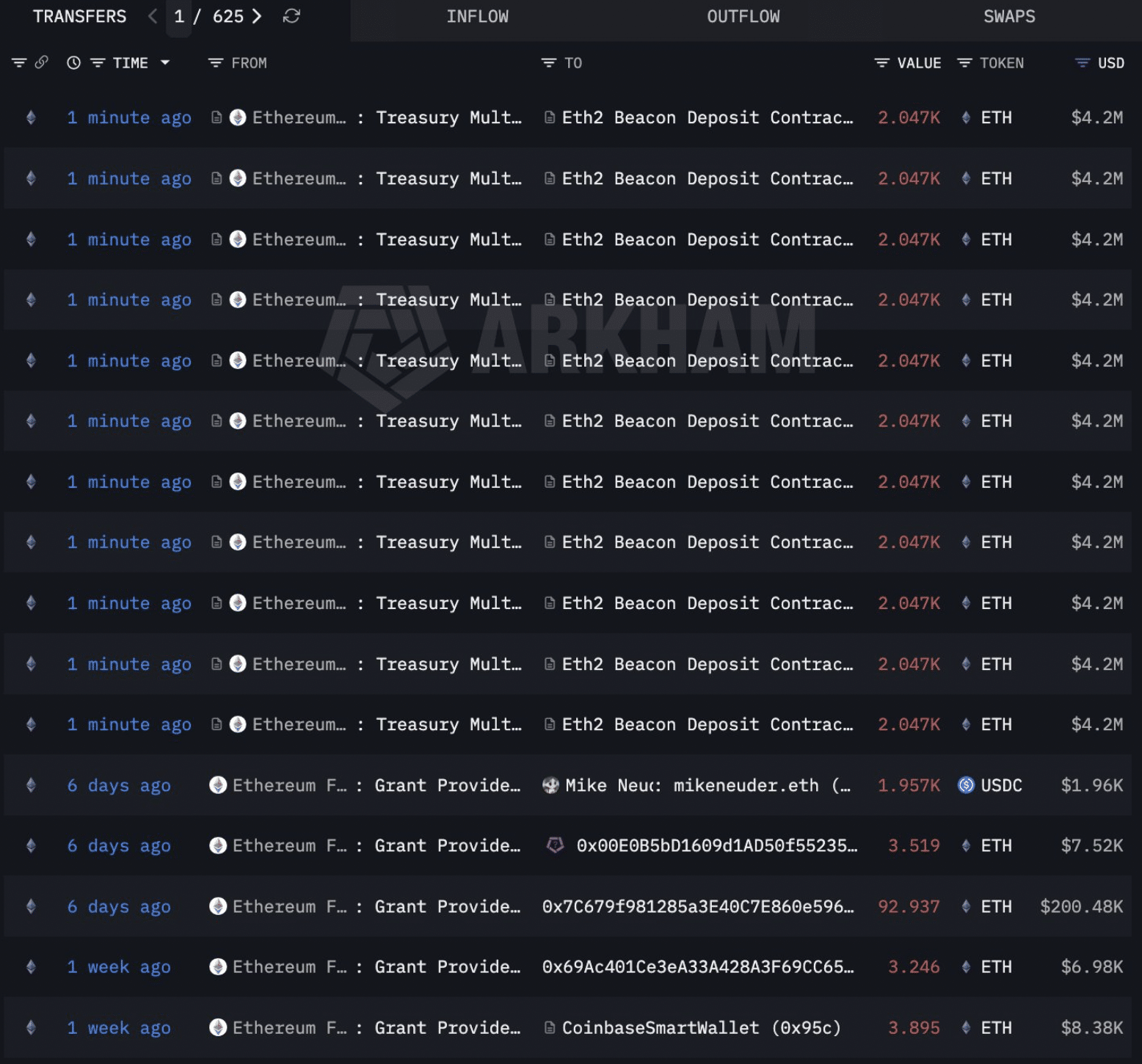
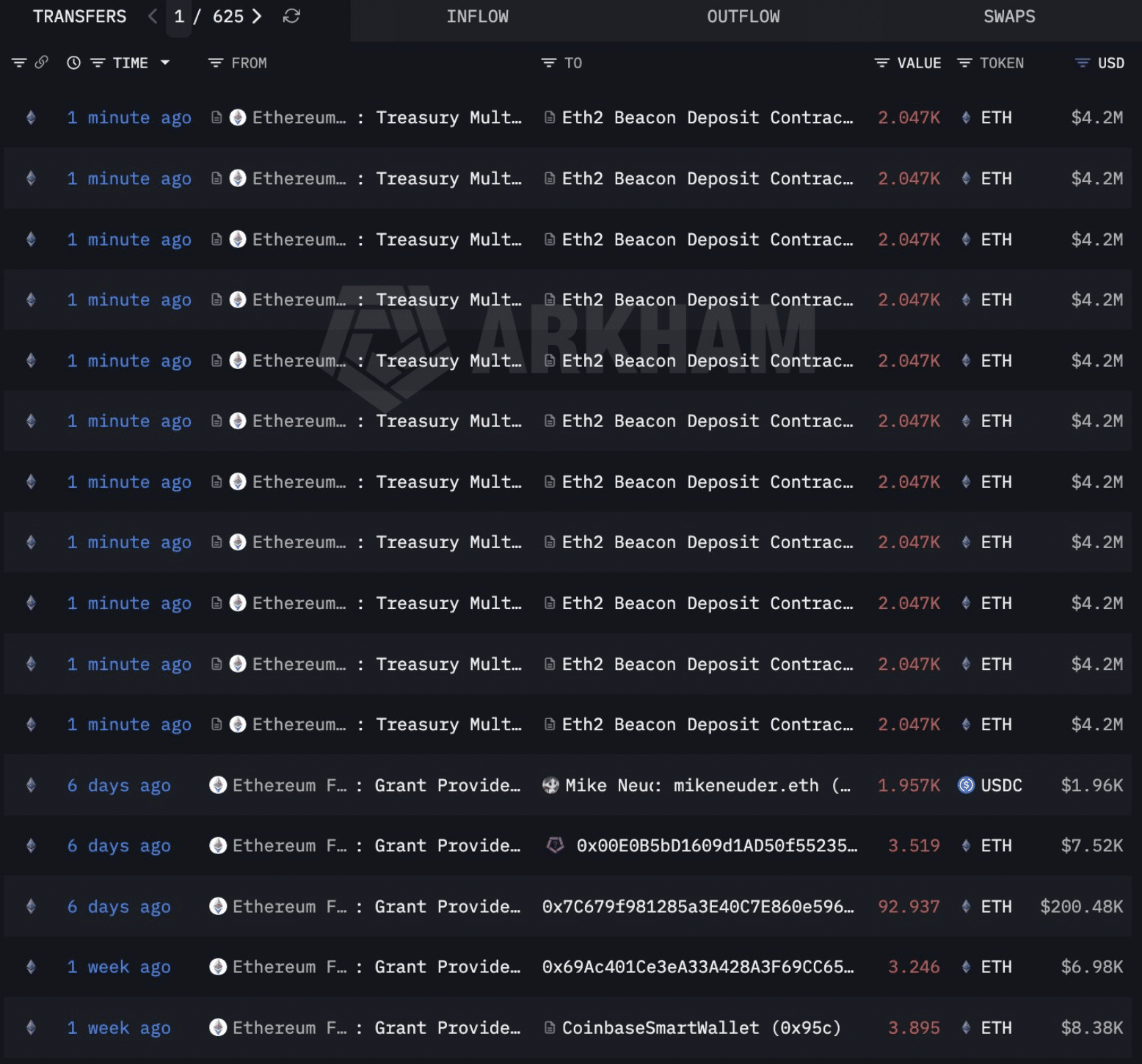
In a recent turn of events, and as reported by Akrham, the Ethereum Foundation has made its biggest Ethereum [ETH] move yet. As per on-chain data, the former has staked around 15,000 ETH, which is around $46.2 million, into the network.

Source: Arkham/X

Now, while such moves often have a direct impact on the price of the asset being staked. In this case, things are different.

Ethereum Foundation stakes ETH – What for?

The Ethereum Foundation has staked this huge amount of ETH for generating on-chain yield. This means that this move won’t have a direct impact on ETH’s price. Instead, it would help in reducing short-term selling pressure from ETH.

For those unaware, this move marks a major step ahead in the Foundation’s goal to stake up to 70,000 ETH. This move coincided with the largest altcoin trading at $2059 at press time, showing a 2.8% increase in the past 24 hours.

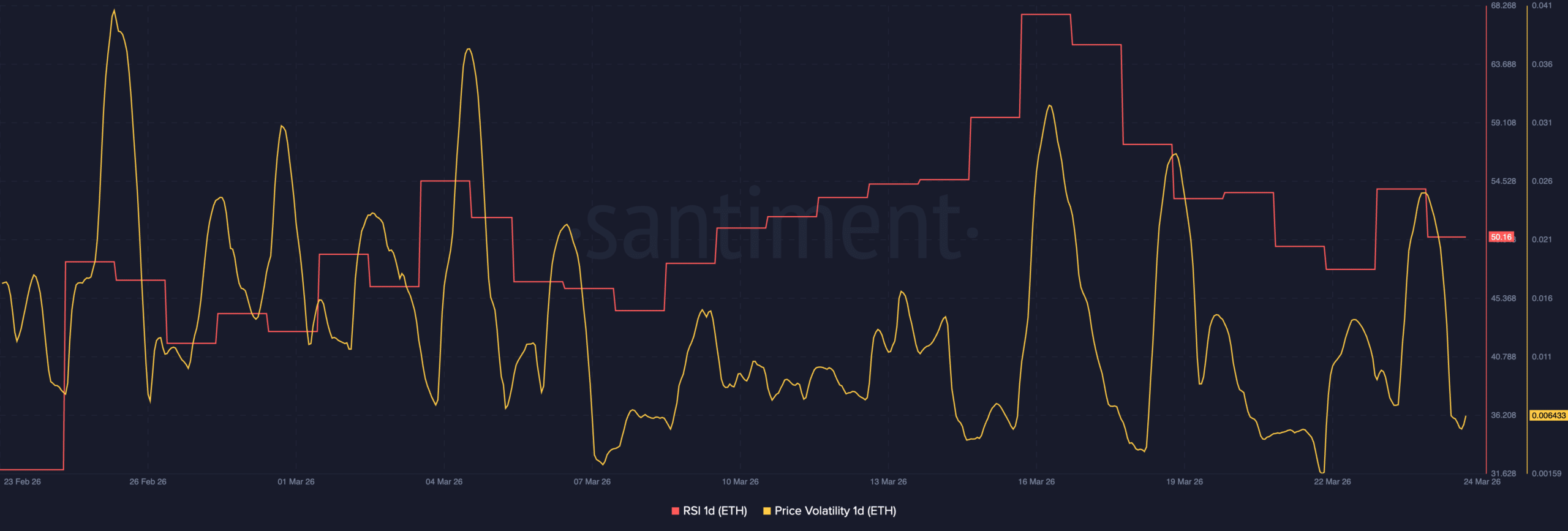
Additionally, the RSI sitting near the neutral zone and price volatility, seeing a drop in momentum, suggests that ETH might be in an equilibrium phase with no strong pull from buyers or sellers.

Source: Santiment

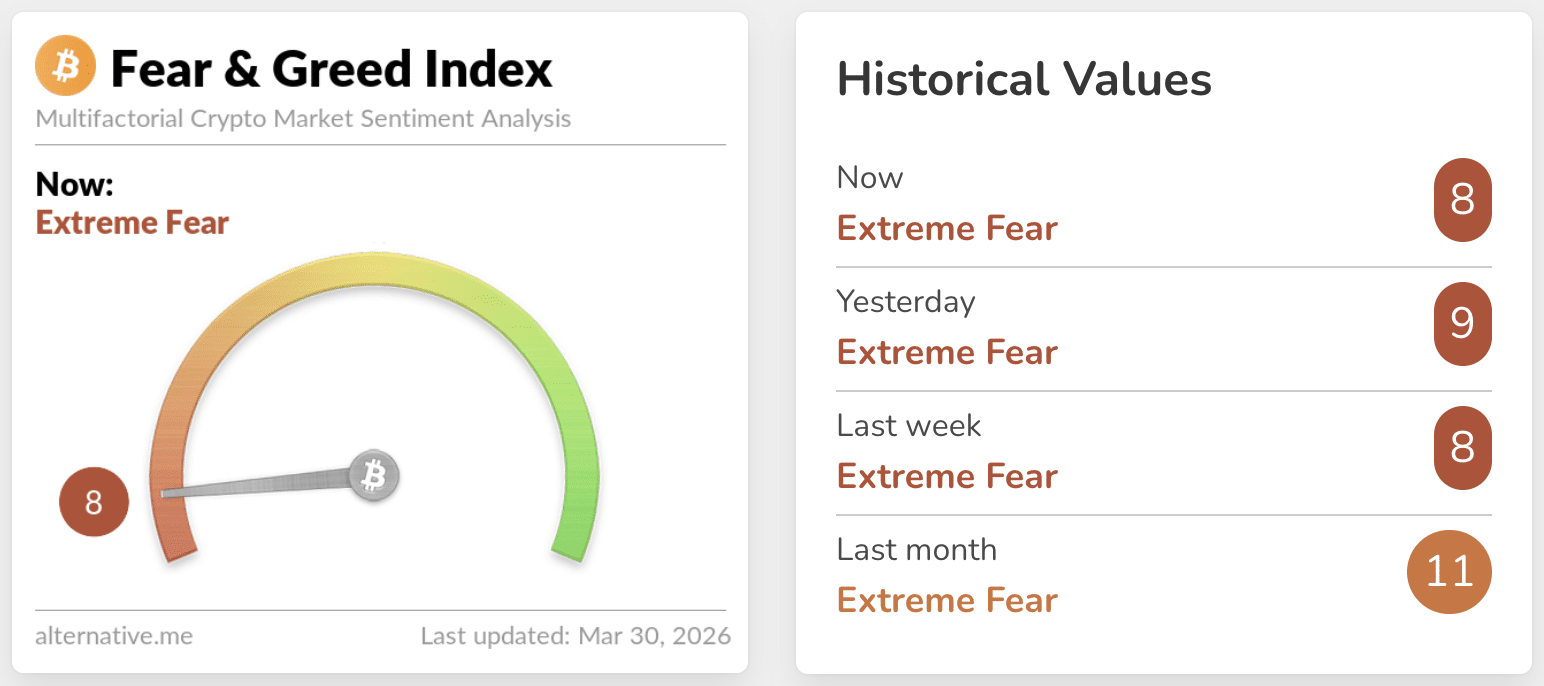
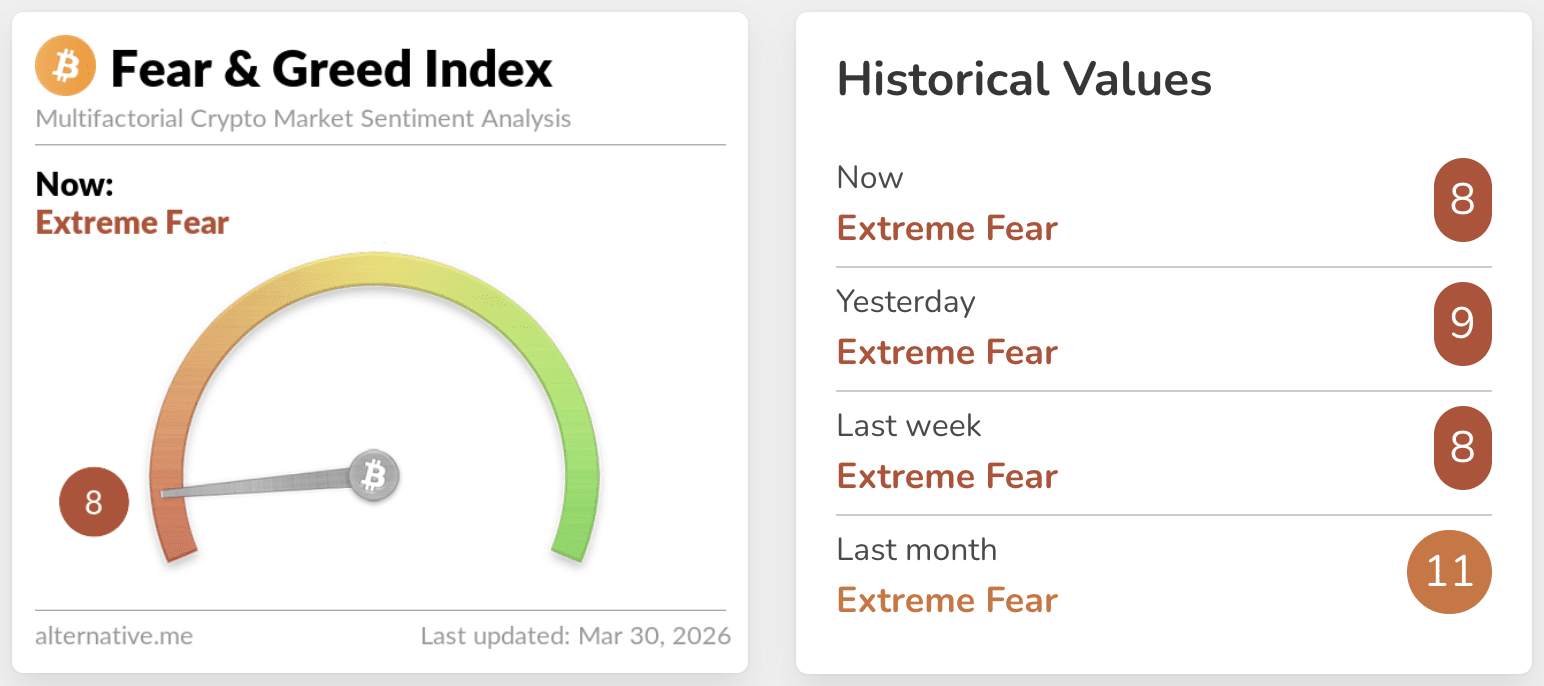
However, with the Crypto Fear and Greed Index still in the “Extreme Fear” zone, things are still uncertain.

Source: Alternative

Ethereum is not alone

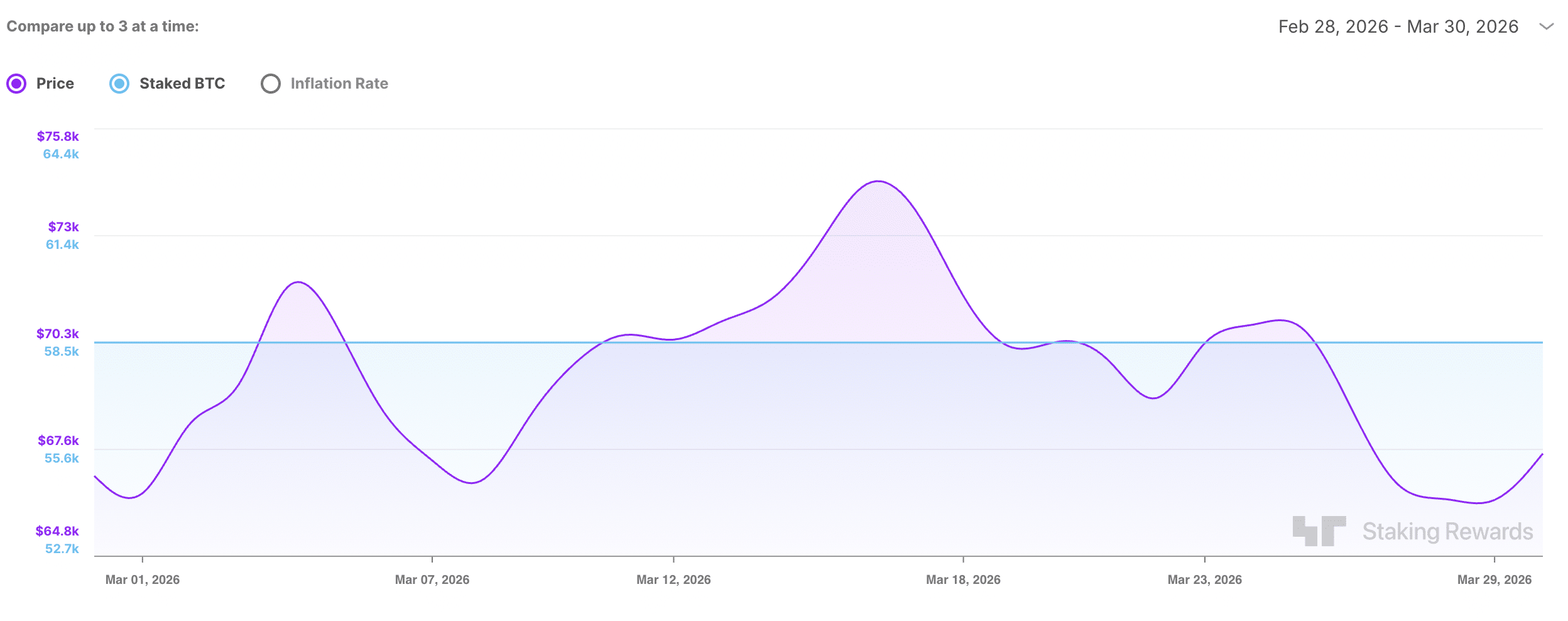
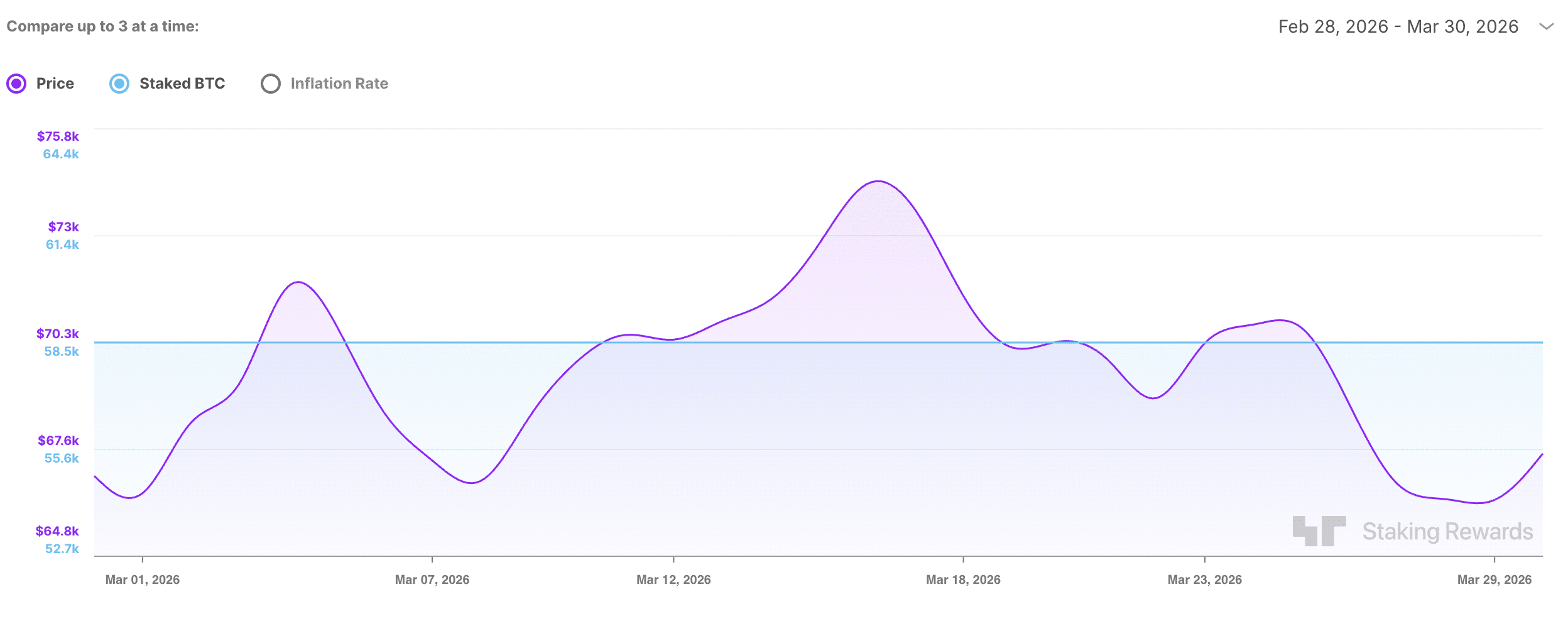
Needless to say, Ethehem is not the only one riding this boat. Bitcoin, despite its volatile price action wherein it just closed near the $75,000 mark and is now back to $67,000, has its staking game unhindered.

Source: Staking Rewards

Simply put, long-term holders are not getting affected by short-term noise and are focused on getting maximum return even in uncertain times by using staking as their game plan.


Final Summary

  • The Ethereum Foundation joins the race to become a leader in the Ethereum staking ecosystem.
  • Muted RSI and “Extreme Fear” conditions hint at cautious investor sentiment as institutions play the long game.

Trending Cryptos

Related Reads

When the World Cup Collides with Agents: From Web2 to Web3, How Are Wallets Evolving into Agentic Wallets?

World Cup as a Catalyst for Agentic Wallets: From Web2 to Web3 This article explores how the World Cup provides a real-world scenario for observing the evolution of digital wallets from simple asset managers towards "Agentic Wallets"—intelligent, AI-powered interfaces. Using the example of prediction markets like Polymarket, it illustrates how AI Agents can lower the barrier to Web3 interaction. Instead of navigating complex DApps, users can express intent in natural language (e.g., "I think Portugal will win") within platforms like Discord or web pages. The Agent then interprets this intent, finds the relevant market, and seamlessly guides the user through the on-chain transaction via their wallet. The core shift is from wallets as mere "function menus" for signing transactions to "intent interpreters" that understand user goals. The article highlights parallel developments in traditional finance, such as Mastercard's "Agent Pay" and WeChat Pay's AI tests, which focus on granting AI controlled, authorized, and auditable payment capabilities. This underscores a broader trend of AI entering the financial layer. However, the article emphasizes that the primary challenge for Agentic Wallets in Web3 is not automation but establishing clear security boundaries. Unlike traditional systems with chargebacks, on-chain transactions are often irreversible. Therefore, future wallets must ensure users retain ultimate control and comprehension. They need to transparently communicate an Agent's permissions, spending limits, authorized durations, and provide easy ways to pause or revoke access. The World Cup experiments represent early steps toward wallets that are not just applications but ubiquitous, intelligent interfaces that simplify Web3 while keeping users securely in control.

marsbit1h ago

When the World Cup Collides with Agents: From Web2 to Web3, How Are Wallets Evolving into Agentic Wallets?

marsbit1h ago

Options Don't Work in DeFi? Vitalik Might Not Agree

For years, the prevailing view has been that options struggle to gain traction in DeFi due to complexity, fragmented liquidity, and lack of natural demand compared to products like perpetual futures. However, a recent algorithmic stablecoin design proposed by Vitalik Buterin presents a different perspective, using options not as a standalone trading product, but as foundational infrastructure for other financial instruments. In this design, one unit of ETH is split into two components: a "stable" side (P) that retains value up to a specified strike price, and an "upside" side (N) that captures all appreciation above that strike. Combined, they always equal one ETH, eliminating debt, margin, and liquidation risks inherent in typical collateralized debt position (CDP) stablecoins. The stable component essentially mimics the payoff of a covered call option. To function as a stablecoin, this structure requires continuously rolling deep in-the-money calls, which introduces challenges like rollover slippage, predictable transaction flow vulnerable to front-running, and persistent liquidity needs. A core hurdle is finding consistent buyers for the leveraged ETH upside exposure (N). While it offers leverage without funding rates or liquidation, it must compete with simpler alternatives like direct call options or perpetuals. The system's scalability depends on a sustained demand for this specific form of leverage. The author draws parallels to their experience with Rysk, where earlier versions of DeFi options protocols struggled. The breakthrough came with Rysk V12, which aligns incentives: asset holders generate yield by selling covered calls against their holdings, while market makers efficiently acquire the desired option exposure. This demonstrates that options can find product-market fit when embedded as a risk distribution and pricing engine within structured products, stablecoins, or yield-generating assets, rather than marketed as a complex direct trading instrument. Vitalik's proposal reinforces this architectural approach—using fully collateralized, non-custodial, and physically settled options as a fundamental building block. The real opportunity for options in DeFi may lie not in becoming the next perpetual swap, but in powering the next generation of on-chain financial products.

marsbit1h ago

Options Don't Work in DeFi? Vitalik Might Not Agree

marsbit1h ago

Conversation with Investor Zheng Di: MicroStrategy's Coin Sale Experiment, AI Economy, and Opportunities in US Stocks

Frontier tech investor Zheng "Didier" Di discusses the recent Bitcoin price drop, the financial strategy shift at MicroStrategy, the AI-driven surge in U.S. stocks, and the evolving role of crypto exchanges. Didier posits that the recent BTC decline stems less from macro factors or ETF outflows, and more from market repricing due to MicroStrategy's new financial structure. Following a wave of preferred stock and debt issuance (STRC, STRZ, etc.), MicroStrategy must now manage cash flow to pay dividends, potentially leading to a market expectation of sustained, small-scale BTC sales to maintain its "per-share bitcoin neutral" principle. Didier views this as a financial "experiment" testing market capacity for such recurring sell pressure, which, while creating near-term structural headwinds, likely avoids a true "death spiral" absent major new external shocks. Shifting to AI, Didier argues that tokens are becoming the new form of labor, with AI models and compute (tokenized inputs) increasingly replacing human roles in execution and middle-management. This drives enterprise efficiency and higher margins, fueling the sustained rally in U.S. semiconductor, data center, and infrastructure stocks. He foresees an emerging "machine economy" where automated agents transact and collaborate on-chain. Regarding crypto exchanges offering U.S. equities, Didier sees this as a natural evolution. With few crypto-native assets generating lasting value, exchanges are pivoting towards real-world assets (RWAs) like stocks and bonds. This doesn't necessarily cannibalize crypto but reflects a maturing industry focusing on blockchain's core utilities: decentralized choice and efficient settlement. He notes that trading logic for crypto natives doesn't need to drastically change, as meme-driven and fundamentalist strategies find analogs in U.S. markets. The "1011 event" (likely referring to a major market crash) severely damaged crypto market liquidity, marking a probable end to the altcoin speculative cycle, with capital flowing towards the deeper liquidity of U.S. markets. For the macro outlook, Didier is cautious about near-term market pressure from potential mega-IPOs (e.g., SpaceX) and the U.S. midterm elections, which could bring more regulatory scrutiny. Long-term, he remains bullish on AI's productivity gains and its convergence with blockchain/Web3, predicting a shift from speculative frenzy to a more institutionalized, industrial phase for the crypto sector.

marsbit2h ago

Conversation with Investor Zheng Di: MicroStrategy's Coin Sale Experiment, AI Economy, and Opportunities in US Stocks

marsbit2h ago

Playnance’s $GCOIN Lists on KoinBX Amid Rapid Growth in India

Playnance's native token, $GCOIN, has been listed on the cryptocurrency exchange KoinBX as of June 18. This move aims to enhance accessibility for its rapidly growing community, particularly in India, where the blockchain-powered Web3 iGaming ecosystem has gained significant traction. Over 130 partners in Playnance's "Be the Boss" program have built communities engaging thousands of active players in the region. The "Be the Boss" model allows participants to create and manage their own gaming communities, earning rewards tied to community activity. CEO Pini Peter noted India's high engagement, with community leaders successfully building player networks. One partner, Dr. Nicolas, reported earning over $57,000 through the program in recent months, highlighting both the financial rewards and the opportunity to grow an engaged community. $GCOIN serves as the ecosystem's core utility token, incentivizing participation and aligning the interests of players and community leaders ("Bosses"). The listing on KoinBX is part of Playnance's strategy to expand globally, increasing the token's utility and accessibility by combining community ownership, gamified engagement, and blockchain-based incentives. Founded in 2020, Playnance is a Web3 iGaming infrastructure company focused on creating live, non-custodial, on-chain products to onboard mainstream users. It currently processes approximately one million transactions daily, aiming to simplify the user experience while maintaining full on-chain transparency.

TheNewsCrypto2h ago

Playnance’s $GCOIN Lists on KoinBX Amid Rapid Growth in India

TheNewsCrypto2h ago

Trading

Spot
Futures

Hot Articles

How to Buy MLN

Welcome to HTX.com! We've made purchasing Melon (MLN) simple and convenient. Follow our step-by-step guide to embark on your crypto journey.Step 1: Create Your HTX AccountUse your email or phone number to sign up for a free account on HTX. Experience a hassle-free registration journey and unlock all features.Get My AccountStep 2: Go to Buy Crypto and Choose Your Payment MethodCredit/Debit Card: Use your Visa or Mastercard to buy Melon (MLN) instantly.Balance: Use funds from your HTX account balance to trade seamlessly.Third Parties: We've added popular payment methods such as Google Pay and Apple Pay to enhance convenience.P2P: Trade directly with other users on HTX.Over-the-Counter (OTC): We offer tailor-made services and competitive exchange rates for traders.Step 3: Store Your Melon (MLN)After purchasing your Melon (MLN), store it in your HTX account. Alternatively, you can send it elsewhere via blockchain transfer or use it to trade other cryptocurrencies.Step 4: Trade Melon (MLN)Easily trade Melon (MLN) on HTX's spot market. Simply access your account, select your trading pair, execute your trades, and monitor in real-time. We offer a user-friendly experience for both beginners and seasoned traders.

3.6k Total ViewsPublished 2024.03.29Updated 2026.06.02

How to Buy MLN

What is $MELON

Understanding cocomELON, $$melon: A Deep Dive into a Unique Crypto Project Introduction to cocomELON, $$melon In the rapidly evolving landscape of digital currencies and blockchain technology, innovative projects continue to emerge, each attempting to carve their niche within the decentralized ecosystem. One such project is cocomELON, $$melon, which seeks to integrate the engaging aspects of gaming with the lucrative opportunities that cryptocurrency presents. This article aims to explore the intricate details surrounding cocomELON, $$melon, its overarching vision, its creators, backers, unique operations, and timeline of important events within its development. What is cocomELON, $$melon? cocomELON, $$melon is a crypto project that seeks to create a playful and community-driven ecosystem centered around the entertainment aspect of digital assets. While the term 'cocomELON' may evoke imagery of childhood entertainment, in this context, it serves as a representation of a creative and engaging approach to cryptocurrency. The project aims to amalgamate the thrill of gaming with decentralized finance (DeFi), allowing users not just to invest but to actively participate in a platform that incentivizes creativity and user interaction. Users can expect a blend of gamified elements, including non-fungible tokens (NFTs), staking mechanisms, and collaborative community experiences—all designed to enhance user engagement while capitalizing on the expansive potential of web3 technology. Who is the creator of cocomELON, $$melon? The creator of cocomELON, $$melon remains unspecified within the available information. This anonymity can often be a notable feature in the crypto space, aligning with the ethos of decentralization and community-led projects. Despite the lack of visibility regarding the founder, the strategic vision and integration of user participation suggest a team of experienced professionals in both the tech and entertainment sectors is likely driving the initiative. Who are the investors of cocomELON, $$melon? As with many innovative crypto projects, detailed information about the investors backing cocomELON, $$melon is not publicly disclosed. However, the project's potential and outline suggest an interest from a mix of angel investors, venture capitalists, and possibly, strategic partnerships within the tech industry—particularly those involved in web3 attractions, gaming, and digital content creation. Inviting investment from relevant sectors underscores the project's commitment to developing a robust and engaging platform that addresses modern entertainment and financial needs. This ecosystem could be appealing to those looking to diversify their investment portfolios into emerging art and creative technologies. How does cocomELON, $$melon work? The operational model of cocomELON, $$melon is innovative and engaging, designed to attract and retain users within the crypto ecosystem. Here are some factors that contribute to its uniqueness: Gamification of Crypto: By integrating gaming elements into the cryptocurrency experience, cocomELON, $$melon makes the process of investing more accessible and enjoyable for users. Features such as quizzes, rewards for participation, and interactive tasks could make users feel integral to the project's success. Community-driven Development: Emphasizing a community-centric approach encourages user feedback and growth alongside the project. The ecosystem likely promotes social sharing and incentivizes collaborative initiatives, thereby ensuring a continuous flow of creative input from users. NFT Utilization: As a significant trend in digital creativity, NFTs are expected to play a pivotal role within the cocomELON, $$melon ecosystem. Users may be able to create, buy, and sell unique digital assets, providing them with a sense of ownership and expression within the community. Evolving Content: The project is positioned to adapt its offerings based on user engagement and trends, ensuring its longevity and relevance in the fast-paced digital space. Regular updates and varied content will keep users returning for fresh experiences. Timeline of cocomELON, $$melon Understanding the historical context of cocomELON, $$melon helps illustrate its development and evolution within the crypto landscape. Here are some key milestones in its journey: 2021: The conceptualization of cocomELON, $$melon takes place, introducing the blend of gaming and cryptocurrency. 2022: Community engagement strategies are developed, driving initial interest and user base formation. 2023: Pre-launch of the platform occurs with a series of marketing efforts aimed at raising awareness and gathering a community of supporters. 2024: Full launch of the cocomELON, $$melon platform, enabling users to engage with its features, participate in content creation, and commence transactions. Key Points About cocomELON, $$melon Community Engagement: The backbone of cocomELON, $$melon lies in its community-driven initiatives, fostering a strong sense of belonging and collective growth. Diversified Offerings: Incorporating gaming elements along with financial activities, the project strives to cater to a broad audience beyond just traditional investors. Adaptability: The capacity to evolve based on user interaction ensures cocomELON, $$melon remains relevant and attractive within the fast-paced landscape of cryptocurrency. User Empowerment: By promoting user-generated content and collaboration, cocomELON, $$melon aims to empower its community, transforming passive observers into active participants. In conclusion, cocomELON, $$melon presents an innovative approach within the cryptocurrency industry, merging entertainment with investment opportunities. Its focus on community engagement, adaptability, and gamified elements uniquely positions it in a crowded market, offering both existing and new crypto enthusiasts an entertaining way to engage with digital assets. As it continues its development, cocomELON, $$melon looks set to push boundaries, leveraging the creativity and collaboration of its user base, which remains at the heart of its mission.

340 Total ViewsPublished 2024.05.02Updated 2024.12.03
What is $MELON

What is MELON

Melon Dog: A New Contender in the Web3 and DeFi Landscape Introduction In the ever-evolving landscape of cryptocurrency, innovative projects continue to emerge, each with its unique vision and community-driven goals. Among them is Melon Dog ($MELON), a cryptocurrency token that operates within the web3 space and decentralized finance (DeFi) ecosystem. This project distinguishes itself by fostering a playful atmosphere while striving to build a robust community around its offerings. In this article, we explore what Melon Dog is, the factors contributing to its uniqueness, and the vision it encapsulates. What is Melon Dog ($MELON)? Melon Dog is a cryptocurrency token that prioritizes community engagement and aims to deliver a distinctive experience in the DeFi sector. The driving force behind this project is the desire to create a sense of belonging and participation among its users. Melon Dog’s approach involves not only engaging the community with various activities but also involving them in roadmap releases that guide the project's development. The core philosophy of Melon Dog hinges on the cultivation of a “cult-like” community. This strategy aims to harness the passions and interests of its members, ultimately leading to a robust and interactive ecosystem. As the DeFi space continues to develop, Melon Dog distinctly positions itself at the intersection of community-driven initiatives and innovative tokenomics. Who is the Creator of Melon Dog ($MELON)? As intriguing as the project may be, information regarding its creator remains obscured. The team behind Melon Dog has chosen to keep its identity private, which is a notable characteristic of many cryptocurrency projects in recent years. This anonymity adds a layer of mystery, although it also raises questions about accountability and transparency. While the absence of publicly available details about the project’s origins may deter certain investors, others find value in the decentralized ethos of crypto projects that embrace anonymity. In this context, Melon Dog’s creator could very well be a collective of individuals committed to the project’s mission rather than a single identifiable figure. Who are the Investors of Melon Dog ($MELON)? Currently, there is no discernible information about specific investment organizations or foundations that have financed Melon Dog. This lack of detailed investment backing underscores an important consideration: the project appears to thrive on community contribution and organic growth rather than relying on significant venture capital investments. The development of Melon Dog reflects a growing trend within the crypto industry, where community involvement often takes precedence over traditional financial backing. This model invites participation from enthusiastic users who, through their involvement, shape the project’s direction. How Does Melon Dog ($MELON) Work? Melon Dog operates by leveraging principles inherent in the DeFi and web3 spaces, dedicating itself to creating a community-oriented project. The token's functionality stems from its promise to engage users through diverse activities, such as roadmap releases and community-driven events. One of the project's unique aspects is its emphasis on interaction; users are invited not merely to invest but to actively participate in the project’s journey. This approach seeks to empower community members, giving them a sense of ownership and partnership in achieving shared goals. Moreover, the infrastructure that supports Melon Dog is inherently decentralized, which aligns with the fundamental beliefs of both the DeFi and web3 landscapes. By fostering a space where users can partake in governance and propose initiatives, the project not only promotes transparency but also encourages innovation and evolution based on collective community feedback. Timeline of Melon Dog ($MELON) Understanding the key milestones in the development of Melon Dog provides insight into its progress and community engagement efforts. Below is a timeline of important events that have marked the project’s history thus far: November 13, 2024: Melon Dog announces a new strategic roadmap aimed at expanding its community. This announcement signals a significant advancement in the project and emphasizes its commitment to fostering user engagement. While this timeline showcases a singular significant event, it reflects the project’s aspirations moving forward. Future updates and roadmap expansions will undoubtedly contribute to its evolving narrative. Key Points About Melon Dog ($MELON) Community Focus Melon Dog places a strong emphasis on building an active and engaged community. Its design and ongoing initiatives are constructed to cultivate a sense of belonging among users. Operational Framework Situated within DeFi and web3, Melon Dog stands out as a project that invites participation, enabling users to contribute to shaping its future. Roadmap Releases Regularly scheduled roadmap releases serve as touchpoints for community involvement, ensuring that the user base is informed and can actively contribute to upcoming developments. Cult-like Community The project identifies itself as a fun and cult-driven initiative, actively promoting loyalty and commitment amongst its users. Important Considerations The ongoing success of Melon Dog is intricately linked to community engagement and participation. The anonymity of its creators and absence of external funding may raise questions, but these elements also reflect a broader trend towards decentralized models within the crypto industry. Conclusion Melon Dog ($MELON) presents an intriguing case within the realms of DeFi and web3, driven by its community-centric philosophy. While details surrounding its creators and investors remain elusive, the project’s emphasis on user participation and community engagement is noteworthy. As the crypto landscape continues to evolve, Melon Dog’s unique approach may pave the way for innovative community-driven projects that thrive on collective effort and shared enthusiasm. In this playful yet purposeful venture, Melon Dog stands as a testament to the transformative power of community in the crypto ecosystem, showcasing how a united group of advocates can foster a thriving digital environment. As new developments unfold, it will be fascinating to observe how Melon Dog continues to engage its cult-like community and expand its initiatives in the ever-changing world of cryptocurrency.

2.0k Total ViewsPublished 2024.11.11Updated 2024.12.03

What is MELON

Discussions

Welcome to the HTX Community. Here, you can stay informed about the latest platform developments and gain access to professional market insights. Users' opinions on the price of MLN (MLN) are presented below.

活动图片