Elon Musk's 'Granny Drain'

marsbitPublished on 2026-05-28Last updated on 2026-05-28

Abstract

Title: Musk "Milking the Old Folks" Author: Nancy, PANews As the memory sector surges with Micron and SK Hynix each surpassing a trillion-dollar market cap, Elon Musk is accelerating his own myth of becoming the world's first trillionaire. SpaceX, with its astronomical valuation, is speeding toward the capital markets. This potentially wealth-history-rewriting super IPO is pushing Musk toward that unprecedented personal fortune and delivering hundredfold or even thousandfold returns to early backers like Google, Valor Equity Partners, Founders Fund, and others. However, to sustain this most expensive space narrative in human history, new buyers are ultimately needed. As massive pension funds are set to be "forced to buy," the retirement savings of Americans are becoming the fuel for Musk's space dreams. Wall Street has begun paving a fast track for such super IPOs. Major indices like Nasdaq and S&P have recently eased rules, allowing mega-companies like SpaceX to be incorporated into key benchmarks like the Nasdaq 100 much faster post-listing. This matters because a vast portion of the U.S. retirement system—trillions in 401(k)s and pension funds—relies on passive index investing. Once a company enters a major index, all funds tracking it are compelled to buy its shares automatically, regardless of valuation, profitability, or risk. This has sparked significant backlash. Teacher unions and major public pension funds (collectively managing trillions) have warned the SEC ...

Author: Nancy, PANews

While the storage sector is going crazy, with Micron and SK Hynix both surpassing the trillion-dollar market capitalization mark, Elon Musk is personally accelerating the myth of creating a trillion-dollar fortune.

SpaceX, with its sky-high valuation, is accelerating towards the capital market. This super IPO, which may rewrite wealth history, is pushing Musk towards becoming the world's first trillionaire, while also delivering astounding returns of hundreds or even thousands of times to early allies.

However, for humanity's most expensive space narrative to continue, new buyers are ultimately needed. As massive pension funds will be 'forced to buy in,' Americans' retirement savings become the fuel for Musk's space dream.
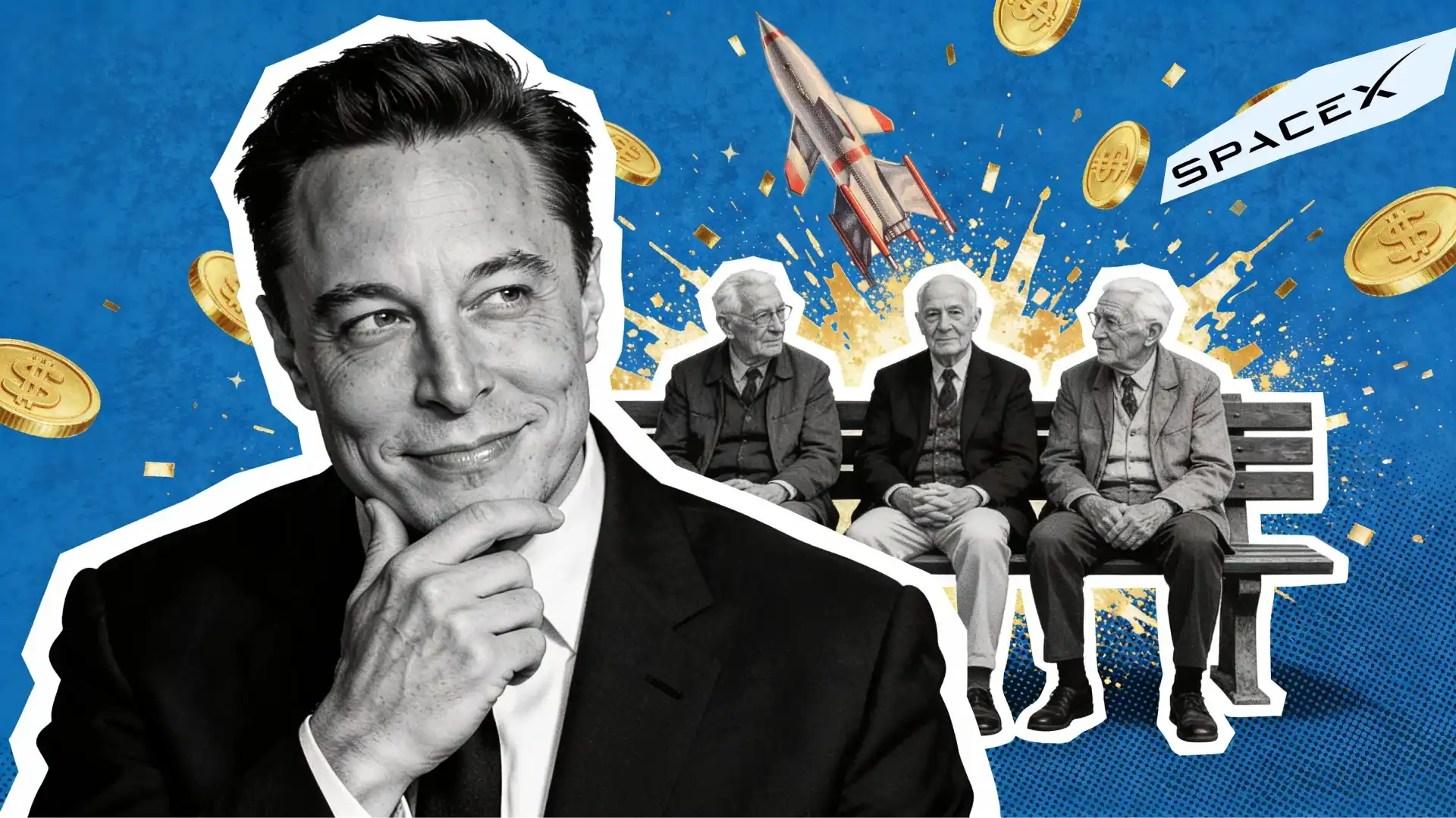
Elon Musk is making American retirees 'pay up.'

Countdown to History's Largest IPO, Early Allies Reap Huge Profits

Wall Street has been waiting for SpaceX's IPO for many years.

Over the past decade, the company has grown from a startup valued at just $27 million into today's super unicorn valued at nearly $1.75 to $2 trillion, becoming one of the world's highest-valued private companies.

Now, this super IPO is finally set to list as early as June 12. This is not only the largest IPO event in human history but also means the wealth feast is entering its cash-out moment. Musk's long-term followers have finally waited for substantial returns.

For example, Google, through early investment, may become the biggest external winner. As of the end of 2025, it holds about 6.11% of SpaceX shares. An investment of just $900 million back then is now worth close to $120 billion; Valor Equity Partners, as a major shareholder second only to Musk, holds over 500 million SpaceX Class A shares, with equity value ranging roughly between $90 billion and $140 billion; Peter Thiel's Founders Fund, through multiple rounds of follow-on investments, holds about 3.5% of the shares, with paper gains exceeding $60 billion; Fidelity, as a major institutional investor in a 2015 co-investment round, holds shares worth about $35 billion; even Sequoia Capital, which entered relatively late, sees considerable returns, expected to be over $20 billion.

As for Musk himself, he is also poised to become the world's first trillion-dollar billionaire.

Bank of America strategist Michael Hartnett warns in a recent report that once super IPOs like SpaceX and OpenAI materialize, the weight of tech stocks in equity benchmark indices could easily surpass about 48%, exceeding the market concentration levels of all major bubble periods in history such as the 'Roaring Twenties' of the 1920s, the 'Nifty Fifty' of the 1970s, the Japanese bubble of the 1980s, and the dot-com bubble of the 1990s.

However, who will ultimately take on such a massive valuation?

To reduce selling pressure after listing and maintain stock price stability, SpaceX has made some adjustments. For instance, insider shares will use a phased unlocking mechanism instead of the traditional unified 6-month lock-up period common in IPOs. Additionally, the company approved a 5-for-1 stock split for common shares to lower the psychological barrier for retail investors and enhance liquidity. Musk has also publicly stated that he will not sell any SpaceX shares.

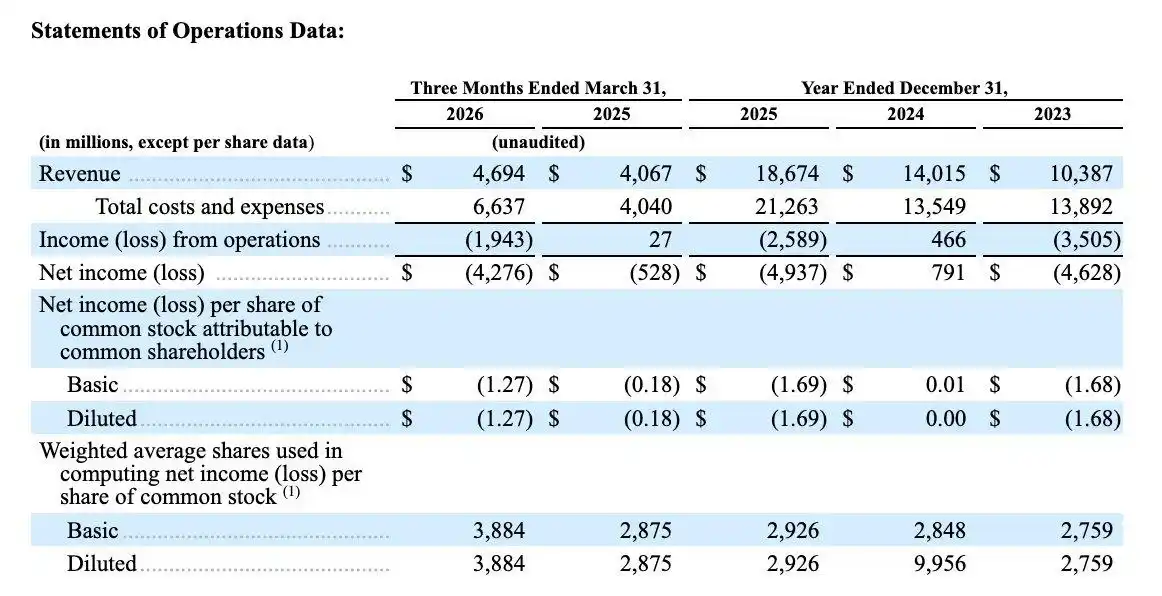
But market concerns haven't disappeared. Putting aside the uncertainty of the grand Mars narrative and looking just at financial data, SpaceX remains a fast-burning company. The prospectus shows that in the first quarter of 2026 alone, SpaceX's net loss was nearly $4.3 billion, almost equivalent to the full-year loss of the previous year. Meanwhile, Musk controls an absolute 85% of the voting rights, meaning the board can hardly fire him, and external shareholders can almost never push through any major business decisions.
To some extent, SpaceX is a highly Musk-ified company. Its valuation, governance, and future expectations are deeply tied to Musk personally.

After all early investors have made a fortune, who is still willing to buy this already outrageously expensive space ticket at a high price?

Wall Street Paves an Index Fast Lane, U.S. Pensions Become the 'Bag Holders'

Americans' retirement savings may become the potential fuel for Musk's space dream.

Wall Street has already started opening express lanes for super IPOs. On May 1 this year, new Nasdaq rules officially took effect. Newly listed companies ranking in the top 40 of the Nasdaq-100 index by market cap can be included in the index after just 15 trading days, compared to the usual wait of about three months previously.

S&P also launched a consultation in May, proposing to shorten the minimum listing time required for inclusion from 12 months to 6 months and considering exempting extremely large companies from profitability requirements. FTSE Russell similarly relaxed restrictions, allowing large IPOs to be assessed for inclusion in the Russell U.S. Equity Indexes (including Russell 1000, Top 200, etc.) as early as the 5th trading day after listing, without waiting for quarterly reviews.

Major U.S. indices quietly relaxing rules is undoubtedly paving a dedicated runway for SpaceX.

According to Business Insider disclosures, after SpaceX goes public, it may quickly enter mainstream indices and ETFs. The speed of passive fund allocation could far exceed that of previous large IPOs. For example, the CRSP indices tracked by Vanguard's VTI and Growth ETF VUG could include SpaceX as early as 5 trading days post-listing; the Nasdaq-100 index tracked by QQQ could include SpaceX after 15 trading days; and the S&P 500 index tracked by SPY might include SpaceX in 2027 after rule changes, among others.

Within the U.S. retirement system, a vast number of 401(k) plans, pension funds, and long-term savings accounts employ passive index investment strategies. Funds typically automatically allocate assets according to index constituents and their market cap weightings.

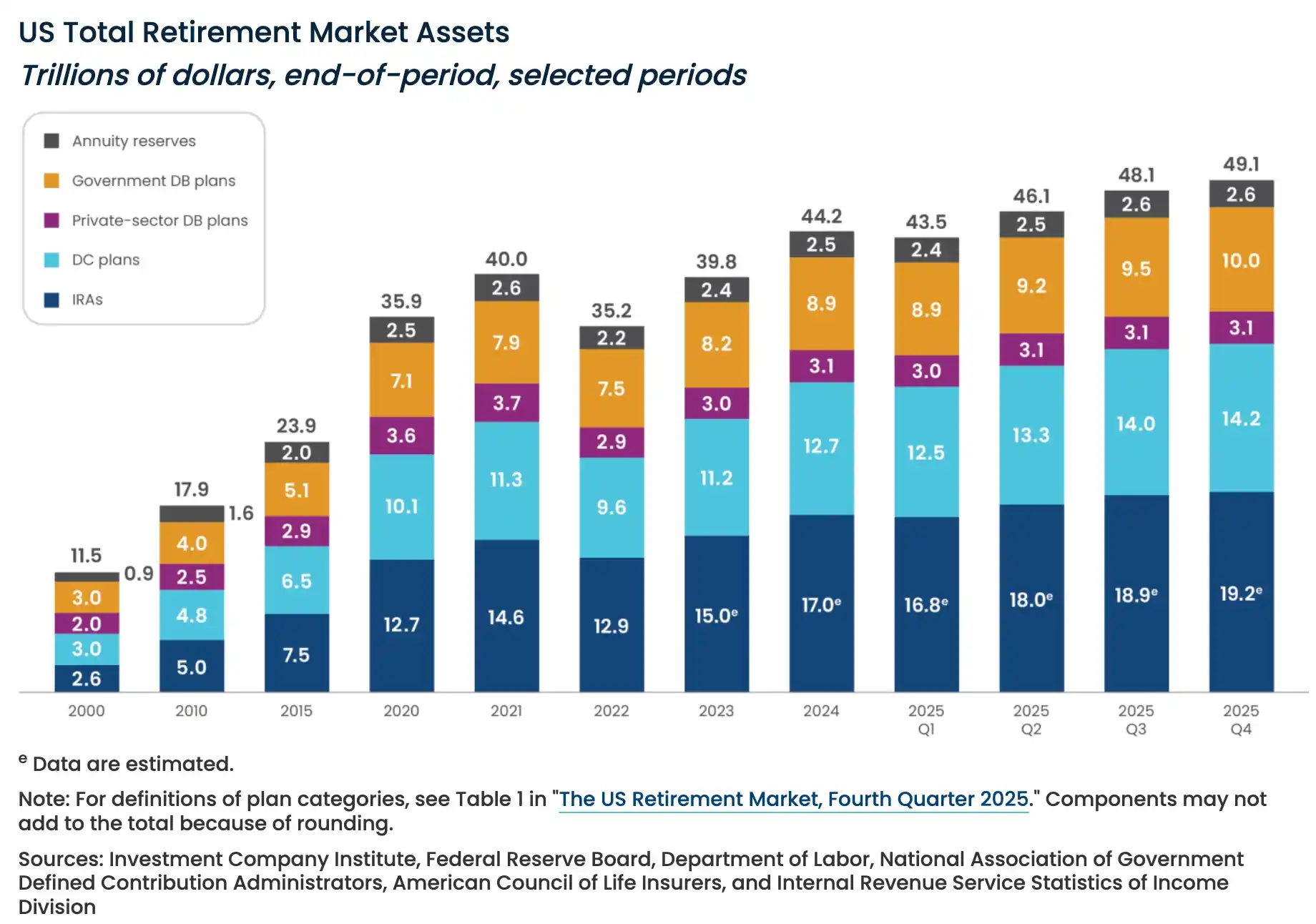
This strategy originated from the first index fund for ordinary investors launched in 1976 by index fund pioneer John Bogle. The core philosophy is to 'replicate the market, not beat it.' With extremely low management fees and high diversification, it became the preferred allocation method for pensions and 401(k) accounts. To date, total U.S. retirement assets exceed $49 trillion.
This means that once SpaceX is included in an index, all funds tracking that benchmark, without analyzing valuation, judging bubbles, or even caring if the company is profitable, are forced to buy according to the weight.

However, this game has sparked strong dissatisfaction within the pension system.

Recently, the American Federation of Teachers sent a letter to the SEC urging strengthened scrutiny of SpaceX's listing, warning that workers' lifetime savings could be controlled by a company that resembles a Musk family business more than a transparent public company.

Simultaneously, three major U.S. public pension funds managing over $1 trillion in assets (CalPERS, New York State, and New York City pension systems) also co-signed a letter to Musk, strongly opposing SpaceX's extreme governance structure. This includes super-voting rights, veto power over his own removal as CEO, and immunity from lawsuits.

They pointed out that Musk simultaneously leads SpaceX, Tesla, xAI, Neuralink, and other companies, posing significant risks due to divided attention. The letter demanded that SpaceX transition to a one-share-one-vote structure within seven years, establish a board with a majority of external shareholders, separate the CEO and Chairman roles, and remove Musk's self-veto rights.

This rule change, tailored by Wall Street for super IPOs, ultimately tightly binds the retirement savings of tens of millions of Americans to Musk's grand space dream. After early investors enjoy hundred-fold returns, the remaining 'bag-holding' cost is shifted onto passive investors incapable of making a choice.

The largest 'Granny Drain' game in history, under the guise of indexing, is officially beginning.


Related Questions

QWhat is the main argument of the article regarding the upcoming SpaceX IPO and its potential impact on certain investors?

AThe article argues that the massive upcoming SpaceX IPO, facilitated by Wall Street rule changes allowing rapid inclusion in major indices, will force passive investment funds (like ETFs and index funds) to automatically buy SpaceX stock. As these funds manage trillions in American retirement savings (e.g., 401(k)s and pensions), ordinary retirees' savings become the primary source of capital to 'fuel' Musk's space ambitions, effectively making them the 'bag holders' after early investors cash out their enormous gains.

QHow does SpaceX's proposed corporate governance structure pose a risk according to the article and certain institutional investors?

AThe article highlights that SpaceX's governance gives Elon Musk 85% of voting control, making the board unable to fire him and external shareholders powerless over major decisions. Major U.S. public pension funds (like CalPERS) have protested this structure, citing risks from Musk's divided attention across multiple companies and the lack of standard shareholder protections. They demand a shift to one-share-one-vote, an independent board majority, and the separation of CEO and chairman roles.

QWhat concerns are raised about SpaceX's financial performance as it prepares for its IPO?

AThe article points out that despite its high valuation, SpaceX is a company burning cash at a significant rate. Its IPO prospectus reportedly shows a net loss of nearly $4.3 billion in just the first quarter of 2026, approaching its total loss for the previous full year. This raises questions about the sustainability of its valuation and who will buy the stock at such a high price after early investors sell.

QWhat specific rule changes by major index providers are mentioned as paving a 'fast track' for SpaceX's inclusion post-IPO?

AThe article details several rule changes: Nasdaq reduced the waiting period for new listings to join the Nasdaq-100 index to just 15 trading days if ranked in the top 40 by market cap. S&P is considering shortening its listing requirement from 12 to 6 months and waiving profitability rules for mega-companies. FTSE Russell now allows large IPOs to be evaluated for inclusion in its U.S. indexes as early as the 5th trading day.

QWho are some of the early investors in SpaceX mentioned in the article, and what are their potential returns?

AThe article lists several early SpaceX investors and their potential gains: Google's initial $900 million investment could be worth about $120 billion; Valor Equity Partners' stake is valued between $90-$140 billion; Peter Thiel's Founders Fund could see over $60 billion; Fidelity's stake is around $35 billion; and Sequoia Capital could gain over $20 billion. These figures illustrate the immense returns for early backers compared to the perceived risk for later passive investors.

Related Reads

Justin Sun’s Interview with Hurun Report: A New Order and Certainty for Value Flow in the Era of Transformation

In an interview with *Hurun Report*, Justin Sun, founder of TRON, discussed the evolution of the Web3 industry as it moves from initial exploration to large-scale adoption. He emphasized that the core value of blockchain lies in building an open and inclusive internet of value, enabling anyone globally to transfer and use funds efficiently and at low cost, regardless of location or access to banking. Sun highlighted that projects with lasting impact are those built on genuine demand and real-world usage. He pointed to the stablecoin payment ecosystem as the most mature and scalable application currently, noting that TRON has rapidly become one of the world's largest stablecoin networks. The circulation of USDT on TRON has surpassed $86.3 billion, driven by actual use cases such as cross-border transfers and daily payments, demonstrating strong network effects. Regarding strategy, Sun outlined a methodology combining data-driven iteration, rapid execution, and user-centric focus. He cited the decision to partner with Tether to launch TRC-20 USDT as a key strategic move, based on an assessment of market trends and long-term potential, which has become a significant growth engine for the TRON ecosystem. On globalization, Sun stressed the importance of local compliance and cultural adaptation, noting that success in different markets depends on deep understanding and local partnerships. He also addressed the convergence of AI and blockchain, describing it as a transformative direction where blockchain provides decentralized infrastructure for AI, while AI enhances the intelligence and user experience of blockchain systems. For industry participants and young entrepreneurs, Sun advised continuous learning and adaptability in a fast-changing environment, focusing on building irreplaceable core strengths rather than spreading resources too thinly. Through infrastructure development, global strategy, and technological foresight, TRON aims to advance the practical implementation and evolution of the value internet.

marsbit22m ago

Justin Sun’s Interview with Hurun Report: A New Order and Certainty for Value Flow in the Era of Transformation

marsbit22m ago

Samsung Leverages Technology Cycles, SK Hynix Relies on HBM, What Enabled Micron to Win a Trillion-Dollar Market Cap?

Micron Technology, the Idaho-based memory chip maker, recently saw its market cap surpass $1 trillion, securing its position as one of the top three DRAM manufacturers alongside Samsung and SK Hynix. Its survival and growth story is marked by a unique combination of political maneuvering and hard-won manufacturing efficiency, but also strategic missteps that now challenge its future. Founded in 1978 in Boise without significant government or capital backing, Micron repeatedly turned to Washington for survival during critical junctures. In the 1980s, it filed anti-dumping complaints against Japanese firms, leading to the U.S.-Japan Semiconductor Agreement. Ironically, this created an opening for Samsung, which Micron had earlier licensed its 64K DRAM technology to. In 2002, Micron avoided heavy fines in a price-fixing investigation by acting as a whistleblower against its competitors, cementing its reputation as a "political opportunist." A major strategic error occurred in 2013 with its $2.5 billion acquisition of bankrupt Japanese firm Elpida. This deal burdened Micron with integrating incompatible manufacturing processes just as the industry was pivoting toward HBM (High Bandwidth Memory), a critical technology for AI. SK Hynix had launched its first HBM chip that same year. By the time AI demand exploded with ChatGPT in 2022, SK Hynix commanded about 85% of the HBM3 market, while Micron, playing catch-up, held only around 3%. In 2017, Micron employed similar tactics against a new competitor, Chinese startup Fujian Jinhua, by alleging intellectual property theft, which led to U.S. sanctions effectively crippling the firm. However, this strategy backfired in 2023 when China banned Micron's products from its critical infrastructure, causing its revenue share from China to plummet from 14% in FY2023 to just 7.1% by FY2025. Today, Micron faces a triple squeeze: it lags in the high-margin HBM race, faces pricing pressure in low-end DRAM from Chinese manufacturers like CXMT, and has lost crucial access to the booming Chinese AI server market. Despite its political strategies, Micron's core strength is its exceptional manufacturing cost control, achieved through decades of engineering. Its DRAM chips have a smaller cell area than its rivals, yielding more chips per wafer. This efficiency has been vital for weathering industry downturns. However, this advantage cannot compensate for the decade lost in HBM development. Micron is now racing to ramp up production of its HBM3E, certified by NVIDIA, and develop HBM4. Its future hinges on whether it can close this technological "time debt" through relentless R&D and execution, in a marathon where its competitors, having started earlier, are not slowing down.

marsbit41m ago

Samsung Leverages Technology Cycles, SK Hynix Relies on HBM, What Enabled Micron to Win a Trillion-Dollar Market Cap?

marsbit41m ago

Deconstructing Mysterious Researcher Serenity's Chokepoint Algorithm and the Global Revaluation of Equity Assets

Unmasking Serenity's "Chokepoint Theory": A Framework for AI-Era Investment This article deconstructs the investment methodology of the pseudonymous online researcher Serenity (formerly AleaBito on Reddit), who claims extraordinary returns by identifying critical bottlenecks in AI and robotics supply chains. Rejecting Wall Street's typical top-down analysis, Serenity employs a bottom-up, reverse-engineering approach. Starting with an end product like an Nvidia GPU cluster, he meticulously maps the global supply chain down to its most essential, irreplaceable physical components—the "choke points." These are low-profile, often monopolized sub-sectors where a disruption could paralyze entire downstream industries, analogous to a strategic strait controlling global oil flow. His primary focus is the physical evolution of AI data centers, specifically the shift from copper interconnects to silicon photonics and Co-Packaged Optics (CPO). He identifies five critical, monopolized technical barriers within CPO: high-precision fiber alignment components (e.g., FOCI), external light sources and high-power lasers (e.g., SIVE), molecular beam epitaxy equipment (ALRIB/Riber), ultra-high-purity red phosphorus raw materials, and Silicon-on-Insulator (SOI) wafers (Soitec). Serenity extends this framework to humanoid robotics, arguing that while the AI "brain" resides in the US, the physical "body" hardware (actuators, gears, motors) is dominated by Asian manufacturers. He highlights a looming "demand tsunami" for specific rare earth elements essential for robot motors, presenting a severe future supply chain and geopolitical challenge. The article cites several of his investment targets (RPI, SIVE, Soitec, VLN, NBIS) where identifying such choke points, coupled with correcting market mispricings (e.g., ticker code confusion for VLN), allegedly led to significant re-ratings. Ultimately, the article posits that Serenity's core value is not in providing stock picks, but in demonstrating a paradigm: using deep technical analysis to find the silent, indispensable "physical switches" within complex systems, thereby exploiting institutional research blind spots. However, it warns of major risks, including illiquidity in micro-cap stocks, potential "pump-and-dump" accusations, and the foundational gamble that his identified technological paths (like CPO) are the correct and inevitable ones.

marsbit42m ago

Deconstructing Mysterious Researcher Serenity's Chokepoint Algorithm and the Global Revaluation of Equity Assets

marsbit42m ago

Cross-strait Regulators Jointly Block Hong Kong Stock Account Openings: Where Can Your Money Go Now?

**Summary:** On May 22, 2026, financial regulators in mainland China and Hong Kong launched a synchronized crackdown targeting informal channels used by mainland investors to trade in Hong Kong and US stocks via Hong Kong-based securities firms. The Hong Kong Securities and Futures Commission (SFC) issued a stringent circular to licensed brokers, mandating stricter onboarding procedures for mainland clients. New requirements include a mandatory written declaration stating that all investment funds originate from *outside* mainland China and are from legal sources. The SFC also demanded the closure of accounts opened with suspicious documents and dormant accounts. Simultaneously, China's securities regulator, along with seven other ministries, initiated a two-year rectification plan, penalizing firms like Futu and Tiger Brokers for illegal cross-border operations. This effectively ends the previously common grey-area practice for mainlanders. Immediate impacts are evident. Social media reports show mainland investors traveling to Hong Kong for in-person account openings are now frequently denied after signing the new declaration, even at firms like uSMART that still accept applications. The declaration acts as both a compliance shield for brokers and a filter for clients. While major internet brokers have halted new mainland accounts, limited options remain. A few Hong Kong-licensed firms like uSMART, Fosun Wealth, and Cheerful still offer avenues, but approval is not guaranteed and hinges on proving offshore fund sources. Crucially, funding accounts must now be in the investor's own name at qualified Hong Kong or international banks, blocking previous informal methods like third-party transfers. For compliant access, official channels like Stock Connect, QDII, and the Cross-boundary Wealth Management Connect remain open. Individuals with verifiable overseas residency or status have better prospects. The crackdown signals the definitive end of the loosely regulated expansion period, forcing mainland investors toward stricter, fully compliant pathways for overseas asset allocation.

marsbit48m ago

Cross-strait Regulators Jointly Block Hong Kong Stock Account Openings: Where Can Your Money Go Now?

marsbit48m ago

Iran and the Fed -- Three Scenarios That Will Impact Global Markets Next

"Three Scenarios for Iran and the Fed Shaping Global Markets" Iranian geopolitics and the Fed's monetary policy path are two dominant themes for markets. Deutsche Bank Research outlines three scenarios linking Iran ceasefire outcomes to Fed policy, with oil prices as the key transmission channel. **Scenario 1: Peace Deal.** A breakthrough leading to the Strait of Hormuz reopening would ease near-term Fed tightening pressure. Recent inflation would be viewed as a temporary energy shock. However, medium-term risks remain; rate hikes could resurface in 2027 if inflation persists. **Scenario 2: Stalemate.** A breakdown in talks and a prolonged Strait closure, but no major escalation, is deemed the scenario with the *highest* Fed hike risk. Sustained high oil prices would feed into core inflation and threaten inflation expectations, while not severely damaging demand enough to give the Fed a reason to pause. This environment could necessitate multiple Fed rate hikes in 2026. **Scenario 3: Conflict Escalation.** Renewed conflict and sharply higher oil prices create a two-way risk for Fed policy. On one hand, it would risk severe inflation expectations de-anchoring, forcing a hawkish response. On the other, extreme oil prices could severely damage demand and the labor market, potentially shifting the Fed's focus toward easing. The ultimate policy decision would depend on which risk materializes first. Overall, Deutsche Bank's framework emphasizes that the path for oil prices, dictated by Iran, will define the nature of inflation pressures and ultimately determine the Fed's policy space. Key signals to watch include ceasefire progress, whether Brent crude stabilizes below $100, and any shift in Fed officials' rhetoric from discussing cuts to potential hikes.

marsbit56m ago

Iran and the Fed -- Three Scenarios That Will Impact Global Markets Next

marsbit56m ago

Trading

Spot
Futures

Hot Articles

What is SONIC

Sonic: Pioneering the Future of Gaming in Web3 Introduction to Sonic In the ever-evolving landscape of Web3, the gaming industry stands out as one of the most dynamic and promising sectors. At the forefront of this revolution is Sonic, a project designed to amplify the gaming ecosystem on the Solana blockchain. Leveraging cutting-edge technology, Sonic aims to deliver an unparalleled gaming experience by efficiently processing millions of requests per second, ensuring that players enjoy seamless gameplay while maintaining low transaction costs. This article delves into the intricate details of Sonic, exploring its creators, funding sources, operational mechanics, and the timeline of significant events that have shaped its journey. What is Sonic? Sonic is an innovative layer-2 network that operates atop the Solana blockchain, specifically tailored to enhance the existing Solana gaming ecosystem. It accomplishes this through a customised, VM-agnostic game engine paired with a HyperGrid interpreter, facilitating sovereign game economies that roll up back to the Solana platform. The primary goals of Sonic include: Enhanced Gaming Experiences: Sonic is committed to offering lightning-fast on-chain gameplay, allowing players and developers to engage with games at previously unattainable speeds. Atomic Interoperability: This feature enables transactions to be executed within Sonic without the need to redeploy Solana programmes and accounts. This makes the process more efficient and directly benefits from Solana Layer1 services and liquidity. Seamless Deployment: Sonic allows developers to write for Ethereum Virtual Machine (EVM) based systems and execute them on Solana’s SVM infrastructure. This interoperability is crucial for attracting a broader range of dApps and decentralised applications to the platform. Support for Developers: By offering native composable gaming primitives and extensible data types - dining within the Entity-Component-System (ECS) framework - game creators can craft intricate business logic with ease. Overall, Sonic's unique approach not only caters to players but also provides an accessible and low-cost environment for developers to innovate and thrive. Creator of Sonic The information regarding the creator of Sonic is somewhat ambiguous. However, it is known that Sonic's SVM is owned by the company Mirror World. The absence of detailed information about the individuals behind Sonic reflects a common trend in several Web3 projects, where collective efforts and partnerships often overshadow individual contributions. Investors of Sonic Sonic has garnered considerable attention and support from various investors within the crypto and gaming sectors. Notably, the project raised an impressive $12 million during its Series A funding round. The round was led by BITKRAFT Ventures, with other notable investors including Galaxy, Okx Ventures, Interactive, Big Brain Holdings, and Mirana. This financial backing signifies the confidence that investment foundations have in Sonic’s potential to revolutionise the Web3 gaming landscape, further validating its innovative approaches and technologies. How Does Sonic Work? Sonic utilises the HyperGrid framework, a sophisticated parallel processing mechanism that enhances its scalability and customisability. Here are the core features that set Sonic apart: Lightning Speed at Low Costs: Sonic offers one of the fastest on-chain gaming experiences compared to other Layer-1 solutions, powered by the scalability of Solana’s virtual machine (SVM). Atomic Interoperability: Sonic enables transaction execution without redeployment of Solana programmes and accounts, effectively streamlining the interaction between users and the blockchain. EVM Compatibility: Developers can effortlessly migrate decentralised applications from EVM chains to the Solana environment using Sonic’s HyperGrid interpreter, increasing the accessibility and integration of various dApps. Ecosystem Support for Developers: By exposing native composable gaming primitives, Sonic facilitates a sandbox-like environment where developers can experiment and implement business logic, greatly enhancing the overall development experience. Monetisation Infrastructure: Sonic natively supports growth and monetisation efforts, providing frameworks for traffic generation, payments, and settlements, thereby ensuring that gaming projects are not only viable but also sustainable financially. Timeline of Sonic The evolution of Sonic has been marked by several key milestones. Below is a brief timeline highlighting critical events in the project's history: 2022: The Sonic cryptocurrency was officially launched, marking the beginning of its journey in the Web3 gaming arena. 2024: June: Sonic SVM successfully raised $12 million in a Series A funding round. This investment allowed Sonic to further develop its platform and expand its offerings. August: The launch of the Sonic Odyssey testnet provided users with the first opportunity to engage with the platform, offering interactive activities such as collecting rings—a nod to gaming nostalgia. October: SonicX, an innovative crypto game integrated with Solana, made its debut on TikTok, capturing the attention of over 120,000 users within a short span. This integration illustrated Sonic’s commitment to reaching a broader, global audience and showcased the potential of blockchain gaming. Key Points Sonic SVM is a revolutionary layer-2 network on Solana explicitly designed to enhance the GameFi landscape, demonstrating great potential for future development. HyperGrid Framework empowers Sonic by introducing horizontal scaling capabilities, ensuring that the network can handle the demands of Web3 gaming. Integration with Social Platforms: The successful launch of SonicX on TikTok displays Sonic’s strategy to leverage social media platforms to engage users, exponentially increasing the exposure and reach of its projects. Investment Confidence: The substantial funding from BITKRAFT Ventures, among others, emphasizes the robust backing Sonic has, paving the way for its ambitious future. In conclusion, Sonic encapsulates the essence of Web3 gaming innovation, striking a balance between cutting-edge technology, developer-centric tools, and community engagement. As the project continues to evolve, it is poised to redefine the gaming landscape, making it a notable entity for gamers and developers alike. As Sonic moves forward, it will undoubtedly attract greater interest and participation, solidifying its place within the broader narrative of blockchain gaming.

1.5k Total ViewsPublished 2024.04.04Updated 2024.12.03

What is SONIC

What is $S$

Understanding SPERO: A Comprehensive Overview Introduction to SPERO As the landscape of innovation continues to evolve, the emergence of web3 technologies and cryptocurrency projects plays a pivotal role in shaping the digital future. One project that has garnered attention in this dynamic field is SPERO, denoted as SPERO,$$s$. This article aims to gather and present detailed information about SPERO, to help enthusiasts and investors understand its foundations, objectives, and innovations within the web3 and crypto domains. What is SPERO,$$s$? SPERO,$$s$ is a unique project within the crypto space that seeks to leverage the principles of decentralisation and blockchain technology to create an ecosystem that promotes engagement, utility, and financial inclusion. The project is tailored to facilitate peer-to-peer interactions in new ways, providing users with innovative financial solutions and services. At its core, SPERO,$$s$ aims to empower individuals by providing tools and platforms that enhance user experience in the cryptocurrency space. This includes enabling more flexible transaction methods, fostering community-driven initiatives, and creating pathways for financial opportunities through decentralised applications (dApps). The underlying vision of SPERO,$$s$ revolves around inclusiveness, aiming to bridge gaps within traditional finance while harnessing the benefits of blockchain technology. Who is the Creator of SPERO,$$s$? The identity of the creator of SPERO,$$s$ remains somewhat obscure, as there are limited publicly available resources providing detailed background information on its founder(s). This lack of transparency can stem from the project's commitment to decentralisation—an ethos that many web3 projects share, prioritising collective contributions over individual recognition. By centring discussions around the community and its collective goals, SPERO,$$s$ embodies the essence of empowerment without singling out specific individuals. As such, understanding the ethos and mission of SPERO remains more important than identifying a singular creator. Who are the Investors of SPERO,$$s$? SPERO,$$s$ is supported by a diverse array of investors ranging from venture capitalists to angel investors dedicated to fostering innovation in the crypto sector. The focus of these investors generally aligns with SPERO's mission—prioritising projects that promise societal technological advancement, financial inclusivity, and decentralised governance. These investor foundations are typically interested in projects that not only offer innovative products but also contribute positively to the blockchain community and its ecosystems. The backing from these investors reinforces SPERO,$$s$ as a noteworthy contender in the rapidly evolving domain of crypto projects. How Does SPERO,$$s$ Work? SPERO,$$s$ employs a multi-faceted framework that distinguishes it from conventional cryptocurrency projects. Here are some of the key features that underline its uniqueness and innovation: Decentralised Governance: SPERO,$$s$ integrates decentralised governance models, empowering users to participate actively in decision-making processes regarding the project’s future. This approach fosters a sense of ownership and accountability among community members. Token Utility: SPERO,$$s$ utilises its own cryptocurrency token, designed to serve various functions within the ecosystem. These tokens enable transactions, rewards, and the facilitation of services offered on the platform, enhancing overall engagement and utility. Layered Architecture: The technical architecture of SPERO,$$s$ supports modularity and scalability, allowing for seamless integration of additional features and applications as the project evolves. This adaptability is paramount for sustaining relevance in the ever-changing crypto landscape. Community Engagement: The project emphasises community-driven initiatives, employing mechanisms that incentivise collaboration and feedback. By nurturing a strong community, SPERO,$$s$ can better address user needs and adapt to market trends. Focus on Inclusion: By offering low transaction fees and user-friendly interfaces, SPERO,$$s$ aims to attract a diverse user base, including individuals who may not previously have engaged in the crypto space. This commitment to inclusion aligns with its overarching mission of empowerment through accessibility. Timeline of SPERO,$$s$ Understanding a project's history provides crucial insights into its development trajectory and milestones. Below is a suggested timeline mapping significant events in the evolution of SPERO,$$s$: Conceptualisation and Ideation Phase: The initial ideas forming the basis of SPERO,$$s$ were conceived, aligning closely with the principles of decentralisation and community focus within the blockchain industry. Launch of Project Whitepaper: Following the conceptual phase, a comprehensive whitepaper detailing the vision, goals, and technological infrastructure of SPERO,$$s$ was released to garner community interest and feedback. Community Building and Early Engagements: Active outreach efforts were made to build a community of early adopters and potential investors, facilitating discussions around the project’s goals and garnering support. Token Generation Event: SPERO,$$s$ conducted a token generation event (TGE) to distribute its native tokens to early supporters and establish initial liquidity within the ecosystem. Launch of Initial dApp: The first decentralised application (dApp) associated with SPERO,$$s$ went live, allowing users to engage with the platform's core functionalities. Ongoing Development and Partnerships: Continuous updates and enhancements to the project's offerings, including strategic partnerships with other players in the blockchain space, have shaped SPERO,$$s$ into a competitive and evolving player in the crypto market. Conclusion SPERO,$$s$ stands as a testament to the potential of web3 and cryptocurrency to revolutionise financial systems and empower individuals. With a commitment to decentralised governance, community engagement, and innovatively designed functionalities, it paves the way toward a more inclusive financial landscape. As with any investment in the rapidly evolving crypto space, potential investors and users are encouraged to research thoroughly and engage thoughtfully with the ongoing developments within SPERO,$$s$. The project showcases the innovative spirit of the crypto industry, inviting further exploration into its myriad possibilities. While the journey of SPERO,$$s$ is still unfolding, its foundational principles may indeed influence the future of how we interact with technology, finance, and each other in interconnected digital ecosystems.

54 Total ViewsPublished 2024.12.17Updated 2024.12.17

What is $S$

What is AGENT S

Agent S: The Future of Autonomous Interaction in Web3 Introduction In the ever-evolving landscape of Web3 and cryptocurrency, innovations are constantly redefining how individuals interact with digital platforms. One such pioneering project, Agent S, promises to revolutionise human-computer interaction through its open agentic framework. By paving the way for autonomous interactions, Agent S aims to simplify complex tasks, offering transformative applications in artificial intelligence (AI). This detailed exploration will delve into the project's intricacies, its unique features, and the implications for the cryptocurrency domain. What is Agent S? Agent S stands as a groundbreaking open agentic framework, specifically designed to tackle three fundamental challenges in the automation of computer tasks: Acquiring Domain-Specific Knowledge: The framework intelligently learns from various external knowledge sources and internal experiences. This dual approach empowers it to build a rich repository of domain-specific knowledge, enhancing its performance in task execution. Planning Over Long Task Horizons: Agent S employs experience-augmented hierarchical planning, a strategic approach that facilitates efficient breakdown and execution of intricate tasks. This feature significantly enhances its ability to manage multiple subtasks efficiently and effectively. Handling Dynamic, Non-Uniform Interfaces: The project introduces the Agent-Computer Interface (ACI), an innovative solution that enhances the interaction between agents and users. Utilizing Multimodal Large Language Models (MLLMs), Agent S can navigate and manipulate diverse graphical user interfaces seamlessly. Through these pioneering features, Agent S provides a robust framework that addresses the complexities involved in automating human interaction with machines, setting the stage for myriad applications in AI and beyond. Who is the Creator of Agent S? While the concept of Agent S is fundamentally innovative, specific information about its creator remains elusive. The creator is currently unknown, which highlights either the nascent stage of the project or the strategic choice to keep founding members under wraps. Regardless of anonymity, the focus remains on the framework's capabilities and potential. Who are the Investors of Agent S? As Agent S is relatively new in the cryptographic ecosystem, detailed information regarding its investors and financial backers is not explicitly documented. The lack of publicly available insights into the investment foundations or organisations supporting the project raises questions about its funding structure and development roadmap. Understanding the backing is crucial for gauging the project's sustainability and potential market impact. How Does Agent S Work? At the core of Agent S lies cutting-edge technology that enables it to function effectively in diverse settings. Its operational model is built around several key features: Human-like Computer Interaction: The framework offers advanced AI planning, striving to make interactions with computers more intuitive. By mimicking human behaviour in tasks execution, it promises to elevate user experiences. Narrative Memory: Employed to leverage high-level experiences, Agent S utilises narrative memory to keep track of task histories, thereby enhancing its decision-making processes. Episodic Memory: This feature provides users with step-by-step guidance, allowing the framework to offer contextual support as tasks unfold. Support for OpenACI: With the ability to run locally, Agent S allows users to maintain control over their interactions and workflows, aligning with the decentralised ethos of Web3. Easy Integration with External APIs: Its versatility and compatibility with various AI platforms ensure that Agent S can fit seamlessly into existing technological ecosystems, making it an appealing choice for developers and organisations. These functionalities collectively contribute to Agent S's unique position within the crypto space, as it automates complex, multi-step tasks with minimal human intervention. As the project evolves, its potential applications in Web3 could redefine how digital interactions unfold. Timeline of Agent S The development and milestones of Agent S can be encapsulated in a timeline that highlights its significant events: September 27, 2024: The concept of Agent S was launched in a comprehensive research paper titled “An Open Agentic Framework that Uses Computers Like a Human,” showcasing the groundwork for the project. October 10, 2024: The research paper was made publicly available on arXiv, offering an in-depth exploration of the framework and its performance evaluation based on the OSWorld benchmark. October 12, 2024: A video presentation was released, providing a visual insight into the capabilities and features of Agent S, further engaging potential users and investors. These markers in the timeline not only illustrate the progress of Agent S but also indicate its commitment to transparency and community engagement. Key Points About Agent S As the Agent S framework continues to evolve, several key attributes stand out, underscoring its innovative nature and potential: Innovative Framework: Designed to provide an intuitive use of computers akin to human interaction, Agent S brings a novel approach to task automation. Autonomous Interaction: The ability to interact autonomously with computers through GUI signifies a leap towards more intelligent and efficient computing solutions. Complex Task Automation: With its robust methodology, it can automate complex, multi-step tasks, making processes faster and less error-prone. Continuous Improvement: The learning mechanisms enable Agent S to improve from past experiences, continually enhancing its performance and efficacy. Versatility: Its adaptability across different operating environments like OSWorld and WindowsAgentArena ensures that it can serve a broad range of applications. As Agent S positions itself in the Web3 and crypto landscape, its potential to enhance interaction capabilities and automate processes signifies a significant advancement in AI technologies. Through its innovative framework, Agent S exemplifies the future of digital interactions, promising a more seamless and efficient experience for users across various industries. Conclusion Agent S represents a bold leap forward in the marriage of AI and Web3, with the capacity to redefine how we interact with technology. While still in its early stages, the possibilities for its application are vast and compelling. Through its comprehensive framework addressing critical challenges, Agent S aims to bring autonomous interactions to the forefront of the digital experience. As we move deeper into the realms of cryptocurrency and decentralisation, projects like Agent S will undoubtedly play a crucial role in shaping the future of technology and human-computer collaboration.

696 Total ViewsPublished 2025.01.14Updated 2025.01.14

What is AGENT S

Discussions

Welcome to the HTX Community. Here, you can stay informed about the latest platform developments and gain access to professional market insights. Users' opinions on the price of S (S) are presented below.

活动图片












