ECB flags stablecoin competition as digital euro push intensifies

ambcryptoPublished on 2026-03-27Last updated on 2026-03-27

Abstract

The European Central Bank (ECB) has expressed growing concern over competition from stablecoins and is positioning the digital euro as a strategic tool to preserve the role of banks in Europe's payment system. In a recent blog post, ECB officials emphasized that the digital euro should be seen as an opportunity rather than a threat to commercial banks, which will remain central to its distribution and customer relationships. The digital euro is designed to complement existing banking models, strengthen Europe's payment infrastructure, and reduce reliance on external providers. It will feature capabilities like conditional payments and pan-European usability to help banks compete with non-bank payment providers. The ECB highlighted stablecoins as a growing competitive threat, noting that without adaptation, banks risk losing fees, customer data, and deposits to digital alternatives. This reflects a broader global shift, with regulators in the U.S. and elsewhere debating how to integrate stablecoins into the financial system. The ECB's push for a digital euro aligns with these efforts, aiming to provide a public alternative that ensures financial stability and Europe’s strategic autonomy in payments.

The European Central Bank [ECB] has signaled growing concern over competition from stablecoins, positioning the digital euro as a key tool to preserve banks’ role in Europe’s payment system.

In a new blog post, ECB officials argued that the digital euro should be viewed as an opportunity for banks rather than a threat. It emphasizes that lenders will remain central to its distribution and customer relationships.

The project is framed as a strategic move to strengthen Europe’s payment infrastructure and reduce reliance on external providers.

The message comes as policymakers increasingly focus on how digital assets are reshaping payments and financial intermediation.

ECB positions digital euro as support for banks

The central bank said commercial lenders will manage digital euro accounts and build services on top of its infrastructure. This allows them to retain customer relationships and generate new revenue streams.

Officials also pointed to features such as conditional payments and pan-European usability, which could enable banks to compete more effectively with non-bank payment providers.

The ECB stressed that the digital euro is designed to complement, not replace, existing banking models. It will also ensure that central bank money remains relevant in a digital economy.

Stablecoins highlighted as a growing competitive threat

At the same time, the ECB acknowledged that banks face rising pressure from alternative payment systems, including stablecoins.

The blog notes that without adaptation, banks risk losing fees, customer data, and even retail deposits to digital alternatives. This reflects a broader shift in which stablecoins are increasingly used for payments and settlement, challenging traditional banking roles.

Rather than competing directly with banks, the ECB’s approach seeks to integrate them into the digital euro ecosystem while countering the growth of privately issued digital money.

Push aligns with global regulatory focus on stablecoins

The ECB’s stance mirrors ongoing debates in the United States, where regulators and lawmakers are working to define how stablecoins should operate within the financial system.

Discussions have centered on whether stablecoin issuers should be allowed to offer yield-bearing products, a feature banks argue could accelerate deposit outflows.

The outcome of these debates is expected to shape how stablecoins compete with traditional banking services.

Against this backdrop, the ECB is positioning the digital euro as a public alternative that preserves financial stability while maintaining Europe’s strategic autonomy in payments.


Final Summary

  • The ECB is promoting the digital euro to keep banks central to payments amid rising stablecoin competition.
  • The move reflects a broader global shift, as regulators respond to stablecoins’ growing role in financial infrastructure.


Trending Cryptos

Related Questions

QWhy is the European Central Bank (ECB) promoting the digital euro according to the article?

AThe ECB is promoting the digital euro to preserve banks' role in Europe's payment system and counter the growing competitive threat from stablecoins and other alternative payment providers.

QHow does the ECB position the digital euro in relation to commercial banks?

AThe ECB positions the digital euro as an opportunity and a form of support for banks, not a threat. It emphasizes that commercial lenders will manage the accounts, build services on its infrastructure, and retain customer relationships.

QWhat specific risks do banks face from stablecoins, as highlighted by the ECB?

ABanks risk losing fees, customer data, and retail deposits to stablecoins and other digital alternatives, which are increasingly used for payments and settlement.

QHow does the ECB's approach to the digital euro relate to global regulatory discussions on stablecoins?

AThe ECB's stance mirrors ongoing debates in places like the U.S., where regulators are defining how stablecoins operate within the financial system, particularly concerning issues like whether they can offer yield-bearing products.

QWhat are two key features of the digital euro mentioned that could help banks compete?

AThe article mentions conditional payments and pan-European usability as features that could enable banks to compete more effectively with non-bank payment providers.

Related Reads

Once-Popular Web3 Enters Wave of Layoffs

The once-hot Web3 industry is experiencing a severe wave of layoffs. While many companies attribute job cuts to AI-driven restructuring, the primary reason is often financial pressure. The Web3 sector, at the intersection of tech and finance, has been hit particularly hard. Employees at major cryptocurrency exchanges report sudden, impersonal layoffs—often with system access revoked overnight—and minimal or no severance. Common tactics include setting impossible performance targets or terminating employees for minor policy violations. The working atmosphere has become toxic, marked by intense monitoring, excessive meetings, and management obsessed with control and internal politics rather than product innovation. The industry's core business model is collapsing. Exchange revenue from trading fees and listing charges has plummeted due to a decline in quality projects and retail investor exodus. Events like the massive forced liquidation on October 10th further shattered confidence. Competition from on-chain derivatives platforms and prediction markets is intensifying the downturn. As layoffs continue, displaced workers struggle to find new opportunities. Many transition to the AI sector, but face significant bias from traditional finance and even some AI firms, which view crypto industry experience with suspicion. The current downturn appears more structural than cyclical, driven by unsustainable practices, internal strife, and a failure to innovate, raising questions about the industry's future trajectory.

marsbit48m ago

Once-Popular Web3 Enters Wave of Layoffs

marsbit48m ago

Sales Drop 26% But Prices Rise? Xiaomi's Dilemma

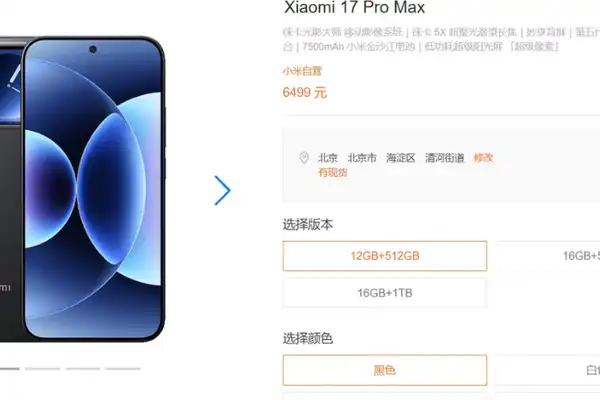
Xiaomi, facing a significant 26.3% year-on-year decline in global smartphone shipments in Q2 2026, has implemented its third price hike of the year. On August 2nd, prices were raised for nine models, including the flagship Mi 17 series (up 400-500 yuan) and Redmi K90/Turbo 5 series (up 300 yuan). This move completes a pattern where cost pressure, originating from surging memory chip prices, has climbed from entry-level to mid-range and now flagship products. The primary driver is a severe supply squeeze on consumer-grade DRAM and NAND flash memory, as major manufacturers like Samsung shift advanced capacity to more profitable HBM for AI applications. According to Xiaomi President Lu Weibing, memory prices for the same configuration have skyrocketed nearly fourfold since Q1 2025, adding roughly 1500 yuan to the cost of a mainstream 12GB+512GB phone. IDC estimates consumer memory costs have risen nearly 300% year-on-year. While the price increases hurt demand and contributed to the sales slump, Xiaomi's strategy of reducing entry-level models and upgrading its product mix also played a role. Domestically, its market share in China fell to 12% (5th place), while leaders Huawei and Apple saw shipments grow over 24%. To mitigate future risks, Xiaomi is accelerating its in-house "Surge" chip development and optimizing memory configurations across its lineup. Xiaomi is not alone; major brands like OPPO, vivo, and Apple have already raised prices in 2026, with industry insiders predicting another round of increases (200-800 yuan) in the second half. A full-scale industry-wide涨价 cycle is underway, forcing both manufacturers and consumers to recalibrate their strategies and purchasing decisions amid sustained cost pressures.

marsbit59m ago

Sales Drop 26% But Prices Rise? Xiaomi's Dilemma

marsbit59m ago

Trading

Spot

Hot Articles

How to Buy PUSH

Welcome to HTX.com! We've made purchasing Push Protocol (PUSH) simple and convenient. Follow our step-by-step guide to embark on your crypto journey.Step 1: Create Your HTX AccountUse your email or phone number to sign up for a free account on HTX. Experience a hassle-free registration journey and unlock all features.Get My AccountStep 2: Go to Buy Crypto and Choose Your Payment MethodCredit/Debit Card: Use your Visa or Mastercard to buy Push Protocol (PUSH) instantly.Balance: Use funds from your HTX account balance to trade seamlessly.Third Parties: We've added popular payment methods such as Google Pay and Apple Pay to enhance convenience.P2P: Trade directly with other users on HTX.Over-the-Counter (OTC): We offer tailor-made services and competitive exchange rates for traders.Step 3: Store Your Push Protocol (PUSH)After purchasing your Push Protocol (PUSH), store it in your HTX account. Alternatively, you can send it elsewhere via blockchain transfer or use it to trade other cryptocurrencies.Step 4: Trade Push Protocol (PUSH)Easily trade Push Protocol (PUSH) on HTX's spot market. Simply access your account, select your trading pair, execute your trades, and monitor in real-time. We offer a user-friendly experience for both beginners and seasoned traders.

4.1k Total ViewsPublished 2024.03.29Updated 2026.06.02

How to Buy PUSH

Discussions

Welcome to the HTX Community. Here, you can stay informed about the latest platform developments and gain access to professional market insights. Users' opinions on the price of PUSH (PUSH) are presented below.

活动图片