Don't Waste Every Loss: The 'Sisyphean Revelation' of the Crypto Market

marsbitPublished on 2025-12-23Last updated on 2025-12-23

Abstract

The article "Don't Waste Every Loss: The Sisyphus Lesson for Crypto Markets" addresses skilled traders facing significant profit drawdowns despite strong historical performance. It draws a parallel to the myth of Sisyphus, who found meaning in the struggle itself, suggesting that success in crypto trading lies not in avoiding losses but in embracing the process with awareness and resilience. The piece critiques two common emotional reactions to major losses: doubling down aggressively (like a Martingale strategy) or quitting entirely. Both are seen as superficial fixes that avoid the core issue: flawed risk management. The real challenge isn’t knowing risk principles but executing them consistently under emotional pressure, ego, and stress. To recover, traders must accept the loss as a tuition fee for personal flaws, not bad luck. They should anchor to current net worth, not past highs, and avoid the dangerous urge to "win it back." Strict rules on position sizing, stop-losses, and discipline are essential to prevent catastrophic failures. Emotional release is encouraged, but the key is converting pain into a lesson to avoid repetition. The article concludes that such losses, if approached with a冷静, machine-like mindset, can build resilience and improve one’s system. Each failure becomes a moat that others must pay to learn. The goal is not redemption or revenge but growth, ensuring the same mistakes never recur.

Author: thiccy

Compiled by: Tim, PANews

In 2025, the crypto market once again staged a dramatic script of volatility, yet many suffered significant losses in their trades.

This article is not written for those who consistently lose money trading, but for those with strong profitability who have seen their profits severely draw down this quarter.

One of life's greatest pains is witnessing months or even years of effort vanish overnight.

In Greek mythology, Sisyphus is punished to endlessly push a boulder up a mountain, only to watch it roll back down each time he reaches the top. The cruelty of this punishment lies in how it precisely targets the core of the human experience—that sense of absurdity in futility and repetition. However, Camus saw another possibility in Sisyphus: when he acknowledges the absurd, ceases to hope for ultimate salvation, and instead throws himself wholeheartedly into the act of pushing the rock itself, he changes his fate through the process. True victory might not lie in the rock staying atop the mountain, but in that conscious awareness and unyielding peace each time he bends to push the stone.

Crypto trading requires this same quality. Unlike most professions, this field has no所谓的“progress bar”. One wrong decision is enough to completely destroy an entire career, a reality that has driven many to despair.

When the boulder truly rolls down, people respond in two ways.

Some double down, trying to recoup their losses. They adopt more aggressive trading styles, essentially using a Martingale strategy (a method of doubling down after losses) to try and break even. If they can quickly earn the money back, they avoid emotionally confronting the reality of the loss. This method often works in the short term, but it is an extremely dangerous strategy because it reinforces a trading habit that is mathematically destined to bankrupt you.

Others become exhausted and choose to leave the game entirely. They often already have enough funds to live comfortably and believe the market's risk-reward ratio is no longer justified. They console themselves by telling themselves that no edge exists in the market anymore, or that any edge is about to disappear. Their choice to exit is, in effect, a pronouncement of a 'death sentence' on the market, vowing to never return.

While understandable, both reactions are merely coping mechanisms that fail to address the root cause. The real problem is that there is a flaw in your risk management system. Most people overestimate the actual level of their risk management.

Risk management itself is not some unsolvable puzzle; the mathematical principles behind it are well-proven. The true challenge lies not in not knowing what to do, but in consistently executing the established strategy in the face of emotions, ego, stress, and fatigue. Aligning actions with knowledge is one of humanity's most difficult disciplines, and the market ruthlessly exposes any disconnect between this awareness and reality.

After a loss, how do you move forward?

First, you must accept one thing: you were not unlucky, nor were you treated unfairly. This loss was an inevitable result of your human weaknesses. If you don't find and fix the issue, the loss will happen again.

Second, you need to fully accept your current net worth; you cannot always anchor yourself to past all-time highs. The impulse to “make it back” is one of the most dangerous impulses in the market. Step away from the screen for a while and be grateful for what you have already achieved. You are alive, you are still in the game, you are no longer trying to recoup losses, but are simply focused on generating new profits.

View this loss as tuition paid for your own flaws, a lesson you were bound to learn sooner or later. Thankfully, you paid it now rather than at a higher cost in the future. If you handle it correctly, you will look back on this moment with gratitude. Character is often forged in extreme circumstances.

Pinpoint the exact cause of the failure. For most people, the problem usually lies in a combination of the following: excessive position sizing, entering a position without a predetermined stop-loss, or failing to execute the stop-loss when it was hit. Establishing ironclad rules for risk control and stop-losses can prevent most catastrophic losses.

Remind yourself that the only way to prevent the boulder from rolling all the way down again is to strictly adhere to those rules. They are the only barrier between you and the torment you are experiencing. Without rules, you are nothing.

Allow yourself to vent fully about the loss—scream, break things. Let the emotions out, don't let them fester inside.

Most importantly, you must transform the pain into a lesson. Otherwise, it will inevitably repeat.

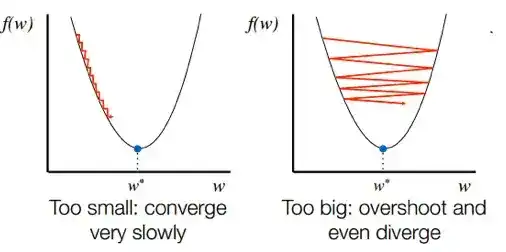
This insight about dealing with pain applies not only to trading losses but also broadly to life. The common coping mechanisms mentioned earlier are crude because, while they may solve the immediate problem, they often introduce just as many new ones. If you cannot recover from a loss in a refined, precise manner, you will end up like a gradient descent algorithm with too large a step size—oscillating wildly around the optimum, constantly overshooting, never converging to the right position.
When Napoleon lost a battle, he would immediately begin rebuilding his army and planning his next move. A single defeat is not fatal, unless it robs you of the ability to continue fighting. The primary task after a setback is to ensure this weakness can no longer be exploited and to restore your best competitive state as quickly as possible.

You should not seek redemption, nor should you seek revenge. You should not react passively, nor should you harbor anger. You must become a cold, calculating machine. You must repair yourself, then rebuild the system, ensuring the same mistake is never made again. Every failure you endure becomes a moat in your system—a moat that everyone else must pay the price to learn themselves.

Be grateful for losses that build character; they appear so you may learn. This loss did not happen without reason. Allow yourself to feel the pain, but transform it into motivation, and ensure you will never make the same mistake again.

These things are difficult because once you find the right direction, the continued growth of wealth becomes a matter of course.

Good luck.

Trending Cryptos

Related Questions

QWhat is the main message of the article regarding losses in crypto trading?

AThe article emphasizes that losses should not be wasted but treated as valuable lessons. It argues that traders should accept the loss, avoid revenge trading, and instead focus on identifying and fixing flaws in their risk management system to prevent future failures.

QHow does the article use the myth of Sisyphus to relate to crypto trading?

AThe article draws a parallel between Sisyphus's endless task of pushing a boulder up a hill only for it roll back down and the experience of crypto traders who see profits vanish suddenly. It suggests that, like Sisyphus finding meaning in the struggle, traders can find value in the process and maintain resilience despite market absurdities.

QWhat are the two common reactions to significant trading losses mentioned in the article?

AThe two common reactions are: 1. Increasing bets aggressively to recover losses quickly, often using a Martingale strategy, which is dangerous and mathematically unsound. 2. Becoming emotionally exhausted and quitting the market entirely, effectively 'sentencing' the market to death and never returning.

QWhat does the article identify as the real challenge in risk management for traders?

AThe real challenge is not a lack of knowledge about risk management principles, but the difficulty in consistently executing those strategies under pressure from emotions, ego, stress, and fatigue. The market exposes the gap between one's cognitive understanding and actual behavior.

QAccording to the article, what is the proper way to transform the pain of a loss?

AThe proper way is to fully accept the current net worth, not anchor to past highs, and view the loss as tuition paid to learn a lesson about one's flaws. One should allow themselves to feel the pain, but then channel it into motivation to rebuild their system with strict rules to ensure the same mistake is never repeated.

Related Reads

Standard Chartered Bank’s 50-Fold Fantasy: Predicting AAVE to Reach $3,500

Standard Chartered Bank has issued an optimistic research report predicting that the AAVE token could surge 50-fold to $3,500 by 2030. This forecast is based on the projection that the total value locked (TVL) in DeFi will grow 37x to approximately $2.7 trillion, driven by stablecoin expansion and the tokenization of real-world assets (RWA). The bank's model links Aave's potential valuation directly to its protocol revenue, which is primarily driven by net interest margins. The report highlights Aave's current dominant position, noting it captures over 80% of the net earnings ("protocol retained earnings") in the lending sector while holding only about half of its TVL. It also points to the recent launch of the Aave V4 architecture and a healthy revenue stream of $142 million in 2025 as positive fundamentals. Grayscale's separate analysis, applying traditional valuation metrics like DCF, concluded AAVE is currently undervalued. However, the article notes significant challenges. Aave's peer-to-pool lending model suffers from inherent capital inefficiency, with an estimated $52 million annual "deadweight loss" due to idle funds needed for liquidity buffers. This structural flaw was exposed during the April KelpDAO exploit, which locked a WETH pool at 100% utilization for days. Emerging protocols like Morpho, with more efficient point-to-point models, are cited as growing competitive threats. In summary, while institutional forecasts paint a macro picture of massive growth fueled by RWA adoption, Aave's path forward hinges on addressing its core structural limitations and competitive pressures within the evolving DeFi lending landscape.

链捕手22m ago

Standard Chartered Bank’s 50-Fold Fantasy: Predicting AAVE to Reach $3,500

链捕手22m ago

Tidal Investment: We Remain Bullish on the AI Industry Chain, But the Reasons Have Changed

Tidal Investment remains optimistic about the AI industry chain, but the rationale has shifted. The market narrative has changed. While recent large-scale IPOs (e.g., SpaceX) and major fundraising plans by tech giants like Alphabet and Meta have caused some nervousness, this isn't a sign of an AI peak. The focus has moved from the initial question of AI's viability to the sustainability of massive investment cycles. The key players—primarily the major cloud providers—are not slowing down; their capital expenditure (Capex) guidance for 2026 has been increased across the board (e.g., Alphabet to $180B, Amazon to $200B). This investment cycle is proving resilient and difficult to stop. Unlike traditional hardware cycles, current AI Capex is distributed across multiple physical layers—computing, memory, networking, and critically, power infrastructure. Bottlenecks are shifting from chips to elements like electricity, transformers, and cooling systems, which have much longer lead times and cannot be easily pre-built like fiber optics during the dot-com bubble. Supply chain data (e.g., Eaton's 240% YoY data center orders) confirms this broad-based, project-driven expansion. Market concerns are acknowledged but viewed differently. First, while Capex growth currently outpaces revenue growth, raising ROI questions, this mirrors the early scaling phase of cloud computing itself. A change in view would require concrete signals like downward Capex revisions or missed AI product targets, which haven't materialized by mid-2026. Second, comparisons to the 2000 dot-com bust are flawed. That crash was driven by a massive, parallel oversupply of cheap capacity (fiber). The current cycle faces *supply constraints* in critical, capital-intensive physical infrastructure that cannot be overbuilt as easily. In conclusion, the wave of fundraising reflects the next, more complex act of the AI story. Physical bottlenecks and sustained high Capex plans suggest this is not the finale but an ongoing, capital-intensive build-out phase. The script has changed, but the play is far from over.

marsbit1h ago

Tidal Investment: We Remain Bullish on the AI Industry Chain, But the Reasons Have Changed

marsbit1h ago

Tidal Investment: We Remain Bullish on the AI Industry Chain, But for Different Reasons Now

Tidal Investments remains optimistic about the AI industry chain, but the rationale has shifted. The market is concerned about massive concurrent fundraising by tech giants like SpaceX, OpenAI, Alphabet, and Meta, fearing an AI peak. However, the authors argue this signals the next act of AI development, not its end. Capital expenditure (Capex) from major cloud providers (Alphabet, Amazon, Meta, Microsoft, Oracle) continues to surge aggressively into 2026. This investment cycle is more resilient than past hardware cycles due to its scale and complexity. Bottlenecks have shifted from chips to critical physical infrastructure like power grids, transformers, cooling, and data center construction—areas with long lead times and limited capacity for rapid expansion. Supply chain data (e.g., Eaton's orders) confirms substantial, tangible progress. Key market concerns are addressed: 1. **ROI vs. Capex Growth**: While Capex growth outpaces revenue, the authors note cloud giants have historically overcome similar phases through scale. The cycle will only be in danger if Capex guidance is cut, orders are canceled, or AI product demand falters—none of which are currently observed. 2. **Comparison to the 2000 Dot-com Bubble**: Unlike the telecom bubble, where cheap, oversupplied fiber crashed prices, AI infrastructure (especially power) is constrained, customized, and subject to lengthy approvals, making a similar supply glut and crash unlikely. In conclusion, the wave of fundraising reflects the immense, ongoing capital needs for AI's next phase, constrained by slow-moving physical bottlenecks. The AI cycle is not over; the script has simply changed.

链捕手1h ago

Tidal Investment: We Remain Bullish on the AI Industry Chain, But for Different Reasons Now

链捕手1h ago

Grayscale: These 15 Profitable Crypto Protocols Are Severely Undervalued

Grayscale Research identifies 15 top-revenue crypto protocols trading at significant valuation discounts, with many at single-digit or even 1x revenue multiples. Protocols like Pump.fun, PancakeSwap, and Meteora have market capitalizations roughly equal to their annual revenue. The report argues these financially-focused protocols (DEXs, lending, staking) are fundamentally undervalued and could benefit from the potential passage of the CLARITY Act, expected as soon as next month. This legislation aims to clarify digital asset regulation, potentially reducing institutional barriers and driving on-chain activity. The analysis breaks down the protocols into three groups: the "1x Club" (market cap ≈ revenue), mid-tier protocols with 3-9x multiples (e.g., Aave, Lido, Jupiter), and high-multiple protocols like Hyperliquid (15x) and Uniswap (37x), where valuation reflects future potential rather than current cash flows. Grayscale applies a traditional DCF model to Aave, suggesting a one-year price target of ~$175, representing ~130% upside from current levels. The report notes a risk-off macro environment since the Iran conflict has further compressed valuations, creating a potential entry window. The conclusion highlights that while the valuation data presents an intriguing opportunity, the investment thesis is contingent on the CLARITY Act's passage and subsequent institutional capital flows. Investors are cautioned to consider Grayscale's inherent conflict of interest as a crypto asset manager with products tied to these assets.

marsbit2h ago

Grayscale: These 15 Profitable Crypto Protocols Are Severely Undervalued

marsbit2h ago

Trading

Spot
Futures

Hot Articles

How to Buy T

Welcome to HTX.com! We've made purchasing Threshold Network Token (T) simple and convenient. Follow our step-by-step guide to embark on your crypto journey.Step 1: Create Your HTX AccountUse your email or phone number to sign up for a free account on HTX. Experience a hassle-free registration journey and unlock all features.Get My AccountStep 2: Go to Buy Crypto and Choose Your Payment MethodCredit/Debit Card: Use your Visa or Mastercard to buy Threshold Network Token (T) instantly.Balance: Use funds from your HTX account balance to trade seamlessly.Third Parties: We've added popular payment methods such as Google Pay and Apple Pay to enhance convenience.P2P: Trade directly with other users on HTX.Over-the-Counter (OTC): We offer tailor-made services and competitive exchange rates for traders.Step 3: Store Your Threshold Network Token (T)After purchasing your Threshold Network Token (T), store it in your HTX account. Alternatively, you can send it elsewhere via blockchain transfer or use it to trade other cryptocurrencies.Step 4: Trade Threshold Network Token (T)Easily trade Threshold Network Token (T) on HTX's spot market. Simply access your account, select your trading pair, execute your trades, and monitor in real-time. We offer a user-friendly experience for both beginners and seasoned traders.

12.1k Total ViewsPublished 2024.03.29Updated 2026.06.02

How to Buy T

Discussions

Welcome to the HTX Community. Here, you can stay informed about the latest platform developments and gain access to professional market insights. Users' opinions on the price of T (T) are presented below.

活动图片