Delphi Digital: Solana to Undergo the Most Radical Technical Upgrade Cycle in Its History

marsbitPublished on 2026-01-21Last updated on 2026-01-21

Abstract

Delphi Digital outlines Solana's ambitious 2026 roadmap, describing it as the network's most radical upgrade cycle. The goal is to transform Solana into an exchange-grade environment where its on-chain Central Limit Order Book (CLOB) can compete with centralized exchanges (CEX) in latency, liquidity depth, and fairness. Key upgrades include: - **Alpenglow:** A major consensus overhaul introducing Votor and Rotor. Votor reduces finality time to 100-150ms by aggregating votes off-chain. It ensures liveness with up to 40% of nodes offline or malicious. Proof of History is deprecated. - **Firedancer:** A second validator client built in C++ by Jump, aimed at increasing client diversity and network resilience. - **DoubleZero:** A private fiber-optic network overlay for validators, minimizing latency disparities and enabling faster consensus. - **Block Building:** Innovations like Jito's BAM, which uses Trusted Execution Environments for transaction privacy, and Harmonic, an open block builder aggregation layer. - **Raiku:** A scheduling/auction layer providing deterministic, guaranteed execution for applications like high-frequency trading. These upgrades aim to position Solana as the premier L1 for on-chain capital markets, supporting everything from meme coins to perpetuals and native chain-on stocks, by achieving performance parity with traditional exchanges.

Written by: Delphi Digital

Compiled by: Nicky, Foresight News

Solana's 2026 roadmap may be the most radical upgrade cycle in the network's history, featuring a comprehensive overhaul from the consensus mechanism to infrastructure, aiming to become the decentralized Nasdaq.

Solana's roadmap aims to transform it into an exchange-grade environment, enabling native on-chain central limit order books (CLOBs) to compete with centralized exchanges (CEXs) in terms of latency, liquidity depth, and fairness. Here are all the upgrades to achieve this goal.

Alpenglow: A Comprehensive Overhaul of the Consensus Mechanism

Alpenglow is the most significant protocol-level change in Solana's history. It introduces a completely new consensus architecture built around two core components: Votor and Rotor.
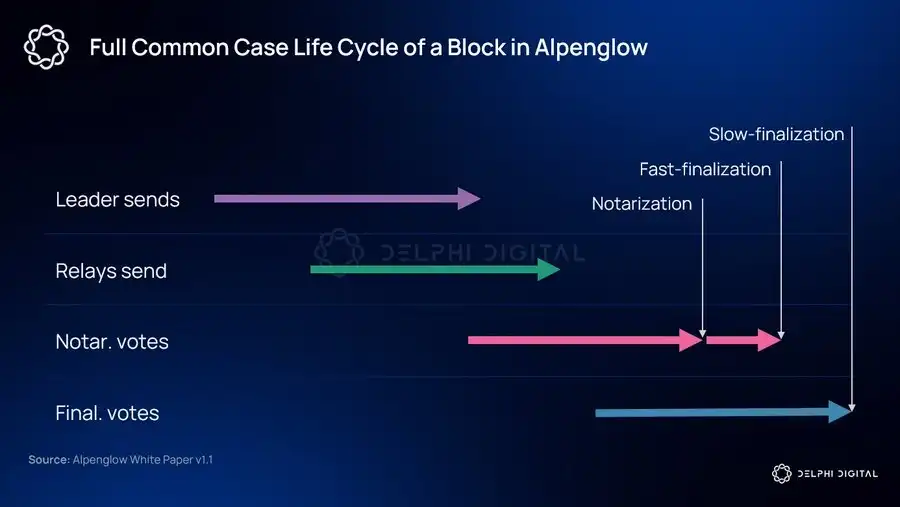
Votor completely revamps how the network reaches consensus. Instead of chaining multiple voting rounds together, it allows validators to aggregate votes off-chain and submit finality within one or two rounds. The result is a theoretical reduction in finality time from the original 12.8 seconds to 100-150 milliseconds.

Votor runs two finality paths in parallel. If a block receives overwhelming support (over 80% stake) in the first round, it is finalized immediately. If support is between 60%-80%, a second round of voting is initiated. If the second round also garners over 60% support, the block is finalized. This design ensures finality even if parts of the network are unresponsive.

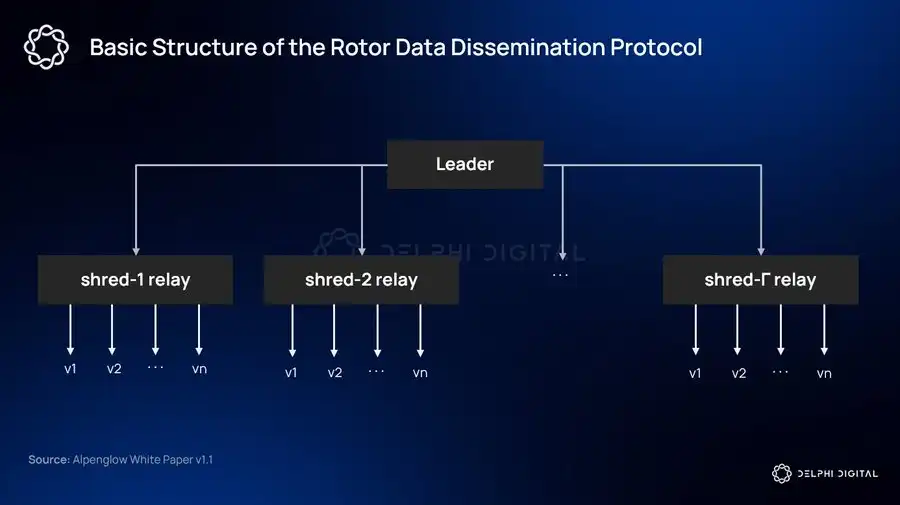
Rotor revolutionizes the block propagation mechanism by routing messages directly through validators with high stake and stable bandwidth.
Alpenglow also introduces a "20+20" resilience model: security is guaranteed as long as malicious stake does not exceed 20%; liveness is maintained even if an additional 20% goes offline. This means Alpenglow can still achieve finality even with up to 40% of the network's nodes being malicious or offline.

Under Alpenglow, the Proof of History mechanism is effectively deprecated, replaced by deterministic epoch scheduling and local timers. This upgrade is expected to launch in early to mid-2026.

Firedancer: Runtime Performance Improvements

Since its inception, Solana has relied on a single validator client (now called Agave). This monoculture has long been a core weakness of the network. Any bug or failure at the client level could lead to a full network outage.

Firedancer is a second, independent validator client developed by Jump, written in C++. Its design goal is to turn Solana validators into deterministic, high-throughput engines capable of handling millions of TPS with minimal latency variance.

Frankendancer is its transitional version, combining Firedancer's network and block production modules with Agave's runtime and consensus components. As Firedancer gradually becomes mainnet-ready, validator diversity is expected to increase significantly.

In this competitive context, both teams have been iterating heavily.

DoubleZero: High-Performance Fiber Infrastructure

DoubleZero is a private network overlay that connects validators via dedicated fiber optic cables, the same infrastructure used by traditional exchanges (like Nasdaq and CME) for microsecond transmissions.
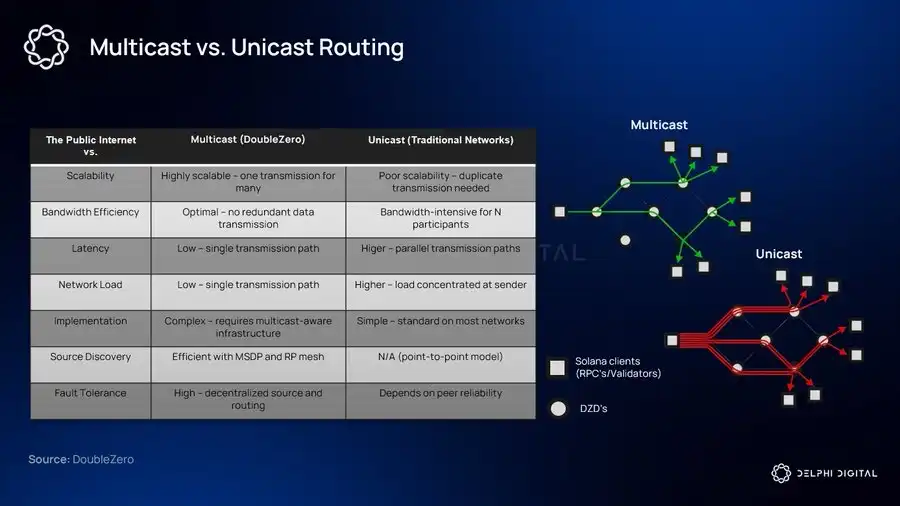
As the validator set expands, information propagation becomes more difficult. More nodes mean more destinations, introducing time inconsistencies in the network. DoubleZero eliminates this variance by routing messages along optimal paths, rather than bouncing around the public internet.

Alpenglow's finality model relies on validators receiving and responding to messages within strict time windows. If propagation is inconsistent, votes arrive late, quorums form slower, and finality takes longer. By narrowing the latency gap between validators, DoubleZero allows Votor to achieve finality faster and enables more uniform propagation for Rotor.

DoubleZero also supports multicast, replicating data within the network and delivering it to all validators simultaneously.

Block Building: BAM and Harmonic

Two complementary trends are reshaping Solana's block building layer:

BAM (Block Assembly Marketplace) is Jito's reimagining of Solana's transaction pipeline. Instead of the slot leader unilaterally deciding transaction ordering, it inserts a market and privacy layer between ordering and execution. Transactions are imported into a Trusted Execution Environment (TEE), meaning neither validators nor builders can see the raw transaction content before ordering is finalized. This prevents opportunistic pre-execution behaviors like front-running.

Harmonic targets another part of the pipeline – who builds the block. It introduces an open block builder aggregation layer, allowing validators to accept block proposals from multiple competing builders in real-time. Think of Harmonic as a meta-market, while BAM is a micro-market.

Raiku: Deterministic Execution Guarantees

Raiku fills the remaining void. Solana has arguably solved most throughput bottlenecks, but it does not natively provide deterministic latency or programmable execution guarantees for specific applications. The granular control required for high-frequency trading (HFT)-style matching and on-chain central limit order books (CLOBs) far exceeds what an L1 can reasonably provide.
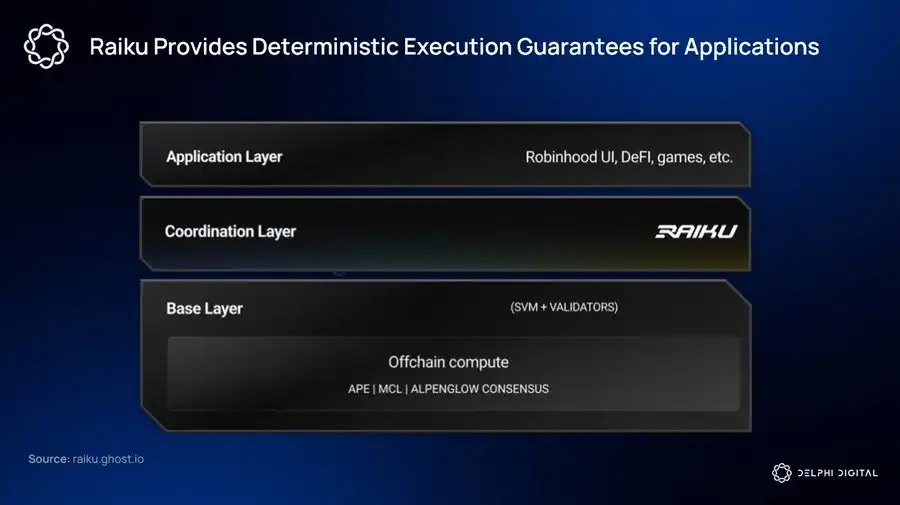
Raiku provides a scheduling/auction layer that runs parallel to the Solana validator set, offering applications a programmable, deterministic pre-execution environment without modifying the L1 consensus mechanism. It achieves guaranteed execution for pre-committed workflows through Ahead-of-Time (AOT) transactions and meets real-time execution needs via Just-in-Time (JIT) transactions.

Bringing Capital Markets On-Chain

Among high-performance public chains, Solana remains the dominant player, but this dominance is meaningless without users and efficient on-chain markets. While the vast majority of meme coins are still traded on Solana, the on-chain perpetual futures market is rapidly consolidating on a few platforms.

To compete with centralized players, performance must be on par. We believe the Solana ecosystem recognizes this issue and is optimistic about closing the gap. The upcoming upgrades are highly anticipated, and new Solana-native perpetual exchanges like BULK are set to launch early in the year.

Retail demand for trading spot assets on Solana remains huge. While Hyperliquid has temporarily captured the perpetuals market, Solana has established itself as the preferred L1 for trading any spot pair. Centralized exchanges still lead significantly, but Solana is currently the go-to solution for on-chain trading.

Products like xStocks are bringing on-chain stocks directly to Solana. Liquidity, price discovery, and speculative attention are converging onto this single chain that offers faster settlement, better user experience, and denser capital.

This is Solana's rationale for bringing capital markets on-chain.

Trending Cryptos

Related Questions

QWhat is the main goal of Solana's 2026 roadmap according to Delphi Digital?

AThe main goal is to transform Solana into an exchange-grade environment where native on-chain centralized limit order books (CLOBs) can compete with centralized exchanges (CEXs) in terms of latency, liquidity depth, and fairness.

QWhat are the two core components of the Alpenglow consensus mechanism upgrade?

AThe two core components are Votor, which overhauls how the network reaches consensus, and Rotor, which revolutionizes block propagation.

QHow does Firedancer improve Solana network's performance and security?

AFiredancer is a second independent validator client written in C++ that aims to turn Solana's validators into deterministic, high-throughput engines capable of handling millions of TPS with minimal latency variance, thereby increasing client diversity and reducing the risk of network-wide outages.

QWhat is the purpose of DoubleZero in the Solana ecosystem?

ADoubleZero is a private network overlay that connects validators via dedicated fiber optics, reducing latency inconsistencies and enabling faster finality by routing messages on optimal paths rather than over the public internet.

QWhat problem does Raiku solve for applications like high-frequency trading (HFT) and on-chain CLOBs?

ARaiku provides a deterministic execution guarantee and a programmable pre-execution environment, offering granular control for applications that require assured execution timing, which is essential for HFT-style matching and on-chain CLOBs.

Related Reads

Misjudged A-Shares: Resilience, Expectations, and Confidence

China's A-share market recently faced selling pressure, especially in tech sectors, initially triggered by a global tech sell-off that began in South Korea. However, the article argues this is a case of "mistaken injury" and highlights the market's underlying resilience. This resilience stems from three main pillars: **1) Tech Sector Fundamentals:** Unlike Korea's market dominated by a few memory chip stocks, China's tech sector is diversified across computing, communications, electronics, and semiconductors, supported by dual narratives of global AI supply chains and domestic substitution. Core areas like optical modules and fiber optics continue to show strong earnings growth. **2) "National Team" Support:** State-backed institutions and large corporations have made significant market purchases and announced buybacks, providing liquidity and signaling confidence. This is seen as a stabilizing policy signal, often associated with market bottoms. **3) Broader Market Pillars:** Other major sectors are showing endogenous recovery momentum. Consumer stocks benefit from stabilizing CPI and signs of sector recovery (e.g., liquor price hikes). Cyclical sectors like aluminum have high earnings, potential price increases due to tight supply, and low valuations. The financial sector offers stable dividends and low valuations. The conclusion is that the sell-off was driven by external contagion, not a collapse in fundamentals. With strong policy support and recovering momentum across key sectors, the A-share market possesses the toughness to regain stability.

marsbit22m ago

Misjudged A-Shares: Resilience, Expectations, and Confidence

marsbit22m ago

The Clarity Act's Journey Through Congress: The Thorny Path of Bipartisan Compromise in the U.S.

The U.S. Congress is struggling to advance the crypto market structure bill known as the Clarity Act, with bipartisan compromise proving difficult. Key hurdles include unresolved disputes over "yield" products and, more critically, the inclusion of strong ethics provisions for elected officials—a non-negotiable demand for many Democrats. While a compromise on yield was reached in May, securing only limited Democratic support in committee, the separate Senate Agriculture Committee version later passed with no Democratic votes due to the ethics impasse. As Republicans push for a full Senate vote in July, demands for ethics rules have expanded, and other contentious issues like developer protections and concerns from law enforcement and large banks further complicate negotiations. Despite consensus on the need for legislation, the path forward is unclear. Recent discussions between senators and White House officials aim to find acceptable ethics language. Some lawmakers question whether a compromise text can garner enough bipartisan support, with one Democrat stating the current proposal lacks the strong ethics provisions required for their vote. Potential short-term goals for the crypto community include symbolic Senate action before the August recess, a longer-term aim for passage by 2026, or establishing a detailed framework that addresses ethics and other compromises. The process remains arduous, relying on the traditional, vote-by-vote effort to build bipartisan support.

marsbit41m ago

The Clarity Act's Journey Through Congress: The Thorny Path of Bipartisan Compromise in the U.S.

marsbit41m ago

Are Kalshi and Polymarket Founders at Odds? This Business Rivalry Is More Brutal Than You Think

"The Rivalry Between Kalshi and Polymarket Founders Turns Bitter and Litigious" The intense feud between Tarek Mansour, CEO of Kalshi, and Shayne Coplan, founder of Polymarket, has escalated far beyond typical business competition into personal animosity and regulatory battles. Both lead billion-dollar prediction market platforms, but their approaches differ sharply. Kalshi positions itself as the compliant operator, securing U.S. regulatory approval before launching. In contrast, Polymarket initially operated offshore, allowing U.S. users to access its platform via VPN, which drew regulatory scrutiny. The conflict reached a peak in November 2024 when FBI agents raided Coplan's New York apartment. While Coplan publicly blamed political motives, his team privately suspected Kalshi was involved. According to sources, Kalshi's lawyers had previously reported Polymarket's operations to federal prosecutors, highlighting its accessibility to U.S. users despite a ban. This incident fueled mutual accusations and underhanded tactics, including social media smear campaigns and attempts to sabotage each other's major business deals. Their rivalry also played out in Washington, influencing regulatory debates. Kalshi actively lobbied against Polymarket's practices, framing them as illegal and unethical. Polymarket, after facing a CFTC fine and investigation, later acquired a licensed U.S. firm to launch a domestic app, regaining a foothold. Despite the hostility, both companies have seen massive growth, with combined trading volumes soaring. However, increased regulatory scrutiny, particularly around insider trading on Polymarket's platform, continues to pose challenges. The founders' deep-seated mutual disdain ensures their battle for market dominance remains as much a personal vendetta as a commercial one.

marsbit50m ago

Are Kalshi and Polymarket Founders at Odds? This Business Rivalry Is More Brutal Than You Think

marsbit50m ago

Trading

Spot

Hot Articles

Discussions

Welcome to the HTX Community. Here, you can stay informed about the latest platform developments and gain access to professional market insights. Users' opinions on the price of SOL (SOL) are presented below.

活动图片















