Cloudflare CEO: How I Decided Which Employees to Replace with AI?

marsbitPublished on 2026-05-22Last updated on 2026-05-22

Abstract

Cloudflare CEO Matthew Prince explains his decision to lay off over 20% of the company's staff, despite record-high growth and revenue. He frames this as a necessary adaptation to AI-driven business transformation, drawing on Peter Drucker's framework of three corporate roles: builders, sellers, and measurers. Prince argues AI primarily targets "measurers"—roles in auditing, finance, legal, compliance, middle management, and operations. AI systems can perform these measuring and oversight tasks with superior objectivity, efficiency, and scale, enabling continuous auditing and faster financial processes. This allows for consolidation and automation in these areas. Conversely, "builders" (e.g., engineers) and "sellers" are seen as secure and even more valuable. AI amplifies their productivity, and human relationships remain crucial for sales. The layoffs were not merely cost-cutting but a reallocation of resources to hire more builders and sellers. Prince highlights the company's record number of open roles and its highly AI-native intern class, who are primarily builders and sellers. He concludes that AI will reshape every company by enhancing measurement capabilities, allowing human talent to focus on creating and capturing value through building and selling.

Author: Matthew Prince

Compiled by: Deep Tide TechFlow

Two weeks ago, I laid off more than 20% of our company's employees. I did not make this decision because Cloudflare was in trouble. On the contrary, our revenue growth has hit a record high, cash flow is ample, and the number of new customers we've acquired globally has reached unprecedented levels. I made this decision because the business environment is undergoing a dramatic shift; and to win in the future, Cloudflare must adapt.

Searching through American business history, you might not find a second publicly traded company like ours that, while maintaining over 30% high growth, also laid off 20% of its staff. However, what we did over the past two weeks will likely become the industry norm within the next year. This is a story about how artificial intelligence (AI) is reshaping everything, but unfortunately, many executives and commentators misunderstand how exactly AI will disrupt business rules and who will be impacted.

To figure this out, I reopened an old book published in 1954 (this book is 20 years older than me): Peter Drucker's "The Practice of Management." In this book, Drucker deeply analyzes the various roles within an enterprise. I categorize these roles into three types: builders, sellers, and measurers.

As the names suggest, "builders" are responsible for creating products, and "sellers" are responsible for selling them. "Measurers" encompass everything else: internal audit, revenue recognition (an accounting term referring to the process of determining when a sale can be officially recorded as income on the company's books according to accounting standards), finance, legal, compliance, middle management, daily operations, and so on, to name a few.

Contrary to the pessimistic predictions of some analysts, the jobs of "builders" are very secure and aren't going anywhere. If an engineer on my team could increase their productivity tenfold with the help of AI, I would definitely hire all such talent I could find in the market.

"Sellers" also have no need to worry about being replaced. Because those who control budgets are still living humans, they prefer to buy from people who are willing to take the time to listen to their needs, can build trust, and can provide support when problems arise.

"Measurers" are also crucial to the enterprise, but they are fundamentally different from the first two. Top "measurers" are often worth their weight in gold. They work tirelessly behind the scenes, not seeking the flowers and applause of front-of-house roles (like servers in a restaurant who directly face customers, referring to positions that easily attract external attention and praise); ideally, they can also maintain an objective perspective independent of other company departments. Drucker pointed out that measuring business performance is important, but customers are ultimately won through "building" and "selling." A truly top-tier company should invest the most resources in these two core functions.

The wave of AI is not targeting "builders" or "sellers"; it is truly aimed at "measurers." Tireless, absolutely independent, extremely efficient, and always online—today's AI systems, when measuring and examining a company, achieve a level of objective detail and precision that even the most outstanding employees of the past could not match.

Take Cloudflare, for example. In the past, our internal audit team could only sample a few business risk points for review each quarter. Now, we are fully implementing a new system that conducts continuous, 24/7 audits on every single business risk point. We are closing our books (closing our books, referring to the regular process where a company settles its accounts and issues financial statements at month-end or year-end) faster. We are making fewer mistakes, and even when occasional errors occur, they can be identified more accurately and reliably. As CEO, I now have unprecedented, excellent tools that not only allow me to precisely measure the company's overall operational status but also help me accurately identify rising stars within the team.

The vast majority of the employees we laid off last week were "measurers." We streamlined middle management across the company because, with AI assistance, managers can now oversee more direct reports while still conducting accurate performance evaluations and providing effective guidance. We consolidated scattered operational roles into a unified business support group, leveraging AI to fill gaps when specific expertise is needed. We also significantly reduced the marketing team—like most companies, it was once a heavy concentration area for "measurers." Furthermore, within the entire finance team, we found ample opportunities to consolidate roles and automate tasks.

However, the fundamental purpose of this layoff was absolutely not simply to reduce headcount. In fact, the number of open positions we are currently hiring for has reached a record high. I expect our total employee count to continue growing in the coming years. Precisely because the work of "measuring" no longer requires as much manpower, we can now free up resources to heavily invest in the talent that truly drives company growth.

This summer, we received nearly one million resumes competing for 1,111 paid internship positions. The interns we finally hired are not only exceptionally outstanding but also naturally AI-native (AI-native, referring to the new generation who grew up in the AI era, naturally adapting to and viewing AI as a mindset and fundamental tool). Without exception, they are all "builders" or "sellers," and we expect the vast majority of them to ultimately receive full-time offers.

They are the new generation of the future, who will invent new ways to power our business. Thanks to AI, we can now more precisely measure their contributions and accurately identify those future leaders. AI is by no means a harbinger of disaster leading to bleak unemployment for young people—quite the opposite is true.

AI will not end all jobs, but it will inevitably reshape every business. In the end, time will prove Drucker right. AI will greatly enhance our ability to measure our organization, so that the living humans on our team can focus all their energy on where they can truly create and capture value: building and selling.

Related Questions

QAccording to the article, why did the Cloudflare CEO decide to lay off more than 20% of employees despite strong company performance?

AHe did it because the business environment is changing drastically, and Cloudflare must adapt to win the future. The decision was driven by how artificial intelligence (AI) is reshaping business rules, specifically targeting certain types of roles.

QBased on Peter Drucker's framework mentioned in the article, what are the three types of roles within a company, and which are most safe from AI disruption?

AThe three roles are Builders (who make products), Sellers (who sell products), and Measurers (who handle internal audit, finance, legal, compliance, operations, etc.). According to the CEO, Builders and Sellers are very safe, as their jobs are not threatened by AI. The AI wave is primarily aimed at Measurers.

QHow has AI specifically changed the work of 'Measurers' at Cloudflare, according to the CEO?

AAI has enabled continuous, around-the-clock auditing of every business risk point, faster financial book closing, fewer and more precisely caught errors, and provided the CEO with superior tools to measure company performance and identify rising talent. This increased efficiency and objectivity reduced the need for many human Measurers.

QWhat was the ultimate goal of the layoffs, and what is Cloudflare's hiring outlook?

AThe ultimate goal was not simply to reduce headcount. It was to reallocate resources toward roles that drive growth. Cloudflare currently has a record number of open roles, and the CEO expects total employee count to grow in the coming years. The savings from automating 'Measurement' allow the company to invest heavily in more Builders and Sellers.

QWhat does the CEO say about the new generation of 'AI-native' interns and the future of work with AI?

AHe states that the new generation of AI-native interns are exceptionally talented and are inherently Builders or Sellers. He sees AI not as a disaster causing unemployment but as a tool that will reshape every business. AI will enhance the ability to measure an organization, allowing humans to focus their energy where they truly create and capture value: building and selling.
Related Reads

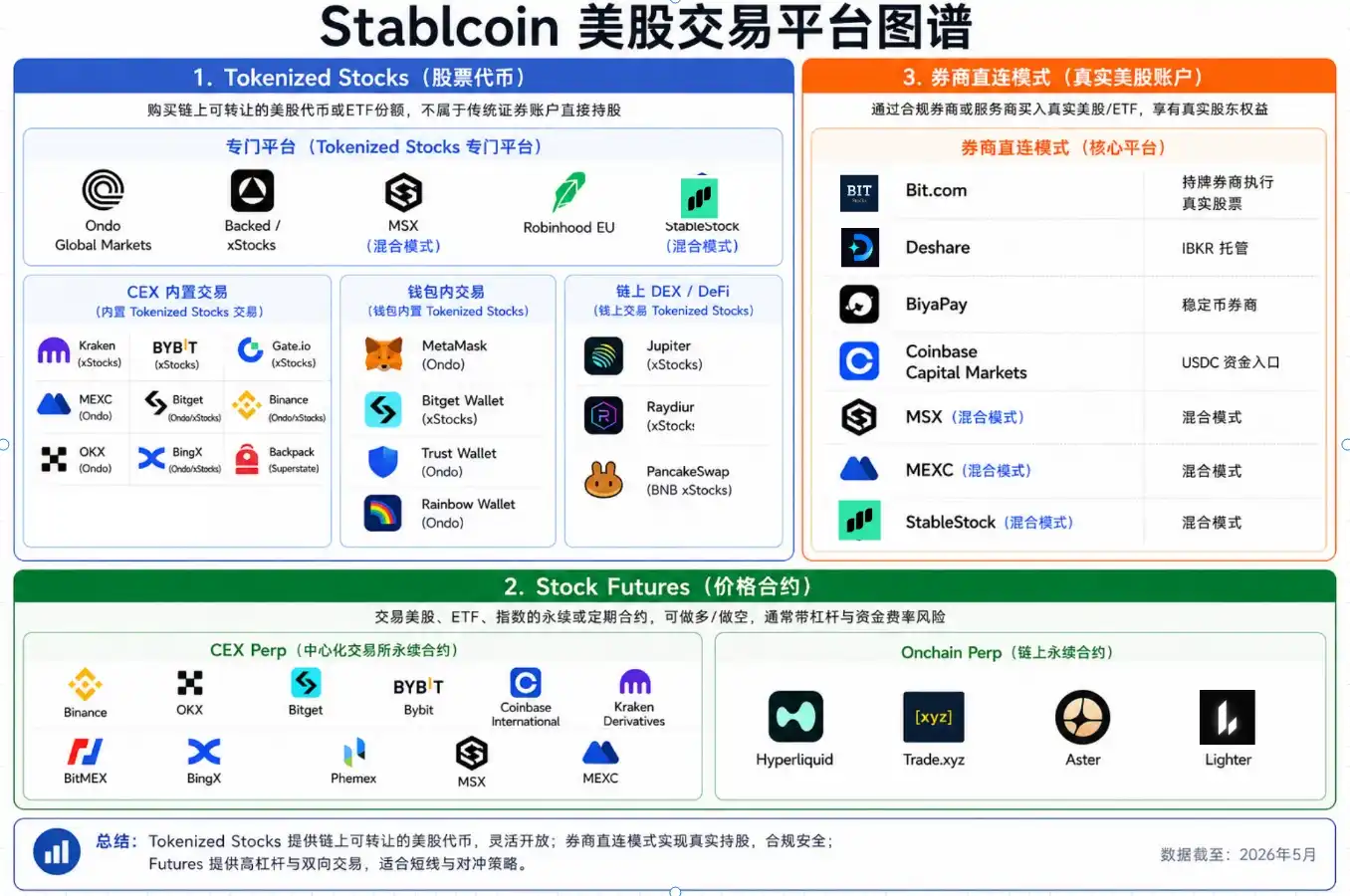
How to Define "Real U.S. Stocks": Differences Between On-Chain Tokens, Price Contracts, and Direct Broker Connections

**Title:** Defining "Real US Stocks": Differences Among On-Chain Tokens, Price Contracts, and Broker-Direct Access **Summary:** In 2026, using stablecoins to purchase US stocks is mainstream, but products marketed as "buying US stocks with USDT" offer fundamentally different assets. This article analyzes three primary models. **1. Tokenized Stocks:** These are on-chain tokens representing economic exposure to underlying stocks, held by an issuer or custodian. They offer benefits like 24/7 trading and DeFi composability (e.g., use as loan collateral). However, users lack direct legal shareholder status; dividends may not be paid in cash, and voting rights are typically non-binding advisory expressions. Examples include platforms like Ondo Finance. **2. Stock Futures / Equity Perpetuals:** These are derivative contracts tracking a stock's price, allowing leveraged long/short positions 24/7, similar to crypto perpetuals. They offer high efficiency and flexibility but involve funding fees, which can be a significant long-term cost, especially during strong trends. Crucially, they confer no ownership rights (dividends, voting) to the holder. **3. Broker-Direct Model:** This model provides access to real securities via licensed broker-dealers. Stocks/ETFs are bought and held within the US clearing and custodial system (e.g., DTCC), making it the only path to genuine stock ownership. Users receive cash dividends and formal proxy voting rights (where applicable). It supports thousands of stocks and ETFs, far exceeding the coverage of the other two models. Key advantages include no funding fees, a clean cost structure for long-term holds, and the potential to transfer holdings to other brokers. Some platforms facilitate stablecoin (USDT/USDC) deposits, reducing reliance on traditional banking. A critical distinction exists *within* the broker-direct model: the underlying brokerage architecture (e.g., Fully Disclosed IB, Omnibus IB, Self-Clearing) determines how client assets are held, protected, and how safeguards like SIPC insurance are conveyed. Users should verify the specific clearing structure and regulatory compliance of any platform. In conclusion, "buying US stocks with USDT" can mean holding an on-chain economic proxy (Tokenized Stocks), trading a price derivative (Stock Futures), or owning the actual security (Broker-Direct). For users seeking full ownership rights and long-term investment, the broker-direct model is the definitive choice, though its implementation details require careful scrutiny.

marsbit54m ago

How to Define "Real U.S. Stocks": Differences Between On-Chain Tokens, Price Contracts, and Direct Broker Connections

marsbit54m ago

NVIDIA Launches DSX Platform, Expanding into AI Factory Infrastructure

NVIDIA has unveiled the DSX platform at its GTC Taipei event, marking a strategic expansion from GPU sales into comprehensive AI factory infrastructure solutions. The platform addresses challenges like power supply, cooling, and resource orchestration as AI models scale, shifting the industry focus from single-chip performance to overall infrastructure efficiency. DSX integrates NVIDIA's chips, systems, software, and partner technologies to cover the entire AI factory lifecycle—from design and simulation to deployment and operations. It aims to accelerate deployment, improve reliability and operational efficiency, and reduce the cost per generated token in AI inference. The software suite includes DSX MaxLPS, which uses 45°C liquid cooling and rack-level optimization to allow up to 40% more GPUs per megawatt, and DSX OS, an open-source platform for AI factory operations. The platform also encompasses reference designs, digital twin simulation (DSX Sim), dynamic workload adjustment based on grid conditions (DSX Flex), and data exchange between systems. Early adopters include cloud providers like CoreWeave and Lambda. Major hardware partners, including Dell, HPE, Lenovo, and Supermicro, are developing DSX-ready systems. Pilot projects for DSX Flex are underway with energy providers. Strategically, DSX represents NVIDIA's ongoing transition from an AI chip supplier to a full-stack AI infrastructure platform provider, aiming to set industry standards and solidify its market leadership.

marsbit59m ago

NVIDIA Launches DSX Platform, Expanding into AI Factory Infrastructure

marsbit59m ago

After Burning Tens of Billions of Dollars in Tokens, Silicon Valley Giants Start Limiting Employee Token Usage

After burning tens of billions of dollars on AI tokens, major Silicon Valley firms are now restricting employee usage. Companies like Microsoft, Uber, and Salesforce, which heavily promoted AI for "efficiency," are facing a cost crisis. The practice of "tokenmaxxing"—pushing employees to maximize AI tool usage—led to wasteful spending on trivial tasks like checking the weather or writing birthday messages, with studies showing significant hidden costs for bug fixes and code rewrites. The core issue is a misalignment between individual productivity gains and actual business value. While employees use AI to automate tasks they dislike, such as writing reports, this often doesn't translate to increased company revenue or improved core business outcomes. For instance, AI-generated code speeds up development but also sees an 800% increase in "code churn" (code being discarded or rewritten). As a result, only 14% of CFOs report seeing a clear, measurable return on AI investments. Firms are now shifting strategies. Microsoft has revoked most internal licenses for Claude Code, while others are implementing monitoring and cost controls. New tools from companies like Harness and CloudZero aim to track AI spending and tie costs to business results. Some AI vendors, like HubSpot, are moving from token-based pricing to charging based on outcomes, such as "resolved conversations" or "leads generated." This represents a necessary correction in the AI adoption cycle. The challenge now is for companies to move beyond using AI merely to speed up old tasks and instead rethink their workflows and business models fundamentally. The future of enterprise AI depends on proving its value, not just its usage.

marsbit1h ago

After Burning Tens of Billions of Dollars in Tokens, Silicon Valley Giants Start Limiting Employee Token Usage

marsbit1h ago

Trading

Spot
Futures

Hot Articles

Discussions

Welcome to the HTX Community. Here, you can stay informed about the latest platform developments and gain access to professional market insights. Users' opinions on the price of AI (AI) are presented below.

活动图片