On Tuesday, August 18, at 12:10 PM Eastern Time (EDT), Bitcoin was trading around $64,738, roughly half of its peak value recorded in October 2025. The dividing line in the market is becoming increasingly difficult to ignore: bearish forces are already putting pressure on balances and order books, while the most compelling arguments for growth still require decisions, implementation, and an influx of fresh capital that has not yet arrived.
ETF Trend Reversed
Unlike the record inflows of 2025, US spot market Bitcoin exchange-traded funds (ETFs) recorded a net outflow of approximately $5.4 billion in the first half of 2026. ETFs allow investors to access Bitcoin through regular brokerage accounts, making their daily flows one of the most accurate indicators of whether institutional funds are truly entering or leaving the market.
According to sosovalue.com, the funds still hold a significant base of investment capital, with a cumulative net inflow of about $51.79 billion. The issue is that the steady demand that once absorbed Bitcoin's supply has become unpredictable. In the past week, from August 10 to 14, the net outflow was approximately $389.7 million. Nevertheless, US spot Bitcoin ETFs currently hold over 1.1 million $BTC worth $76.61 billion.
Treasury Company's 'Flywheel' Mechanism Has Stalled
The strategy transformed the corporate Bitcoin treasury model into a capital markets mechanism, selling stocks and debt, buying Bitcoin, and using its inflated valuation to raise even more funds. This mechanism becomes significantly harder to operate when the company's stock no longer trades at a significant premium to the Bitcoin held on its balance sheet.
This year, the company sold $BTC three times and used the proceeds to repurchase preferred shares. The company still owns 840,447 $BTC, so liquidation is still far off. What has changed is more important: Bitcoin has demonstrated it can become a funding source when the company needs to defend its capital structure.
The Fed, Which Could Hike Rates, Not Cut Them
In July, the Federal Reserve kept the benchmark rate at 3.50–3.75%, although three officials favored a quarter-percentage-point hike. Since then, markets have scaled back expectations for a September rate hike, but traders are barely pricing in the aggressive easing cycle that risk assets would prefer.
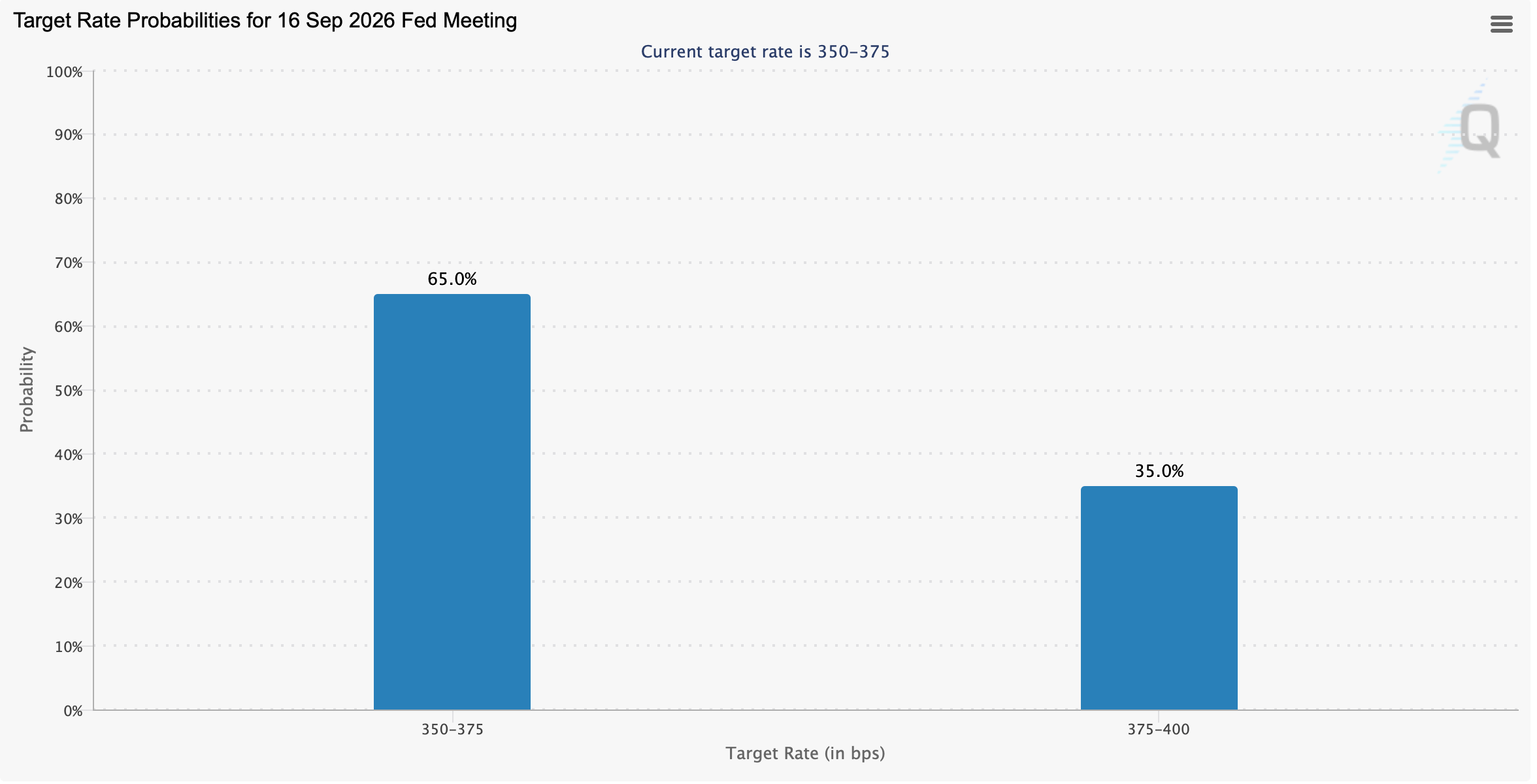
This distinction matters because high rates give investors attractive yields without needing to turn to volatile assets. The Fed doesn't need another rate hike to make life harder for Bitcoin. Simply holding rates high can have a significant effect on its own. Inflation and employment data to be released before the September 15–16 meeting could sharply alter these expectations.
Mining Economics Hit a Wall
Bitcoin miners are experiencing one of the toughest economic periods in recent years. The Hashprice metric, which measures the mining revenue generated per unit of computational power, averaged $31.21 per petahash per second per day in July, putting operators dangerously close to historical lows.
Owners of outdated hardware and miners forced to use expensive power supplies are faring the worst. Public miners sold over 32,000 $BTC in Q1 2026, setting a quarterly record as operators raised cash to continue operations. Others are repurposing valuable power-plant sites for AI and high-performance computing clients, where contracts can be more lucrative than chasing block rewards.
Custody Shock
The now-infamous Coldcard vulnerability taught a painful lesson to wallet owners affected by the incident, although the Bitcoin network itself was never compromised. Attackers stole nearly 2,000 $BTC, worth about $116 million at the time, after vulnerable devices generated recovery seeds that were weaker than assumed. For wallet owners, the Coldcard failure was an even harsher lesson: firmware and recovery seed security can turn theoretical vulnerabilities into irreversible losses.
Meanwhile, companies Trezor and Safepal faced data leaks that exposed customers' personal information, including home addresses and private data. These leaks compromised customer privacy.
Favorable Trends for Bitcoin
However, Bitcoin's story in 2026 isn't just about a crash. Washington may pass new regulations, access to pension funds could well open up, and long-term holders are holding steady. If fresh capital encounters this shrinking supply, $BTC could soon break above the upper range in Q4. Bitcoin market bears have left, and traders see new catalysts that could make sidelined funds return to the market right now.
Supply from Long-Term Holders Reached a Record Level
Long-term holders—investors whose coins have remained inactive for extended periods—appear to be rebuilding their positions. On-chain analytics firm Cryptoquant recorded a 1.29 million $BTC increase in its long-term holder metric in May—the highest reading in over six years.
There's an important nuance here: the record level does not mean investors bought 1.29 million $BTC in one month. Coins simply enter the long-term category by remaining untouched. Nonetheless, the growing number of coins not in circulation matters because, should demand resume, there will be fewer readily available coins to chase.
The Door to $9.9 Trillion in 401(k) Plans Cracks Open
The US Department of Labor is considering a mechanism that could make it easier for retirement plan fiduciaries to evaluate products that include alternative assets. No one is mandating 401(k) plans to buy Bitcoin, but easing regulatory barriers could open a channel that has remained largely closed to this asset so far.
The numbers explain why bulls are watching. US 401(k) plan assets stood at about $9.9 trillion in March 2026, meaning a hypothetical 1% allocation represents a risk of about $99 billion. This capital won't arrive tomorrow. Plan sponsors, asset managers, and employees would still need to choose suitable products, making this opportunity more of a multi-year development than an instant liquidity event.
The Digital Asset Market Clarity Act (CLARITY) Returns from the Abyss
The Digital Asset Market Clarity Act, known as CLARITY, is nearing a procedural vote in the Senate scheduled for September 15. The bill aims to address one of the crypto industry's longest-standing problems by defining how US regulators will oversee specific segments of the digital asset market, including trading venues, custodians, and intermediaries.
Passage is far from guaranteed, as disputes over consumer protection, market integrity, and conflicts of interest remain unresolved. However, financial institutions have for years used regulatory uncertainty as a reason to delay. Clearer federal rules could remove that excuse, and a planned Securities and Exchange Commission (SEC) regulatory framework for crypto assets offers an alternative regulatory path should Congress drag its feet.
Mining Contracts as One Tail Risk Fades
Mining issues eventually resolve themselves when inefficient hardware goes offline, and the Bitcoin network's automatic difficulty adjustment improves the economics for those who survive. The network's hash rate has remained about 12% below the December 2025 peak, while difficulty fell roughly 5.7% in July—indicating that some of this cleansing process is already happening.
Another potential protocol-related problem has also receded. BIP-110—a proposed activation scenario requiring 55% miner support—failed to gain significant traction and never even remotely threatened Bitcoin's dominant chain. Low volatility and restrained use of leverage could amplify any next significant move, but neither gives the market a clear directional signal.
Bitcoin's immediate problem is whether real demand will return before another wave of supply hits the market. Sustained ETF inflows, new purchases by strong treasury companies, and easing pressure from the Fed would support the bull case with real money. Continued ETF outflows, miner liquidations, and corporate Bitcoin sales, conversely, would send the opposite signal: the market still hasn't found its next major buyer.