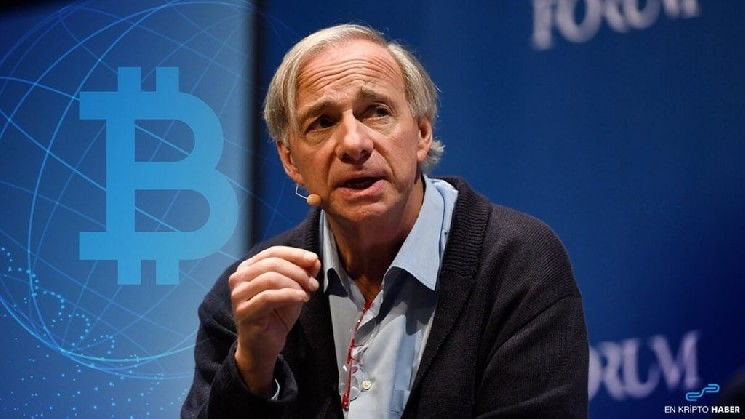
Chainlink Maxi Shares Why LINK Is A Better Institutional Bet Than XRP

bitcoinistPublished on 2026-03-21Last updated on 2026-03-21

Abstract

In a controversial post, Chainlink ambassador Zach Rynes sparked debate by arguing that LINK is a superior institutional investment compared to XRP. He criticized Ripple for prioritizing equity shareholders over XRP token holders, claiming the company uses XRP sale proceeds to fund corporate acquisitions and stock buybacks that don’t benefit token investors. Rynes dismissed the XRP Ledger as an "obsolete ghost chain" with minimal market share in real-world assets and stablecoins, while highlighting Chainlink’s dominance in DeFi, institutional partnerships, and structurally aligned incentives—noting that even Chainlink employees are rewarded in LINK, not equity. Ripple’s former CTO, David Schwartz, countered that Ripple’s consistent XRP sales created lower entry prices for buyers, a claim Rynes rejected as "elite-tier gaslighting."

Chainlink Maxi Zach Rynes has ignited fierce debate across the crypto community after sharing a pointed critique of XRP and Ripple, drawing significant backlash from supporters and former executives. The ambassador has framed Chainlink’s native token LINK as the superior institutional play, labeling XRP a ghost chain. He also criticizes Ripple’s recent share buybacks, suggesting that the company prioritizes shareholders over XRP investors.

Chainlink Maxi Takes Aim At XRP And Ripple

In a recent post on X, Rynes argued that XRP holders are effectively funding a company that has openly stated it will prioritize equity shareholders over token investors. He explained that when a company sells both tokens and equity to investors, it creates two competing stakeholder groups whose economic interests diverge. As a result, when excess revenue is present, equity investors hold superior, legally enforceable rights, leaving XRP holders at a disadvantage.

Rynes argued that Ripple sells XRP and uses proceeds to acquire companies and fund stock buybacks that benefit only shareholders. He also noted that, even under oath in court filings, the crypto company admitted that XRP’s bridge currency use case is demand-neutral and does not affect price.

Furthermore, he dismissed the XRP Ledger (XRPL) as an “obsolete ghost chain” sitting outside the top 40 chains by usage, holding less than 1% market share in real-world assets and less than 0.01% in stablecoins. The Chainlink maxi further noted that Ripple itself issued 90% of the RLUSD stablecoin on Ethereum and has since expanded to additional chains outside the XRP Ledger, including BNY Mellon’s private EVM chain.

Supporting Chainlink, Rynes stated that LINK presented a structurally cleaner investment case compared to XRP because it has no equity investors competing for value. He explained that every layer of network growth focuses primarily on the native token and that even Chainlink Lab employees receive long-term incentive rewards in LINK rather than equity.

He pointed to Chainlink’s more than 70% market share in DeFi with $60 billion in secured TVL, alongside institutional partnerships with SWIFT, the DTCC, Euroclear, JPMorgan, and others as proof of tangible adoption. The Chainlink maxi finally concluded that the LINK token represents the best index bet on institutional blockchain adoption. At the same time, XRP functions as a “bank-themed meme coin” that Ripple sells to retail to fund corporate acquisitions.

Ripple’s Former CTO Fires Back

The debate escalated when Ripple’s former Chief Technology Officer (CTO), David Schwartz, entered the conversation. Schwartz argued that Ripple’s consistent and predictable XRP selling over five years created sustained downward price pressure, which he claimed actually benefited buyers who accumulated tokens at lower prices than they would have otherwise paid.

Rynes sharply rejected the rebuttal, calling it “elite-tier gaslighting,” and questioning whether Schwartz argued that suppressing XRP’s price through Ripple’s own selling activity was a benefit to holders. Schwartz doubled down, criticizing the comment and insisting that a constant factor already priced into the market affects buyers and sellers equally. He said that anyone who purchased XRP benefited from low entry prices just as much as they might be affected on the way out.

LINK trading at $9 on the 1D chart | Source: LINKUSDT on Tradingview.com

Trending Cryptos

Related Questions

QAccording to Zach Rynes, why is LINK a better institutional investment than XRP?

AZach Rynes argues that LINK is a structurally cleaner investment because it has no equity investors competing for value, all network growth focuses on the native token, and it has dominant market share in DeFi with major institutional partnerships, unlike XRP which he claims is a 'ghost chain' and a 'bank-themed meme coin' sold to fund corporate acquisitions.

QWhat specific criticism did Rynes level against Ripple's financial practices?

ARynes criticized Ripple for selling XRP and using the proceeds to acquire companies and fund stock buybacks that only benefit equity shareholders, while openly prioritizing them over XRP token investors.

QHow did Ripple's former CTO, David Schwartz, respond to the claims about Ripple's XRP sales?

ADavid Schwartz argued that Ripple's consistent and predictable XRP selling over five years created sustained downward price pressure, which he claimed actually benefited buyers by allowing them to accumulate tokens at lower prices than they would have otherwise paid.

QWhat did Rynes cite as evidence of Chainlink's tangible adoption and institutional use?

ARynes cited Chainlink's more than 70% market share in DeFi with $60 billion in secured TVL, alongside institutional partnerships with major entities like SWIFT, the DTCC, Euroclear, and JPMorgan.

QWhat did Rynes claim about the XRP Ledger's (XRPL) usage and market position?

ARynes dismissed the XRP Ledger as an 'obsolete ghost chain' sitting outside the top 40 chains by usage, holding less than 1% market share in real-world assets and less than 0.01% in stablecoins.

Related Reads

US and Japan's Unprecedented Joint Action in 30 Years Marks End of Yen Carry Trade Era

Japan and the U.S. conducted a rare coordinated intervention in the foreign exchange market around August 3rd to stem the yen's sharp depreciation. U.S. Treasury Secretary Scott Bessette's notepad, photographed by Reuters, revealed plans for a $5-10 billion yen-buying operation. Following official confirmation, the USD/JPY pair plunged from near 164 to around 155-156. The intervention marks a significant shift as the U.S. moved from verbal support to practical coordination. While the core carry trade logic—exploiting the higher U.S. interest rates—remains intact, the risk structure has changed. Traders must now account for potential repeated bilateral actions, altering the risk-reward calculation for yen shorts. The intervention's immediate effect is forcing leveraged positions to unwind, amplifying the yen's rebound. However, analysts note this does not signal the end of the yen carry trade. The fundamental driver—the wide interest rate differential between the U.S. (3.50%-3.75%) and Japan (1%)—persists. The action is seen more as buying time for the Bank of Japan's gradual policy normalization while mitigating imported inflation pressures. To avoid destabilizing the U.S. Treasury market during intervention, authorities utilized the Fed's FIMA repo facility, allowing Japan to obtain dollar liquidity using its Treasury holdings as collateral instead of selling them. The move aims to contain spillover risks. While creating short-term volatility and compressing leverage for yen bears, the long-term trend for the yen will ultimately depend on the convergence of U.S. and Japanese monetary policies, not unilateral market operations. The current action is narrower in scope than historical agreements like the Plaza Accord, focused on curbing excessive yen weakness rather than engineering a broad-based dollar decline.

marsbit20m ago

US and Japan's Unprecedented Joint Action in 30 Years Marks End of Yen Carry Trade Era

marsbit20m ago

Why Hasn't Bitcoin Made the Expected Surge? There Are Both Positive and Negative Data

Analytical firm Glassnode reports Bitcoin retreated to around $62,600 after failing to sustain above $66,000. Weak spot market demand and defensive positions in derivatives are applying downward pressure. However, structural support remains from resilient long-term holders, surging on-chain activity, and renewed inflows into Bitcoin ETFs. The price action reflects weakened spot momentum, with low trading volume and persistent seller pressure keeping Bitcoin in a consolidation phase with limited breakout potential. While open interest in derivatives has fallen, funding rates have risen again, and options investors maintain a cautious stance. Demand for downside protection has increased. Positively, Bitcoin ETFs have seen renewed net inflows and trading volume, indicating institutional repositioning. On-chain metrics show a significant spike in active addresses and adjusted transaction volume, pointing to increased network usage. The historically low ratio of short-term to long-term holders suggests long-term conviction remains firm. However, overall market profitability continues to decline as the proportion of Bitcoin in profit nears cycle lows, indicating a trend of loss realization and de-risking by investors. Glassnode concludes the Bitcoin market is in a transitional phase. Structural support is present, but valuation pressure, insufficient spot demand, and defensive derivatives positioning continue to limit overall risk appetite.

cryptonews.ru50m ago

Why Hasn't Bitcoin Made the Expected Surge? There Are Both Positive and Negative Data

cryptonews.ru50m ago

Trading

Spot

Hot Articles

How to Buy LINK

Welcome to HTX.com! We've made purchasing ChainLink (LINK) simple and convenient. Follow our step-by-step guide to embark on your crypto journey.Step 1: Create Your HTX AccountUse your email or phone number to sign up for a free account on HTX. Experience a hassle-free registration journey and unlock all features.Get My AccountStep 2: Go to Buy Crypto and Choose Your Payment MethodCredit/Debit Card: Use your Visa or Mastercard to buy ChainLink (LINK) instantly.Balance: Use funds from your HTX account balance to trade seamlessly.Third Parties: We've added popular payment methods such as Google Pay and Apple Pay to enhance convenience.P2P: Trade directly with other users on HTX.Over-the-Counter (OTC): We offer tailor-made services and competitive exchange rates for traders.Step 3: Store Your ChainLink (LINK)After purchasing your ChainLink (LINK), store it in your HTX account. Alternatively, you can send it elsewhere via blockchain transfer or use it to trade other cryptocurrencies.Step 4: Trade ChainLink (LINK)Easily trade ChainLink (LINK) on HTX's spot market. Simply access your account, select your trading pair, execute your trades, and monitor in real-time. We offer a user-friendly experience for both beginners and seasoned traders.

9.9k Total ViewsPublished 2024.03.29Updated 2026.06.02

How to Buy LINK

Discussions

Welcome to the HTX Community. Here, you can stay informed about the latest platform developments and gain access to professional market insights. Users' opinions on the price of LINK (LINK) are presented below.

活动图片