CFTC Welcomes New Leadership, Accelerating Legislation on Cryptocurrency Market Structure

比推Published on 2025-12-23Last updated on 2025-12-23

Abstract

The U.S. Commodity Futures Trading Commission (CFTC) has appointed Michael Selig Sworn as its new chairman, following his confirmation by the Senate on December 18, 2025. Nominated by President Trump, Selig previously served as chief legal counsel for the SEC’s Crypto Assets Task Force and played a key role in shaping regulatory frameworks for digital assets. Selig’s appointment signals a shift toward clearer, innovation-friendly regulation of crypto markets. He has emphasized reducing unnecessary enforcement actions and compliance burdens on businesses, while supporting Congressional efforts to pass digital asset market structure legislation. His background is expected to help improve coordination between the CFTC and SEC. Challenges ahead include resource constraints at the understaffed CFTC and the current unusual situation of Selig being the only commissioner. His leadership is likely to advance the agency’s focus on balancing market integrity with support for financial innovation, in line with the Trump administration’s goal to strengthen U.S. leadership in digital finance.

Author: KarenZ, Foresight News

Original Title: CFTC's New Chair Takes Office! Can He Uphold Half of U.S. Financial Regulation?


The U.S. Commodity Futures Trading Commission (CFTC) has officially welcomed its new leader.

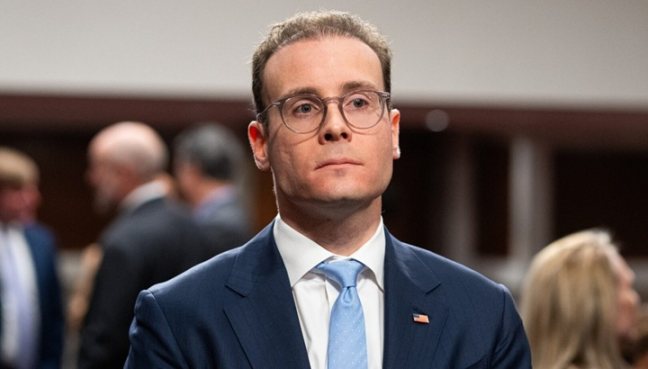
According to a statement released by the CFTC on December 22, 2025, Michael Selig Sworn was officially sworn in that day, becoming the 16th Chairman in the agency's history.

Appointment Background

Michael Selig Sworn was nominated by U.S. President Trump on October 27, 2025, and was confirmed by the U.S. Senate on December 18. This appointment marks the Trump administration's readjustment of the financial regulatory system, particularly in establishing a regulatory framework for the emerging digital asset market.
However, the nomination process was not smooth sailing. Trump initially nominated Brian Quintenz, a former CFTC Commissioner and former head of policy at a16z crypto, but ultimately withdrew the nomination due to resistance from the cryptocurrency industry. One reason was a dispute between Gemini's Tyler Winklevoss and Cameron Winklevoss and Brian Quintenz. Additionally, an informed source told The Block that some concerns were also focused on a16z's lobbying activities, which led to Brian Quintenz being excluded.

Subsequently, Michael Selig Sworn, in his role as Chief Legal Counsel of the U.S. Securities and Exchange Commission (SEC) Crypto Task Force, emerged as the new nominee. The Senate Agriculture Committee advanced his nomination along party lines, and it was ultimately confirmed by the full Senate.

Michael Selig Sworn's appointment comes after a prolonged period of interim leadership at the CFTC. Former Acting Chairman Caroline D. Pham announced her resignation on the same day, subsequently joining MoonPay as Chief Legal Officer and Executive Director.

Who is Michael Selig Sworn?

Prior to assuming the role of the new CFTC Chairman, Michael Selig Sworn accumulated considerable experience in both the public and private sectors.

According to the official statement, he served as Chief Legal Counsel of the SEC's Crypto Asset Task Force starting in March 2025, and was also a Senior Advisor to SEC Chairman Paul S. Atkins.

In this role, Michael Selig Sworn assisted in developing a clear regulatory framework for digital asset securities markets, coordinated the rule systems of the SEC and CFTC, promoted the modernization of agency rules to adapt to emerging technologies, and ended the practice of regulation by enforcement. Furthermore, he participated in the work of the President’s Working Group on Digital Assets and contributed to the "Strengthening U.S. Leadership in Digital Financial Technology" report.

It is worth noting that the "Strengthening U.S. Leadership in Digital Financial Technology" report is a presidential executive order issued by the White House on January 23, 2025. This executive action aims to promote U.S. leadership in the digital asset and financial technology fields while protecting economic freedom. Core contents include supporting the responsible development and use of digital assets, blockchain technology, and related technologies across all economic sectors; prohibiting CBDC; protecting dollar sovereignty and supporting dollar-backed stablecoins. Additionally, this executive order promoted the establishment of the President’s Working Group on Digital Assets, providing clear policy direction and strong legal support for the development of the U.S. digital asset industry.

Extended Reading: "Prohibiting CBDC, Upholding Dollar Sovereignty, Trump Signs First Crypto Executive Order"

Prior to this, from September 2015 to March 2025, Michael Selig Sworn worked as an Associate at three different law firms, later serving as Legal Counsel and then Partner at Willkie Farr & Gallagher LLP starting in 2022. According to the CFTC official release, Michael Selig Sworn primarily focused on derivatives and securities regulatory matters. During his private practice, he represented numerous clients regulated by the CFTC, including commercial end-users, futures commission merchants, commodity trading advisors, swap dealers, designated contract markets, derivatives clearing organizations, and digital asset companies. Selig advised clients on compliance with the Commodity Exchange Act and CFTC rules, covering registration applications and obligations, enforcement matters, and complex transactions, among other areas.

Notably, Michael Selig Sworn began his career in 2014 as a legal assistant to then-CFTC Commissioner J. Christopher Giancarlo, before transitioning to private practice at law firms.

Academically, Michael Selig Sworn holds a law degree from the George Washington University Law School, where he served as an articles editor for The George Washington Law Review. He also holds an undergraduate degree from Florida State University.

The New CFTC Chair's Regulatory Vision: Centered on "Made in America" Innovation, Consolidating Crypto Leadership

In his inauguration statement, Michael Selig Sworn thanked President Trump for the nomination and outlined his understanding of the CFTC's future direction, emphasizing the importance of balancing innovation and regulation.

He pointed out that this is a critical period for the CFTC's development, with numerous new technologies, products, and platforms emerging, and retail investor participation in commodity markets reaching record highs. Selig specifically emphasized the importance of the digital asset market structure legislation soon to be submitted to the President by Congress, stating it would consolidate the U.S.'s position as the "crypto capital of the world." He also直言 stated, "The CFTC will conquer these important areas, ensuring future innovation is 'Made in America.'"

Regarding the CFTC's role, Michael Selig Sworn gave a clear定位: "In the new markets of America's golden financial age, no institution is better suited than the CFTC to establish common-sense rules."

Meanwhile, former Acting Chairman Caroline D. Pham, in her departure statement, welcomed Michael Selig Sworn's appointment, describing him as pragmatic, results-oriented, and capable of balancing innovation with market integrity. Additionally, Caroline D. Pham mentioned that in 2025, the CFTC had already listed "promoting responsible innovation and fair competition" as a core mission, particularly with expanded regulatory scope in emerging areas like digital assets, cryptocurrency, and prediction markets, which will lay the groundwork for Michael Selig Sworn's subsequent work.

Potential Impact: Regulatory Shift, Accelerated Coordination, and Coexisting Challenges

How will Michael Selig Sworn's appointment reshape the U.S. financial regulatory landscape, especially the regulatory ecosystem of the digital asset领域? From his hearing statements, past experience, and industry trends, the direction of impact is becoming clear.

Regulatory Logic Shift: From "Strict Enforcement" to "Emphasis on Rules," Reducing "Technical Compliance" Burden

Michael Selig Sworn repeatedly emphasized during his hearings that the CFTC is the appropriate regulator for spot digital commodity trading and supports Congress's rapid advancement of digital asset market structure legislation. This aligns highly with the Trump administration's goal of "making America the crypto capital."

At the Senate confirmation hearing, according to WilmerHale报道, Selig多次 emphasized vigilance against "over-regulation" and "over-reliance on enforcement." He坦言 that he had personally witnessed regulatory agencies, by ignoring the practical impact of their actions and沉迷于 regulation by enforcement, ultimately push businesses overseas and burden entrepreneurs with red tape. To support this view, he shared a personal experience: assisting an agricultural company dealing with a massive CFTC investigation triggered merely by a "harmless error in swap data reporting," which forced the company to divert significant time and resources from its core business, severely impacting normal operations.

This direction is highly consistent with the adjustment of enforcement focus promoted by Pham during her tenure, aiming to avoid unnecessary regulatory burdens.

Will Rapidly Advance the Implementation of Digital Asset Market Structure Legislation

Michael Selig Sworn clearly stated that the CFTC will rapidly advance the implementation of digital asset market structure-related legislation and keep pace with market developments.

Coordinate SEC and CFTC, Promote a Unified Framework

From a broader perspective, Michael Selig Sworn's SEC background will help coordinate differences between the two major regulatory agencies (SEC and CFTC), reduce duplicate regulation, and promote a unified framework. This may accelerate the standardization of the spot crypto market.

According to the 166-page "Strengthening U.S. Leadership in Digital Financial Technology" report from the previous "President’s Working Group on Digital Assets," the SEC and CFTC should coordinate to ensure an efficient rulemaking process and solicit public comments on rulemaking proposals. Simultaneously, the report指出, the CFTC should clearly obtain regulatory authority over the spot market for non-security digital assets. SEC and CFTC registered entities could conduct diverse businesses under an efficient licensing framework, avoiding regulatory arbitrage. SEC-registered entities should be able to provide digital asset securities trading and engage in non-security digital asset trading according to the licensing structure defined by Congress. CFTC-registered entities should be able to provide digital commodity derivatives trading, retail digital commodity trading, and other CFTC-regulated products, as well as non-security digital assets designated by Congress.

Extended Reading: "White House Report Hides 100+ Legislative Recommendations, Also a Crypto Weather Vane"

What Challenges Does He Face?

Michael Selig Sworn also faces tangible challenges, such as resource and staffing gaps, and an imbalanced committee composition.

Several senators expressed concerns about the CFTC's resources and staffing. According to WilmerHale's报道, since the beginning of Trump's second term, the CFTC's staff has decreased by approximately 20%, currently standing at around 600 employees. If Congress grants the CFTC more crypto regulatory authority, additional funding and personnel support will be needed. Regrettably, Selig was vague in his hearing承诺 regarding specific resource needs.

Another issue worth noting is the composition of the CFTC Commission. According to official website information, the CFTC Commission consists of five commissioners appointed by the President with the advice and consent of the Senate, serving staggered five-year terms. However, after the acting chairman stepped down, the newly appointed Michael Selig Sworn found himself in the unusual situation of being the "lone commissioner." Currently, Michael Selig Sworn is the only Commissioner at the CFTC. This "single commissioner"格局打破了常规制衡机制 and significantly increases the Trump administration's policy control over the CFTC. This "single commissioner dominance" has also sparked discussions about regulatory neutrality.

When asked whether the vacant seats set a bad precedent, Michael Selig Sworn declined to comment, stating that nomination decisions should be made by the President. This evasive response somewhat reflects the sensitivity of this abnormal situation. When asked whether the vacant seats set a bad precedent, Selig declined to comment, stating that nomination decisions should be made by the President. This evasive response somewhat reflects the sensitivity of this abnormal situation.

A key question is whether Michael Selig Sworn will continue the reform pace initiated by Caroline D. Pham. Judging from the remarks made during the power transition, this seems highly likely. Caroline D. Pham's evaluation of Michael Selig Sworn indicates considerable consistency in regulatory logic between these two leaders, both emphasizing the balance between innovation and market integrity.

Furthermore, Michael Selig Sworn's focus on digital assets and emerging market structures, and his role in developing a coordination framework between the SEC and CFTC, suggest he may promote further coordination between these two key financial regulatory agencies.

How Michael Selig Sworn balances encouraging innovation with risk prevention, and how he advances broader regulatory responsibilities with limited resources, will be key看点 for the U.S. financial market in 2026.


Twitter:https://twitter.com/BitpushNewsCN

Bitpush TG Discussion Group:https://t.me/BitPushCommunity

Bitpush TG Subscription: https://t.me/bitpush

Original article link:https://www.bitpush.news/articles/7597837

Related Questions

QWho is the new chairman of the CFTC and when was he sworn in?

AMichael Selig Sworn is the new chairman of the CFTC, and he was officially sworn in on December 22, 2025.

QWhat was the reason Brian Quintenz's nomination for CFTC chairman was withdrawn?

ABrian Quintenz's nomination was withdrawn due to resistance from the cryptocurrency industry, including a dispute with Gemini's Winklevoss twins and concerns about a16z's lobbying activities.

QWhat key report did Michael Selig Sworn contribute to while at the SEC, and what were its main goals?

AHe contributed to the 'Strengthening U.S. Leadership in Digital Financial Technology' report, which aimed to promote U.S. leadership in digital assets and blockchain technology, prohibit a CBDC, and support dollar-backed stablecoins.

QWhat is a major challenge the new CFTC chairman faces regarding the agency's structure?

AA major challenge is that he is currently the only commissioner at the CFTC, creating an unusual 'single commissioner' situation that lacks the typical checks and balances and raises concerns about regulatory neutrality.

QWhat legislative priority did Michael Selig Sworn emphasize in his new role?

AHe emphasized the CFTC will quickly advance the implementation of digital asset market structure legislation from Congress to solidify the U.S. as the 'crypto capital of the world'.

Related Reads

Warsh Hearing Concludes: What Are the Notable Signals for the Crypto Industry?

The Senate Banking Committee held a confirmation hearing for Judy Shelton, a Federal Reserve nominee, who faced intense questioning regarding her ability to maintain the central bank's independence amid pressure from President Trump to lower interest rates. Shelton denied any pre-arranged commitments on rate cuts and emphasized her independence, though Democrats remained skeptical, citing contradictions with Trump's public statements. Shelton characterized post-pandemic inflation as a major policy failure and called for a "regime change" in the Fed’s approach, including reforms to inflation measurement and communication strategies. She criticized the current practice of Fed officials frequently signaling future rate moves and did not commit to maintaining post-meeting press conferences, suggesting potential reductions in transparency. Regarding crypto markets, Shelton’s extensive investments in digital asset companies—including Solana, DeFi, and blockchain infrastructure—were noted, though she has pledged to divest these holdings due to ethics rules. Her familiarity with the crypto industry and deregulatory leanings may signal a more open, though cautious, stance toward digital assets. However, concerns were raised about potential conflicts of interest, especially given Trump family involvement in crypto-financial ventures. The timing of her confirmation remains uncertain, pending a Justice Department investigation into current Chair Powell. Shelton’s potential leadership could lead to a more hawkish, productivity-focused Fed with tighter policy communication—factors that may significantly influence liquidity conditions and macro narratives for crypto markets.

marsbit4h ago

Warsh Hearing Concludes: What Are the Notable Signals for the Crypto Industry?

marsbit4h ago

Trading

Spot
Futures

Hot Articles

What is SONIC

Sonic: Pioneering the Future of Gaming in Web3 Introduction to Sonic In the ever-evolving landscape of Web3, the gaming industry stands out as one of the most dynamic and promising sectors. At the forefront of this revolution is Sonic, a project designed to amplify the gaming ecosystem on the Solana blockchain. Leveraging cutting-edge technology, Sonic aims to deliver an unparalleled gaming experience by efficiently processing millions of requests per second, ensuring that players enjoy seamless gameplay while maintaining low transaction costs. This article delves into the intricate details of Sonic, exploring its creators, funding sources, operational mechanics, and the timeline of significant events that have shaped its journey. What is Sonic? Sonic is an innovative layer-2 network that operates atop the Solana blockchain, specifically tailored to enhance the existing Solana gaming ecosystem. It accomplishes this through a customised, VM-agnostic game engine paired with a HyperGrid interpreter, facilitating sovereign game economies that roll up back to the Solana platform. The primary goals of Sonic include: Enhanced Gaming Experiences: Sonic is committed to offering lightning-fast on-chain gameplay, allowing players and developers to engage with games at previously unattainable speeds. Atomic Interoperability: This feature enables transactions to be executed within Sonic without the need to redeploy Solana programmes and accounts. This makes the process more efficient and directly benefits from Solana Layer1 services and liquidity. Seamless Deployment: Sonic allows developers to write for Ethereum Virtual Machine (EVM) based systems and execute them on Solana’s SVM infrastructure. This interoperability is crucial for attracting a broader range of dApps and decentralised applications to the platform. Support for Developers: By offering native composable gaming primitives and extensible data types - dining within the Entity-Component-System (ECS) framework - game creators can craft intricate business logic with ease. Overall, Sonic's unique approach not only caters to players but also provides an accessible and low-cost environment for developers to innovate and thrive. Creator of Sonic The information regarding the creator of Sonic is somewhat ambiguous. However, it is known that Sonic's SVM is owned by the company Mirror World. The absence of detailed information about the individuals behind Sonic reflects a common trend in several Web3 projects, where collective efforts and partnerships often overshadow individual contributions. Investors of Sonic Sonic has garnered considerable attention and support from various investors within the crypto and gaming sectors. Notably, the project raised an impressive $12 million during its Series A funding round. The round was led by BITKRAFT Ventures, with other notable investors including Galaxy, Okx Ventures, Interactive, Big Brain Holdings, and Mirana. This financial backing signifies the confidence that investment foundations have in Sonic’s potential to revolutionise the Web3 gaming landscape, further validating its innovative approaches and technologies. How Does Sonic Work? Sonic utilises the HyperGrid framework, a sophisticated parallel processing mechanism that enhances its scalability and customisability. Here are the core features that set Sonic apart: Lightning Speed at Low Costs: Sonic offers one of the fastest on-chain gaming experiences compared to other Layer-1 solutions, powered by the scalability of Solana’s virtual machine (SVM). Atomic Interoperability: Sonic enables transaction execution without redeployment of Solana programmes and accounts, effectively streamlining the interaction between users and the blockchain. EVM Compatibility: Developers can effortlessly migrate decentralised applications from EVM chains to the Solana environment using Sonic’s HyperGrid interpreter, increasing the accessibility and integration of various dApps. Ecosystem Support for Developers: By exposing native composable gaming primitives, Sonic facilitates a sandbox-like environment where developers can experiment and implement business logic, greatly enhancing the overall development experience. Monetisation Infrastructure: Sonic natively supports growth and monetisation efforts, providing frameworks for traffic generation, payments, and settlements, thereby ensuring that gaming projects are not only viable but also sustainable financially. Timeline of Sonic The evolution of Sonic has been marked by several key milestones. Below is a brief timeline highlighting critical events in the project's history: 2022: The Sonic cryptocurrency was officially launched, marking the beginning of its journey in the Web3 gaming arena. 2024: June: Sonic SVM successfully raised $12 million in a Series A funding round. This investment allowed Sonic to further develop its platform and expand its offerings. August: The launch of the Sonic Odyssey testnet provided users with the first opportunity to engage with the platform, offering interactive activities such as collecting rings—a nod to gaming nostalgia. October: SonicX, an innovative crypto game integrated with Solana, made its debut on TikTok, capturing the attention of over 120,000 users within a short span. This integration illustrated Sonic’s commitment to reaching a broader, global audience and showcased the potential of blockchain gaming. Key Points Sonic SVM is a revolutionary layer-2 network on Solana explicitly designed to enhance the GameFi landscape, demonstrating great potential for future development. HyperGrid Framework empowers Sonic by introducing horizontal scaling capabilities, ensuring that the network can handle the demands of Web3 gaming. Integration with Social Platforms: The successful launch of SonicX on TikTok displays Sonic’s strategy to leverage social media platforms to engage users, exponentially increasing the exposure and reach of its projects. Investment Confidence: The substantial funding from BITKRAFT Ventures, among others, emphasizes the robust backing Sonic has, paving the way for its ambitious future. In conclusion, Sonic encapsulates the essence of Web3 gaming innovation, striking a balance between cutting-edge technology, developer-centric tools, and community engagement. As the project continues to evolve, it is poised to redefine the gaming landscape, making it a notable entity for gamers and developers alike. As Sonic moves forward, it will undoubtedly attract greater interest and participation, solidifying its place within the broader narrative of blockchain gaming.

1.1k Total ViewsPublished 2024.04.04Updated 2024.12.03

What is SONIC

What is $S$

Understanding SPERO: A Comprehensive Overview Introduction to SPERO As the landscape of innovation continues to evolve, the emergence of web3 technologies and cryptocurrency projects plays a pivotal role in shaping the digital future. One project that has garnered attention in this dynamic field is SPERO, denoted as SPERO,$$s$. This article aims to gather and present detailed information about SPERO, to help enthusiasts and investors understand its foundations, objectives, and innovations within the web3 and crypto domains. What is SPERO,$$s$? SPERO,$$s$ is a unique project within the crypto space that seeks to leverage the principles of decentralisation and blockchain technology to create an ecosystem that promotes engagement, utility, and financial inclusion. The project is tailored to facilitate peer-to-peer interactions in new ways, providing users with innovative financial solutions and services. At its core, SPERO,$$s$ aims to empower individuals by providing tools and platforms that enhance user experience in the cryptocurrency space. This includes enabling more flexible transaction methods, fostering community-driven initiatives, and creating pathways for financial opportunities through decentralised applications (dApps). The underlying vision of SPERO,$$s$ revolves around inclusiveness, aiming to bridge gaps within traditional finance while harnessing the benefits of blockchain technology. Who is the Creator of SPERO,$$s$? The identity of the creator of SPERO,$$s$ remains somewhat obscure, as there are limited publicly available resources providing detailed background information on its founder(s). This lack of transparency can stem from the project's commitment to decentralisation—an ethos that many web3 projects share, prioritising collective contributions over individual recognition. By centring discussions around the community and its collective goals, SPERO,$$s$ embodies the essence of empowerment without singling out specific individuals. As such, understanding the ethos and mission of SPERO remains more important than identifying a singular creator. Who are the Investors of SPERO,$$s$? SPERO,$$s$ is supported by a diverse array of investors ranging from venture capitalists to angel investors dedicated to fostering innovation in the crypto sector. The focus of these investors generally aligns with SPERO's mission—prioritising projects that promise societal technological advancement, financial inclusivity, and decentralised governance. These investor foundations are typically interested in projects that not only offer innovative products but also contribute positively to the blockchain community and its ecosystems. The backing from these investors reinforces SPERO,$$s$ as a noteworthy contender in the rapidly evolving domain of crypto projects. How Does SPERO,$$s$ Work? SPERO,$$s$ employs a multi-faceted framework that distinguishes it from conventional cryptocurrency projects. Here are some of the key features that underline its uniqueness and innovation: Decentralised Governance: SPERO,$$s$ integrates decentralised governance models, empowering users to participate actively in decision-making processes regarding the project’s future. This approach fosters a sense of ownership and accountability among community members. Token Utility: SPERO,$$s$ utilises its own cryptocurrency token, designed to serve various functions within the ecosystem. These tokens enable transactions, rewards, and the facilitation of services offered on the platform, enhancing overall engagement and utility. Layered Architecture: The technical architecture of SPERO,$$s$ supports modularity and scalability, allowing for seamless integration of additional features and applications as the project evolves. This adaptability is paramount for sustaining relevance in the ever-changing crypto landscape. Community Engagement: The project emphasises community-driven initiatives, employing mechanisms that incentivise collaboration and feedback. By nurturing a strong community, SPERO,$$s$ can better address user needs and adapt to market trends. Focus on Inclusion: By offering low transaction fees and user-friendly interfaces, SPERO,$$s$ aims to attract a diverse user base, including individuals who may not previously have engaged in the crypto space. This commitment to inclusion aligns with its overarching mission of empowerment through accessibility. Timeline of SPERO,$$s$ Understanding a project's history provides crucial insights into its development trajectory and milestones. Below is a suggested timeline mapping significant events in the evolution of SPERO,$$s$: Conceptualisation and Ideation Phase: The initial ideas forming the basis of SPERO,$$s$ were conceived, aligning closely with the principles of decentralisation and community focus within the blockchain industry. Launch of Project Whitepaper: Following the conceptual phase, a comprehensive whitepaper detailing the vision, goals, and technological infrastructure of SPERO,$$s$ was released to garner community interest and feedback. Community Building and Early Engagements: Active outreach efforts were made to build a community of early adopters and potential investors, facilitating discussions around the project’s goals and garnering support. Token Generation Event: SPERO,$$s$ conducted a token generation event (TGE) to distribute its native tokens to early supporters and establish initial liquidity within the ecosystem. Launch of Initial dApp: The first decentralised application (dApp) associated with SPERO,$$s$ went live, allowing users to engage with the platform's core functionalities. Ongoing Development and Partnerships: Continuous updates and enhancements to the project's offerings, including strategic partnerships with other players in the blockchain space, have shaped SPERO,$$s$ into a competitive and evolving player in the crypto market. Conclusion SPERO,$$s$ stands as a testament to the potential of web3 and cryptocurrency to revolutionise financial systems and empower individuals. With a commitment to decentralised governance, community engagement, and innovatively designed functionalities, it paves the way toward a more inclusive financial landscape. As with any investment in the rapidly evolving crypto space, potential investors and users are encouraged to research thoroughly and engage thoughtfully with the ongoing developments within SPERO,$$s$. The project showcases the innovative spirit of the crypto industry, inviting further exploration into its myriad possibilities. While the journey of SPERO,$$s$ is still unfolding, its foundational principles may indeed influence the future of how we interact with technology, finance, and each other in interconnected digital ecosystems.

54 Total ViewsPublished 2024.12.17Updated 2024.12.17

What is $S$

What is AGENT S

Agent S: The Future of Autonomous Interaction in Web3 Introduction In the ever-evolving landscape of Web3 and cryptocurrency, innovations are constantly redefining how individuals interact with digital platforms. One such pioneering project, Agent S, promises to revolutionise human-computer interaction through its open agentic framework. By paving the way for autonomous interactions, Agent S aims to simplify complex tasks, offering transformative applications in artificial intelligence (AI). This detailed exploration will delve into the project's intricacies, its unique features, and the implications for the cryptocurrency domain. What is Agent S? Agent S stands as a groundbreaking open agentic framework, specifically designed to tackle three fundamental challenges in the automation of computer tasks: Acquiring Domain-Specific Knowledge: The framework intelligently learns from various external knowledge sources and internal experiences. This dual approach empowers it to build a rich repository of domain-specific knowledge, enhancing its performance in task execution. Planning Over Long Task Horizons: Agent S employs experience-augmented hierarchical planning, a strategic approach that facilitates efficient breakdown and execution of intricate tasks. This feature significantly enhances its ability to manage multiple subtasks efficiently and effectively. Handling Dynamic, Non-Uniform Interfaces: The project introduces the Agent-Computer Interface (ACI), an innovative solution that enhances the interaction between agents and users. Utilizing Multimodal Large Language Models (MLLMs), Agent S can navigate and manipulate diverse graphical user interfaces seamlessly. Through these pioneering features, Agent S provides a robust framework that addresses the complexities involved in automating human interaction with machines, setting the stage for myriad applications in AI and beyond. Who is the Creator of Agent S? While the concept of Agent S is fundamentally innovative, specific information about its creator remains elusive. The creator is currently unknown, which highlights either the nascent stage of the project or the strategic choice to keep founding members under wraps. Regardless of anonymity, the focus remains on the framework's capabilities and potential. Who are the Investors of Agent S? As Agent S is relatively new in the cryptographic ecosystem, detailed information regarding its investors and financial backers is not explicitly documented. The lack of publicly available insights into the investment foundations or organisations supporting the project raises questions about its funding structure and development roadmap. Understanding the backing is crucial for gauging the project's sustainability and potential market impact. How Does Agent S Work? At the core of Agent S lies cutting-edge technology that enables it to function effectively in diverse settings. Its operational model is built around several key features: Human-like Computer Interaction: The framework offers advanced AI planning, striving to make interactions with computers more intuitive. By mimicking human behaviour in tasks execution, it promises to elevate user experiences. Narrative Memory: Employed to leverage high-level experiences, Agent S utilises narrative memory to keep track of task histories, thereby enhancing its decision-making processes. Episodic Memory: This feature provides users with step-by-step guidance, allowing the framework to offer contextual support as tasks unfold. Support for OpenACI: With the ability to run locally, Agent S allows users to maintain control over their interactions and workflows, aligning with the decentralised ethos of Web3. Easy Integration with External APIs: Its versatility and compatibility with various AI platforms ensure that Agent S can fit seamlessly into existing technological ecosystems, making it an appealing choice for developers and organisations. These functionalities collectively contribute to Agent S's unique position within the crypto space, as it automates complex, multi-step tasks with minimal human intervention. As the project evolves, its potential applications in Web3 could redefine how digital interactions unfold. Timeline of Agent S The development and milestones of Agent S can be encapsulated in a timeline that highlights its significant events: September 27, 2024: The concept of Agent S was launched in a comprehensive research paper titled “An Open Agentic Framework that Uses Computers Like a Human,” showcasing the groundwork for the project. October 10, 2024: The research paper was made publicly available on arXiv, offering an in-depth exploration of the framework and its performance evaluation based on the OSWorld benchmark. October 12, 2024: A video presentation was released, providing a visual insight into the capabilities and features of Agent S, further engaging potential users and investors. These markers in the timeline not only illustrate the progress of Agent S but also indicate its commitment to transparency and community engagement. Key Points About Agent S As the Agent S framework continues to evolve, several key attributes stand out, underscoring its innovative nature and potential: Innovative Framework: Designed to provide an intuitive use of computers akin to human interaction, Agent S brings a novel approach to task automation. Autonomous Interaction: The ability to interact autonomously with computers through GUI signifies a leap towards more intelligent and efficient computing solutions. Complex Task Automation: With its robust methodology, it can automate complex, multi-step tasks, making processes faster and less error-prone. Continuous Improvement: The learning mechanisms enable Agent S to improve from past experiences, continually enhancing its performance and efficacy. Versatility: Its adaptability across different operating environments like OSWorld and WindowsAgentArena ensures that it can serve a broad range of applications. As Agent S positions itself in the Web3 and crypto landscape, its potential to enhance interaction capabilities and automate processes signifies a significant advancement in AI technologies. Through its innovative framework, Agent S exemplifies the future of digital interactions, promising a more seamless and efficient experience for users across various industries. Conclusion Agent S represents a bold leap forward in the marriage of AI and Web3, with the capacity to redefine how we interact with technology. While still in its early stages, the possibilities for its application are vast and compelling. Through its comprehensive framework addressing critical challenges, Agent S aims to bring autonomous interactions to the forefront of the digital experience. As we move deeper into the realms of cryptocurrency and decentralisation, projects like Agent S will undoubtedly play a crucial role in shaping the future of technology and human-computer collaboration.

549 Total ViewsPublished 2025.01.14Updated 2025.01.14

What is AGENT S

Discussions

Welcome to the HTX Community. Here, you can stay informed about the latest platform developments and gain access to professional market insights. Users' opinions on the price of S (S) are presented below.

活动图片