BTC Market Pulse: Week 19

insights.glassnodePublished on 2026-06-03Last updated on 2026-06-03

Abstract

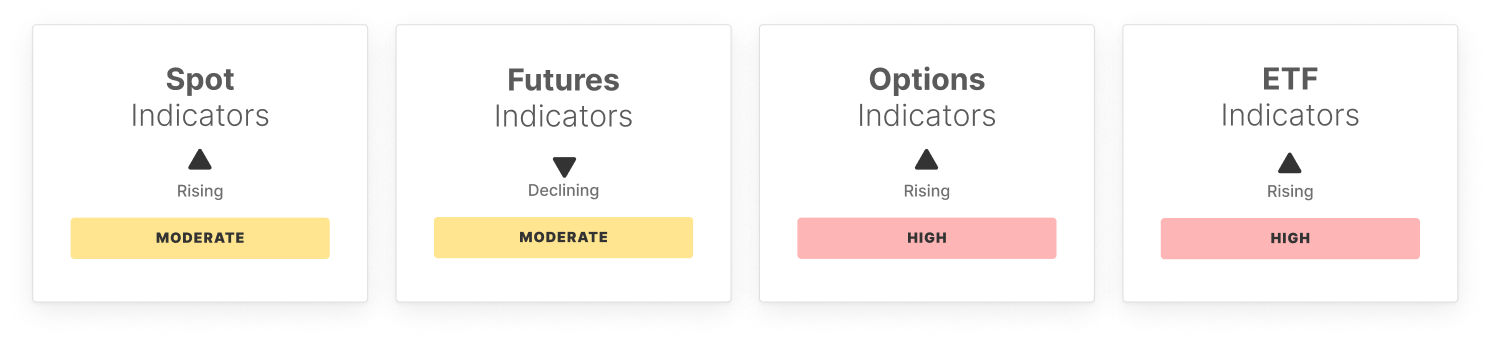
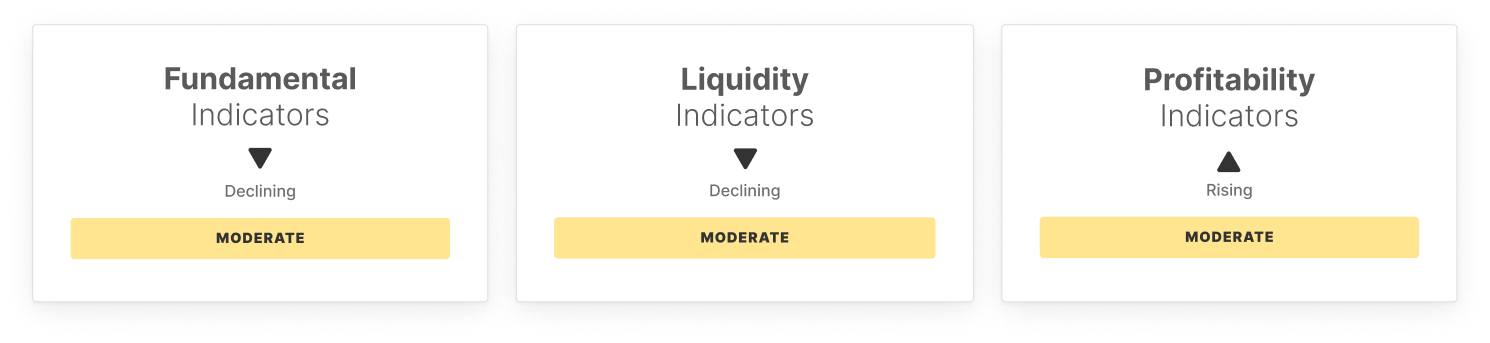
Bitcoin market analysis for Week 19 indicates a phase of consolidation and weakening near-term momentum. Overhead supply is capping price gains, evidenced by declines in price momentum, net buying pressure, and trading activity. Futures markets show increased speculative interest but also strong sell-side pressure. Options data reflects a cautious outlook with heightened perceived risk. Traditional finance signals are mixed: U.S. Spot ETFs saw significant net outflows and lower volume, suggesting softer institutional demand and potential profit-taking. However, on-chain activity shows a rise in daily active addresses, indicating steady user engagement. Overall, liquidity and positioning metrics point to a relatively stable market structure with easing bearish pressure, balancing weaker institutional flows with gradually improving sentiment.

Overhead supply is beginning to cap momentum in the near term. This is evidenced by a 3.5% decline in price momentum, a 28.6% reduction in net buying pressure, and a 13.3% decrease in trading activity. The dominance of selling activity and reduced volume may suggest a lack of strong investor engagement, potentially signaling consolidation or reduced enthusiasm in the Bitcoin market.

In the futures market, there has been a rise in speculative interest and leverage, with futures open interest increasing by 3.0%. The less negative value of long-side funding payments suggests a moderation in demand for short positions, possibly reflecting a stabilization in market sentiment as traders reassess their bearish outlook. However, a significant decrease in perpetual CVD, moving from $120.5M to -$101.4M, highlights strong sell-side pressure, indicating a potential weakening in bullish momentum.

In the options market, the 6.75% increase in options 25-delta skew indicates a cautious outlook on potential downside risks. This sentiment is also reflected in a 9.98% decrease in options open interest, possibly due to profit-taking or position closures, and a 173.4% increase in volatility spread, suggesting higher implied risk than realized.

From a traditional finance perspective, Bitcoin presents mixed signals. US Spot ETF MVRV points to potential profit-taking, reinforced by $783.4M in net outflows and a 13.45% drop in trading volume, suggesting softer institutional demand and possible consolidation. On-chain activity is more balanced, with daily active addresses rising 6.4%, while a 7.4% decline in entity-adjusted transfer volume indicates reduced large-scale transaction activity.

Liquidity and positioning metrics point to a relatively stable structure. A slight increase in hot capital share and neutral realized cap flows indicate a pause in major capital rotation, while declining short-term holder supply reflects stronger conviction among remaining participants. Profitability metrics show modest improvement, with NUPL ticking higher and realized profit-to-loss ratios rising, suggesting easing bearish pressure.

Overall, the market appears to be in a consolidation phase, where weaker institutional flows and reduced trading activity are offset by steady user engagement and gradually improving sentiment.

Off-Chain Indicators
On-Chain Indicators
🔗 Access the full report in PDF

Don't miss it!

Smart market intelligence, straight to your inbox.

Subscribe now
  • Follow us and reach out on X
  • Join our Telegram channel
  • For on-chain metrics, dashboards, and alerts, visit Glassnode Studio

Disclaimer: This report does not provide any investment advice. All data is provided for information and educational purposes only. No investment decision shall be based on the information provided here and you are solely responsible for your own investment decisions.

Exchange balances presented are derived from Glassnode’s comprehensive database of address labels, which are amassed through both officially published exchange information and proprietary clustering algorithms. While we strive to ensure the utmost accuracy in representing exchange balances, it is important to note that these figures might not always encapsulate the entirety of an exchange’s reserves, particularly when exchanges refrain from disclosing their official addresses. We urge users to exercise caution and discretion when utilizing these metrics. Glassnode shall not be held responsible for any discrepancies or potential inaccuracies.

Please read our Transparency Notice when using exchange data.

Trending Cryptos

Related Questions

QBased on the report, what are the key factors suggesting that overhead supply is capping Bitcoin's near-term momentum?

AThe key factors are a 3.5% decline in price momentum, a 28.6% reduction in net buying pressure, and a 13.3% decrease in trading activity. This dominance of selling activity and reduced volume suggests a lack of strong investor engagement.

QWhat significant shift in the perpetual CVD is highlighted in the futures market section, and what does it indicate?

AThe perpetual CVD shows a significant decrease, moving from $120.5M to -$101.4M. This highlights strong sell-side pressure and indicates a potential weakening in bullish momentum.

QWhat does the 6.75% increase in options 25-delta skew signify about market sentiment, according to the report?

AThe 6.75% increase in the options 25-delta skew indicates a more cautious outlook among traders regarding potential downside risks for Bitcoin.

QWhat mixed signals does Bitcoin present from a traditional finance (TradFi) perspective in the report?

AFrom a TradFi perspective, Bitcoin presents mixed signals: US Spot ETF MVRV points to potential profit-taking, reinforced by $783.4M in net outflows and a 13.45% drop in trading volume, suggesting softer institutional demand. However, on-chain daily active addresses increased by 6.4%, showing steady user engagement.

QWhat is the overall state of the Bitcoin market described in the conclusion of the report?

AThe overall market appears to be in a consolidation phase. Weaker institutional flows and reduced trading activity are being offset by steady user engagement and gradually improving sentiment, according to the report.

Related Reads

The Once-Niche Field of Philosophy Becomes a Hot Topic in "Governing" AI

"Cold" Philosophy Becomes Hot in Taming AI This article explores the rising prominence of philosophical inquiry at the World Artificial Intelligence Conference (WAIC), highlighting a shift from purely technical discussions to deeper questions about AI's nature and impact. A key theme is the foundational question of intelligence itself. Philosopher Sun Ning argued that true, grounded intelligence requires embodiment, environment, interaction with others, and historical context, summarized as "Before intelligence, there is a world. Before mind, there is relationship." The forum then examined AI's expanding role in science. Researchers presented AI systems that can autonomously generate scientific papers and mathematical proofs, raising critical questions about evaluation, attribution of discovery, and potential misuse. The proposed solution is a collaborative framework: AI expands the search space, humans define value and provide rigorous constraints, and machines handle verification. As AI models begin to simulate human societies and behaviors for research, new risks emerge. Simulations can inherit and amplify societal biases from their training data, and their outputs risk being mistaken for genuine social signals. This necessitates robust governance focused on auditability, bias correction, and clear human oversight—ensuring people retain intervention, correction, and explanation rights ("human-in-the-loop"). The discussion extended to industry, where AI integrates with wet labs for bio-manufacturing. Here, challenges involve bridging the digital-physical gap and adapting regulatory and business models from process-based to outcome-based partnerships, fundamentally altering production relationships. The convergence of philosophers, scientists, and entrepreneurs at WAIC signals a broader trend: as AI permeates knowledge creation and social systems, technical progress is increasingly intertwined with urgent questions of ethics, governance, economic distribution, and public policy. The core challenge becomes not just what AI *can* do, but what we *should* ask it, trust from it, and guide it towards.

marsbit39m ago

The Once-Niche Field of Philosophy Becomes a Hot Topic in "Governing" AI

marsbit39m ago

After six years of pie-in-the-sky fundraising, 90% of funds used to replenish cash flow: The illusion and reality of L'CI Technology's silicon carbide "industrialization"|TMTPost Deep Dive

After six years and raising approximately 3.2 billion yuan through two private placements, Luxshare Technology has officially terminated its two major SiC wafer projects. Only about 7.75% of the raised funds were actually invested in SiC construction and R&D, with the remaining 90% redirected to replenish working capital and repay loans. Despite previous ambitious plans for a 10-billion-yuan SiC industrial park and public assurances of progress, the company's actual SiC capacity remains unclear, with its subsidiary recording significant losses. The article details a pattern of chasing market trends, from electric vehicles and photovoltaics to the current focus on SiC. However, its SiC entry was late; while peers like Tianke Heda and Tianyue Advanced have moved from mass-producing 6-inch to 8-inch and even 12-inch wafers, Luxshare is still struggling with its 6-inch plans and now promises to develop larger sizes with its own funds. Key concerns include unclear disclosures about the status of its chief scientist, Chen Zhizhan, and significantly lower R&D investment compared to competitors. Financially, since its 2011 IPO, the company has raised over 7 billion yuan but generated only 221 million yuan in cumulative net profit. Meanwhile, the controlling shareholder family has cashed out nearly 2 billion yuan since 2018. The article positions Luxshare as a case study of a listed company focused more on financing and capital operation around hot topics than on substantive industrial development.

marsbit1h ago

After six years of pie-in-the-sky fundraising, 90% of funds used to replenish cash flow: The illusion and reality of L'CI Technology's silicon carbide "industrialization"|TMTPost Deep Dive

marsbit1h ago

ChatGPT Finally Can 'Search Itself': Nearly Four Years of Conversations, Retrieved with One Click

ChatGPT, nearly four years old, has long lacked a functional way for users to search their own accumulated history. This changed on July 14th, when OpenAI launched a comprehensive "Unified Search" feature across all platforms and plans. This new search allows users to find and instantly access past conversations, uploaded documents, generated images, and projects within their own ChatGPT account, all from a single sidebar entry. This update signifies a major shift in ChatGPT's role, transforming it from a transient chat tool into a personal knowledge base or "file system" for users' AI-generated content. It completes a critical missing piece as OpenAI expands ChatGPT's capabilities with features like Projects, Memory, Work, and Sites, aiming to make it a central hub for work and creativity. The ability to easily retrieve years of personal data makes that data more valuable as a unique, irreplaceable asset in the AI era. However, it also highlights the increasing weight and potential sensitivity of this data, given default settings that allow conversations to be used for model training and legal precedents involving user logs. While a significant improvement over the previous ineffective search, this move is seen as addressing an industry-wide oversight. As the competition between AI assistants (ChatGPT, Gemini, Claude) moves beyond raw model power, the new battleground is becoming which platform can best organize, retain, and leverage the valuable data co-created by users and AI.

marsbit1h ago

ChatGPT Finally Can 'Search Itself': Nearly Four Years of Conversations, Retrieved with One Click

marsbit1h ago

7-Year-Olds Starting Companies? 9-Year-Olds Making Movies? Post-90s Parents Are Raising 'AI Prodigies'

"AI Genius Kids: A New Wave or a Parental Anxiety Trap?" The article examines the recent surge in AI-focused educational camps and programs in China, heavily marketed to parents of young children with sensational claims like "7-year-olds start companies" and "9-year-olds make movies." These programs promise rapid, practical AI skills—from creating agents and business plans to generating content—often for significant fees, capitalizing on parental anxieties about the AI-dominated future. It contrasts this trend with earlier, more foundational AI education, arguing current offerings prioritize superficial, immediate application over deep learning. The author critiques this approach as premature for children still in basic education, suggesting it fosters a shortcut mentality and may even teach improper use, like using AI to cheat on homework. The driving force behind this trend is identified as the profound anxiety of the current generation of parents—largely professionals in tech or related fields—who are witnessing firsthand how AI disrupts and replaces jobs. This workplace fear translates into a desperate desire to equip their children with perceived competitive advantages from an extremely young age, viewing AI proficiency as a magical key to success. The piece also casts a skeptical eye on the phenomenon of real "AI child prodigies," citing examples like Australian teen Alby Churven, whose ventures attract media buzz but little serious investment. It suggests that beyond the hype, the business world remains wary of child-led enterprises. True advancement, the article implies, still relies on solid, traditional education and foundational knowledge, not just early exposure to tools. Ultimately, it frames the AI camp boom less as a legitimate educational movement and more as a reflection of societal pressure and a potentially expensive exploitation of parental fears in a rapidly changing technological landscape.

marsbit1h ago

7-Year-Olds Starting Companies? 9-Year-Olds Making Movies? Post-90s Parents Are Raising 'AI Prodigies'

marsbit1h ago

Trading

Spot

Hot Articles

What is $BITCOIN

DIGITAL GOLD ($BITCOIN): A Comprehensive Analysis Introduction to DIGITAL GOLD ($BITCOIN) DIGITAL GOLD ($BITCOIN) is a blockchain-based project operating on the Solana network, which aims to combine the characteristics of traditional precious metals with the innovation of decentralized technologies. While it shares a name with Bitcoin, often referred to as “digital gold” due to its perception as a store of value, DIGITAL GOLD is a separate token designed to create a unique ecosystem within the Web3 landscape. Its goal is to position itself as a viable alternative digital asset, although specifics regarding its applications and functionalities are still developing. What is DIGITAL GOLD ($BITCOIN)? DIGITAL GOLD ($BITCOIN) is a cryptocurrency token explicitly designed for use on the Solana blockchain. In contrast to Bitcoin, which provides a widely recognized value storage role, this token appears to focus on broader applications and characteristics. Notable aspects include: Blockchain Infrastructure: The token is built on the Solana blockchain, known for its capacity to handle high-speed and low-cost transactions. Supply Dynamics: DIGITAL GOLD has a maximum supply capped at 100 quadrillion tokens (100P $BITCOIN), although details regarding its circulating supply are currently undisclosed. Utility: While precise functionalities are not explicitly outlined, there are indications that the token could be utilized for various applications, potentially involving decentralized applications (dApps) or asset tokenization strategies. Who is the Creator of DIGITAL GOLD ($BITCOIN)? At present, the identity of the creators and development team behind DIGITAL GOLD ($BITCOIN) remains unknown. This situation is typical among many innovative projects within the blockchain space, particularly those aligning with decentralized finance and meme coin phenomena. While such anonymity may foster a community-driven culture, it intensifies concerns about governance and accountability. Who are the Investors of DIGITAL GOLD ($BITCOIN)? The available information indicates that DIGITAL GOLD ($BITCOIN) does not have any known institutional backers or prominent venture capital investments. The project seems to operate on a peer-to-peer model focused on community support and adoption rather than traditional funding routes. Its activity and liquidity are primarily situated on decentralized exchanges (DEXs), such as PumpSwap, rather than established centralized trading platforms, further highlighting its grassroots approach. How DIGITAL GOLD ($BITCOIN) Works The operational mechanics of DIGITAL GOLD ($BITCOIN) can be elaborated on based on its blockchain design and network attributes: Consensus Mechanism: By leveraging Solana’s unique proof-of-history (PoH) combined with a proof-of-stake (PoS) model, the project ensures efficient transaction validation contributing to the network's high performance. Tokenomics: While specific deflationary mechanisms have not been extensively detailed, the vast maximum token supply implies that it may cater to microtransactions or niche use cases that are still to be defined. Interoperability: There exists the potential for integration with Solana’s broader ecosystem, including various decentralized finance (DeFi) platforms. However, the details regarding specific integrations remain unspecified. Timeline of Key Events Here is a timeline that highlights significant milestones concerning DIGITAL GOLD ($BITCOIN): 2023: The initial deployment of the token occurs on the Solana blockchain, marked by its contract address. 2024: DIGITAL GOLD gains visibility as it becomes available for trading on decentralized exchanges like PumpSwap, allowing users to trade it against SOL. 2025: The project witnesses sporadic trading activity and potential interest in community-led engagements, although no noteworthy partnerships or technical advancements have been documented as of yet. Critical Analysis Strengths Scalability: The underlying Solana infrastructure supports high transaction volumes, which could enhance the utility of $BITCOIN in various transaction scenarios. Accessibility: The potential low trading price per token could attract retail investors, facilitating wider participation due to fractional ownership opportunities. Risks Lack of Transparency: The absence of publicly known backers, developers, or an audit process may yield skepticism regarding the project's sustainability and trustworthiness. Market Volatility: The trading activity is heavily reliant on speculative behavior, which can result in significant price volatility and uncertainty for investors. Conclusion DIGITAL GOLD ($BITCOIN) emerges as an intriguing yet ambiguous project within the rapidly evolving Solana ecosystem. While it attempts to leverage the “digital gold” narrative, its departure from Bitcoin's established role as a store of value underscores the need for a clearer differentiation of its intended utility and governance structure. Future acceptance and adoption will likely depend on addressing the current opacity and defining its operational and economic strategies more explicitly. Note: This report encompasses synthesised information available as of October 2023, and developments may have transpired beyond the research period.

935 Total ViewsPublished 2025.05.13Updated 2025.05.13

What is $BITCOIN

Discussions

Welcome to the HTX Community. Here, you can stay informed about the latest platform developments and gain access to professional market insights. Users' opinions on the price of BTC (BTC) are presented below.

活动图片