BTC Market Pulse: Week 12

insights.glassnodePublished on 2026-03-16Last updated on 2026-03-16

Abstract

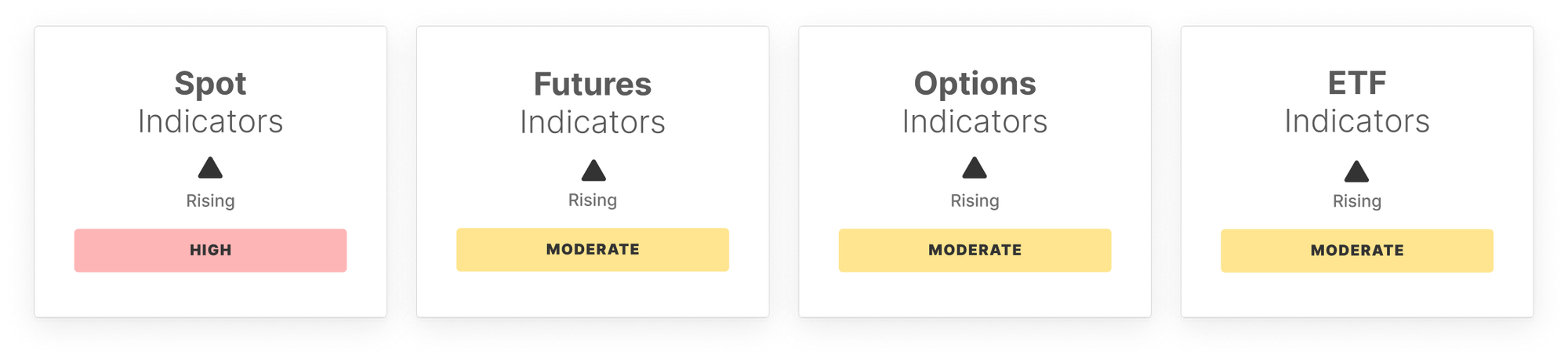
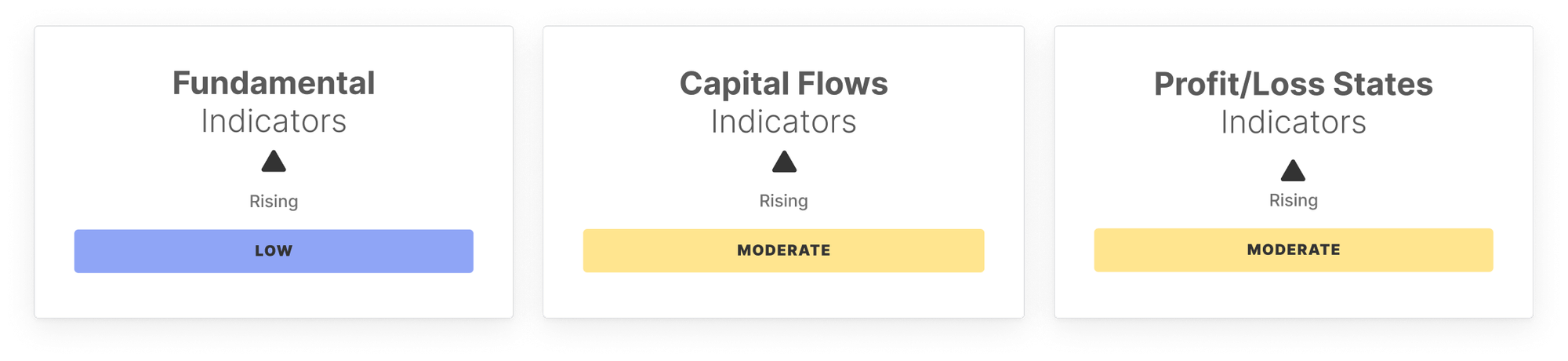
Spot market signals are mixed but constructive, with a return of aggressive buying pressure though overall volume remains subdued. Derivatives show rising but cautious engagement, with increased open interest and negative funding rates. ETF inflows accelerated, indicating renewed institutional demand. On-chain activity is muted with lower active addresses and stable fees. Capital flow and profitability metrics are gradually improving, pointing to reduced market stress. Overall, conditions show signs of stabilization and recovery, though broader conviction has yet to fully return.

Spot market signals are mixed but constructive. Spot CVD flipped decisively positive, reflecting a return of aggressive buying pressure, though overall spot volume declined toward its lower statistical band, suggesting broader participation remains subdued.

Derivatives markets reflect rising but cautious engagement. Futures OI edged higher as futures CVD surged, while funding payments moved further negative, pointing to persistent short positioning. In options, the volatility spread narrowed sharply as IV realigned with realised conditions, and 25-delta skew rose modestly, signalling continued demand for downside hedging.

ETF activity strengthened notably, with net inflows into US spot Bitcoin ETFs accelerating meaningfully, indicating renewed institutional demand, even as total ETF trading volume cooled slightly from prior elevated levels.

On-chain activity remains relatively muted. Active addresses declined below their lower band and transfer volumes, while improving modestly, remain subdued. Fee volume remains stable, reflecting steady but quiet network usage.

Capital flow dynamics and investor positioning are gradually improving. Realized cap change remains negative but has moved closer to neutral, suggesting easing outflows. Meanwhile, profitability metrics such as supply in profit, NUPL, and the realized profit-to-loss ratio all improved modestly, pointing to a reduction in market stress.

Overall, market conditions are showing signs of stabilization and gradual recovery. Momentum and spot buying pressure have strengthened, ETF inflows remain supportive, and investor profitability is improving modestly. However, subdued on-chain activity and cautious derivatives positioning suggest broader conviction has yet to fully return.

Off-Chain Indicators
On-Chain Indicators
🔗 Access the full report in PDF

Don't miss it!

Smart market intelligence, straight to your inbox.

Subscribe now
  • Follow us and reach out on X
  • Join our Telegram channel
  • For on-chain metrics, dashboards, and alerts, visit Glassnode Studio

Disclaimer: This report does not provide any investment advice. All data is provided for information and educational purposes only. No investment decision shall be based on the information provided here and you are solely responsible for your own investment decisions.

Exchange balances presented are derived from Glassnode’s comprehensive database of address labels, which are amassed through both officially published exchange information and proprietary clustering algorithms. While we strive to ensure the utmost accuracy in representing exchange balances, it is important to note that these figures might not always encapsulate the entirety of an exchange’s reserves, particularly when exchanges refrain from disclosing their official addresses. We urge users to exercise caution and discretion when utilizing these metrics. Glassnode shall not be held responsible for any discrepancies or potential inaccuracies.

Please read our Transparency Notice when using exchange data.

Related Questions

QWhat does the positive flip in Spot CVD indicate about the market?

AThe decisive positive flip in Spot CVD indicates a return of aggressive buying pressure in the spot market.

QHow did the derivatives market, particularly futures, behave according to the report?

AFutures open interest (OI) edged higher and futures CVD surged, but funding payments moved further negative, pointing to persistent short positioning and cautious engagement.

QWhat trend was observed in US spot Bitcoin ETF activity?

ANet inflows into US spot Bitcoin ETFs accelerated meaningfully, indicating renewed institutional demand, even though total ETF trading volume cooled slightly from prior elevated levels.

QWhat does the narrowing volatility spread in options signify?

AThe narrowing volatility spread signifies that implied volatility (IV) realigned with realized market conditions, while the rise in 25-delta skew indicates continued demand for downside hedging.

QWhat overall conclusion does the report draw about current market conditions?

AThe report concludes that market conditions are showing signs of stabilization and gradual recovery, with strengthened momentum, supportive ETF inflows, and improved investor profitability, though broader conviction has yet to fully return due to subdued on-chain activity and cautious derivatives positioning.

Related Reads

Lightspark CEO: In Ten Years, Bitcoin Will Be as Invisible as TCP/IP, Yet Power Trillions in Daily Transactions

A decade from now, Bitcoin will function like TCP/IP — invisible yet foundational, supporting trillions in daily transactions globally, according to Lightspark CEO David Marcus. In this future, a coffee shop in Lagos receives instant payment, a manufacturer in São Paulo settles an invoice with a supplier in Ho Chi Minh City, and a freelancer in Bangalore gets paid weekly from an Austin startup — all via Bitcoin's settlement layer, with none of the parties consciously interacting with it. This vision parallels the adoption of open protocols: first driven by necessity where existing systems fail, then scaling rapidly as tools mature and economic benefits become clear. The structural shift begins with wallets. Modern non-custodial wallets, like Spark, allow users to hold dollars, local currency, and Bitcoin in a single address, seamlessly switching between them. This eliminates friction and revolutionizes global custody, moving significant deposits to user-controlled keys not by ideology, but by superior utility. As a result, Bitcoin becomes the default savings layer for billions, as its fixed supply and appreciating value make it a rational choice for savers holding it alongside stablecoins in their everyday wallets. Businesses follow a similar path, from small companies in emerging markets to multinational corporations, holding Bitcoin alongside operational stablecoins. The latest trend is direct Bitcoin transactions for commerce. When both parties hold Bitcoin, transacting in it becomes the simplest option — no conversions, no intermediary currency. This starts in niche areas like high-value B2B settlements but grows as infrastructure makes sending Bitcoin as easy as stablecoins. An accelerating force is AI agents. By 2036, AI agents conducting commerce on behalf of individuals and firms will increasingly choose Bitcoin for settlement. Optimizing for speed, finality, and minimal counterparty risk across jurisdictions, they find Bitcoin's global, neutral, and programmable network ideal for netting and settling obligations. Thus, Bitcoin is becoming the native currency for machine commerce, just as it has become a native savings asset for humans. The global monetary system is being rebuilt from the protocol layer: open infrastructure, default self-custody, Bitcoin settling everything underneath, with stablecoins as the interface. Most users won't think about Bitcoin when they transact — and they won't need to.

foresightnews_api4m ago

Lightspark CEO: In Ten Years, Bitcoin Will Be as Invisible as TCP/IP, Yet Power Trillions in Daily Transactions

foresightnews_api4m ago

Peeking Through Windows, Precision Hijacking? Two Giants of Prediction Markets Engage in Corporate Espionage

Polymarket, a prediction market platform, is investigating a suspected corporate espionage case involving its main rival, Kalshi. Polymarket accuses Kalshi of stealing business information and copying product launches through potentially illicit means, compiling a "plagiarism file" documenting over a dozen suspiciously coincidental product releases and marketing campaigns. Key incidents include a February 2026 free-grocery pop-up event, where Kalshi launched an almost identical campaign just nine days before Polymarket's scheduled launch, seemingly to siphon attention. Furthermore, an article leaked Kalshi's plans for a perpetual futures trading product merely an hour before Polymarket's own planned announcement for a similar tool in April 2026. Polymarket executives suspect either an internal mole or physical surveillance, noting that the office of Paradigm—a Kalshi investor—directly faces their Manhattan workspace, leading them to install dark window film. Both Paradigm and Kalshi have dismissed the allegations as baseless and ridiculous. Kalshi claims its product developments are independent and coincidental timing is merely market-driven. The rivalry intensifies as both companies secure significant funding, with Polymarket seeking a $15 billion valuation and Kalshi valued at $22 billion amid growing regulatory scrutiny of the prediction market industry.

foresightnews_api8m ago

Peeking Through Windows, Precision Hijacking? Two Giants of Prediction Markets Engage in Corporate Espionage

foresightnews_api8m ago

Hyperliquid, Wall Street's All-Day Trading Convenience Store

**Hyperliquid: Wall Street's 24/7 Trading Convenience Store** Written by Vicky Ge Huang, Wall Street Journal. Hyperliquid, a decentralized crypto trading platform, has become a go-to venue for Wall Street traders, especially during weekends when traditional U.S. markets are closed. Operating 24/7, it allows traders to pre-position or close trades ahead of market opens, capitalizing on events like geopolitical news. The platform, founded by former Hudson River Trading quant Jeff Yan, offers perpetual contracts on a wide range of assets, including Bitcoin, the S&P 500, oil, and even pre-IPO companies like SpaceX. Its growth exemplifies the merging of traditional finance and crypto markets, attracting significant volume from professional traders seeking leverage and constant access. A key differentiator, according to Yan, is user self-custody of assets—a necessity highlighted by the FTX collapse. Despite U.S. regulatory restrictions, some American users reportedly access the platform via VPN, drawn by its ease of use, lack of stringent KYC, and strong community culture on platforms like Discord and X. The platform is not without risks. Perpetual contracts are complex and highly leveraged, leading to massive liquidations during market volatility. Hyperliquid itself saw $10 billion in liquidations during a market crash in October last year. Regulatory warnings emphasize insufficient risk disclosure for retail investors. With about 11 employees, Hyperliquid and its associated blockchain reportedly generated around $800 million in revenue last year. Its native token, HYPE, has surged over 100% since late 2024. The platform plans to expand into prediction markets and options trading, aiming to become a hub for all financial activity.

foresightnews_api10m ago

Hyperliquid, Wall Street's All-Day Trading Convenience Store

foresightnews_api10m ago

Trading

Spot
Futures

Hot Articles

What is $BITCOIN

DIGITAL GOLD ($BITCOIN): A Comprehensive Analysis Introduction to DIGITAL GOLD ($BITCOIN) DIGITAL GOLD ($BITCOIN) is a blockchain-based project operating on the Solana network, which aims to combine the characteristics of traditional precious metals with the innovation of decentralized technologies. While it shares a name with Bitcoin, often referred to as “digital gold” due to its perception as a store of value, DIGITAL GOLD is a separate token designed to create a unique ecosystem within the Web3 landscape. Its goal is to position itself as a viable alternative digital asset, although specifics regarding its applications and functionalities are still developing. What is DIGITAL GOLD ($BITCOIN)? DIGITAL GOLD ($BITCOIN) is a cryptocurrency token explicitly designed for use on the Solana blockchain. In contrast to Bitcoin, which provides a widely recognized value storage role, this token appears to focus on broader applications and characteristics. Notable aspects include: Blockchain Infrastructure: The token is built on the Solana blockchain, known for its capacity to handle high-speed and low-cost transactions. Supply Dynamics: DIGITAL GOLD has a maximum supply capped at 100 quadrillion tokens (100P $BITCOIN), although details regarding its circulating supply are currently undisclosed. Utility: While precise functionalities are not explicitly outlined, there are indications that the token could be utilized for various applications, potentially involving decentralized applications (dApps) or asset tokenization strategies. Who is the Creator of DIGITAL GOLD ($BITCOIN)? At present, the identity of the creators and development team behind DIGITAL GOLD ($BITCOIN) remains unknown. This situation is typical among many innovative projects within the blockchain space, particularly those aligning with decentralized finance and meme coin phenomena. While such anonymity may foster a community-driven culture, it intensifies concerns about governance and accountability. Who are the Investors of DIGITAL GOLD ($BITCOIN)? The available information indicates that DIGITAL GOLD ($BITCOIN) does not have any known institutional backers or prominent venture capital investments. The project seems to operate on a peer-to-peer model focused on community support and adoption rather than traditional funding routes. Its activity and liquidity are primarily situated on decentralized exchanges (DEXs), such as PumpSwap, rather than established centralized trading platforms, further highlighting its grassroots approach. How DIGITAL GOLD ($BITCOIN) Works The operational mechanics of DIGITAL GOLD ($BITCOIN) can be elaborated on based on its blockchain design and network attributes: Consensus Mechanism: By leveraging Solana’s unique proof-of-history (PoH) combined with a proof-of-stake (PoS) model, the project ensures efficient transaction validation contributing to the network's high performance. Tokenomics: While specific deflationary mechanisms have not been extensively detailed, the vast maximum token supply implies that it may cater to microtransactions or niche use cases that are still to be defined. Interoperability: There exists the potential for integration with Solana’s broader ecosystem, including various decentralized finance (DeFi) platforms. However, the details regarding specific integrations remain unspecified. Timeline of Key Events Here is a timeline that highlights significant milestones concerning DIGITAL GOLD ($BITCOIN): 2023: The initial deployment of the token occurs on the Solana blockchain, marked by its contract address. 2024: DIGITAL GOLD gains visibility as it becomes available for trading on decentralized exchanges like PumpSwap, allowing users to trade it against SOL. 2025: The project witnesses sporadic trading activity and potential interest in community-led engagements, although no noteworthy partnerships or technical advancements have been documented as of yet. Critical Analysis Strengths Scalability: The underlying Solana infrastructure supports high transaction volumes, which could enhance the utility of $BITCOIN in various transaction scenarios. Accessibility: The potential low trading price per token could attract retail investors, facilitating wider participation due to fractional ownership opportunities. Risks Lack of Transparency: The absence of publicly known backers, developers, or an audit process may yield skepticism regarding the project's sustainability and trustworthiness. Market Volatility: The trading activity is heavily reliant on speculative behavior, which can result in significant price volatility and uncertainty for investors. Conclusion DIGITAL GOLD ($BITCOIN) emerges as an intriguing yet ambiguous project within the rapidly evolving Solana ecosystem. While it attempts to leverage the “digital gold” narrative, its departure from Bitcoin's established role as a store of value underscores the need for a clearer differentiation of its intended utility and governance structure. Future acceptance and adoption will likely depend on addressing the current opacity and defining its operational and economic strategies more explicitly. Note: This report encompasses synthesised information available as of October 2023, and developments may have transpired beyond the research period.

363 Total ViewsPublished 2025.05.13Updated 2025.05.13

What is $BITCOIN

Discussions

Welcome to the HTX Community. Here, you can stay informed about the latest platform developments and gain access to professional market insights. Users' opinions on the price of BTC (BTC) are presented below.

活动图片











