Blockchain.com Expands Tokenized Stock Access Through Ondo Finance

bitcoinistPublished on 2026-06-19Last updated on 2026-06-19

Abstract

Blockchain.com has expanded its partnership with Ondo Finance to integrate tokenized U.S. stocks and ETFs into its wallet ecosystem. This move allows eligible, primarily non-U.S., users to access traditional financial assets through a familiar crypto-native interface, blending real-world asset exposure with existing crypto holdings like stablecoins and DeFi tools. Ondo Finance, a key player in tokenizing assets like Treasuries and equities, gains a significant distribution channel through Blockchain.com's large user base. The partnership highlights the industry trend of making tokenized assets as accessible as ordinary crypto tokens, targeting global audiences who may face barriers using traditional brokerage services. While the tokenized real-world asset (RWA) market grows increasingly competitive, questions remain around custody, regulation, and market structure. Blockchain.com and Ondo are betting that seamless wallet integration can address these challenges and drive broader adoption.

Blockchain.com Expands Tokenized Stock Access Through Ondo Finance

TL;DR

  • Blockchain.com and Ondo Finance have expanded access to tokenized U.S. stocks and ETFs through the Blockchain.com wallet ecosystem.
  • The partnership brings regulated real-world asset exposure into a crypto-native interface for eligible users.
  • The latest market discussion centers on the growth of Ondo Global Markets and a wider catalogue of tokenized equities.
  • The move fits a larger trend: exchanges and wallet providers are racing to make tokenized traditional assets feel like ordinary crypto products.

Tokenized Stocks Move Further Into Wallets

Blockchain.com’s partnership with Ondo Finance is pushing tokenized U.S. stocks and ETFs deeper into the crypto wallet experience, giving eligible users another way to access real-world assets onchain. The companies have already framed the integration as a way to bring tokenized equities into the familiar Blockchain.com wallet interface, rather than forcing users through a traditional brokerage-style setup.

The story has gained fresh attention as Ondo Global Markets continues expanding the number of tokenized assets available across chains. For crypto users, the practical draw is simple: stocks, ETFs and other traditional exposures can sit closer to stablecoins, DeFi and self-custody tools.

Why Ondo Is Central To The RWA Push

Ondo has become one of the best-known names in the tokenized real-world asset market because it focuses on taking familiar financial products and representing them onchain. That includes tokenized Treasuries, yield products and stock-linked exposure. The Blockchain.com integration gives Ondo a consumer-facing distribution channel with a large wallet user base.

This is important because tokenization is not just a technology problem. It is a distribution problem. Users need access, compliance checks, liquidity, custody options and a reason to prefer tokenized exposure over existing brokerage products. Wallet integrations can help close that gap by putting tokenized assets in front of users who already operate in crypto.

The Non-US Access Angle

Much of the tokenized stock story is aimed at users outside the United States. In many markets, access to U.S. equities can be slow, expensive or limited by local brokerage infrastructure. Tokenized products promise a crypto-native alternative, though availability still depends on eligibility, jurisdiction and product structure.

That makes the Blockchain.com and Ondo setup interesting. It is not trying to convince U.S. brokerage customers to abandon familiar platforms overnight. Instead, it targets a global audience that may already use stablecoins and crypto wallets as financial infrastructure, then adds stock-like exposure into that environment.

RWA Growth Gets More Competitive

The broader RWA market is becoming increasingly crowded. Exchanges, fintech apps, DeFi protocols and issuers all want to control the interface through which users access tokenized traditional assets. Stocks and ETFs are especially attractive because they are easy to understand and already have strong global demand.

Still, tokenized equities carry real questions around custody, redemption, market hours, legal claims and regulatory treatment. The winning products will need to feel as simple as crypto tokens while giving users confidence that the underlying exposure is legitimate. Blockchain.com and Ondo are betting that wallet-native access can help make that leap.

This article was written by the Bitcoinist News Desk and edited by Samuel Rae.

This report is based on information from Blockchain.com. at Blockchain.com

Trending Cryptos

Related Questions

QWhat is the main news announced in the article regarding Blockchain.com and Ondo Finance?

ABlockchain.com and Ondo Finance have expanded access to tokenized U.S. stocks and ETFs through the Blockchain.com wallet ecosystem, integrating regulated real-world assets into a crypto-native interface for eligible users.

QWhy is Ondo Finance considered central to the push for tokenized real-world assets (RWAs)?

AOndo Finance is central because it focuses on tokenizing familiar financial products like Treasuries, yield products, and stock-linked exposures, and the integration with Blockchain.com provides a major consumer-facing distribution channel to a large wallet user base, helping solve the distribution problem for tokenized assets.

QAccording to the article, which user segment is a primary target for tokenized stock access via this partnership?

AThe primary target is users outside the United States, who may face slow, expensive, or limited access to U.S. equities through traditional local brokerage infrastructure, but already use stablecoins and crypto wallets as financial infrastructure.

QWhat is one key practical benefit for crypto users in having tokenized stocks and ETFs in their wallet?

AA key practical benefit is that stocks, ETFs, and other traditional exposures can sit closer to and be managed alongside stablecoins, DeFi assets, and self-custody tools within a familiar crypto wallet interface.

QWhat are some of the challenges or questions mentioned regarding tokenized equities?

AChallenges and questions include issues around custody, redemption, alignment with market hours, legal claims on the underlying assets, and regulatory treatment. Winning products must feel as simple as crypto tokens while ensuring users have confidence in the legitimacy of the underlying exposure.

Related Reads

Beyond the Stadium: The Profitable Games Surrounding the World Cup

"Beyond the Pitch: The Profit Game Around the World Cup" The FIFA World Cup transcends being a sporting spectacle, evolving into a massive global arena for speculation and profit-seeking. The 2026 tournament has amplified this dynamic, creating a multi-layered ecosystem of financial opportunism alongside the football. **Prediction markets** have surged into the mainstream. Platforms like Polymarket and Kalshi saw trading volumes for World Cup contracts soar, attracting new users with their financial trading model and high-profile, chain-based wealth stories that overshadow traditional sports betting in terms of growth and narrative. However, **traditional sportsbooks** remain the dominant force, leveraging established user habits, legal markets, and comprehensive product offerings to handle the vast majority of speculative wagers, with projections suggesting record-breaking betting volumes. Capital markets also react. **"Concept stocks"** in countries like South Korea and Japan experience volatile price swings based on team performance and anticipated fan spending on items like chicken, beer, and viewing parties, effectively becoming a stock market reflecting fan sentiment. The **ticket resale market** has become a sophisticated arena for arbitrage. Prices fluctuate wildly based on team draws and star power, with sellers sometimes listing tickets they don't yet own in a practice akin to short-selling, while FIFA's own "Right to Buy" tokens add another layer of speculative trading. **Collectibles and merchandise** offer another avenue. Panini sticker albums, with their inherent scarcity and nostalgic value, can become high-value collectibles. Limited-edition or locally themed jerseys command significant premiums on secondary markets, and even counterfeit vendors profit from fans' desire for affordable match-day identity. The **cryptocurrency** space has seen a frenzy of speculative, unauthorized World Cup-themed meme coins on chains like Solana. These tokens, often exploiting team names and player imagery, experience extreme pump-and-dump cycles, creating stories of massive gains for a few early entrants and steep losses for many others. Finally, an entire industry thrives on **providing information and tools** to other speculators. Developers create platforms like SeatSidekick to track ticket inventory and prices, while paid Telegram groups and subscriptions sell betting tips and predictions, monetizing the widespread desire for an informational edge. In essence, the World Cup has become a compressed, global laboratory for speculation. While the games determine champions on the field, a parallel, complex network of financial transactions—spanning prediction contracts, bets, stocks, tickets, collectibles, crypto, and information services—settles its own scores in the global market.

marsbit28m ago

Beyond the Stadium: The Profitable Games Surrounding the World Cup

marsbit28m ago

How Does Codex Use a Computer? Three Entry Points and Permission Boundaries

This article explains the three primary methods for Codex to interact with a computer, each with distinct use cases, permission boundaries, and trust levels. **1. Computer Use:** This offers the broadest access, allowing Codex to visually control and interact with the graphical user interface of authorized macOS/Windows apps, system settings, and even iOS simulators. It's ideal for tasks lacking APIs or structured tools, such as operating legacy software or multi-app workflows. However, it's the slowest method and has the widest permission scope, requiring careful supervision for sensitive actions. **2. Chrome Extension:** This grants Codex access to the user's logged-in Chrome browser state, including cookies, profiles, and open tabs. It's best for tasks requiring user identity across websites like Gmail, LinkedIn, Salesforce, or internal dashboards. Its key advantage is multi-tab control for complex workflows. While more powerful for browser-based tasks than Computer Use, it carries higher sensitivity as actions are performed under the user's identity. **3. In-App Browser:** This is a browser isolated within the Codex thread, separate from the user's personal browsing data. It excels in web development and debugging scenarios—previewing local servers, testing responsive layouts, or annotating designs directly on the page. Its isolation is a strength for development but a limitation for tasks requiring login sessions. The core principle is to choose the narrowest, safest, and most structured interface for the task. Use plugins or MCPs first, resort to visual control (Computer Use) only for GUI-dependent tasks, employ the Chrome extension for identity-reliant browser work, and prefer the In-App Browser for isolated development. **Appshots** are clarified as a fourth, complementary tool for *inputting* context—capturing a screenshot of a window to point Codex to something—rather than a method for Codex to *act*. Together, this layered approach highlights a key to AI agent productization: not granting unlimited permissions, but constraining them within clear boundaries for specific tasks while preserving user oversight.

marsbit2h ago

How Does Codex Use a Computer? Three Entry Points and Permission Boundaries

marsbit2h ago

The "Iron Rule" of Chip Equipment Is Being Broken

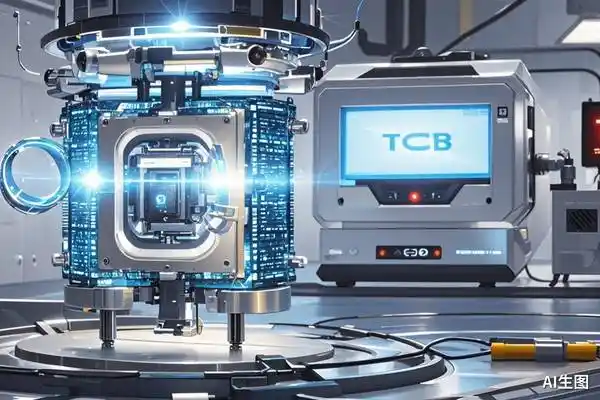
For years, the semiconductor equipment industry followed an unwritten "iron rule": suppliers offered steep discounts for new tool introductions (Design-in) and faced consistent price pressure during repeat orders, especially during market downturns. This long-standing buyer's market dynamic is now being upended. Recently, SK Hynix's primary equipment suppliers have reportedly requested a 3-4% price *increase*, a nearly unprecedented move. This shift is driven by a severe supply-demand imbalance fueled by the AI compute boom. Securing equipment has become an urgent arms race as chipmakers' expansion speed dictates their ability to fulfill massive AI chip orders. Key areas feeling the strain include: **TCB (Thermal Compression Bonding) Equipment:** Demand is exploding, driven by the simultaneous needs of HBM4 memory stacking, AI chip Chip-on-Substrate (C2S), and logic Chiplet Chip-on-Wafer (C2W) packaging. Players like Hanmi Semiconductor, Hanwha Semitech, and ASMPT are receiving major orders. While hybrid bonding is seen as the future, TCB remains the pragmatic choice for HBM4 mass production, with its lifecycle extended by relaxed specifications and ongoing technological upgrades. **Test Equipment Bottlenecks:** Ironically, AI-driven shortages are now crippling test equipment manufacturing. Critical components like FPGAs, Driver ICs, and CPUs face severe shortages and extended lead times (up to 52 weeks for FPGAs), as AI data center and server vendors prioritize supply. This creates a paradoxical cycle: AI chip shortages drive fab expansion, which requires more test equipment, whose production is delayed because its key parts are diverted to make AI chips. The industry is entering a broad, AI-powered upcycle. SEMI forecasts global semiconductor equipment sales to hit a record $156 billion by 2027, fueled by investment in advanced logic/foundry, HBM-driven DRAM, and advanced packaging (like CoWoS). Major players like TSMC, SK Hynix, and Micron are aggressively ramping capital expenditure. In conclusion, leading equipment vendors are no longer just selling tools; they are selling the critical capability to deliver AI-era capacity. Pricing power is shifting decisively to those with indispensable technology in key process nodes like advanced logic, HBM, and advanced packaging, rewriting the industry's traditional power structure.

marsbit2h ago

The "Iron Rule" of Chip Equipment Is Being Broken

marsbit2h ago

Trading

Spot
Futures

Hot Articles

How to Buy ONDO

Welcome to HTX.com! We've made purchasing OndoFinance (ONDO) simple and convenient. Follow our step-by-step guide to embark on your crypto journey.Step 1: Create Your HTX AccountUse your email or phone number to sign up for a free account on HTX. Experience a hassle-free registration journey and unlock all features.Get My AccountStep 2: Go to Buy Crypto and Choose Your Payment MethodCredit/Debit Card: Use your Visa or Mastercard to buy OndoFinance (ONDO) instantly.Balance: Use funds from your HTX account balance to trade seamlessly.Third Parties: We've added popular payment methods such as Google Pay and Apple Pay to enhance convenience.P2P: Trade directly with other users on HTX.Over-the-Counter (OTC): We offer tailor-made services and competitive exchange rates for traders.Step 3: Store Your OndoFinance (ONDO)After purchasing your OndoFinance (ONDO), store it in your HTX account. Alternatively, you can send it elsewhere via blockchain transfer or use it to trade other cryptocurrencies.Step 4: Trade OndoFinance (ONDO)Easily trade OndoFinance (ONDO) on HTX's spot market. Simply access your account, select your trading pair, execute your trades, and monitor in real-time. We offer a user-friendly experience for both beginners and seasoned traders.

5.0k Total ViewsPublished 2024.03.29Updated 2026.06.02

How to Buy ONDO

Discussions

Welcome to the HTX Community. Here, you can stay informed about the latest platform developments and gain access to professional market insights. Users' opinions on the price of ONDO (ONDO) are presented below.

活动图片