Bitcoin rises as ETF inflows hit February highs amid crisis – But will it last?

ambcryptoPublished on 2026-04-08Last updated on 2026-04-08

Abstract

Bitcoin ETFs saw significant inflows amid the West Asia crisis, with March net inflows reaching $1.3 billion. On April 6, daily net inflows hit $471.3 million, the highest since February. BTC rallied 8% over the past month, outperforming gold, suggesting its role as a safe-haven asset. A short squeeze on April 8 wiped out $424 million in shorts, lifting BTC from $67.7K to $72K. Analysts warn that the focus may shift to macro factors if geopolitical tensions ease. The upcoming U.S. PCE inflation data on April 9 could drive volatility, as markets anticipate a hawkish Fed pause. Profit-taking reached $257 million during the rally, but the response was seen as modest. The inflation report is expected to set the next direction for BTC.

Spot Bitcoin ETF investors increased exposure to the crypto asset as the West Asia crisis dragged on. In March, the products attracted a whopping $1.3 billion in net monthly inflows.

And the appetite didn’t falter in April, even as President Donald Trump threatened “civilization destruction” against Iran. In fact, during Trump’s threat on the 6th of April, the products attracted $471.3 million in daily net inflows, the highest since February.
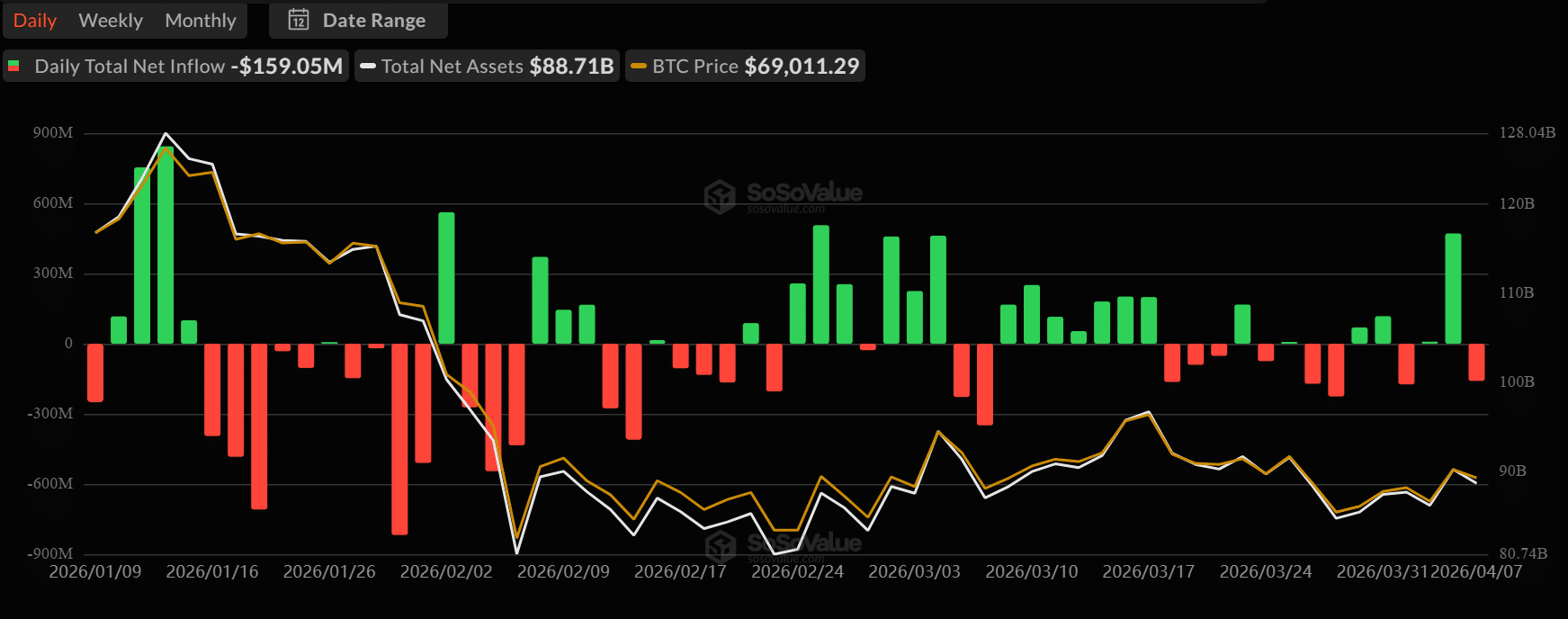
Source: SoSo Value

Interestingly, over the past month, BTC rallied about 8% while gold lagged by 5.4%. In other words, BTC became a safe haven during the crisis. And investors remain bullish on it, perhaps expecting more returns if the crisis deepens.

So what’s next after the U.S-Iran ceasefire and potential ending of the war?

Will short squeeze lift BTC higher?

On Wednesday, the 8th of April, during the early Asian market hours, bears suffered massive losses after the U.S-Iran ceasefire. CoinGlass data showed $424 million worth of shorts were wiped out in the past 24 hours, with Bitcoin [BTC] bears suffering a $164 million loss.

The short squeeze swiftly lifted BTC from $67.7K to $72K.

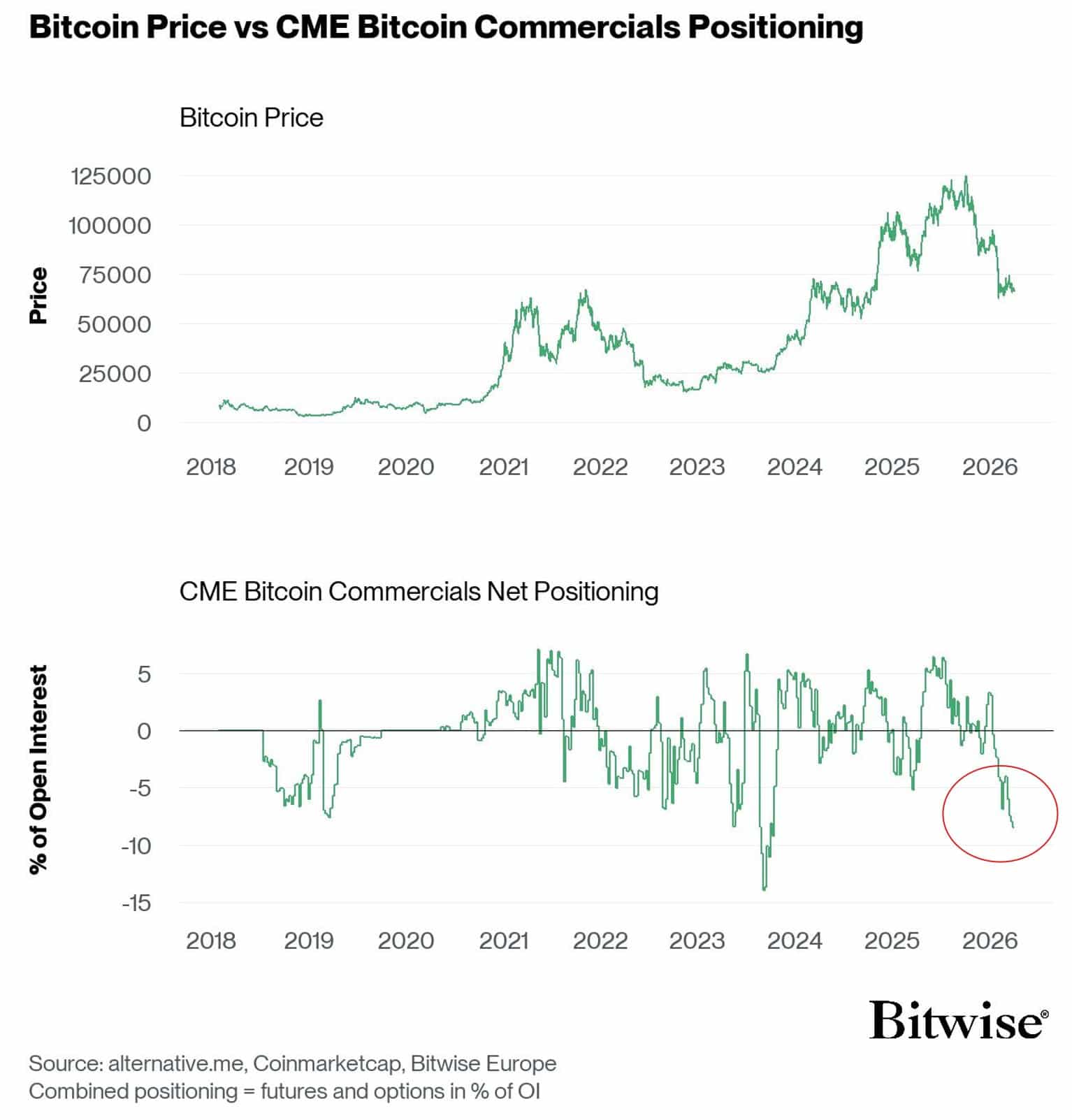
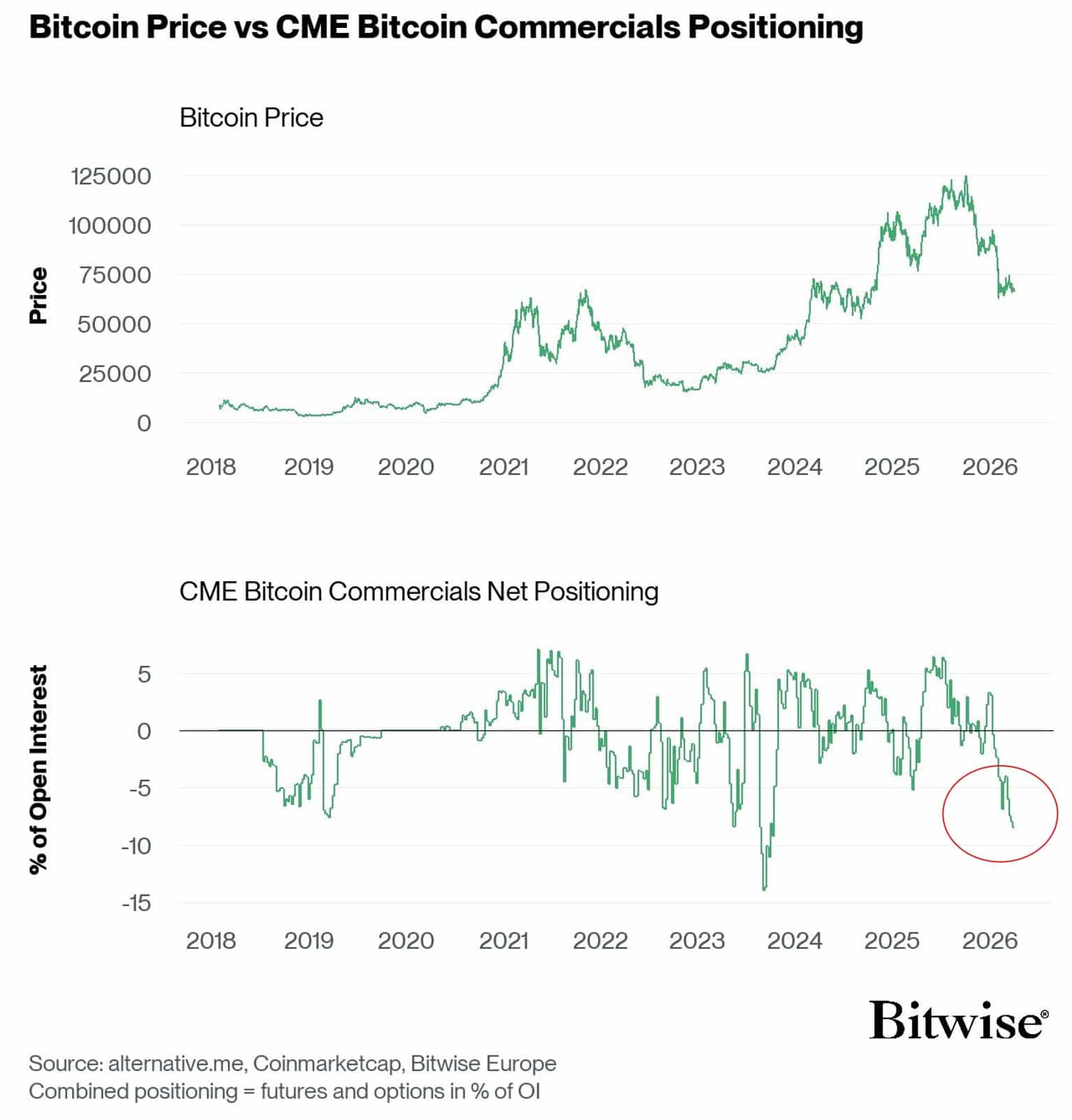
Interestingly, Bitwise’s EU head of research, André Dragosch, had previously projected that the massive short covering could be a ‘dry powder’ for a leg higher.

He cited the record bearish BTC positioning by institutions on the CME, which was the highest since 2023.
Source: Bitwise

What’s next for BTC after Iran ceasefire?

But in the short-term, if the West Asia crisis is resolved, then the market focus would shift back to macro factors.

The U.S. PCE inflation data, scheduled for the 9th of April, could drive volatility in Bitcoin. This metric is the Federal Reserve’s preferred inflation gauge and often shapes rate expectations.

Markets have already priced in the possibility of a hawkish pause ahead of the April FOMC meeting.

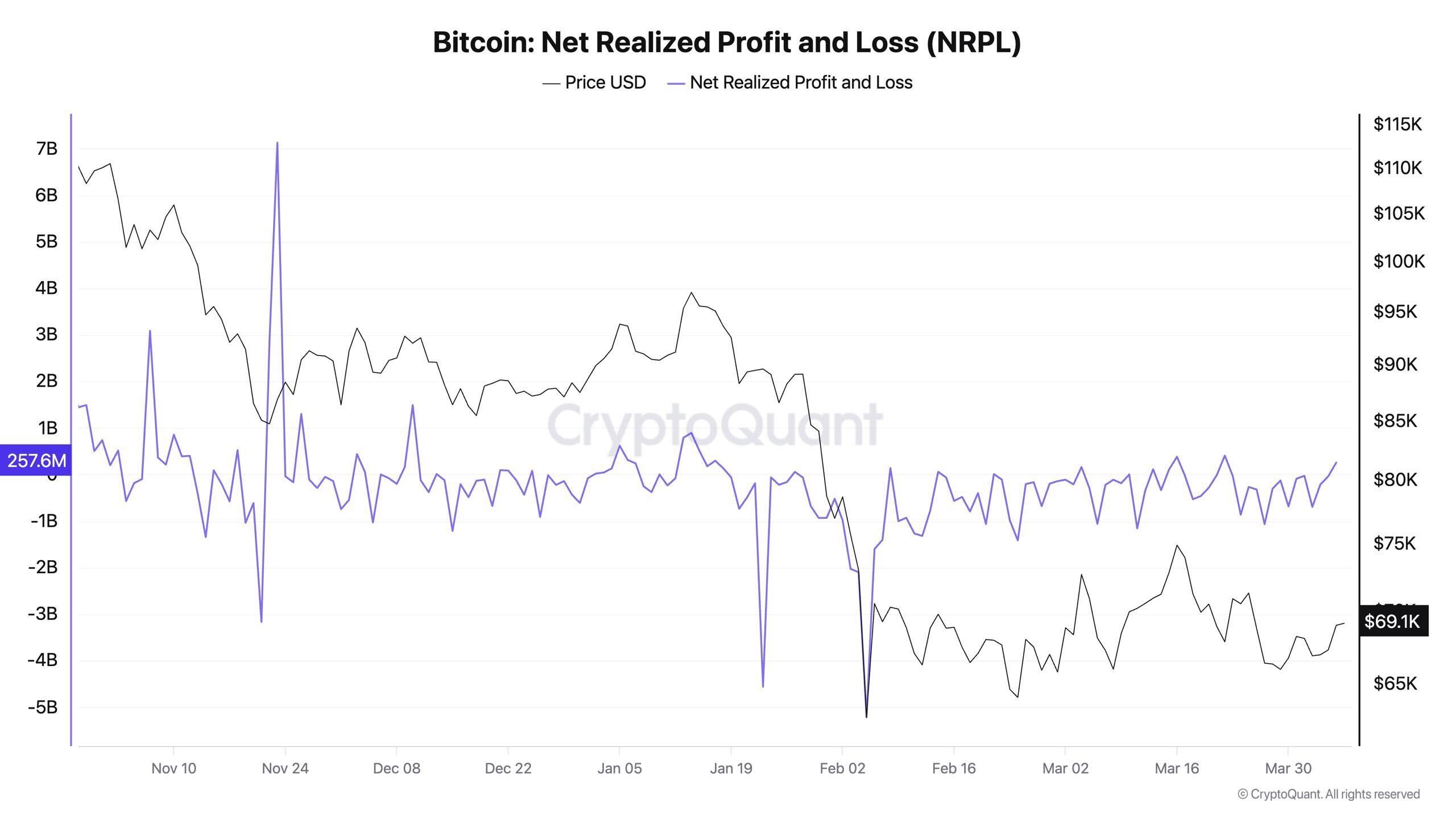
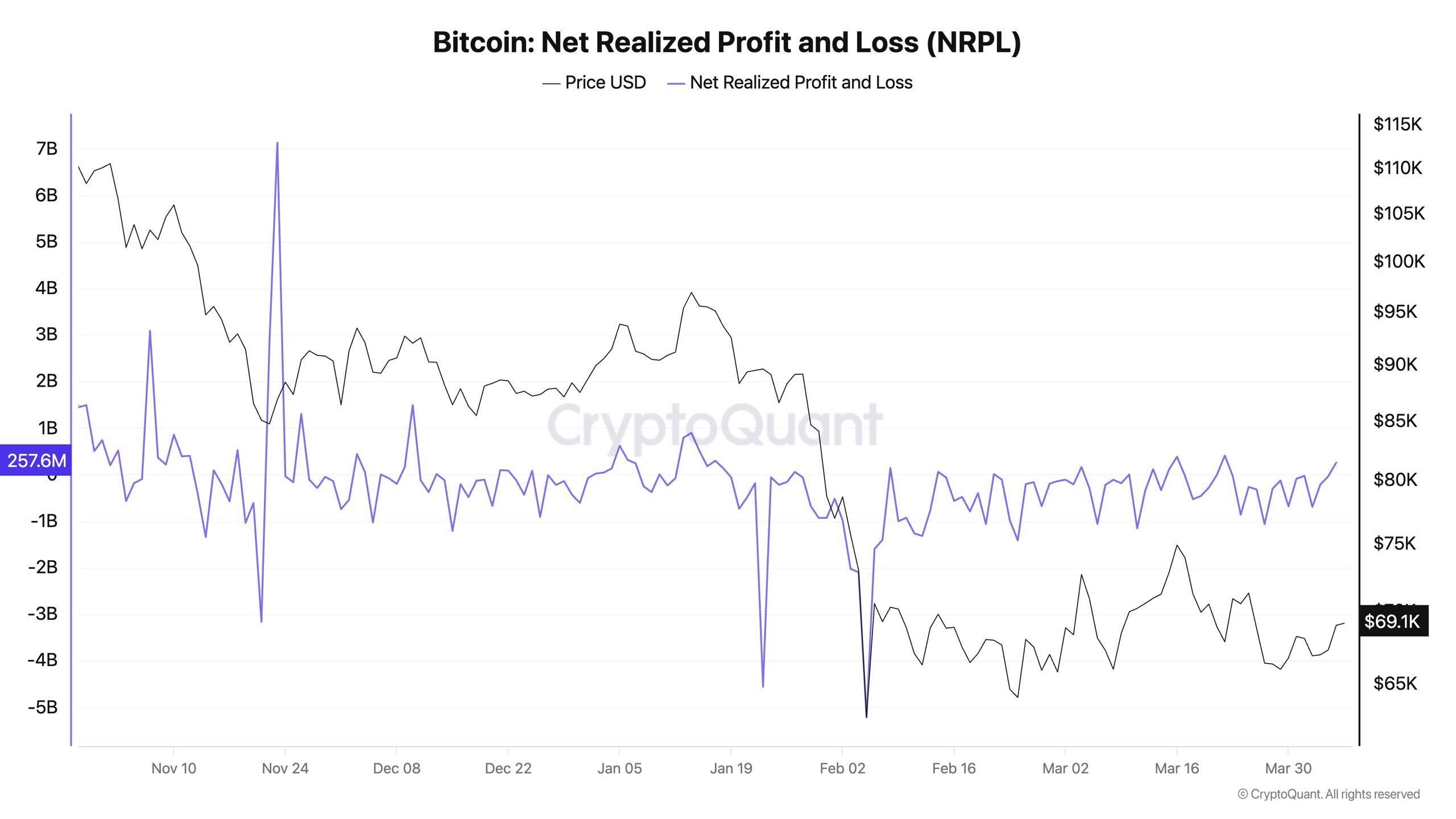
Meanwhile, Wednesday’s rally triggered $257 million in profit-taking, continuing a pattern seen in recent weeks.
Source: CryptoQuant/Bitfinex

However, Bitfinex analysts termed it ‘modest’ to dent BTC, stressing that the inflation could set the next direction for the crypto asset.

Traders are taking profit, but the response is modest relative to the move, pointing to limited conviction rather than genuine distribution. PCE on 9 April is the next test.


Final Summary

  • U.S. Spot BTC ETFs have seen a massive $1.3B inflows in March as the crypto asset remained resilient during the West Asian crisis.
  • Bitfinex analysts cautioned that the recent BTC recovery will be tested ahead of the U.S. inflation print on Thursday.


Trending Cryptos

Related Questions

QWhat was the net monthly inflow for Spot Bitcoin ETFs in March, and why did investors increase their exposure?

ASpot Bitcoin ETFs attracted a net monthly inflow of $1.3 billion in March as investors increased exposure to Bitcoin due to its resilience and perceived safe-haven status during the West Asia crisis.

QHow did Bitcoin's performance compare to gold over the past month, and what does this suggest?

ABitcoin rallied about 8% over the past month, while gold lagged by 5.4%, suggesting that BTC acted as a safe-haven asset during the crisis and outperformed traditional safe havens like gold.

QWhat event caused a significant short squeeze in Bitcoin on April 8th, and what was the price impact?

AThe U.S.-Iran ceasefire triggered a significant short squeeze, wiping out $424 million worth of shorts in 24 hours, with BTC bears losing $164 million. This swiftly lifted Bitcoin's price from $67.7K to $72K.

QWhat key macroeconomic event could drive volatility in Bitcoin after the Iran ceasefire, according to the article?

AThe U.S. PCE inflation data, scheduled for April 9th, could drive volatility in Bitcoin as it is the Federal Reserve's preferred inflation gauge and shapes interest rate expectations.

QHow did Bitfinex analysts characterize the profit-taking activity following Wednesday's rally, and what did they emphasize as the next test for BTC?

ABitfinex analysts termed the profit-taking activity as 'modest' and insufficient to significantly dent BTC, emphasizing that the U.S. PCE inflation data on April 9th would be the next test for Bitcoin's price direction.

Related Reads

How Does Codex Use a Computer? Three Entry Points and Permission Boundaries

This article explains the three primary methods for Codex to interact with a computer, each with distinct use cases, permission boundaries, and trust levels. **1. Computer Use:** This offers the broadest access, allowing Codex to visually control and interact with the graphical user interface of authorized macOS/Windows apps, system settings, and even iOS simulators. It's ideal for tasks lacking APIs or structured tools, such as operating legacy software or multi-app workflows. However, it's the slowest method and has the widest permission scope, requiring careful supervision for sensitive actions. **2. Chrome Extension:** This grants Codex access to the user's logged-in Chrome browser state, including cookies, profiles, and open tabs. It's best for tasks requiring user identity across websites like Gmail, LinkedIn, Salesforce, or internal dashboards. Its key advantage is multi-tab control for complex workflows. While more powerful for browser-based tasks than Computer Use, it carries higher sensitivity as actions are performed under the user's identity. **3. In-App Browser:** This is a browser isolated within the Codex thread, separate from the user's personal browsing data. It excels in web development and debugging scenarios—previewing local servers, testing responsive layouts, or annotating designs directly on the page. Its isolation is a strength for development but a limitation for tasks requiring login sessions. The core principle is to choose the narrowest, safest, and most structured interface for the task. Use plugins or MCPs first, resort to visual control (Computer Use) only for GUI-dependent tasks, employ the Chrome extension for identity-reliant browser work, and prefer the In-App Browser for isolated development. **Appshots** are clarified as a fourth, complementary tool for *inputting* context—capturing a screenshot of a window to point Codex to something—rather than a method for Codex to *act*. Together, this layered approach highlights a key to AI agent productization: not granting unlimited permissions, but constraining them within clear boundaries for specific tasks while preserving user oversight.

marsbit9m ago

How Does Codex Use a Computer? Three Entry Points and Permission Boundaries

marsbit9m ago

The "Iron Rule" of Chip Equipment Is Being Broken

For years, the semiconductor equipment industry followed an unwritten "iron rule": suppliers offered steep discounts for new tool introductions (Design-in) and faced consistent price pressure during repeat orders, especially during market downturns. This long-standing buyer's market dynamic is now being upended. Recently, SK Hynix's primary equipment suppliers have reportedly requested a 3-4% price *increase*, a nearly unprecedented move. This shift is driven by a severe supply-demand imbalance fueled by the AI compute boom. Securing equipment has become an urgent arms race as chipmakers' expansion speed dictates their ability to fulfill massive AI chip orders. Key areas feeling the strain include: **TCB (Thermal Compression Bonding) Equipment:** Demand is exploding, driven by the simultaneous needs of HBM4 memory stacking, AI chip Chip-on-Substrate (C2S), and logic Chiplet Chip-on-Wafer (C2W) packaging. Players like Hanmi Semiconductor, Hanwha Semitech, and ASMPT are receiving major orders. While hybrid bonding is seen as the future, TCB remains the pragmatic choice for HBM4 mass production, with its lifecycle extended by relaxed specifications and ongoing technological upgrades. **Test Equipment Bottlenecks:** Ironically, AI-driven shortages are now crippling test equipment manufacturing. Critical components like FPGAs, Driver ICs, and CPUs face severe shortages and extended lead times (up to 52 weeks for FPGAs), as AI data center and server vendors prioritize supply. This creates a paradoxical cycle: AI chip shortages drive fab expansion, which requires more test equipment, whose production is delayed because its key parts are diverted to make AI chips. The industry is entering a broad, AI-powered upcycle. SEMI forecasts global semiconductor equipment sales to hit a record $156 billion by 2027, fueled by investment in advanced logic/foundry, HBM-driven DRAM, and advanced packaging (like CoWoS). Major players like TSMC, SK Hynix, and Micron are aggressively ramping capital expenditure. In conclusion, leading equipment vendors are no longer just selling tools; they are selling the critical capability to deliver AI-era capacity. Pricing power is shifting decisively to those with indispensable technology in key process nodes like advanced logic, HBM, and advanced packaging, rewriting the industry's traditional power structure.

marsbit22m ago

The "Iron Rule" of Chip Equipment Is Being Broken

marsbit22m ago

Trading

Spot
Futures

Hot Articles

What is $BITCOIN

DIGITAL GOLD ($BITCOIN): A Comprehensive Analysis Introduction to DIGITAL GOLD ($BITCOIN) DIGITAL GOLD ($BITCOIN) is a blockchain-based project operating on the Solana network, which aims to combine the characteristics of traditional precious metals with the innovation of decentralized technologies. While it shares a name with Bitcoin, often referred to as “digital gold” due to its perception as a store of value, DIGITAL GOLD is a separate token designed to create a unique ecosystem within the Web3 landscape. Its goal is to position itself as a viable alternative digital asset, although specifics regarding its applications and functionalities are still developing. What is DIGITAL GOLD ($BITCOIN)? DIGITAL GOLD ($BITCOIN) is a cryptocurrency token explicitly designed for use on the Solana blockchain. In contrast to Bitcoin, which provides a widely recognized value storage role, this token appears to focus on broader applications and characteristics. Notable aspects include: Blockchain Infrastructure: The token is built on the Solana blockchain, known for its capacity to handle high-speed and low-cost transactions. Supply Dynamics: DIGITAL GOLD has a maximum supply capped at 100 quadrillion tokens (100P $BITCOIN), although details regarding its circulating supply are currently undisclosed. Utility: While precise functionalities are not explicitly outlined, there are indications that the token could be utilized for various applications, potentially involving decentralized applications (dApps) or asset tokenization strategies. Who is the Creator of DIGITAL GOLD ($BITCOIN)? At present, the identity of the creators and development team behind DIGITAL GOLD ($BITCOIN) remains unknown. This situation is typical among many innovative projects within the blockchain space, particularly those aligning with decentralized finance and meme coin phenomena. While such anonymity may foster a community-driven culture, it intensifies concerns about governance and accountability. Who are the Investors of DIGITAL GOLD ($BITCOIN)? The available information indicates that DIGITAL GOLD ($BITCOIN) does not have any known institutional backers or prominent venture capital investments. The project seems to operate on a peer-to-peer model focused on community support and adoption rather than traditional funding routes. Its activity and liquidity are primarily situated on decentralized exchanges (DEXs), such as PumpSwap, rather than established centralized trading platforms, further highlighting its grassroots approach. How DIGITAL GOLD ($BITCOIN) Works The operational mechanics of DIGITAL GOLD ($BITCOIN) can be elaborated on based on its blockchain design and network attributes: Consensus Mechanism: By leveraging Solana’s unique proof-of-history (PoH) combined with a proof-of-stake (PoS) model, the project ensures efficient transaction validation contributing to the network's high performance. Tokenomics: While specific deflationary mechanisms have not been extensively detailed, the vast maximum token supply implies that it may cater to microtransactions or niche use cases that are still to be defined. Interoperability: There exists the potential for integration with Solana’s broader ecosystem, including various decentralized finance (DeFi) platforms. However, the details regarding specific integrations remain unspecified. Timeline of Key Events Here is a timeline that highlights significant milestones concerning DIGITAL GOLD ($BITCOIN): 2023: The initial deployment of the token occurs on the Solana blockchain, marked by its contract address. 2024: DIGITAL GOLD gains visibility as it becomes available for trading on decentralized exchanges like PumpSwap, allowing users to trade it against SOL. 2025: The project witnesses sporadic trading activity and potential interest in community-led engagements, although no noteworthy partnerships or technical advancements have been documented as of yet. Critical Analysis Strengths Scalability: The underlying Solana infrastructure supports high transaction volumes, which could enhance the utility of $BITCOIN in various transaction scenarios. Accessibility: The potential low trading price per token could attract retail investors, facilitating wider participation due to fractional ownership opportunities. Risks Lack of Transparency: The absence of publicly known backers, developers, or an audit process may yield skepticism regarding the project's sustainability and trustworthiness. Market Volatility: The trading activity is heavily reliant on speculative behavior, which can result in significant price volatility and uncertainty for investors. Conclusion DIGITAL GOLD ($BITCOIN) emerges as an intriguing yet ambiguous project within the rapidly evolving Solana ecosystem. While it attempts to leverage the “digital gold” narrative, its departure from Bitcoin's established role as a store of value underscores the need for a clearer differentiation of its intended utility and governance structure. Future acceptance and adoption will likely depend on addressing the current opacity and defining its operational and economic strategies more explicitly. Note: This report encompasses synthesised information available as of October 2023, and developments may have transpired beyond the research period.

409 Total ViewsPublished 2025.05.13Updated 2025.05.13

What is $BITCOIN

Discussions

Welcome to the HTX Community. Here, you can stay informed about the latest platform developments and gain access to professional market insights. Users' opinions on the price of BTC (BTC) are presented below.

活动图片