Bitcoin Mining Companies Accelerate Departure from the Mining Era, MARA Massively Sells Coins to Dive into AI

marsbitPublished on 2026-03-27Last updated on 2026-03-27

Abstract

Bitcoin mining company Marathon Digital (MARA) is accelerating its pivot away from cryptocurrency mining, selling a significant portion of its bitcoin holdings to fund a strategic expansion into AI and high-performance computing (HPC). Between March 4 and March 25, MARA sold 15,133 BTC for approximately $1.1 billion. The proceeds are intended to strengthen its balance sheet and provide flexibility for its new strategic focus on digital energy and AI/HPC infrastructure. This move reflects growing financial pressure within the mining sector, where profitability has sharply declined due to low hash prices and high operational costs. The company's CEO, Fred Thiel, had previously signaled this shift, stating the goal that 50% of revenue should eventually come from non-Bitcoin mining operations. MARA is repurposing its existing infrastructure—land, power resources, and data centers—originally built for mining to serve AI cloud clients. This transition is part of a broader industry trend, with major miners like Bitdeer and Core Scientific also moving into AI. Analysts note that mining industry valuations are diverging: companies with AI/HPC contracts trade at significantly higher revenue multiples than pure-play miners. With rising transformation costs, selling bitcoin reserves has become a necessary step for miners to survive increasing competition and fund their entry into the AI infrastructure race.

Author: Nancy, PANews

Nowadays, it has become commonplace for mining companies to abandon cryptocurrencies and turn to AI.

Recently, the leading listed mining company MARA has been selling Bitcoin on a large scale. This signal of cashing out indicates that transitioning to AI is no longer a precautionary backup option but a critical necessity for survival.

Massively Selling of Coins to Cash Out $1.1 Billion, MARA Expands AI Business

On March 26, MARA disclosed that it had sold a total of 15,133 Bitcoins between March 4 and March 25, generating approximately $1.1 billion in revenue. These funds will be used to strengthen the balance sheet and provide greater strategic flexibility for expansion into the digital energy and AI/HPC sectors.

Earlier this month, MARA had already given the market heads-up by adjusting its treasury strategy from "only selling the current year's mining output" to "being able to sell accumulated Bitcoins on the balance sheet." This sell-off caused MARA to drop from the second-largest company in terms of Bitcoin holdings among listed mining companies, just after Strategy, to the third position. Currently, MARA still holds nearly 38,700 Bitcoins, with its holdings falling back to the level of December 2024.
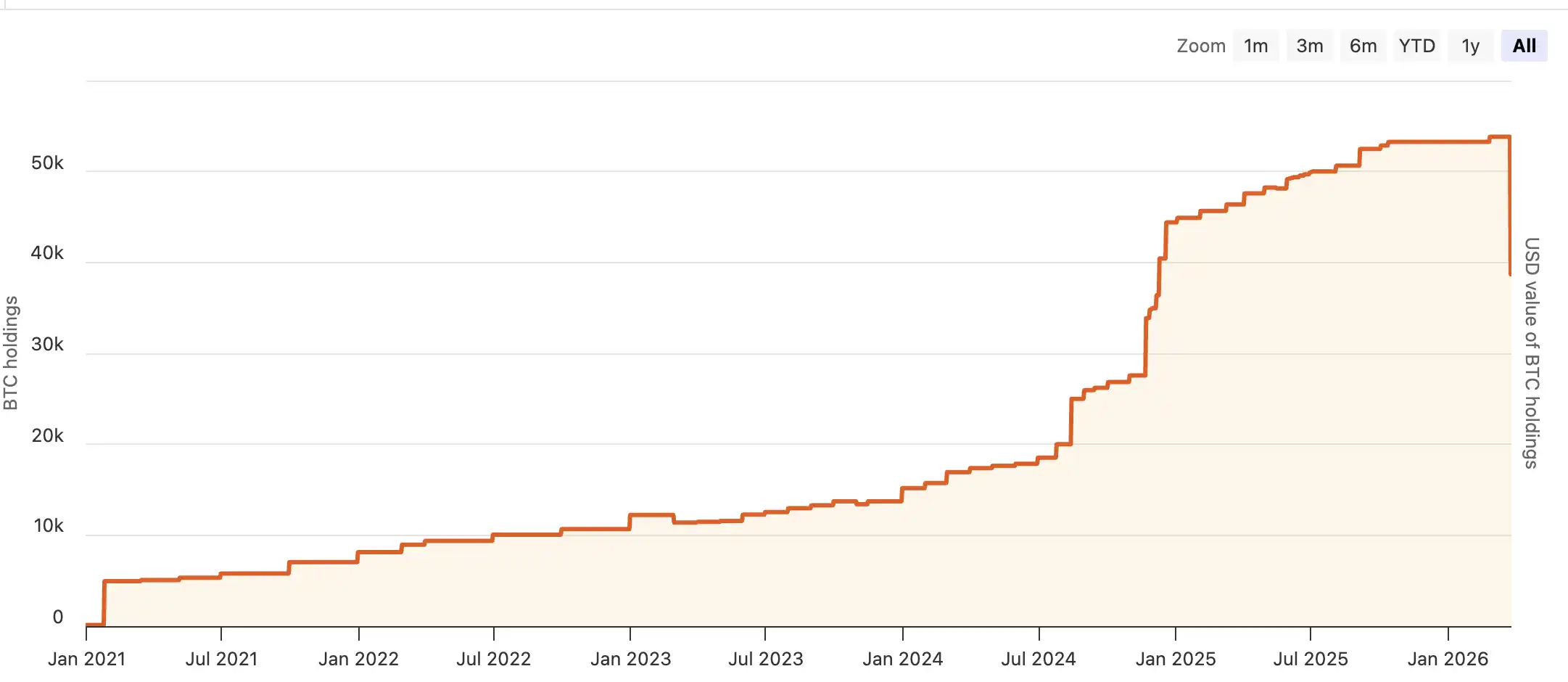
Although MARA emphasized that it does not intend to liquidate most of its Bitcoin holdings, the scale of the sell-off reflects the increasing cash pressure on mining companies, a pressure stemming from the continued downturn in Bitcoin mining operations.

According to the latest report from CoinShares, Bitcoin miners are facing severe profitability challenges, with the hash price dropping to approximately $28-30/PH/s/day in Q1 2026, hitting a new low post-halving. Meanwhile, the weighted average cash cost in Q4 2025 reached about $80,000 per coin, with roughly 15-20% of global mining machines operating at a loss. VanEck recently disclosed that the total miner balance (excluding wallets attributed to Satoshi Nakamoto) is about 684,000 BTC, a year-on-year decrease of approximately 0.5%. During the same period, about 164,000 new BTC were mined, meaning that over the past year, miners have effectively sold off all newly produced supply.
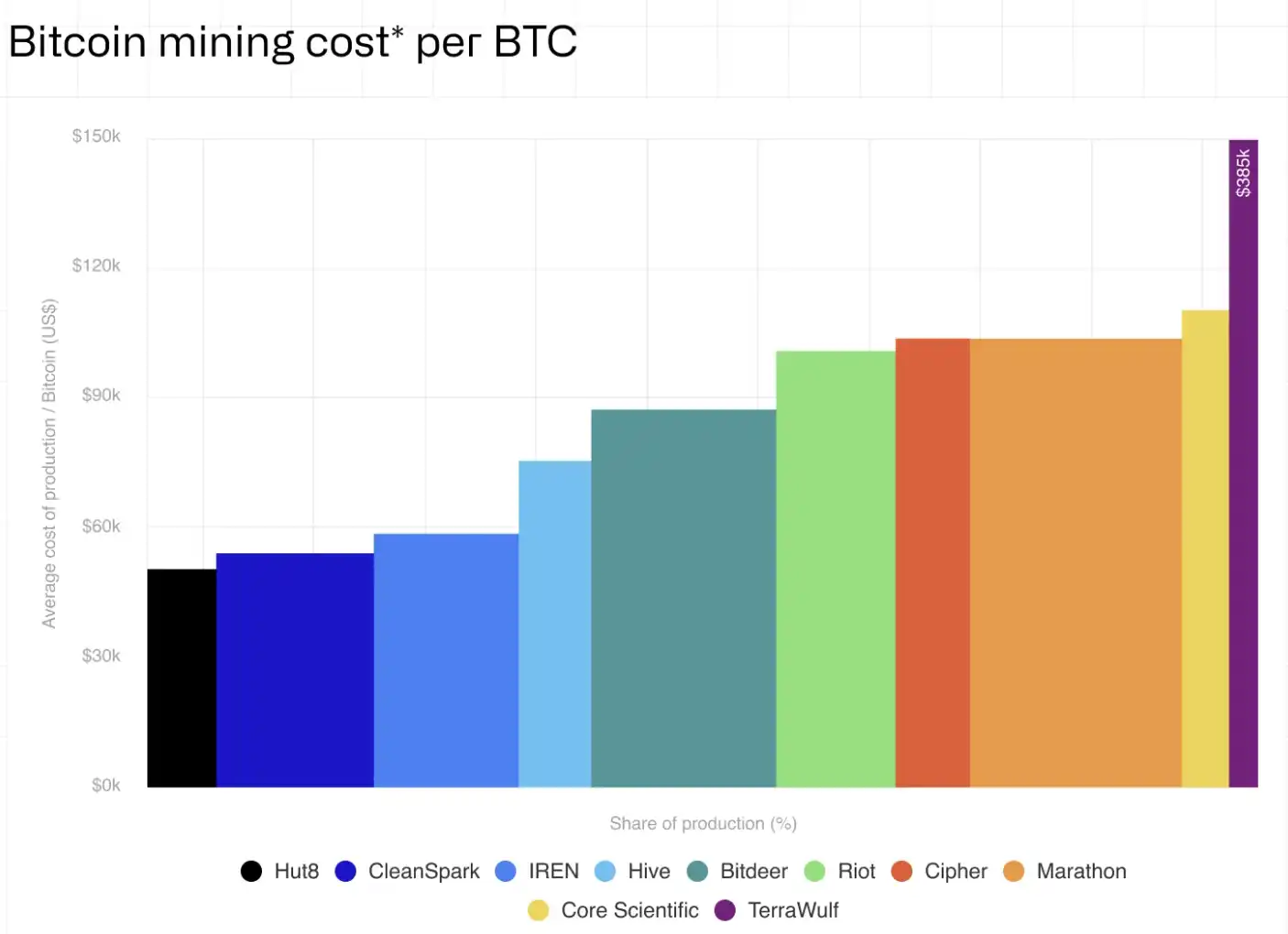
These data provide an intuitive sense of how unprofitable the mining business has become. Moreover, MARA's early expansion relied on S19 series miners, and these older machines have severely compressed profit margins. However, the company has been gradually upgrading to more efficient models over the past two years.

AI Transition Becomes a Necessity for Mining Companies

Faced with mining pressure, MARA is accelerating its AI布局 (layout).

Just this February, MARA announced a collaboration with Starwood Digital Ventures, a subsidiary of Starwood Capital Group, to convert and expand part of its U.S. sites originally used for Bitcoin mining into data centers catering to enterprise cloud and artificial intelligence clients. Starwood is one of the most representative real estate investment institutions in the U.S. and has been heavily betting on digital infrastructure in recent years, building one of the world's top private data center portfolios.

In fact, MARA CEO Fred Thiel proposed as early as 2024 that successful Bitcoin miners would integrate AI components in the long term, leveraging low-cost energy to provide services for AI data centers. He expressed hope that 50% of the company's revenue would come from non-Bitcoin mining businesses within the next four years.

That year, MARA also began its transition to AI infrastructure, utilizing the power resources and data center sites accumulated from Bitcoin mining to pivot towards high-performance computing (HPC) and AI data centers.

In January of this year, Fred Thiel stated in an interview that data centers and Bitcoin mining farms are competing for the same scarce resource: reliable electricity and its supporting infrastructure, with land, power, and operational control determining who can scale up. He recently warned that the industry is becoming increasingly brutal, and only mining companies with access to low-cost, reliable energy or those adopting new business models can survive. Bitcoin mining companies must control power resources; otherwise, they risk being eliminated before the next halving. By 2028, mining companies will face three paths: becoming power producers, being acquired by power producers, or partnering with them.

Now, major mining companies including MARA, Bitdeer, and Core Scientific are advancing AI infrastructure businesses and significantly selling off Bitcoin reserves to support this transition.

According to Coinshares, listed mining companies have collectively secured over $70 billion in AI/HPC contracts, and by the end of 2026, up to 70% of the revenue for listed mining firms could come from AI. Simultaneously, a clear divergence in valuations has emerged: mining companies with HPC contracts have an EV/NTM revenue multiple of 12.3x, while pure mining companies stand at 5.9x. The industry has bifurcated into infrastructure companies and mining companies, with vastly different prospects.

The AI transition has become a necessity for mining companies, but the high costs of transformation and hardware expansion make this new arms race expensive, forcing mining companies to liquidate their assets to alleviate short-term pressure.


Trending Cryptos

Related Questions

QWhy did Marathon Digital Holdings (MARA) sell a significant amount of Bitcoin recently?

AMarathon Digital Holdings sold 15,133 Bitcoin to raise approximately $1.1 billion. The funds are intended to strengthen its balance sheet and provide greater strategic flexibility for expanding into the digital energy and AI/HPC (High-Performance Computing) sectors.

QWhat is the current state of profitability for Bitcoin miners according to the article?

ABitcoin miners are facing severe profitability challenges. The hash price dropped to approximately $28-30/PH/s/day in Q1 2026, a post-halving low. The weighted average cash cost in Q4 2025 was about $80,000 per Bitcoin, with an estimated 15-20% of global mining machines operating at a loss.

QWhat strategic shift did MARA's CEO predict for the company's future revenue?

AMARA's CEO, Fred Thiel, stated that he hopes 50% of the company's revenue will come from non-Bitcoin mining businesses within the next four years, with a focus on leveraging its infrastructure for AI and high-performance computing data centers.

QHow are mining companies' valuations being affected by the trend toward AI transformation?

AMining companies are experiencing a valuation divide. Those with HPC (High-Performance Computing) contracts have an enterprise value to next-twelve-month (NTM) revenue multiple of 12.3x, while pure mining companies have a multiple of 5.9x. The industry is bifurcating into infrastructure companies and mining companies with different prospects.

QWhat did the article identify as the critical resource that both data centers and bitcoin mining operations are competing for?

ABoth data centers and bitcoin mining operations are competing for the same critical resource: reliable electricity and its supporting infrastructure. Control over land, power, and operational control determines which companies can scale effectively.

Related Reads

From South Korea to the United States: Blue-Collar Jobs Are Becoming Increasingly Popular, Thanks to AI

AI is reshaping the labor market's value proposition. The traditional four-year college degree is losing its appeal as a guaranteed career path, while skilled blue-collar trades like electricians, welders, and plumbers are experiencing historic demand and wage premiums. This shift is driven by dual pressures: AI's displacement of certain white-collar roles and a booming need for physical infrastructure and data center construction. Data confirms the trend. In the U.S., vocational school revenue surged, and a significant portion of recent layoffs are AI-related. Surveys show a majority of Gen Z adults plan to pursue blue-collar work, citing better job security against AI automation. Vocational education interest has exploded recently. Experts cite a psychological shift as younger generations seek tangible, AI-resistant careers and avoid high student debt. In many cases, salaries for skilled trades now match or exceed those requiring a bachelor's degree. In South Korea, semiconductor vocational high schools boast near-total employment, with graduates securing high-paying roles at companies like Samsung. The shortage is structural, exacerbated by a retiring baby boomer workforce and massive infrastructure projects. Companies like JPMorgan Chase, Meta, and Lowe's are investing heavily in training programs. However, overcoming historical stigma and a "perception gap" around trade careers remains a key challenge to closing the talent gap.

marsbit51m ago

From South Korea to the United States: Blue-Collar Jobs Are Becoming Increasingly Popular, Thanks to AI

marsbit51m ago

Qualcomm: AI Hype Subsides, When Will Smartphones Emerge from the Gloom?

Qualcomm reported its Q3 FY2026 results (ending June 2026), with revenue of $9.95B, down 4% YoY but above expectations. Gross margin declined to 53.1%, pressured by rising costs across manufacturing and memory. Key business segments showed mixed performance: Handset revenue fell 19.6% YoY to $5.09B, dragged by an 11% decline in non-Apple Android shipments and weaker high-end mix. Conversely, Automotive revenue surged 61% to $1.59B, and IoT grew 9% to $1.83B. Core operating profit dropped 41% YoY due to margin compression and higher expenses. Management's Q4 FY2026 guidance projects revenue of $9.7B-$10.5B, in line with consensus, but Non-GAAP EPS guidance of $2.05-$2.25 fell short of expectations. Amidst persistent weakness in its core handset market, Qualcomm is pursuing growth in AI, focusing on Edge AI (smartphones, PCs, automotive) and Data Center AI. Its data center strategy includes four pillars: AI accelerators (e.g., AI200), commercial CPUs (Dragonfly C1000), custom silicon, and connectivity solutions. While these initiatives initially boosted its stock, concerns over AI capital expenditure sustainability have since erased those gains. The company targets $5B in data center revenue for FY2027 and $15B for FY2029. The report concludes that with the traditional handset business still under pressure, the data center opportunity is currently viewed as a longer-term option, and a more conservative valuation based on core operations may be warranted until AI contributions materialize.

marsbit55m ago

Qualcomm: AI Hype Subsides, When Will Smartphones Emerge from the Gloom?

marsbit55m ago

From TPU to Self-Evolving Agents: How Jeff Dean Predicts the Next Step in AI

At the 2026 YC Startup School, Jeff Dean outlined his vision for AI's next phase, shifting focus from simply scaling models to building intelligent, autonomous systems. He believes AI's progress is no longer just about creating smarter models, but about integrating them into systems capable of long-term, iterative work, automated experimentation, and continuous learning. This evolution moves the competition from "who has the bigger model" to "who can best organize intelligence." Dean suggests AI capabilities are now comparable to a junior engineer, enabling the automation of complex workflows. However, the true challenge and opportunity lie in managing these AI "workers" at scale. He emphasizes the importance of **context engineering**—structuring tools, memory, and feedback loops—over raw model power. For startups, this means building deep expertise in niche domains where general models currently fail (near 0-1% success rates), leveraging proprietary data, specialized tools, and domain-specific evaluators. A recurring theme is re-examining fundamental constraints. Dean's past work, like moving Google's search index to memory or creating the TPU, stemmed from questioning outdated assumptions about hardware and cost. He sees similar inflection points today, particularly in **specialized inference hardware** to drastically reduce latency and energy consumption for real-time Agent operation. Notably, he points out that in modern AI systems, the dominant cost is often not computation but **data movement**. Reliable, long-running Agents require robust system design, borrowing concepts from distributed computing like checkpointing, state management, and parallel exploration to handle failures and maintain progress over days or weeks. As AI automates execution, the scarcest human skills will shift to **defining clear specifications**, **judging what problems are worth solving** (taste), and designing effective feedback loops. Ultimately, Dean's framework prioritizes understanding the problem deeply, identifying the true bottlenecks, and systematically building closed-loop systems where AI can not only perform tasks but also improve AI itself.

marsbit56m ago

From TPU to Self-Evolving Agents: How Jeff Dean Predicts the Next Step in AI

marsbit56m ago

Trading

Spot

Hot Articles

What is $BITCOIN

DIGITAL GOLD ($BITCOIN): A Comprehensive Analysis Introduction to DIGITAL GOLD ($BITCOIN) DIGITAL GOLD ($BITCOIN) is a blockchain-based project operating on the Solana network, which aims to combine the characteristics of traditional precious metals with the innovation of decentralized technologies. While it shares a name with Bitcoin, often referred to as “digital gold” due to its perception as a store of value, DIGITAL GOLD is a separate token designed to create a unique ecosystem within the Web3 landscape. Its goal is to position itself as a viable alternative digital asset, although specifics regarding its applications and functionalities are still developing. What is DIGITAL GOLD ($BITCOIN)? DIGITAL GOLD ($BITCOIN) is a cryptocurrency token explicitly designed for use on the Solana blockchain. In contrast to Bitcoin, which provides a widely recognized value storage role, this token appears to focus on broader applications and characteristics. Notable aspects include: Blockchain Infrastructure: The token is built on the Solana blockchain, known for its capacity to handle high-speed and low-cost transactions. Supply Dynamics: DIGITAL GOLD has a maximum supply capped at 100 quadrillion tokens (100P $BITCOIN), although details regarding its circulating supply are currently undisclosed. Utility: While precise functionalities are not explicitly outlined, there are indications that the token could be utilized for various applications, potentially involving decentralized applications (dApps) or asset tokenization strategies. Who is the Creator of DIGITAL GOLD ($BITCOIN)? At present, the identity of the creators and development team behind DIGITAL GOLD ($BITCOIN) remains unknown. This situation is typical among many innovative projects within the blockchain space, particularly those aligning with decentralized finance and meme coin phenomena. While such anonymity may foster a community-driven culture, it intensifies concerns about governance and accountability. Who are the Investors of DIGITAL GOLD ($BITCOIN)? The available information indicates that DIGITAL GOLD ($BITCOIN) does not have any known institutional backers or prominent venture capital investments. The project seems to operate on a peer-to-peer model focused on community support and adoption rather than traditional funding routes. Its activity and liquidity are primarily situated on decentralized exchanges (DEXs), such as PumpSwap, rather than established centralized trading platforms, further highlighting its grassroots approach. How DIGITAL GOLD ($BITCOIN) Works The operational mechanics of DIGITAL GOLD ($BITCOIN) can be elaborated on based on its blockchain design and network attributes: Consensus Mechanism: By leveraging Solana’s unique proof-of-history (PoH) combined with a proof-of-stake (PoS) model, the project ensures efficient transaction validation contributing to the network's high performance. Tokenomics: While specific deflationary mechanisms have not been extensively detailed, the vast maximum token supply implies that it may cater to microtransactions or niche use cases that are still to be defined. Interoperability: There exists the potential for integration with Solana’s broader ecosystem, including various decentralized finance (DeFi) platforms. However, the details regarding specific integrations remain unspecified. Timeline of Key Events Here is a timeline that highlights significant milestones concerning DIGITAL GOLD ($BITCOIN): 2023: The initial deployment of the token occurs on the Solana blockchain, marked by its contract address. 2024: DIGITAL GOLD gains visibility as it becomes available for trading on decentralized exchanges like PumpSwap, allowing users to trade it against SOL. 2025: The project witnesses sporadic trading activity and potential interest in community-led engagements, although no noteworthy partnerships or technical advancements have been documented as of yet. Critical Analysis Strengths Scalability: The underlying Solana infrastructure supports high transaction volumes, which could enhance the utility of $BITCOIN in various transaction scenarios. Accessibility: The potential low trading price per token could attract retail investors, facilitating wider participation due to fractional ownership opportunities. Risks Lack of Transparency: The absence of publicly known backers, developers, or an audit process may yield skepticism regarding the project's sustainability and trustworthiness. Market Volatility: The trading activity is heavily reliant on speculative behavior, which can result in significant price volatility and uncertainty for investors. Conclusion DIGITAL GOLD ($BITCOIN) emerges as an intriguing yet ambiguous project within the rapidly evolving Solana ecosystem. While it attempts to leverage the “digital gold” narrative, its departure from Bitcoin's established role as a store of value underscores the need for a clearer differentiation of its intended utility and governance structure. Future acceptance and adoption will likely depend on addressing the current opacity and defining its operational and economic strategies more explicitly. Note: This report encompasses synthesised information available as of October 2023, and developments may have transpired beyond the research period.

1.4k Total ViewsPublished 2025.05.13Updated 2025.05.13

What is $BITCOIN

Discussions

Welcome to the HTX Community. Here, you can stay informed about the latest platform developments and gain access to professional market insights. Users' opinions on the price of BTC (BTC) are presented below.

活动图片














