Bitcoin ETF Two Years On: The Financialization Journey from Breakthrough to Convergence

marsbitPublished on 2026-01-12Last updated on 2026-01-12

Abstract

Two years after the launch of Bitcoin spot ETFs, the financialization of Bitcoin has accelerated significantly, with total assets under management (AUM) reaching $124.85 billion. The top five ETFs—IBIT, GBTC, FBTC, ARKB, and BITB—account for 96.6% of the market, highlighting strong institutional dominance. Trading volume surpassed $2 trillion, with the second trillion taking only 8 months compared to 16 months for the first. Bitcoin ETFs have significantly outperformed Ethereum ETFs in net inflows, reinforcing Bitcoin’s leading position in the crypto ETF market. The approval of Bitcoin spot ETFs in January 2024 marked a milestone after over a decade of regulatory scrutiny, reflecting maturation in market infrastructure, custody, and investor protection frameworks. Unlike the first gold ETF, which took years to gain traction, Bitcoin ETFs achieved rapid adoption, accelerating liquidity and institutional participation. ETFs have simplified Bitcoin investment, enabling regulated, accessible exposure without direct asset management. Major institutions like BlackRock and Fidelity have facilitated broader acceptance, integrating Bitcoin into mainstream portfolios and retirement plans. However, financialization introduces challenges, including Bitcoin’s inherent volatility and ETF management fees. Beyond price speculation, alternative participation methods like cloud mining offer cost-stable Bitcoin acquisition and support network infrastructure. In summary, Bitcoin ETFs have fa...

In January 2024, the spot Bitcoin ETF was officially approved.

For the crypto industry, this was a milestone moment that had been awaited for over a decade, and the news quickly captured the focus of global financial markets.

Two years have passed in the blink of an eye, and the spot Bitcoin ETF is no longer a novel topic. A set of solid data is quietly reshaping the market's understanding of the boundaries of this asset class.

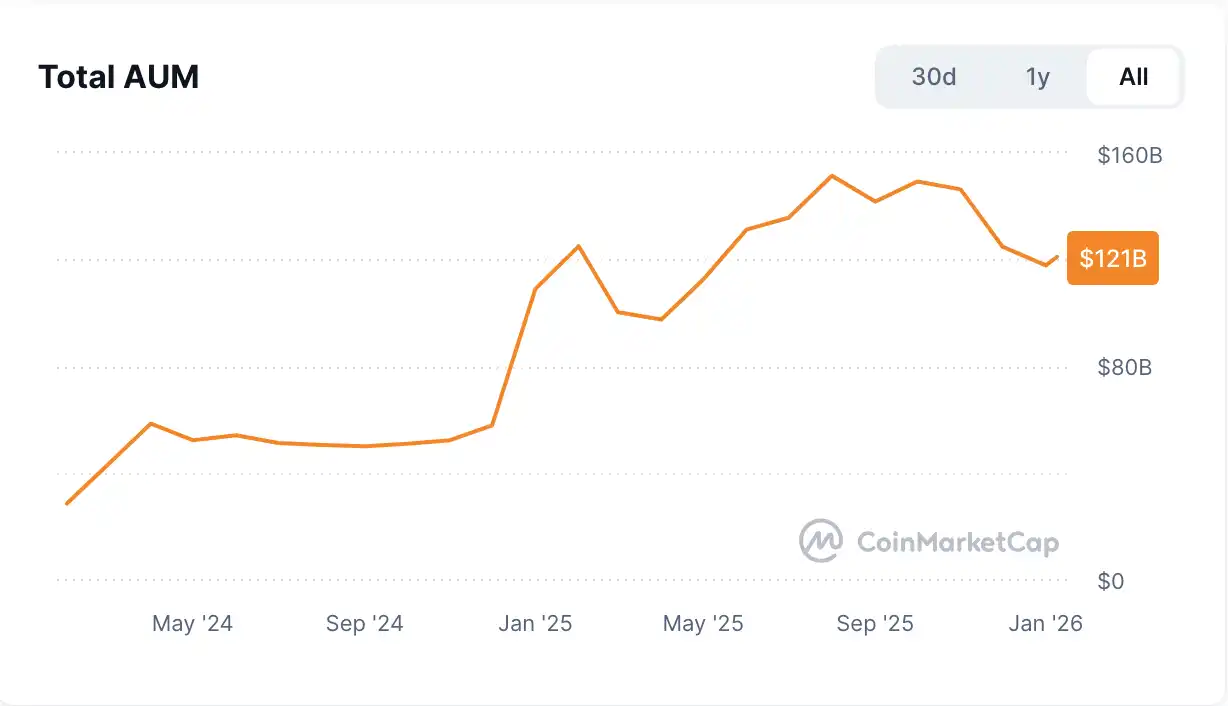
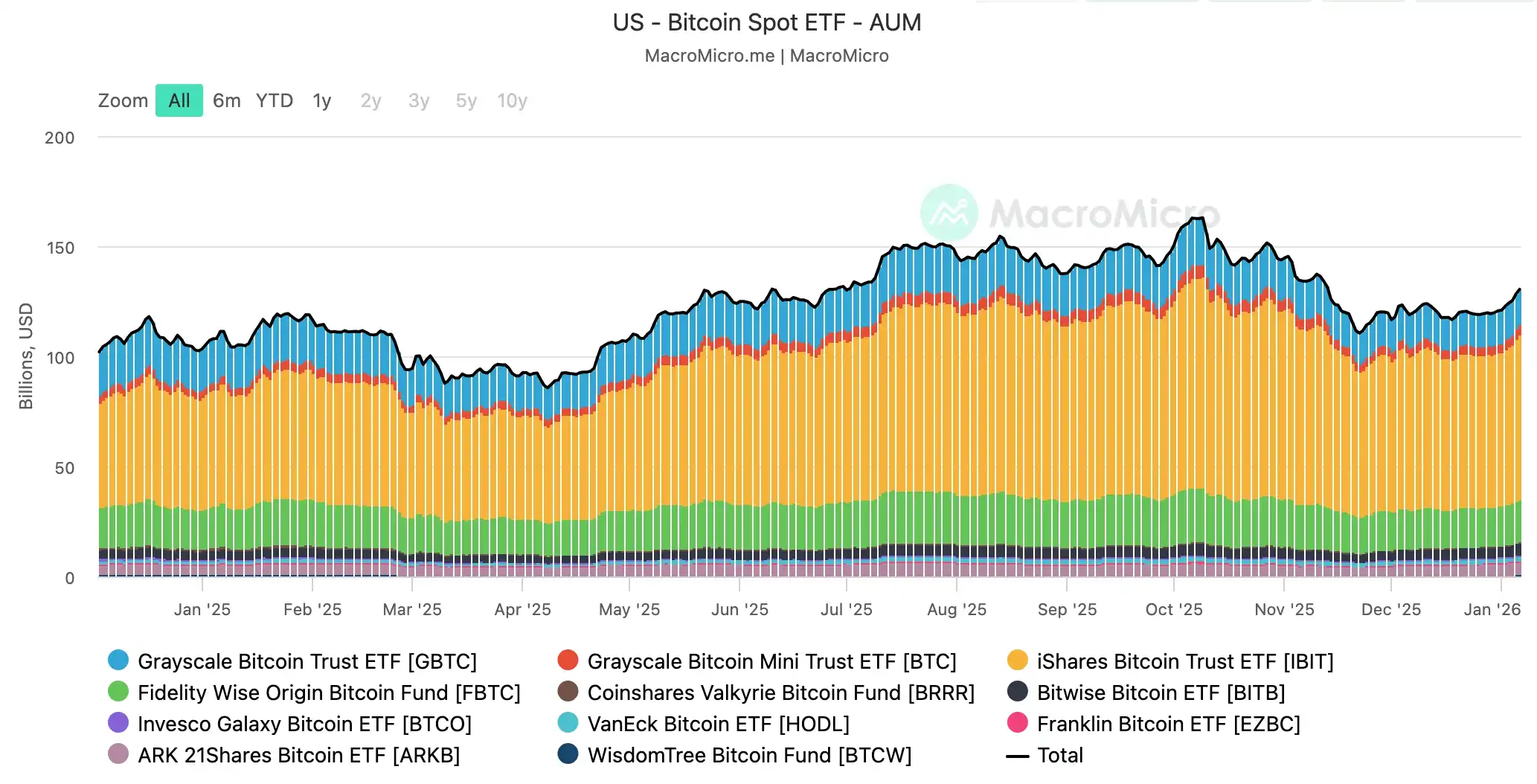
As of now, the total assets under management (AUM) of Bitcoin ETFs have climbed to $124.5 billion. The concentration is extremely significant: five products—IBIT ($74.11 billion), GBTC ($16.4 billion), FBTC ($18.89 billion), ARKB ($5.81 billion), and BITB ($5.35 billion)—collectively manage $120.56 billion in assets, accounting for 96.6% of the total market, clearly outlining an institutionally-dominated market structure.

The trading activity has also exceeded expectations. According to data from The Block, the cumulative trading volume of U.S. spot cryptocurrency ETFs officially surpassed $2 trillion on January 2nd. Looking back at this progression: it took a full 16 months to first reach $1 trillion on May 6th, 2025; but it took only 8 months to go from $1 trillion to $2 trillion, with the growth rate doubling. Among them, BlackRock's IBIT remains firmly in the top spot, accounting for a whopping 70% of the trading volume.

The divergence in fund flows is also very clear. In 2025, U.S. spot Bitcoin ETFs accounted for the majority of the net inflows in the cryptocurrency ETF market, performing far better than Ethereum ETFs, further solidifying Bitcoin's dominant position in the crypto ETF space.

If the approval of the Bitcoin ETF symbolized Bitcoin officially knocking on the door of the mainstream financial system; then these figures today prove that it has become a structurally significant allocation asset in institutional investment portfolios. Behind these numbers is not just a leap in scale, but also institutional-level recognition: Bitcoin is integrating into the常规 operational framework of the global financial system at an unprecedented speed.
History of the Bitcoin ETF: A Breakthrough That Was No Accident

The launch of the spot Bitcoin ETF was not a sudden act of regulatory goodwill, but the result of a long-term game.

Before 2024, the core concerns of regulators regarding Bitcoin ETF applications and rejections always focused on three points: whether the underlying market was mature and could effectively prevent manipulation; whether the asset custody, clearing, and audit mechanisms were reliable; and whether the investor protection system was complete. These issues were not about judging Bitcoin's intrinsic value, but were institutional thresholds that any asset must cross to be incorporated into the formal financial product system.

Tracing the timeline, the demand for a Bitcoin ETF can be traced back to 2013. At that time, Bitcoin's price began to enter the public eye, and some investors and brokers found it difficult for ordinary investors to access this emerging asset within a compliant framework, leading to the earliest conceptions of a Bitcoin ETF. However, for many years thereafter, the U.S. Securities and Exchange Commission (SEC) consistently rejected related proposals, citing reasons revolving around the three core issues of market manipulation risk, custody security, and information transparency.

It wasn't until October 2021 that the SEC first relented, approving the ProShares Bitcoin Strategy ETF (BITO). But this product was based on futures contracts, not a true spot ETF, and was more like a regulatory test.

The real turning point occurred on January 10, 2024. The SEC approved 10 spot Bitcoin ETFs at once, including those from BlackRock, Fidelity, Grayscale, Ark Invest, and Invesco. This decision marked the official entry of U.S. crypto asset investment into the spot ETF era and became the most important institutional link between the traditional financial system and crypto assets.

The arrival of this moment was no accident. By 2024, the infrastructure around Bitcoin, including trading systems, custody mechanisms, compliance frameworks, and information disclosure standards, had developed to a stage acceptable to regulators. The emergence of the ETF was essentially the financial system's recognition and response to this market maturity.

From a longer-cycle perspective, this is by no means the end point of Bitcoin's financialization, but a clearly visible, officially confirmed阶段性 node in its financialization process.

Beyond Gold: Bitcoin ETF Presses the "Fast-Forward" Button

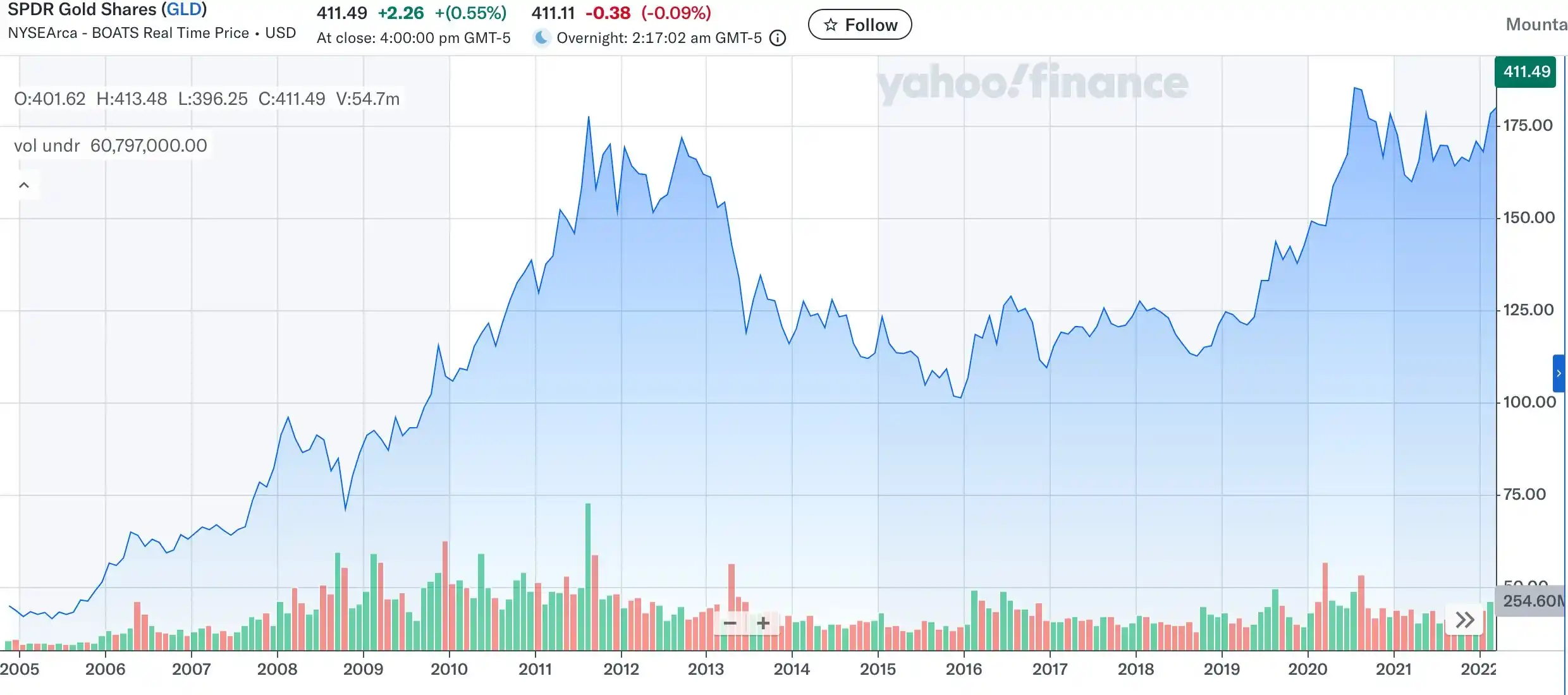
In 2004, the SPDR Gold Trust ETF (GLD) was approved, becoming the first spot gold ETF in history. At that time, the global market capitalization of gold was approximately $1 to $2 trillion. Subsequently, driven by ETFs and related financial instruments, gold's financialization process began to accelerate. By 2025, the global AUM of gold ETFs had climbed to $559 billion, and the average daily trading volume of the gold market reached about $361 billion, both hitting record highs.

With this history as a backdrop, when the spot Bitcoin ETF was approved in 2024, many market participants naturally compared the two. Everyone had a similar question in mind: could the ETF once again play the role of a "catalyst," injecting unprecedented liquidity and vitality into the Bitcoin market?

Now, two years later, the Bitcoin ETF has given a clear answer.

According to data from Chainalysis, the pace of fund flows into Bitcoin ETFs has already surpassed the early-stage inflow speed of the first *net* gold ETF (inflation-adjusted) launched in 2005.

After the launch of the spot gold ETF, not only did its own scale rise rapidly, but it also spurred activity across the entire gold ecosystem: the trading volumes of spot, futures, options, and even various derivative markets achieved quantum growth in the following years.

This history provides a vivid reference for understanding the potential impact of the Bitcoin ETF. It confirms that ETFs, as a financial medium, inherently possess a kind of "leverage effect," capable of rapidly increasing an asset's liquidity and attracting broader market participation.

Therefore, the Bitcoin ETF is not simply retreading gold's old path. It has demonstrated a faster market acceptance rate in a shorter time and received a more enthusiastic response from capital.
The Significance of ETFs: Accelerators of the Financialization Process

Looking at the development over two years, spot Bitcoin ETFs have promoted Bitcoin's financialization process on multiple levels.

First, the method of participation has been institutionalized.

Spot Bitcoin ETFs provide investors with a regulated, standardized participation path, significantly reducing technical and operational barriers. Investors can participate in its price fluctuations without directly holding, storing, or managing Bitcoin, making Bitcoin investment more aligned with the usage habits of mainstream financial markets.

Second, the investment process has been greatly simplified.

Investors can buy and sell Bitcoin ETF shares like stocks or other ETFs, using market or limit orders, improving both convenience and security, thereby making it easier for Bitcoin to be incorporated into常规 investment portfolio systems.

Third, mainstream acceptance of Bitcoin as an asset class continues to increase.

Spot Bitcoin ETFs have significantly enhanced market recognition of Bitcoin as an independent asset class, gradually moving it from within the crypto market into the mainstream asset allocation and wealth management discussion framework, and beginning to appear in some long-term investment and retirement planning scenarios.

Fourth, institutional capital and global market participation have been systematically opened up.

The participation of global top asset management institutions like BlackRock and Fidelity has turned Bitcoin ETFs from symbolic compliant products into important entry points for institutional funds into the crypto market. Meanwhile, the successive advancement of spot Bitcoin ETFs in markets like the U.S. and Hong Kong also indicates that this financialization process is showing a trend of global diffusion.

Structural Challenges and Diversified Participation Paths Under Accelerated Financialization

The rapid development of Bitcoin ETFs has significantly accelerated Bitcoin's financialization process, but it has also simultaneously amplified some long-standing structural challenges.

First, from a market perspective, spot Bitcoin ETFs are still directly exposed to Bitcoin's inherent high volatility, and rapid price changes can lead to short-term valuation fluctuations;同时, the management fees and operational costs of ETFs will also affect the investment return structure in the long run.

More importantly, the high degree of financialization represented by ETFs is itself a double-edged sword. On one hand, it significantly amplifies Bitcoin's market liquidity and participation scale; on the other hand, it can easily cause the market to focus more on price performance at the financial product level, thereby overlooking the fact that the Bitcoin network itself still requires continuous investment in computing power and infrastructure construction to maintain its long-term security and stability.

From an investor's perspective, ways to participate in Bitcoin are not limited to price-level trading and holding. Besides obtaining price returns through spot, spot ETFs, or trading strategies, cloud mining offers another approach: participating in Bitcoin through a path of locking in costs and stabilizing output.

Through cloud mining, investors can lock in hashrate and costs in advance, obtaining relatively stable Bitcoin output over a certain period. This model essentially equates to locking in the cost of acquiring Bitcoin for a future period, allowing investors to establish a more controllable cost structure and return expectations in a highly volatile market, and also providing another potential path to outperform the spot price over a cycle.

同时, this method also allows individual capital to continue participating in the Bitcoin network's hashrate system, rather than staying only at the level of financial price speculation. Cloud mining is both a way to acquire Bitcoin and a form of continuous support for the network infrastructure. Against the backdrop of deepening financialization, it preserves a richer, more diverse participation structure for the market.

As Bitcoin continues to integrate into the global financial system, different levels and forms of participation will together form an important foundation for its long-term operation and development.
Conclusion

Two years is enough for a new financial product to undergo a complete market test. This journey of the spot Bitcoin ETF clearly tells us: the speed at which Bitcoin is entering the mainstream financial track is much faster than most people initially imagined.

But this is clearly not the终点. The ETF is more like a lit beacon, making Bitcoin's financialization path clear from模糊, and预示着 that more institutionalized forms will appear ahead.

In the future, Bitcoin will continue to evolve between financial markets, technological systems, and infrastructure. Different forms of participation will共同塑造 its long-term position in the global financial system.

Two years is just the prologue. This journey is still extending, and the new pages truly worth writing may have just been turned.


Trending Cryptos

Related Reads

My Coding Betting Dashboard is Profiting, but Polymarket is Truly Not a Good Place for 'Arbitrage'

The author built a custom monitoring dashboard for Polymarket, a prediction market platform, and tested it with $1,600, achieving over 30% returns. However, the core argument is that Polymarket is not a good venue for traditional arbitrage. The dashboard has two main sections: a "Portfolio Dashboard" for tracking active positions with key metrics like total capital, P&L, and a risk-control module using a tier system (T1, T2, T3), and an "Opportunity Watchlist" for monitoring markets. The article details a critical structural trap in binary markets: a bet with a high perceived probability of success still carries a 100% loss risk if wrong. The author's T1/T2/T3 system is designed to manage this by limiting position sizes based on conviction and time horizon, emphasizing that high confidence should not equal high concentration. A key insight is the danger of "pseudo-diversification"—betting on different markets driven by the same underlying variable. The author concludes that Polymarket offers few true low-risk, arbitrage opportunities. It is instead a high-risk environment where wins can create a false sense of mastery, leading to large losses. The platform is better viewed as a training ground for honing judgment through disciplined, framework-driven betting rather than a reliable income source. The tools help transform intuition into structured, rule-based decisions to mitigate the risk of catastrophic errors.

marsbit3h ago

My Coding Betting Dashboard is Profiting, but Polymarket is Truly Not a Good Place for 'Arbitrage'

marsbit3h ago

WeChat AI Card Hands-On Guide: Has the AI Shopping Era Arrived?

**"WeChat AI Card" Practical Test Guide: Has the Era of AI Shopping Arrived?** WeChat has officially launched the "AI Exclusive Card," a feature integrated into its Workbuddy AI assistant. This card is designed to handle payments for AI-initiated purchases. Our hands-on test reveals it's not yet a tool for fully autonomous AI shopping, but rather a controlled payment layer for AI agents. The AI Card functions as an isolated sub-wallet within WeChat Pay. Users must bind the card and transfer funds into it from their main wallet. Crucially, every transaction requires explicit user confirmation via smartphone scan; AI cannot spend autonomously. Currently accessible through the Workbuddy agent, the card targets specific digital consumption scenarios: purchasing paid content (reports, data), calling paid APIs/tools, and subscribing to services. Its design prioritizes security and control by separating funds and mandating approval for each payment. We tested a real-world scenario: ordering bubble tea via Workbuddy using a "Meituan Life Assistant" skill. The process encountered multiple hurdles: high "skill" usage costs (exceeding daily free credits), and most importantly, while a payment was successfully initiated, the AI purchased an incorrect product (a mismatched group-buy coupon instead of the desired drink). This highlights the current limitation: the **AI Card only solves the payment step**. The broader challenge lies in the **AI agent's execution chain**—accurately understanding intent, navigating third-party platforms, selecting the right product, and ensuring proper fulfillment. The payment succeeded, but the purchase failed to meet the user's need. In conclusion, the WeChat AI Exclusive Card is a cautious, early-step experiment in AI commerce. It provides a secure, user-controlled payment method for agent interactions but is not yet capable of reliable, end-to-end complex purchases. For now, it's best used for low-value, low-risk digital services with careful user verification at each step. The vision of AI handling complete shopping tasks remains a work in progress.

marsbit5h ago

WeChat AI Card Hands-On Guide: Has the AI Shopping Era Arrived?

marsbit5h ago

Deconstructing Notion's Growth: From a Note-taking Tool to 100 Million Users—How Notion Built a Triple Growth Flywheel Through Product, Templates, and Community

Notion's growth from a niche note-taking tool to a platform with 100 million users is powered by three interconnected flywheels: Product-Led Growth (PLG), a Template Economy, and Community-Driven Growth. First, Notion's PLG strategy relies on a highly flexible, "plastic" product that users can adapt to countless personal and team workflows. Its freemium model lowers the barrier to entry, while features like page sharing and collaboration drive organic, usage-based viral growth as users naturally invite others. Second, the Template Economy solves the "blank page" problem. Templates, created by both Notion and its community, transform abstract product capabilities into concrete, copyable solutions for specific scenarios (e.g., project management, content calendars). This dramatically lowers activation costs for new users and fuels SEO-driven discovery. Third, a vibrant Community acts as a distributed growth engine. Users and official Ambassadors create tutorials, share use cases, and host local events. This community not only educates users but also fosters a sense of identity around pursuing "better ways of working," strengthening loyalty and enabling global, low-cost expansion. Together, these flywheels create a self-reinforcing ecosystem: a great product attracts users who create templates and community content, which in turn attracts more users and deepens engagement. This system allowed Notion to scale from individuals to teams and enterprises through a bottom-up adoption path. Looking ahead, AI integration promises to accelerate these flywheels further by making templates smarter and the platform a potential AI-native work operating system. Ultimately, Notion's defensible advantage is not just its features, but this deeply entrenched network of user assets, creators, and community trust.

marsbit5h ago

Deconstructing Notion's Growth: From a Note-taking Tool to 100 Million Users—How Notion Built a Triple Growth Flywheel Through Product, Templates, and Community

marsbit5h ago

$10 Billion, Qualcomm to Acquire Chip Legend Jim Keller's Company

Global mobile chip giant Qualcomm is in advanced talks to acquire AI chip startup Tenstorrent in a deal valued between $8-10 billion, according to media reports. This potential acquisition would be one of the largest in the AI chip sector in recent years. Tenstorrent, led by legendary chip architect Jim Keller, has gained prominence for its RISC-V architecture and AI accelerator designs. The move highlights Qualcomm's strategic push to diversify beyond its core smartphone chip business. As the smartphone market matures, Qualcomm is aggressively targeting growth in automotive, data center, and cloud AI. Acquiring Tenstorrent would allow Qualcomm to rapidly enter the high-end AI computing market, bypassing lengthy in-house development cycles. Tenstorrent's cost-effective system architecture, which avoids expensive HBM memory and relies on standard Ethernet for clustering, offers a potential alternative to Nvidia's costly solutions. Furthermore, Tenstorrent's high-performance RISC-V CPU technology and its focus on the automotive and edge computing segments align with Qualcomm's strategic goals, including its "Snapdragon Digital Chassis" platform. Despite the strategic rationale, the high valuation has sparked some investor caution. The successful integration of Tenstorrent's open-source culture and independent team into Qualcomm's organization, along with the commercialization of its technology, remains a key challenge.

marsbit6h ago

$10 Billion, Qualcomm to Acquire Chip Legend Jim Keller's Company

marsbit6h ago

Trading

Spot
Futures

Hot Articles

What is $BITCOIN

DIGITAL GOLD ($BITCOIN): A Comprehensive Analysis Introduction to DIGITAL GOLD ($BITCOIN) DIGITAL GOLD ($BITCOIN) is a blockchain-based project operating on the Solana network, which aims to combine the characteristics of traditional precious metals with the innovation of decentralized technologies. While it shares a name with Bitcoin, often referred to as “digital gold” due to its perception as a store of value, DIGITAL GOLD is a separate token designed to create a unique ecosystem within the Web3 landscape. Its goal is to position itself as a viable alternative digital asset, although specifics regarding its applications and functionalities are still developing. What is DIGITAL GOLD ($BITCOIN)? DIGITAL GOLD ($BITCOIN) is a cryptocurrency token explicitly designed for use on the Solana blockchain. In contrast to Bitcoin, which provides a widely recognized value storage role, this token appears to focus on broader applications and characteristics. Notable aspects include: Blockchain Infrastructure: The token is built on the Solana blockchain, known for its capacity to handle high-speed and low-cost transactions. Supply Dynamics: DIGITAL GOLD has a maximum supply capped at 100 quadrillion tokens (100P $BITCOIN), although details regarding its circulating supply are currently undisclosed. Utility: While precise functionalities are not explicitly outlined, there are indications that the token could be utilized for various applications, potentially involving decentralized applications (dApps) or asset tokenization strategies. Who is the Creator of DIGITAL GOLD ($BITCOIN)? At present, the identity of the creators and development team behind DIGITAL GOLD ($BITCOIN) remains unknown. This situation is typical among many innovative projects within the blockchain space, particularly those aligning with decentralized finance and meme coin phenomena. While such anonymity may foster a community-driven culture, it intensifies concerns about governance and accountability. Who are the Investors of DIGITAL GOLD ($BITCOIN)? The available information indicates that DIGITAL GOLD ($BITCOIN) does not have any known institutional backers or prominent venture capital investments. The project seems to operate on a peer-to-peer model focused on community support and adoption rather than traditional funding routes. Its activity and liquidity are primarily situated on decentralized exchanges (DEXs), such as PumpSwap, rather than established centralized trading platforms, further highlighting its grassroots approach. How DIGITAL GOLD ($BITCOIN) Works The operational mechanics of DIGITAL GOLD ($BITCOIN) can be elaborated on based on its blockchain design and network attributes: Consensus Mechanism: By leveraging Solana’s unique proof-of-history (PoH) combined with a proof-of-stake (PoS) model, the project ensures efficient transaction validation contributing to the network's high performance. Tokenomics: While specific deflationary mechanisms have not been extensively detailed, the vast maximum token supply implies that it may cater to microtransactions or niche use cases that are still to be defined. Interoperability: There exists the potential for integration with Solana’s broader ecosystem, including various decentralized finance (DeFi) platforms. However, the details regarding specific integrations remain unspecified. Timeline of Key Events Here is a timeline that highlights significant milestones concerning DIGITAL GOLD ($BITCOIN): 2023: The initial deployment of the token occurs on the Solana blockchain, marked by its contract address. 2024: DIGITAL GOLD gains visibility as it becomes available for trading on decentralized exchanges like PumpSwap, allowing users to trade it against SOL. 2025: The project witnesses sporadic trading activity and potential interest in community-led engagements, although no noteworthy partnerships or technical advancements have been documented as of yet. Critical Analysis Strengths Scalability: The underlying Solana infrastructure supports high transaction volumes, which could enhance the utility of $BITCOIN in various transaction scenarios. Accessibility: The potential low trading price per token could attract retail investors, facilitating wider participation due to fractional ownership opportunities. Risks Lack of Transparency: The absence of publicly known backers, developers, or an audit process may yield skepticism regarding the project's sustainability and trustworthiness. Market Volatility: The trading activity is heavily reliant on speculative behavior, which can result in significant price volatility and uncertainty for investors. Conclusion DIGITAL GOLD ($BITCOIN) emerges as an intriguing yet ambiguous project within the rapidly evolving Solana ecosystem. While it attempts to leverage the “digital gold” narrative, its departure from Bitcoin's established role as a store of value underscores the need for a clearer differentiation of its intended utility and governance structure. Future acceptance and adoption will likely depend on addressing the current opacity and defining its operational and economic strategies more explicitly. Note: This report encompasses synthesised information available as of October 2023, and developments may have transpired beyond the research period.

392 Total ViewsPublished 2025.05.13Updated 2025.05.13

What is $BITCOIN

Discussions

Welcome to the HTX Community. Here, you can stay informed about the latest platform developments and gain access to professional market insights. Users' opinions on the price of BTC (BTC) are presented below.

活动图片