Bit Digital Saw Ethereum’s Strategic Value Before Institutions Caught On

bitcoinistPublished on 2026-05-30Last updated on 2026-05-30

Abstract

Bit Digital recognized Ethereum's strategic value as a core balance sheet asset years before institutional consensus caught on. The company based its thesis on Ethereum's expanding role as the primary settlement layer for decentralized finance, stablecoins, and tokenized real-world assets (RWAs), even while its price remained compressed. Bit Digital has been building its ETH position over multiple cycles, viewing market weakness as a strategic accumulation opportunity. This view is supported by data showing large holders (with 100,000+ ETH) have increased their collective balance to a 9-week high, now holding roughly 22% of the circulating supply. The next phase of tokenization is expected to be defined by credible, compliant settlement infrastructure—a role Ethereum is increasingly dominating—rather than by speed or market narratives.

In a market where most institutions focus on crypto, Bit Digital appears to have taken a more forward-looking approach by recognizing Ethereum’s strategic importance early on. While many players were still treating ETH as a secondary asset, Bit Digital began positioning itself around ETH’s long-term potential as the backbone of decentralized finance, staking, and tokenized economies.

Ethereum’s Role As A Settlement Layer Continues To Expand

In a recent post on X, Bit Digital revealed that the company recognized Ethereum as a core strategic balance sheet asset years before the institutional consensus broadly embraced its role as the settlement infrastructure rail for crypto. Bit Digital anchored its thesis to a simple dynamic that usage and adoption continue to expand, while the price remains compressed.

As stablecoin settlement, tokenization, and on-chain financial activity continue to scale, ETH’s real-world usage has steadily increased regardless of market volatility. When the infrastructure layer individuals have been steadily accumulating becomes cheaper, and real-world utility continues to grow, the capital allocation decision becomes clearer.

The firm emphasized that its stack position has been diligently built over multiple market cycles, and its recent ETH purchase is a continuation of that strategic asset framework. Bit Digital also explains that it was early to recognize ETH as an asset suitable for a public company’s balance sheet, and that the company’s recent ETH purchase is a continuation of a long-standing thesis at a price the market made available.
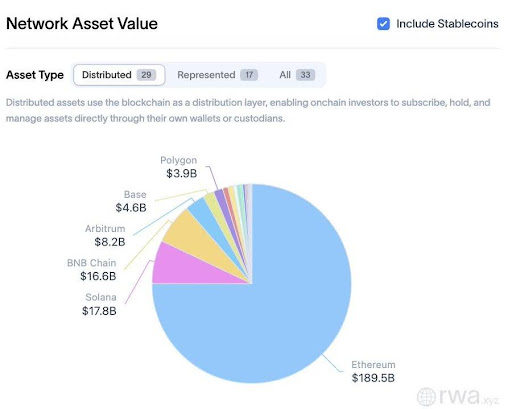
Source: Chart from Bit Digital on X

One of the strongest signals emerging from the real-world asset (RWA) market is the growing dominance of Ethereum as the primary settlement layer for the majority of tokenized financial assets. According to Pharos post, this trend is not being driven by institutions suddenly becoming more crypto-native. Instead, capital markets fundamentally value neutral settlement layers, credible infrastructure, and composability across financial applications.

Meanwhile, as the RWAs sector continues to scale, chains will increasingly compete on settlement credibility rather than community culture or market narratives. The next phase of tokenization will not be defined by who can launch assets fastest, but by who can support compliant and globally coordinated financial activity that could emerge at scale.

Large ETH Holders Continue Accumulating During Market Weakness

Ethereum is showing strong signs of quiet accumulation by large holders, a pattern often associated with early-stage bullish positioning. Crypto analyst Lucky has noted that the data reveal that wallets holding 100,000 ETH have increased their collective balance to around 17.41 million ETH, marking a 9-week high and accounting for roughly 22% of the circulating supply.

This type of behavior is what long-term investors watch closely because it reflects strategic accumulation during periods of price weakness, which is a very strong bullish setup for ETH.

ETH trading at $2,017 on the 1D chart | Source: ETHUSDT on Tradingview.com

Related Questions

QWhat differentiated Bit Digital's approach to Ethereum compared to most institutions initially?

ABit Digital recognized Ethereum's strategic importance as a core balance sheet asset and its role as the backbone for decentralized finance, staking, and tokenized economies early on, while most other institutions initially treated it as a secondary asset.

QAccording to Bit Digital, what key dynamic supported their thesis for accumulating ETH?

ABit Digital anchored its thesis to the dynamic that Ethereum's real-world usage, adoption, and utility continue to expand and scale across areas like stablecoin settlement and tokenization, while its price remained compressed.

QWhat is a primary reason for Ethereum's growing dominance in the Real-World Asset (RWA) tokenization market, as indicated in the article?

AEthereum's growing dominance is driven by capital markets fundamentally valuing neutral settlement layers, credible infrastructure, and composability across financial applications, not just institutions becoming more crypto-native.

QWhat recent on-chain data suggests bullish positioning for Ethereum by large holders?

AData shows that wallets holding 100,000 ETH have increased their collective balance to around 17.41 million ETH, a 9-week high, accounting for roughly 22% of the circulating supply, indicating strategic accumulation during market weakness.

QHow does the article characterize the next phase of competition in the tokenization sector?

AThe next phase will be defined not by who can launch assets fastest, but by which blockchain can support compliant and globally coordinated financial activity at scale, competing primarily on settlement credibility.

Related Reads

6 Questions to Understand the Business Trends of AI

The AI industry has entered its "summer" phase, according to a six-dimensional scoring framework assessing its development cycle. Each dimension—narrative vs. delivery, system connectivity, delivery capability, ROI rationalization, common industry trends, and capital environment—scores 1 point, totaling 6 points. This places the industry firmly in summer (5-7 points), characterized by a coexistence of grand promises and tangible deliverables, with increasing pressure to demonstrate value and profitability. Key signals mark this shift. ByteDance's Doubao launched paid subscriptions, while OpenAI introduced an advertising platform. These moves are driven by dual forces: immense cost pressures from scaling user bases and massive compute requirements, and the maturation of commercial opportunities. Major players like Anthropic report explosive growth, highlighting AI's transition into core productivity infrastructure. For businesses, the path forward involves three strategic steps. First, identify a small, high-impact use case to quickly demonstrate a closed-loop value proposition, such as automating customer service or content generation. Second, systematically replicate successful pilots across the organization by standardizing processes, building shared AI capabilities, and aligning talent, incentives, and leadership. Finally, move beyond simply adding AI to existing workflows and undertake systemic reconstruction—redesigning processes for parallel AI-human collaboration, implementing real-time dashboards, and establishing automated trigger chains. The era where storytelling alone secured funding is over. The focus has shifted to delivering measurable efficiency gains, cost savings, and new revenue streams, as evidenced by real-world implementations in companies like Semir, Anta, and Midea. Success now depends on starting with a focused proof point, scaling it organization-wide, and ultimately allowing AI to redefine operational paradigms.

marsbit4h ago

6 Questions to Understand the Business Trends of AI

marsbit4h ago

US Government Lifts Ban on Crypto Perpetual Contracts for the First Time: What Does It Mean for the Market?

The U.S. Commodity Futures Trading Commission (CFTC) has issued guidance permitting 24/7 trading and clearing for crypto asset derivatives, effectively opening the U.S. market to crypto perpetual contracts for the first time. This move ends the previous ban and allows American individuals and institutions to trade these instruments around the clock. Direct beneficiaries include Kalshi, which received approval to list a Bitcoin perpetual contract; Coinbase, now the first CFTC-regulated futures commission merchant for U.S. clients to access global crypto derivatives; and CME, which will transition its Bitcoin futures and options to 24/7 trading. The CFTC emphasized this is a specific allowance for crypto assets, noting that traditional commodities like agriculture may not be suitable for non-stop trading. It also requires platforms to undergo case-by-case reviews for compliance and risk management. Industry leaders like Michael Saylor and Brian Armstrong praised the decision for integrating Bitcoin into capital markets and granting U.S. users access to a major global market segment. However, consumer advocacy group Better Markets criticized the CFTC for allegedly neglecting investor protection and favoring the industry it regulates. Other platforms like Kraken have announced plans to launch regulated perpetual futures for the U.S. market. The policy shift is expected to redirect significant liquidity and institutional participation to the newly accessible U.S. crypto derivatives landscape.

Odaily星球日报15h ago

US Government Lifts Ban on Crypto Perpetual Contracts for the First Time: What Does It Mean for the Market?

Odaily星球日报15h ago

How the CLARITY Act Reshapes the Stablecoin Yield Economy

The CLARITY Act, recently advanced by the U.S. Senate Banking Committee, fundamentally reshapes the stablecoin yield economy by closing loopholes left by the earlier GENIUS Act. Its Section 404 expands the ban on "hold-to-earn" rewards to all Digital Asset Service Providers (DASPs) and their affiliates, prohibiting any passive, interest-like yield. Crucially, it introduces a legal distinction, permitting "use-to-earn" rewards based on actual activities like spending, trading, or staking. In anticipation of this regulatory shift, major Wall Street asset managers—Morgan Stanley, BlackRock, and JPMorgan—have launched a series of tokenized money market funds (e.g., BlackRock's BRSRV, JPMorgan's JLTXX) designed explicitly for stablecoin reserve assets. These products represent a new, compliant yield layer: the stablecoin issuer earns interest from the underlying tokenized fund, which can then be passed to users through redesigned activity-based rewards. This marks a paradigm shift from a "hold-to-earn" to a "use-to-earn" market. While pathways remain for exchanges to redesign rewards (Path A) and for DeFi protocols to offer yield (Path B), the tokenized reserve asset layer (Path C) emerges as the most robust and strategically positioned infrastructure. However, this concentration—exemplified by BlackRock's BUIDL fund backing over 90% of USDtb's reserves—introduces new systemic risks. The final outcome hinges on regulatory decisions, particularly the OCC's proposed 20% cap on tokenized assets in reserves, which will determine the scalability of this new financial infrastructure layer.

marsbit17h ago

How the CLARITY Act Reshapes the Stablecoin Yield Economy

marsbit17h ago

Trading

Spot
Futures

Hot Articles

Discussions

Welcome to the HTX Community. Here, you can stay informed about the latest platform developments and gain access to professional market insights. Users' opinions on the price of ETH (ETH) are presented below.

活动图片















