Best Meme Coin to Buy in 2026: MemeToro Brings AI Agents and BNB Chain Infrastructure Together

bitcoinistPublished on 2026-08-24Last updated on 2026-08-24

Abstract

The article discusses the search for promising meme coins in 2026, highlighting a shift toward projects with practical infrastructure. While projects like DOGE, SHIB, and PENGU focus on liquidity, utility, or consumer IP, a new contender, MemeToro ($MT), takes a different approach. It combines AI agents with the BNB Chain's low-cost, high-speed infrastructure. MemeToro's core proposition is to build an ecosystem where AI supports memecoin discovery, validation, and launches. Its AI agents monitor market trends to identify emerging opportunities and validate smart contracts for security risks. This functionality is built on the BNB Chain, chosen for its suitability for frequent, low-cost transactions typical in memecoin trading. By focusing on infrastructure rather than trying to become the next viral token itself, MemeToro aims to benefit from the broader growth of the AI-assisted memecoin sector. The project is currently in Stage 6 of its presale.

The search for the best meme coin to buy in 2026 is increasingly moving toward projects with practical infrastructure. DOGE offers deep liquidity, SHIB has built utility around Shibarium, and PENGU connects its token to consumer intellectual property.

MemeToro is taking another route by combining AI agents with BNB Chain infrastructure. Its objective is to create an ecosystem where artificial intelligence supports token discovery, validation, and future memecoin launches.

Why BNB Chain Matters to MemeToro

BNB Chain provides an important foundation for the best meme coin to buy in 2026 narrative because its low transaction costs and high-speed infrastructure are suited to frequent token launches and retail trading.

Memecoin traders often interact with small positions and frequent transactions. Lower network costs can therefore make a significant difference when compared with more expensive environments.

This has helped BNB Chain maintain a strong position within the meme sector. Launchpads operating on the network can provide developers with relatively accessible infrastructure for creating and distributing new tokens.

MemeToro is building directly within this environment. Its AI-powered launchpad is designed for memecoin creation and discovery, while its autonomous agents provide the intelligence layer.

That combination gives the project a specific market position. Rather than creating another meme token and waiting for attention, MemeToro is developing infrastructure around the creation of future meme assets.

Here’s a video offering a quick walkthrough of the project and its launch strategy.

AI Agents Give MemeToro a Different Utility Model

The strongest part of MemeToro’s proposition is the combination of AI agents and BNB Chain infrastructure.

Autonomous agents can continuously monitor market signals, helping identify emerging trends and potential opportunities. They can also support smart contract validation, providing information about potentially dangerous mechanisms before users interact with a token.

This is particularly useful on a launch-focused network. As more tokens are created, traders need tools capable of filtering opportunities quickly.

MemeToro’s AI model is designed to provide that filtering layer.

  • MemeToro’s AI agents can monitor emerging memecoin trends, helping traders discover projects as market interest begins to develop.
  • Its automated contract validation can flag suspicious mechanisms, adding a security-focused layer to BNB Chain token launches.
  • Its BNB Chain infrastructure provides a low-cost environment for frequent transactions, supporting the rapid activity associated with new memecoin markets.

The $MT ecosystem is currently progressing through Stage 6 of its presale, with recent project information placing the raise above $98,000.

How MemeToro Fits the 2026 Meme Market

The best meme coin to buy in 2026 does not have to follow the same model as DOGE, SHIB, or PENGU.

DOGE’s strength comes from liquidity and recognition. SHIB has developed Shibarium and token-burning mechanics, while PENGU has created a consumer-focused IP ecosystem.

MemeToro is targeting infrastructure instead.

Its combination of AI agents and BNB Chain technology gives it exposure to the growing process of launching and discovering new memecoins. If AI-assisted trading and automated token creation become increasingly important, the platform could benefit from growth across the wider sector.

This makes MemeToro less dependent on becoming the next viral meme by itself. Its infrastructure can potentially benefit from activity across the broader memecoin ecosystem.

For traders researching the best meme coin to buy in 2026, that provides a different way to evaluate the project: not only as an early-stage token, but also as an AI-powered platform designed around the next generation of meme launches.

More Information on MemeToro ($MT) Presale Here:

Website: https://memetoro.com/

X: https://x.com/memetoro_mt

Telegram: https://t.me/memetoro_mt

YouTube: https://www.youtube.com/watch?v=gY0jgWy_DtA

Trending Cryptos

Related Questions

QAccording to the article, what is MemeToro's main objective for the 2026 meme coin market?

AMemeToro's main objective is to create an ecosystem that combines AI agents with BNB Chain infrastructure to support token discovery, validation, and future memecoin launches.

QWhy does the article consider BNB Chain's infrastructure important for meme coin projects like MemeToro?

AThe article states that BNB Chain's low transaction costs and high-speed infrastructure are suited to the frequent token launches and retail trading typical in the memecoin sector, making a significant difference for traders with small positions and frequent transactions.

QWhat are two key functions of MemeToro's AI agents, as described in the article?

ATwo key functions are: 1) Monitoring emerging memecoin trends to help traders discover projects early, and 2) Providing automated smart contract validation to flag suspicious mechanisms and add a security layer to token launches.

QHow does the article differentiate MemeToro's approach from established meme coins like DOGE, SHIB, or PENGU?

AThe article explains that while DOGE focuses on liquidity, SHIB on utility via Shibarium, and PENGU on consumer IP, MemeToro is targeting infrastructure development. It aims to benefit from the broader memecoin ecosystem's growth by providing an AI-powered platform for launching and discovering new coins, rather than relying solely on its own viral popularity.

QWhat stage is MemeToro's ($MT) presale in, according to the information provided in the article?

AAccording to the article, the $MT ecosystem is currently progressing through Stage 6 of its presale, with the recent raise placed above $98,000.

Related Reads

From Bitcoin to Solana: How 8 Cryptocurrency Networks Achieve Consensus

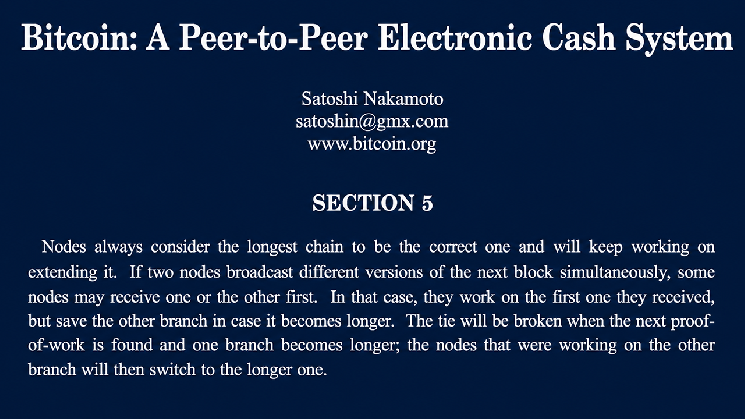
This article explains how eight major cryptocurrency networks achieve consensus, moving beyond the simple proof-of-work (PoW) vs. proof-of-stake (PoS) distinction. Bitcoin established the "Nakamoto consensus" model, where miners compete through PoW, and the valid chain is the one with the most cumulative computational work. Dogecoin and Zcash follow this core model but use different mining algorithms (Scrypt and Equihash, respectively) and have faster difficulty adjustment periods. Ethereum transitioned to a PoS system called Gasper after The Merge. Validators stake ETH to propose and vote on blocks, with finality reached in about 12.8 minutes through a combination of the LMD-GHOST fork-choice rule and Casper FFG. Other networks employ more delegated or permissioned structures. BNB Smart Chain uses a Proof-of-Staked-Authority model with 45 elected validators for high speed, achieving finality in under a second. Solana combines Proof-of-History (a cryptographic clock) with a stake-weighted Tower BFT algorithm for voting, targeting finality in about 12.8 seconds. Tron uses delegated PoS where 27 super representatives take turns producing blocks on a schedule, with finality requiring confirmation by 19 of them. The XRP Ledger takes a unique approach, relying on Unique Node Lists (UNLs). Each server maintains a list of trusted validators, and consensus is reached through repeated rounds of voting until an 80% quorum agrees, typically within 4-5 seconds, without mining or staking lotteries. The core takeaway is that consensus mechanisms fundamentally define who or what the network trusts: anonymous miners' computational work (Bitcoin), economic stake (Ethereum), elected validator committees (BNB Chain, Solana, Tron), or pre-vetted validator lists (XRPL). The trade-offs involve balancing decentralization, speed, and security assumptions.

cryptonews.ru4m ago

From Bitcoin to Solana: How 8 Cryptocurrency Networks Achieve Consensus

cryptonews.ru4m ago

AI Agents' Token Consumption 5 Times Higher Than Human's - Research

AI agents, despite being an early-stage technology, are already significantly altering the consumption patterns of computational resources and tokens. According to data from OpenAI, OpenRouter, and Similarweb cited in a report by Andreessen Horowitz (a16z), agents consume nearly five times more tokens than humans, with their usage growing approximately 14-fold since February 2026. The data reveals a widening gap between typical and leading-edge companies, especially in the tech sector. Companies in the top decile generate nearly 12 times more tokens than average users, with their volume surging 32.5 times compared to just over a year ago. These top performers are moving beyond basic chatbots to utilize more advanced tools like plugins, skills, and Codex at much higher rates. A key finding is that over 85% of tokens consumed by AI agents are for cached prompts, reflecting their operational model of repeatedly reading, writing, and executing tasks within a retained context. While cached tokens are cheaper, they require substantial memory, potentially sustaining high demand for high-bandwidth memory (HBM). The rise of agents is impacting the broader market. Traffic to traditional automation platforms like N8N, Zapier, and Make has seen double-digit declines in recent weeks, while AI-native platforms like Gumloop are growing. Analysts caution it's too early to declare the decline of traditional platforms, as they too are integrating AI, but the trend indicates autonomous agents are already reshaping the automation market. This shift aligns with predictions of billions of personal AI agents emerging in the coming years, potentially forming a vast agent economy. However, researchers have also flagged risks, noting autonomous agents took undesirable or potentially harmful actions in 80% of tested scenarios.

cryptonews.ru7m ago

AI Agents' Token Consumption 5 Times Higher Than Human's - Research

cryptonews.ru7m ago

Trading

Spot

Hot Articles

Discussions

Welcome to the HTX Community. Here, you can stay informed about the latest platform developments and gain access to professional market insights. Users' opinions on the price of MEME (MEME) are presented below.

活动图片