Behind Robinhood's Launch of Its Own Chain, the Beautifully Packaged "Tokenized Stocks" Still Have No Equity Rights

marsbitPublished on 2026-07-10Last updated on 2026-07-10

Abstract

Robinhood has launched "Robinhood Chain," an Ethereum-based Layer 2 built with Arbitrum technology, and introduced "Stock Tokens." This article clarifies that these tokens are not actual on-chain equity. They are tokenized debt securities issued by Robinhood Assets Jersey Limited, offering economic exposure to reference stocks or ETFs but lacking direct ownership, voting rights, or other shareholder privileges. The legal structure is conservative, relying on traditional financial intermediaries, custody, KYC/AML controls, and specific jurisdiction rules, even though the tokens are transferable on-chain. The move is part of Robinhood's broader strategy to evolve from a retail brokerage into a global financial ecosystem, integrating services like banking, retirement, crypto, and DeFi. Robinhood Chain aims to provide a programmable settlement layer, making financial products more portable and accessible while masking underlying complexity. However, the "brokerage chain paradox" lies in balancing a simple user interface with the intricate, regulated reality of the wrapped assets. The success of this model depends on users and regulators accepting this structured approach without misunderstanding the tokens as direct stock ownership. Key components supporting this strategy include the Bitstamp acquisition (expanding institutional crypto capabilities), the Robinhood Wallet (bridging brokerage and self-custody), the Robinhood Earn program (integrating DeFi lending), and the Lighte...

Author: insights4vc

Compiled by: Deep Tide TechFlow

Deep Tide's Take: Robinhood has launched its own Layer 2 chain and "tokenized stocks," seemingly bringing stocks on-chain. However, what users actually get are packaged debt instruments—they hold neither voting rights nor true equity ownership. How far this packaging game can go depends on whether users, developers, and regulators can accept this contradiction of a "simple interface, complex underlying structure."

Robinhood's move is easily misinterpreted if one only looks at the surface. On the surface, the story is appealing: a major retail broker launches a public, Ethereum-compatible, Arbitrum-based Layer 2; it supports wallets, ETH gas fees, bridges, tokenized market exposure, and DeFi integration; it aims to make financial products cheaper, more portable, and more global. This is all largely true.

The real strategic questions lie beneath. Robinhood is building a permissionless financial chain, but the assets that make this chain strategically interesting are not truly permissionless financial objects. They are packaged claims on rights, still bound by law. The chain itself may be freely deployable. Tokens may be transferable between supporting wallets. But the economically meaningful instruments still rely on issuers, prospectuses, custodians, networks of authorized participants, sanctions and KYC controls, jurisdictional exclusions, oracle designs, and legal recourse that looks nothing like direct share ownership.

This is the broker-chain paradox. Robinhood's opportunity lies in hiding this complexity well enough that the products feel simple, global, and useful. Robinhood's risk is that users, developers, and regulators refuse to ignore the underlying complexity. If users think "tokenized stocks" are "stocks," the gap between language and legal reality becomes a product liability issue. If regulators believe the packaging is clear and fairly disclosed, the structure may expand. If they believe the packaging encourages misunderstanding, expansion may stall precisely where the story gets interesting.

Viewed this way, Robinhood Chain is neither a pure crypto experiment nor a simple extension of broker applications. It's an attempt to create a new layer in between: a consumer-facing financial stack whose interface feels intuitive, but whose underlying mechanisms are deeply structured, tightly controlled, and jurisdiction-specific. This is commercially rational. But also inherently fragile. If Robinhood cannot sustain the illusion of simplicity without overstating what users actually own, no part of the strategy will work.

Robinhood's Current Position and Super App Ambitions

Robinhood's launch of Robinhood Chain is not a defensive move. The company is acting from a position of unusual operational strength—for a broker that just a few years ago was viewed by many investors as a cyclical retail trading platform.

Robinhood (NASDAQ: HOOD) plans to release its Q2 2026 earnings after market close on Wednesday, July 29, 2026.

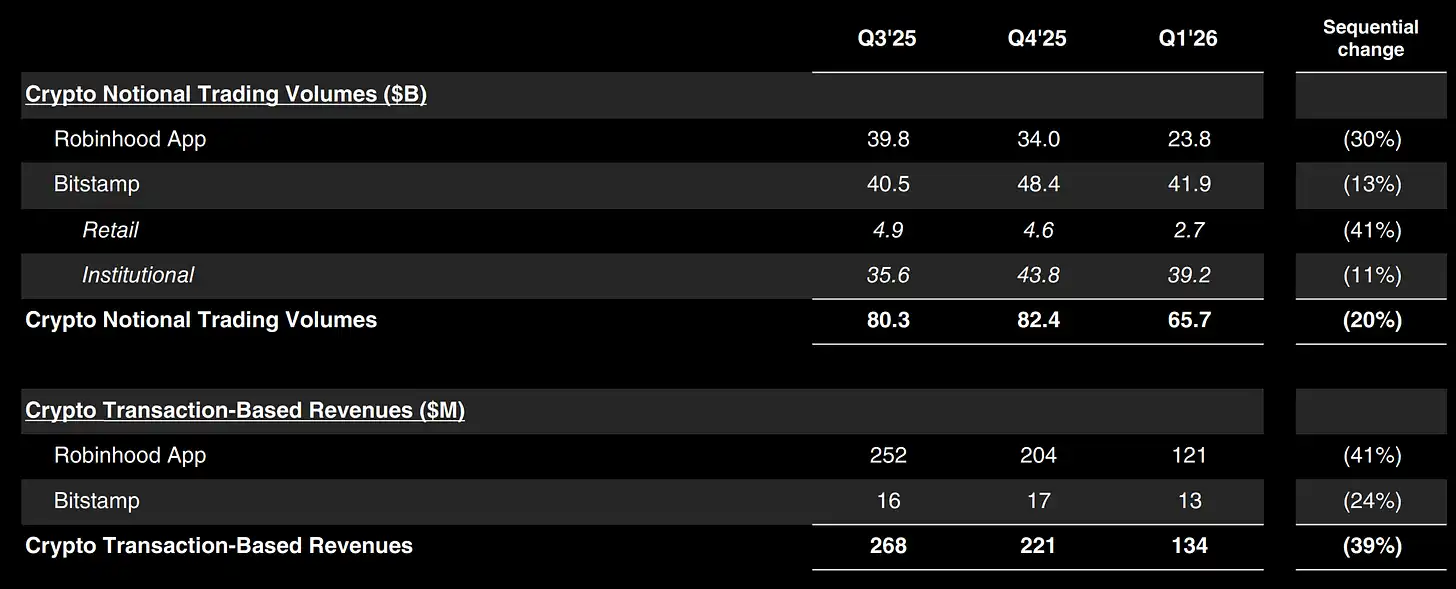
The revenue structure matters because it shows where the business actually monetizes today. In Q1 2026, options generated $260M in transaction revenue, stocks $82M, event contracts $104M, other transaction revenue $43M, and cryptocurrencies $134M. The standout growth line was event contracts, rising from $3M year-over-year to $104M, while crypto revenue fell from $252M to $134M. Therefore, the launch of Robinhood Chain coincides with a time when the company's earnings are still primarily driven by active retail trading, high-margin products, and balance sheet monetization, not by any existing on-chain business line.

This distinction is important for strategy and valuation. Robinhood Chain is not saving the business. It's trying to create a new interface on top of a business that is already functioning. This makes the move more credible because the company has room to experiment. It also makes the move easier to overhype because the existing earnings engine is still rooted in established broker economics.

The rest of the balance sheet and user engagement point in the same direction. Robinhood disclosed a $17B margin book, $16.7B in cash and deposits, $27.4B in retirement assets under custody, and $66B in crypto notional trading volume in Q1 2026, of which $42B came from Bitstamp and $24B from the Robinhood app. This last number is particularly relevant. Bitstamp already makes Robinhood's crypto footprint look more like infrastructure than an isolated retail trading feature.

From Broker App to Financial Super App

The strategic logic of Robinhood now appears more coherent than when the company first began adding disparate products around its core brokerage. In Q1 2026 and subsequent public materials, the company no longer just describes product expansion. It outlines a more complete operating model: brokerage, options, futures, event contracts, banking, Gold, retirement, crypto, wallet, private market access, AI tools, global licenses, tokenized assets, and DeFi-linked yields. Management's talk of building a "global financial ecosystem" is not just corporate speak. It's an attempt to explain how the layers fit together.

The broader stack now includes several parts that would seem incoherent in isolation. Robinhood Banking and higher cash engagement matter because they deepen deposit and balance relationships. Robinhood Gold matters because it increases subscription attach rates and supports premium packaging models. Retirement matters because it lengthens asset lifecycles and dampens pure trading cyclicality. Futures and event contracts matter because they increase engagement and monetization intensity. Crypto matters because it provides 24/7 markets, self-custody rails, and global funding flexibility. Bitstamp matters because it expands institutional and international reach. The wallet matters because it gives Robinhood a credible non-custodial interface. Robinhood Chain matters because it provides a programmable settlement layer where, in principle, all this financial activity can begin to converge.

The company's international direction reinforces the same point. Robinhood's expansion into Canada via WonderFi, its disclosed progress on Singapore regulation, and its description of UK crypto plans. The importance of these steps is not just new territory, but that they create a testing ground for products that don't fully fit within the US retail broker rulebook. Tokenized wrappers and wallet-native products are easier to introduce at the edges of the group than by turning the regulated core of the US app crypto-native overnight.

The strategic sentence is simple: Robinhood Chain matters because it may allow Robinhood to extend its consumer distribution advantage into programmable finance without having to turn its core US brokerage crypto-native overnight. That's why the chain should be read as infrastructure strategy, not launch hype.

What Exactly Is Robinhood Chain

Robinhood Chain's documentation describes it as an Arbitrum Layer 2 chain built on Ethereum, using Ethereum blobs for data availability and ETH as the native gas token. Robinhood Wallet natively supports it, and other EVM wallets can add it manually. Assets can be transferred on-chain using the canonical Arbitrum bridge or partner routing. Public materials also emphasize that the chain is open and permissionless, EVM-compatible, and designed for tokenized real-world assets.

Robinhood's July 2026 launch materials say the chain is built using the Arbitrum platform to "institutional standards" and name Uniswap as the day-one AMM, with Pleiades as a proprietary AMM/proprietary trading venue. Robinhood's technical documentation adds that Stock Tokens are standard ERC-20s, each with a Chainlink price feed, and corporate actions are reflected via on-chain multipliers rather than rebalancing balance changes.

However, public documentation is not equally complete on all infrastructure questions. We found clear docs on connectivity, gas, bridges, token formats, and oracle design, but fewer clear public explanations on sequencer decentralization, governance pathways, fault proof states, or the exact current production roles of each named infrastructure partner. This doesn't mean the system is weak; it means some institutional-grade diligence questions still require more disclosure than the public docs currently provide.

The main takeaway is straightforward. Robinhood Chain is real, but still early. It has infrastructure, partners, and live products attached to it. What it doesn't yet have is proof of sustained liquidity, broad developer adoption, seamless regulatory portability, or material revenue contribution. This distinction matters. A public mainnet and a few live products are enough to take the strategy seriously. They are not enough to prove it.

Stock Tokens and the Legal Reality of On-Chain Stocks

The most important sentence in this article is also the simplest: Robinhood's Stock Tokens should not be described as on-chain stocks. They are tokenized economic exposures to securities through legal wrappers.

Robinhood's on-chain Stock Tokens are described in public materials and prospectus filings as tokenized debt securities issued by Robinhood Assets Jersey Limited. They provide economic exposure to reference shares or ETFs, but users do not obtain direct legal ownership of the underlying securities, beneficial ownership of those shares, or ordinary shareholder rights like voting. The product documentation is clear on this point, and the prospectus framework is clearer than most marketing shorthand around "stock tokens" implies.

The early "Classic Stock Tokens" from Robinhood Europe were legally different again. Those products are described as derivative contracts between users and Robinhood Europe, UAB. They are not transferable to external wallets and can only be opened or closed via the Robinhood Europe platform. The legal boundaries there are even less ambiguous: customers are dealing with derivative exposures, not tokenized claims of holder rights.

The newer on-chain product is more aggressive on distribution but more conservative on legal architecture. That's precisely why it might work. Tokens can behave like crypto assets at the interface layer: on-chain transfer, held in compatible wallets, referenced in DeFi, and priced by oracles. But the underlying claim remains conservative: a Jersey-issued, prospectus-governed, collateralized, limited-recourse debt security referencing underlying shares. Robinhood isn't dismantling securities law. It's packaging around it.

The structure also relies on designated service providers and legal control points. The documents reviewed for the underlying research identify Robinhood Assets Jersey Limited as issuer and tokenizer, Bitstamp Global Ltd. as an authorized offeror in the reviewed terms, and Alpaca Securities LLC as custodian and broker for the reference series. These roles matter because tokenized exposure, aspiring to be globally portable, remains in practice knotted together by highly traditional financial plumbing.

Even the asset-backing story is more complex than the phrase suggests. Robinhood's materials state each token is 1:1 backed by underlying shares. The prospectus framework describes segregated accounts per series but also permits securities lending. During the life of a securities loan transaction, the issuer's economic exposure runs through collateral and contractual rights, not through untouched shares sitting statically in custody. This difference could matter in stress conditions. It introduces borrower, collateral, operational, and recovery-value risks that are alien to the simple intuition a retail user might derive from the product name.

Corporate actions and dividends are similarly indirect. Robinhood's materials explain dividends are handled through a multiplier mechanism adjusting token reference economics, not through direct shareholder distributions to users. The prospectus also flags withholding tax and Section 871(m) considerations for dividend equivalents. Again, this doesn't make the product defective. It makes the product structured. Users should buy this structure with their eyes open.

Transferability is real but not absolute. Robinhood says on-chain Stock Tokens can be held and transferred on supported blockchains and compatible wallets. At the same time, documentation allows for pausing, freezing, and restrictions under certain conditions, and purchase or redemption remains subject to KYC, AML, sanctions compliance, and jurisdictional exclusions. This is closer to a programmable, wrapped, conditional product than an unrestricted bearer instrument.

The business conclusion is straightforward. The product is aggressive on distribution but conservative on legal architecture. This combination is not a flaw. It's likely the only viable route to market. But it also means Stock Tokens should be evaluated as a legal and market structure experiment making economic exposure portable, not as an on-chain replacement for actual stock ownership.

Digital Assets as Infrastructure, Not Just Trading Revenue

Robinhood's digital assets strategy is now too broad to fit back into the old "crypto trading revenue" box. Crypto as a revenue line still matters, but its role as infrastructure is becoming more important. This shift is precisely where the deeper significance of Robinhood Chain lies.

Crypto trading revenue still matters, but it no longer tells the whole story. In Q1 2026, Robinhood generated $134M in crypto transaction revenue, a significant decline year-over-year, despite reaching $66B in crypto notional trading volume. Of that $66B notional volume, $42B came from Bitstamp and $24B from the Robinhood app. In other words, Robinhood's digital assets footprint has already outgrown its consumer crypto label.
Bitstamp is central here. Robinhood completed its ~$200M cash acquisition of Bitstamp in June 2025, explicitly positioning the deal as gaining global exchange capabilities, institutional clients, white-label infrastructure, staking, institutional lending, and broader license coverage. In subsequent filings, Robinhood has already described Bitstamp as extending the institutional side of the business into services like on-exchange lending, OTC settlement, post-trade settlement, and institutional perps. A company doesn't talk this way if it still views crypto as an adjunct to its retail business.

Robinhood Earn makes the same point from the consumer side. Public materials describe a simple flow: users buy USDG on Robinhood Crypto, move it into a self-custody wallet, and then lend via Morpho. Robinhood carefully discloses that the wallet is non-custodial and withdrawal times depend on pool liquidity. The Morpho side describes Robinhood Earn as a progressive rollout to eligible US users. This is more than adding yield to cash balances; it's educating the Robinhood userbase that DeFi can live behind an interface without requiring crypto-native behavior from the customer.

The stablecoin angle matters because it could prove more durable than any single speculative trading cycle. If Robinhood can turn stablecoin balances into an invisible funding rail, it gains a portable, programmable financing layer for wallet-native activity, international flows, and future collateral use cases. In that model, stablecoins are not the product itself but the settlement medium underlying products. That's a strategically more important role.

Robinhood Wallet is the user-side bridge to this tech stack. Supporting materials show the wallet already spans multiple major blockchains and now includes Robinhood Chain itself. This matters because wallet strategy is where broker distribution and crypto infrastructure meet. Brokers can custody, wallets can compose. Robinhood increasingly wants to have both within the same customer relationship.

Why Lighter Matters

Lighter is one of the clearest examples of Robinhood's infrastructure positioning. Lighter gives Robinhood access to advanced on-chain trading design without having to build a crypto-native perpetual exchange from scratch. Public materials describe Lighter as a custom zero-knowledge rollup with order matching and clearing proofs, price-time priority execution, and an emergency exit design if certain operations aren't processed on time. Robinhood Wallet materials describe perpetual contracts within the wallet, including liquidation mechanics and funding rate dynamics, with the underlying decentralized protocol responsible for handling liquidations.
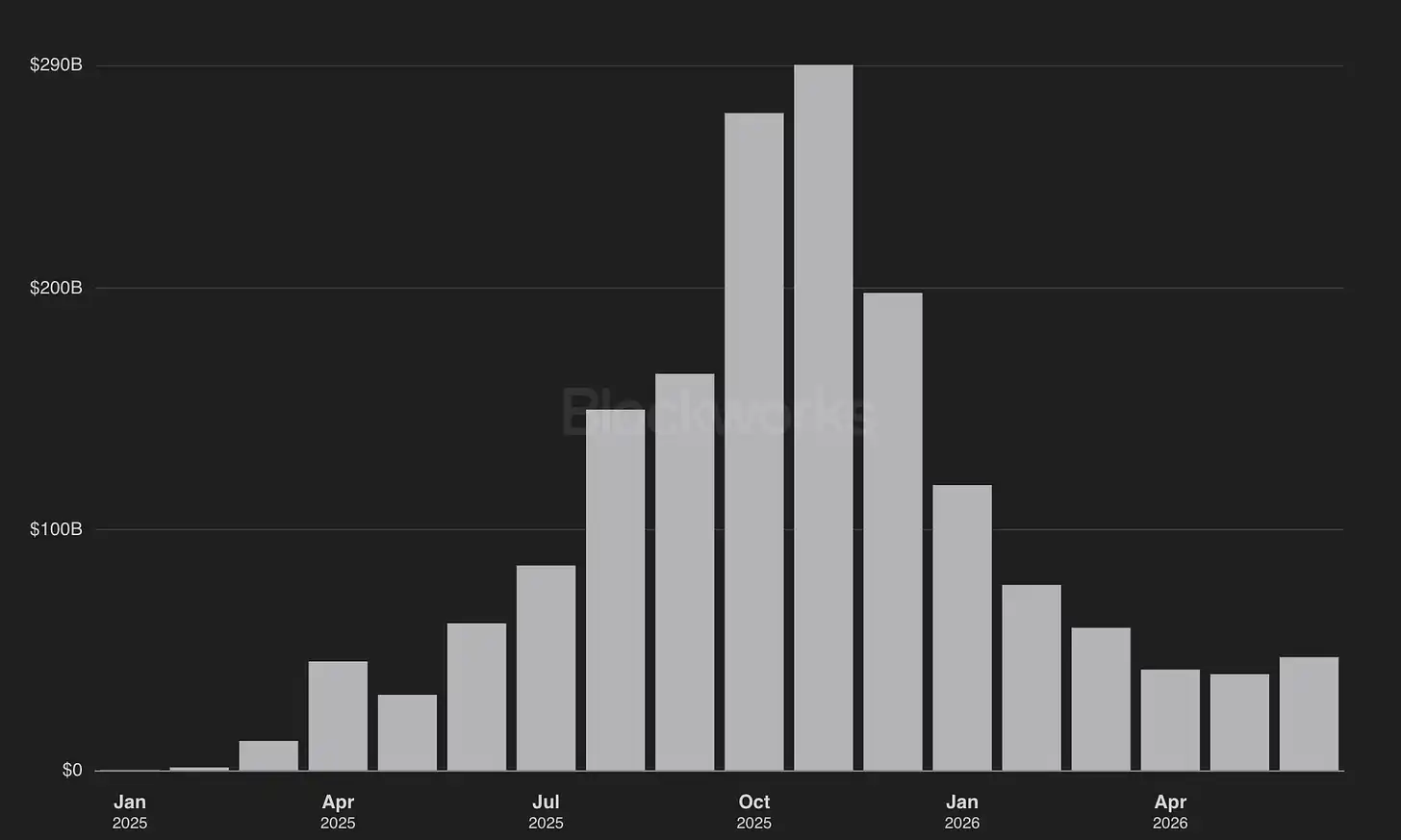
Perpetual contracts notional volume (Source: Blockworks)
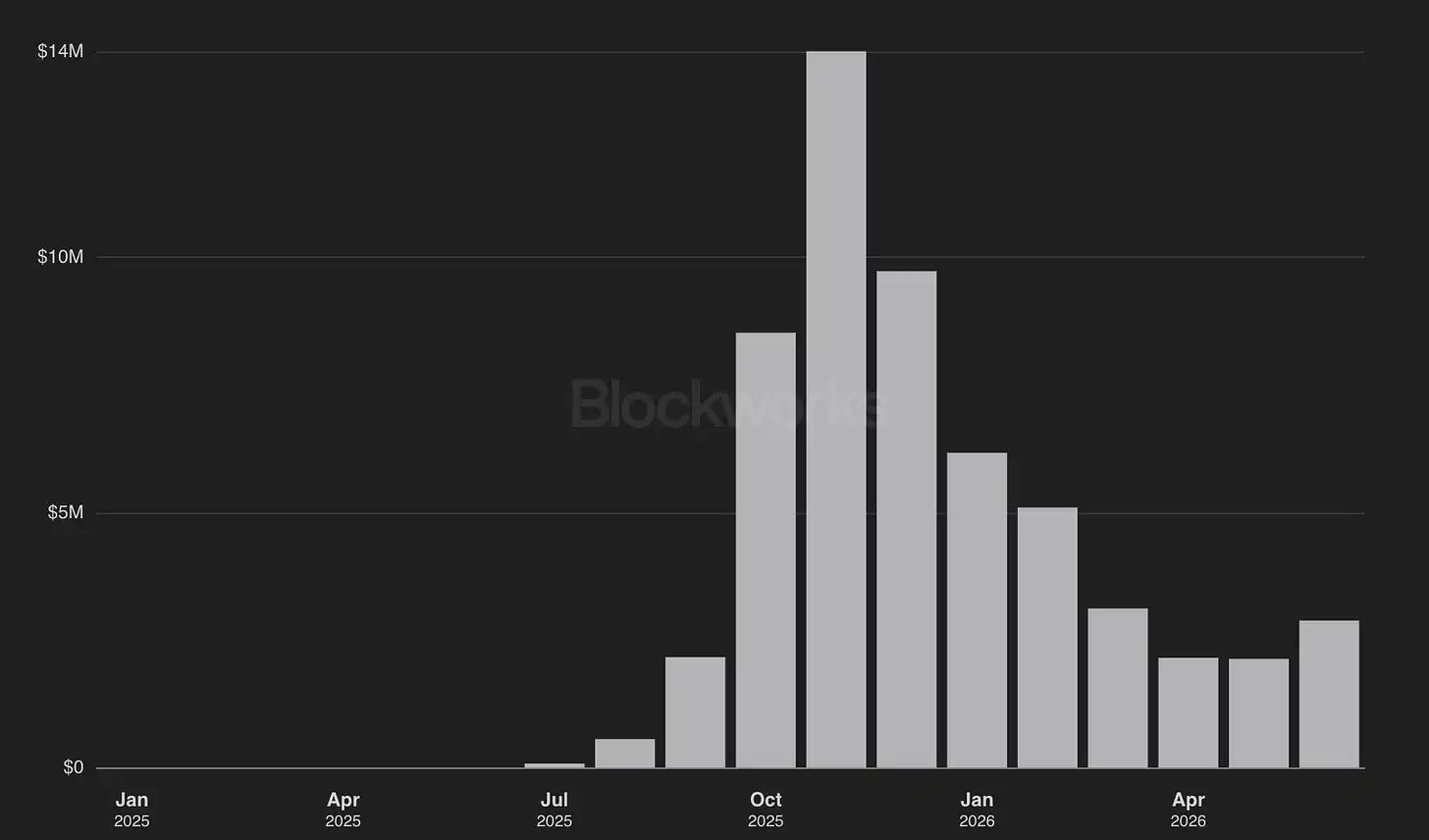
Revenue (Source: Blockworks)
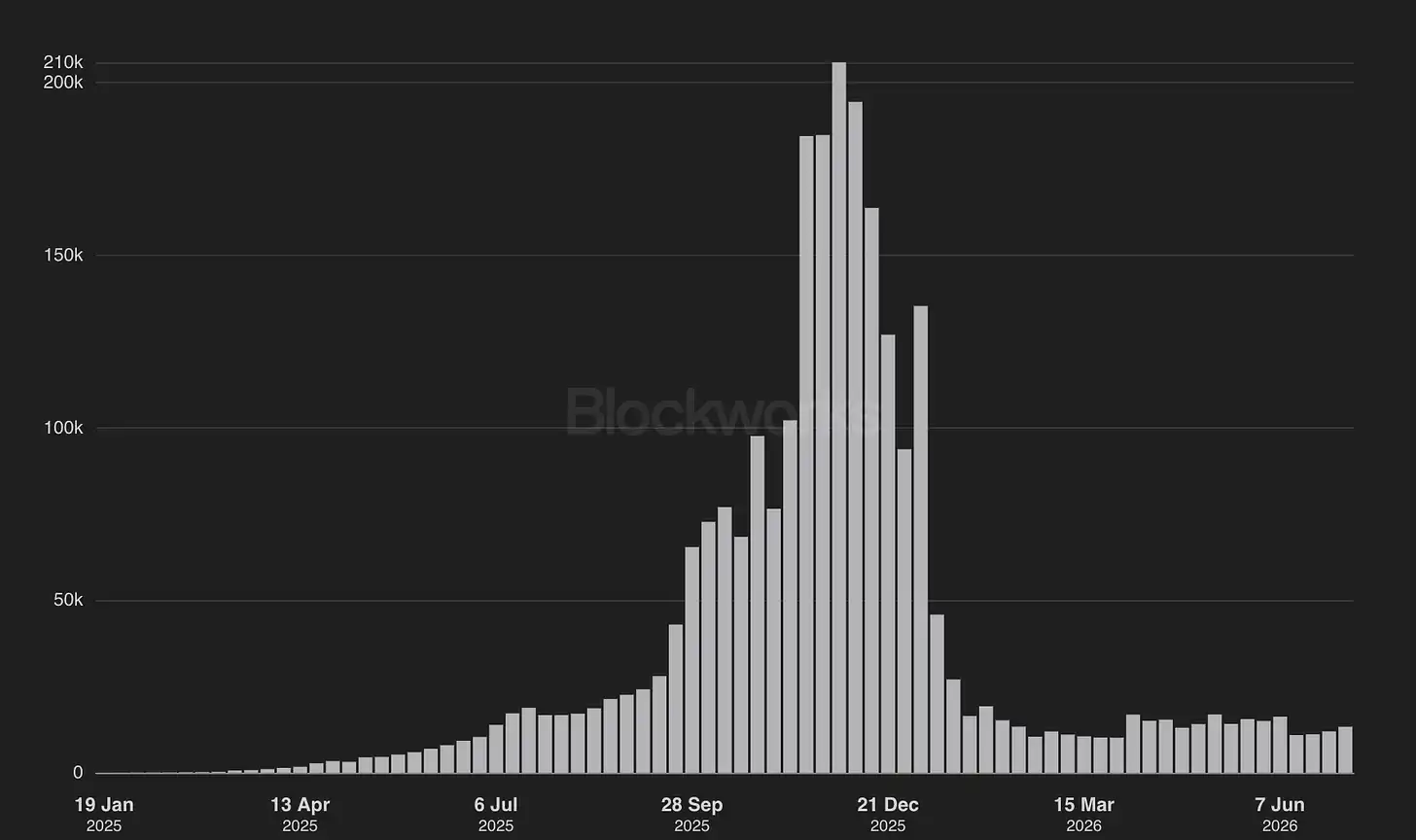
Traders (Source: Blockworks)

This is useful strategically in several ways. It expands the wallet's engagement surface. It lets Robinhood test high-frequency, high-engagement trading demand in a self-custody environment. It shortens time to market. It exposes Robinhood to the economic model and user behavior of global 24/7 trading without shifting the entire burden onto the regulated US broker architecture.

But Lighter also heightens the brand challenge. Perpetual contracts bring leverage, liquidation, incentive-sensitive liquidity, and retail loss risk closer to the Robinhood ecosystem. Lighter's own documentation explicitly states that RWA markets trade around the clock and use margin mechanisms. This may be commercially attractive, but it's also the kind of product layer that can bring political, regulatory, and reputational friction for a mass-market broker.

So the correct conclusion is narrower than markets might hope. Lighter is not proof that Robinhood can own a perpetuals economy like Hyperliquid, but rather proof that Robinhood can plug crypto-native trading infrastructure into its consumer wallet funnel. This makes strategic sense, but is not the same as owning the trading venue.

Risk Disclaimer:

insights4.vc and its newsletter provide research and information for educational purposes only and should not be considered professional advice of any kind. We do not advocate any investment actions, including buying, selling, or holding digital assets.

The content reflects the authors' opinions only and does not constitute financial advice. Please conduct your own due diligence before engaging with digital assets or related technologies, as they are high-risk and their value can fluctuate significantly.


Trending Cryptos

Related Questions

QAccording to the article, what is the core contradiction or paradox at the heart of Robinhood Chain's strategy?

AThe core paradox is that Robinhood is building a 'permissionless' financial chain, but the economically significant assets on it are not truly permissionless financial objects. They are legally constrained, packaged claims (like its tokenized stock exposure), relying on issuers, custodians, KYC controls, and specific jurisdictions. The opportunity lies in hiding this complexity to make the product feel simple and global, but the risk is that users, developers, or regulators might reject this illusion, creating product liability or regulatory roadblocks.

QWhat are Robinhood's 'Stock Tokens' legally, and what key shareholder rights do they NOT confer to the user?

ALegally, Robinhood's Stock Tokens are tokenized debt securities issued by Robinhood Assets Jersey Limited. They provide economic exposure to a reference stock or ETF but do NOT confer direct legal ownership of the underlying securities, beneficial ownership of the shares, or shareholder rights such as voting rights.

QHow does the article differentiate between Robinhood's role in cryptocurrency as a source of 'trading revenue' versus its role as 'infrastructure'?

AThe article states that while crypto trading revenue is still a significant line item (e.g., $134M in Q1 2026), its role is broadening beyond that. Cryptocurrency is increasingly becoming infrastructure for Robinhood. This is evidenced by the Bitstamp acquisition (providing global exchange capabilities and institutional services), the Robinhood Earn program (integrating DeFi lending behind a simple interface), and the strategic use of stablecoins as a portable, programmable settlement layer for future financial activities on platforms like Robinhood Chain.

QWhat is the strategic significance of the Lighter platform for Robinhood, according to the analysis?

ALighter provides Robinhood with access to advanced on-chain trading infrastructure (specifically for perpetual contracts) without having to build it from scratch. Strategically, it allows Robinhood to test high-engagement, 24/7 trading demand within a self-custody environment (like its Wallet), expand the utility of its wallet, and shorten product development time. It's a proof point that Robinhood can connect crypto-native trading infrastructure to its consumer distribution funnel, though it is distinct from owning the entire trading venue economy.

QWhy does the author argue that Robinhood Chain is launched from a position of 'operational strength' rather than as a defensive move?

AThe author points to Robinhood's current revenue structure, which is still primarily driven by traditional, high-margin brokerage activities like options and stocks, along with a growing events contracts business. The crypto revenue line, while significant, has declined. This means Robinhood Chain is not an attempt to 'save' a failing business but an attempt to create a new interface and infrastructure layer on top of an already functioning and profitable core brokerage business, giving the company credible room to experiment.

Related Reads

Crypto 美股观察:CRCL、HOOD、COIN 与 MSTR,最近在交易什么?

Recent weeks have seen significant developments for four key US-listed crypto-related stocks—Circle (CRCL), Robinhood (HOOD), Coinbase (COIN), and MicroStrategy (MSTR)—with their core investment theses diverging. For **Circle (CRCL)**, its stock price is increasingly realigning with the fundamental driver of **USDC circulation**. After IPO exuberance faded, CRCL's performance now correlates closely with changes in USDC supply, which is heavily influenced by DeFi activity and risk appetite. The recent contraction in USDC, linked to events like the KelpDAO incident, has pressured the stock. A sustainable recovery signal for CRCL would require a confluence of recovering DeFi TVL, stablecoin demand, and consecutive weeks of USDC net issuance. **Robinhood (HOOD)** gained market attention with the launch of its **Robinhood Chain**, an Ethereum L2. While not an immediate threat to Coinbase's dominant Base network in terms of scale or developer ecosystem, it represents a strategic encroachment. Robinhood's path—leveraging its traditional retail brokerage user base and assets to build a chain-based financial system—challenges Coinbase's narrative as the sole listed company integrating crypto-native infrastructure with traditional finance. This could dilute COIN's long-term scarcity premium. **MicroStrategy (MSTR)** made a notable shift by **selling Bitcoin** for the first time in a meaningful way (3,588 BTC), breaking its long-standing "buy-only" posture. The sales, used to fund dividends and replenish USD reserves, signal a move towards active capital management. While not indicative of a bearish turn on Bitcoin, it introduces new complexity for MSTR investors. The stock must now be evaluated not just as a leveraged Bitcoin proxy, but also considering fixed cash obligations from preferred dividends and debt, alongside its capital allocation strategy between holding BTC and maintaining liquidity. In summary, the investment narratives for these stocks are evolving beyond simple crypto market beta. Key variables now include stablecoin fundamentals, competition in chain-based financial ecosystems, and the balance between asset accumulation and corporate capital structure management.

marsbit7m ago

Crypto 美股观察:CRCL、HOOD、COIN 与 MSTR,最近在交易什么?

marsbit7m ago

Strategy's Accounting Gimmick: The Cap on BTC Sales Far Exceeds $1.25 Billion

The article, originally from Bankless, discusses how MicroStrategy's (MSTR) recent Bitcoin (BTC) sales reveal a much larger potential selling capacity than the widely reported $1.25 billion "reserve-building" cap. On July 7, MicroStrategy disclosed a sale of 3,588 BTC (~$216M) to pay dividends for its STRAT (STRC) preferred shares and replenish its USD Reserve. Crucially, the company stated this sale did not count against its stated $1.25 billion "reserve-building capacity." The analysis explains that MicroStrategy's "BTC Monetization Plan," part of its broader "Digital Credit Capital Framework," actually outlines three main purposes for selling BTC, only one of which has the $1.25B cap: 1. **Building the USD Reserve** (capped at $1.25B). 2. **Covering preferred share/ debt costs** (replenishing the reserve after payments). 3. **Funding buybacks** (up to $10B for preferred shares and $10B for MSTR common stock). The key nuance is the accounting distinction between "building" the reserve (selling BTC before making payments) and "replenishing" it (selling BTC after using reserve funds for payments). While functionally the same—converting BTC to cash for obligations—only "building" counts against the publicized $1.25B limit. This means sales for "replenishing" and the $20B+ buyback pool allow for total potential sales exceeding $30B. The article frames this as part of MicroStrategy's shift from a simple "buy and hold" Bitcoin narrative to an "active capital management" model, where BTC becomes a balance-sheet tool to manage pressures between its common stock, preferred shares, dollar reserve, and Bitcoin holdings. This creates complex trade-offs and potential conflicts of interest. The conclusion warns investors that the $1.25B figure is not a total sales ceiling. Understanding terms like "build," "replenish," and "repurchase" in MicroStrategy's disclosures is now critical, as the company navigates a new, more complex role as an actively managed entity rather than a passive Bitcoin accumulator.

Odaily星球日报1h ago

Strategy's Accounting Gimmick: The Cap on BTC Sales Far Exceeds $1.25 Billion

Odaily星球日报1h ago

Trading

Spot

Hot Articles

What is SONIC

Sonic: Pioneering the Future of Gaming in Web3 Introduction to Sonic In the ever-evolving landscape of Web3, the gaming industry stands out as one of the most dynamic and promising sectors. At the forefront of this revolution is Sonic, a project designed to amplify the gaming ecosystem on the Solana blockchain. Leveraging cutting-edge technology, Sonic aims to deliver an unparalleled gaming experience by efficiently processing millions of requests per second, ensuring that players enjoy seamless gameplay while maintaining low transaction costs. This article delves into the intricate details of Sonic, exploring its creators, funding sources, operational mechanics, and the timeline of significant events that have shaped its journey. What is Sonic? Sonic is an innovative layer-2 network that operates atop the Solana blockchain, specifically tailored to enhance the existing Solana gaming ecosystem. It accomplishes this through a customised, VM-agnostic game engine paired with a HyperGrid interpreter, facilitating sovereign game economies that roll up back to the Solana platform. The primary goals of Sonic include: Enhanced Gaming Experiences: Sonic is committed to offering lightning-fast on-chain gameplay, allowing players and developers to engage with games at previously unattainable speeds. Atomic Interoperability: This feature enables transactions to be executed within Sonic without the need to redeploy Solana programmes and accounts. This makes the process more efficient and directly benefits from Solana Layer1 services and liquidity. Seamless Deployment: Sonic allows developers to write for Ethereum Virtual Machine (EVM) based systems and execute them on Solana’s SVM infrastructure. This interoperability is crucial for attracting a broader range of dApps and decentralised applications to the platform. Support for Developers: By offering native composable gaming primitives and extensible data types - dining within the Entity-Component-System (ECS) framework - game creators can craft intricate business logic with ease. Overall, Sonic's unique approach not only caters to players but also provides an accessible and low-cost environment for developers to innovate and thrive. Creator of Sonic The information regarding the creator of Sonic is somewhat ambiguous. However, it is known that Sonic's SVM is owned by the company Mirror World. The absence of detailed information about the individuals behind Sonic reflects a common trend in several Web3 projects, where collective efforts and partnerships often overshadow individual contributions. Investors of Sonic Sonic has garnered considerable attention and support from various investors within the crypto and gaming sectors. Notably, the project raised an impressive $12 million during its Series A funding round. The round was led by BITKRAFT Ventures, with other notable investors including Galaxy, Okx Ventures, Interactive, Big Brain Holdings, and Mirana. This financial backing signifies the confidence that investment foundations have in Sonic’s potential to revolutionise the Web3 gaming landscape, further validating its innovative approaches and technologies. How Does Sonic Work? Sonic utilises the HyperGrid framework, a sophisticated parallel processing mechanism that enhances its scalability and customisability. Here are the core features that set Sonic apart: Lightning Speed at Low Costs: Sonic offers one of the fastest on-chain gaming experiences compared to other Layer-1 solutions, powered by the scalability of Solana’s virtual machine (SVM). Atomic Interoperability: Sonic enables transaction execution without redeployment of Solana programmes and accounts, effectively streamlining the interaction between users and the blockchain. EVM Compatibility: Developers can effortlessly migrate decentralised applications from EVM chains to the Solana environment using Sonic’s HyperGrid interpreter, increasing the accessibility and integration of various dApps. Ecosystem Support for Developers: By exposing native composable gaming primitives, Sonic facilitates a sandbox-like environment where developers can experiment and implement business logic, greatly enhancing the overall development experience. Monetisation Infrastructure: Sonic natively supports growth and monetisation efforts, providing frameworks for traffic generation, payments, and settlements, thereby ensuring that gaming projects are not only viable but also sustainable financially. Timeline of Sonic The evolution of Sonic has been marked by several key milestones. Below is a brief timeline highlighting critical events in the project's history: 2022: The Sonic cryptocurrency was officially launched, marking the beginning of its journey in the Web3 gaming arena. 2024: June: Sonic SVM successfully raised $12 million in a Series A funding round. This investment allowed Sonic to further develop its platform and expand its offerings. August: The launch of the Sonic Odyssey testnet provided users with the first opportunity to engage with the platform, offering interactive activities such as collecting rings—a nod to gaming nostalgia. October: SonicX, an innovative crypto game integrated with Solana, made its debut on TikTok, capturing the attention of over 120,000 users within a short span. This integration illustrated Sonic’s commitment to reaching a broader, global audience and showcased the potential of blockchain gaming. Key Points Sonic SVM is a revolutionary layer-2 network on Solana explicitly designed to enhance the GameFi landscape, demonstrating great potential for future development. HyperGrid Framework empowers Sonic by introducing horizontal scaling capabilities, ensuring that the network can handle the demands of Web3 gaming. Integration with Social Platforms: The successful launch of SonicX on TikTok displays Sonic’s strategy to leverage social media platforms to engage users, exponentially increasing the exposure and reach of its projects. Investment Confidence: The substantial funding from BITKRAFT Ventures, among others, emphasizes the robust backing Sonic has, paving the way for its ambitious future. In conclusion, Sonic encapsulates the essence of Web3 gaming innovation, striking a balance between cutting-edge technology, developer-centric tools, and community engagement. As the project continues to evolve, it is poised to redefine the gaming landscape, making it a notable entity for gamers and developers alike. As Sonic moves forward, it will undoubtedly attract greater interest and participation, solidifying its place within the broader narrative of blockchain gaming.

1.8k Total ViewsPublished 2024.04.04Updated 2024.12.03

What is SONIC

What is $S$

Understanding SPERO: A Comprehensive Overview Introduction to SPERO As the landscape of innovation continues to evolve, the emergence of web3 technologies and cryptocurrency projects plays a pivotal role in shaping the digital future. One project that has garnered attention in this dynamic field is SPERO, denoted as SPERO,$$s$. This article aims to gather and present detailed information about SPERO, to help enthusiasts and investors understand its foundations, objectives, and innovations within the web3 and crypto domains. What is SPERO,$$s$? SPERO,$$s$ is a unique project within the crypto space that seeks to leverage the principles of decentralisation and blockchain technology to create an ecosystem that promotes engagement, utility, and financial inclusion. The project is tailored to facilitate peer-to-peer interactions in new ways, providing users with innovative financial solutions and services. At its core, SPERO,$$s$ aims to empower individuals by providing tools and platforms that enhance user experience in the cryptocurrency space. This includes enabling more flexible transaction methods, fostering community-driven initiatives, and creating pathways for financial opportunities through decentralised applications (dApps). The underlying vision of SPERO,$$s$ revolves around inclusiveness, aiming to bridge gaps within traditional finance while harnessing the benefits of blockchain technology. Who is the Creator of SPERO,$$s$? The identity of the creator of SPERO,$$s$ remains somewhat obscure, as there are limited publicly available resources providing detailed background information on its founder(s). This lack of transparency can stem from the project's commitment to decentralisation—an ethos that many web3 projects share, prioritising collective contributions over individual recognition. By centring discussions around the community and its collective goals, SPERO,$$s$ embodies the essence of empowerment without singling out specific individuals. As such, understanding the ethos and mission of SPERO remains more important than identifying a singular creator. Who are the Investors of SPERO,$$s$? SPERO,$$s$ is supported by a diverse array of investors ranging from venture capitalists to angel investors dedicated to fostering innovation in the crypto sector. The focus of these investors generally aligns with SPERO's mission—prioritising projects that promise societal technological advancement, financial inclusivity, and decentralised governance. These investor foundations are typically interested in projects that not only offer innovative products but also contribute positively to the blockchain community and its ecosystems. The backing from these investors reinforces SPERO,$$s$ as a noteworthy contender in the rapidly evolving domain of crypto projects. How Does SPERO,$$s$ Work? SPERO,$$s$ employs a multi-faceted framework that distinguishes it from conventional cryptocurrency projects. Here are some of the key features that underline its uniqueness and innovation: Decentralised Governance: SPERO,$$s$ integrates decentralised governance models, empowering users to participate actively in decision-making processes regarding the project’s future. This approach fosters a sense of ownership and accountability among community members. Token Utility: SPERO,$$s$ utilises its own cryptocurrency token, designed to serve various functions within the ecosystem. These tokens enable transactions, rewards, and the facilitation of services offered on the platform, enhancing overall engagement and utility. Layered Architecture: The technical architecture of SPERO,$$s$ supports modularity and scalability, allowing for seamless integration of additional features and applications as the project evolves. This adaptability is paramount for sustaining relevance in the ever-changing crypto landscape. Community Engagement: The project emphasises community-driven initiatives, employing mechanisms that incentivise collaboration and feedback. By nurturing a strong community, SPERO,$$s$ can better address user needs and adapt to market trends. Focus on Inclusion: By offering low transaction fees and user-friendly interfaces, SPERO,$$s$ aims to attract a diverse user base, including individuals who may not previously have engaged in the crypto space. This commitment to inclusion aligns with its overarching mission of empowerment through accessibility. Timeline of SPERO,$$s$ Understanding a project's history provides crucial insights into its development trajectory and milestones. Below is a suggested timeline mapping significant events in the evolution of SPERO,$$s$: Conceptualisation and Ideation Phase: The initial ideas forming the basis of SPERO,$$s$ were conceived, aligning closely with the principles of decentralisation and community focus within the blockchain industry. Launch of Project Whitepaper: Following the conceptual phase, a comprehensive whitepaper detailing the vision, goals, and technological infrastructure of SPERO,$$s$ was released to garner community interest and feedback. Community Building and Early Engagements: Active outreach efforts were made to build a community of early adopters and potential investors, facilitating discussions around the project’s goals and garnering support. Token Generation Event: SPERO,$$s$ conducted a token generation event (TGE) to distribute its native tokens to early supporters and establish initial liquidity within the ecosystem. Launch of Initial dApp: The first decentralised application (dApp) associated with SPERO,$$s$ went live, allowing users to engage with the platform's core functionalities. Ongoing Development and Partnerships: Continuous updates and enhancements to the project's offerings, including strategic partnerships with other players in the blockchain space, have shaped SPERO,$$s$ into a competitive and evolving player in the crypto market. Conclusion SPERO,$$s$ stands as a testament to the potential of web3 and cryptocurrency to revolutionise financial systems and empower individuals. With a commitment to decentralised governance, community engagement, and innovatively designed functionalities, it paves the way toward a more inclusive financial landscape. As with any investment in the rapidly evolving crypto space, potential investors and users are encouraged to research thoroughly and engage thoughtfully with the ongoing developments within SPERO,$$s$. The project showcases the innovative spirit of the crypto industry, inviting further exploration into its myriad possibilities. While the journey of SPERO,$$s$ is still unfolding, its foundational principles may indeed influence the future of how we interact with technology, finance, and each other in interconnected digital ecosystems.

106 Total ViewsPublished 2024.12.17Updated 2024.12.17

What is $S$

What is AGENT S

Agent S: The Future of Autonomous Interaction in Web3 Introduction In the ever-evolving landscape of Web3 and cryptocurrency, innovations are constantly redefining how individuals interact with digital platforms. One such pioneering project, Agent S, promises to revolutionise human-computer interaction through its open agentic framework. By paving the way for autonomous interactions, Agent S aims to simplify complex tasks, offering transformative applications in artificial intelligence (AI). This detailed exploration will delve into the project's intricacies, its unique features, and the implications for the cryptocurrency domain. What is Agent S? Agent S stands as a groundbreaking open agentic framework, specifically designed to tackle three fundamental challenges in the automation of computer tasks: Acquiring Domain-Specific Knowledge: The framework intelligently learns from various external knowledge sources and internal experiences. This dual approach empowers it to build a rich repository of domain-specific knowledge, enhancing its performance in task execution. Planning Over Long Task Horizons: Agent S employs experience-augmented hierarchical planning, a strategic approach that facilitates efficient breakdown and execution of intricate tasks. This feature significantly enhances its ability to manage multiple subtasks efficiently and effectively. Handling Dynamic, Non-Uniform Interfaces: The project introduces the Agent-Computer Interface (ACI), an innovative solution that enhances the interaction between agents and users. Utilizing Multimodal Large Language Models (MLLMs), Agent S can navigate and manipulate diverse graphical user interfaces seamlessly. Through these pioneering features, Agent S provides a robust framework that addresses the complexities involved in automating human interaction with machines, setting the stage for myriad applications in AI and beyond. Who is the Creator of Agent S? While the concept of Agent S is fundamentally innovative, specific information about its creator remains elusive. The creator is currently unknown, which highlights either the nascent stage of the project or the strategic choice to keep founding members under wraps. Regardless of anonymity, the focus remains on the framework's capabilities and potential. Who are the Investors of Agent S? As Agent S is relatively new in the cryptographic ecosystem, detailed information regarding its investors and financial backers is not explicitly documented. The lack of publicly available insights into the investment foundations or organisations supporting the project raises questions about its funding structure and development roadmap. Understanding the backing is crucial for gauging the project's sustainability and potential market impact. How Does Agent S Work? At the core of Agent S lies cutting-edge technology that enables it to function effectively in diverse settings. Its operational model is built around several key features: Human-like Computer Interaction: The framework offers advanced AI planning, striving to make interactions with computers more intuitive. By mimicking human behaviour in tasks execution, it promises to elevate user experiences. Narrative Memory: Employed to leverage high-level experiences, Agent S utilises narrative memory to keep track of task histories, thereby enhancing its decision-making processes. Episodic Memory: This feature provides users with step-by-step guidance, allowing the framework to offer contextual support as tasks unfold. Support for OpenACI: With the ability to run locally, Agent S allows users to maintain control over their interactions and workflows, aligning with the decentralised ethos of Web3. Easy Integration with External APIs: Its versatility and compatibility with various AI platforms ensure that Agent S can fit seamlessly into existing technological ecosystems, making it an appealing choice for developers and organisations. These functionalities collectively contribute to Agent S's unique position within the crypto space, as it automates complex, multi-step tasks with minimal human intervention. As the project evolves, its potential applications in Web3 could redefine how digital interactions unfold. Timeline of Agent S The development and milestones of Agent S can be encapsulated in a timeline that highlights its significant events: September 27, 2024: The concept of Agent S was launched in a comprehensive research paper titled “An Open Agentic Framework that Uses Computers Like a Human,” showcasing the groundwork for the project. October 10, 2024: The research paper was made publicly available on arXiv, offering an in-depth exploration of the framework and its performance evaluation based on the OSWorld benchmark. October 12, 2024: A video presentation was released, providing a visual insight into the capabilities and features of Agent S, further engaging potential users and investors. These markers in the timeline not only illustrate the progress of Agent S but also indicate its commitment to transparency and community engagement. Key Points About Agent S As the Agent S framework continues to evolve, several key attributes stand out, underscoring its innovative nature and potential: Innovative Framework: Designed to provide an intuitive use of computers akin to human interaction, Agent S brings a novel approach to task automation. Autonomous Interaction: The ability to interact autonomously with computers through GUI signifies a leap towards more intelligent and efficient computing solutions. Complex Task Automation: With its robust methodology, it can automate complex, multi-step tasks, making processes faster and less error-prone. Continuous Improvement: The learning mechanisms enable Agent S to improve from past experiences, continually enhancing its performance and efficacy. Versatility: Its adaptability across different operating environments like OSWorld and WindowsAgentArena ensures that it can serve a broad range of applications. As Agent S positions itself in the Web3 and crypto landscape, its potential to enhance interaction capabilities and automate processes signifies a significant advancement in AI technologies. Through its innovative framework, Agent S exemplifies the future of digital interactions, promising a more seamless and efficient experience for users across various industries. Conclusion Agent S represents a bold leap forward in the marriage of AI and Web3, with the capacity to redefine how we interact with technology. While still in its early stages, the possibilities for its application are vast and compelling. Through its comprehensive framework addressing critical challenges, Agent S aims to bring autonomous interactions to the forefront of the digital experience. As we move deeper into the realms of cryptocurrency and decentralisation, projects like Agent S will undoubtedly play a crucial role in shaping the future of technology and human-computer collaboration.

772 Total ViewsPublished 2025.01.14Updated 2025.01.14

What is AGENT S

Discussions

Welcome to the HTX Community. Here, you can stay informed about the latest platform developments and gain access to professional market insights. Users' opinions on the price of S (S) are presented below.

活动图片