Bears take over below $90K? 5 things to know in Bitcoin this week

cointelegraphPublished on 2025-12-15Last updated on 2025-12-15

Abstract

Bitcoin (BTC) faces a critical week as it struggles to hold the $90,000 support level ahead of Christmas. Traders anticipate range-bound market with key resistance at $95,000–$98,000, where significant liquidity could trigger short squeezes. A bear flag pattern on daily charts suggests potential downside, though some analysts argue for a bullish reversal resembling April’s rebound. Macroeconomic data, including US CPI and unemployment figures, may influence risk assets, especially after the Fed’s recent rate cut. Bitcoin derivatives show compressed volatility, with traders in "wait-and-see" mode post-FOMC. Meanwhile, on-chain metrics indicate capitulation among short-term holders—a historical signal that often precedes market recoveries.

Bitcoin (BTC) starts the last full week before Christmas threatening to lose $90,000 support.

  • Bitcoin traders brace for range-bound trading with the price stuck without catalysts.

  • The new year bear flag is causing some to see a bullish outcome for the current BTC price consolidation.

  • CPI and unemployment lead an important week of US macro data.

  • Derivatives markets are pricing out risk for the medium term after a predictable Fed rate cut.

  • Short-term holders give further signs of a market reset now underway.


$95,000 in focus for Bitcoin liquidity grab

On spot markets, Bitcoin offers traders little security, sticking in a frustratingly narrow range, per data from Cointelegraph Markets Pro and TradingView.
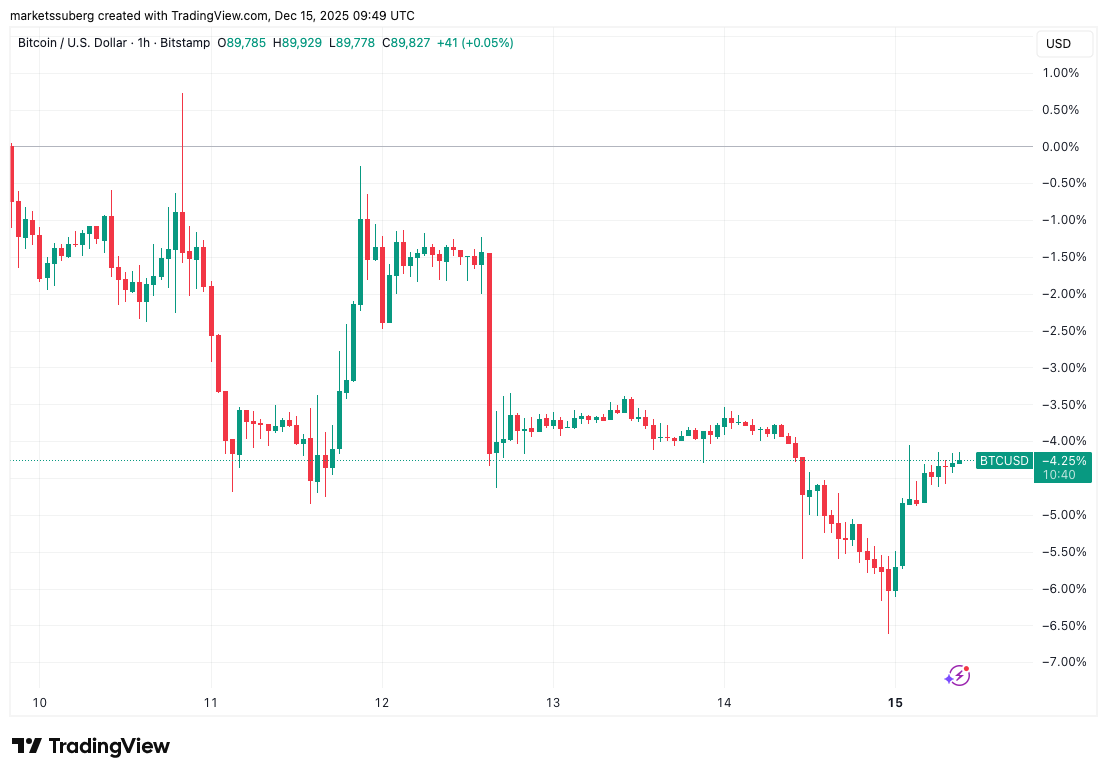
BTC/USD one-hour chart. Source: Cointelegraph/TradingView


As the Christmas holiday period nears, market participants are demanding clearer signals before taking sides.

“This really looks like a range and it's trading like one,” trader CrypNuevo wrote in a dedicated X thread on BTC price action Sunday.

CrypNuevo identified $80,000 and $99,000 as the extremes of the new range while anticipating a trip to one end or the other “soon.”

“There are some more liquidations in the upper side around the 1D50EMA ($95.5k) which makes it a bit more likely to tag this zone first,” he noted, referring to the 50-day exponential moving average.
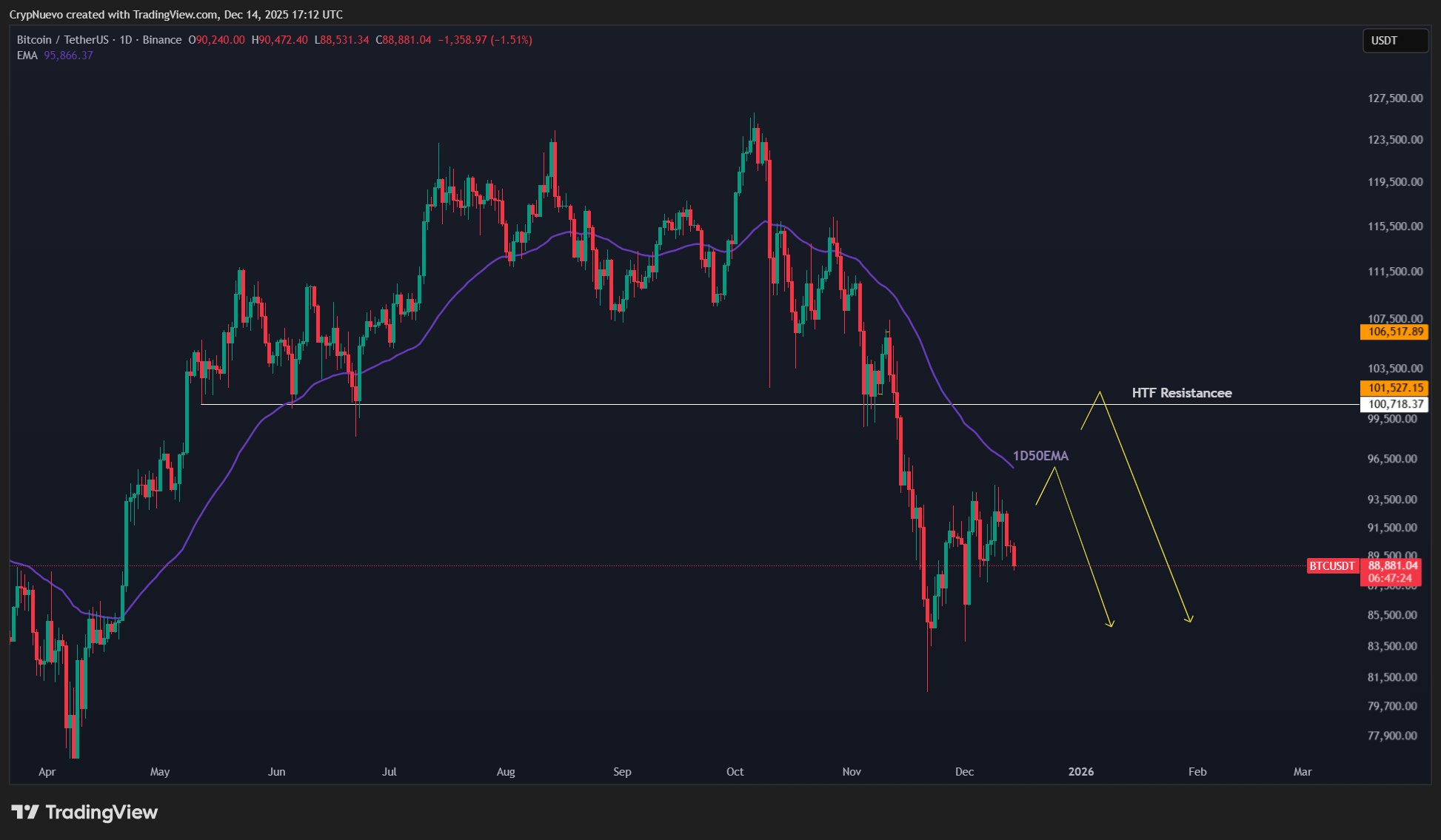
BTC/USDT one-day chart. Source: CrypNuevo/X


The latest data from monitoring resource CoinGlass underscored the potential significance of the $95,000 zone as a short-term price magnet on the day.

Exchange order-book liquidity, having seen a sweep of bids overnight, was now primed to put shorts in the firing line.

“The amount of liquidity between the 95K and 98K region is shining brighter than the sun,” analyst Mark Cullen told X followers.

Cullen suggested that a large player could artificially send the price higher in order to execute a sizeable sell order.
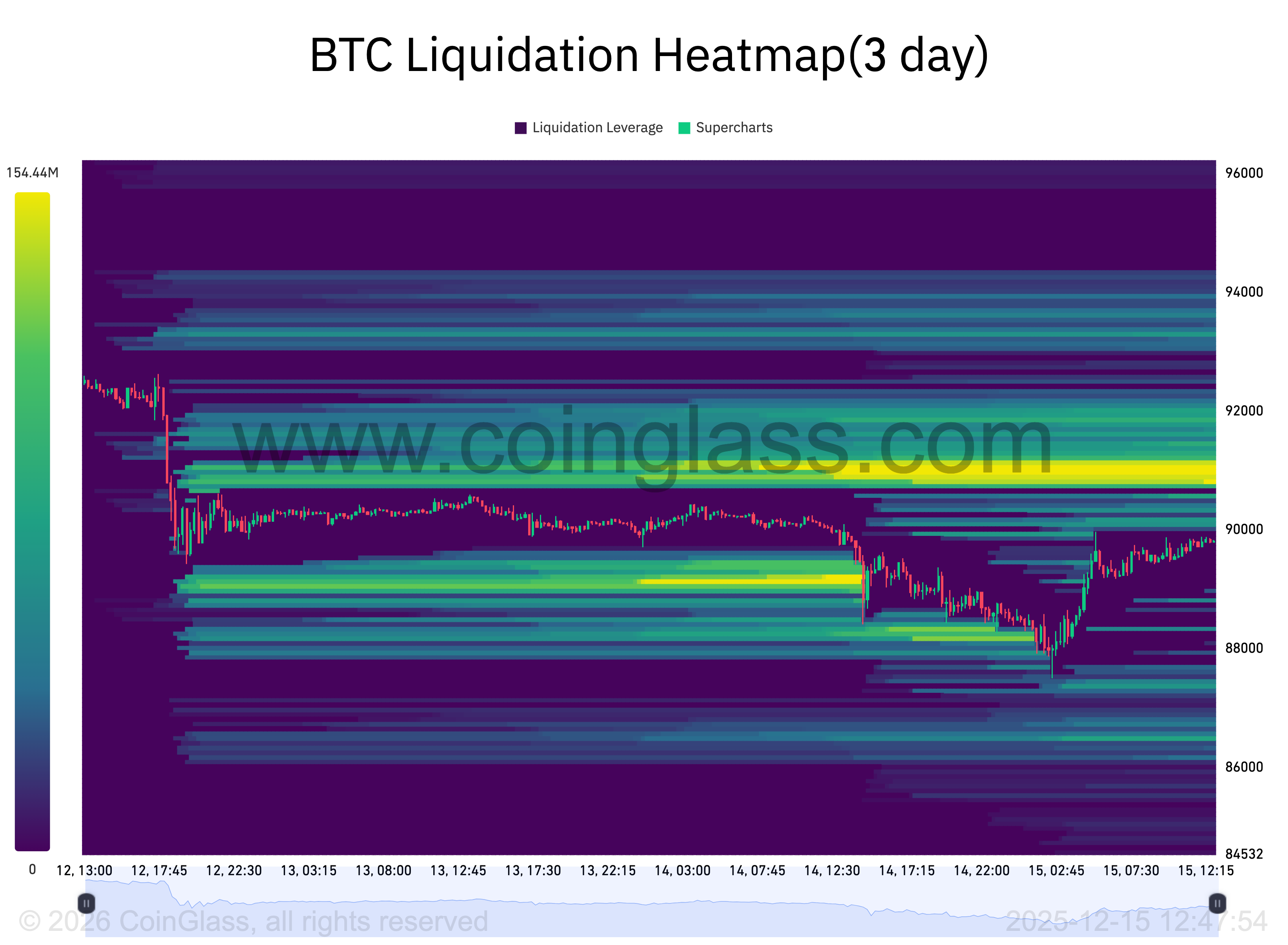
BTC liquidation heatmap. Source: CoinGlass


For crypto trader, analyst and entrepreneur Michaël van de Poppe, meanwhile, it was $90,000 that held the key to short-term direction.

“If that $90K area breaks, I think we'll see some fast moves to $92-94K, which increases the chances of a quick breakout to $100K,” he wrote.

“However, if this $90K still holds up as resistance, there's a chance we'll go substantially lower. Important week!”
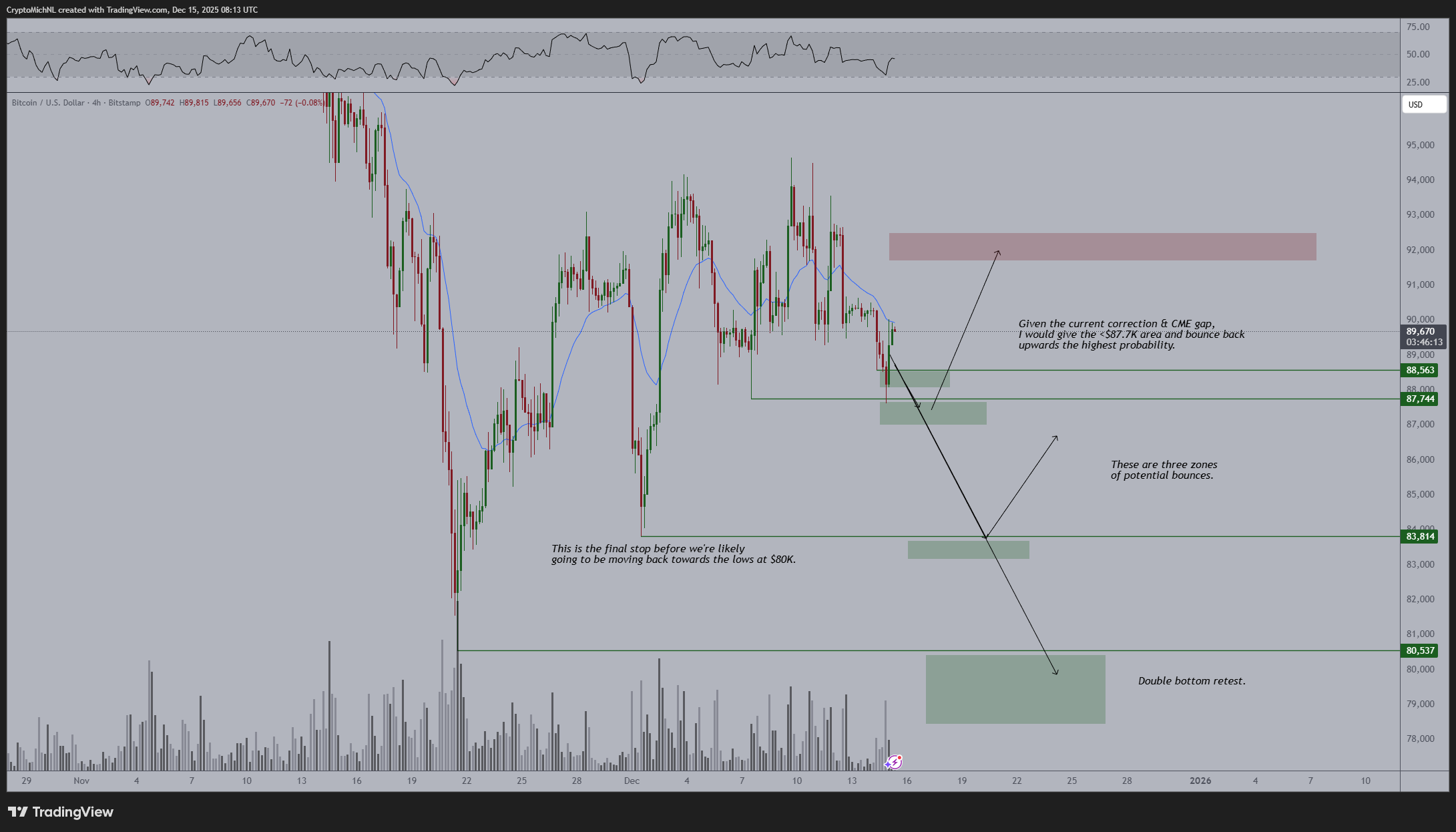
BTC/USDT four-hour chart with RSI, volume data. Source: Michaël van de Poppe/X


As Cointelegraph reported, downside BTC price forecasts include a return to levels closer to $50,000.


Bear flag debate continues

When it comes to BTC price chart features, traders are watching one in particular as 2025 comes to an end.

The bear flag playing out on daily timeframes has led to increasing consensus that current price action is just a relief bounce within a broader downtrend. Once it breaks, new lows are due.

“Let the drop to 76k begin. Bear divs + bear price action proving their worth,” trader Roman wrote in part of an X post on the topic last week.
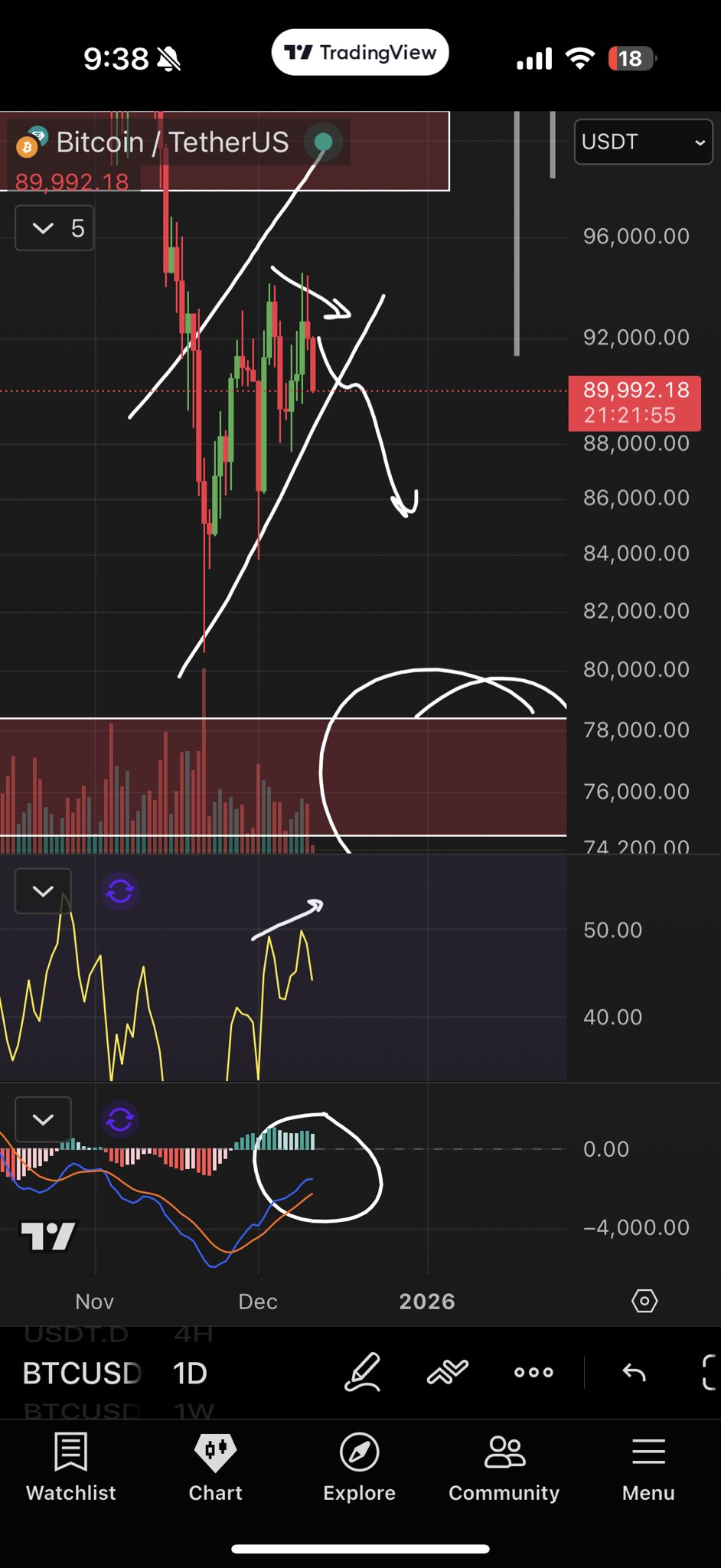
BTC/USD one-day chart. Source: Roman/X


Not everyone, however, believes that the pattern will leave sellers in control.

“This bear flag and measured move is unlikely to play out,” trader SuperBro argued Monday.

“Instead, I expect a higher low or a shallow sweep like we saw in April.”
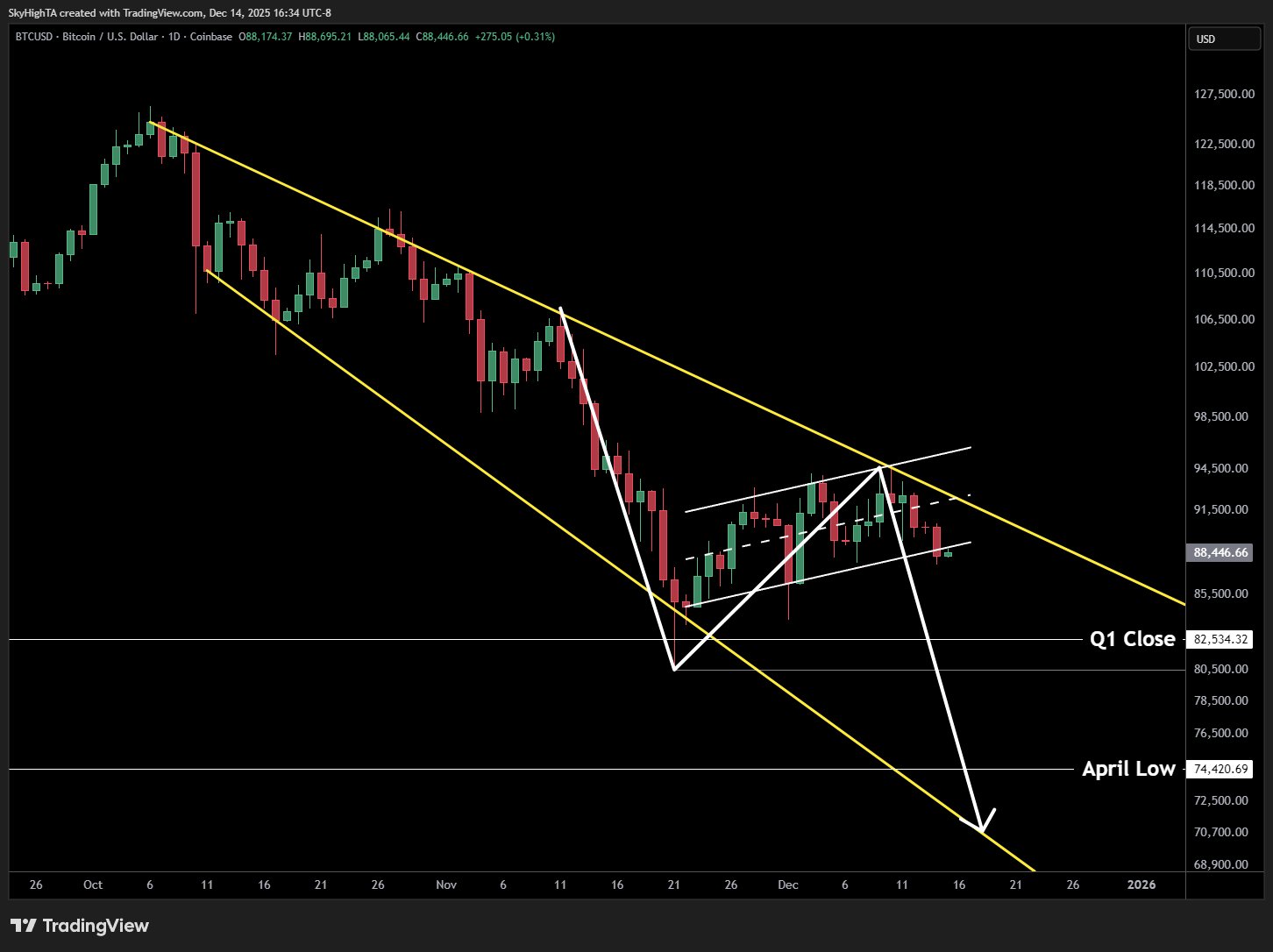
BTC/USD one-day chart. Source: SuperBro/X


SuperBro referred to BTC price performance in the aftermath of the US trade tariff implementation, which saw a trip below $75,000 before a multimonth rebound.

Higher lows are also on the radar for the monthly chart. SuperBro eyed a potential reversal structure already in play, questioning the idea that Bitcoin is at the start of a new bear market despite its 30% drop from all-time highs.

“Many are convinced this is the start of a painful bear, but the monthly chart supports my base case of a prolonged bull cycle,” he commented.
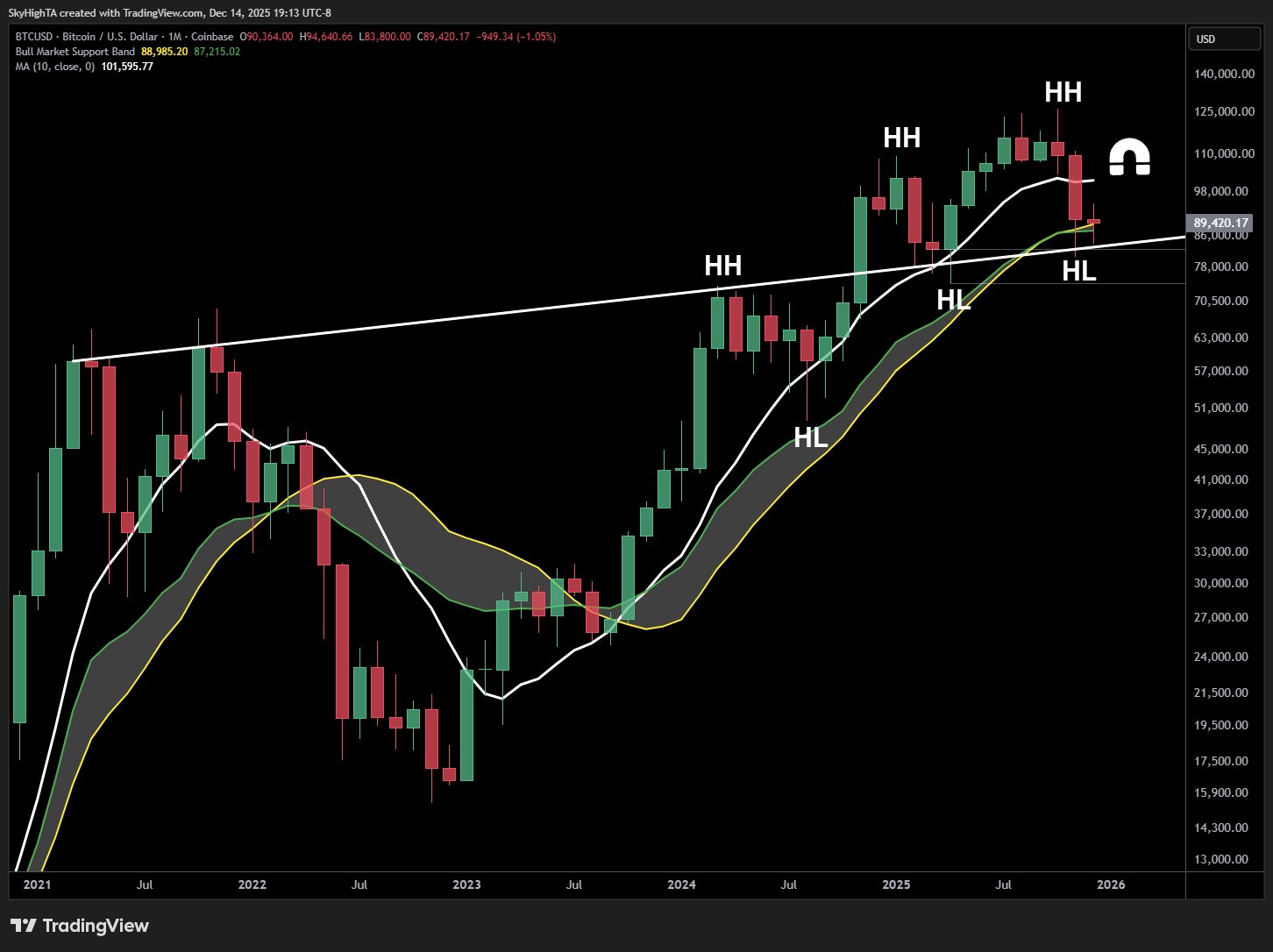
BTC/USD one-month chart. Source: SuperBro/X

Macro data makes a comeback

A deluge of US macroeconomic data is set to round out the last full week before Christmas.

Unemployment data will lead the line-up of figures to watch for risk-asset traders, with the Consumer Price Index (CPI) print following on Thursday.

Both will include unreleased data from during the government shutdown, giving an insight into economic trends that traders and policymakers have lacked for months.

“A massive backlog of economic data is coming this week,” trading resource The Kobeissi Letter summarized on X.

“Mass amounts of economic data from the government shutdown have officially arrived.”

The releases come as the Federal Reserve begins to expand liquidity after officially ending its latest round of quantitative tightening (QT) at the end of November.

Interest rates also continue to drop despite inflation remaining above the Fed’s notional 2% target. All this, says analysis, points to an ideal mix of catalysts for risk assets.

“The boost to liquidity is also coinciding with solid economic growth and fiscal stimulus arriving next year due to tax and spending provisions contained in the One Big Beautiful Bill,” trading outfit Mosaic Asset Company wrote in the latest edition of its regular newsletter, “The Market Mosaic.”

“That’s a perfect storm of conditions to keep driving the bull market into the new year. With valuations historically extended, a positive earnings outlook is critical to support additional gains in the stock market.”
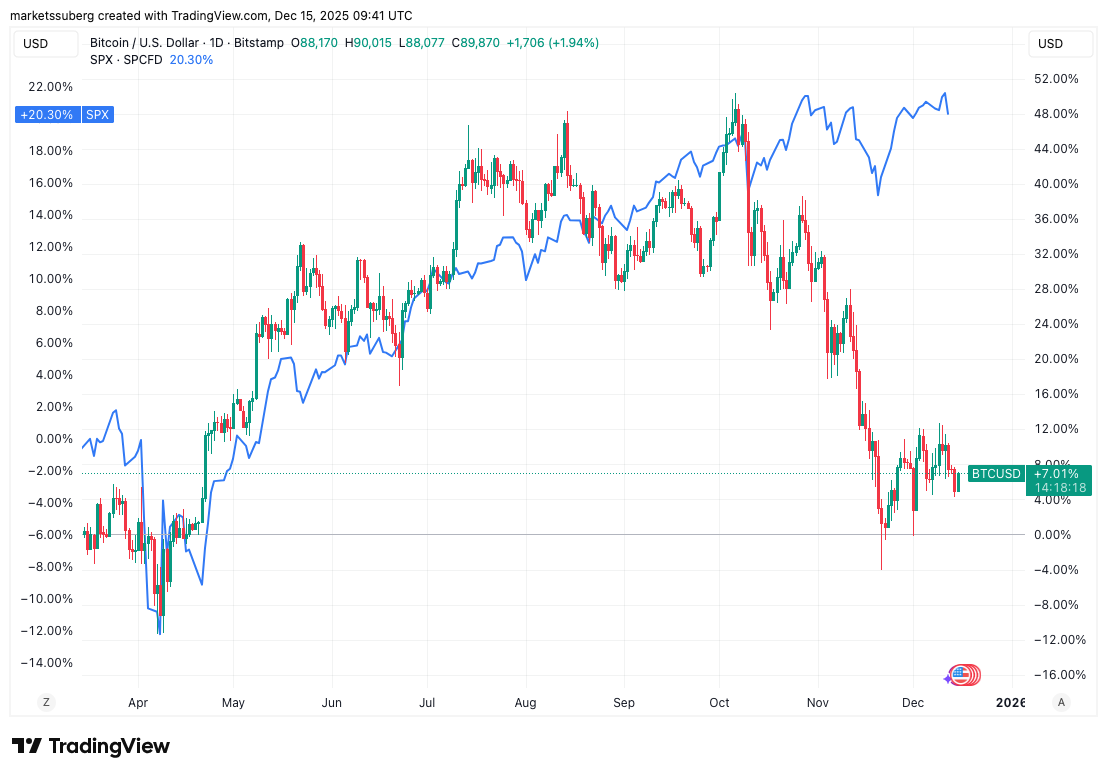
BTC/USD vs. S&P 500 one-day chart. Source: Cointelegraph/TradingView


As Cointelegraph reported, crypto has diverged conspicuously from stocks and gold over the past month, failing to capitalize on the latest round of financial easing by central banks worldwide.

Speaking at the White House over the weekend, meanwhile, US President Donald Trump described inflation as being “totally neutralized.”

“We may get it a little bit lower — you don’t want it too [low]. You don’t want deflation; deflation is in many ways worse than inflation,” he said.

Bitcoin options traders lock in post Fed

The Fed move quickly began to impact Bitcoin derivatives markets.

Summarizing the situation at the end of last week, onchain analytics platform Glassnode said that traders were now very much in “wait and see” mode.

“Post FOMC, implied volatility has compressed, but downside remains consistently priced,” an X thread concluded.

“Skew and flow data point to a market expecting limited upside, range bound conditions, and ongoing sensitivity to macro drivers rather than fresh policy catalysts.”
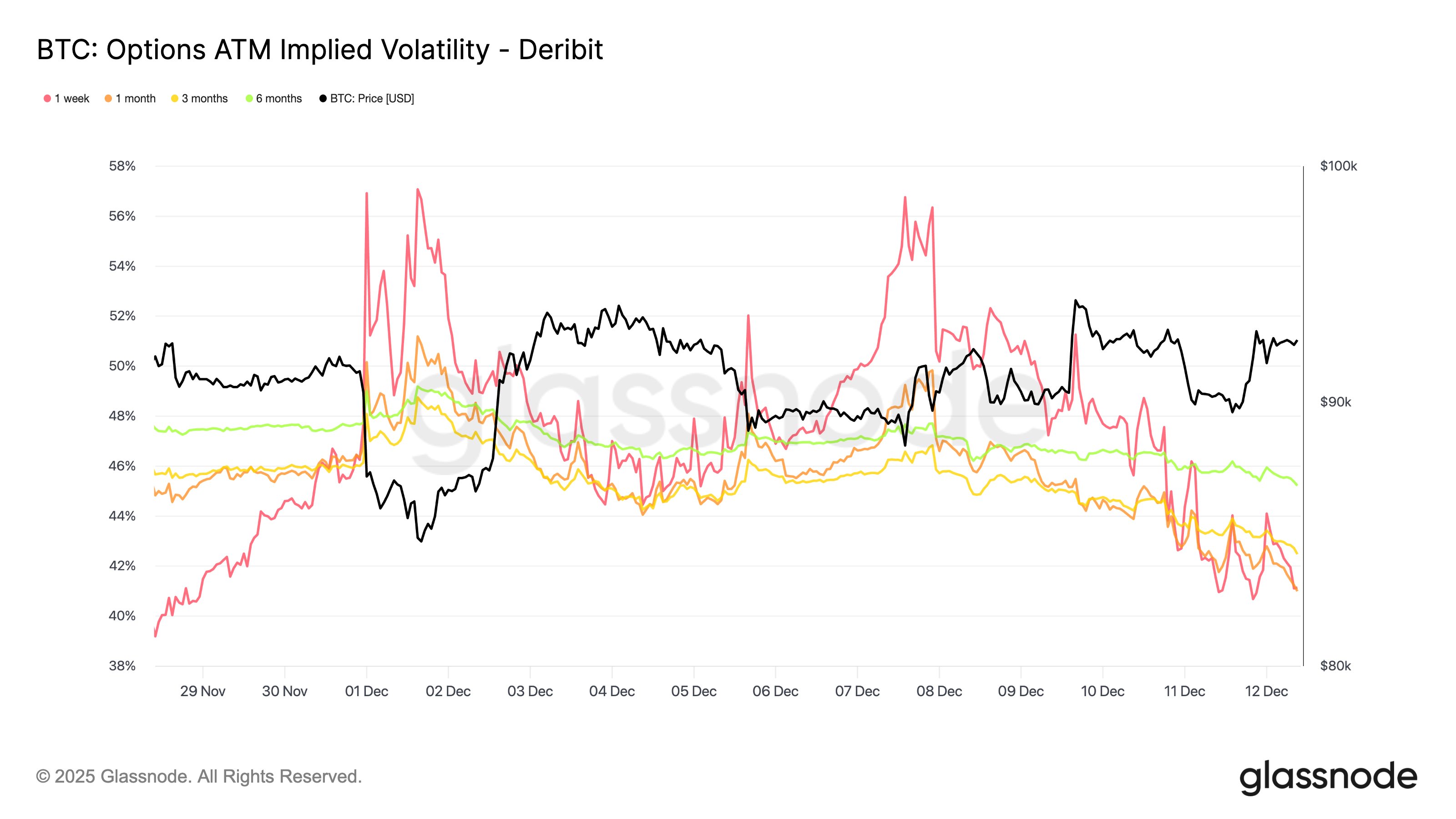
Bitcoin option at-the-money IV. Source: Glassnode/X


Backing up its forecast was decreasing implied volatility (IV) between weekly and six-month timeframes.

“Lower IV means options price in smaller expected moves. With the policy catalyst behind us, the market is de-pricing uncertainty,” Glassnode explained.

Despite this, concerns over Japanese market stability have led some commentators to warn of volatility making a sweeping return across risk assets.

This Friday, Japan’s central bank is expected to go against the global easing trend and hike interest rates — something that historically has had bearish implications for Bitcoin.


Speculators in Bitcoin market cleanse

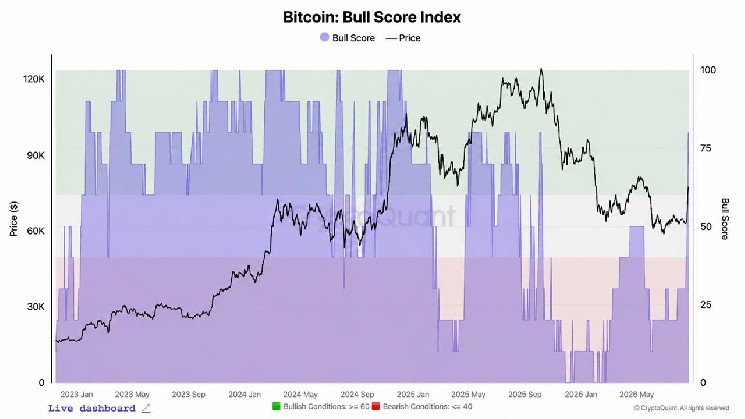
Bitcoin speculators are capitulating at a rate not seen since late 2023, “setting the stage” for a market comeback.

Related: Michael Saylor hints at next Bitcoin buy as BTC falls below $88K

In one of its latest market insights, onchain analytics platform CryptoQuant revealed two-year lows in the ratio of loss-making onchain transactions originating from long-term (LTH) and short-term (STH) holders.

A “ratio of a ratio,” the data stems from the spent output profit ratio (SOPR) metric, which measures the extent to which coins moving onchain are doing so in profit or loss.

When STH-based onchain losses become noticeably more common than those of LTHs, it can signal that a flush-out of speculative activity is underway.

The SOPR Ratio hit 1.29 in recent days, marking lows not seen since BTC/USD began to rise for its Q3 2023 bull run. At the time, BTC/USD traded at around $30,000.

“This sharp drop signals that short-term holders (STH) are realizing heavy losses relative to long-term holders (LTH), who are largely holding firm and spending minimal profits (or even losses),” CryptoQuant contributor NovAnalytica commented.

“Historically, such extreme lows in the ratio have coincided with major capitulation phases for speculative participants – often clearing out weak hands and setting the stage for a market rebound.”
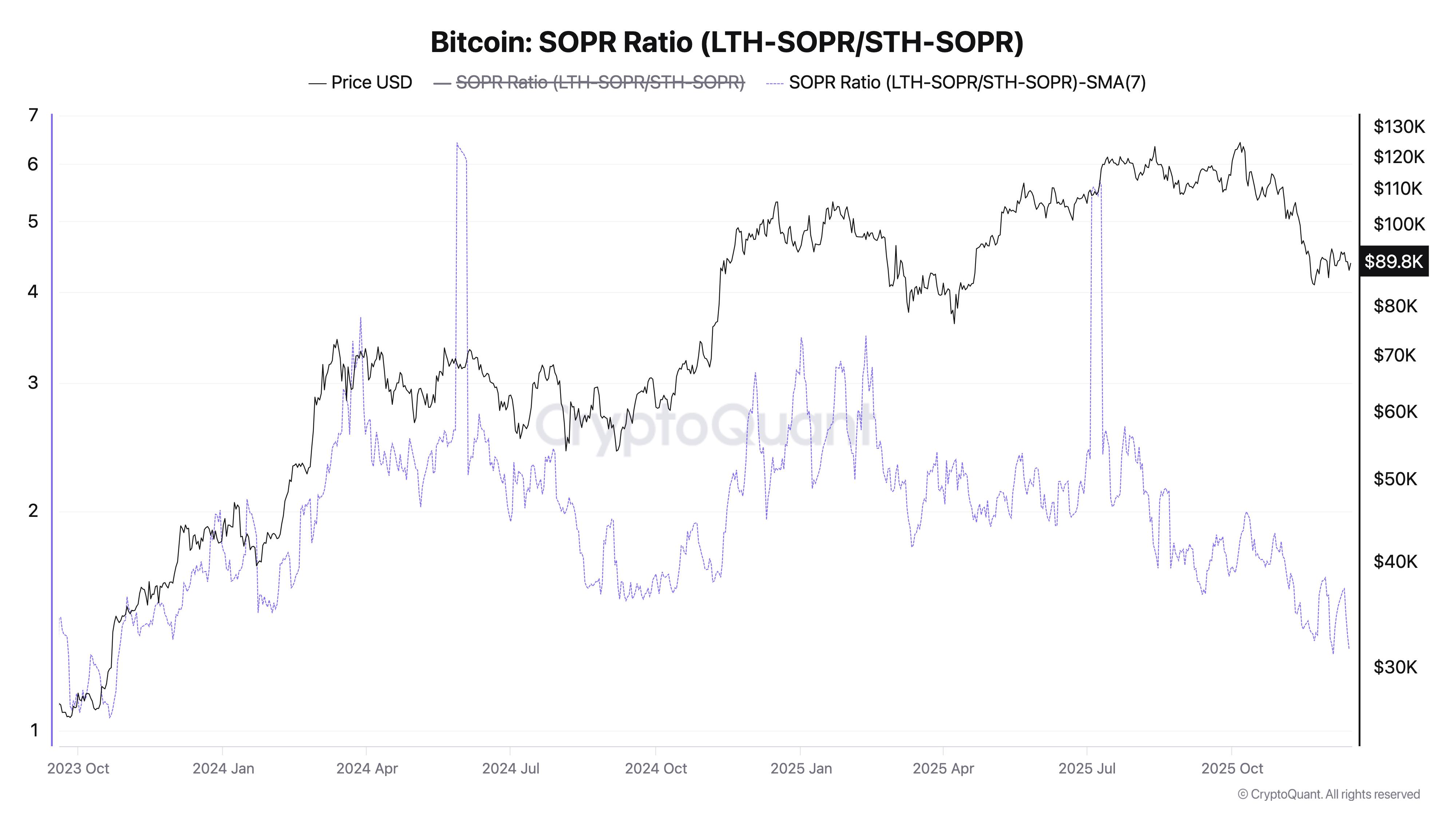
Bitcoin SOPR Ratio. Source: CryptoQuant


Last week, Cointelegraph reported on STHs’ ongoing battle to avoid complete capitulation as the cohort’s cost basis becomes a key focus.

This article does not contain investment advice or recommendations. Every investment and trading move involves risk, and readers should conduct their own research when making a decision. While we strive to provide accurate and timely information, Cointelegraph does not guarantee the accuracy, completeness, or reliability of any information in this article. This article may contain forward-looking statements that are subject to risks and uncertainties. Cointelegraph will not be liable for any loss or damage arising from your reliance on this information.





Trending Cryptos

Related Reads

In Just 11 Days, Claude Rewrote Millions of Lines of Code, an Epic AI Engineering Feat Sparks Fury

In just 11 days, Bun's founder Jarred Sumner used Anthropic's Claude AI models to rewrite its million lines of code from Zig to Rust. This move sparked significant controversy, particularly from Zig's creator, Andrew Kelley, who publicly criticized Sumner's engineering practices and the decision to use AI for such a massive rewrite. Bun, a high-performance JavaScript/TypeScript runtime and rival to Node.js, was originally written in Zig. After Anthropic acquired Bun, the team encountered persistent stability and memory safety bugs in the Zig codebase. These issues, combined with Zig's strict policy against LLM-generated code, led to the decision to rewrite in Rust. The rewrite was executed using Claude AI tools at an estimated API cost of $165,000, dramatically reducing the expected time and financial cost. Andrew Kelley's response was scathing. He blamed the original bugs on poor engineering habits, calling Bun's Zig code a collection of "hacks on top of hacks." He expressed relief that Bun was no longer associated with Zig, fearing it would misrepresent the language and attract low-quality, AI-generated contributions. The tech community is divided; some view Kelley's critique as unprofessional, while others see it as a defense of engineering integrity. A major concern about the AI-driven rewrite is the resulting code quality. The translation from Zig left approximately 27,000 lines of unsafe Rust code, raising fears about long-term maintainability and technical debt. The debate centers on whether this project is a milestone in AI-assisted development or a future maintenance nightmare.

marsbit34m ago

In Just 11 Days, Claude Rewrote Millions of Lines of Code, an Epic AI Engineering Feat Sparks Fury

marsbit34m ago

From Auto Finance to Bitcoin to AI Engines: An Analysis of Cango's 'What Not to Do' Strategy

From Auto Finance to Bitcoin and Now AI: Cango's "What Not to Do" Strategy Cango, a Chinese auto finance platform that went public on the NYSE in 2018, is undergoing its third major transformation. After selling its entire auto business in 2024, it pivoted to become a large-scale Bitcoin miner, acquiring 50 exahash of mining rigs from Bitmain. However, its true goal was never Bitcoin, but owning and controlling energy infrastructure. Now, Cango is pivoting again. While most listed Bitcoin miners are leasing power to giant hyperscalers for AI training clusters, Cango is taking the opposite path. It has launched an AI inference subsidiary called EcoHash, focusing not on training but on distributed inference. The company's strategy hinges on the insight that over 70% of mining industry power is controlled by small, independent sites (10-50 MW), which are too small for hyperscalers but ideal for low-latency AI inference. Cango aims to partner with these small operators, providing the AI technology, customers, and financing through its EcoLink software layer, which can distribute workloads across sites for reliability. Cango maintains a hybrid model, running roughly 31.7 EH/s of Bitcoin mining for cash flow while aggressively cleaning its balance sheet—slashing long-term debt by 94.5% to $30.6 million and raising $75 million for its AI venture. Its first AI deployment will be at a 50 MW site in Georgia. The strategy faces skepticism, given the high costs of converting mining sites and the potential for an AI bubble. However, Cango's leadership believes discipline around "what not to do"—avoiding direct competition with hyperscalers in training—positions it to capture the long-tail demand for distributed AI inference power.

Foresight News50m ago

From Auto Finance to Bitcoin to AI Engines: An Analysis of Cango's 'What Not to Do' Strategy

Foresight News50m ago

Strategy's Bitcoin Sales Cap Far Exceeds $1.25 Billion: A Detail the Market Overlooked

The article discusses how MicroStrategy's potential Bitcoin sales go far beyond the announced $1.25 billion "reserve-building capacity." It clarifies a key distinction in the company's "BTC Monetization Program": selling Bitcoin to *build* a new dollar reserve (the $1.25B cap) versus selling to *replenish* the existing USD Reserve after it's used for expenses like preferred share dividends. The recent $216M BTC sale for dividend payments was a "replenishment," leaving the headline $1.25B building quota untouched. The plan actually outlines three potential funding pools from BTC sales: 1) Building the reserve ($1.25B cap), 2) Covering preferred share/ debt costs (no specified cap), and 3) Funding buyback programs (up to $20B). This means the structured sales potential exceeds $30 billion, not including uncapped replenishment sales. The piece argues this marks MicroStrategy's shift from a passive "buy-and-hold" Bitcoin proxy to an actively managed entity using BTC as a balance-sheet tool to manage its complex capital structure (common stock, preferred shares, debt, reserve). This creates new dynamics and potential conflicts, as actions benefiting one part (e.g., selling BTC to pay dividends) may pressure another (e.g., undermining the "never sell" narrative). Investors must now parse the company's specific terminology ("build" vs. "replenish") to understand the true scope of future BTC sales, which is significantly larger than the market initially perceived.

marsbit56m ago

Strategy's Bitcoin Sales Cap Far Exceeds $1.25 Billion: A Detail the Market Overlooked

marsbit56m ago

Goldman Sachs Report Deconstructs the Competitive Landscape of China's AI Large Models: Who Will Be the Long-Term Winner?

Goldman Sachs analyzes China's AI large language model (LLM) landscape, identifying key players and a strategic shift towards efficiency and global expansion. The report highlights that Chinese open-source/open-weight models are closing the performance gap with top global proprietary models at significantly lower cost, driven by architectural innovations like MoE. This enables a "two-tier" market: a high-end segment (e.g., GLM5.2, Qwen3.7 Max) with pricing at ~$1 per million tokens, and a low-end, price-sensitive global segment. Open-source strategies aid adoption but limit monetization, as deployments via third-party platforms (e.g., AWS Bedrock, Alibaba Cloud) may not generate direct revenue for model creators. The industry is thus moving towards "open-weight + community license" models with revenue-sharing to improve unit economics. Internationally, the focus is shifting from "token maximization" to ROI-driven enterprise adoption, particularly in non-U.S. markets. Major cloud platforms are integrating Chinese models (e.g., DeepSeek, MiniMax). Using a competitive framework based on pricing power, cost advantage, and financial strength, Goldman Sachs identifies **Zhipu AI** and **DeepSeek** as leaders in foundational text models, and **ByteDance** (with Seedance) leading in multimodal/video generation. **MiniMax** and **Kuaishou** are also rated favorably. The firm forecasts China's AI model API/subscription revenue growing from ~RMB 35bn (2026E) to RMB 879bn by 2030.

marsbit57m ago

Goldman Sachs Report Deconstructs the Competitive Landscape of China's AI Large Models: Who Will Be the Long-Term Winner?

marsbit57m ago

Trading

Spot

Hot Articles

What is $BITCOIN

DIGITAL GOLD ($BITCOIN): A Comprehensive Analysis Introduction to DIGITAL GOLD ($BITCOIN) DIGITAL GOLD ($BITCOIN) is a blockchain-based project operating on the Solana network, which aims to combine the characteristics of traditional precious metals with the innovation of decentralized technologies. While it shares a name with Bitcoin, often referred to as “digital gold” due to its perception as a store of value, DIGITAL GOLD is a separate token designed to create a unique ecosystem within the Web3 landscape. Its goal is to position itself as a viable alternative digital asset, although specifics regarding its applications and functionalities are still developing. What is DIGITAL GOLD ($BITCOIN)? DIGITAL GOLD ($BITCOIN) is a cryptocurrency token explicitly designed for use on the Solana blockchain. In contrast to Bitcoin, which provides a widely recognized value storage role, this token appears to focus on broader applications and characteristics. Notable aspects include: Blockchain Infrastructure: The token is built on the Solana blockchain, known for its capacity to handle high-speed and low-cost transactions. Supply Dynamics: DIGITAL GOLD has a maximum supply capped at 100 quadrillion tokens (100P $BITCOIN), although details regarding its circulating supply are currently undisclosed. Utility: While precise functionalities are not explicitly outlined, there are indications that the token could be utilized for various applications, potentially involving decentralized applications (dApps) or asset tokenization strategies. Who is the Creator of DIGITAL GOLD ($BITCOIN)? At present, the identity of the creators and development team behind DIGITAL GOLD ($BITCOIN) remains unknown. This situation is typical among many innovative projects within the blockchain space, particularly those aligning with decentralized finance and meme coin phenomena. While such anonymity may foster a community-driven culture, it intensifies concerns about governance and accountability. Who are the Investors of DIGITAL GOLD ($BITCOIN)? The available information indicates that DIGITAL GOLD ($BITCOIN) does not have any known institutional backers or prominent venture capital investments. The project seems to operate on a peer-to-peer model focused on community support and adoption rather than traditional funding routes. Its activity and liquidity are primarily situated on decentralized exchanges (DEXs), such as PumpSwap, rather than established centralized trading platforms, further highlighting its grassroots approach. How DIGITAL GOLD ($BITCOIN) Works The operational mechanics of DIGITAL GOLD ($BITCOIN) can be elaborated on based on its blockchain design and network attributes: Consensus Mechanism: By leveraging Solana’s unique proof-of-history (PoH) combined with a proof-of-stake (PoS) model, the project ensures efficient transaction validation contributing to the network's high performance. Tokenomics: While specific deflationary mechanisms have not been extensively detailed, the vast maximum token supply implies that it may cater to microtransactions or niche use cases that are still to be defined. Interoperability: There exists the potential for integration with Solana’s broader ecosystem, including various decentralized finance (DeFi) platforms. However, the details regarding specific integrations remain unspecified. Timeline of Key Events Here is a timeline that highlights significant milestones concerning DIGITAL GOLD ($BITCOIN): 2023: The initial deployment of the token occurs on the Solana blockchain, marked by its contract address. 2024: DIGITAL GOLD gains visibility as it becomes available for trading on decentralized exchanges like PumpSwap, allowing users to trade it against SOL. 2025: The project witnesses sporadic trading activity and potential interest in community-led engagements, although no noteworthy partnerships or technical advancements have been documented as of yet. Critical Analysis Strengths Scalability: The underlying Solana infrastructure supports high transaction volumes, which could enhance the utility of $BITCOIN in various transaction scenarios. Accessibility: The potential low trading price per token could attract retail investors, facilitating wider participation due to fractional ownership opportunities. Risks Lack of Transparency: The absence of publicly known backers, developers, or an audit process may yield skepticism regarding the project's sustainability and trustworthiness. Market Volatility: The trading activity is heavily reliant on speculative behavior, which can result in significant price volatility and uncertainty for investors. Conclusion DIGITAL GOLD ($BITCOIN) emerges as an intriguing yet ambiguous project within the rapidly evolving Solana ecosystem. While it attempts to leverage the “digital gold” narrative, its departure from Bitcoin's established role as a store of value underscores the need for a clearer differentiation of its intended utility and governance structure. Future acceptance and adoption will likely depend on addressing the current opacity and defining its operational and economic strategies more explicitly. Note: This report encompasses synthesised information available as of October 2023, and developments may have transpired beyond the research period.

717 Total ViewsPublished 2025.05.13Updated 2025.05.13

What is $BITCOIN

Discussions

Welcome to the HTX Community. Here, you can stay informed about the latest platform developments and gain access to professional market insights. Users' opinions on the price of BTC (BTC) are presented below.

活动图片