Ashenbrenner's Fund Lost Most of Its Stock Portfolio

cryptonews.ruPublished on 2026-07-31Last updated on 2026-07-31

Abstract

Former OpenAI researcher Leopold Aschenbrenner's hedge fund, Situational Awareness, was forced to sell the majority of its public stock portfolio on July 30 after sustaining heavy losses. The portfolio, estimated at up to $16 billion, was purchased at a discount by Citadel, Ken Griffin’s firm. The rapid sale was triggered by a dual market shock: a sharp decline in the fund's concentrated bets on AI infrastructure stocks (like Nebius Group, Sandisk, Micron, CoreWeave) and losses from short positions on software firms like Adobe. The fund had used significant leverage, and falling share prices prompted margin calls from prime brokers including Bank of America, Goldman Sachs, and JPMorgan Chase. This came just weeks after the fund reported staggering gains of 439% for the first half of the year. Following the sale, the fund retains approximately $10 billion in assets, including a stake in AI company Anthropic, which was reportedly not part of the Citadel deal. Notably, major bitcoin mining stocks held by the fund—including IREN, Bitdeer, and Riot Platforms—surged 18-30% on the day of the sale.

On July 30, Situational Awareness, the hedge fund of former OpenAI researcher Leopold Ashenbrenner, urgently sold the majority of its portfolio of public stocks. CNBC reports this citing sources.

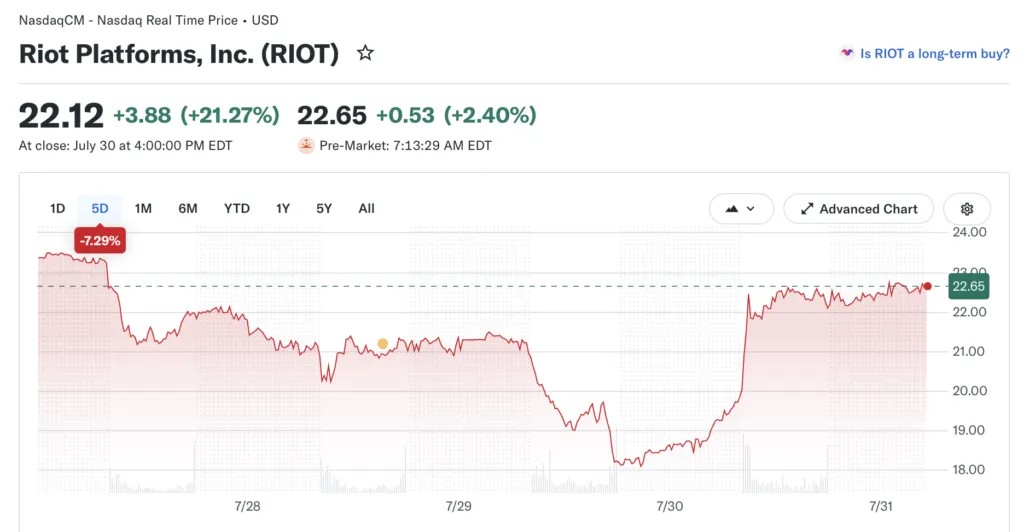
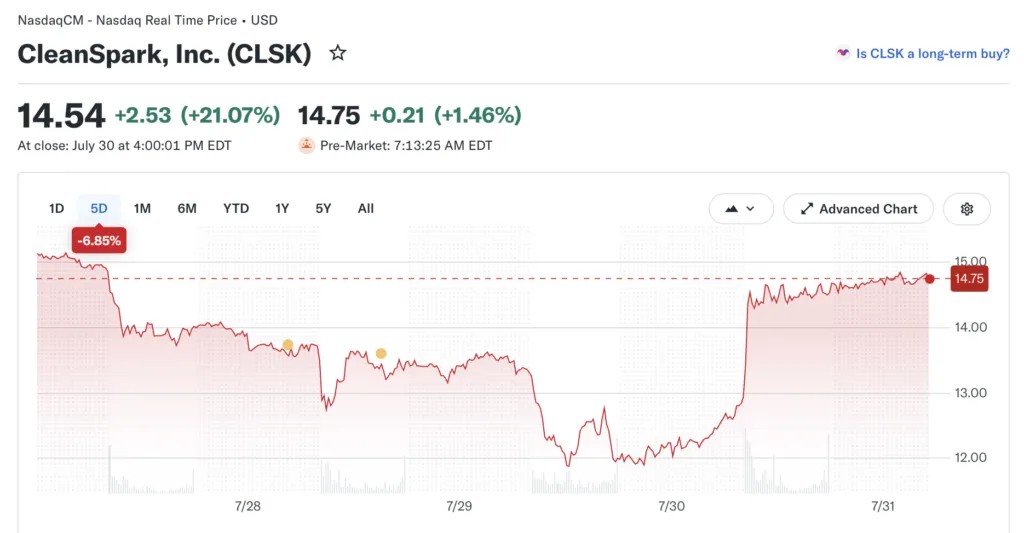
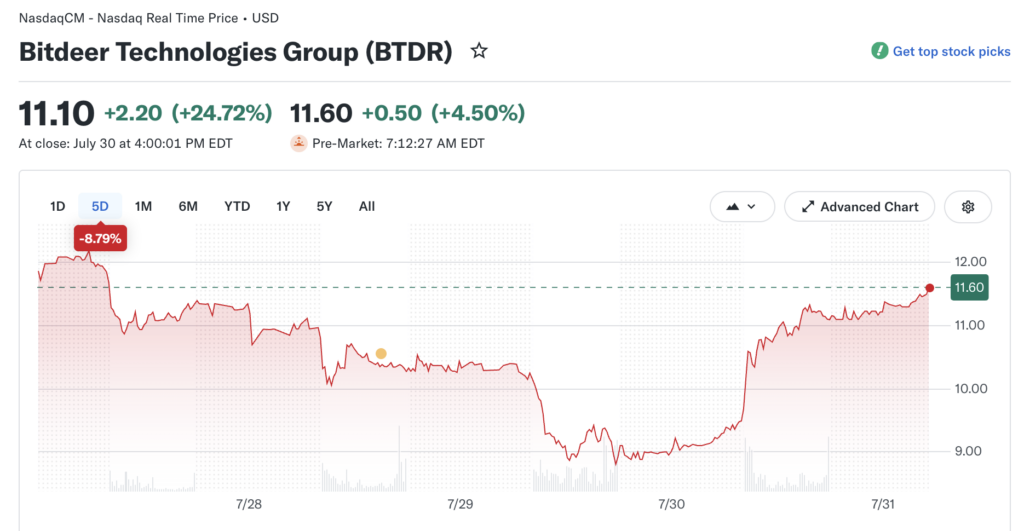
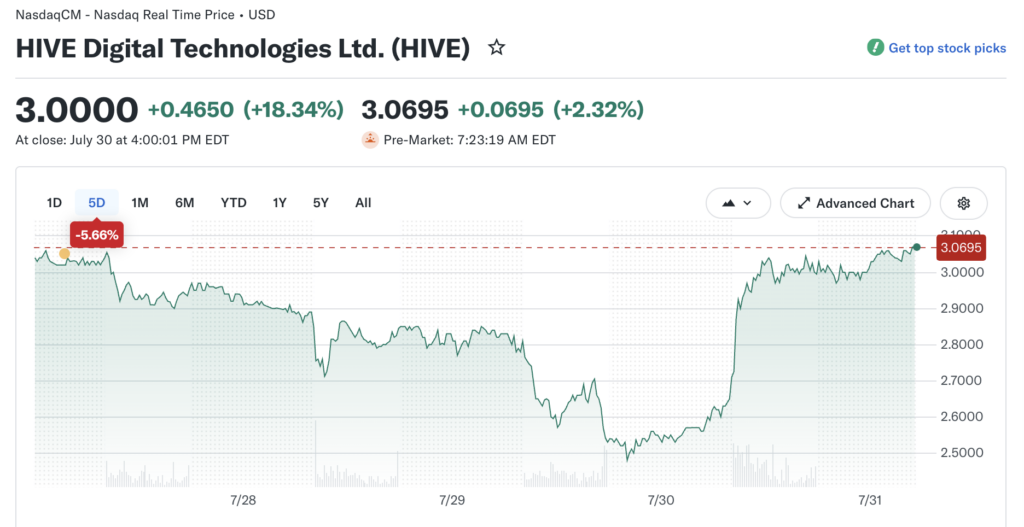
Shares of bitcoin miners, which the structure held according to reporting data as of March 31, rose by 18-30% at the end of the last trading session.

Ashenbrenner's Picks and Shovels

A Deal Overnight

The buyer of the Situational Awareness portfolio was Ken Griffin's Citadel, which agreed to purchase the package at a discount. According to Financial Times, it outbid competing offers from Millennium Management and Jane Street. Bloomberg clarified that both companies examined these assets but did not participate in the final transaction. Goldman Sachs, JPMorgan Chase, Bank of America, and Citigroup helped organize the transaction, Reuters sources stated.

The deal was prepared in less than 24 hours. Discussions began on Wednesday evening, and by Thursday morning the parties had agreed on terms. By that time, the fund was already looking for a single buyer for the entire package—selling the securities piecemeal on a falling market would have hurt its own positions. Ashenbrenner offered competitors to buy out shares worth more than $10 billion, writes The New York Times. According to the publication's estimate, the entire crisis unfolded over approximately a day and a half.

The full volume of the deal remains unknown. WSJ, Reuters, and FT reported on the main part of the portfolio without giving exact figures. According to WSJ's version, Citadel primarily took the positions purchased with borrowed funds, while some unleveraged assets might have remained with the fund. Situational Awareness's public investments prior to the transaction were estimated by FT at approximately $16 billion, calling it one of the largest on the American stock market.

After the agreement, the structure retained assets worth approximately $10 billion, including non-public investments. The NYT noted that Wall Street viewed the developments with caution: the previous episode of forced closure of a major player's positions—the collapse of Archegos in 2021—resulted in losses for Credit Suisse.

Leverage Worked in Reverse

Ashenbrenner's fund was hit by two blows simultaneously, CNBC sources emphasized. Investments in AI infrastructure were particularly hard hit: shares of Nebius Group, Sandisk, Micron, and CoreWeave fell by more than 35% by the end of July. The sell-off also affected other major positions—SK Hynix and Bloom Energy. At the same time, Situational Awareness was hurt by its short bets on software development companies, including Adobe.

The structure built up positions using borrowed funds, so the drop in share prices devalued the loan collateral. Prime brokers Bank of America, Goldman Sachs, and JPMorgan Chase demanded additional collateral. Reuters, however, noted: it is unknown whether the banks had time to send formal margin calls to the fund before the deal. Estimates of Situational Awareness's size vary. A CNBC source stated $45 billion at its peak in early July, while Bloomberg and FT cited a range of $20-24 billion before the main crash.

Only a few weeks passed between record returns and the sell-off. In a letter to investors dated July 24, Ashenbrenner reported that the fund earned 439% from January to June and 1551% since its launch. He acknowledged that the tech sector sell-off had affected his portfolio as well, but called it a favorable moment for purchases. He offered clients to make additional contributions starting August 1.

According to WSJ, by the end of July the loss had reached approximately 67%. In the same letter, Ashenbrenner linked the scale of the losses to the actions of short sellers working against Situational Awareness's positions.

Major non-public investments, including a stake in Anthropic, were not part of the agreement with Citadel, but the fund was considering selling them too. According to WSJ, management almost reached an agreement to sell the Claude developer's stake for approximately $3.5 billion to a consortium led by Greenoaks and Sequoia Capital, but the deal was canceled. A Situational Awareness representative told CNBC that reports about the sale of this stake were inaccurate.

Greenoaks and Sequoia Capital had already invested in Anthropic earlier. In May, the company raised $65 billion at a post-investment valuation of $965 billion—the round was led by Altimeter Capital, Dragoneer, Greenoaks, and Sequoia Capital. On June 1, the AI developer confidentially filed a draft registration statement on Form S-1 with the SEC. Ashenbrenner called this possible placement one of the key events of the second half of the year.

How This Affected Bitcoin Miner Stocks

At the end of trading on July 30, IREN rose the most—by 30.54%, to $38.26. Bitdeer gained 24.72%, Riot Platforms—21.27%, CleanSpark—21.07%, Core Scientific—20.36%, HIVE Digital—18.34%.
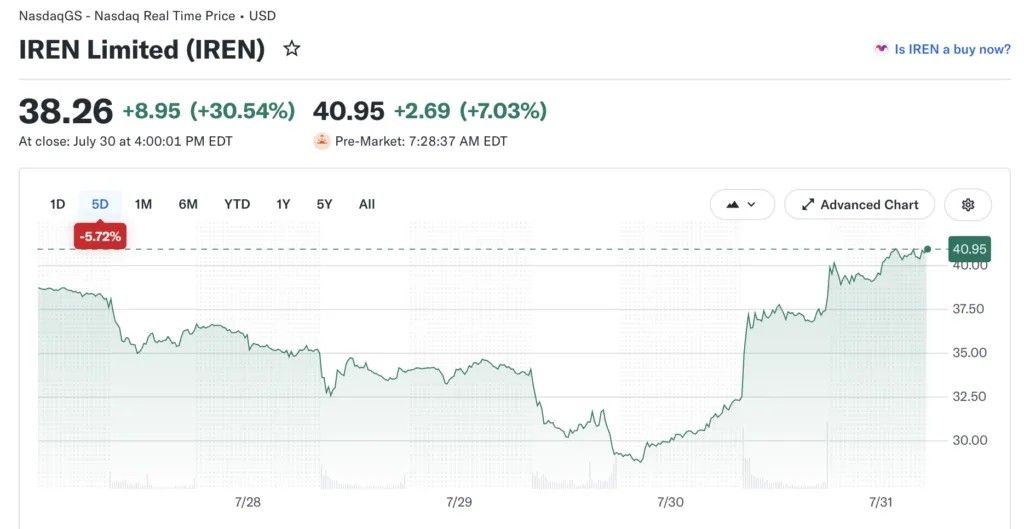
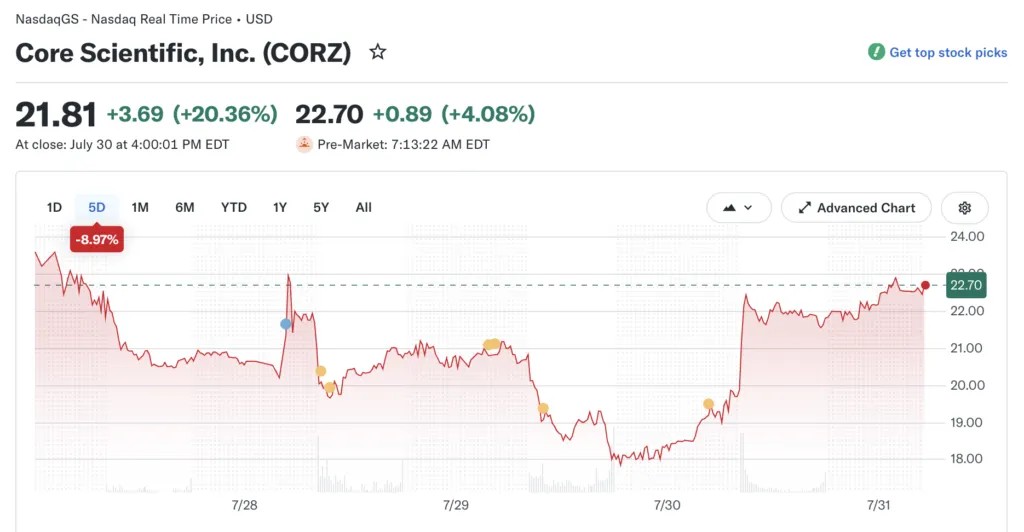
Source: Yahoo Finance.

All six companies were listed in the fund's Form 13F reporting as of March 31:

  • IREN — 11.7 million shares worth $401 million;
  • Core Scientific — 26 million worth $389.1 million;
  • Riot Platforms — 11.5 million worth $142.2 million;
  • CleanSpark — 12.3 million worth $104.5 million;
  • Bitdeer — 3.44 million worth $29.8 million;
  • HIVE Digital — 3.39 million worth $6.4 million.

However, it is unknown whether the fund held these securities immediately before the sale.

IREN's quotes were also influenced by the company's own news. On July 20, the company announced new contracts for cloud AI services with a total value of $2.8 billion and raised its target annual AI Cloud revenue growth rate by the end of 2026 to over $4 billion. Among the clients, the miner's management highlighted Microsoft, NVIDIA, Perplexity, Figure AI, and other organizations.

Recall that in July, Alphabet recorded negative free cash flow for the first time due to massive investments in AI infrastructure.

end-content
Trending Cryptos

Related Questions

QWhat was the main event involving Leopold Aschenbrenner's hedge fund Situational Awareness on July 30th?

AOn July 30th, the hedge fund Situational Awareness, founded by former OpenAI researcher Leopold Aschenbrenner, conducted an emergency sale of the majority of its public stock portfolio.

QWho was the buyer of the portfolio sold by Situational Awareness, and what notable condition was involved in the deal?

AThe buyer was Citadel, founded by Ken Griffin. The deal involved Citadel acquiring the portfolio at a discount.

QWhat were the two main factors that contributed to the fund's financial troubles leading to the sale?

AThe fund faced two major blows: a significant decline in the value of its AI infrastructure investments (e.g., Nebius Group, Sandisk) and losses from its short positions on software companies like Adobe. The use of leverage (borrowed funds) amplified these losses as falling share prices devalued the collateral for its loans.

QHow did the sale of the fund's portfolio affect the stock prices of major Bitcoin mining companies?

AFollowing the sale on July 30th, the stocks of major Bitcoin mining companies held by the fund surged significantly. For example, IREN rose by 30.54%, Bitdeer by 24.72%, Riot Platforms by 21.27%, CleanSpark by 21.07%, Core Scientific by 20.36%, and HIVE Digital by 18.34%.

QWhat happened to the fund's reported performance between its launch and June 2024, and what was its estimated loss by the end of July?

AAccording to a letter to investors from July 24th, the fund earned 439% from January to June 2024 and had gained 1551% since its launch. However, by the end of July, its estimated loss had reached approximately 67%.

Related Reads

A Precedent for the Prediction Markets: CFTC Aims to Prove Authority Over Polymarket via Criminal Case

A U.S. Army soldier, Gannon Ken Van Dyke, who earned $400,000 using non-public information on the crypto event-prediction platform Polymarket, is contesting the U.S. Commodity Futures Trading Commission's (CFTC) attempt to intervene in his criminal case. The CFTC, which initiated a separate civil suit against Van Dyke but has not pursued it to trial, seeks to submit arguments in the ongoing criminal proceeding. Van Dyke's lawyers filed a motion opposing this, arguing the CFTC is improperly trying to influence the criminal case as an outside expert rather than through its own lawsuit. They contend that event contracts traded on platforms like Polymarket are not swaps and thus fall outside the CFTC's jurisdiction, calling the regulator's tactics a procedural maneuver. Van Dyke faces criminal fraud charges for allegedly trading based on confidential information about potential regime change in Venezuela. His civil case with the CFTC is stayed pending the criminal trial, expected in late 2026 or early 2027. The court's decision on whether to allow the CFTC's intervention could set a precedent for how such event contracts are regulated. An AI analysis notes inconsistency in the CFTC's approach compared to a similar case involving a Google employee, raising questions about the legal strategy for the prediction market industry, which includes platforms like Kalshi. The outcome may define future regulatory standards for the entire market.

cryptonews.ru1m ago

A Precedent for the Prediction Markets: CFTC Aims to Prove Authority Over Polymarket via Criminal Case

cryptonews.ru1m ago

Nvidia's Jensen Huang, Fei-Fei Li, and Bin Lin All Invest in the Same Robotics Company

Generalist, a San Francisco-based AI startup focused on developing a "universal brain" for robots, has rapidly raised significant funding, attracting high-profile investors including Nvidia, Jeff Bezos' Bezos Expeditions, AI pioneer Fei-Fei Li, and Xiaomi co-founder Bin Lin. Founded in 2024 by former Google DeepMind researchers Pete Florence, Andy Zeng, and former Boston Dynamics engineer Andrew Barry, the company has secured approximately $750 million across four rounds, reaching a valuation surpassing $2 billion. The company's core innovation is its GEN-1.5 model, which aims to give robots powerful generalization capabilities. Unlike traditional systems requiring extensive reprogramming for each new task, GEN-1.5 can learn from a single, brief human demonstration (3-12 seconds) without needing retraining or fine-tuning. This "physical prompting" allows a robot to perform tasks like opening jars or using new tools after seeing them done once. While current single-demo success rates average 59% on simple tasks (improving to 83% with minor fine-tuning), the technology promises to drastically reduce robot deployment time from months to seconds. Generalist's strategy is to provide the AI intelligence layer that can run on various robotic hardware, rather than building robots themselves. The founding team combines DeepMind's expertise in AI model generalization with Boston Dynamics' practical robotics experience, targeting the industry bottleneck where robot "brains" lag behind advanced "bodies." Capital sees potential in this approach for creating a versatile, low-margin-cost robotic base applicable across factories, warehouses, and labs. However, GEN-1.5 remains a work in progress. Its capabilities are currently demonstrated on short, simple tasks, and significant challenges remain for reliable, long-term operation in complex, unpredictable real-world environments. Commercial viability also depends on hardware costs, maintenance, and system integration. Nevertheless, Generalist represents a shift toward "generalist" robots that can quickly adapt to new tasks, potentially redefining the robotics landscape and posing future questions about the role of human labor.

marsbit7m ago

Nvidia's Jensen Huang, Fei-Fei Li, and Bin Lin All Invest in the Same Robotics Company

marsbit7m ago

Bitcoin above $81K and altcoin surge. The top crypto news this morning

**Bitcoin Surpasses $81,000 as Altcoins Rally: Key Crypto Market Summary for the Morning** Bitcoin (BTC) traded above $80,500, briefly exceeding $81,300, its highest level since early May. Over the past 24 hours, BTC gained nearly 5%, while Ethereum (ETH) rose 3% to trade above $2,500. The total crypto market capitalization stands above $2.71 trillion. Market sentiment is bullish, with the crypto fear and greed index reaching 74 points, indicating "greed" and the highest reading since late last year. Among the top 100 cryptocurrencies, Aerodrome Finance (AERO) posted the largest gain (+18%), while Aave (AAVE) saw the biggest drop (-8%). Bitcoin ETFs recorded a net inflow of over $337 million on August 24, and Ethereum ETFs saw nearly $115 million in inflows. Analysts have turned positive, with some calling the current cycle potentially the "strongest in history." Corporate buying also continued, with mining company Lonic Digital and fintech firm Strive adding to their BTC reserves. Interest has shifted to altcoins and more speculative segments. Memecoins like CASHCAT, Dogecoin (DOGE), and Shiba Inu (SHIB) showed strong gains. Institutional interest in alts is evident, with Bitwise reporting record trading volumes for its Solana ETF. Data from Glassnode shows 85% of non-Bitcoin perpetual futures now have positive funding rates, a level last seen during previous market peaks.

cryptonews.ru12m ago

Bitcoin above $81K and altcoin surge. The top crypto news this morning

cryptonews.ru12m ago

Trading

Spot

Hot Articles

What is SONIC

Sonic: Pioneering the Future of Gaming in Web3 Introduction to Sonic In the ever-evolving landscape of Web3, the gaming industry stands out as one of the most dynamic and promising sectors. At the forefront of this revolution is Sonic, a project designed to amplify the gaming ecosystem on the Solana blockchain. Leveraging cutting-edge technology, Sonic aims to deliver an unparalleled gaming experience by efficiently processing millions of requests per second, ensuring that players enjoy seamless gameplay while maintaining low transaction costs. This article delves into the intricate details of Sonic, exploring its creators, funding sources, operational mechanics, and the timeline of significant events that have shaped its journey. What is Sonic? Sonic is an innovative layer-2 network that operates atop the Solana blockchain, specifically tailored to enhance the existing Solana gaming ecosystem. It accomplishes this through a customised, VM-agnostic game engine paired with a HyperGrid interpreter, facilitating sovereign game economies that roll up back to the Solana platform. The primary goals of Sonic include: Enhanced Gaming Experiences: Sonic is committed to offering lightning-fast on-chain gameplay, allowing players and developers to engage with games at previously unattainable speeds. Atomic Interoperability: This feature enables transactions to be executed within Sonic without the need to redeploy Solana programmes and accounts. This makes the process more efficient and directly benefits from Solana Layer1 services and liquidity. Seamless Deployment: Sonic allows developers to write for Ethereum Virtual Machine (EVM) based systems and execute them on Solana’s SVM infrastructure. This interoperability is crucial for attracting a broader range of dApps and decentralised applications to the platform. Support for Developers: By offering native composable gaming primitives and extensible data types - dining within the Entity-Component-System (ECS) framework - game creators can craft intricate business logic with ease. Overall, Sonic's unique approach not only caters to players but also provides an accessible and low-cost environment for developers to innovate and thrive. Creator of Sonic The information regarding the creator of Sonic is somewhat ambiguous. However, it is known that Sonic's SVM is owned by the company Mirror World. The absence of detailed information about the individuals behind Sonic reflects a common trend in several Web3 projects, where collective efforts and partnerships often overshadow individual contributions. Investors of Sonic Sonic has garnered considerable attention and support from various investors within the crypto and gaming sectors. Notably, the project raised an impressive $12 million during its Series A funding round. The round was led by BITKRAFT Ventures, with other notable investors including Galaxy, Okx Ventures, Interactive, Big Brain Holdings, and Mirana. This financial backing signifies the confidence that investment foundations have in Sonic’s potential to revolutionise the Web3 gaming landscape, further validating its innovative approaches and technologies. How Does Sonic Work? Sonic utilises the HyperGrid framework, a sophisticated parallel processing mechanism that enhances its scalability and customisability. Here are the core features that set Sonic apart: Lightning Speed at Low Costs: Sonic offers one of the fastest on-chain gaming experiences compared to other Layer-1 solutions, powered by the scalability of Solana’s virtual machine (SVM). Atomic Interoperability: Sonic enables transaction execution without redeployment of Solana programmes and accounts, effectively streamlining the interaction between users and the blockchain. EVM Compatibility: Developers can effortlessly migrate decentralised applications from EVM chains to the Solana environment using Sonic’s HyperGrid interpreter, increasing the accessibility and integration of various dApps. Ecosystem Support for Developers: By exposing native composable gaming primitives, Sonic facilitates a sandbox-like environment where developers can experiment and implement business logic, greatly enhancing the overall development experience. Monetisation Infrastructure: Sonic natively supports growth and monetisation efforts, providing frameworks for traffic generation, payments, and settlements, thereby ensuring that gaming projects are not only viable but also sustainable financially. Timeline of Sonic The evolution of Sonic has been marked by several key milestones. Below is a brief timeline highlighting critical events in the project's history: 2022: The Sonic cryptocurrency was officially launched, marking the beginning of its journey in the Web3 gaming arena. 2024: June: Sonic SVM successfully raised $12 million in a Series A funding round. This investment allowed Sonic to further develop its platform and expand its offerings. August: The launch of the Sonic Odyssey testnet provided users with the first opportunity to engage with the platform, offering interactive activities such as collecting rings—a nod to gaming nostalgia. October: SonicX, an innovative crypto game integrated with Solana, made its debut on TikTok, capturing the attention of over 120,000 users within a short span. This integration illustrated Sonic’s commitment to reaching a broader, global audience and showcased the potential of blockchain gaming. Key Points Sonic SVM is a revolutionary layer-2 network on Solana explicitly designed to enhance the GameFi landscape, demonstrating great potential for future development. HyperGrid Framework empowers Sonic by introducing horizontal scaling capabilities, ensuring that the network can handle the demands of Web3 gaming. Integration with Social Platforms: The successful launch of SonicX on TikTok displays Sonic’s strategy to leverage social media platforms to engage users, exponentially increasing the exposure and reach of its projects. Investment Confidence: The substantial funding from BITKRAFT Ventures, among others, emphasizes the robust backing Sonic has, paving the way for its ambitious future. In conclusion, Sonic encapsulates the essence of Web3 gaming innovation, striking a balance between cutting-edge technology, developer-centric tools, and community engagement. As the project continues to evolve, it is poised to redefine the gaming landscape, making it a notable entity for gamers and developers alike. As Sonic moves forward, it will undoubtedly attract greater interest and participation, solidifying its place within the broader narrative of blockchain gaming.

2.4k Total ViewsPublished 2024.04.04Updated 2024.12.03

What is SONIC

What is $S$

Understanding SPERO: A Comprehensive Overview Introduction to SPERO As the landscape of innovation continues to evolve, the emergence of web3 technologies and cryptocurrency projects plays a pivotal role in shaping the digital future. One project that has garnered attention in this dynamic field is SPERO, denoted as SPERO,$$s$. This article aims to gather and present detailed information about SPERO, to help enthusiasts and investors understand its foundations, objectives, and innovations within the web3 and crypto domains. What is SPERO,$$s$? SPERO,$$s$ is a unique project within the crypto space that seeks to leverage the principles of decentralisation and blockchain technology to create an ecosystem that promotes engagement, utility, and financial inclusion. The project is tailored to facilitate peer-to-peer interactions in new ways, providing users with innovative financial solutions and services. At its core, SPERO,$$s$ aims to empower individuals by providing tools and platforms that enhance user experience in the cryptocurrency space. This includes enabling more flexible transaction methods, fostering community-driven initiatives, and creating pathways for financial opportunities through decentralised applications (dApps). The underlying vision of SPERO,$$s$ revolves around inclusiveness, aiming to bridge gaps within traditional finance while harnessing the benefits of blockchain technology. Who is the Creator of SPERO,$$s$? The identity of the creator of SPERO,$$s$ remains somewhat obscure, as there are limited publicly available resources providing detailed background information on its founder(s). This lack of transparency can stem from the project's commitment to decentralisation—an ethos that many web3 projects share, prioritising collective contributions over individual recognition. By centring discussions around the community and its collective goals, SPERO,$$s$ embodies the essence of empowerment without singling out specific individuals. As such, understanding the ethos and mission of SPERO remains more important than identifying a singular creator. Who are the Investors of SPERO,$$s$? SPERO,$$s$ is supported by a diverse array of investors ranging from venture capitalists to angel investors dedicated to fostering innovation in the crypto sector. The focus of these investors generally aligns with SPERO's mission—prioritising projects that promise societal technological advancement, financial inclusivity, and decentralised governance. These investor foundations are typically interested in projects that not only offer innovative products but also contribute positively to the blockchain community and its ecosystems. The backing from these investors reinforces SPERO,$$s$ as a noteworthy contender in the rapidly evolving domain of crypto projects. How Does SPERO,$$s$ Work? SPERO,$$s$ employs a multi-faceted framework that distinguishes it from conventional cryptocurrency projects. Here are some of the key features that underline its uniqueness and innovation: Decentralised Governance: SPERO,$$s$ integrates decentralised governance models, empowering users to participate actively in decision-making processes regarding the project’s future. This approach fosters a sense of ownership and accountability among community members. Token Utility: SPERO,$$s$ utilises its own cryptocurrency token, designed to serve various functions within the ecosystem. These tokens enable transactions, rewards, and the facilitation of services offered on the platform, enhancing overall engagement and utility. Layered Architecture: The technical architecture of SPERO,$$s$ supports modularity and scalability, allowing for seamless integration of additional features and applications as the project evolves. This adaptability is paramount for sustaining relevance in the ever-changing crypto landscape. Community Engagement: The project emphasises community-driven initiatives, employing mechanisms that incentivise collaboration and feedback. By nurturing a strong community, SPERO,$$s$ can better address user needs and adapt to market trends. Focus on Inclusion: By offering low transaction fees and user-friendly interfaces, SPERO,$$s$ aims to attract a diverse user base, including individuals who may not previously have engaged in the crypto space. This commitment to inclusion aligns with its overarching mission of empowerment through accessibility. Timeline of SPERO,$$s$ Understanding a project's history provides crucial insights into its development trajectory and milestones. Below is a suggested timeline mapping significant events in the evolution of SPERO,$$s$: Conceptualisation and Ideation Phase: The initial ideas forming the basis of SPERO,$$s$ were conceived, aligning closely with the principles of decentralisation and community focus within the blockchain industry. Launch of Project Whitepaper: Following the conceptual phase, a comprehensive whitepaper detailing the vision, goals, and technological infrastructure of SPERO,$$s$ was released to garner community interest and feedback. Community Building and Early Engagements: Active outreach efforts were made to build a community of early adopters and potential investors, facilitating discussions around the project’s goals and garnering support. Token Generation Event: SPERO,$$s$ conducted a token generation event (TGE) to distribute its native tokens to early supporters and establish initial liquidity within the ecosystem. Launch of Initial dApp: The first decentralised application (dApp) associated with SPERO,$$s$ went live, allowing users to engage with the platform's core functionalities. Ongoing Development and Partnerships: Continuous updates and enhancements to the project's offerings, including strategic partnerships with other players in the blockchain space, have shaped SPERO,$$s$ into a competitive and evolving player in the crypto market. Conclusion SPERO,$$s$ stands as a testament to the potential of web3 and cryptocurrency to revolutionise financial systems and empower individuals. With a commitment to decentralised governance, community engagement, and innovatively designed functionalities, it paves the way toward a more inclusive financial landscape. As with any investment in the rapidly evolving crypto space, potential investors and users are encouraged to research thoroughly and engage thoughtfully with the ongoing developments within SPERO,$$s$. The project showcases the innovative spirit of the crypto industry, inviting further exploration into its myriad possibilities. While the journey of SPERO,$$s$ is still unfolding, its foundational principles may indeed influence the future of how we interact with technology, finance, and each other in interconnected digital ecosystems.

439 Total ViewsPublished 2024.12.17Updated 2024.12.17

What is $S$

What is AGENT S

Agent S: The Future of Autonomous Interaction in Web3 Introduction In the ever-evolving landscape of Web3 and cryptocurrency, innovations are constantly redefining how individuals interact with digital platforms. One such pioneering project, Agent S, promises to revolutionise human-computer interaction through its open agentic framework. By paving the way for autonomous interactions, Agent S aims to simplify complex tasks, offering transformative applications in artificial intelligence (AI). This detailed exploration will delve into the project's intricacies, its unique features, and the implications for the cryptocurrency domain. What is Agent S? Agent S stands as a groundbreaking open agentic framework, specifically designed to tackle three fundamental challenges in the automation of computer tasks: Acquiring Domain-Specific Knowledge: The framework intelligently learns from various external knowledge sources and internal experiences. This dual approach empowers it to build a rich repository of domain-specific knowledge, enhancing its performance in task execution. Planning Over Long Task Horizons: Agent S employs experience-augmented hierarchical planning, a strategic approach that facilitates efficient breakdown and execution of intricate tasks. This feature significantly enhances its ability to manage multiple subtasks efficiently and effectively. Handling Dynamic, Non-Uniform Interfaces: The project introduces the Agent-Computer Interface (ACI), an innovative solution that enhances the interaction between agents and users. Utilizing Multimodal Large Language Models (MLLMs), Agent S can navigate and manipulate diverse graphical user interfaces seamlessly. Through these pioneering features, Agent S provides a robust framework that addresses the complexities involved in automating human interaction with machines, setting the stage for myriad applications in AI and beyond. Who is the Creator of Agent S? While the concept of Agent S is fundamentally innovative, specific information about its creator remains elusive. The creator is currently unknown, which highlights either the nascent stage of the project or the strategic choice to keep founding members under wraps. Regardless of anonymity, the focus remains on the framework's capabilities and potential. Who are the Investors of Agent S? As Agent S is relatively new in the cryptographic ecosystem, detailed information regarding its investors and financial backers is not explicitly documented. The lack of publicly available insights into the investment foundations or organisations supporting the project raises questions about its funding structure and development roadmap. Understanding the backing is crucial for gauging the project's sustainability and potential market impact. How Does Agent S Work? At the core of Agent S lies cutting-edge technology that enables it to function effectively in diverse settings. Its operational model is built around several key features: Human-like Computer Interaction: The framework offers advanced AI planning, striving to make interactions with computers more intuitive. By mimicking human behaviour in tasks execution, it promises to elevate user experiences. Narrative Memory: Employed to leverage high-level experiences, Agent S utilises narrative memory to keep track of task histories, thereby enhancing its decision-making processes. Episodic Memory: This feature provides users with step-by-step guidance, allowing the framework to offer contextual support as tasks unfold. Support for OpenACI: With the ability to run locally, Agent S allows users to maintain control over their interactions and workflows, aligning with the decentralised ethos of Web3. Easy Integration with External APIs: Its versatility and compatibility with various AI platforms ensure that Agent S can fit seamlessly into existing technological ecosystems, making it an appealing choice for developers and organisations. These functionalities collectively contribute to Agent S's unique position within the crypto space, as it automates complex, multi-step tasks with minimal human intervention. As the project evolves, its potential applications in Web3 could redefine how digital interactions unfold. Timeline of Agent S The development and milestones of Agent S can be encapsulated in a timeline that highlights its significant events: September 27, 2024: The concept of Agent S was launched in a comprehensive research paper titled “An Open Agentic Framework that Uses Computers Like a Human,” showcasing the groundwork for the project. October 10, 2024: The research paper was made publicly available on arXiv, offering an in-depth exploration of the framework and its performance evaluation based on the OSWorld benchmark. October 12, 2024: A video presentation was released, providing a visual insight into the capabilities and features of Agent S, further engaging potential users and investors. These markers in the timeline not only illustrate the progress of Agent S but also indicate its commitment to transparency and community engagement. Key Points About Agent S As the Agent S framework continues to evolve, several key attributes stand out, underscoring its innovative nature and potential: Innovative Framework: Designed to provide an intuitive use of computers akin to human interaction, Agent S brings a novel approach to task automation. Autonomous Interaction: The ability to interact autonomously with computers through GUI signifies a leap towards more intelligent and efficient computing solutions. Complex Task Automation: With its robust methodology, it can automate complex, multi-step tasks, making processes faster and less error-prone. Continuous Improvement: The learning mechanisms enable Agent S to improve from past experiences, continually enhancing its performance and efficacy. Versatility: Its adaptability across different operating environments like OSWorld and WindowsAgentArena ensures that it can serve a broad range of applications. As Agent S positions itself in the Web3 and crypto landscape, its potential to enhance interaction capabilities and automate processes signifies a significant advancement in AI technologies. Through its innovative framework, Agent S exemplifies the future of digital interactions, promising a more seamless and efficient experience for users across various industries. Conclusion Agent S represents a bold leap forward in the marriage of AI and Web3, with the capacity to redefine how we interact with technology. While still in its early stages, the possibilities for its application are vast and compelling. Through its comprehensive framework addressing critical challenges, Agent S aims to bring autonomous interactions to the forefront of the digital experience. As we move deeper into the realms of cryptocurrency and decentralisation, projects like Agent S will undoubtedly play a crucial role in shaping the future of technology and human-computer collaboration.

1.1k Total ViewsPublished 2025.01.14Updated 2025.01.14

What is AGENT S

Discussions

Welcome to the HTX Community. Here, you can stay informed about the latest platform developments and gain access to professional market insights. Users' opinions on the price of S (S) are presented below.

活动图片