American Federation Of Teachers Opposes Crypto Market Structure Bill In New Letter

bitcoinistPublished on 2025-12-11Last updated on 2025-12-11

Abstract

The American Federation of Teachers (AFT) has formally opposed a proposed crypto market structure bill, urging the Senate Banking Committee to reconsider the legislation. In a letter, AFT President Randi Weingarten called the bill “irresponsible” and “reckless,” warning it could endanger pension funds and retirement plans like 401(k)s by exposing them to volatile and potentially fraudulent crypto assets. She highlighted a provision allowing non-crypto companies to issue stock on blockchain, bypassing existing securities regulations, which could lead to “disastrous outcomes.” The AFT’s opposition aligns with concerns from other groups, including the AFL-CIO and several Democratic senators, who fear the bill may weaken investor protections and potentially trigger another financial crisis. Progress on the bill has been delayed, but a new draft is expected for review soon.

The American Federation of Teachers (AFT) has formally added its voice to the growing opposition against the proposed crypto market structure bill, urging the Senate Banking Committee to reconsider the legislation.

In a letter obtained by CNBC, AFT President Randi Weingarten described the bill as “as irresponsible as it is reckless,” citing the alleged dangers it poses to working families’ pensions and the overall economy.

AFT Calls Out Loopholes In Crypto Legislation

In her correspondence with Senate Banking Committee Chairman Tim Scott and Ranking Member Elizabeth Warren, who is known for her consistent skepticism toward digital assets, Weingarten expressed significant concern about the implications of the proposed legislation.

She stated that the current draft gives the AFT “deep concern” over the risks posed to retirement plans, including the union’s own pensions. Weingarten argued that advancing the crypto legislation could open the door to “widespread fraud” and “unethical practices” within retirement schemes.

Weingarten alleged that the bill “misleadingly” portrays cryptocurrencies as stable and mainstream, despite their volatility. She argued that rather than providing necessary safeguards. “If passed, it will undercut the safety of many assets and cause problems across retirement investments,” she noted.

Among the specific concerns raised by the AFT was a provision allowing non-crypto companies to issue their stock on the blockchain, thus evading existing regulatory frameworks for securities.

Weingarten warned that this loophole and the corresponding erosion of traditional securities laws could have “disastrous outcomes.” She noted that pensions and 401(k) plans may end up invested in unsafe assets, even when they are nominally traditional securities.

Additionally, she criticized the legislation for inadequately addressing the fraud and illegal activities that Weingarten believes remain prevalent in crypto markets, labeling it “irresponsible” and “reckless.”

Delays And Heightened Concerns

In the letter, Weingarten also stressed that if the bill were to become law, it could potentially set the stage for the next financial crisis. The AFT’s stance aligns with concerns previously expressed by the AFL-CIO, the nation’s largest labor union, which also opposed a draft of the crypto bill in October.

In line with Weingarten’s opposition, Democratic senators, including Warren, have raised concerns regarding the balance of regulatory oversight between the Commodity Futures Trading Commission (CFTC) and the Securities and Exchange Commission (SEC).

Massachusetts Secretary of State William Galvin reiterated these concerns in a letter, highlighting that the proposed legislation could exclude significant portions of the financial industry from state oversight, creating risks for millions of savers.

Progress on the Senate’s version of the crypto market structure bill has faced delays, partly attributed to the recent lengthiest government shutdown in US history.

Senator Lummis recently provided insight into potential timelines, indicating that her goal is to share a new draft by the end of the week. She plans to allow both the crypto industry and lawmakers from both parties to review the draft before moving forward with markup next week.

The daily chart shows the total crypto market cap valuation currently at $3.12 trillion. Source: TOTAL on TradingView.com

Featured image from DALL-E, chart from TradingView.com

Related Questions

QWhat is the main reason the American Federation of Teachers (AFT) opposes the crypto market structure bill?

AThe AFT opposes the bill because it believes the legislation is irresponsible and reckless, posing significant risks to working families' pensions and the overall economy by potentially opening the door to widespread fraud and unethical practices within retirement schemes.

QAccording to AFT President Randi Weingarten, what specific loophole in the bill could allow non-crypto companies to evade existing regulations?

AThe bill contains a provision that would allow non-crypto companies to issue their stock on the blockchain, thus evading existing regulatory frameworks for securities.

QWhich two major US regulatory agencies' balance of oversight is a point of concern for Democratic senators regarding this bill?

ADemocratic senators, including Elizabeth Warren, have raised concerns regarding the balance of regulatory oversight between the Commodity Futures Trading Commission (CFTC) and the Securities and Exchange Commission (SEC).

QWhat potential consequence does the AFT warn could occur if this crypto bill becomes law?

AThe AFT warns that if the bill becomes law, it could potentially set the stage for the next financial crisis.

QWhich other large labor union had previously expressed opposition to a draft of this crypto bill, as mentioned in the article?

AThe AFL-CIO, the nation's largest labor union, also opposed a draft of the crypto bill in October.

Related Reads

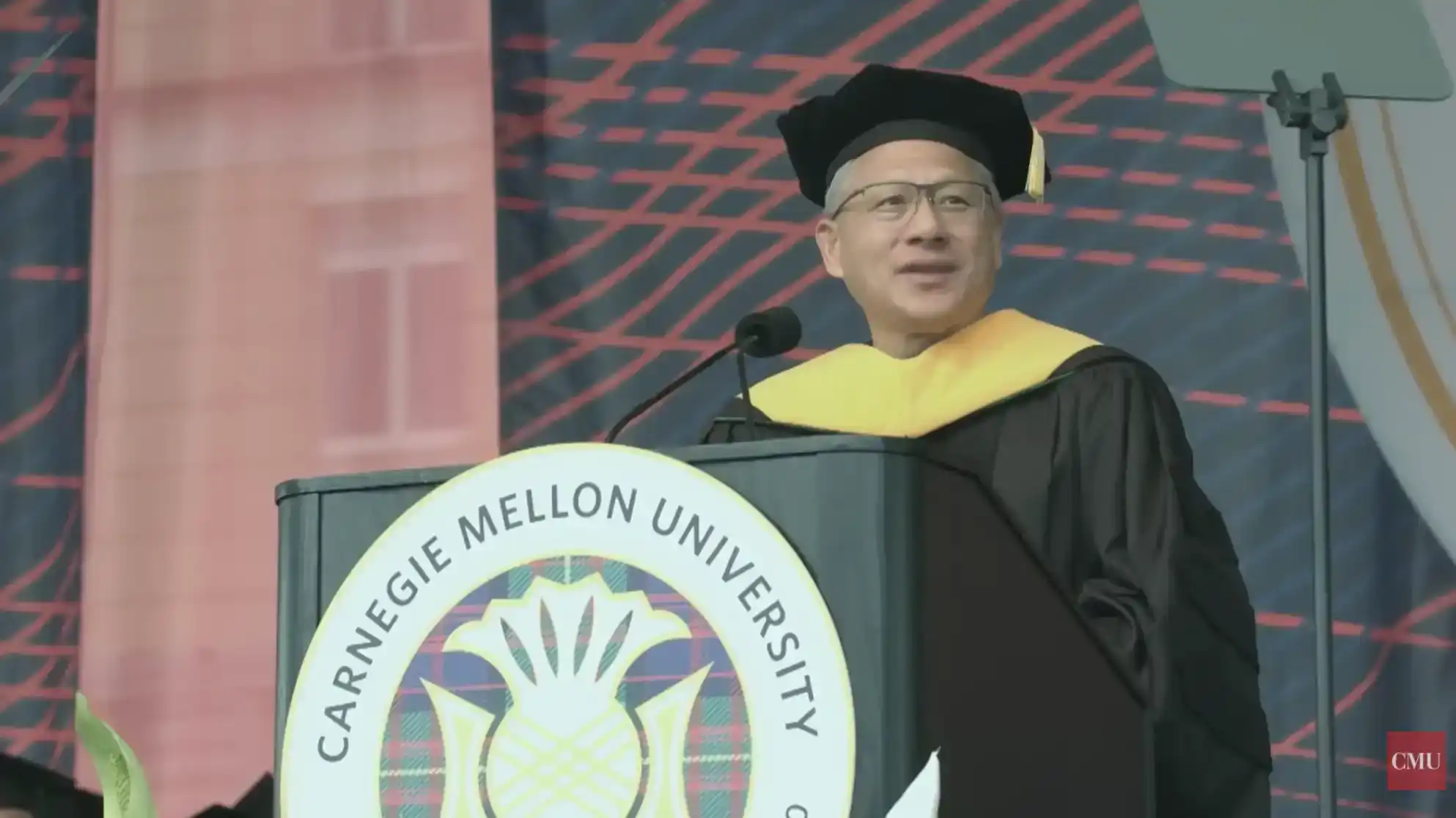
Jensen Huang's CMU Speech: In the AI Era, Don't Just Watch, Build

Jensen Huang, CEO of NVIDIA and a first-generation immigrant, delivered the commencement address to Carnegie Mellon University's class of 2026. He shared his personal journey from a humble background to founding NVIDIA, emphasizing resilience, learning from failure, and the responsibility that comes with leadership. Huang framed the present moment as the dawn of the AI revolution, a shift he believes is more profound than previous computing waves. He described AI as fundamentally resetting computing—moving from human-written software to machines that understand, reason, and use tools. This will create a new industry for generating intelligence and transform every sector. While acknowledging AI's potential to automate tasks and displace some jobs, Huang distinguished between the *tasks* of a job and its core *purpose*. He argued AI will augment human capability, not replace humans. The real risk, he stated, is not AI itself, but people being left behind by those who effectively use AI. He presented AI as a generational opportunity for massive infrastructure investment—in chip factories, data centers, energy grids, and advanced manufacturing—that could re-industrialize nations like the U.S. and bridge the digital divide by making computing and intelligent tools accessible to all. Huang called for a balanced approach: advancing AI safely and responsibly, establishing prudent policies, ensuring broad access, and encouraging universal participation. He urged the graduates not to fear the future but to engage with optimism and ambition, reminding them of CMU's motto, "My heart is in the work." His core message was clear: this is their moment to actively build and shape the AI-powered future, not merely observe it.

marsbit22m ago

Jensen Huang's CMU Speech: In the AI Era, Don't Just Watch, Build

marsbit22m ago

The Era Has Arrived Where Human Writers Must Prove They Are Not Machines

The article describes an era where AI-generated content is flooding the market, forcing human authors to prove they are not machines. It begins with the example of dozens of AI-written, error-ridden biographies of Henry Kissinger appearing on Amazon within hours of his death, a pattern repeated for other deceased celebrities and even living experts who find fraudulent books under their names. This spam content has exploded, with monthly new book releases on platforms like Amazon reaching 300,000 by late 2025. The issue spans genres, from suspiciously high proportions of AI-written teen romance and self-help books to dangerous, AI-generated foraging guides containing lethal advice. The platforms' automated review systems, designed to catch plagiarism and banned words, are ill-equipped to detect AI-generated text that avoids these pitfalls while being nonsensical or fraudulent. The problem has infiltrated traditional publishing. A major publisher, Hachette, had to recall a bestselling horror novel after AI detection tools suggested 78% of its content was machine-generated. An acclaimed European philosophy book was later revealed to be entirely written by AI under a fake author persona. In response, authors are fighting back. At the 2026 London Book Fair, 10,000 writers published a blank book titled "Don't Steal This Book" containing only their signatures—using emptiness as a protest weapon in an age of AI overproduction. Initiatives like the "Human Author Certification" program have emerged, ironically placing the burden on humans to prove their work is not machine-made. The article warns of a vicious cycle: AI-generated low-quality books pollute the data used to train future AI models, leading to "model collapse" and an ever-worsening flood of digital waste, eroding trust in publishing and devaluing human creativity.

marsbit47m ago

The Era Has Arrived Where Human Writers Must Prove They Are Not Machines

marsbit47m ago

Trading

Spot
Futures
活动图片