Alibaba Restructured the Entire AI | Rewire Evening News

marsbitPublished on 2026-03-16Last updated on 2026-03-16

Abstract

Trump is reportedly forming a "Hormuz Alliance" to secure the Strait of Hormuz and is considering sending ground troops to seize Iran’s Kharg Island, causing Brent crude to surge past $105 per barrel. Meanwhile, Alibaba has consolidated all AI assets into a new group, Alibaba Token Hub (ATH), directly under the CEO, signaling a full-scale AI integration. On the same day, Reuters reported that China’s second-largest chipmaker is preparing for 7nm production, broadening China's semiconductor capabilities amid U.S. sanctions. Nvidia’s GTC conference begins amid mixed AI signals: Ben Thompson argues AI is entering an "Agents over Bubbles" phase, while Foxconn’s profit miss raises concerns about AI hardware demand. Meta, however, continues investing heavily in AI infrastructure. Elsewhere, prediction markets are gaining institutional interest despite legal grey areas, and AI-powered face-swap fraud is becoming a structured underground industry. Additional notes include gains in U.S. and Chinese tech stocks, UniCredit’s bid for Commerzbank, and Zero Run Auto’s first annual profit.

Trump is set to announce the "Hormuz Alliance" this week, while also considering whether to send ground forces to seize Kharg Island. Brent crude oil doesn't believe him, surging over $3 per barrel on Sunday, breaking through $105. On another front today, Alibaba has consolidated all its AI assets into one business group, directly managed by the CEO, while China's second chip factory prepares for 7-nanometer production on the same day.

1| Hormuz Alliance + Kharg Island Option: Trump Falls into His Own Trap for the First Time

Four sources told Axios that Trump is contacting multiple countries to form the "Hormuz Alliance," with an announcement expected this week, aiming to forcibly reopen the Strait. Meanwhile, the White House is evaluating another option: deploying U.S. ground forces to directly occupy Kharg Island, through which 90% of Iran's oil exports transit. The market isn't buying it, with Brent crude jumping over $3 per barrel on Sunday, already surpassing $105. The WSJ also confirmed that the alliance announcement itself failed to suppress oil prices.

The fundamental difference between the two options is that the alliance is a diplomatic display and can still be reversed, while deploying ground forces to the island is a substantial commitment with no "one-click withdrawal." This is the first time in the third week of the Iran war that Trump has been forced into an extreme position. His usual style is intuition and improvisation, playing and retracting cards equally casually. But Axios' behind-the-scenes analysis says the war is the first situation where he cannot unilaterally control the outcome; Iran's drones don't care if he tweets in the afternoon, and the Strait doesn't automatically reopen because he held a press conference. The same day, he accused Iran of using AI to spread disinformation, officially bringing AI into the information warfare framework of the Iran war.

The morning report discussed the cabinet's撕裂 (split), with Sacks wanting to withdraw and Hegseth shouting "no survivors." The evening signal is that the cabinet isn't unified yet, but Trump is simultaneously pushing for more aggressive military options externally. It's not a consistent strategy; it's two opposite directions moving at the same time.

2| Alibaba ATH + China's Second 7nm Factory: The "Waist" of the Sanction System is Widening

Alibaba today established the Alibaba Token Hub (ATH) business group, directly managed by CEO Wu Yongming, consolidating Tongyi Lab, the MaaS business line, Qianwen, Wukong, and the AI Innovation Department—packaging everything from basic model R&D to consumer applications into one chain. U.S. pre-market stock rose nearly 3%. This is the first clear action among Chinese internet giants to organizationally structure the entire AI chain—not "setting up an AI department" but "restructuring into an AI company."

On the same day, Reuters exclusively reported that China's second-largest chip manufacturer is preparing for 7nm mass production on a newly acquired plot in Taiwan. The previous market consensus was that only SMIC could handle advanced processes; now there are at least two. Reuters Breakingviews published a concurrent article stating that the AI influence of Chinese tech veterans like Baidu and 360 is being eroded by new stars like DeepSeek and Kimi.

The logic of U.S. sanctions is to choke the head—restricting TSMC supply and blocking GPU exports. But China's response is taking a different path: at the application layer, integrating AI into the largest commercial entity; at the manufacturing layer, getting a second manufacturer to run 7nm. Each additional node reduces the precision strike effectiveness of the sanctions. This isn't bypassing sanctions; it's turning a single point into a surface.

3| On the Eve of GTC, Thompson Says It's Not a Bubble, Foxconn Uses Profits to Say "But Demand Isn't There Yet"

Ben Thompson today published the most timely article, with the title "Agents Over Bubbles" itself being a thesis. AI is neither a bubble about to burst nor just hype; the business model of the Agent era is the real issue. Nvidia GTC opens tomorrow, with The Information reporting that Groq chips will be unveiled.

But the same day, Bloomberg's headline was that Foxconn's profits missed expectations, raising AI demand concerns. Hon Hai is one of Nvidia's largest hardware OEM partners, and the profit miss made the market start to wonder if AI hardware shipments have already hit a ceiling. Meanwhile, Meta announced an investment of up to $27 billion in AI infrastructure with Nebius, following the morning report's "20% layoffs"—Meta continues to double down on computing power, cutting jobs and spending money simultaneously.

Three signals stacked together: Thompson is saying you're asking the wrong question, Foxconn is saying there's still a gap on the demand side, and Meta is saying I don't care, I'll keep building. GTC is the moment the test papers are handed out; Nvidia needs to clarify how computing power is monetized in the Agent era.

4| Two Gray Markets Diverge: Prediction Markets Whitening, AI Deepfake Fraud Scaling

Wired reports that while the legal battle over prediction markets isn't over, Wall Street financial institutions have already started placing bets. The legal gray area hasn't stopped capital, almost the same script as the prelude to cryptocurrency.

Simultaneously, another Wired report states that dozens of Telegram channels are publicly recruiting "AI facial models," mainly recruiting women, with job content involving配合 (cooperating with) AI video call tools to complete up to 100 scam video calls per day, using real faces to package AI-generated scripts to cheat money. This is no longer "AI tools being used for fraud" but a complete gray labor market with recruitment, division of labor, and薪酬结构 (compensation structure).

The structure of both stories is the same: after AI is widely deployed, where regulation hasn't arrived, the market runs first. Prediction markets are moving towards legalization, with institutional capital entry often a precursor to regulation catching up; AI deepfake fraud is moving towards scale, and industrialization makes it harder to combat. They are not the same path, but both start from the same point: the proliferation speed of AI capabilities is faster than the governance speed.

Also Worth Knowing ↓

On the day Alibaba ATH was announced, U.S. large-cap tech stocks rose broadly in pre-market trading, with Chinese concept stocks collectively strengthening. Meta and Intel rose over 3%, Alibaba rose nearly 3%, Bilibili rose nearly 3%, NIO and Li Auto rose over 2%—the strongest performance for Chinese concept stocks in nearly a week. (Source: 36Kr)

Italy's UniCredit launched a $28 billion offer to acquire the remaining shares of Germany's Commerzbank. After UniCredit acquired a minority stake in Commerzbank last year, it raised the offer to a controlling level today. The attitude of German regulators is the key variable, as European banking integration enters a real M&A phase. (Source: WSJ)

Leapmotor achieved annual profitability for the first time; the "Half-Price Li Auto" learned Li Auto's way of making money. After two years of price wars in China's EV track, the first to achieve a profitable model isn't the leader but Leapmotor, priced at half of Li Auto. The next step for survivors isn't to keep cutting prices but to build moats. (Source: QbitAI)

Google and Accel screened 4000 Indian AI startup pitches; 70% were wrappers, ultimately selecting only 5. None of the truly selected were shell companies. In the hottest AI startup market, what caught the eye of both Google and Accel were those not following the trend. (Source: TechCrunch)

LinkedIn Editor-in-Chief Daniel Roth used Claude Code to launch two iOS apps without writing a single line of code. A journalist by background with zero programming experience, he used a "builder + reviewer" dual-Agent mechanism to push the App to the App Store. This is something that actually happened, not a demo. The line where the programming barrier drops to zero moved forward another notch today. (Source: Lenny's Newsletter)

Related Questions

QWhat is the 'Strait of Hormuz Alliance' that Trump is reportedly planning to announce, and what is its purpose?

AAccording to the article, former President Trump is contacting multiple countries to form a 'Strait of Hormuz Alliance,' with an announcement expected within the week. Its purpose is to forcibly reopen the Strait of Hormuz to shipping traffic.

QHow did the market, specifically Brent crude oil, react to the news of potential military action in Iran?

AThe market did not respond positively. Brent crude oil prices jumped by more than $3 per barrel on Sunday, breaking through the $105 per barrel mark.

QWhat major AI reorganization did Alibaba announce, and what is the name of the new group?

AAlibaba announced a major reorganization of its AI assets into a new business group called Alibaba Token Hub (ATH). This group consolidates its Tongyi Lab, MaaS business line, Qianwen, Wukong, and AI Innovation Business Department, covering the entire chain from basic model R&D to consumer applications.

QWhat significant development was reported about China's semiconductor industry on the same day as Alibaba's AI announcement?

AReuters exclusively reported that China's second-largest chip manufacturer is preparing for 7-nanometer mass production on a newly acquired plot of land in Taiwan. This indicates that at least two Chinese foundries, not just SMIC, are now capable of advanced node production.

QWhat contrasting signals about AI demand and investment were highlighted in the article regarding Foxconn, Ben Thompson, and Meta?

AThe article presents contrasting signals: Foxconn's profits fell short of expectations, raising concerns about AI hardware demand. In contrast, analyst Ben Thompson argued that AI is not a bubble but is about the business model for the 'Agent era,' and Meta announced a massive investment of up to $27 billion in AI infrastructure, showing continued heavy spending on compute power despite other cost-cutting measures like layoffs.

Related Reads

KOL's Perspective: Why Is SOL Set to Rise from This Point?

**Summary: Why SOL is Positioned for Growth at This Level** The article argues that SOL is poised for an upward move from its current price point, citing several key factors. Primarily, SOL has just broken out of a 4-month consolidation phase. This breakout signals a return of risk appetite to the broader crypto market, as SOL is seen as a key indicator of overall crypto health. The token's ownership has reportedly shifted from short-term traders and tourists to long-term accumulators, leading to low volume. Any meaningful increase in trading activity could thus trigger significant upward momentum. Fundamental strengths include strong institutional adoption, integration with DeFi and RWAs (Real-World Assets), and the potential benefits from the Clarity Act. Despite its high volatility—having dropped 70% from its all-time high but still up 12x from its bear market low—SOL is highlighted as one of the few tokens from the last cycle to reach new highs. It boasts a robust ecosystem of applications, users, and protocols. Future catalysts include the expected influx of AI developers following the Miami Accelerate conference, which focused on AI on Solana. Furthermore, Solana is positioned as the premier chain for memecoin activity, a trend expected to continue and drive network usage and fees. The article concludes that recent price action reflects a healthy transfer to long-term holders, setting the stage for growth.

marsbit4m ago

KOL's Perspective: Why Is SOL Set to Rise from This Point?

marsbit4m ago

Those Pre-Bitcoin PoW Protocols Have Recently Been Reimplemented

This article details a recent surge in replicating pre-Bitcoin Proof-of-Work (PoW) protocols, specifically focusing on Hal Finney's 2004 RPOW (Reusable Proofs of Work). Within five days in May 2026, multiple independent builders in the Bitcoin/cypherpunk community launched projects inspired by this early electronic cash proposal. The initiative began with Fred Krueger's `rpow2.com`, a centralized but auditable system that replaced RPOW's original IBM 4758 hardware with Ed25519 signatures. Initially a faithful replica, it later adopted Bitcoin-like features (21M supply cap, difficulty adjustment) and a controversial 5.24% founder allocation. This sparked rapid forks, including `rpow4.com` which incorporated full Bitcoin parameters, a prediction market (`rpowmarket.com`), and a DEX (`rpow2swap.com`). Concurrently, Mike In Space created a prototype of Wei Dai's 1998 b-money proposal (`b-money.replit.app`), pushing the historical exploration even further back. The article contrasts these centralized, server-dependent experiments with Bitcoin's core innovation of decentralized, trustless consensus. It also highlights a parallel development: the `HASH` project on Ethereum, which uses smart contract hooks to enable a purely fair-launch, browser-mineable PoW token with 0% allocations to team or VCs. The collective activity is framed as a meme-driven, educational exploration of cypherpunk history rather than a serious financial movement, with all projects heavily disclaiming any investment value.

marsbit8m ago

Those Pre-Bitcoin PoW Protocols Have Recently Been Reimplemented

marsbit8m ago

South Korean Exchanges 'Battle' Regulators, Challenging the Boundaries of Enforcement and Legislation

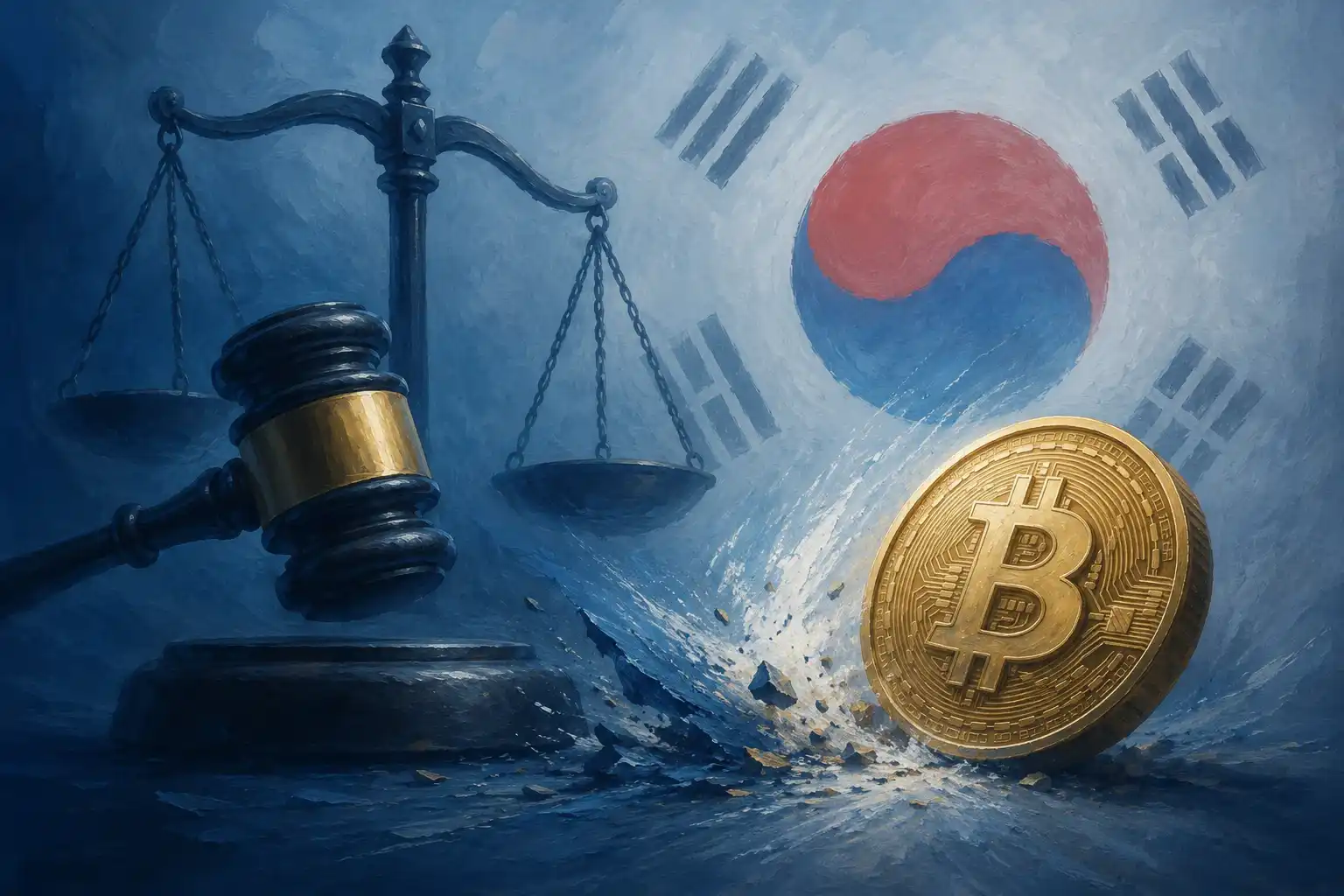
South Korea's cryptocurrency industry is engaged in a rare, direct confrontation with regulators. The Financial Intelligence Unit (FIU), the primary anti-money laundering (AML) watchdog, has recently imposed heavy penalties on major exchanges like Upbit and Bithumb for alleged violations involving unregistered overseas VASPs and AML procedures. However, exchanges are now actively challenging these actions in court and through industry associations. In a significant shift, the Seoul Administrative Court ruled in favor of Upbit's operator, Dunamu, overturning part of an FIU-ordered business suspension. The court found the FIU's penalty criteria and justification insufficiently clear. Similarly, the court suspended the enforcement of a six-month business suspension against Bithumb pending a final ruling, citing potential irreversible harm to the exchange. Beyond legal battles, the industry is contesting proposed legislative amendments. The Digital Asset eXchange Alliance (DAXA) strongly opposes a draft rule that would mandate Suspicious Transaction Reports (STRs) for all crypto transfers over 10 million KRW (~$6,800). DAXA argues this "poison pill" clause violates legal principles and would overwhelm the STR system, increasing reports from 63,000 to an estimated 5.45 million annually for major exchanges, thereby crippling effective AML monitoring. This conflict highlights a structural tension in South Korea's crypto governance: comprehensive digital asset laws are still developing, while regulators rely heavily on AML enforcement. The industry's move from passive compliance to active legal and legislative challenges signifies a new phase, pressing for clearer rules and more proportionate enforcement. While short-term disputes may intensify, this clash could ultimately lead to a more mature and sustainable regulatory framework for South Korea's vibrant crypto market.

marsbit1h ago

South Korean Exchanges 'Battle' Regulators, Challenging the Boundaries of Enforcement and Legislation

marsbit1h ago

After 50x Storage Surge, Justin Sun Always Looks to the Next Decade

Sun Yuchen, known for his controversial stunts like a $30 million lunch with Warren Buffett (canceled due to a kidney stone) and eating a $6.2 million duct-taped banana, is often overshadowed by a significant fact: his decade-long track record of spotting major investment trends. In 2016, he famously advised young people to invest in Bitcoin, Nvidia, Tesla, and Tencent instead of buying property. A hypothetical $20,000 investment in Nvidia and Tesla from that list would now be worth over 50 million RMB. His latest major call was on November 6, 2025, predicting a "50x storage opportunity" tied to the AI boom, which materialized with Sandisk's stock surging nearly 50-fold by 2026. Looking ahead, Sun now focuses on the next frontier: Physical AI. He identifies four key areas: 1. **Embodied AI/Robotics**: He sees this reaching its "iPhone moment," with companies like UBTech and Galaxy General leading in commercialization. 2. **Drones**: Viewed as the first commercially viable form of Physical AI, revolutionizing sectors from warfare (e.g., AeroVironment's Switchblade) to logistics. 3. **Spatial Computing**: Beyond VR, it's about AI understanding physical space, a foundational technology for robotics and autonomous systems, exemplified by Apple's Vision Pro. 4. **Space Exploration**: After a 2025 suborbital flight with Blue Origin, Sun advocates for space as the ultimate frontier, discussing blockchain's potential role in space asset management and data transactions. His investment philosophy involves betting on entire, inevitable trends rather than single companies. For robotics, he sees Tesla (the body/manufacturer) and Nvidia (the brain/AI platform) as complementary plays. In defense drones, he highlights companies making tanks obsolete (AeroVironment) and those augmenting fighter jets (Kratos). For space, he participated in Blue Origin's flight and anticipates SpaceX's potential IPO to redefine the sector's valuation. Sun Yuchen's vision frames the next two decades not as a revolution in information flow (like the internet), but in the fundamental operation of the physical world through AI-powered robots, autonomous systems, and spatial intelligence, ultimately extending human and AI activity into space. While many still focus on conventional assets, he continues to look toward the next technological horizon.

marsbit1h ago

After 50x Storage Surge, Justin Sun Always Looks to the Next Decade

marsbit1h ago

Trading

Spot
Futures

Hot Articles

Discussions

Welcome to the HTX Community. Here, you can stay informed about the latest platform developments and gain access to professional market insights. Users' opinions on the price of AI (AI) are presented below.

活动图片