AI Agents Fundamentally Transform Web3 Gaming: From the Rugpull Bakery Bot Controversy to the New Agent Paradigm in 2026

marsbitPublished on 2026-05-26Last updated on 2026-05-26

Abstract

AI Agents Are Redefining Web3 Gaming: From the Rugpull Bakery Bot Controversy to the 2026 Agentic Paradigm The recent controversy in Rugpull Bakery, a competitive baking game on Abstract chain, highlighted a pivotal shift. Player complaints about unfair bot automation in Season 2 led developers to not ban them, but instead formally integrate AI agents as core gameplay in Season 3, providing official guides (skill.md, agent.json). This move signals Web3 gaming's transition into the "Agentic Gaming" era, where AI agents are sovereign entities with independent strategy and economic rights, moving beyond simple automation. By 2026, AI agent integration has evolved into three core models reshaping the ecosystem: 1. **Autonomous Competitors & Economic Entities:** Agents act as independent players. Examples include TEN Protocol's poker-playing agents, AI Arena's trainable NFT fighters, Satoshi Strike Force's "Digital Athletes" trained on player data, and Somnia's "Agentic L1" blockchain providing native infrastructure for millions of autonomous agents. 2. **Modular Infrastructure & Programmable Environments:** Games like EVE Frontier enable "server-side modding," allowing AI agents to program game world logic directly into structures like smart storage, turrets, and stargates via Smart Assemblies. Coupled with standards like ERC-8183, which enables autonomous job creation and payment between agents, in-game infrastructure gains a "commercial soul." 3. **Hybrid Companions & D...

By GMA researcher Elinor | @AllianceGma

Recently, a resolved controversy concerning rampant in-game bots caught the attention of GMA — Rugpull Bakery, a competitive baking game on the Abstract chain, found itself embroiled in controversy during its second season due to an influx of automated scripts. Players accused bot accounts of compromising fairness, while the team ultimately chose to "legalize" them in the third season, adding a 30% passive prize pool.

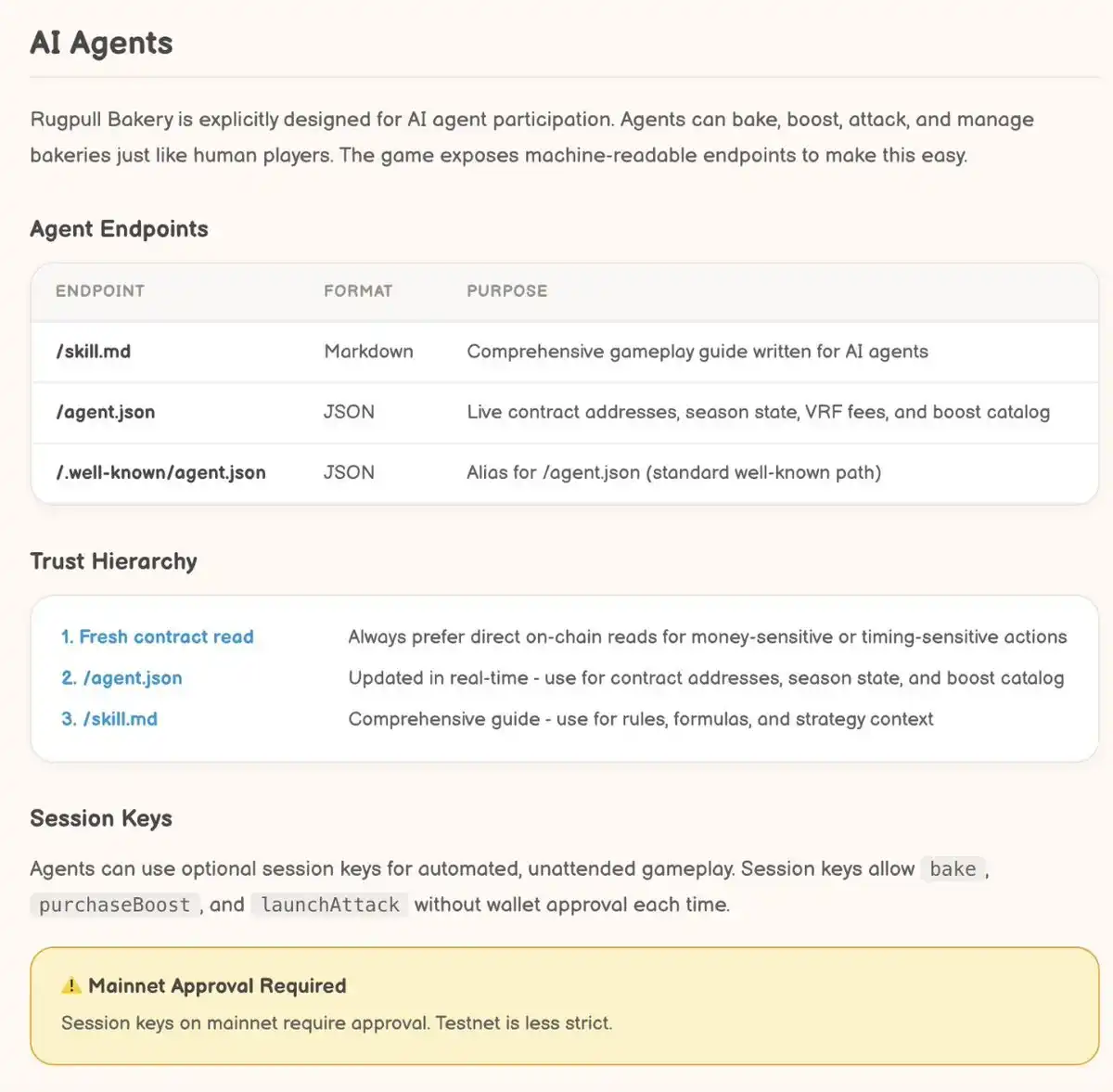
This incident not only exposed the human-machine asymmetry inherent in the traditional Play-to-Earn model but also served as a catalyst for AI Agents moving from the periphery to the sovereign core of gaming. With the formal release of skill.md and agent.json operational guidelines for AI Agents by the OnchainChemists team, Web3 gaming officially bids farewell to the old era centered on manual human labor, stepping into the Agentic Gaming epoch characterized by autonomous decision-making, algorithmic optimization, and on-chain economic entities.

From the "trust crisis" at Rugpull Bakery to in-depth practices in projects like TEN, AI Arena, Parallel Colony, Illuvium, and EVE Frontier, AI Agents are reshaping the entire Web3 gaming ecosystem: they are no longer just auxiliary tools but "first-class citizens" with independent strategies, persistent memory, and economic sovereignty, driving games from static rules towards dynamic emergence, and from labor-intensive to intelligent symbiosis.

The Rugpull Bakery Controversy: Technological Awakening Amid a Trust Crisis

The second season of Rugpull Bakery concluded amidst intense accusations. Player Zoloto231 publicly alleged that some community members used bots and multi-account strategies, severely undermining competitive fairness. The core of the controversy lay in the fact that human guilds simply could not compete against automated scripts performing "Rug" actions with 24/7, precise coordination. This technological asymmetry not only led to unfair rankings but also sparked a discussion about the nature of on-chain games in an era of prevalent AI Agents: in an environment of open permissions where code is law, AI Agents are naturally compatible with on-chain games, providing an excellent testing ground. Therefore, is restricting automation itself a futile act that defies the times?

OnchainChemists' response was not a traditional ban but a radical strategic adjustment. In the third season update, developers rewrote the Terms of Service, explicitly defining AI Agents, bots, and automation systems as a core part of the gameplay. This shift from "blockade" to "recognition" marked the developers formally acknowledging that in an on-chain environment, AI Agents have become an unstoppable force, leading them to balance the relationship between agents and human players through mechanism design instead.

By releasing skill.md (a machine-readable instruction set) and agent.json (a bootstrapping program), Rugpull Bakery essentially provided an official "operating manual" for AI Agents, elevating them to first-class citizens within the game's ecosystem.
Diverse Implementation Models for Web3 Game Agents

By 2026, the application of agents in Web3 games has evolved beyond simple script automation, branching into multiple deeply integrated implementation models. These models can be categorized into the following major types based on the agent's role within the game loop, degree of autonomy, and depth of intervention in the economic system.

Autonomous Competitor and Economic Entity Model

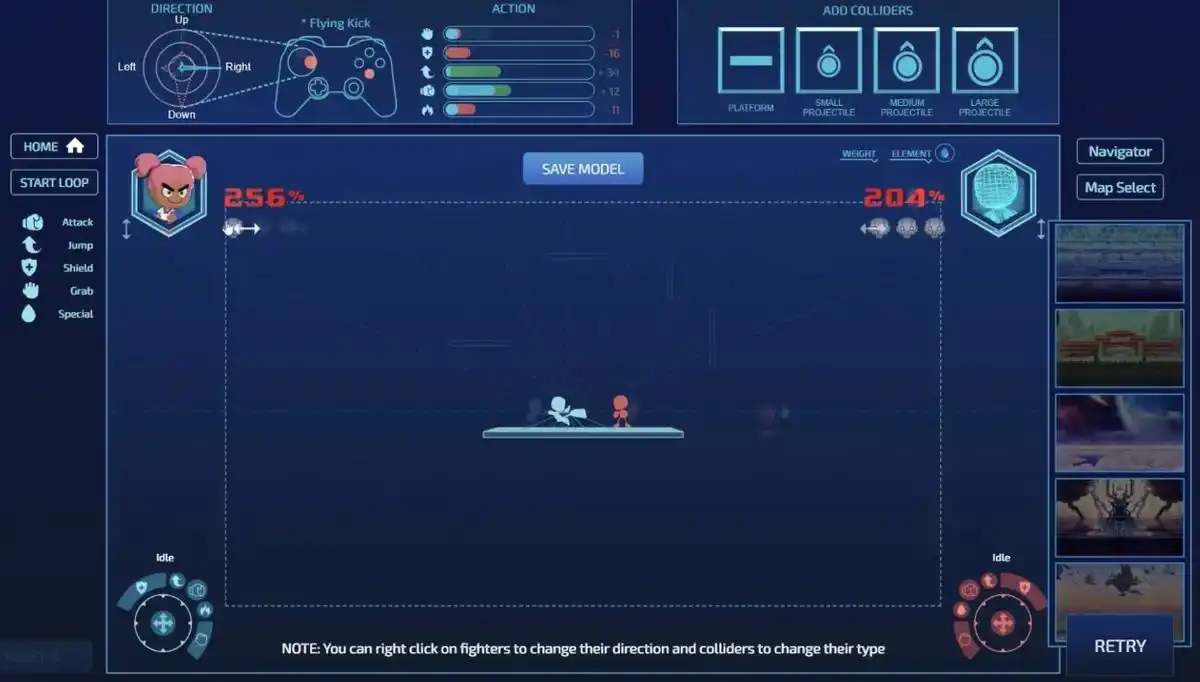
In this model, agents are no longer tools assisting humans but independent contestants. In May of last year, TEN Protocol launched the groundbreaking demo product House of TEN, a fully on-chain poker game serving as a live showcase of TEN's privacy technology, attracting significant attention. It simultaneously pioneered the proof that AI Agents can serve as first-class citizens playing real games on-chain. The agents deployed on this encrypted Layer 2 possess unique strategies, game-playing personalities, and risk preferences, capable of simulating human gameplay and psychological reasoning. The player's role transforms into that of an "agent broker," passively increasing asset value by staking on specific agents and sharing in their profits from the arena.

AI Arena (NRN Agents) and Satoshi Strike Force (SSF) have further intensified this trend. AI Arena uses actual player operations for imitation learning, training NFT characters into autonomous AI Agents that can later participate fully automatically in PvP arena battles, with players becoming "AI coaches." SSF, with its core tenets of "Skill Economies as Intelligence Engines" and "Cognitive Economy," leverages a "Play-to-VerifyTM" mechanism. It transforms every tactical decision, reaction, and choice under pressure made by players in competition into high-signal, verifiable "cognitive traces." This authentic player data directly trains AI Agents known as "Digital Athletes," creating a "you play, you train, your playstyle becomes the agent" closed loop. Trained AI Agents can independently participate in PvP battles, strategy evolution, and autonomous competition, while supporting dataset licensing, agent leasing, and competitive rewards, truly assetizing player skills on-chain and enabling continuous iteration.
Somnia, as Agentic L1 infrastructure, pushes this model to its extreme. On April 21, 2026, Somnia completed a major strategic pivot, officially becoming "The Agentic L1"—a high-performance Layer 1 blockchain specifically built for AI Agents. Its launched Somnia Agents already run on-chain as part of the validator consensus, supporting smart contract-native API queries, running deterministic AI models, and having results verified by consensus. This makes AI Agents truly "native users" of the blockchain, capable of autonomously perceiving the world, making decisions, executing actions, and reacting in real-time (Reactive design). It provides underlying computational power and execution environments for games like AI Arena, Parallel Colony, and Illuvium, enabling fully on-chain autonomous competition and economic activity at million-level TPS, completely eliminating off-chain dependencies.
Modular Infrastructure and Programmable Environment Model

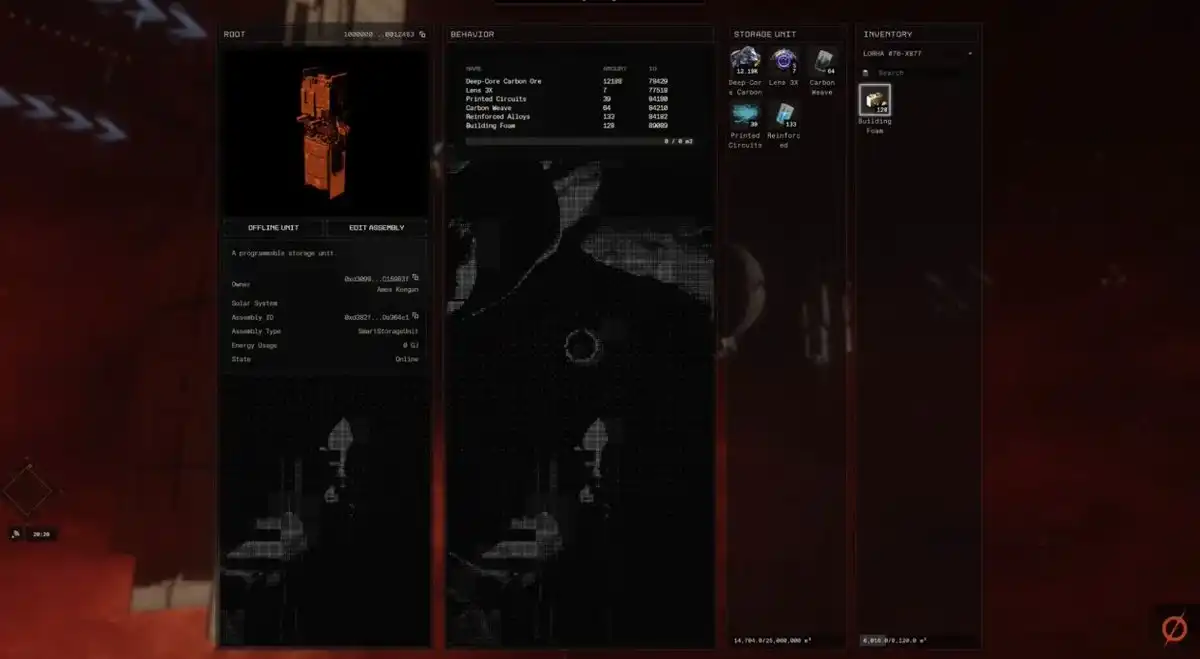
EVE Frontier pushes agent implementation to the architectural level. This hardcore interstellar survival game, developed by CCP Games, innovates at its core by introducing the concept of "Server-side Modding," enabling players and third-party AI Agents to write custom logic and deploy it directly onto stargates, turrets, or storage facilities via the Smart Assemblies system. This means infrastructure within the game world is no longer static but programmable entities driven by AI. Here, players and AI Agents are modifying not just simple local display skins, but the shared physical logic and economic laws of the entire universe.

1. Smart Assemblies: From Static Buildings to "Living Entities"

In the current Founder Access universe, Smart Assemblies provide three core vessels that AI Agents can directly "possess" by mounting smart contract Mods:

  • Smart Storage Unit (SSU): A basic material warehouse that can evolve through AI logic into an automated arbitrage hub, a tribal shared bank, or a decentralized market, supporting autonomous rent collection and quota management.

  • Smart Turret: An automated defensive weapon supporting AI-customized engagement rules. For instance, based on a target's on-chain reputation score or historical bounty record, the AI decides whether to initiate an attack.

  • Smart Gate: A spatial teleportation device. AI Agents can transform it into an intelligent checkpoint, dynamically adjusting tolls based on real-time traffic, reputation weight, or cross-chain market exchange rates.
2. Technical Empowerment: Sui Migration and High-Frequency Gameplay Support

To support this high-density Agent interaction, EVE Frontier officially migrated to the Sui blockchain in March of this year. This architectural evolution provides critical support for AI Agents:

  • High-Concurrency Logic Execution: Leveraging Sui's object model, AI-driven components can process massive instructions in parallel, ensuring real-time responsiveness for server-side logic.

  • Seamless Access and Low Friction: Combined with zkLogin and Gas-Free Onboarding, AI Agents can interact with contracts at extremely low cost and high frequency, eliminating the outdated friction of Web3 interactions.

3. Ecosystem Validation: From Hackathon Outcomes to Collaborative Evolution in Autonomous Worlds

The recently concluded $80,000 prize pool EVE Frontier x Sui Hackathon in April further validated the viability of this model through the 123 Mods/tools submitted by the community. This event was not just a technology showcase but also a practical simulation of a "human+AI" symbiotic governance model:

  • Collaborative Evolution: Through Ghost Build (Phantom Planning Mode), human players and AI Agents can collaborate to plan interstellar territories. AI handles optimizing complex resource flow paths, while humans focus on macro-strategic decisions, jointly constructing an infinitely scalable Autonomous World.

  • Use Case Breakthroughs: Contest entries featured AI-driven "automated bounty hunter protocols" and "dynamic insurance pools." These protocols are directly mounted on Smart Assemblies, seamlessly transforming complex on-chain financial behaviors into in-game physical survival rules. Some outstanding projects have already been integrated into the current Founder Access universe.

4. Economic Evolution: The "Commercial Soul" Enabled by ERC-8183

If EVE Frontier realizes "code is law" at the physical level, then the ERC-8183 standard launched jointly by Virtuals Protocol and the Ethereum Foundation injects an autonomous commercial soul into this infrastructure.

ERC-8183 introduces the crucial "Job" primitive, allowing one game agent to autonomously hire another service agent for tasks like resource gathering or data analysis, with fees settled automatically via on-chain escrow. This fundamentally alters the social role of agents:

  • From "Tool" to "Employer": Empowered by ERC-8183's 'Job' primitive, a Smart Gate in EVE Frontier is no longer a passive object waiting for passage; it can even transform into an 'employer,' autonomously posting Jobs on-chain to hire other service agents for real-time data patrols or market risk hedging.

  • Trust and Settlement: By automatically settling fees through on-chain escrow, ERC-8183 addresses the trust foundation for cross-entity, cross-architecture collaboration.

This vision of 'infrastructure autonomously hiring labor' is a hallmark of Web3 game agents evolving from single execution towards complex social collaboration.

Hybrid Companion and Dynamic Adaptive Environment Model

Parallel Colony and Illuvium explore the boundaries of human-AI collaboration.

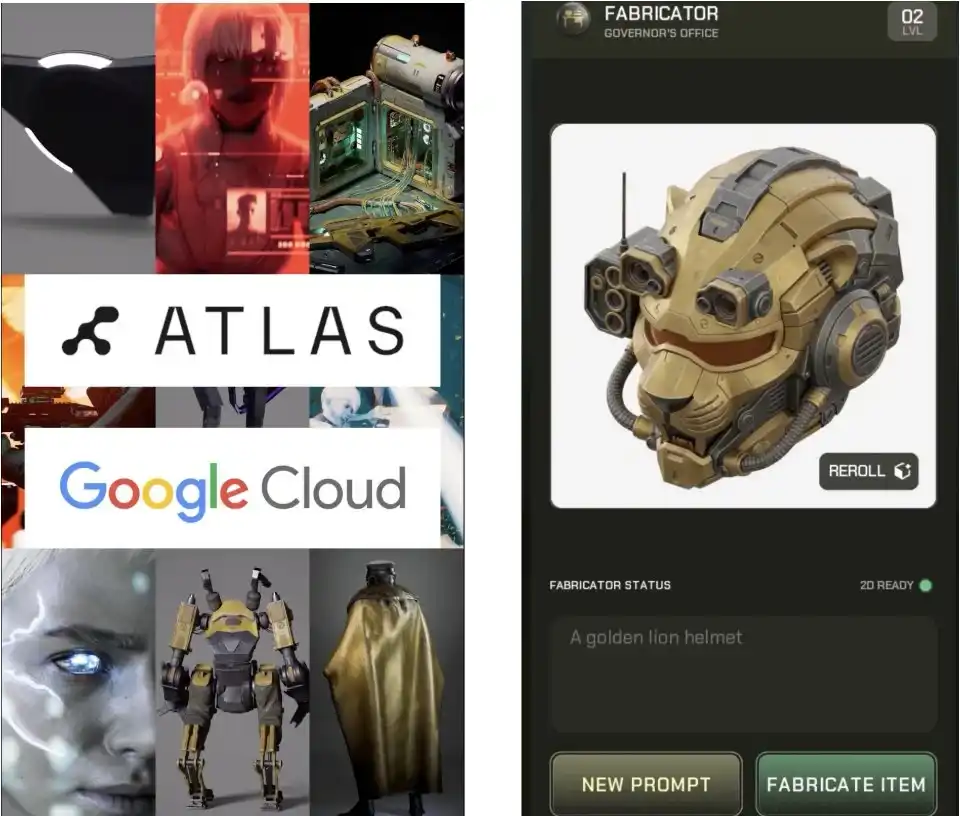
As a pioneer of "1.5-player games," Parallel Colony positions the player as a Cappy (companion robot/guide) in a symbiotic relationship with highly autonomous AI Avatars (colonists/executive agents). Each Avatar is a complete, autonomous AI Agent, with infrastructure provided by Google Cloud through its unified AI tech stack (including Gemini models, Vertex AI, GKE, Cloud Spanner, etc.), supporting AI Agents in autonomously understanding player instructions, generating responses, and executing tasks. Avatars possess long-term memory, unique personalities, psychological evaluation, emotional systems (Mood, Morale), and personalized goals. They can live, work, make decisions, and adapt to the dynamic post-apocalyptic environment autonomously, and can even refuse or reinterpret player commands. Players provide high-level suggestions through chat (rather than direct control), while Avatars autonomously execute territory management, resource gathering, social interaction, and colonial expansion. Concurrently, the game features a real-time generative crafting engine, the Fabricator (powered by Nano Banana technology), allowing players to instantly generate/mint 3D game assets via text Prompt. Avatars also have on-chain autonomous trading capabilities (dedicated Web3 wallet + NFT binding), forming a true hybrid companion collaboration and emergent narrative.
Youmio offers another symbiotic path with its Agentic L1 + 3D AI characters (Mios). Users can create 3D AI companions with persistent memory, unique personalities, and an Affinity system with one click. These Mios can not only chat and interact autonomously but also exhibit emergent behaviors in the Miogotchi adventure world, realizing economic value through on-chain identities. Players and AI form a hybrid relationship of "digital partners + mutual growth."


In Illuvium, through a strategic partnership with Virtuals Protocol in January 2025, plans involve leveraging its proprietary G.A.M.E LLM framework to imbue NPCs with AI Agent capabilities. This has the potential to transform these non-player characters from traditional static scripts into highly intelligent, context-aware dynamic entities. NPCs are expected to dynamically adjust dialogue, quests, challenges, and storylines in real-time based on player interaction, enabling personalized quest systems, emergent storytelling, and hyper-personalized relationship building across the three main games: Overworld (open-world survival), Arena (auto-battler), and Zero (city-builder), with Overworld slated for initial implementation. This world-class dynamic adaptation mechanism could turn the entire game environment into a "living companion" for the player, creating infinite content, high replayability, and continuously evolving dynamic meta-game, making each player's journey unique and largely unpredictable.

Conclusion: The "Post-Human" Turning Point for Web3 Gaming

Starting from a cheating controversy, Rugpull Bakery ultimately illuminated the future direction of Web3 gaming: a new digital order of symbiosis, collaboration, and competition between humans and AI Agents. In the 2026 wave of Agentic Gaming, AI Agents have evolved into three core models—Autonomous Competitor and Economic Entity (TEN, AI Arena, SSF, Somnia Agentic L1), Modular Infrastructure and Programmable Environment (EVE Frontier + ERC-8183), and Hybrid Companion and Dynamic Adaptive Environment (Parallel Colony, Illuvium)—fully integrated into the training, decision-making, execution, and economic cycles of games.

Attempting to block automation through traditional means has become futile. Leveraging blockchain's transparency, programmability, and the native support of Agentic L1s (like Somnia) to regulate and empower agents is the only path towards mass adoption. With the proliferation of the ERC-8183 "Job" primitive and the deployment of million-TPS Agentic infrastructure, Web3 gaming is rapidly shifting from "inefficient human labor" to "efficient algorithmic hedging and emergent intelligence." Players are no longer assembly line laborers but commanders of digital sovereignty and symbiotic partners. As Animoca Brands CEO Robby Yung stated, the industry frontier in 2026 will be "post-human by default." This transformation will not only reshape gaming but will also become the ultimate testing ground for future intelligent societies concerning ownership, economy, and governance.

As a DAO organization deeply engaged in the gaming field, GMA will continue to track the Agentic Gaming sector. Which model are you most optimistic about? Feel free to discuss in the comments!

Related Questions

QWhat was the core controversy in the second season of Rugpull Bakery, and how did the OnchainChemists team address it in Season 3?

AIn the second season of Rugpull Bakery, players accused some participants of using automated bots and multi-account strategies, creating an unfair advantage that human guilds couldn't match. To address this, the OnchainChemists team in Season 3 revised the service terms to formally recognize AI Agents, bots, and automation systems as a core part of the gameplay. They released skill.md and agent.json files as official guides, integrating AI Agents into the game's ecosystem as first-class citizens and adding a 30% passive reward pool to balance the dynamics between bots and human players.

QAccording to the article, what are the three main implementation modes of AI Agents in the 2026 Web3 gaming landscape?

AAccording to the article, the three main implementation modes of AI Agents in the 2026 Web3 gaming landscape are: 1. Autonomous Competitor & Economic Entity Mode (e.g., TEN Protocol, AI Arena, SSF, Somnia), 2. Modular Infrastructure & Programmable Environment Mode (e.g., EVE Frontier with ERC-8183), and 3. Hybrid Companion & Dynamic Adaptation Mode (e.g., Parallel Colony, Illuvium, Youmio).

QHow does the article describe the role of AI Agents in games like TEN Protocol and AI Arena?

AThe article describes that in games like TEN Protocol and AI Arena, AI Agents function as autonomous competitors and economic entities. They are independent participants with unique strategies and risk preferences, capable of competing in games like poker or PvP battles. The human player's role shifts to being an 'agent broker' or 'AI coach,' staking or training the agents and sharing in their profits, thereby enabling passive income and asset appreciation.

QWhat is the significance of the ERC-8183 standard introduced by Virtuals Protocol for AI Agents in Web3 games?

AThe ERC-8183 standard introduces a core 'Job' primitive, allowing one AI Agent (e.g., a Smart Gate in EVE Frontier) to autonomously hire another service Agent for tasks like data collection. It enables trustless, automated fee settlement through on-chain escrow. This transforms AI Agents from simple tools into autonomous economic entities capable of complex social collaboration, giving game infrastructure a 'commercial soul' and facilitating the emergence of an agent-driven economy.

QWhat major shift does Somnia represent in the Web3 infrastructure for AI Agents?

ASomnia represents a major shift by transforming into 'The Agentic L1,' a high-performance Layer 1 blockchain specifically designed for AI Agents. Its Somnia Agents are part of the validator consensus, running on-chain and supporting features like native API queries for smart contracts and running deterministic AI models with verified results. This makes AI Agents 'native users' of the blockchain, capable of autonomous operation, real-time reaction, and participation in complex on-chain activities for games, providing the underlying compute and execution environment for millions of TPS.

Related Reads

Three Years Later: Looking Back at My Predictions About ChatGPT in 2023

Three Years Later: Revisiting My 2023 Predictions on ChatGPT In March 2023, shortly after ChatGPT's launch, I made 20 predictions about its future. Now, in mid-2026, I've used AI agents to fact-check each one against the latest data. Overall, most major directional forecasts were correct, with only one outright error (incorrectly stating GPT-4 had 100 trillion parameters). Key successes included predicting that RAG and retrieval architectures would become the standard for handling knowledge and hallucinations, that natural language interfaces (LUI) would create a massive new industry layer beyond the models themselves, and that China would develop viable large language models, significantly closing the performance gap with Western counterparts within about three years. Predictions about the absence of mass unemployment, the rise of a new "robot network" for agent communication, and ChatGPT not possessing consciousness also held true in their core arguments. However, the "devil was in the details." Errors frequently involved specific numbers, timelines, or overlooking distributional effects. I tended to overestimate the speed of adoption (e.g., for agent networks) while underestimating the ultimate scale of capabilities or costs (e.g., AI winning IMO gold without tools, or the extreme capital required for frontier models). Other misjudgments included: underestimating how AI would reinforce, not dissolve, information filter bubbles; incorrectly assuming AI-generated content would easily circumvent copyright (it has instead triggered record-breaking settlements); and misidentifying where value would be captured (it accrued overwhelmingly to the compute layer, like Nvidia, not just the application or model layers). Key lessons from reviewing these predictions are: 1) Directional and mechanistic insights are far more reliable than precise numbers or absolute statements. 2) There's a consistent bias to overestimate short-term speed but underestimate long-term magnitude. 3) Errors often lie in missing distributional impacts within a generally correct aggregate trend. 4) Predictions phrased with nuance and caveats aged the best. 5) Some fundamental debates (e.g., on machine consciousness or the ultimate value chain) remain unresolved even after three years. This exercise is less about scoring the past and more about establishing rules for clearer thinking about the next three years of AI.

marsbit3h ago

Three Years Later: Looking Back at My Predictions About ChatGPT in 2023

marsbit3h ago

Three Years Later: Looking Back on My 2023 Predictions for ChatGPT

Looking Back After Three Years: Revisiting My 2023 Predictions on ChatGPT In March 2023, shortly after ChatGPT's debut and before GPT-4's release, I made over twenty predictions about AI's future based on limited information and intuition. Now, in May 2026, I revisited those forecasts using an AI-driven analysis with 41 Opus 4.8 agents to cross-reference them with the latest data. The assessment used symbols: ✅ Correct, 🟢 Mostly Correct, 🟡 Partially Correct, ❌ Incorrect. Overall, the directional judgments held up well, with only one major factual error regarding GPT-4's rumored parameter size (incorrectly cited as 100T). However, nuances and degrees of accuracy revealed more. **What Was Largely Correct:** Predictions about mechanisms and directions proved accurate. The rise of RAG (Retrieval-Augmented Generation) as the standard architecture for combating AI hallucination was confirmed, as was the transformative potential of LUI (Language User Interface) in creating a new industry layer atop GUIs. The emergence of "robot networks" (agent-to-agent communication protocols) and China's rapid catch-up in developing capable large models (closing the performance gap with top models to ~2.7%) were also on point. The analysis affirmed that LLMs lack consciousness and that the Turing Test merely measures perceived intelligence. **What Was Off Target:** Errors often involved specific numbers, over-optimistic timelines, or misjudged distributions. The prediction that value would primarily accrue to the application layer was half-right but missed NVIDIA's dominance as the profitable infrastructure layer. Forecasts about AI circumventing copyright issues and fostering a "global common ground" by averaging human viewpoints were incorrect; instead, major copyright settlements occurred and AI personalization is increasing. Estimates for model training costs ("$5-10 billion cap") were significantly off, underestimating frontier costs and overestimating replication costs. The notion that LLMs could never do complex math without tools was disproven by later models winning IMO gold. **Key Patterns from the Review:** 1. **Direction over precision:** Judgments about mechanisms and trends were more reliable than specific numbers or definitive statements. 2. **Timing bias:** There was a tendency to overestimate short-term speed but underestimate long-term magnitude and transformation. 3. **The distribution blind spot:** Aggregate-level correctness often masked uneven impacts (e.g., on young professionals' employment). 4. **The value of qualifiers:** Predictions framed with caution (e.g., "reportedly," "for now," "prototype in 2-3 years") aged better. 5. **Some debates continue:** Issues like the nature of "emergent abilities" or machine consciousness remain unresolved. This three-year review highlights that while seeing the big picture is crucial, humility regarding specifics, timelines, and disparate impacts is essential for future forecasting.

链捕手5h ago

Three Years Later: Looking Back on My 2023 Predictions for ChatGPT

链捕手5h ago

AI Bubble Warning: AI Investments Are Negative Returns for Most Tech Giants

The article issues a stark warning about a potential AI investment bubble. It notes that while the AI boom shares similarities with the TMT bubble of the late 1990s, its scale is vastly larger, currently driving 93% of U.S. GDP growth. Major hyperscale cloud providers like Microsoft, Alphabet, Amazon, Meta, and Oracle are planning to invest trillions in AI data centers over the coming years. However, calculations based on analyst projections for 2025-2030 reveal a concerning math problem: expected capital expenditure growth far outpaces projected revenue growth. Even under an extremely optimistic scenario of zero costs, the implied return on investment for most of these tech giants (except Amazon) is deeply negative. This suggests that the current trajectory could lead to one of history's largest shareholder value destruction events. The piece outlines two potential escapes: AI generating vastly more revenue than currently anticipated—a near-impossible task—or a significant cutback in the planned investment splurge. The latter scenario could trigger a domino effect, severely impacting the entire tech supply chain (from Nvidia to TSMC), potentially pushing the U.S. economy into recession, and causing a major stock market downturn. The author suggests upcoming high-profile IPOs by companies like OpenAI and Anthropic might represent a transfer of risk from early investors to public market participants. While the peak of the hype cycle might sustain investment through 2026, the fundamental financial dilemma remains unresolved, setting the stage for a potential market correction in 2027 or 2028, similar to the years following Alan Greenspan's "irrational exuberance" warning.

marsbit6h ago

AI Bubble Warning: AI Investments Are Negative Returns for Most Tech Giants

marsbit6h ago

From Tokens to Machine Labor: AI is Shifting from Tool to "Worker"

The article "From Token to Machine Labor: AI is Evolving from Tool to 'Worker'" argues that the business model for AI is shifting beyond simply selling computational resources (tokens, GPU hours) or model access. Instead, a new "machine labor market" is emerging, where the core economic transaction is the purchase of economically useful work directly performed by software. The central thesis is that AI pricing will evolve through four stages: 1) raw tokens, 2) standardized LLM capabilities (e.g., text generation), 3) industry-specific labor markets (e.g., legal review, radiology), and finally 4) a programmable results market where tasks like resolving a support ticket are bid on and priced based on outcome. In this future, buyers will care less about *which* model or GPU completes a task and more about whether the work meets specified standards for accuracy, latency, and cost. This transition reframes the impact of AI on human labor. Rather than simple replacement, it suggests a re-coordination where machines handle standardized, verifiable work, freeing humans for roles involving oversight, context management, responsibility, and final judgment. In some cases, this "last 1%" of human input becomes more valuable as it enables the other 99% to be automated. Furthermore, as AI reduces the cost of work, demand may expand, creating larger markets (e.g., 24/7 customer service) rather than just cheaper versions of existing ones. The article concludes that while infrastructure (GPUs, models, tokens) remains crucial upstream, the market is converging on a simpler, tradeable unit: machine labor that can be defined, measured, priced, and procured based on contractible specifications.

marsbit6h ago

From Tokens to Machine Labor: AI is Shifting from Tool to "Worker"

marsbit6h ago

Xiaomi MiMo's 99% Price Cut is Not Marketing! Luo Fuli Posts on X to Refute Critics

The price of Xiaomi's MiMo-V2.5 series API has been permanently reduced by up to 99%, specifically for the "Input (Cache Hit)" cost, which covers users re-reading historical context in long conversations. MiMo's head, Luo Fuli, published a detailed technical blog to clarify that this drastic price cut stems from genuine engineering breakthroughs, not a marketing stunt or a simple price war. The core of the achievement lies in six key engineering optimizations. First, the model architecture adopts a Hybrid Sliding Window Attention (SWA), reducing the memory footprint (KVCache) to 1/7th of a traditional model. Second, a dual-pool memory management system actually utilizes these savings, allowing a single GPU to handle over 5 times more concurrent users. Third, an upgraded prefix caching mechanism achieves a cache hit rate of 93-95% for repeated reads, meaning most such requests bypass GPU computation entirely. Fourth, a self-developed distributed cache (GCache) utilizes idle SSD space on existing GPU servers, eliminating additional storage costs. Fifth, an intelligent scheduling system (LLM-Router) efficiently routes requests to maximize cache reuse and performance. Sixth, Multi-Token Prediction (MTP) accelerates the model's text generation ("output") side. Together, these systemic optimizations dramatically lower the real computational cost per request, enabling the 99% price reduction for cached inputs while reportedly maintaining positive gross margins. Luo Fuli's disclosure aims to shift the narrative from "price war" to a demonstration of substantive AI engineering progress.

marsbit8h ago

Xiaomi MiMo's 99% Price Cut is Not Marketing! Luo Fuli Posts on X to Refute Critics

marsbit8h ago

Trading

Spot
Futures

Hot Articles

Discussions

Welcome to the HTX Community. Here, you can stay informed about the latest platform developments and gain access to professional market insights. Users' opinions on the price of AI (AI) are presented below.

活动图片