After Storage, Are Copper and Fiber Optic Cables Facing an AI "Great Famine"?

marsbitPublished on 2026-05-14Last updated on 2026-05-14

Abstract

Following the storage sector, copper and fiber optics are emerging as potentially the next major markets to experience explosive growth due to AI. Demand for copper, described by Goldman Sachs as "the oil of the AI era," is surging. Prices are near record highs, with LME copper up 41% over the past 12 months. This is driven by AI's immense and unique requirements: copper is the essential material for the massive electrical distribution (e.g., a 1GW AI data center requires ~27,000 tons) and advanced liquid cooling systems needed for high-power AI clusters like NVIDIA's GB200. Meanwhile, new large-scale copper mine discoveries have been scarce for a decade, tightening supply. Concurrently, a "fiber famine" is unfolding. AI's need for ultra-high-speed, long-distance interconnects between thousands of GPUs is pushing data transmission beyond the physical limits of copper cables. Demand for fiber optics is experiencing a step-change, with a single AI data center requiring up to 36 times more fiber than a traditional CPU rack. This has caused prices for standard G.652D fiber in China to nearly double in just three months. Supply is critically constrained due to the long (18-24 month) lead times required to expand production of the core preform material. In summary, AI's infrastructure demands are cascading down from semiconductors to foundational materials. Copper faces a structural supply-demand imbalance, while fiber optics is entering a period of severe shortage, positioning ...

Following the storage sector, copper and fiber optics may be the next markets to experience a major boom due to AI.

A trade that Charlie, a metal strategist at Citigroup, has been eager to execute in recent weeks: buying a digital call option on LME copper with a strike price of $15,250, expiring in August.

He believes that almost all demand growth for copper since 2022 has come from sources related to the energy transition and AI.

As of May 14, 2026, LME three-month copper is approaching $14,000 per ton, and COMEX copper opened at $6.63 per pound. Over the past 12 months, copper has risen 41%. Over the past 4 weeks, copper has risen 10%. This is a price near its historical high.

Over the past two years, the entire market has framed the AI narrative as a chip story—Nvidia's market capitalization, TSMC's capacity, HBM yield rates, CoWoS packaging bottlenecks. Almost all discussions about "AI infrastructure" have focused on those few square centimeters of silicon.

But from a perspective many are unaware of, AI demand is cascading outward from the silicon chip, down to copper mines, down to glass.
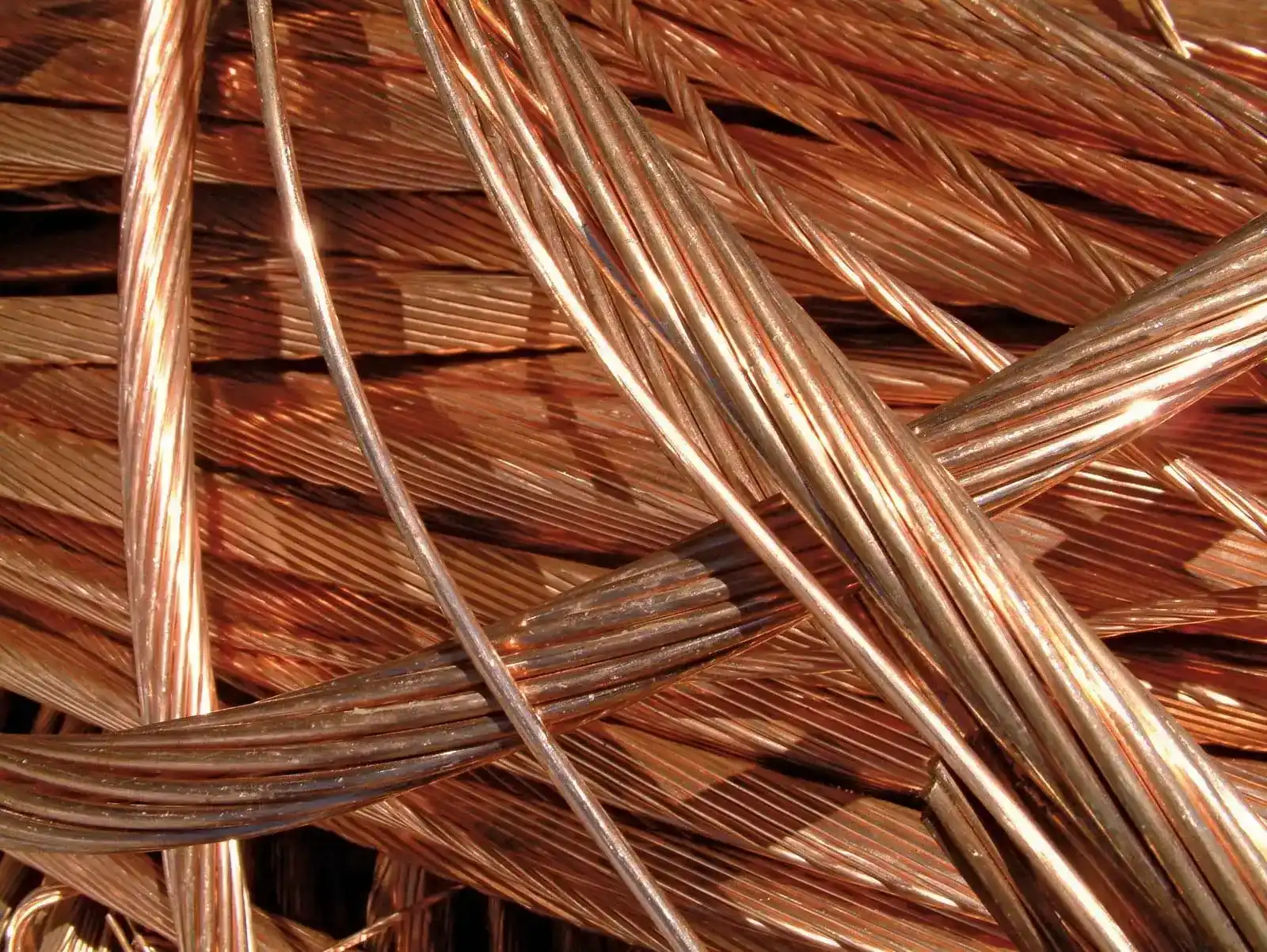
Copper is the Oil of the AI Era

Supply and demand determine price. The view that "copper demand is strong" is more directly visible in the market.

LME three-month copper closed at $13,943 per ton on May 11, 2026, an all-time LME closing high, rising 2.7% for the day. COMEX copper hit an intraday high of $6.58 per pound on May 12. Over the past 12 months, copper has risen 41%. Over the past four weeks, it has risen 10%.

At the beginning of 2025, copper was around $9,000. It broke through $12,000 mid-year, finishing the year up 43%, its best year since 2009. In January 2026, copper broke $13,000 intraday for the first time. Four months later, it's approaching $14,000. The shape of this curve resembles a rediscovered asset being priced by new logic.

Trafigura is the world's second-largest metal trader. Its head of metals analysis, Graeme Train, provided a very concise breakdown of demand: of the additional 10 million tons of copper consumption over the next decade, one-third will come from electric vehicles, one-third from power generation and transmission/distribution, and the remaining third from automation, manufacturing capital expenditure, and data center cooling systems.

In a report titled "AI and Defense Place the Power Grid at the Center of Energy Security," Goldman Sachs offered a sharper verdict: Copper will become the oil of the AI era. Goldman Sachs calculates that by 2030, global power grid and electricity infrastructure construction will account for over 60% of incremental copper demand growth.

This might sound somewhat exaggerated, but it's reasonable upon closer thought.

Copper's conductivity is 100% IACS, second only to silver among all metals. But silver is too expensive. Copper is the only practical answer for almost all large-scale conductive scenarios in industry. The closest substitute is aluminum, but aluminum's conductivity is only 61% that of copper, meaning to transmit the same megawatt of electricity, aluminum wire requires a larger cross-section—it's heavier, occupies more space, and has greater thermal losses. In the centimeter-scale space of a data center rack, this difference is almost unacceptable.

Thermal conductivity is even more so. Copper's thermal conductivity is 401 W/(m·K), five times that of iron and eight times that of stainless steel. A single NVIDIA GB200 card consumes 1,200W. A standard 72-card rack consumes over 130kW. At this level of thermal density, air cooling is insufficient; liquid cooling is mandatory. And almost every component dealing with "heat" in a liquid cooling system—cold plates, pipes, water blocks—is made of copper.

In other words, copper is not the "preferred material" for AI data centers; it is the "only physically viable choice."

AI's power consumption is disruptive, and delivering that power to data centers is very copper-intensive.

A 1GW AI data center requires roughly 27,000 tons of copper just for power distribution and wiring. Meta's Hyperion data center in Louisiana has a scale of 5GW. Calculating based on this, the copper demand for this single project alone approaches 135,000 tons. This doesn't even account for the high-voltage transmission lines, substations, and grid upgrades needed to deliver power to the data center's doorstep.

In our past impression, copper was an easily accessible metal, but recent data suggests this impression may need adjusting.

Starting in March 2026, the US-Iran conflict cut off Middle Eastern sulfur and sulfuric acid exports. Sulfuric acid is a key input for heap leaching copper refining, forcing Chilean refineries to reduce production. This was also the trigger for the current wave of price increases in 2026.

A more structural and macro issue is that globally, no super-large copper mine has been discovered in the past decade. John Meyer, an analyst at UK broker SP Angel, believes the breakeven price for developing the next generation of new copper mines is $13,000 per ton, already exceeding copper's current price. The team led by Wang Jiechao at CITIC Securities estimates a global refined copper deficit of over 100,000 tons in 2026; Citi's forecast is more aggressive at 308,000 tons.

The 2026 Fiber Optic "Great Famine"

Up to this point, the copper story is a clear bullish narrative. But if you zoom into the interior of an AI data center, you'll find something very subtle: part of the demand for copper is being replaced.

"Next-generation AI infrastructure will require massive optical connections because computational demand is growing so rapidly that copper wires can no longer keep up." This is the view expressed by Jensen Huang in an interview this month.

As Huang said, the data transmission needs of AI clusters are pushing beyond the physical limits of copper cables.

Copper cable transmission of high-speed signals has two fundamental constraints: first, signal loss increases dramatically with frequency; second, the size and weight of copper cables become unacceptable at high frequencies. The interconnect bandwidth between GPU clusters is advancing from 200G, 400G towards 800G, 1.6T. The distance copper cables can reliably sustain shrinks from several meters to tens of centimeters. But AI clusters are at a scale of tens of thousands of cards, spanning racks, sometimes even spanning data centers—copper physically cannot do it.

But fiber optics can.
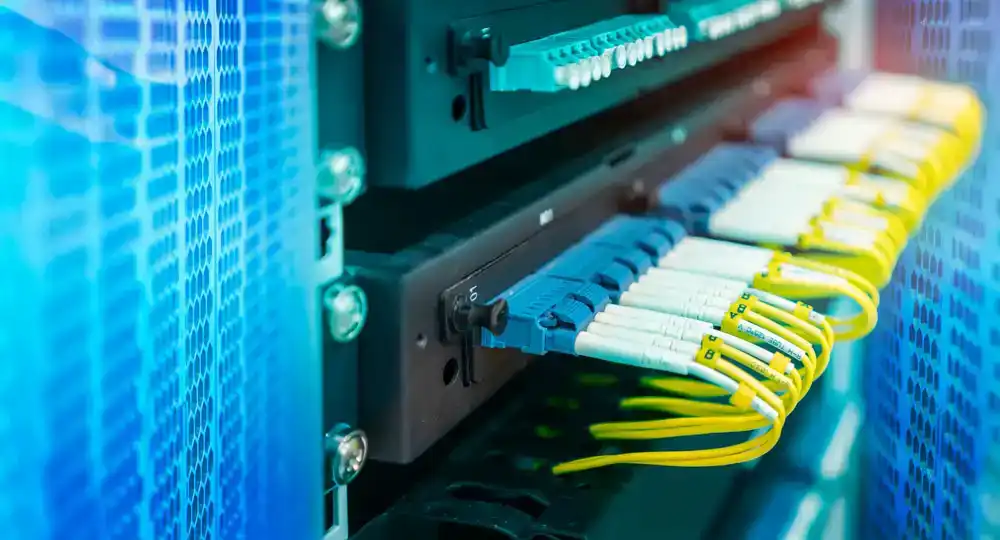
This is why the current surge in fiber optics is more intense, more pure, and more irreversible than copper's. How exaggerated is this spike in fiber optics?

According to CRU data: The price of Chinese G.652D bare fiber surged over 80% between November 2025 and January 2026. The January average price was 31.5 RMB per fiber-core-kilometer, with some actual transactions in the 40 to 50 RMB range, representing a cumulative increase of 94% to 144%.

Fiber optics, an industrial product whose price had been relatively stable for years, more than doubled in three months.

By February 2026, higher-end categories of fiber saw even sharper increases. For example, G.657.A bend-insensitive fiber rose from above 30 RMB per fiber-core-kilometer to above 50 RMB within a month. Sun Telecom directly coined the term "2026 Fiber Optic Great Famine." Its G.652D price per kilometer was $2.20 in 2024, rose to $3.00 in December 2025, and rose again to $4.10 a month later. Overall Asian fiber prices increased 75%, hitting a 7-year high.

AI data center demand for fiber optics represents an order-of-magnitude disruption.

Rahul Puri, CEO of STL's Optical Networking Business, mentioned a figure that gave us pause the first time we saw it: An AI data center requires 36 times the amount of fiber optics of a traditional CPU rack—this is a cliff-like leap.

GPU clusters operate fundamentally differently from CPU ones. A training cluster with tens of thousands of cards requires non-blocking, high-speed interconnections between all GPUs. This network architecture, called a Scale-out architecture, demands bandwidth unimaginable in the CPU era. Additionally, Data Center Interconnect (DCI) links are needed between data centers to stitch together computing clusters in different geographical locations into a supercomputer. For Meta's Hyperion data center project alone, fiber demand reaches 8 million miles.

Returning to the economic principle that price is determined by supply and demand, what about the supply side given this state of demand?

Light Reading reported that at least one leading fiber manufacturer has sold out its entire 2026 inventory. Data Center Dynamics reported that lead times for large customers have extended to 20 weeks, and for small customers, close to a year.

Why can't capacity be expanded quickly? Because the expansion cycle for optical fiber preforms—the core raw material—is 18 to 24 months, with an extremely complex manufacturing process. Even if all manufacturers decided to expand capacity today, the earliest new capacity would only come online in the second half of 2027. Meanwhile, demand will only continue to rise.

Anis Khemakhem, Chief Commercial Officer of Clearfield, provided a more macro number: By 2029, the United States alone will need to add 213.3 million miles of new fiber, doubling the existing 159.6 million miles to 372.9 million miles. In six years, the national fiber inventory doubles.

The biggest winner in this story is Corning.
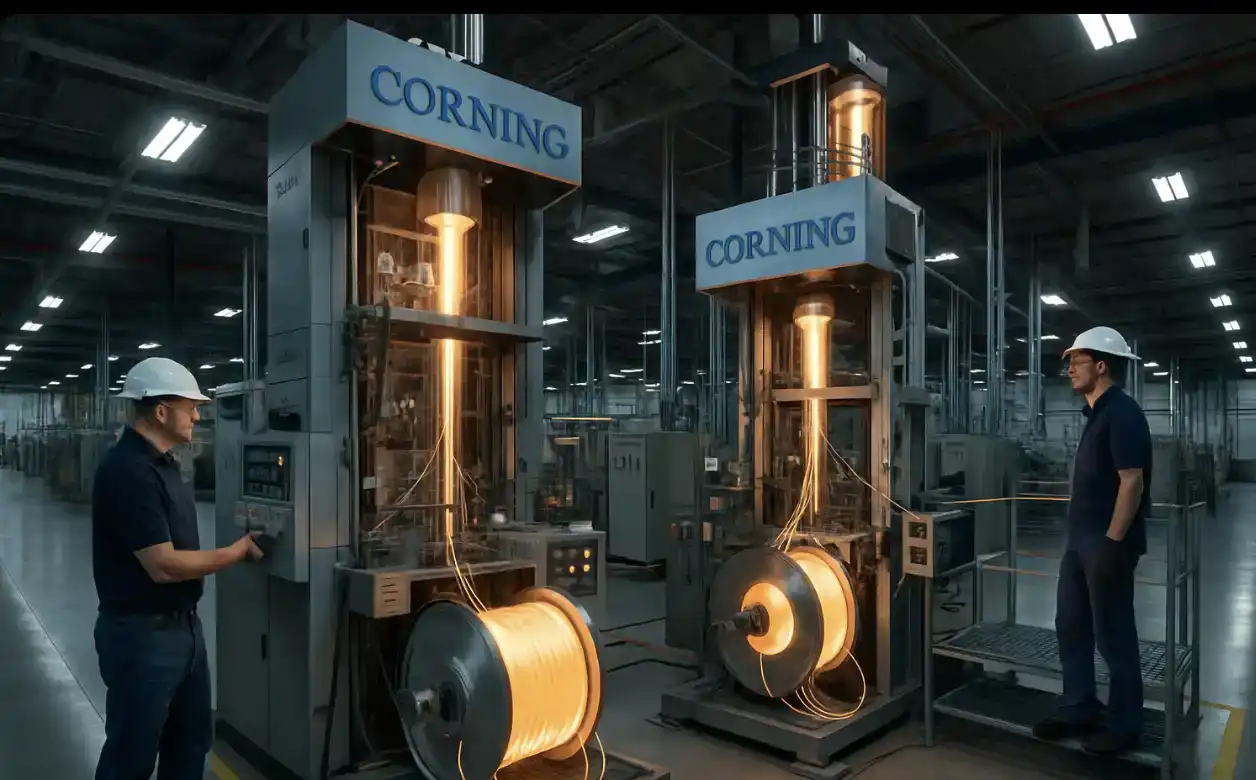
This is a glass company founded in 1851. It made glass bulbs for Edison's light bulbs, glass for TV picture tubes, and Gorilla Glass for the iPhone. Many people don't even know this company still exists. But it is now a core fiber supplier for Meta, Nvidia, OpenAI, Google, AWS, and Microsoft. Its stock price has risen over 75% in the past year. We might explore the story of Corning in a new article later, so we won't delve into it further here.

The story of copper and fiber optics seems to have only just begun to capture mainstream market attention, but we believe this might be the next explosive sector following the storage track.


Related Questions

QAccording to the article, what is the main reason for the sharp rise in copper prices since 2022, and why is copper considered essential for AI data centers?

AThe main reason for the sharp rise in copper prices since 2022 is the surge in demand driven by energy transition and AI-related sources. Copper is considered essential for AI data centers because it is the 'physical only choice' for high-performance electrical conductivity and heat dissipation. Its high electrical conductivity (100% IACS) is crucial for power delivery, and its excellent thermal conductivity (401 W/(m·K)) is vital for cooling systems, especially liquid cooling required for high-power AI chips like the NVIDIA GB200.

QWhat specific AI infrastructure demand is driving the dramatic price increase for fiber optics, and what is a key statistic illustrating this demand surge?

AThe demand for high-bandwidth, low-latency interconnections within and between AI GPU clusters is driving the dramatic price increase for fiber optics. A key statistic illustrating this surge is that an AI data center requires 36 times more fiber than a traditional CPU server rack, representing a cliff-like leap in demand. This is due to the scale-out architecture of GPU clusters requiring non-blocking, high-speed interconnects across thousands of GPUs.

QWhat are the two main physical constraints of copper cables that are leading to their replacement by fiber optics in advanced AI infrastructure?

AThe two main physical constraints of copper cables are: 1. Signal loss increases dramatically with higher frequencies, limiting the effective transmission distance for high-speed data. 2. At high frequencies, copper cables become excessively bulky and heavy, making them impractical for large-scale, distributed AI clusters that require connections over meters or between data centers.

QWhy is the supply of fiber optics struggling to meet the current demand surge, and what is a leading company benefiting from this situation?

AThe supply of fiber optics is struggling to meet demand because expanding production capacity is a slow process. The core raw material, the preform or 'light rod,' has an expansion cycle of 18 to 24 months due to its complex manufacturing process. Even if manufacturers decide to expand now, new capacity won't be available until the second half of 2027 at the earliest. A leading company benefiting immensely from this situation is Corning, a key fiber supplier to major tech firms like Meta, Nvidia, and Google, whose stock price rose over 75% in the past year.

QBased on the article's analysis, what are the primary sectors contributing to the projected additional copper demand over the next decade?

AAccording to the analysis by Trafigura's Graeme Train, the primary sectors contributing to the projected additional 10 million tonnes of copper demand over the next decade are: one-third from electric vehicles (EVs), one-third from power generation and transmission/distribution (the power grid), and the remaining one-third from automation, manufacturing capital expenditure, and data center cooling systems. Goldman Sachs also highlights that over 60% of incremental copper demand by 2030 will come from global grid and power infrastructure construction.

Related Reads

AI Relay Stations Spark Heated Debate on Zhihu: Behind Cheap Tokens, What Are Users Really Worried About?

A discussion on Zhihu about "AI relay stations" shifted the niche developer topic of "cheap tokens" into broader user awareness. Users moved beyond simply questioning the legitimacy of these services to focus on practical concerns: Where do cheap tokens truly come from? Is the model being accessed the real one? Can relay stations see prompts, code, and API keys? For occasional users, are the risks worth it? The core debate centered less on price and more on trust. A primary worry is model authenticity—the risk of "model swapping," where users paying for a premium model might be routed to a cheaper one, creating an information asymmetry. Others argued that cost comparisons matter; while cheaper than official pay-as-you-go APIs, relay stations may not be the lowest-cost option versus subscriptions, domestic models, or free tiers, making user needs assessment crucial. Speculation about token sources ranged from legitimate bulk discounts to gray-area methods like account sharing or exploiting regional pricing. This opacity makes risk assessment difficult for users. Data security emerged as a critical concern, especially for enterprise use. When processing sensitive information like code, contracts, or client data, the inability to verify a relay station's data handling, retention, or access policies poses significant compliance and confidentiality risks. The evolving consensus suggests relay stations can be used cautiously for low-sensitivity, disposable tasks (e.g., summarizing public info, simple translation). However, they should not be the default for sensitive, professional, or production workflows involving proprietary data, Agents, or automated systems. Recommendations include avoiding large prepayments, not relying on a single service, using test prompts to monitor quality, anonymizing data where possible, and keeping official channels as backups. Ultimately, the discussion framed tokens not just as a billing unit but as a measure of real cost encompassing price, model integrity, data security, and service stability. The popularity of relay stations highlights user demand for affordable access, but the debate underscores a key trade-off: the savings from cheap tokens may come at the price of trust, transparency, and control over one's data and AI experience.

marsbit11m ago

AI Relay Stations Spark Heated Debate on Zhihu: Behind Cheap Tokens, What Are Users Really Worried About?

marsbit11m ago

In-Depth Research Report on TradFi: The Convergence Wave of Crypto and Traditional Finance

In 2026, the crypto industry is undergoing a profound infrastructure-level transformation—TradFi assets are migrating on-chain at an unprecedented pace. According to CoinGecko's Q1 2026 report, the total value locked (TVL) of tokenized real-world assets (RWA) has surpassed $31 billion, a nearly 4x increase from $7.8 billion at the beginning of 2025, with the sector’s aggregate market capitalization reaching $19.3 billion. Among these, the market cap of tokenized stocks surged from $2 million to $486 million, with Q1 spot trading volume reaching $15.1 billion—a single quarter already surpassing the entire second half of 2025. RWA perpetual contract Q1 trading volume reached a staggering $524.8 billion, far exceeding the $313 billion for all of 2025. Meanwhile, BlackRock's BUIDL fund has reached $2.3 billion in scale and has filed for two new tokenized funds, signaling that the world's largest asset manager's tokenization strategy is evolving from pilot to product suite expansion. HTX, as a core participant in the crypto exchange sector, officially launched TradFi perpetual futures products including NVDA, AAPL, MSFT, META, and SPY in 2026, enabling crypto users to gain 24/7 trading access to core U.S. equities. Boston Consulting Group predicts that global tokenized asset scale could reach $16 trillion by 2030, while McKinsey offers a conservative estimate of approximately $2 trillion. The on-chain migration of TradFi assets is no longer a "future narrative" but a structural transformation unfolding in real time, as crypto exchanges evolve from single crypto asset trading platforms toward "multi-asset-class trading infrastructure."

HTX Learn13m ago

In-Depth Research Report on TradFi: The Convergence Wave of Crypto and Traditional Finance

HTX Learn13m ago

Blocked Its Own Treasure, WeChat AI Steps Up

Tencent's stock surged over 10% on June 2nd amid reports that WeChat, with 1.43 billion monthly users, is finalizing tests for a native AI Agent. The reported feature, accessible by swiping right from the main interface, allows users to issue commands in natural language. The AI then decomposes tasks and automatically calls upon relevant Mini Programs within WeChat to complete actions like ordering food, booking tickets, or making payments, creating a closed-loop service execution system. This strategic shift follows the internal conflict and subsequent "blocking" of Tencent's standalone AI app, Yuanbao, by WeChat for violating sharing rules during a 2026 Spring Festival promotion. The incident highlighted a lack of internal consensus and exposed the weakness of competing in the standalone AI assistant arena against rivals like ByteDance's Doubao (345M MAU) and Alibaba's Qianwen. The new WeChat AI Agent aims to leverage WeChat's unique assets—its massive user base, standardized Mini Program APIs, WeChat Pay, and identity system—to move from simple content generation to actual task execution. Analysts note this changes the competitive landscape from model benchmarks to which AI can connect to more real-world services. However, success depends on key variables: the capability of Tencent's underlying Hunyuan model, managing massive inference costs, and redesigning incentives for Mini Program developers whose traffic might be bypassed. The move is seen as an attempt to keep user service intent within WeChat's ecosystem as AI begins to redefine how users access services.

marsbit1h ago

Blocked Its Own Treasure, WeChat AI Steps Up

marsbit1h ago

ByteDance Adopts Arm CPUs, Jensen Huang: So Sad I Didn't Buy Arm

**Summary:** At Computex 2026, Arm CEO Rene Haas announced that ByteDance and Oracle have adopted Arm's self-designed Arm AGI data center CPU. The company expects significant revenue growth from this product, projecting $20 billion in demand for the 2027/2028 fiscal years. Haas noted that restricting AI-capable CPUs from the US to China is nearly impossible due to their widespread applications. Arm's stock has surged dramatically this year, notably rising 16% after NVIDIA's Arm-based Vera CPU and RTX Spark announcements. A highlight was the informal, humorous on-stage conversation between Haas and NVIDIA CEO Jensen Huang. Huang joked about NVIDIA's failed attempt to acquire Arm and playfully lamented selling his Arm shares. Both executives showed a clear sense of camaraderie and shared regret over the missed merger. Key technical topics were discussed: 1. **AI PC Design:** Huang explained NVIDIA's RTX Spark superchip (with a 20-core Arm CPU) is designed for future AI agents that will autonomously run and use tools on PCs, blending local and cloud processing. 2. **Agent vs. OS:** Huang emphasized the operating system remains crucial, as AI agents rely on its APIs and tools to function. 3. **Growth Constraints:** He identified the shift to "useful AI" that generates profitable tokens as a primary driver for immense, almost limitless, computational demand. Haas outlined Arm's strategy across PC and data centers. For PCs, Arm collaborates with partners like NVIDIA and MediaTek, offering its compute subsystem (CSS) for custom SoCs. In data centers, its Arm AGI CPU (built on TSMC's 3nm process) has gained major partners including OpenAI, Meta, and now ByteDance and Oracle. Arm presented a multi-year roadmap for its in-house CPU line. The article concludes that while GPUs dominated the AI training race, the explosion of AI agents is shifting significant focus to CPUs for inference, state management, and tool orchestration. The industry is trending towards vertical integration, with companies like cloud providers designing chips and chip/IP firms offering full solutions, all competing to deliver more efficient computing per watt.

marsbit1h ago

ByteDance Adopts Arm CPUs, Jensen Huang: So Sad I Didn't Buy Arm

marsbit1h ago

Trading

Spot
Futures

Hot Articles

Discussions

Welcome to the HTX Community. Here, you can stay informed about the latest platform developments and gain access to professional market insights. Users' opinions on the price of AI (AI) are presented below.

活动图片