A Country That Has Been Mining Bitcoin for 8 Years Establishes Its Own Dedicated Crypto Bank

marsbitPublished on 2026-06-18Last updated on 2026-06-18

Abstract

Bhutan, a small Himalayan nation known for prioritizing Gross National Happiness over GDP, has established a dedicated crypto bank after eight years of Bitcoin mining. The DK Bank, located in the Gelephu Mindfulness City (GMC) Special Administrative Region, aims to fill the persistent banking gap for the crypto industry. Unlike traditional banks that often reject crypto firms or only handle their fiat transactions, DK Bank offers integrated multi-currency accounts where users can manage both fiat currencies and stablecoins like USDT and USDC, alongside services such as Bitcoin-backed loans. The bank operates under a unique "one country, two systems" governance model in GMC, which is designed to become a financial hub for South Asia. Its regulatory framework is modeled on Singapore's common law and Abu Dhabi Global Market's (ADGM) rules, offering a fast-track licensing process for firms already licensed in those jurisdictions. DK Bank and GMC authorities emphasize stringent, real-time on-chain and off-chain transaction monitoring to mitigate risks associated with anonymity in crypto. This move is part of Bhutan's longer-term strategic pivot toward institutional crypto services—including mining, custody, and asset management—rather than retail-focused speculative tokens. Officials stress diversification within the blockchain ecosystem to hedge against volatility in assets like Bitcoin. The development of supporting infrastructure, including an international airport managed by...

Author: Boaz Sobrado

Compilation: Luffy, Foresight News

"If you don't know how to do it, just avoid it."

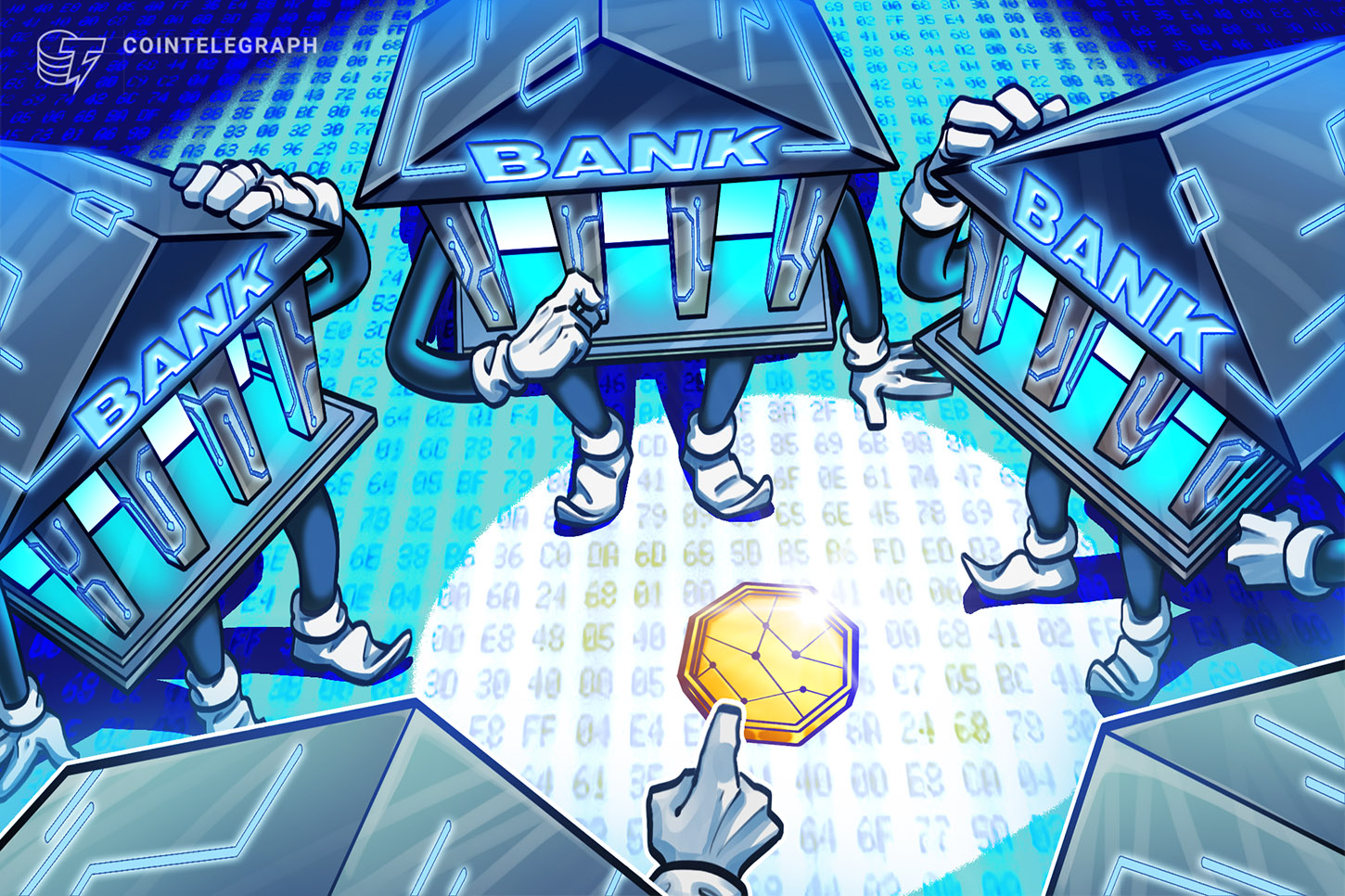
DK Bank CEO Zheng YD used this phrase to explain the root cause of crypto enterprises frequently facing banking service disconnections. Located in Bhutan's newly built Gyalpo Mindfulness City, and also the only licensed bank in the area, it was established precisely to undertake the crypto business that other financial institutions shun.

"There has long been a huge supply gap in banking services for the crypto industry," Zheng YD said on the *On The Margin* podcast. "The root cause is that cryptocurrencies were born from decentralized protocols with inherent anonymity. The banking industry generally lacks corresponding risk control methods. To this day, the vast majority of institutions still don't know where to start."

DK Bank is jointly regulated by the Royal Monetary Authority of Bhutan and is at the core of a unique financial experiment. Bhutan is a small Himalayan nation with a population of less than a million. Compared to GDP, Gross National Happiness is this country's signature development indicator. Gyalpo Mindfulness City (GMC for short) is a special administrative zone in southern Bhutan. The project operator claims this area has independent governance rules.

"The new city is independent from mainland Bhutan in terms of administration, legislation, and judiciary," said Jigdrel Singay, Director of the Gyalpo Mindfulness City Authority and Head of Fintech Operations. He describes this governance model as "one country, two systems."

They are targeting a vast market that has long lacked supporting financial services. "South Asia has about 2 billion people, yet there is no financial services hub, equivalent to a gap in the region's financial gateway," Singay said. He hopes GMC can become South Asia's financial service center, much like Hong Kong is for China and Singapore is for Southeast Asia.

Fiat and Stablecoins in One Account

DK Bank's business positioning is very clear. Zheng YD stated that most banks claiming to support cryptocurrencies are only willing to handle the fiat business of crypto companies, with digital assets still needing to be custodied on external platforms.

"These banks will only say they won't close your account because you're a crypto business, but all your crypto asset flows cannot go through their channels," Zheng YD said. "We want to be different. We bridge the fiat and crypto asset systems, offering integrated multi-currency accounts and crypto custody services. Users can manage stablecoins like USDT and USDC in the same bank account, just like managing US dollars, British pounds, or Euros."

According to disclosed project information, the account supports 9 fiat currencies, along with Bitcoin pledge lending, and two-way fiat-to-crypto asset exchange and on/off-ramp channels. Implementation presents two major challenges. The first is the underlying architecture: traditional banks only batch-process business on weekdays from 9 to 5, whereas the crypto market operates 24/7 with real-time trading. Zheng YD admitted that bridging these two systems requires a highly difficult technical upgrade.

The second challenge is intercepting bad actors. Zheng YD did not shy away from industry issues. "We never deny there are bad actors in the crypto industry. Any industry will breed a certain proportion of non-compliant participants," he said. "Therefore, the Gyalpo New City Authority and DK Bank collaborate to complete risk screening from the user admission stage." Risk control doesn't stop at account opening: "We don't just monitor off-chain fund flows; we also track complete on-chain trajectories, scan wallet addresses, and verify every inflow, outflow, and counterparty information."

Zheng YD believes this track is worth pursuing, with the core judgment being that global financial services are gradually moving from off-chain to on-chain. "We believe global financial services will continue migrating on-chain. DK Bank aims to be the financial institution fully prepared to welcome this transformation."

Adopting Singapore Law, Opening Fast-Track Licensing Channel

Gyalpo New City did not build a regulatory system from scratch. "For corporate governance, we adopt Singapore common law; financial regulatory rules benchmark the Abu Dhabi Global Market (ADGM)," Singay explained. "The reason for choosing these two systems is that they are both globally top-tier standards with extremely high recognition among international investors." Companies that have already obtained licenses in Singapore, ADGM, or Hong Kong can operate here without going through the full approval process again, utilizing a fast-track channel.

There are widespread concerns that simplifying the process will weaken oversight. Singay clarified: the speed-up only applies to the approval process; regulatory standards will not be relaxed. Companies wanting to enjoy the new city's highest zero corporate income tax preferential policy must have a genuine operational entity. "We do not welcome companies that only register shell companies with empty offices," Singay said. "Companies need to meet physical operation requirements: hire local Bhutanese employees, establish a physical office space, and provide proof of daily operational expenses. Core position leaders of the company must also pass qualification review by regulatory bodies."

Why Are Small Countries Building This Infrastructure Now?

Bhutan is not the only small sovereign state focusing on this track. Xin Yan, CEO of Sign, a sovereign crypto infrastructure company, has been in this field for two years, shifting his clientele from crypto users to national governments, with Bhutan being one of his partner countries.

"Governments are the gatekeepers for all business, data, and assets in the real world," Xin Yan mentioned on the podcast. "Government decisions are very pragmatic. They won't blindly chase Bitcoin or crypto concepts for their own sake. The core demand is only one: to solve their own development challenges." He pointed out that countries generally face risks of external dependence. "The current mainstream global financial infrastructure is dominated by China and the US. Once these two countries restrict cooperation for geopolitical reasons, the financial systems of related countries will suffer."

Neo, founder of the Swiss-licensed on-chain neo-bank UR, bluntly stated that many Web3 projects today have superficial models. "Nowadays, both Web2 and Web3 industries are taking shortcuts: issuing USDC stablecoins, launching payment cards, and calling themselves digital banks. It looks glamorous, but the underlying architecture hasn't undergone substantive change."

Neo explained that the Swiss Financial Market Supervisory Authority (FINMA) focuses its regulatory approach on on-chain data. The regulator directly reads the blockchain, checks quarterly fund flows and holdings of various wallet addresses, and uses this to determine whether a company is compliant and to issue the next stage of operating licenses. Zheng YD stated that DK Bank adopts a similar regulatory logic, simultaneously monitoring on-chain wallet flows and fiat funds to safeguard the entire new city's financial security.

Mining Since 2018 and Hedging Bitcoin Risk

Bhutan's crypto plan was not a spur-of-the-moment idea; Bitcoin mining operations leveraging hydropower resources have been running for years. Singay said mining operations started in 2018, with Zheng YD adding, "National-scale mining began in 2019. Long before most countries understood Bitcoin, Bhutan was already deeply engaged with the crypto ecosystem." Singay attributed this to the country's long-term strategic vision. "Our industry experience is the best proof. We are early pioneers in the industry."

Both leaders were unwilling to bet the country's development on a single crypto asset. When asked if Bhutan would launch a native cryptocurrency similar to Trump's token, Singay said the focus is on institutional-grade, full-crypto industry chain: mining, custody, asset management, and prime brokerage business. "Speculative tokens targeting retail investors, at least Gyalpo New City will not proactively pursue them."

When asked how to respond if Bitcoin's price plummets and fails to recover for a long time, Zheng YD answered with a banker's risk-control mindset: "Running a bank requires anticipating all kinds of risks. Theoretically, extreme market conditions are all possible. If Bitcoin experiences a deep decline, how do we respond?" His solution is diversified deployment, not relying solely on Bitcoin: "Blockchain is the underlying technology; Bitcoin is just one application built on it. We focus on Bitcoin, but we are also developing other blockchain tracks like stablecoins and real-world asset tokenization."

Project implementation is constrained by time cycles. The crucial international airport mentioned by Singay will be managed by the operator of Singapore's Changi Airport, with overall planning by the renowned architectural firm Bjarke Ingels Group (BIG), and is expected to be completed by December 2029. The digital nomad visa for overseas remote workers, Zheng YD said, is still in the testing phase. This newly planned city emphasizing coexistence between humans and nature exempts foreign nationals from personal income tax, with monthly rents as low as $400 to $500, but currently, there are only complete planning blueprints and DK Bank in operation.

Whether this crypto bank can create value depends on an industry-wide issue. Wojciech Kaszycki, founder of the digital asset company Mobilum, explicitly stated the necessity of sovereign crypto infrastructure: "I believe every country should establish its own local digital asset reserve institution."

Zheng YD used a personal anecdote to gently explain the value of small countries deploying crypto finance. "When I first visited Bhutan, the entire capital city had only one traffic light," he said. "It wasn't due to a lack of vehicles; the local car ownership is not low. But the people are polite and orderly; they don't need traffic lights to guide traffic. During traffic jams, everyone waits quietly without honking. In today's increasingly chaotic global environment, this inclusive and restrained mindset is precisely the quality urgently needed in the global financial industry." While most countries were still ignoring blockchain technology, Bhutan had already started Bitcoin mining; now, this small Himalayan nation has gone a step further, creating its own dedicated, compliant crypto bank.

Trending Cryptos

Related Questions

QAccording to the article, what is the main reason traditional banks often cut off services to crypto enterprises?

ATraditional banks generally lack the corresponding risk control mechanisms to handle the anonymity inherent in decentralized crypto protocols, and most institutions still don't know how to manage this even today.

QWhat is the key feature that differentiates DK Bank from most banks that claim to support cryptocurrency?

ADK Bank integrates fiat and crypto asset systems, offering a unified multi-currency account and crypto custody services. Users can manage stablecoins like USDT and USDC in the same bank account alongside traditional currencies like USD, GBP, and EUR.

QWhich two established regulatory frameworks does the Gakiling Mindfulness City (GMC) use as references for its own governance and financial rules?

AGMC adopts Singapore common law for corporate governance and aligns its financial regulatory framework with the Abu Dhabi Global Market (ADGM).

QHow long has Bhutan been involved in Bitcoin mining, and what resource does it leverage for this activity?

ABhutan has been involved in Bitcoin mining since 2018, leveraging its hydroelectric resources for the operation.

QWhat is the core philosophy behind the Gakiling Mindfulness City's development, as illustrated by Zheng YD's anecdote about his first visit to Bhutan?

AThe development philosophy emphasizes tolerance and restraint. This is illustrated by the anecdote where the capital city functioned with only one traffic light due to citizens' orderly conduct and mutual courtesy, a trait seen as essential for the global financial industry.

Related Reads

When the World Cup Collides with Agents: From Web2 to Web3, How Are Wallets Evolving into Agentic Wallets?

World Cup as a Catalyst for Agentic Wallets: From Web2 to Web3 This article explores how the World Cup provides a real-world scenario for observing the evolution of digital wallets from simple asset managers towards "Agentic Wallets"—intelligent, AI-powered interfaces. Using the example of prediction markets like Polymarket, it illustrates how AI Agents can lower the barrier to Web3 interaction. Instead of navigating complex DApps, users can express intent in natural language (e.g., "I think Portugal will win") within platforms like Discord or web pages. The Agent then interprets this intent, finds the relevant market, and seamlessly guides the user through the on-chain transaction via their wallet. The core shift is from wallets as mere "function menus" for signing transactions to "intent interpreters" that understand user goals. The article highlights parallel developments in traditional finance, such as Mastercard's "Agent Pay" and WeChat Pay's AI tests, which focus on granting AI controlled, authorized, and auditable payment capabilities. This underscores a broader trend of AI entering the financial layer. However, the article emphasizes that the primary challenge for Agentic Wallets in Web3 is not automation but establishing clear security boundaries. Unlike traditional systems with chargebacks, on-chain transactions are often irreversible. Therefore, future wallets must ensure users retain ultimate control and comprehension. They need to transparently communicate an Agent's permissions, spending limits, authorized durations, and provide easy ways to pause or revoke access. The World Cup experiments represent early steps toward wallets that are not just applications but ubiquitous, intelligent interfaces that simplify Web3 while keeping users securely in control.

marsbit24m ago

When the World Cup Collides with Agents: From Web2 to Web3, How Are Wallets Evolving into Agentic Wallets?

marsbit24m ago

Options Don't Work in DeFi? Vitalik Might Not Agree

For years, the prevailing view has been that options struggle to gain traction in DeFi due to complexity, fragmented liquidity, and lack of natural demand compared to products like perpetual futures. However, a recent algorithmic stablecoin design proposed by Vitalik Buterin presents a different perspective, using options not as a standalone trading product, but as foundational infrastructure for other financial instruments. In this design, one unit of ETH is split into two components: a "stable" side (P) that retains value up to a specified strike price, and an "upside" side (N) that captures all appreciation above that strike. Combined, they always equal one ETH, eliminating debt, margin, and liquidation risks inherent in typical collateralized debt position (CDP) stablecoins. The stable component essentially mimics the payoff of a covered call option. To function as a stablecoin, this structure requires continuously rolling deep in-the-money calls, which introduces challenges like rollover slippage, predictable transaction flow vulnerable to front-running, and persistent liquidity needs. A core hurdle is finding consistent buyers for the leveraged ETH upside exposure (N). While it offers leverage without funding rates or liquidation, it must compete with simpler alternatives like direct call options or perpetuals. The system's scalability depends on a sustained demand for this specific form of leverage. The author draws parallels to their experience with Rysk, where earlier versions of DeFi options protocols struggled. The breakthrough came with Rysk V12, which aligns incentives: asset holders generate yield by selling covered calls against their holdings, while market makers efficiently acquire the desired option exposure. This demonstrates that options can find product-market fit when embedded as a risk distribution and pricing engine within structured products, stablecoins, or yield-generating assets, rather than marketed as a complex direct trading instrument. Vitalik's proposal reinforces this architectural approach—using fully collateralized, non-custodial, and physically settled options as a fundamental building block. The real opportunity for options in DeFi may lie not in becoming the next perpetual swap, but in powering the next generation of on-chain financial products.

marsbit57m ago

Options Don't Work in DeFi? Vitalik Might Not Agree

marsbit57m ago

Conversation with Investor Zheng Di: MicroStrategy's Coin Sale Experiment, AI Economy, and Opportunities in US Stocks

Frontier tech investor Zheng "Didier" Di discusses the recent Bitcoin price drop, the financial strategy shift at MicroStrategy, the AI-driven surge in U.S. stocks, and the evolving role of crypto exchanges. Didier posits that the recent BTC decline stems less from macro factors or ETF outflows, and more from market repricing due to MicroStrategy's new financial structure. Following a wave of preferred stock and debt issuance (STRC, STRZ, etc.), MicroStrategy must now manage cash flow to pay dividends, potentially leading to a market expectation of sustained, small-scale BTC sales to maintain its "per-share bitcoin neutral" principle. Didier views this as a financial "experiment" testing market capacity for such recurring sell pressure, which, while creating near-term structural headwinds, likely avoids a true "death spiral" absent major new external shocks. Shifting to AI, Didier argues that tokens are becoming the new form of labor, with AI models and compute (tokenized inputs) increasingly replacing human roles in execution and middle-management. This drives enterprise efficiency and higher margins, fueling the sustained rally in U.S. semiconductor, data center, and infrastructure stocks. He foresees an emerging "machine economy" where automated agents transact and collaborate on-chain. Regarding crypto exchanges offering U.S. equities, Didier sees this as a natural evolution. With few crypto-native assets generating lasting value, exchanges are pivoting towards real-world assets (RWAs) like stocks and bonds. This doesn't necessarily cannibalize crypto but reflects a maturing industry focusing on blockchain's core utilities: decentralized choice and efficient settlement. He notes that trading logic for crypto natives doesn't need to drastically change, as meme-driven and fundamentalist strategies find analogs in U.S. markets. The "1011 event" (likely referring to a major market crash) severely damaged crypto market liquidity, marking a probable end to the altcoin speculative cycle, with capital flowing towards the deeper liquidity of U.S. markets. For the macro outlook, Didier is cautious about near-term market pressure from potential mega-IPOs (e.g., SpaceX) and the U.S. midterm elections, which could bring more regulatory scrutiny. Long-term, he remains bullish on AI's productivity gains and its convergence with blockchain/Web3, predicting a shift from speculative frenzy to a more institutionalized, industrial phase for the crypto sector.

marsbit1h ago

Conversation with Investor Zheng Di: MicroStrategy's Coin Sale Experiment, AI Economy, and Opportunities in US Stocks

marsbit1h ago

Playnance’s $GCOIN Lists on KoinBX Amid Rapid Growth in India

Playnance's native token, $GCOIN, has been listed on the cryptocurrency exchange KoinBX as of June 18. This move aims to enhance accessibility for its rapidly growing community, particularly in India, where the blockchain-powered Web3 iGaming ecosystem has gained significant traction. Over 130 partners in Playnance's "Be the Boss" program have built communities engaging thousands of active players in the region. The "Be the Boss" model allows participants to create and manage their own gaming communities, earning rewards tied to community activity. CEO Pini Peter noted India's high engagement, with community leaders successfully building player networks. One partner, Dr. Nicolas, reported earning over $57,000 through the program in recent months, highlighting both the financial rewards and the opportunity to grow an engaged community. $GCOIN serves as the ecosystem's core utility token, incentivizing participation and aligning the interests of players and community leaders ("Bosses"). The listing on KoinBX is part of Playnance's strategy to expand globally, increasing the token's utility and accessibility by combining community ownership, gamified engagement, and blockchain-based incentives. Founded in 2020, Playnance is a Web3 iGaming infrastructure company focused on creating live, non-custodial, on-chain products to onboard mainstream users. It currently processes approximately one million transactions daily, aiming to simplify the user experience while maintaining full on-chain transparency.

TheNewsCrypto2h ago

Playnance’s $GCOIN Lists on KoinBX Amid Rapid Growth in India

TheNewsCrypto2h ago

Trading

Spot
Futures

Hot Articles

What is $BITCOIN

DIGITAL GOLD ($BITCOIN): A Comprehensive Analysis Introduction to DIGITAL GOLD ($BITCOIN) DIGITAL GOLD ($BITCOIN) is a blockchain-based project operating on the Solana network, which aims to combine the characteristics of traditional precious metals with the innovation of decentralized technologies. While it shares a name with Bitcoin, often referred to as “digital gold” due to its perception as a store of value, DIGITAL GOLD is a separate token designed to create a unique ecosystem within the Web3 landscape. Its goal is to position itself as a viable alternative digital asset, although specifics regarding its applications and functionalities are still developing. What is DIGITAL GOLD ($BITCOIN)? DIGITAL GOLD ($BITCOIN) is a cryptocurrency token explicitly designed for use on the Solana blockchain. In contrast to Bitcoin, which provides a widely recognized value storage role, this token appears to focus on broader applications and characteristics. Notable aspects include: Blockchain Infrastructure: The token is built on the Solana blockchain, known for its capacity to handle high-speed and low-cost transactions. Supply Dynamics: DIGITAL GOLD has a maximum supply capped at 100 quadrillion tokens (100P $BITCOIN), although details regarding its circulating supply are currently undisclosed. Utility: While precise functionalities are not explicitly outlined, there are indications that the token could be utilized for various applications, potentially involving decentralized applications (dApps) or asset tokenization strategies. Who is the Creator of DIGITAL GOLD ($BITCOIN)? At present, the identity of the creators and development team behind DIGITAL GOLD ($BITCOIN) remains unknown. This situation is typical among many innovative projects within the blockchain space, particularly those aligning with decentralized finance and meme coin phenomena. While such anonymity may foster a community-driven culture, it intensifies concerns about governance and accountability. Who are the Investors of DIGITAL GOLD ($BITCOIN)? The available information indicates that DIGITAL GOLD ($BITCOIN) does not have any known institutional backers or prominent venture capital investments. The project seems to operate on a peer-to-peer model focused on community support and adoption rather than traditional funding routes. Its activity and liquidity are primarily situated on decentralized exchanges (DEXs), such as PumpSwap, rather than established centralized trading platforms, further highlighting its grassroots approach. How DIGITAL GOLD ($BITCOIN) Works The operational mechanics of DIGITAL GOLD ($BITCOIN) can be elaborated on based on its blockchain design and network attributes: Consensus Mechanism: By leveraging Solana’s unique proof-of-history (PoH) combined with a proof-of-stake (PoS) model, the project ensures efficient transaction validation contributing to the network's high performance. Tokenomics: While specific deflationary mechanisms have not been extensively detailed, the vast maximum token supply implies that it may cater to microtransactions or niche use cases that are still to be defined. Interoperability: There exists the potential for integration with Solana’s broader ecosystem, including various decentralized finance (DeFi) platforms. However, the details regarding specific integrations remain unspecified. Timeline of Key Events Here is a timeline that highlights significant milestones concerning DIGITAL GOLD ($BITCOIN): 2023: The initial deployment of the token occurs on the Solana blockchain, marked by its contract address. 2024: DIGITAL GOLD gains visibility as it becomes available for trading on decentralized exchanges like PumpSwap, allowing users to trade it against SOL. 2025: The project witnesses sporadic trading activity and potential interest in community-led engagements, although no noteworthy partnerships or technical advancements have been documented as of yet. Critical Analysis Strengths Scalability: The underlying Solana infrastructure supports high transaction volumes, which could enhance the utility of $BITCOIN in various transaction scenarios. Accessibility: The potential low trading price per token could attract retail investors, facilitating wider participation due to fractional ownership opportunities. Risks Lack of Transparency: The absence of publicly known backers, developers, or an audit process may yield skepticism regarding the project's sustainability and trustworthiness. Market Volatility: The trading activity is heavily reliant on speculative behavior, which can result in significant price volatility and uncertainty for investors. Conclusion DIGITAL GOLD ($BITCOIN) emerges as an intriguing yet ambiguous project within the rapidly evolving Solana ecosystem. While it attempts to leverage the “digital gold” narrative, its departure from Bitcoin's established role as a store of value underscores the need for a clearer differentiation of its intended utility and governance structure. Future acceptance and adoption will likely depend on addressing the current opacity and defining its operational and economic strategies more explicitly. Note: This report encompasses synthesised information available as of October 2023, and developments may have transpired beyond the research period.

396 Total ViewsPublished 2025.05.13Updated 2025.05.13

What is $BITCOIN

Discussions

Welcome to the HTX Community. Here, you can stay informed about the latest platform developments and gain access to professional market insights. Users' opinions on the price of BTC (BTC) are presented below.

活动图片