This week, the market is seeking direction amid fluctuations, with opportunities and risks coexisting. HYPE's daily Wave V structure faces a critical validation point, where the success or failure of the $40.17 support will determine the subsequent trend; BTC, meanwhile, hovers between the continuation of the D-wave rebound and pressure from resistance zones, with the bull-bear battle in the $73,500~$79,000 range remaining the core focus.
Following the trend and adhering to strict discipline are key to navigating complex market conditions steadily.
Summary of This Week's Core Trading Views:
• Analysis of HYPE's current trend structure. (Details in Part 1)
• HYPE's market forecast and short-term trading strategy for this week. (Details in Part 2)
• Analysis of BTC's multi-cycle trend structure. (Details in Part 3)
• BTC's market forecast and medium- and short-term trading strategies for this week. (Details in Part 4)
Market Validation of Last Week's Trading Strategy and Core Views:
• HYPE Short-term Trading Results: HYPE completed one short-term long position trade (1x leverage) last week, achieving a cumulative return of approximately 6.80%. (Details in Table 1)
• Market Validation of HYPE's Trend Forecast: In our previous article, we indicated that the rebound initiated from the low of $34.44 on April 2nd for HYPE, in terms of wave structure, belongs to a potential daily Wave V rise. The current market movement validates our previous view. Last week, the market rebound reached a high of $45.75, not only successfully breaking through the Wave III high of $43.78 from March 18th but also setting a new high for this upward trend.
• Validation of BTC Medium-term Trading Results: Bitcoin followed the established medium-term strategy last week, continuing to hold the short position established at $89,000 (1x leverage). As of last week's close (approximately $73,800), the profit was about 17.08%, with a maximum profit of about 32.58% during the period.
• Market Validation of BTC's Trend Forecast: In last week's article, we indicated that the market would maintain a wide-range volatile consolidation pattern. The current market movement validates our previous forecast.
I. HYPE: Trend Structure Analysis
HYPE_4-hour K-line Chart
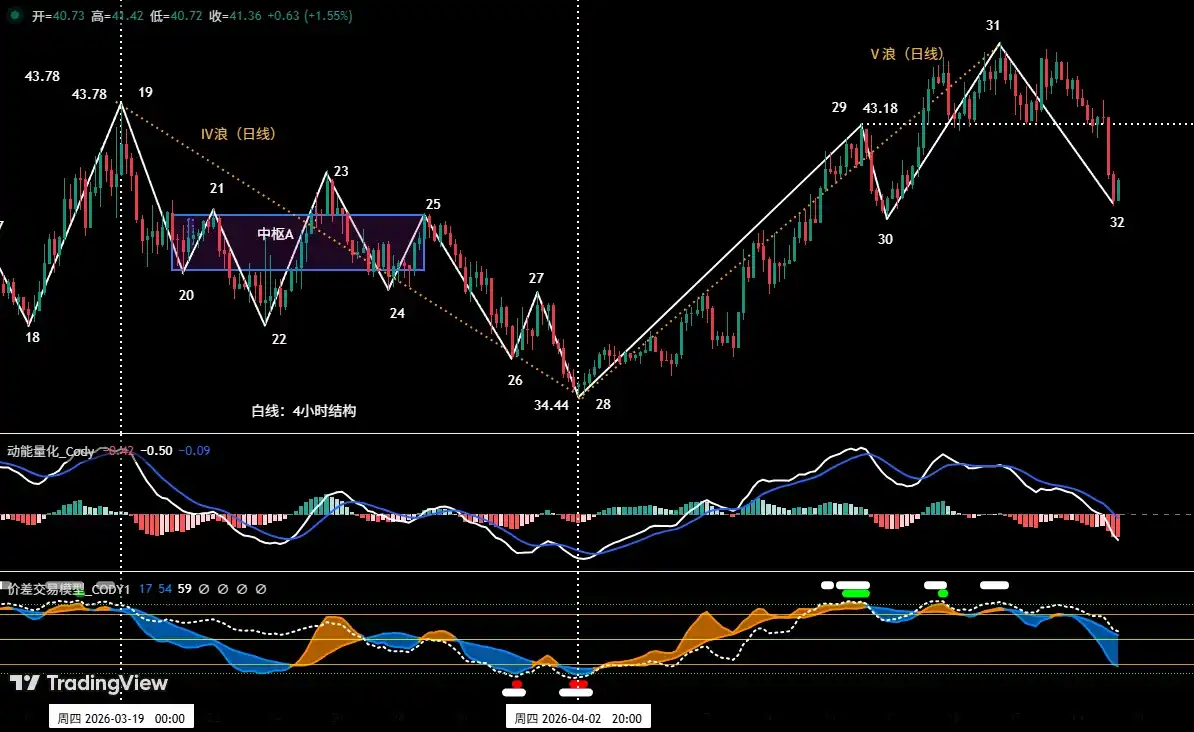
Figure 1
1. As shown in (Figure 1), HYPE reached a new high of $45.76 on April 16th, setting a new rebound high since the low of $20.46 on January 21st, and has broken through the previous high of $43.78 from March 18th (i.e., the Wave III high). Therefore, the upward movement starting from the low of $34.44 on April 2nd can be tentatively regarded as a daily Wave V rising structure, which is currently in progress.
2. As shown in (Figure 1), the aforementioned daily Wave V can be further subdivided in the 4-hour cycle into: an upward structure consisting of 4 segments: 28-29, 29-30, 30-31, and 31-32.
3. The market is currently running the 31-32 adjustment segment.
• In HYPE's 4-hour structure, our self-built momentum quantitative model detected that two momentum signal lines have simultaneously moved below the zero axis, indicating that this adjustment segment may be weak and the adjustment time may be extended.
• Currently, the potential adjustment endpoint (i.e., endpoint 32) is approaching the previous support level of $40.17 (i.e., endpoint 30).
II. HYPE's Market Forecast and Short-term Trading Strategy for This Week
1. HYPE's Market Trend Forecast for This Week:
As shown in (Figure 1), focus on whether endpoint 32 breaks below endpoint 30 (i.e., $40.17):
• If it holds above, it will maintain a box consolidation between $40.17 and $45.76;
• If it breaks below this support level, and the subsequent rebound high cannot exceed $45.76 (i.e., endpoint 31), it will form a classic technical pattern of "adjustment breaking the previous low, but subsequent rebound failing to make a new high." This would mean that the daily Wave V rising structure initiated from the low on April 2nd has a high probability of having completed its termination at $45.76.
2. HYPE's Short-term Trading Strategy for This Week:
• Based on the forecast of the overall upward trend, the strategy of "follow the trend, buy on dips" should be followed.
• According to the signals from our self-built quantitative model, use the 30-minute/60-minute cycle as the operation period, utilizing 30% of the position to capture long entry opportunities.
• Entry Strategy: HYPE faces adjustment demand at the beginning of the week. If the price pulls back near the key support of $40.17 and shows signals confirming it is holding above the support, combined with the bottom buy signals triggered by the two major models, consider entering a long position and strictly adhere to stop-loss discipline.
III. Bitcoin Multi-cycle Trend Structure Analysis
1. BTC Daily Level Wave Division: (Based on the market after the high on October 6, 2025)
Bitcoin _ Daily K-line Chart:
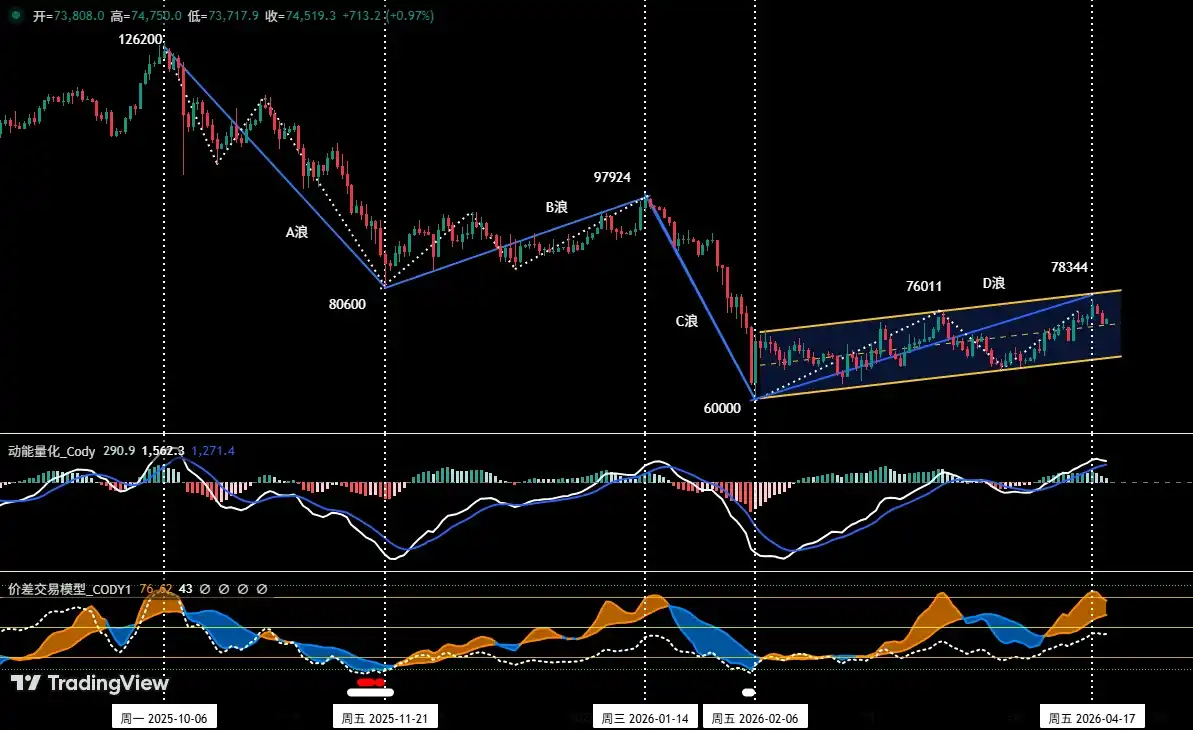
Figure 2
As shown in (Figure 2), since Bitcoin's rebound starting from the low of $60,000 on February 6th not only reached a new rebound high of $78,333 on April 17th but has also run for about 73 trading days as of April 19th, its time and space have significantly exceeded the previously forecasted "C-wave adjustment wave internal C-2 wave rebound" scope (e.g., its continuous rebound time has far exceeded the 54-day B-wave rebound). Therefore, from the principles of Elliott Wave Theory analysis, the original framework may need adjustment. We are more inclined to redefine this upward movement starting from $60,000 as a larger-level "D-wave rebound," which is more in line with the objective fact that the current market is exchanging time for space and the rebound cycle is prolonged.
The specific medium-term adjustment wave division can be optimized as follows:
• A-wave adjustment (driving decline): Started from the high of $126,200 on October 6, 2025, to the low of $80,600 on November 21, 2025, lasting about 46 days, with a maximum decline of about 36%. This wave established the medium-term adjustment pattern.
• B-wave rebound (complex adjustment): Started from the low of $80,600 on November 21, 2025, to the high of $97,924 on January 14, 2026, lasting about 54 days, with a maximum increase of about 21.5%. This is a correction against the A-wave decline.
• C-wave adjustment (main decline wave): Started from the high of $97,924 on January 14, 2026, and touched the low of $60,000 on February 6, 2026, with a rapid decline, lasting about 22 days, with a maximum decline of about 38.7%. This wave completed the main spatial part of the adjustment.
• D-wave rebound (currently in progress/possibly in the final stage): Started from the low of $60,000 on February 6, 2026. As of April 19, it has run for about 73 days, with a maximum increase of about 30.6% (from $60,000 to $78,333). The characteristics of this rebound are prolonged time, complex structure, and it is currently facing the test of key time windows and price resistance zones (such as $79,000-80,600). If the D-wave is established, after the coin price rebound ends, it may usher in a corresponding "E-wave" adjustment.
2. BTC: In-depth Analysis of Trend Structure
Bitcoin _4-hour K-line Chart
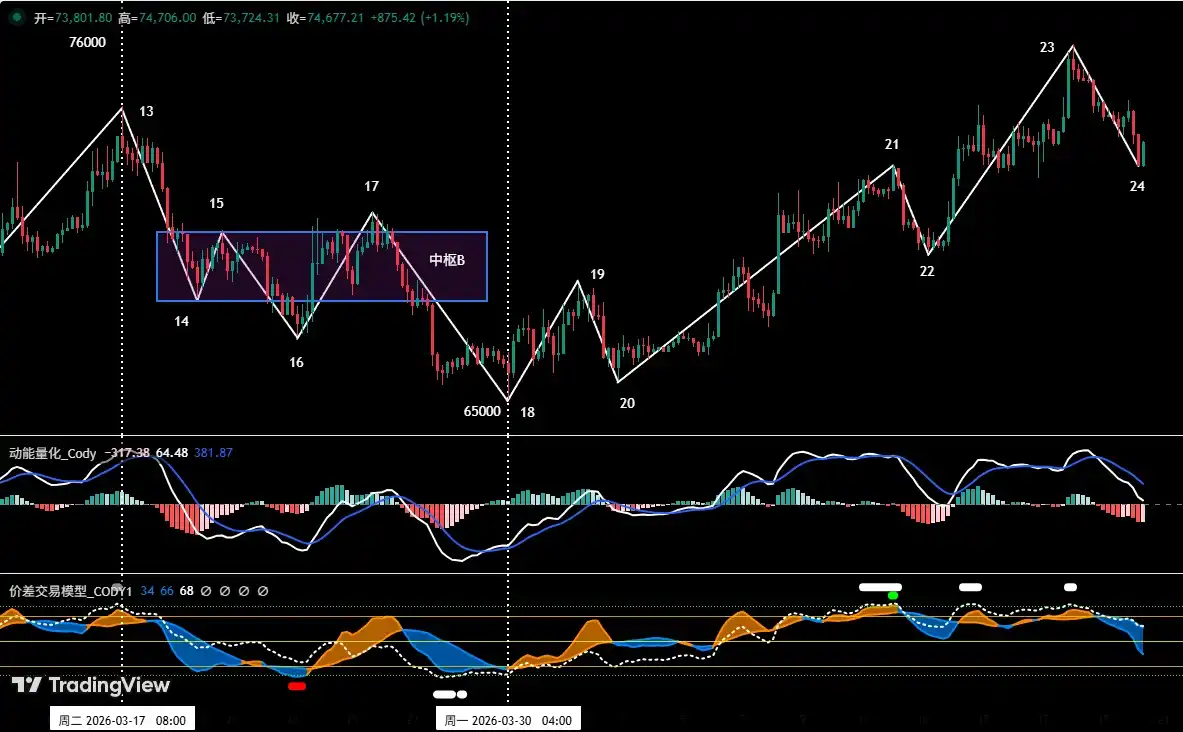
Figure 3
• Based on the market evolution after the low of $65,000 on March 30.
• As shown in (Figure 3), BTC started a fluctuating upward trend from the low on March 30. From endpoint 18 to endpoint 24, it consists of a 6-segment structure: 18-19, 19-20, 20-21, 21-22, 22-23, and 23-24.
• The figure shows: From endpoint 18 to endpoint 23, the market has run a relatively clear 5-wave rebound structure, and is currently running the 23-24 segment. From our self-built spread trading model, recent top warning signals have been continuously issued (green and white points in the figure), which means technical indicators are in a severe overbought state, and the market has short-term adjustment needs.
IV. Bitcoin's Market Forecast and Trading Strategy for This Week
1. BTC's Market Trend Forecast for This Week:
• Core View for This Week:
Currently maintaining consolidation in the $73,500~$79,000 range, focus on the battle between bulls and bears near the upper and lower bounds of the range. If the rebound breaks above the upper bound, the market will fluctuate and rebound, but the space is limited; if it effectively breaks below the lower bound, the coin price may further test the key support near $69,500.
2. Core Resistance Levels:
• First Resistance Zone: $79,000~$80,600 area (near the November 2025 low)
• Second Resistance Zone: $83,500~$84,500 area (previous multi-empty chip密集 transaction area)
3. Core Support Levels:
• First Support Level: Near $73,500 (previous important support level)
• Second Support Level: Near $69,500 (previous important support level)
• Third Support Level: $65,000~$66,000 area (near the lower rail of the consolidation range)
4. Trading Strategy for This Week (excluding sudden news impact): (04.20~04.26)
1. Medium-term Strategy:
Bitcoin _ Daily K-line Chart: (Position Monitoring Model)
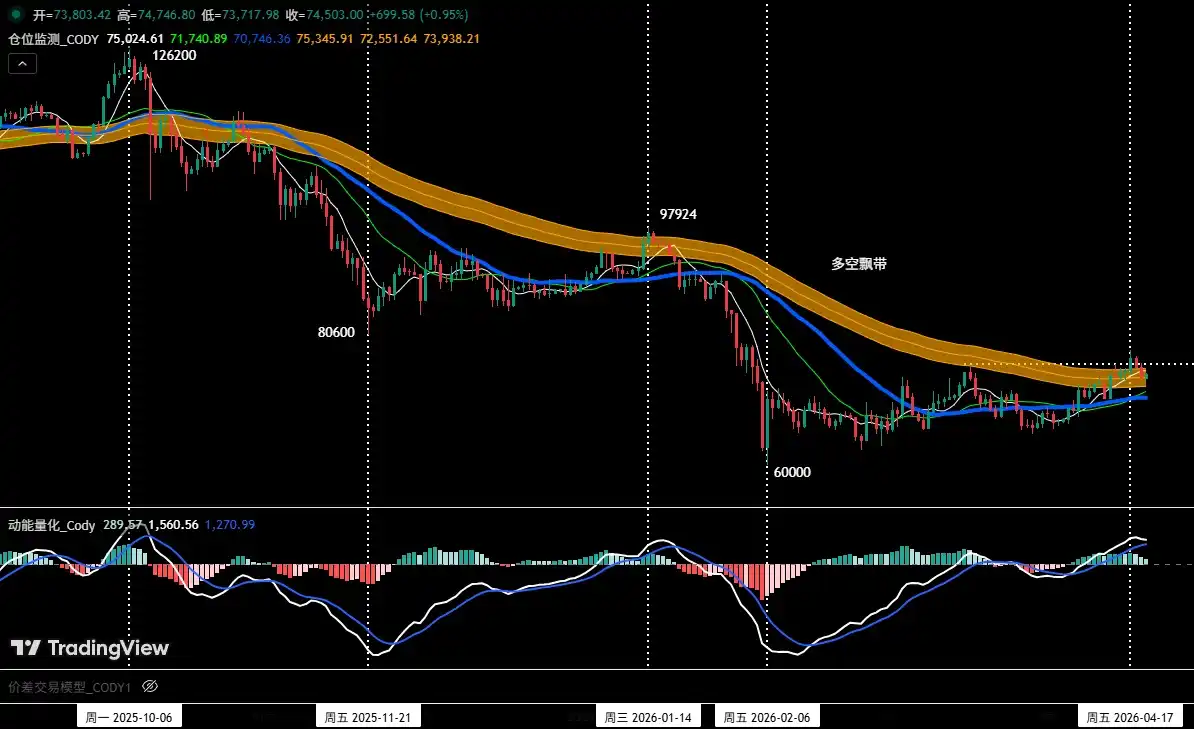
Figure 4
Position Monitoring Model: As shown in (Figure 4), currently, the coin price is fluctuating near the bull-bear ribbon. According to our strategy rules, we temporarily hold the 60% short position established at $89,000 (January 28).
• If the coin price rebound this week effectively stabilizes above the bull-bear ribbon, clear all medium-term positions.
2. Short-term Strategy: Use 30% of the position, set stop-loss points, and look for "spread" opportunities based on support and resistance levels. (Use the 30-minute/60-minute cycle as the operation period).
3. Based on the forecast of the medium-term bearish trend, the principle of "follow the trend to go short" should be adhered to. To dynamically respond to the complex evolution of the market and combine the signals from our self-built trading model, we will formulate two short-term operation plans: A/B:
• Plan A: Rebound meets resistance, sell high on rallies.
• Entry: When the coin price rebounds to the $76,500~$79,000 area and triggers resistance signals combined with the model's top signals, a 30% short position can be established.
• Risk Control: Initial stop-loss set above $80,600.
• Close Position: When the coin price falls near important support levels and combines with model signals, gradually close positions to take profits.
• Plan B: Follow the trend break short.
• Entry: The coin price continues to adjust. When the coin price effectively breaks below the support near $73,500 and combines with the model's top signals, follow the trend to establish a 30% short position.
• Risk Control: Initial stop-loss set above $74,500.
• Close Position: When falling to support levels and combining with model signals, gradually close positions to take profits.
V. HYPE: Operation Review
1. Short-term Operation Review: (See Table 1)
We strictly followed the operation plan and, based on the trading signals issued by our self-built spread trading model and momentum quantitative model, completed one short-term (long) operation last week, with a cumulative trading profit of 6.80%.
2. Summary of HYPE Short-term Trading Details: (Leverage*1x)
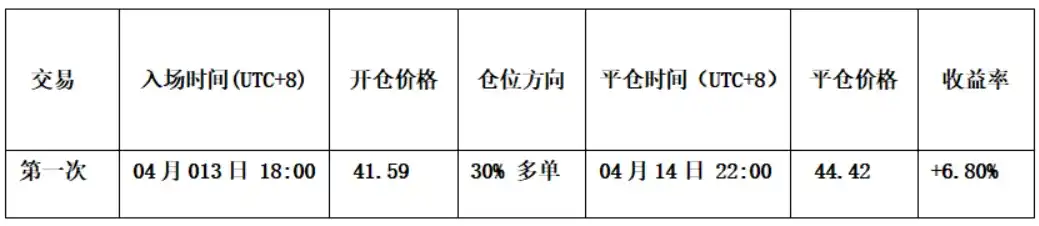
Table 1
3. Short-term Trading Review: (See Figure 5)
• Entry Strategy: First, based on the judgment of the market's V-wave upward trend; second, the spread trading model had already issued a bottom warning signal (good point in the figure); third, the two momentum lines in the momentum model simultaneously moved above the zero axis, and the two major models issued共振上涨 signals. We established a 30% long position at $41.59.
• Close Position Strategy: When the price rose to near $45 and encountered resistance, and the spread trading model triggered a strong top warning signal (green point + white point), we closed all positions near $44.42.
• Summary: This trade successfully profited about 6.80%.
HYPE_60-minute K-line Chart: (Momentum Quantitative Model + Spread Trading Model)
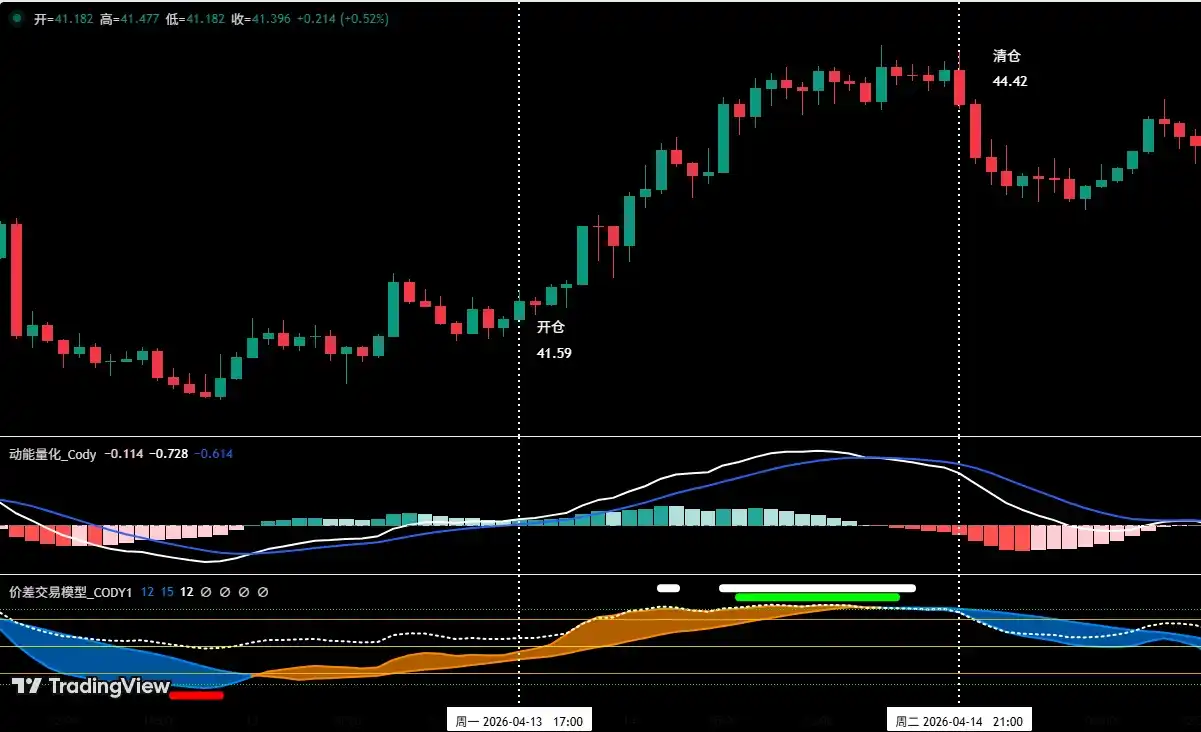
Figure 5 (Short-term Trading Illustration)
VI. Special Notes:
1. When opening a position: Immediately set the initial stop-loss level.
2. When profit reaches 1%: Move the stop-loss to the entry cost price (breakeven point) to ensure capital safety.
3. When profit reaches 2%: Move the stop-loss to the position of 1% profit.
4. Continuous tracking: Thereafter, for every additional 1% profit the coin price makes, move the stop-loss level up by 1% accordingly, dynamically protecting and locking in profits.
The financial market changes rapidly, all market analysis and trading strategies need to be adjusted dynamically. All views, analysis models, and operation strategies involved in this article are derived from personal technical analysis and are for personal trading log purposes only, not constituting any investment advice or operational basis. The market has risks, investment needs caution, please do not make decisions based on this.