Why Does SpaceX Have Such a High Valuation Ceiling? The Answer Lies in Musk's Business Blueprint

marsbitPublished on 2026-06-22Last updated on 2026-06-22

Abstract

SpaceX achieved a record-breaking IPO on June 12, 2026, with its market cap surging past $2.1 trillion. This valuation reflects its central role within Elon Musk's expansive, interconnected technological ecosystem. The article details how four core components form a synergistic closed-loop system: 1) **The "Brain" (xAI & Orbital Compute):** xAI provides AI models and massive ground/space-based supercomputing for simulation and decision-making across the system. 2) **The "Neural Logistics Core" (Starlink & Starship):** Starlink's low-latency satellite network enables global data transmission, while Starship's low-cost, reusable launch capacity aims to make large-scale space deployment economically viable. 3) **The "Physical Body" (Tesla & Optimus):** Tesla's manufacturing prowess and energy products support hardware production and power, pivoting toward mass-producing the Optimus humanoid robot for terrestrial and potential space-based labor. 4) **The "Human Interface" (Neuralink & X):** Neuralink seeks direct brain-computer communication, and the X platform provides real-time societal data. Together, these elements create three reinforcing "flywheels": manufacturing/logistics, data-driven iteration, and energy/compute/network synergy. This integrated approach promises lower costs, faster innovation cycles, and potential infrastructure-as-a-service offerings. However, it also concentrates technical, regulatory, and corporate governance risks. Ultimately, SpaceX's high valuatio...

Author: Black Mario

On June 12, 2026, Eastern Time, SpaceX officially listed on the NASDAQ exchange under the ticker symbol SPCX. The company's opening price was set at $135, and after opening, the stock price continued to fluctuate upwards, ultimately closing at $160.95, marking a substantial single-day increase of 19.2%.

Driven by this epic listing performance, SpaceX's market capitalization surged by over $2.1 trillion in a single day, setting a record for the largest single IPO in human commercial history (after the IPO, SPCX continued to rise, showing the market's seemingly limitless imagination for SpaceX's development).
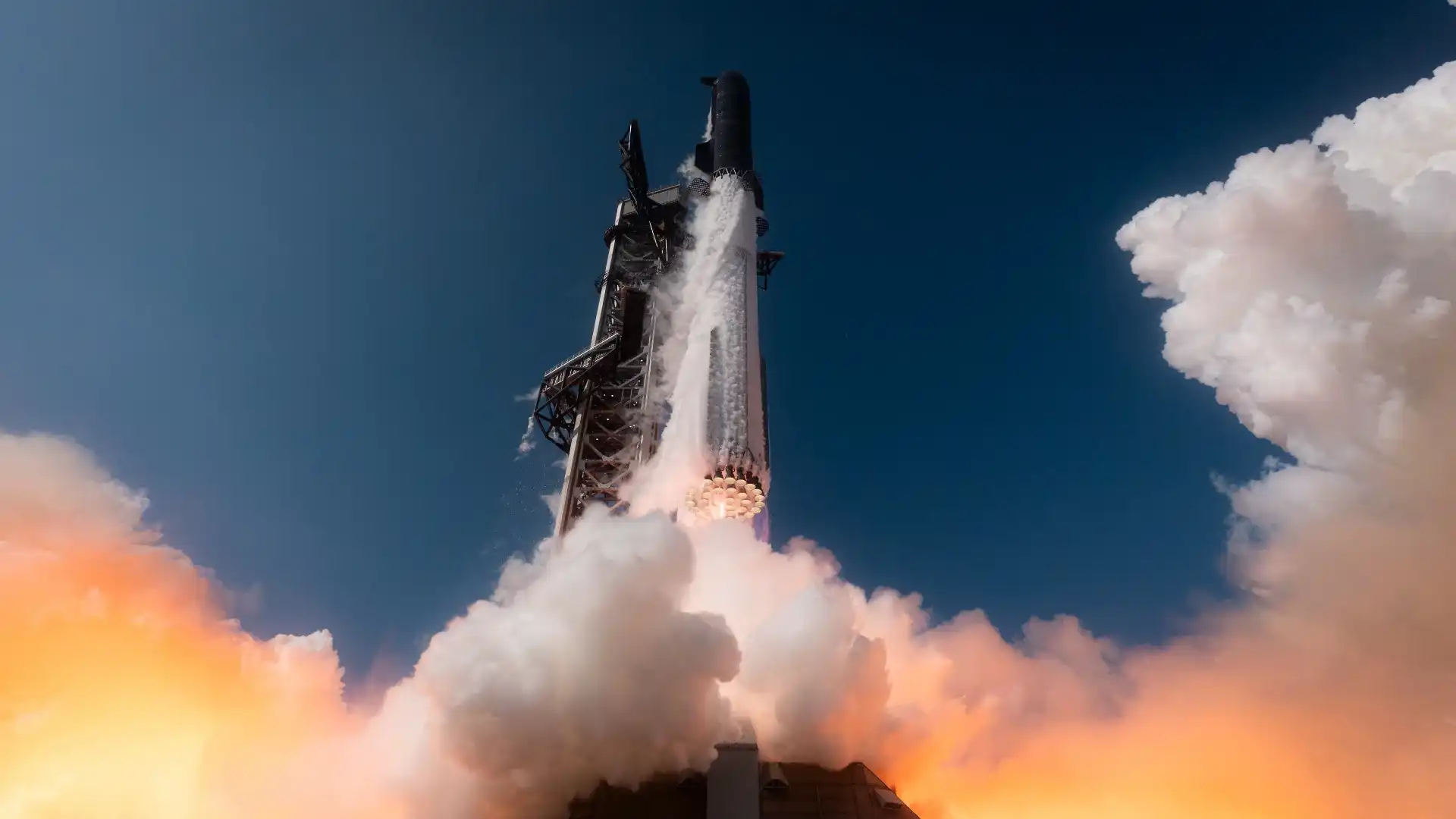
Image: Starship Launch Photo Source: www.space.com/

This capital feast also directly propelled Musk to the pinnacle of global wealth, making him the first person in human history with a personal fortune exceeding $1.1 trillion.

Of course, if we take a longer-term view of Musk's series of operations over these past few years, we'll find that SpaceX's listing is actually just one logically sequential step within his vast industrial layout.

Behind this lies an underlying business logic that was meticulously planned long ago. All seemingly scattered actions have been silently serving a larger, more comprehensive ecosystem.

Tesla's intelligent manufacturing, xAI's artificial intelligence, Starlink's global network, and Neuralink's cutting-edge technology serve as layered foundations for data entry, manufacturing systems, intelligent computing power, and aerospace technology. These build upon each other progressively and interlink, leveraging capital dividends to continuously integrate, iterate, and empower one another, gradually forming a complete, self-sustaining, and continuously evolving commercial closed loop.

In fact, today's global technological competition has long moved beyond the rivalry of single products or isolated technological advancements. Future industrial competition will increasingly be a contest of entire ecosystem chains encompassing computing power, energy, manufacturing, data, and physical execution.

The key to grasping core discourse power in the next generation of intelligent industries lies more in breaking down barriers between various fields and constructing complete ecological closed loops. The capital feast surrounding SpaceX might signify the starting point of a new cycle; a deeper-level contest in the technology industry may have just begun.

Deconstructing Musk's Empire and Ecological Blueprint

In reality, Musk has undertaken many projects over the years that were initially unproven and even unimaginable. From reusable rockets and global satellite internet to humanoid robots, brain-computer interfaces, and orbital computing power, each requires massive investment, long cycles, and comes with high uncertainty.

If we look at these projects together, we find they are tightly interconnected. Musk has been continuously filling in all the key capabilities needed for his envisioned complete technological system, revolving around artificial intelligence, communication networks, aerospace transportation, intelligent manufacturing, and human-computer interaction.

Currently, I roughly break down this blueprint into four parts:

  • xAI and orbital computing power form the intelligent brain;
  • Starlink and Starship handle information transmission and physical transportation;
  • Tesla and Optimus are responsible for manufacturing and physical execution;
  • Neuralink and X connect neural signals and human societal data, respectively.

These segments are currently at different stages of development. Some have established stable commercial revenue streams, some are entering the scaling verification phase, while others remain in long-term technological exploration.

Yet together, they constitute Musk's highly imaginative industrial moat, continually expanding SpaceX's value boundaries into communication, computing power, manufacturing, and future space infrastructure.
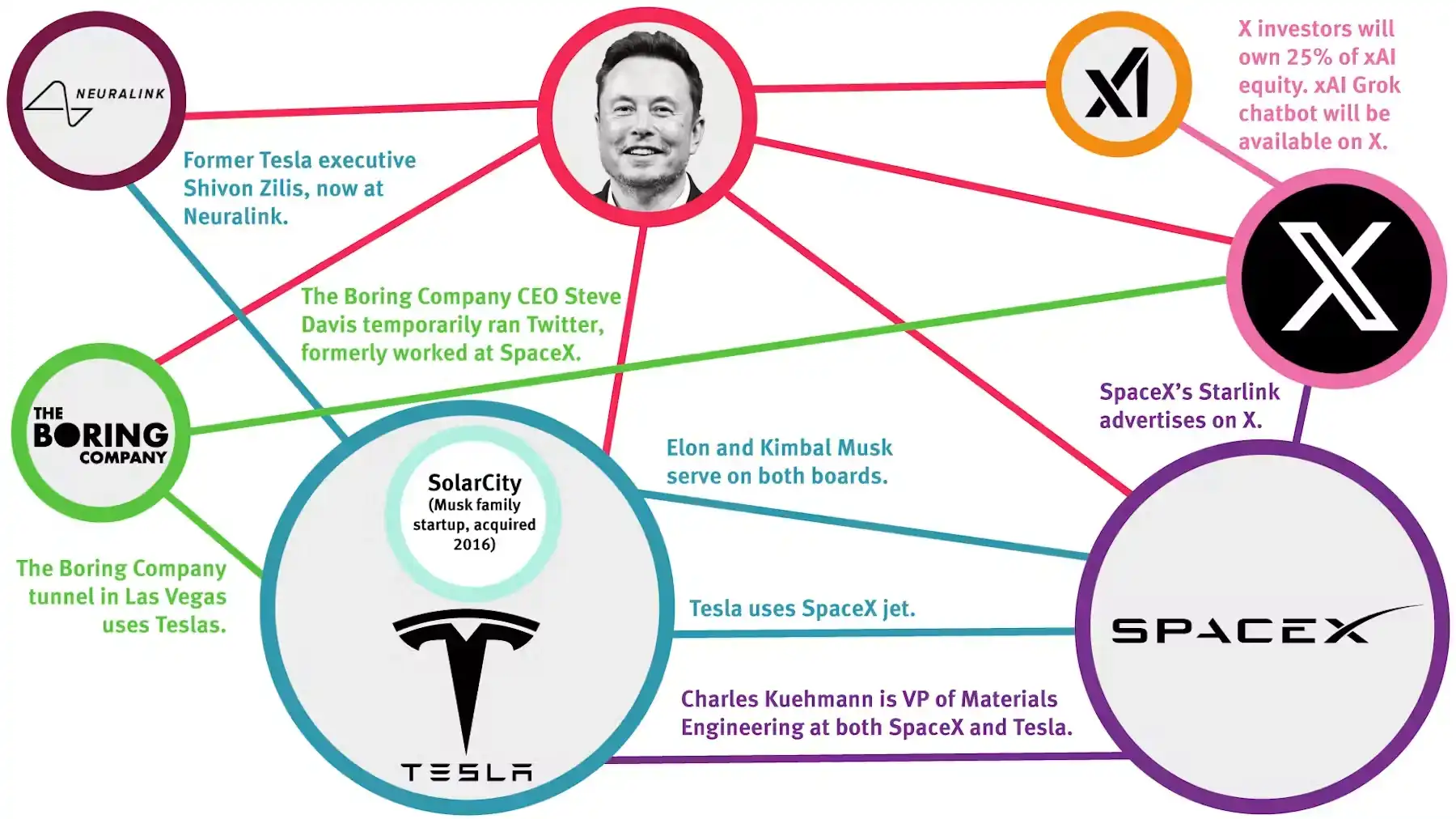
Image: Musk's Empire and Ecological Blueprint Source: www.theinformation.com

The Brain: xAI + Orbital Computing Power

xAI is Musk's artificial intelligence company. Its most well-known product is Grok, but xAI's role is far more significant than just a chatbot. It simultaneously possesses capabilities in large models, supercomputing clusters, and AI infrastructure, serving as the intelligence and computing power hub within Musk's entire technological system.

In February 2026, SpaceX fully acquired xAI, valued at $250 billion, further integrating AI with its deep expertise in aerospace technology and the Starlink satellite network.

Since both companies belong to Musk, many interpreted this acquisition as financial engineering before the IPO—a left-hand-right-hand transaction, a capital operation to pave the way for SpaceX's listing.

But from a longer-term perspective, this acquisition was more about aiming to further complete the AI and computing power capabilities within the SpaceX system. Post-integration, SpaceX now covers space transportation, satellite communication, artificial intelligence, and computing power infrastructure, forming a technology matrix spanning aerospace and AI.

Therefore, we shouldn't view xAI entirely through the lens of understanding OpenAI or Anthropic. Grok is merely a front-end product for the public; its deeper value lies in providing model, computing power, and intelligent decision-making capabilities for Musk's aerospace, robotics, intelligent manufacturing, and future orbital facilities.

The profound and unique computing power system behind xAI is also one of its most fundamental distinctions from ordinary AI companies.

From the conventional computing cluster perspective, according to xAI's official disclosure, its Colossus computing cluster has deployed 200,000 H100 GPUs. The entire cluster was initially built in just 122 days and later doubled in scale within another 92 days, setting a record for rapid construction.
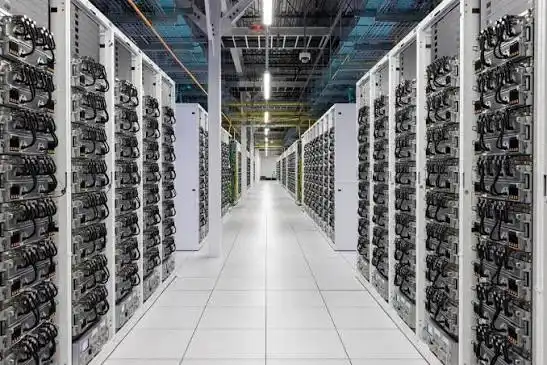
Image: xAI Colossus Supercomputing Cluster Source: www.naddod.com

This means xAI has entered the most capital-intensive, asset-heavy global AI computing power competition, building its intelligent iterative capabilities from the ground up.

Supported by top-tier computing power, xAI can conduct billions of continuous virtual simulation runs for various real-world, hardcore scenarios like rocket combustion parameters, robot motion trajectories, space material degradation, and interstellar base construction, screening the optimal implementation paths from a sea of options, providing precise intelligent support for the entire system's physical operations.

However, the iterative upgrade of ground-based AI computing systems has long encountered inherent physical bottlenecks, an inevitable constraint of technological development.

AI supercomputing research data indicates that the performance of cutting-edge AI supercomputers roughly doubles every 9 months, but corresponding hardware costs and power demands also double annually.

For clusters like Colossus, industry estimates hardware costs around $7 billion, with operational power consumption as high as 300 MW. They face four major challenges: energy consumption, cooling limitations, land resources, and network latency. In other words, there is a ceiling to the iterative limits of ground-based data centers; simply stacking more GPUs or expanding server rooms cannot achieve a qualitative breakthrough.

It's like trying to fit more items into a fixed-size warehouse; no matter how you rearrange, the upper limit for what can be stored is finite.

Thus, the core reason behind Musk's push for orbital computing power is to break free from the developmental shackles of ground-based computing and pivot to space.

Space offers virtually limitless free solar energy resources and a naturally low-temperature environment for efficient cooling. Deploying computing clusters in low Earth orbit can completely escape the rigid constraints of ground resources, providing a continuous core driving force for AI's ongoing evolution.

If you look closely, Musk has been frantically launching satellites in recent years, one of the aims being to forge his space computing network, preparing for a future space computing system.

A Reuters report indicates SpaceX plans to complete an orbital AI computing demonstration as early as late 2027 and has already received approval to launch up to 1 million space data center satellites (Musk's cost of launching satellites is extremely low, as we will detail later, making this something essentially only he can do).

In March of last year, xAI acquired the social platform X, one of the purposes being data acquisition. The X platform accumulates massive amounts of real-time data on human behavior patterns, group preferences, and social dynamics daily. Combined with xAI's own accumulated physical scenario simulation data, this intelligent system can deeply understand the complete operational logic of both the physical world and human society.

Compared to the commonly outsourced, static, lagging, and sample-based datasets used by peers, the real-time, authentic, and multi-dimensional data endogenously generated within Musk's ecosystem forms an irreplaceable, differentiated iterative advantage.

Nervous System & Logistics Core: Starlink + Starship

Starlink is the low Earth orbit (LEO) satellite internet system built by SpaceX. It provides broadband internet globally, especially covering remote areas, seas, airspace, and other scenarios difficult for traditional communication networks to reach. It functions more like a global communication network SpaceX has built in space and is now widely adopted.

For example, during the Russia-Ukraine conflict, after ground communication infrastructure was damaged, Ukraine relied on Starlink's network services to maintain military command, drone control, and government communications. After Hurricane "Helene" caused outages in parts of the US in 2024, rescue departments also deployed many Starlink terminals to restore emergency communications.

Starlink has actually achieved high commercial success. In 2025, SpaceX's sales reached $18.67 billion, with Starlink contributing about 60% of the revenue, making it the group's core cash flow source. Currently, Starlink has over 10.3 million global users and approximately 9,600 satellites in orbit, indicating its evolution from an experimental project to a mature, stable core infrastructure.

Of course, Starlink's core value has long transcended ordinary satellite broadband services. It essentially serves as the real-time, global information network for this entire ecosystem.

Unlike the public perception of it "replacing ground networks," Starlink's core advantage lies in complementary empowerment.

Traditional ground fiber optic networks rely on glass medium transmission, suffering from high latency, significant signal loss, and strong geographical limitations, unable to meet the millisecond-level global协同 scheduling demands of advanced AI.

However, LEO satellite networks equipped with inter-satellite laser links can circumvent some path limitations of undersea cables in transcontinental long-distance通信, achieving lower latency communication via shorter transmission paths. They also build unique network advantages in scenarios like global coverage without dead zones, connectivity in remote areas, communication in extreme conditions, and low-latency跨洲 transmission, ensuring the efficient联动 and precise operation of this ecosystem.

With Starlink, future orbital computing centers can maintain low-latency interaction with ground-based data systems. For instance, a ground-side AI inference request can be uploaded via Starlink to a space computing center for processing, and the inference results can be transmitted back to the ground in real-time through Starlink.

Starship is the next-generation super-heavy launch vehicle system under continuous development by SpaceX, responsible for transporting personnel, satellites, and large equipment into space. The "chopsticks catching a rocket" we saw earlier was a recovery test for Starship—after launch, the first-stage booster autonomously flies back to the launch tower and is directly caught by two giant mechanical arms, minimizing refurbishment time and enabling rapid reuse. This recovery system significantly reduces Starship's launch costs.
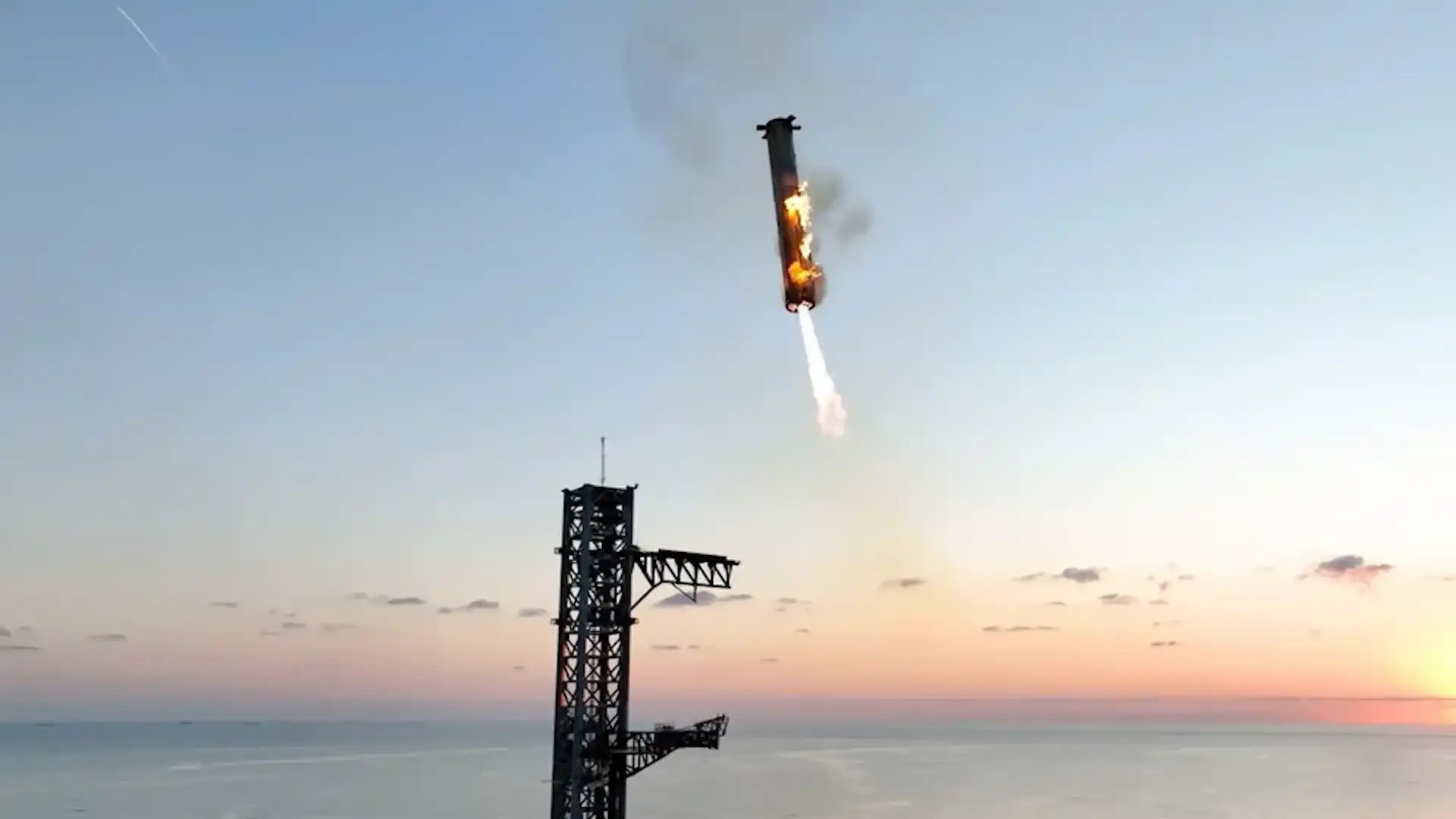
Image: Starship "Chopsticks Catching Rocket" Capture Moment Source: san.com

Although Starship is still in the testing phase and has not yet established stable commercial launch pricing, Musk previously stated that once mature, the comprehensive launch cost per mission could potentially drop below $10 million, with long-term marginal costs possibly approaching $2 million.

What does this mean? SpaceX's current Falcon 9 standard commercial launch price is around $74 million, which is already considered quite low-cost. In contrast, NASA's SLS single mission costs range from $2 to $4 billion.

Therefore, Starship, with such low costs, will be the world's only scalable, low-cost, repeatedly reusable space transportation vehicle capable of delivering over 100 tons of payload to low Earth orbit. Traditional space launch costs are prohibitively high with extremely low frequency, utterly incapable of supporting large-scale space commercial布局. Starship, through technological reuse, mass production, and high-frequency iteration, dramatically compresses the cost of space operations.

Leveraging its immense payload capacity and low-cost advantage, Starship can batch deploy orbital computing nodes, assemble large-scale Starlink satellite constellations, perform space equipment maintenance, and handle round-trip cargo transportation between Earth and space.

Starlink handles ultra-fast information flow; Starship handles low-cost physical deployment. One virtual, one physical; one information, one matter—together they thoroughly打通 the two-way流通 channel between space and Earth, allowing Musk's ecosystem to leap beyond the competitive confines of traditional terrestrial technology.

Physical Body Core: Tesla + Optimus

Tesla, the electric vehicle company, needs little introduction.

In January 2026, Tesla officially announced the permanent discontinuation of its two flagship models, the Model S and Model X. In reality, these models were once Tesla's face and represented stable, high-margin core businesses. However, sales declined persistently, industry competition intensified, and they long occupied significant R&D effort, production line capacity, and core human resources, with their赋能 value to the overall intelligent closed-loop布局 continuously weakening.
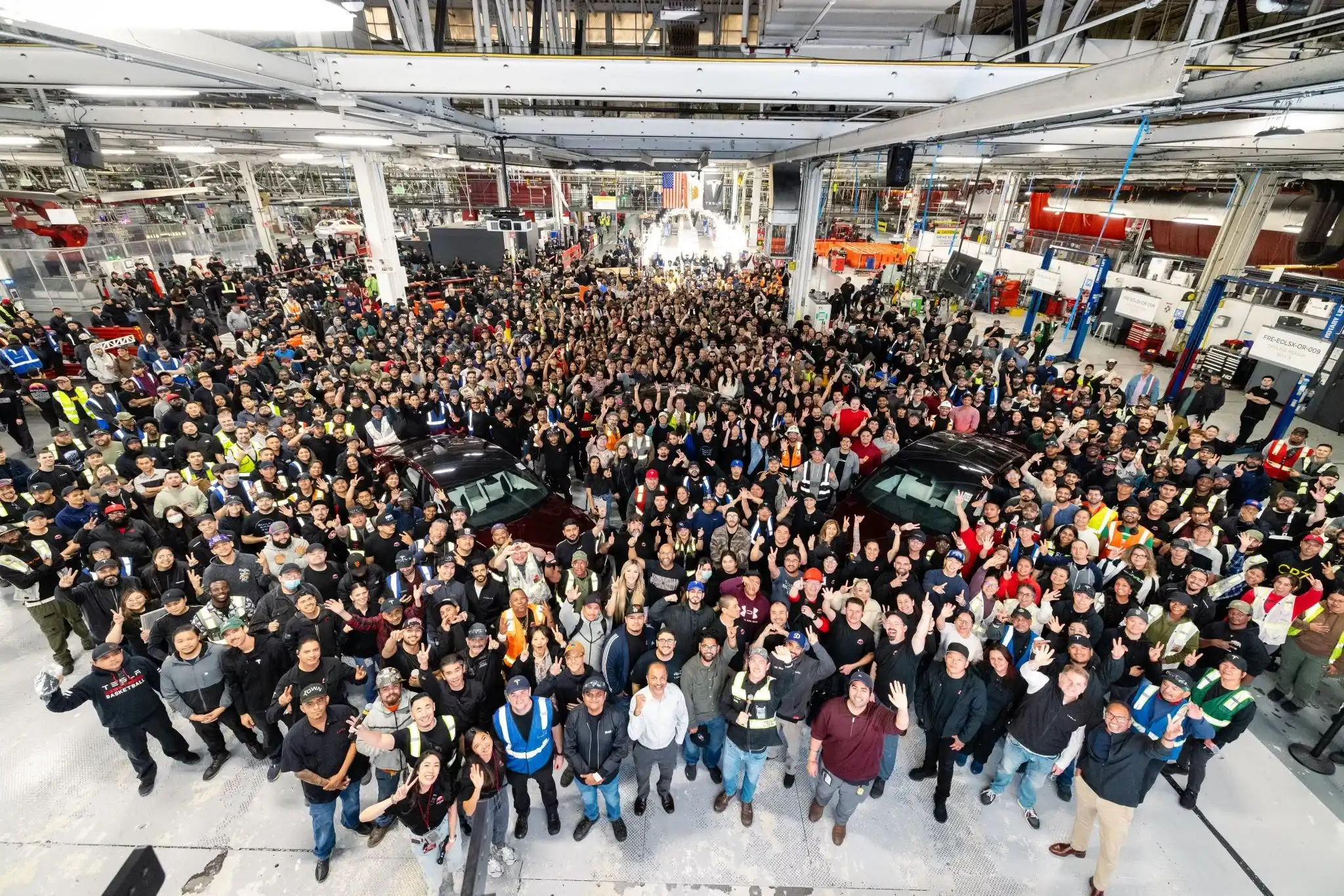
Image: Fremont Factory Employee Group Photo + Last Two Model S / Model X Source: cdn.shopify.com

The authoritative media Axios disclosed that the core purpose of Tesla discontinuing the Model S and Model X was to free up premium production capacity and space resources at the Fremont factory to fully pivot towards the R&D and mass production of the Optimus humanoid robot. Similarly, The Guardian explicitly stated that the essence of this product line adjustment is Tesla's corporate positioning evolution—transitioning from a traditional EV company to a "Physical AI Company."

In essence, cars are intelligent robots on wheels, while Optimus is a general-purpose robot that walks on two legs. Their underlying logic is fully interconnected, sharing perception algorithms, intelligent decision-making, motion control, supply chain systems, and mass production capabilities. Discontinuing traditional flagship models is fundamentally about concentrating all premium resources to全力赋能 Optimus's iterative落地.
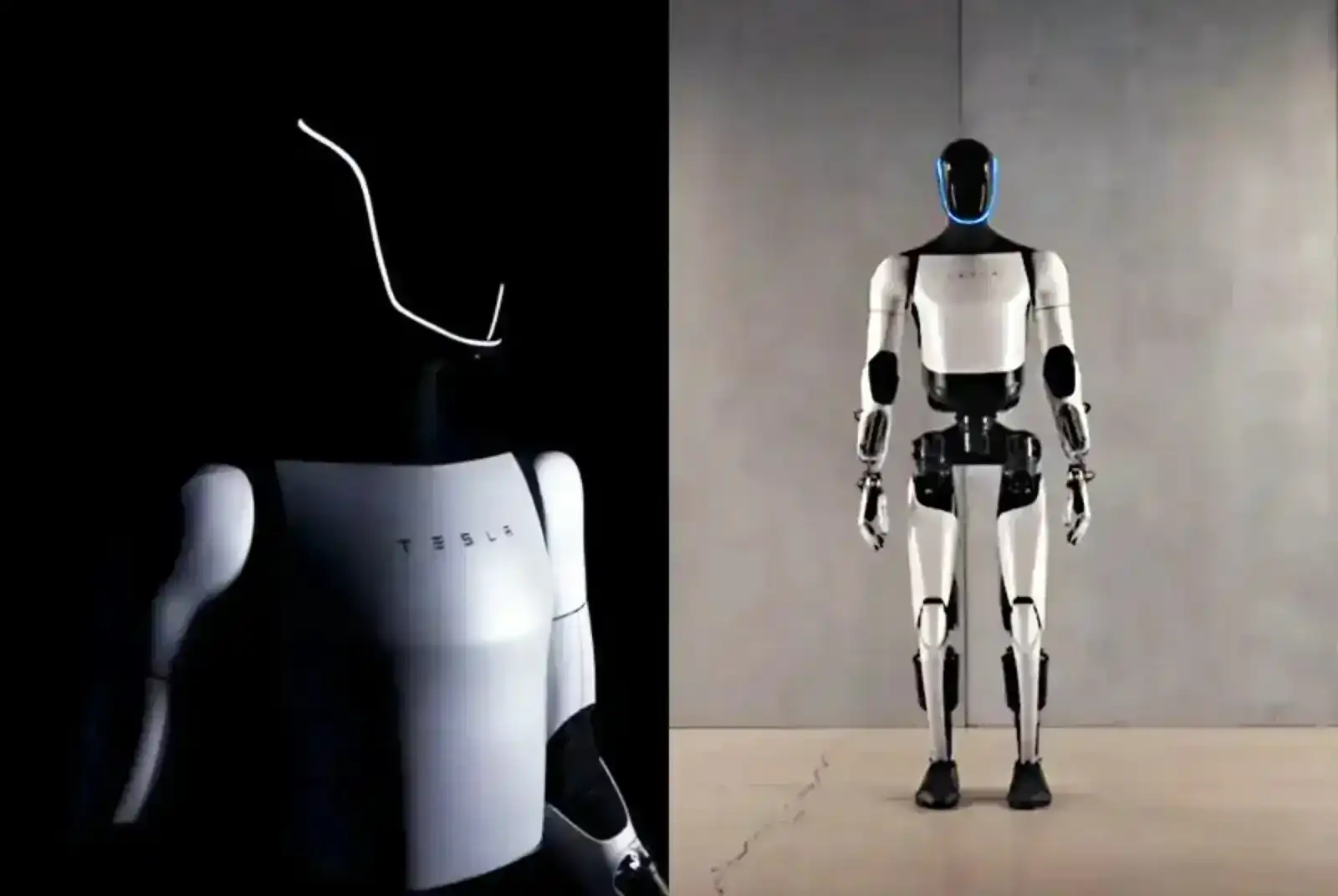
Image: Tesla Optimus Humanoid Robot Full Body Photo Source: tesery.com

Musk's fondness for humanoid robots is no secret, and he places great hopes on Optimus. Optimus itself is绝非 a普通 consumer tech product; it is designed as a versatile industrial worker adaptable to entire supply chains, capable of undertaking high-precision, repetitive, high-risk tasks like aerospace equipment assembly, industrial精密 manufacturing, hazardous equipment inspection, and maintenance. In the future, it could also be deployed to space bases to complete various extreme scenario operations, filling the ecosystem's physical execution短板.

On another front, the real-world physical data generated during Optimus's global operations—such as motion trajectories, environmental parameters, and equipment failures—will flow back in real-time to the xAI hub, providing源源不断的 authentic data support for algorithm model training, hardware optimization, and operational plan upgrades.

So you see, Tesla's mature global supply chain and mass production system lay a solid industrial foundation for robot commercialization, forming a complete self-perpetuating cycle of hardware production, scenario application, data feedback, and intelligent iteration. This transforms AI's virtual computing power into sustainable physical productivity.

Human-Machine Interface Core: Neuralink + X

Another thread is Neuralink + X.

I have long been aware of Neuralink, a company that also plays a highly technologically advanced, even futuristic role. Neuralink is a brain-computer interface (BCI) company founded by Musk. Its core function involves implanting a微型 chip into the human brain to read neural signals through electrodes and convert these signals into commands understandable by computers.

Its most immediate application is primarily to assist paralyzed individuals or those with severe mobility impairments to control computers, phones, and robotic arms using only their "thoughts." For example, after receiving the implant, a patient wouldn't need to move limbs; simply generating an operational intent in their mind could move a cursor, type, or control external devices.

Put more simply, Neuralink establishes a direct communication channel between the human brain and machines. Short-term, it is first and foremost a medical technology to help patients regain communication and movement abilities. Its long-term goal is to further enhance the efficiency of information interaction between humans and AI or robots.
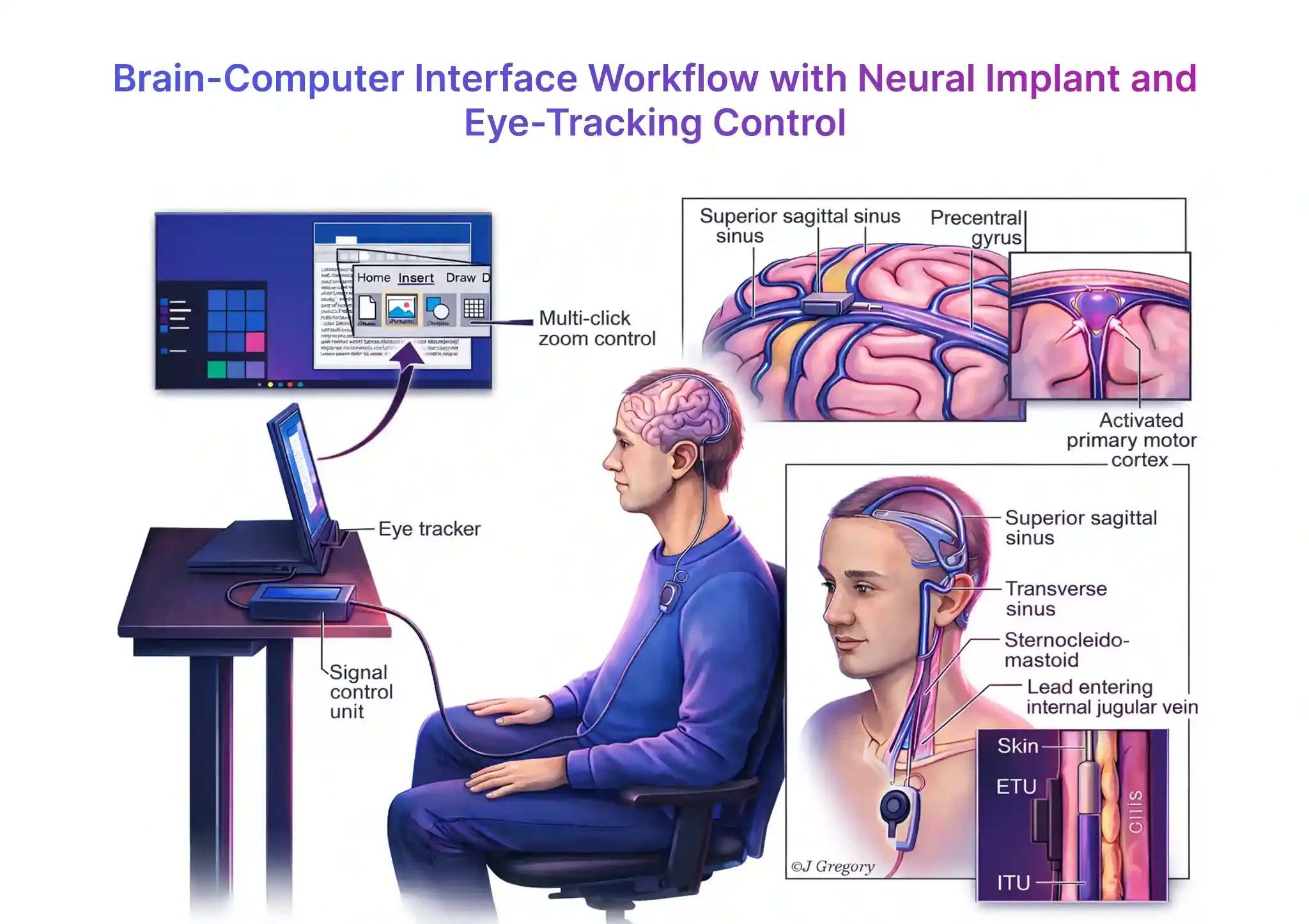
Image: Neuralink Brain-Computer Interface Workflow Schematic Source: frugaltesting.com

Neuralink's short-term core落地 scenario and commercialization入口 focus on the medical field, with a clear path for technology verification and clinical落地.

As early as January 2024, Neuralink successfully performed the world's first human brain-computer interface implant surgery, successfully detecting the participant's neural signals and achieving basic brain-machine interaction. According to data公开 on ClinicalTrials.gov, its ongoing PRIME Study project aims to verify the safety of the N1 implant and R1 surgical robot, conducting early feasibility exploration. As of January 2026, UCLH disclosed that 7 patients had participated in the GB-PRIME clinical trial, able to control devices through thought and achieve human-machine interaction, tangibly helping特殊人群突破 physical limitations.

Of course, from a long-term strategic value perspective, Neuralink's ambitions extend far beyond medical assistance. Its ultimate core is to break the century-long bandwidth barrier in human-machine interaction, enabling interaction through thought across一切,抹平 the speed gap in human-machine collaboration.

Following Neuralink, the X platform is responsible for collecting macro-level human societal data, comprehensively covering group behaviors, public opinion preferences, and social operation dynamics. This allows AI to deeply adapt to real human life and social contexts, preventing intelligent systems from脱离现实 and iterating in isolation.

Meanwhile, Neuralink focuses on breakthrough in micro-level neural signals. In the future, it could enable seamless, rapid input of human strategic intentions and innovative ideas, as well as precise feedback of system computation results, risk mitigation plans, and optimization方案. While firmly retaining human decision-making authority, supervision rights, and design authority, it would maximize the elimination of human-machine speed mismatch, achieving efficient, precise, and deep human-machine collaboration.

Currently, however, the human-machine interface segment has relatively low maturity, with a small overall practical sample size and still some technological uncertainty. This represents the final crucial piece in Musk's comprehensive closed loop and a core battlefield for future global intelligent industry discourse power.

Once the macro societal data from the X platform can联动 with the micro neural signals from Neuralink, the entire ecosystem will realize a complete closed-loop chain from human intent to AI computation, machine execution, and real-world feedback.

Connecting Dispersed Business Systems into a Closed Loop

In reality, Musk is attempting to gradually connect this vast business blueprint from分散业务 into a complete system.

Traditional tech companies typically emphasize专业分工 and risk隔离. An AI company purchases hardware from chip manufacturers, rents computing power from cloud platforms, acquires data from external sources, and then collaborates with manufacturers,通信 firms, and终端 companies to bring products to market.

This model分散经营风险 but also generates continuous industrial链 friction. Each additional external环节 introduces issues like procurement costs, profit sharing, negotiation cycles, interface适配, and data permissions, ultimately slowing overall iteration speed.

Musk, this maverick, has chosen a completely different path.

xAI provides models and computing power; X provides social interaction data; Starlink and Starship handle information transmission and physical transportation, respectively; Tesla and Optimus are responsible for manufacturing and physical execution; and Neuralink explores the longer-term human-computer interaction入口.

These companies still need chips, components, external suppliers, and the global supply chain. However, the distances between data, computing power, energy,通信, manufacturing, and physical execution are being significantly缩短.

Currently, the maturity levels across these segments are not uniform.

SpaceX's launch system, Starlink's commercial network, and Tesla's manufacturing and energy businesses have already received real-world commercial validation. The computing power, energy, and data协同 between xAI and other businesses are正在推进. Optimus entering industrial production at scale, Starship承担高频轨道运输, orbital computing power commercialization, and Neuralink becoming a high-bandwidth human-machine interface属于 more long-term布局.

Therefore, at this stage, Musk has completed the布局 of most关键能力 and has begun attempting to gradually connect these capabilities.

Three Potential Mutually Reinforcing Core Flywheels

Regarding the imagination for Musk's system, I believe it stems more from the持续反馈正向循环 among the various companies under his umbrella.

Cost reduction, scale expansion, or technological breakthroughs in one segment can potentially drive further upgrades in other segments.

1. Manufacturing & Space Logistics Flywheel

Large-scale space布局 faces two primary challenges: equipment manufacturing costs and aerospace transportation costs. These are the biggest门槛 preventing other companies from entering this field.

Tesla's long-accumulated supply chain, automated production, and mass manufacturing capabilities can provide an industrial foundation for robots, energy storage devices, and other hardware products.

In the future, if Optimus gradually参与 equipment assembly, warehousing/logistics, inspection, and high-risk operations, it has the potential to reduce repetitive labor costs and improve production efficiency and stability.

Starship is tasked with solving the space transportation problem.

As rocket reusability, payload capacity, and launch frequency continuously improve, the deployment costs for satellites, orbital computing nodes, and other space equipment are expected to keep declining.

Therefore, the operational logic of this flywheel is roughly as follows:

Improved manufacturing efficiency drives down hardware costs; lower launch costs lead to larger-scale space deployment; larger deployment scales, in turn, generate more orders and operational data, further optimizing equipment design, production processes, and launch plans.

In fact, a mature雏形 of this flywheel already exists between SpaceX and Starlink. For instance, in a 2025 Starlink launch mission, the Falcon 9 first-stage booster used had already completed its 21st flight, successfully delivering another batch of satellites to orbit.

Rocket reuse continuously reduces satellite deployment costs. As Starlink's scale expands, it brings stable launch demand and cash flow to SpaceX. The two businesses thus form a mutually reinforcing循环.

2. Data & Design Iteration Flywheel

On another front, as AI enters the physical world, real-world scenario data and the ability to rapidly convert data into technological upgrades are becoming core competitive要素.

xAI can simulate rocket operations, robot movements, material degradation, and equipment failures in virtual environments, testing different design方案 in advance and reducing some of the costly and time-consuming physical trial-and-error.

Once a方案 is deployed in reality, rockets, satellites, robots, and production lines generate vast amounts of real operational data.

This data flowing back into the models helps the system calibrate discrepancies between virtual simulations and reality and further optimizes hardware design, motion control, and operational方案.

Thus, a continuous iterative链 is formed: virtual simulation,方案 design, physical testing, data回流, model optimization.

Virtual simulation can提前排除部分无效方案, lowering trial-and-error costs and shortening R&D and verification cycles. Physical testing continues to承担 final verification and现实校准 roles.

When combined, the iterative efficiency of the entire R&D system is significantly enhanced.

3. Energy, Computing Power & Network协同 Flywheel

AI computing power expansion requires共同支撑 from chips, electricity, energy storage, and communication networks. Real business connections have already emerged between Tesla and xAI.

In 2025, Tesla sold Megapack energy storage设备 to xAI, with related revenue约为 $430 million. xAI's data center energy需求 directly translated into订单 for Tesla's energy business; Tesla's energy storage capabilities, in turn, provided配套 support for xAI's computing cluster expansion.

Starlink provides通信连接 for ground terminals, the satellite network, and potentially future orbital computing centers. Starship负责 transporting satellites and设备 into space. xAI provides model computation and scheduling capabilities.

When these环节 are further串联, computing power expansion will drive energy and network需求. The continuous improvement of energy and通信 infrastructure will, in turn, support larger-scale model training and设备部署.

Ultimately, the three flywheels point towards two outcomes, as mentioned earlier: cost reduction and increased iteration speed.

Expanding manufacturing scale can摊薄硬件成本. Increasing rocket reuse and launch frequency lowers the太空部署门槛. Continuous回流 of real data accelerates model and equipment optimization速度.

On this foundation, these capabilities actually hold potential for external output in the future.

SpaceX's launch capabilities, Starlink's通信网络, Tesla's energy设备, and xAI's computing power can all provide infrastructure services to governments, enterprises, and other tech companies.

Thus, this closed loop possesses two growth paths: continuous cost reduction through internal联动 and commercialization of underlying capabilities对外.

Risks Beyond Efficiency

While高度协作 can enhance overall efficiency, it also concentrates risks more significantly.

Starship's launch cost and reuse efficiency directly determine whether future large-scale orbital部署 can become viable. Optimus's量产进度 will impact the落地速度 of the physical execution layer. Orbital computing power still faces engineering challenges like散热, cosmic radiation, equipment lifespan, on-orbit maintenance, and deployment成本.

Therefore, if any one piece fails to materialize long-term, the envisioned positive flywheels might stall at局部, affecting the推进速度 of the entire closed loop.

Furthermore, this ecosystem faces an easily overlooked issue: Musk's companies are not unified under a single legal entity.

Tesla, SpaceX, xAI, and Neuralink have different shareholder structures, valuation systems, and利益主体. When conducting设备采购, data共享, technology licensing, or resource调配 between companies, they must address governance issues like whether related-party transactions are fair, how intellectual property is归属, whether one company is bearing costs for another, and how minority shareholder interests are protected.

For example, Tesla selling Megapacks to xAI showcases the协同能力 among related businesses, but it also involves questions about transaction price fairness and whether resource投入 aligns with Tesla shareholder interests.

This means that the tighter the technological闭环, the more frequent the商业协作, the more difficult such corporate governance issues become to回避.

Additionally, the global布局 of computing power,通信, and data directly touches national regulatory boundaries.

Medical, financial, and industrial data are subject to data localization, privacy protection, and cross-border transmission rules, making it difficult to flow freely like普通公开 data. Neuralink involves human clinical and神经 data; Starlink involves通信许可 and national security; orbital computing power may also face future data sovereignty and infrastructure监管 issues.

Therefore, beyond technology, Musk needs to long-term平衡 the interests of different companies, regulatory frameworks, capital投入, and resource分配. While a闭环 can amplify efficiency, it also同步放大 technology delays, corporate governance conflicts, and regulatory risks.

Re-examining SpaceX: Where Does Its High Valuation Imagination Come From?

Finally, returning to the initial question: Why has SpaceX achieved such a high valuation?

I believe the core reason is that it has become the most crucial infrastructure中枢 within Musk's entire technological ecosystem.

Rocket launches determine space transportation capability. Starlink provides a global通信网络. Future orbital computing power, satellite deployment, and space commerce also rely on SpaceX's transportation, communication, and in-orbit infrastructure.

SpaceX connects, on one end, the ground-based AI, energy, manufacturing, and robotics systems, and on the other end, the satellite network, low Earth orbit, and more远期 space infrastructure.

Its position within this ecosystem determines that its own value boundaries can continuously extend into通信, computing power, transportation, and space infrastructure.

The market's pricing of SpaceX incorporates multiple expectations: rocket launch business, Starlink cash flow, Starship transport capacity, orbital computing power, and future space commerce.

As these businesses逐步落地, SpaceX's revenue structure, industrial boundaries, and infrastructure influence all have room for further expansion.

Of course, Starship reuse, orbital computing power, and cross-business协同 still require long-term验证. But from a longer-term perspective, SpaceX has already secured an extremely difficult-to-replicate infrastructure入口.

Thus, the market's long-term optimism towards SpaceX stems fundamentally from its中枢地位 within Musk's overall commercial ecosystem.

This IPO更像 is a集中定价 event by capital markets for this entire system. Of course, how high the future valuation ultimately reaches will depend on whether these capabilities can be continuously realized and form a stably operating商业闭环.


Trending Cryptos

Related Questions

QWhat are the four key parts that make up the 'Empire Ecosystem Blueprint' of Musk's companies, and what role does each part play?

AThe four parts are: 1) The 'Brain' (xAI and Orbital Computing): This provides the AI models, intelligence, and computing power that form the central intelligence and decision-making hub for the entire ecosystem. 2) The 'Nervous & Logistics Core' (Starlink and Starship): This part is responsible for global information transmission (Starlink) and low-cost physical transportation to space (Starship), connecting the virtual and physical worlds. 3) The 'Physical Body Core' (Tesla and Optimus): This part handles advanced manufacturing and physical execution of tasks on Earth and potentially in space through robots, turning AI intelligence into physical productivity. 4) The 'Human-Interface Core' (Neuralink and X): This connects the ecosystem to human society, with X providing macro social data and Neuralink aiming to enable high-bandwidth, direct brain-machine communication in the future.

QWhy is SpaceX considered to have an extremely high valuation ceiling according to the article?

ASpaceX's high valuation stems from its central role as the infrastructure hub within Musk's broader technological ecosystem. It's not just a rocket launch company. Its value expands through its launch services, the mature Starlink business (which provides crucial cash flow and a global data network), the future potential of the Starship for ultra-low-cost space transport, the planned orbital computing infrastructure, and its position as the essential enabler for all future space-based commercial activities in the ecosystem. The market is pricing in this multi-layered potential as a critical infrastructure provider connecting Earth-based AI/manufacturing with space-based networks and computing.

QWhat are the three potential 'reinforcing flywheels' mentioned in the article that could drive the ecosystem's growth?

AThe three flywheels are: 1) Manufacturing & Space Logistics Flywheel: Tesla's manufacturing scale and efficiency lower hardware costs, while Starship's reusability lowers space deployment costs. More deployments create more data and orders, further optimizing manufacturing and launch processes. 2) Data & Design Iteration Flywheel: xAI simulates designs virtually to reduce real-world trial and error. Real-world data from rockets, robots, etc., then flows back to xAI to refine the models and simulations, creating a continuous, fast-paced optimization loop. 3) Energy, Computing & Network Synergy Flywheel: xAI's computing growth drives demand for Tesla's energy storage (Megapack) and Starlink's communication network. The improvement of these energy and network infrastructures, in turn, supports the expansion of even larger computing clusters and more sophisticated AI models.

QHow does the concept of 'orbital computing' address limitations faced by ground-based AI data centers?

AGround-based AI supercomputers face physical bottlenecks in energy consumption, cooling, land use, and network latency. Their performance growth is tied to exponentially increasing costs for hardware and power. Orbital computing, by deploying data centers in space (on satellites), aims to bypass these limits. Space offers virtually unlimited solar energy for power and a natural cryogenic environment for efficient cooling, removing the major constraints of terrestrial infrastructure. This would allow for potentially limitless and sustainable scaling of computing power to fuel future AI advancements.

QWhat are some of the key risks associated with Musk's highly integrated ecosystem approach?

AThe main risks are: 1) Concentration Risk: The high interdependence means failure or delay in one critical component (like Starship's reusability, Optimus' mass production, or orbital computing's technical hurdles) could slow down or break the intended synergistic flywheels. 2) Corporate Governance Challenges: The companies (Tesla, SpaceX, xAI, etc.) are separate legal entities with different shareholders. Frequent internal collaborations (data sharing, equipment sales) raise complex issues of fair pricing, intellectual property rights, cost allocation, and protecting minority shareholder interests in individual companies. 3) Regulatory Hurdles: Global expansion of services like Starlink (communications), Neuralink (medical/neural data), and future orbital computing touches on strict regulations concerning data sovereignty, national security, privacy, and cross-border data flows, which could limit seamless global operation.

Related Reads

During the World Cup, USDT becomes the preferred chip for illegal gambling? Beware of three typical scams

During the 2026 FIFA World Cup, USDT has become the preferred payment method for illegal online gambling due to its price stability, anonymity, and fast cross-border transfers. This article analyzes how USDT facilitates this activity and outlines three major scams targeting users. **Why USDT is the "Chip of Choice"**: It solves bettors' anxiety over crypto volatility, enables instant cross-border transfers without traditional banking, and shows significant abnormal transaction spikes during major events. **The Fund Flow**: Gambling platforms use a complex laundering chain involving multi-layer address hopping, cross-chain transfers (e.g., Polygon to Tron), mixers like Tornado Cash, and final cash-out via exchanges. **Three Typical Scams**: 1. **"USDT Betting Evades Regulation"**: Fake platforms promising anonymous, high-odds betting but manipulating outcomes. 2. **Fake Sportsbooks**: High-quality replica sites that allow small initial withdrawals to build trust before freezing accounts with larger funds. 3. **"Insider Tips / Guaranteed Wins"**: Schemes selling fabricated "AI predictions" or "fixed match" models to exploit information anxiety. **Identifying Suspicious Addresses**: Key chain-based indicators include a "fast-in, fast-out" transaction pattern, clustered addresses with consistent behavior, uniform Gas fee patterns, and frequent cross-chain jumps. **User Protection Advice**: * Avoid any project promoting "USDT betting," "Web3 predictions," or "anonymous high returns." * Be skeptical of promises like "guaranteed wins" or "insider models." * Do not trust platforms just because they allow small withdrawals—this is a common trust-building tactic. * If scammed, preserve all evidence: transaction hashes, wallet addresses, chat logs, and platform URLs. **Conclusion**: USDT provides unprecedented liquidity for illicit activities. The most effective protection for users is complete non-participation in any form of online crypto gambling.

marsbit12m ago

During the World Cup, USDT becomes the preferred chip for illegal gambling? Beware of three typical scams

marsbit12m ago

Zoomex X Space Recap With Djibril Cissé and the World Cup Trading Panel

Zoomex hosted a World Cup-themed X Space with Champions League winner Djibril Cissé and four crypto traders, discussing pressure management, analysis, and philosophy, and launching a charity pledge. Cissé emphasized embracing pressure in critical moments, drawing from his experience taking a penalty in a Champions League final. The traders agreed that managing stress comes from systematic preparation and clear risk parameters before executing a trade. The conversation explored parallels between football and trading. Cissé highlighted pace as his key weapon, but stressed that output (goals) matters more than tools. The traders debated timing versus speed of execution, concluding that timing is paramount and relative to one's timeframe. Discussing resilience, Cissé shared his mindset after major injuries: focusing on recovery and finding the positive. Similarly, traders emphasized learning from losses rather than avoiding them. Cissé declined to speculate on alternate histories, like France's 2006 World Cup run without his injury, stating one must work only with reality—a principle directly applicable to trading. In a lighter segment, traders mapped cryptocurrencies to national teams (e.g., Bitcoin to Brazil/France). The core lesson was that high performers, in both fields, thrive on uncertainty by relying on tested systems and focusing solely on actionable information. The session was part of Zoomex's World Cup Impact Pledge, which includes charity donations tied to guest predictions.

TheNewsCrypto19m ago

Zoomex X Space Recap With Djibril Cissé and the World Cup Trading Panel

TheNewsCrypto19m ago

Fed Turns Hawkish, Wall Street Capitulates, Citi Stands as 'Last Holdout': Insists on Resuming Rate Cuts in October

Amid a surprisingly hawkish shift from the Fed and most of Wall Street capitulating on rate cut expectations, Citigroup stands as a notable outlier, holding firm to its forecast for monetary easing to restart this October. Following the June FOMC meeting, where the "dovish bias" was removed and the dot plot shifted dramatically, markets priced in nearly 37bps of tightening for 2026. Major banks like Deutsche Bank and Goldman Sachs revised their calls, predicting rate hikes as soon as September. Citigroup, however, maintains a baseline scenario for a 25bps rate cut in October, followed by two more cuts in December and January 2027. Its counter-consensus view rests on three key arguments: 1) Plunging oil prices are eliminating a major inflation upside risk. 2) Rising initial jobless claims are mirroring seasonal weakening patterns seen in 2024-2025, signaling a labor market cool-down. 3) The strong core PCE is an "outlier," heavily influenced by AI-related prices and equity market gains rather than broad consumer price pressures, with other inflation metrics showing more moderation. While Wall Street largely "surrenders" to the hawkish Fed narrative, with Deutsche Bank forecasting two hikes and Goldman Sachs warning of potential back-to-back moves, Citigroup remains the "last holdout," betting that disinflationary forces will pave the way for cuts before year-end.

marsbit21m ago

Fed Turns Hawkish, Wall Street Capitulates, Citi Stands as 'Last Holdout': Insists on Resuming Rate Cuts in October

marsbit21m ago

Open Systems Will Ultimately Prevail: Why Ethereum Is the Next Linux?

The article "Open Systems Will Ultimately Prevail: Why Ethereum Is the Next Linux?" argues that Ethereum, like Linux before it, will triumph over closed, proprietary systems in finance due to its open, permissionless, and credibly neutral nature. It draws a historical parallel: just as the open internet defeated corporate private networks and Linux outcompeted proprietary Unix systems, open financial infrastructure like Ethereum will surpass private blockchains. The core advantage lies in the "bazaar" development model (as described in Eric Raymond's "The Cathedral and the Bazaar"), where decentralized, permissionless innovation by a global community of developers outpaces the controlled "cathedral" approach of centralized entities. This model fosters rapid innovation, as seen with Ethereum standards like ERC-20 and applications like Uniswap, which were built without needing permission. Ethereum's key, irreplicable strength is its credible neutrality: transparent, equally applicable, immutable rules that allow anyone to participate. This ensures sovereign independence, meaning no single entity (company, government) can control or change its core rules—a critical feature for global financial infrastructure. In contrast, private blockchains and consortium chains (like SWIFT or various bank-led projects) suffer from platform risk, central control, and an inability to attract broad developer ecosystems, leading to frequent failures. The article notes that major institutions (e.g., BlackRock, JPMorgan, Coinbase, Robinhood) are already building on Ethereum or its Layer 2 networks, recognizing its security, developer ecosystem, and network effects. While critics argue finance requires accountable, controlled systems, the response is that compliance (KYC, regulations) can be built at the application layer on top of a neutral settlement layer like Ethereum, just as secure commerce was built on the open internet via HTTPS. Ultimately, the thesis is that attempting to build walled-garden, proprietary financial networks is a flawed strategy that stifles innovation. The winning approach is to build applications on top of open, credibly neutral infrastructure like Ethereum, which is poised to become the foundational settlement layer for global finance.

Foresight News32m ago

Open Systems Will Ultimately Prevail: Why Ethereum Is the Next Linux?

Foresight News32m ago

Trading

Spot
Futures

Hot Articles

What is SONIC

Sonic: Pioneering the Future of Gaming in Web3 Introduction to Sonic In the ever-evolving landscape of Web3, the gaming industry stands out as one of the most dynamic and promising sectors. At the forefront of this revolution is Sonic, a project designed to amplify the gaming ecosystem on the Solana blockchain. Leveraging cutting-edge technology, Sonic aims to deliver an unparalleled gaming experience by efficiently processing millions of requests per second, ensuring that players enjoy seamless gameplay while maintaining low transaction costs. This article delves into the intricate details of Sonic, exploring its creators, funding sources, operational mechanics, and the timeline of significant events that have shaped its journey. What is Sonic? Sonic is an innovative layer-2 network that operates atop the Solana blockchain, specifically tailored to enhance the existing Solana gaming ecosystem. It accomplishes this through a customised, VM-agnostic game engine paired with a HyperGrid interpreter, facilitating sovereign game economies that roll up back to the Solana platform. The primary goals of Sonic include: Enhanced Gaming Experiences: Sonic is committed to offering lightning-fast on-chain gameplay, allowing players and developers to engage with games at previously unattainable speeds. Atomic Interoperability: This feature enables transactions to be executed within Sonic without the need to redeploy Solana programmes and accounts. This makes the process more efficient and directly benefits from Solana Layer1 services and liquidity. Seamless Deployment: Sonic allows developers to write for Ethereum Virtual Machine (EVM) based systems and execute them on Solana’s SVM infrastructure. This interoperability is crucial for attracting a broader range of dApps and decentralised applications to the platform. Support for Developers: By offering native composable gaming primitives and extensible data types - dining within the Entity-Component-System (ECS) framework - game creators can craft intricate business logic with ease. Overall, Sonic's unique approach not only caters to players but also provides an accessible and low-cost environment for developers to innovate and thrive. Creator of Sonic The information regarding the creator of Sonic is somewhat ambiguous. However, it is known that Sonic's SVM is owned by the company Mirror World. The absence of detailed information about the individuals behind Sonic reflects a common trend in several Web3 projects, where collective efforts and partnerships often overshadow individual contributions. Investors of Sonic Sonic has garnered considerable attention and support from various investors within the crypto and gaming sectors. Notably, the project raised an impressive $12 million during its Series A funding round. The round was led by BITKRAFT Ventures, with other notable investors including Galaxy, Okx Ventures, Interactive, Big Brain Holdings, and Mirana. This financial backing signifies the confidence that investment foundations have in Sonic’s potential to revolutionise the Web3 gaming landscape, further validating its innovative approaches and technologies. How Does Sonic Work? Sonic utilises the HyperGrid framework, a sophisticated parallel processing mechanism that enhances its scalability and customisability. Here are the core features that set Sonic apart: Lightning Speed at Low Costs: Sonic offers one of the fastest on-chain gaming experiences compared to other Layer-1 solutions, powered by the scalability of Solana’s virtual machine (SVM). Atomic Interoperability: Sonic enables transaction execution without redeployment of Solana programmes and accounts, effectively streamlining the interaction between users and the blockchain. EVM Compatibility: Developers can effortlessly migrate decentralised applications from EVM chains to the Solana environment using Sonic’s HyperGrid interpreter, increasing the accessibility and integration of various dApps. Ecosystem Support for Developers: By exposing native composable gaming primitives, Sonic facilitates a sandbox-like environment where developers can experiment and implement business logic, greatly enhancing the overall development experience. Monetisation Infrastructure: Sonic natively supports growth and monetisation efforts, providing frameworks for traffic generation, payments, and settlements, thereby ensuring that gaming projects are not only viable but also sustainable financially. Timeline of Sonic The evolution of Sonic has been marked by several key milestones. Below is a brief timeline highlighting critical events in the project's history: 2022: The Sonic cryptocurrency was officially launched, marking the beginning of its journey in the Web3 gaming arena. 2024: June: Sonic SVM successfully raised $12 million in a Series A funding round. This investment allowed Sonic to further develop its platform and expand its offerings. August: The launch of the Sonic Odyssey testnet provided users with the first opportunity to engage with the platform, offering interactive activities such as collecting rings—a nod to gaming nostalgia. October: SonicX, an innovative crypto game integrated with Solana, made its debut on TikTok, capturing the attention of over 120,000 users within a short span. This integration illustrated Sonic’s commitment to reaching a broader, global audience and showcased the potential of blockchain gaming. Key Points Sonic SVM is a revolutionary layer-2 network on Solana explicitly designed to enhance the GameFi landscape, demonstrating great potential for future development. HyperGrid Framework empowers Sonic by introducing horizontal scaling capabilities, ensuring that the network can handle the demands of Web3 gaming. Integration with Social Platforms: The successful launch of SonicX on TikTok displays Sonic’s strategy to leverage social media platforms to engage users, exponentially increasing the exposure and reach of its projects. Investment Confidence: The substantial funding from BITKRAFT Ventures, among others, emphasizes the robust backing Sonic has, paving the way for its ambitious future. In conclusion, Sonic encapsulates the essence of Web3 gaming innovation, striking a balance between cutting-edge technology, developer-centric tools, and community engagement. As the project continues to evolve, it is poised to redefine the gaming landscape, making it a notable entity for gamers and developers alike. As Sonic moves forward, it will undoubtedly attract greater interest and participation, solidifying its place within the broader narrative of blockchain gaming.

1.7k Total ViewsPublished 2024.04.04Updated 2024.12.03

What is SONIC

What is $S$

Understanding SPERO: A Comprehensive Overview Introduction to SPERO As the landscape of innovation continues to evolve, the emergence of web3 technologies and cryptocurrency projects plays a pivotal role in shaping the digital future. One project that has garnered attention in this dynamic field is SPERO, denoted as SPERO,$$s$. This article aims to gather and present detailed information about SPERO, to help enthusiasts and investors understand its foundations, objectives, and innovations within the web3 and crypto domains. What is SPERO,$$s$? SPERO,$$s$ is a unique project within the crypto space that seeks to leverage the principles of decentralisation and blockchain technology to create an ecosystem that promotes engagement, utility, and financial inclusion. The project is tailored to facilitate peer-to-peer interactions in new ways, providing users with innovative financial solutions and services. At its core, SPERO,$$s$ aims to empower individuals by providing tools and platforms that enhance user experience in the cryptocurrency space. This includes enabling more flexible transaction methods, fostering community-driven initiatives, and creating pathways for financial opportunities through decentralised applications (dApps). The underlying vision of SPERO,$$s$ revolves around inclusiveness, aiming to bridge gaps within traditional finance while harnessing the benefits of blockchain technology. Who is the Creator of SPERO,$$s$? The identity of the creator of SPERO,$$s$ remains somewhat obscure, as there are limited publicly available resources providing detailed background information on its founder(s). This lack of transparency can stem from the project's commitment to decentralisation—an ethos that many web3 projects share, prioritising collective contributions over individual recognition. By centring discussions around the community and its collective goals, SPERO,$$s$ embodies the essence of empowerment without singling out specific individuals. As such, understanding the ethos and mission of SPERO remains more important than identifying a singular creator. Who are the Investors of SPERO,$$s$? SPERO,$$s$ is supported by a diverse array of investors ranging from venture capitalists to angel investors dedicated to fostering innovation in the crypto sector. The focus of these investors generally aligns with SPERO's mission—prioritising projects that promise societal technological advancement, financial inclusivity, and decentralised governance. These investor foundations are typically interested in projects that not only offer innovative products but also contribute positively to the blockchain community and its ecosystems. The backing from these investors reinforces SPERO,$$s$ as a noteworthy contender in the rapidly evolving domain of crypto projects. How Does SPERO,$$s$ Work? SPERO,$$s$ employs a multi-faceted framework that distinguishes it from conventional cryptocurrency projects. Here are some of the key features that underline its uniqueness and innovation: Decentralised Governance: SPERO,$$s$ integrates decentralised governance models, empowering users to participate actively in decision-making processes regarding the project’s future. This approach fosters a sense of ownership and accountability among community members. Token Utility: SPERO,$$s$ utilises its own cryptocurrency token, designed to serve various functions within the ecosystem. These tokens enable transactions, rewards, and the facilitation of services offered on the platform, enhancing overall engagement and utility. Layered Architecture: The technical architecture of SPERO,$$s$ supports modularity and scalability, allowing for seamless integration of additional features and applications as the project evolves. This adaptability is paramount for sustaining relevance in the ever-changing crypto landscape. Community Engagement: The project emphasises community-driven initiatives, employing mechanisms that incentivise collaboration and feedback. By nurturing a strong community, SPERO,$$s$ can better address user needs and adapt to market trends. Focus on Inclusion: By offering low transaction fees and user-friendly interfaces, SPERO,$$s$ aims to attract a diverse user base, including individuals who may not previously have engaged in the crypto space. This commitment to inclusion aligns with its overarching mission of empowerment through accessibility. Timeline of SPERO,$$s$ Understanding a project's history provides crucial insights into its development trajectory and milestones. Below is a suggested timeline mapping significant events in the evolution of SPERO,$$s$: Conceptualisation and Ideation Phase: The initial ideas forming the basis of SPERO,$$s$ were conceived, aligning closely with the principles of decentralisation and community focus within the blockchain industry. Launch of Project Whitepaper: Following the conceptual phase, a comprehensive whitepaper detailing the vision, goals, and technological infrastructure of SPERO,$$s$ was released to garner community interest and feedback. Community Building and Early Engagements: Active outreach efforts were made to build a community of early adopters and potential investors, facilitating discussions around the project’s goals and garnering support. Token Generation Event: SPERO,$$s$ conducted a token generation event (TGE) to distribute its native tokens to early supporters and establish initial liquidity within the ecosystem. Launch of Initial dApp: The first decentralised application (dApp) associated with SPERO,$$s$ went live, allowing users to engage with the platform's core functionalities. Ongoing Development and Partnerships: Continuous updates and enhancements to the project's offerings, including strategic partnerships with other players in the blockchain space, have shaped SPERO,$$s$ into a competitive and evolving player in the crypto market. Conclusion SPERO,$$s$ stands as a testament to the potential of web3 and cryptocurrency to revolutionise financial systems and empower individuals. With a commitment to decentralised governance, community engagement, and innovatively designed functionalities, it paves the way toward a more inclusive financial landscape. As with any investment in the rapidly evolving crypto space, potential investors and users are encouraged to research thoroughly and engage thoughtfully with the ongoing developments within SPERO,$$s$. The project showcases the innovative spirit of the crypto industry, inviting further exploration into its myriad possibilities. While the journey of SPERO,$$s$ is still unfolding, its foundational principles may indeed influence the future of how we interact with technology, finance, and each other in interconnected digital ecosystems.

62 Total ViewsPublished 2024.12.17Updated 2024.12.17

What is $S$

What is AGENT S

Agent S: The Future of Autonomous Interaction in Web3 Introduction In the ever-evolving landscape of Web3 and cryptocurrency, innovations are constantly redefining how individuals interact with digital platforms. One such pioneering project, Agent S, promises to revolutionise human-computer interaction through its open agentic framework. By paving the way for autonomous interactions, Agent S aims to simplify complex tasks, offering transformative applications in artificial intelligence (AI). This detailed exploration will delve into the project's intricacies, its unique features, and the implications for the cryptocurrency domain. What is Agent S? Agent S stands as a groundbreaking open agentic framework, specifically designed to tackle three fundamental challenges in the automation of computer tasks: Acquiring Domain-Specific Knowledge: The framework intelligently learns from various external knowledge sources and internal experiences. This dual approach empowers it to build a rich repository of domain-specific knowledge, enhancing its performance in task execution. Planning Over Long Task Horizons: Agent S employs experience-augmented hierarchical planning, a strategic approach that facilitates efficient breakdown and execution of intricate tasks. This feature significantly enhances its ability to manage multiple subtasks efficiently and effectively. Handling Dynamic, Non-Uniform Interfaces: The project introduces the Agent-Computer Interface (ACI), an innovative solution that enhances the interaction between agents and users. Utilizing Multimodal Large Language Models (MLLMs), Agent S can navigate and manipulate diverse graphical user interfaces seamlessly. Through these pioneering features, Agent S provides a robust framework that addresses the complexities involved in automating human interaction with machines, setting the stage for myriad applications in AI and beyond. Who is the Creator of Agent S? While the concept of Agent S is fundamentally innovative, specific information about its creator remains elusive. The creator is currently unknown, which highlights either the nascent stage of the project or the strategic choice to keep founding members under wraps. Regardless of anonymity, the focus remains on the framework's capabilities and potential. Who are the Investors of Agent S? As Agent S is relatively new in the cryptographic ecosystem, detailed information regarding its investors and financial backers is not explicitly documented. The lack of publicly available insights into the investment foundations or organisations supporting the project raises questions about its funding structure and development roadmap. Understanding the backing is crucial for gauging the project's sustainability and potential market impact. How Does Agent S Work? At the core of Agent S lies cutting-edge technology that enables it to function effectively in diverse settings. Its operational model is built around several key features: Human-like Computer Interaction: The framework offers advanced AI planning, striving to make interactions with computers more intuitive. By mimicking human behaviour in tasks execution, it promises to elevate user experiences. Narrative Memory: Employed to leverage high-level experiences, Agent S utilises narrative memory to keep track of task histories, thereby enhancing its decision-making processes. Episodic Memory: This feature provides users with step-by-step guidance, allowing the framework to offer contextual support as tasks unfold. Support for OpenACI: With the ability to run locally, Agent S allows users to maintain control over their interactions and workflows, aligning with the decentralised ethos of Web3. Easy Integration with External APIs: Its versatility and compatibility with various AI platforms ensure that Agent S can fit seamlessly into existing technological ecosystems, making it an appealing choice for developers and organisations. These functionalities collectively contribute to Agent S's unique position within the crypto space, as it automates complex, multi-step tasks with minimal human intervention. As the project evolves, its potential applications in Web3 could redefine how digital interactions unfold. Timeline of Agent S The development and milestones of Agent S can be encapsulated in a timeline that highlights its significant events: September 27, 2024: The concept of Agent S was launched in a comprehensive research paper titled “An Open Agentic Framework that Uses Computers Like a Human,” showcasing the groundwork for the project. October 10, 2024: The research paper was made publicly available on arXiv, offering an in-depth exploration of the framework and its performance evaluation based on the OSWorld benchmark. October 12, 2024: A video presentation was released, providing a visual insight into the capabilities and features of Agent S, further engaging potential users and investors. These markers in the timeline not only illustrate the progress of Agent S but also indicate its commitment to transparency and community engagement. Key Points About Agent S As the Agent S framework continues to evolve, several key attributes stand out, underscoring its innovative nature and potential: Innovative Framework: Designed to provide an intuitive use of computers akin to human interaction, Agent S brings a novel approach to task automation. Autonomous Interaction: The ability to interact autonomously with computers through GUI signifies a leap towards more intelligent and efficient computing solutions. Complex Task Automation: With its robust methodology, it can automate complex, multi-step tasks, making processes faster and less error-prone. Continuous Improvement: The learning mechanisms enable Agent S to improve from past experiences, continually enhancing its performance and efficacy. Versatility: Its adaptability across different operating environments like OSWorld and WindowsAgentArena ensures that it can serve a broad range of applications. As Agent S positions itself in the Web3 and crypto landscape, its potential to enhance interaction capabilities and automate processes signifies a significant advancement in AI technologies. Through its innovative framework, Agent S exemplifies the future of digital interactions, promising a more seamless and efficient experience for users across various industries. Conclusion Agent S represents a bold leap forward in the marriage of AI and Web3, with the capacity to redefine how we interact with technology. While still in its early stages, the possibilities for its application are vast and compelling. Through its comprehensive framework addressing critical challenges, Agent S aims to bring autonomous interactions to the forefront of the digital experience. As we move deeper into the realms of cryptocurrency and decentralisation, projects like Agent S will undoubtedly play a crucial role in shaping the future of technology and human-computer collaboration.

738 Total ViewsPublished 2025.01.14Updated 2025.01.14

What is AGENT S

Discussions

Welcome to the HTX Community. Here, you can stay informed about the latest platform developments and gain access to professional market insights. Users' opinions on the price of S (S) are presented below.

活动图片