AstraTennis moment for China's robots has arrived.
On August 22nd, the second World Humanoid Robot Games opened, broadcast live globally by China Media Group.
As the camera panned across the court, the entire venue seemed to hold its breath.
On either side of the net stood a human tennis star on one side, and a humanoid robot on the other.
This moment marks a historic singularity in embodied AI for Chinese technological innovation.
The world's first true human vs. robot tennis match officially began!
World's First Human vs. Robot Tennis Match
It started right away with an exciting human-robot mixed doubles match.
Surprisingly, Galaxy Xingzai's performance was brilliant: Its footwork was nimble, moving quickly back and forth as needed, playing very smoothly.

Moreover, Xingzai and its human partner formed a perfect one-in-front, one-behind formation with great默契, fighting hard against the opposing team.
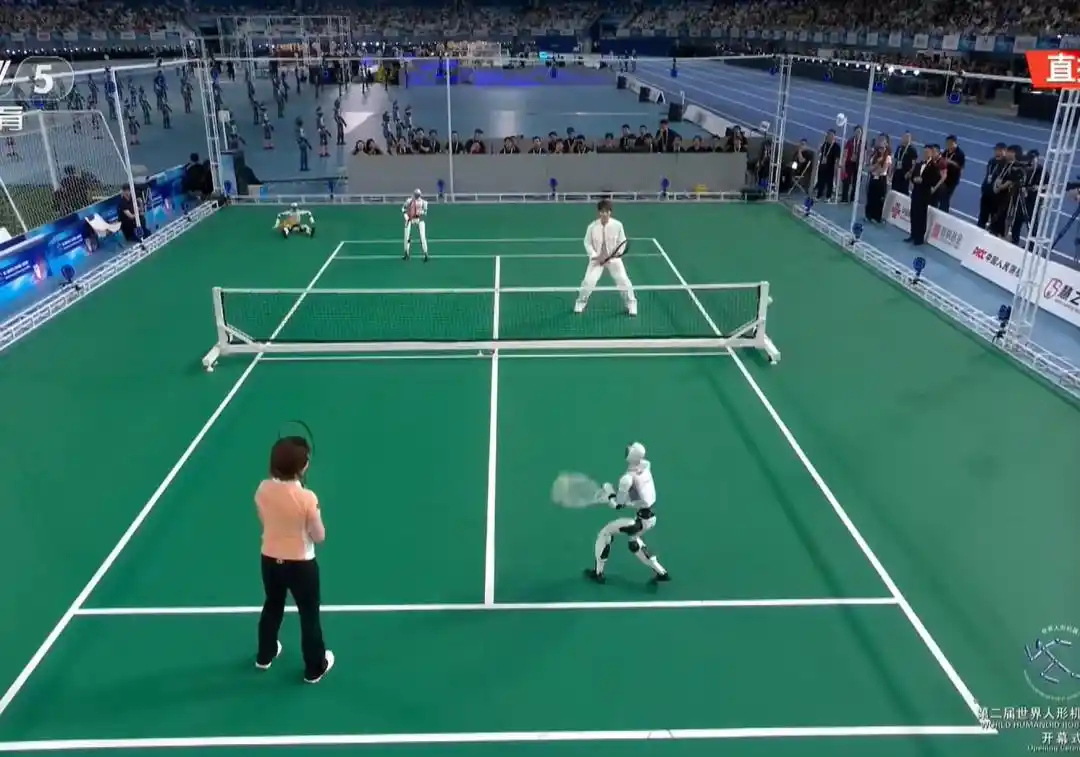
Next, tennis star Zheng Jie and Galaxy General-purpose Robot engaged in the world's first human vs. robot singles match.
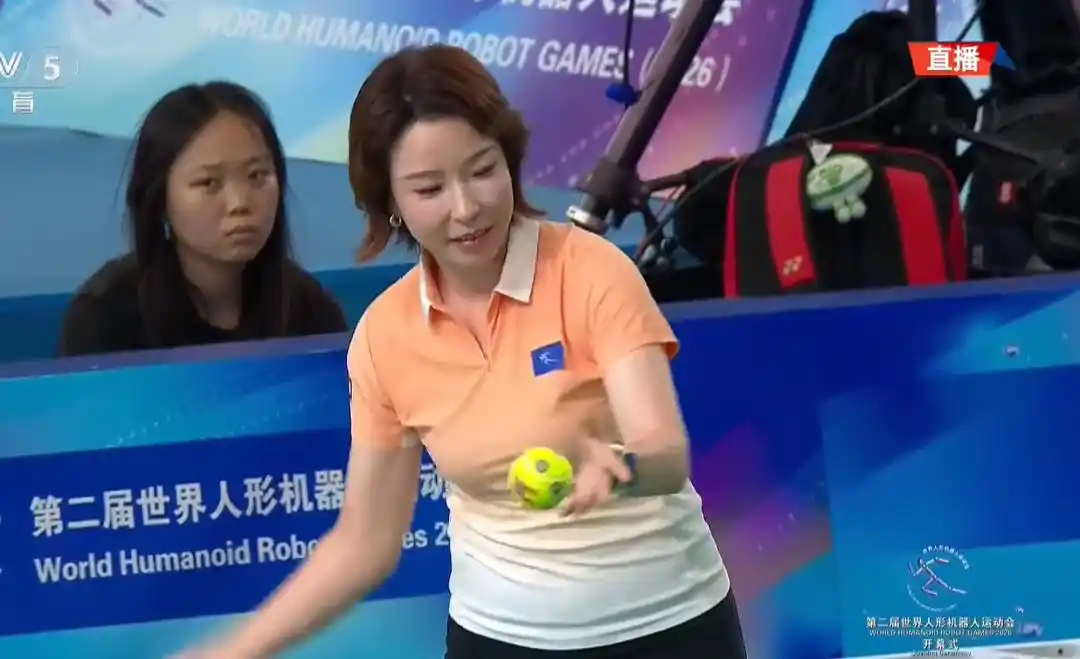
Whether forehand or backhand, the robot traded shots with the human on equal terms.
Then, Zheng Jie decided to up the difficulty, hitting a lob.
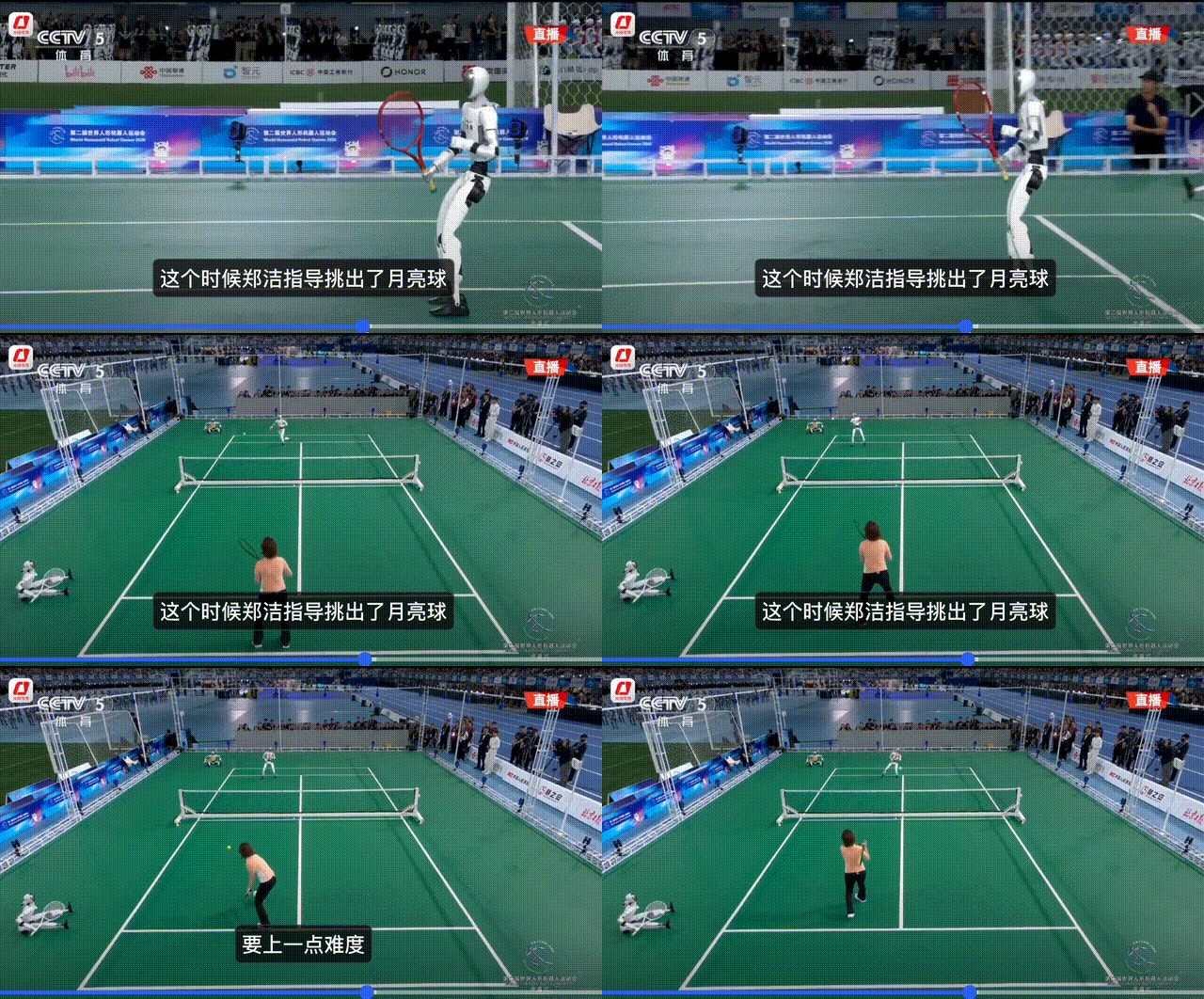
However, while being pulled left and right by its opponent, the robot accidentally took a tumble and landed flat on its back.
Unexpectedly, the next second, it immediately adjusted its posture and stood back up.

Facing Zheng Jie's slices and spins, the robot's judgment was also surprisingly good.

Finally, Zheng Jie knew she couldn't hold back anymore and began moving the robot around with shots left, right, forward, and back. The robot unexpectedly executed a brilliant split-step, earning cheers from the live audience.
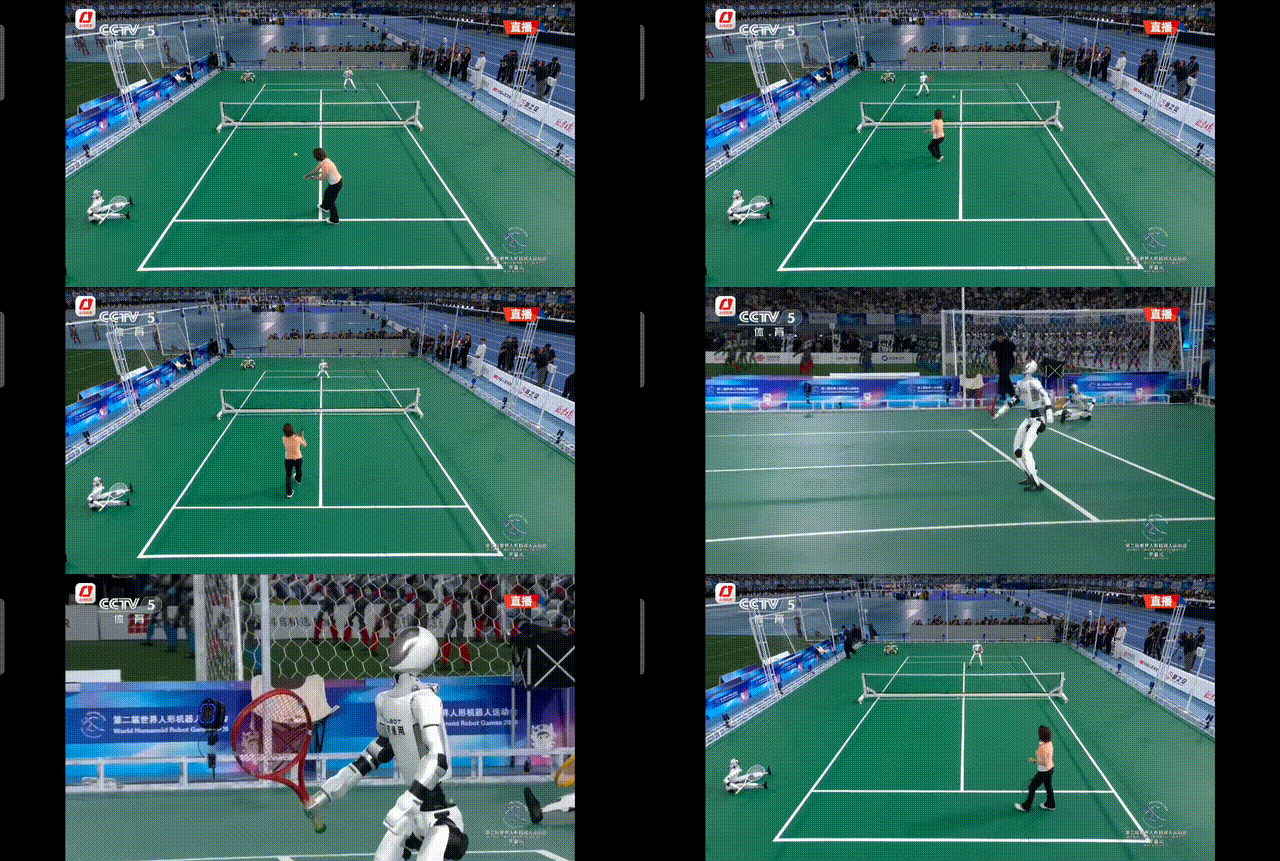
The match ended, and the robot's performance had everyone cheering.
Throughout the match, actions like bending the knees, tossing the ball, and body rotation were all performed autonomously by the humanoid robot.
Moreover, with serve speeds exceeding 100 kilometers per hour, leaving it only a few tenths of a second to react, it rarely faltered.
This robot is from Galaxy General.
Ten years ago, AlphaGo defeated Lee Sedol. Ten years later, a Chinese robot competes on the same court as a top tennis athlete.
If AlphaGo proved AI could conquer the digital world, then today, Galaxy General's Chinese robot proves: AI can withstand the extreme pressure tests of the physical world.
For the first time, it stood up from within the code, running, swinging, strategizing in real competition, even getting up on its own after a fall and continuing the fight.
Such a spectacular embodied AI AstraTennis moment was witnessed globally, simultaneously!
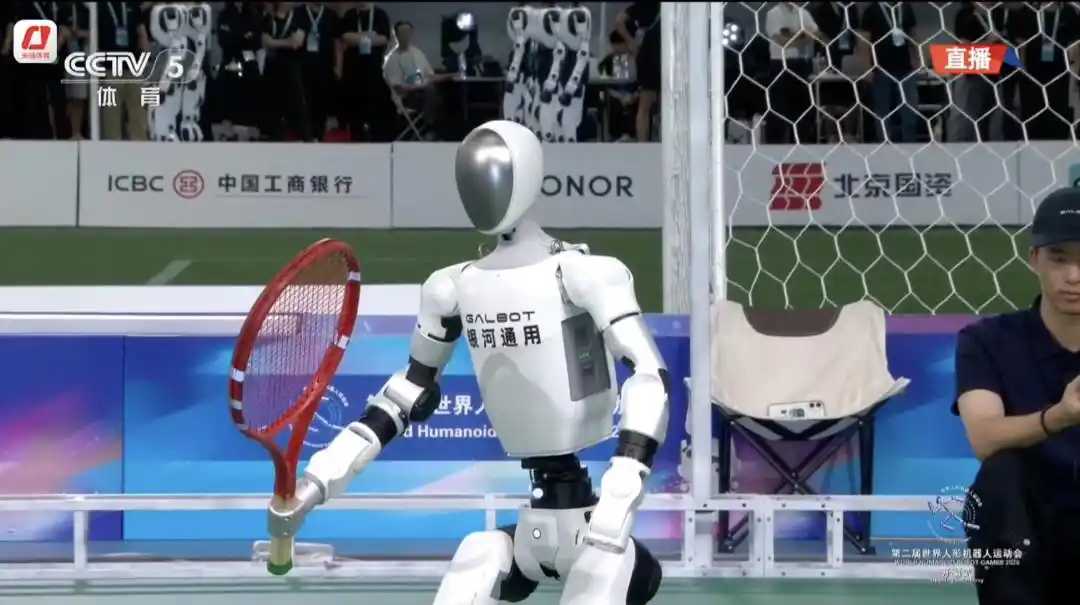
The AstraTennis Moment for China's Robots
Why could this tennis match trigger a massive earthquake in the global tech community?
Because tennis is the ultimate pressure test for embodied intelligence.
With reaction times of only a few tenths of a second, this sport simultaneously pushes a robot's perception, decision-making, whole-body motion control, and real-time strategic gameplay to their physical limits.
Furthermore, playing tennis is much harder for AI than playing Go.
After all, AlphaGo faced 361 definite intersections on a 19x19 grid, and after the opponent's move, it had tens of seconds or even minutes to calculate the next step.
That was gameplay in the digital world—vast solution space, but clear boundaries and constant rules. The entire world was static, discrete, and completely visible to the AI.
Although the solution space for this puzzle was larger than the number of atoms in the universe, for AI it was just a more difficult "math problem."
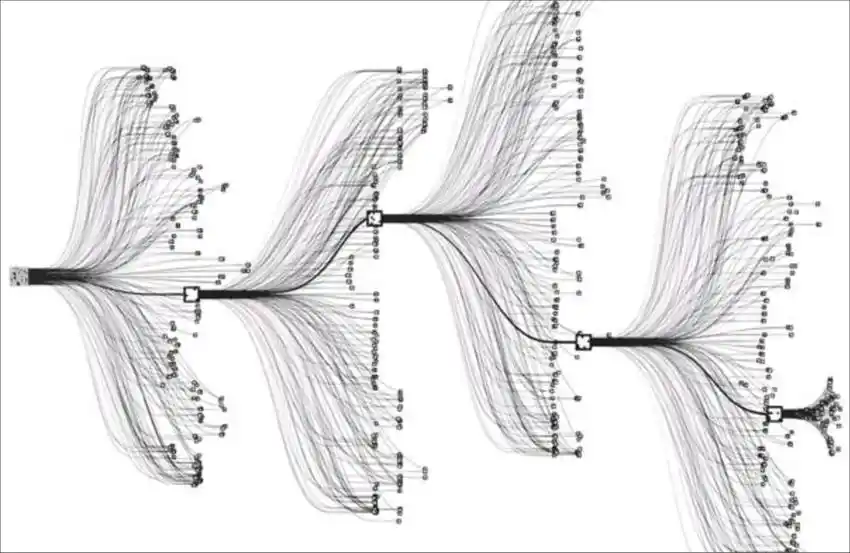
But a tennis court is different.
The ball comes at speeds over 100 km/h, its landing point affected by spin, wind, and court friction, with varying physical parameters for every single shot.
The robot must complete perception, prediction, decision-making, and whole-body coordination within a few hundred milliseconds, while keeping itself from falling. The opponent is a living person who can deceive the robot and change pace.
This is the Moravec's Paradox in action.
In 1988, Hans Moravec, then the head of Carnegie Mellon's Mobile Robot Laboratory, pointed out: "It is comparatively easy to make computers exhibit adult-level performance on intelligence tests or playing checkers, and difficult or impossible to give them the skills of a one-year-old when it comes to perception and mobility."
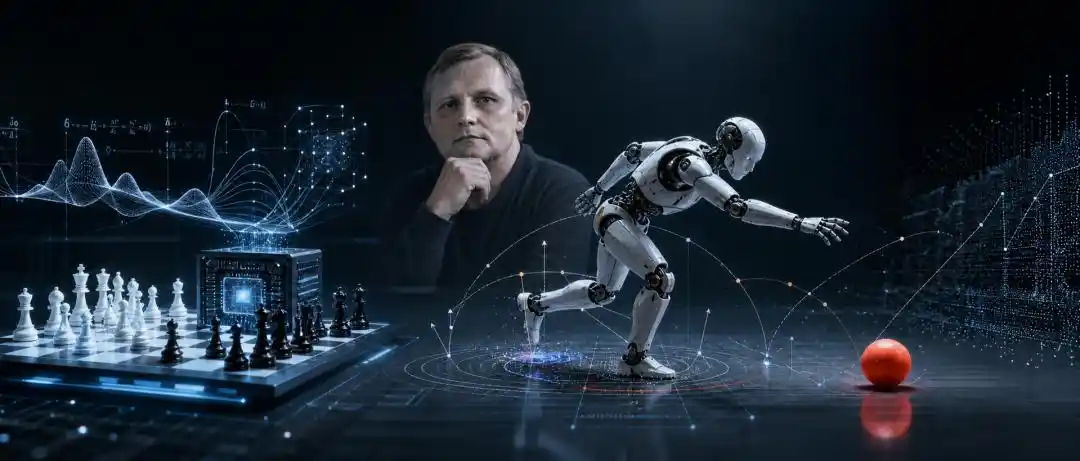
Over thirty years later, the first half has long been fulfilled, but the latter half remains very difficult to achieve.
Therefore, the true significance of this tennis match far exceeds "whether a robot can play tennis."
The question it poses is: This time, can AI truly step out of the digital world and close the loop—perceiving, deciding, controlling motion, and engaging in real-time gameplay—within a real physical environment?
AI cannot stop at thinking; it must complete the full loop from cognitive decision-making to whole-body execution.
This time, a Chinese company has submitted the answer first!
On the court, Galaxy General's robot performance was truly stunning.
Serving, forehand, backhand, baseline rallies, net volleys—all these individual skills appeared during the match, and all were performed exceptionally well.
Doubles presented even greater challenges.
With the robot and its human teammate on the same side, it had to judge in real-time who should go for the ball, who should cover, and dynamically adjust its tactics.
So, it needed to understand not just the ball, but also what its teammate intended to do next.
During the high-speed exchanges, there were moments of desperate saves. After falling down, the robot got back up on its own and continued playing.
Many people's first reaction was: Haven't robots done these individual movements before?
Shooting hoops, kicking a ball, running 100 meters—videos of humanoid robots over the past two years seem to show everything.
But the biggest difference here is that tennis is a contest between two players.
The environment for running is predictable; every shot in tennis is a new problem presented by the opponent in real-time. Running allows practicing one movement ten thousand times; no two tennis shots are exactly the same.
To stand firm in a contest—that is true intelligence.
Brain and Cerebellum, Housed in the Same Model for the First Time
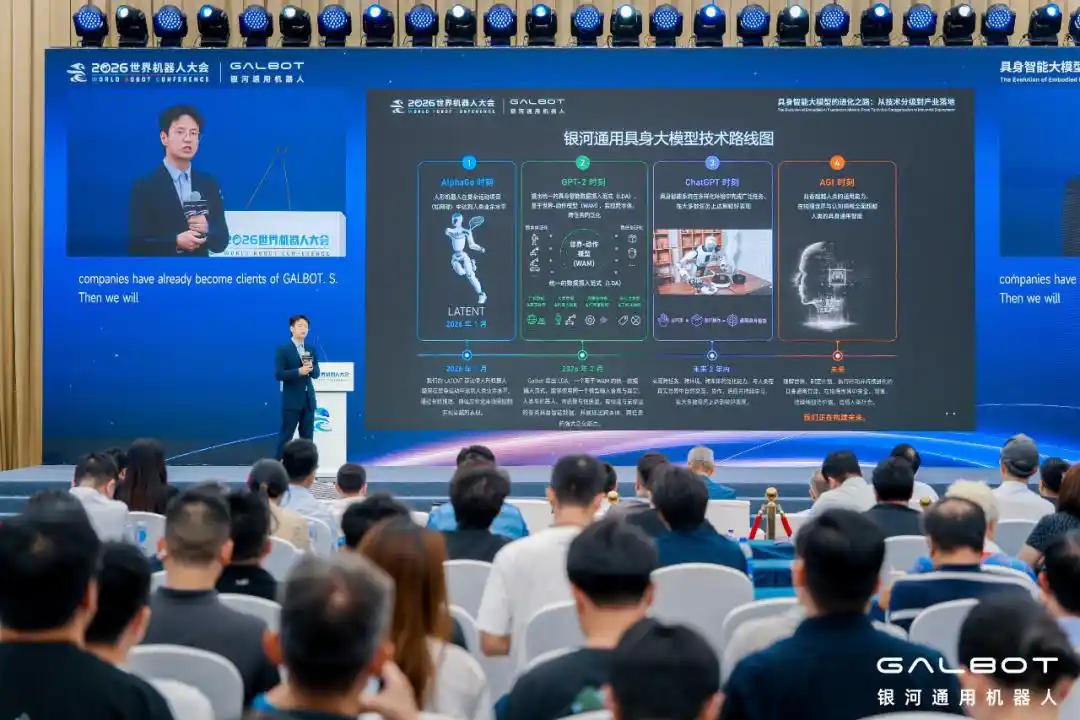
Supporting all this is Galaxy General's self-developed embodied intelligence large model, "Galaxy Star Brain" AstraBrain.
One of its biggest highlights lies in its architectural choice.
The mainstream approach in the industry has been hierarchical: a "brain" model responsible for task understanding and high-level decision-making, a "cerebellum" module responsible for real-time motion control, with instructions passed between them via interfaces.
The drawbacks of this architecture are direct: Even if the brain thinks clearly, by the time the instruction reaches the cerebellum, it's already half a step late; even if the cerebellum's movements are precise, it doesn't know why the brain wants it to move that way.
A more subtle problem is the information gap.
When the brain issues a command, it doesn't know where its center of gravity is leaning or how much force the right arm has left; when the cerebellum executes an action, it doesn't know whether this shot is meant to move the opponent around or to win the point directly.
Both sides might be optimal individually, but together they form a system that "thinks but can't act" or "acts but doesn't think."
In a task like tennis, being slightly late means losing the point.
Galaxy Star Brain's approach is to integrate the brain layer (task understanding and tactical decision-making), the cerebellum layer (high-dynamic whole-body motion control), and neural control within the same model.
According to Galaxy General, this is the world's first model capable of simultaneously handling "thinking clearly" and "acting out," with no information loss in between.
Reasoning backward from the tennis task, this might be the only solution. Tactical decisions cannot be separated from real-time perception of one's own physical limits, and motion control cannot be separated from understanding tactical intent—the two should never have been separated in the first place.
Learning from Imperfect Human Data
Playing Ten Million Matches in Virtual Courts
Beyond architecture, another question is: How was this model trained?
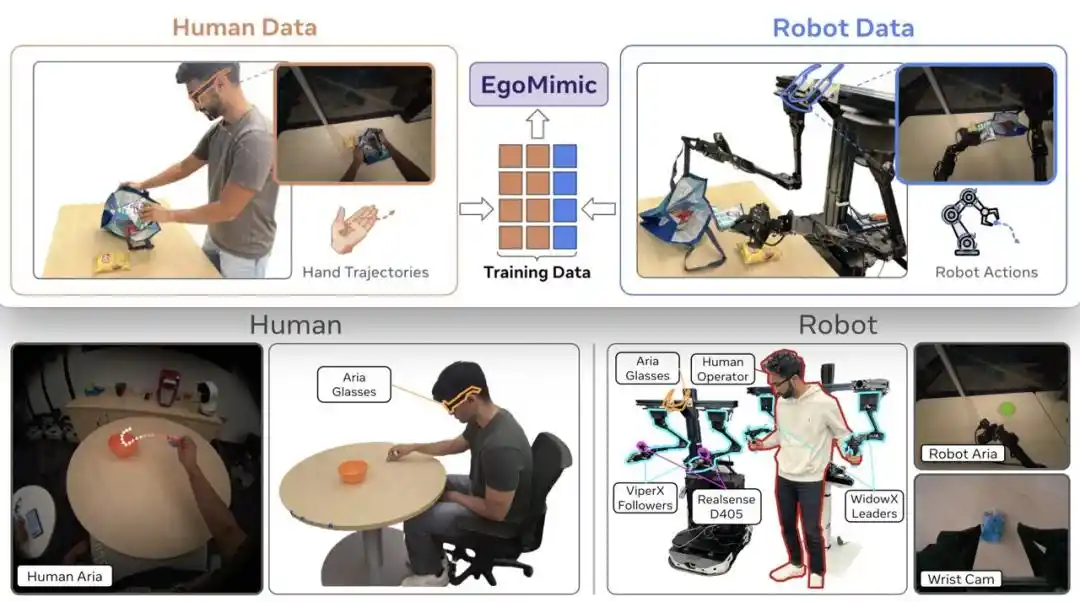
A traditional challenge in robotics is the lack of data.
A language model can consume all the text on the internet; robots don't have such an internet.
Collecting one hour of real robot movement data takes one hour, requires human supervision, and risks hardware damage.
This is also why progress in embodied AI has often been slower than expected in recent years.
Supporting this effort is Galaxy General's core technology platform, "Galaxy Star Workshop."
The process is divided into two main steps.
Step One: Learning from "Imperfect Human Data."
Human tennis movement data can be collected via motion capture, video, or wearable sensors.
However, human movements themselves are not standardized. Amateur players are indeed amateurs, with extraneous movements. Professional players' movements maximize their individual athleticism, making them difficult for others to replicate, and everyone's height, wingspan, and joint angles differ from the robot's.
Traditional imitation learning requires demonstration data to be clean, aligned, and high-quality—requirements almost impossible to meet with human data.
The task of the Galaxy Star Workshop data platform is to extract useful priors from this noisy, misaligned, mixed-quality demonstration data:
When to start moving, the general rhythm of a swing, how to transfer body weight—truly learning the underlying motion principles.
The value of this step lies in cold-start capability.
The robot doesn't have to start exploring from random movements; it begins with a rough idea of "what playing tennis looks like."
Step Two: Entering the Virtual Tennis World.
In the simulated environment, multiple intelligent agents play against each other. It's not one robot practicing against a ball machine, but multiple strategies evolving and competing against each other.
When one side learns to hit the sidelines, the other is forced to learn large lateral movements; when one side learns the drop shot, the other is forced to learn to rush the net.
Within this vast virtual competition, a miracle occurs—"skill emergence."
Engineers never taught it how to slide for a desperate save, but after countless failures to reach the ball, the model itself "figured out" the posture for a maximum extension.
Engineers never wrote hard-coded instructions for getting up after a fall, but after falling millions of times in the virtual world, the model itself "learned" how to coordinate all its motors to stand back up.
Skills do not need to be manually designed; under the pressure of competition, the AI learns them on its own.
Finally, when these "souls" honed to mastery in the virtual world are seamlessly transferred into the physical bodies of real robots in the physical world, a tennis master is born!
Placed within the spectrum of machine learning, this path lies between two extremes.
The ceiling of pure imitation learning is the level of the demonstrator; a human coach cannot teach a student who surpasses them, and human demonstrations simply don't contain data on "how to get up after falling and continue playing."
Pure reinforcement learning explores from scratch. In tasks like tennis with huge action spaces and sparse rewards, the search cost becomes unrealistically high, and it tends to learn bizarre, humanly incomprehensible actions that might win points but don't resemble tennis.
Start with human priors as a foundation, then elevate through autonomous evolution.
This approach isn't entirely new; AlphaGo also started by learning human Go games before self-play. What's new is that ten years ago, this method succeeded on a board, and ten years later, it has succeeded for the first time on a task requiring a body.
In a sense, this is the most fascinating technical echo between AstraTennis and AlphaGo.
In the AlphaGo era, intelligence thought on a board; this time, intelligence begins to enter the physical world.
This is far more than just a tennis match. This AstraTennis moment proves: In the new era of carbon-silicon symbiosis, the power of China is beginning to create more wonders.
Edited by: Aeneas, David
This article is from the WeChat public account "New Zhiyuan", author: ASI Apocalypse