On Monday, Bitcoin nearly reached the $64,000 mark, as the cryptocurrency seemed poised to start the new week on a positive note after closing July with moderate gains. However, the cryptocurrency's ascent to its intraday high just above $63,900 was not straightforward. Market data indicates an initial downward move first, with the price sliding from an earlier high of around $63,650 to an intraday low of $62,216.
This decline appears to have been linked to reports that Strategy concluded its third Bitcoin sale of 2026, liquidating 1,638 Bitcoins between July 27 and August 2. The company reported that the proceeds were used to fund preferred share dividend payments and support STRC share buybacks. Although some of the coins were sold amidst Bitcoin's price rise following the Fed's rate decision and slightly better-than-expected PCE data, news of the liquidation negatively impacted market sentiment.
However, as events unfolded throughout the day, reports that the Trump administration was re-engaging in talks with Iran contributed to Bitcoin's recovery. As seen on the daily chart, Bitcoin surged from around $62,404 at approximately 8:10 AM Eastern Standard Time (EST) and reached an intraday high of $63,920 in less than three hours. Although at the time of writing (1:04 PM EST) the price had retreated to around $63,680, the cryptocurrency's jump of over $1,000 helped increase its daily gain to 0.7%.
This modest rise increased Bitcoin's market capitalization to approximately $1.28 trillion, which in turn boosted the total cryptocurrency market capitalization to $2.28 trillion. In the derivatives market, Bitcoin's price movement over the past 24 hours led to the liquidation of nearly $82 million worth of leveraged positions, with short positions accounting for almost $50 million of that amount.
Although the latest minor gain for Bitcoin narrowed its weekly losses to 1.9%, many experts continue to warn that without progress on the CLARITY Act, the cryptocurrency's growth potential will remain limited. However, as U.S. Senators remain deadlocked over the bill's wording, the chances of it passing before the congressional recess are dwindling.
Senate Deadlock on CLARITY Act Limits Growth Potential
The news that the CLARITY Act bill was removed from the Senate's Monday agenda heightened concerns that time is running out for the digital asset regulatory framework before the upcoming congressional recess. Investors quickly adjusted their expectations, and prediction markets promptly reacted to the legislative impasse. Data from Polymarket highlighted growing pessimism, showing that the probability of the bill being signed into law had plummeted by over 10 percentage points in the past week—from 38% last Monday to just 27%.
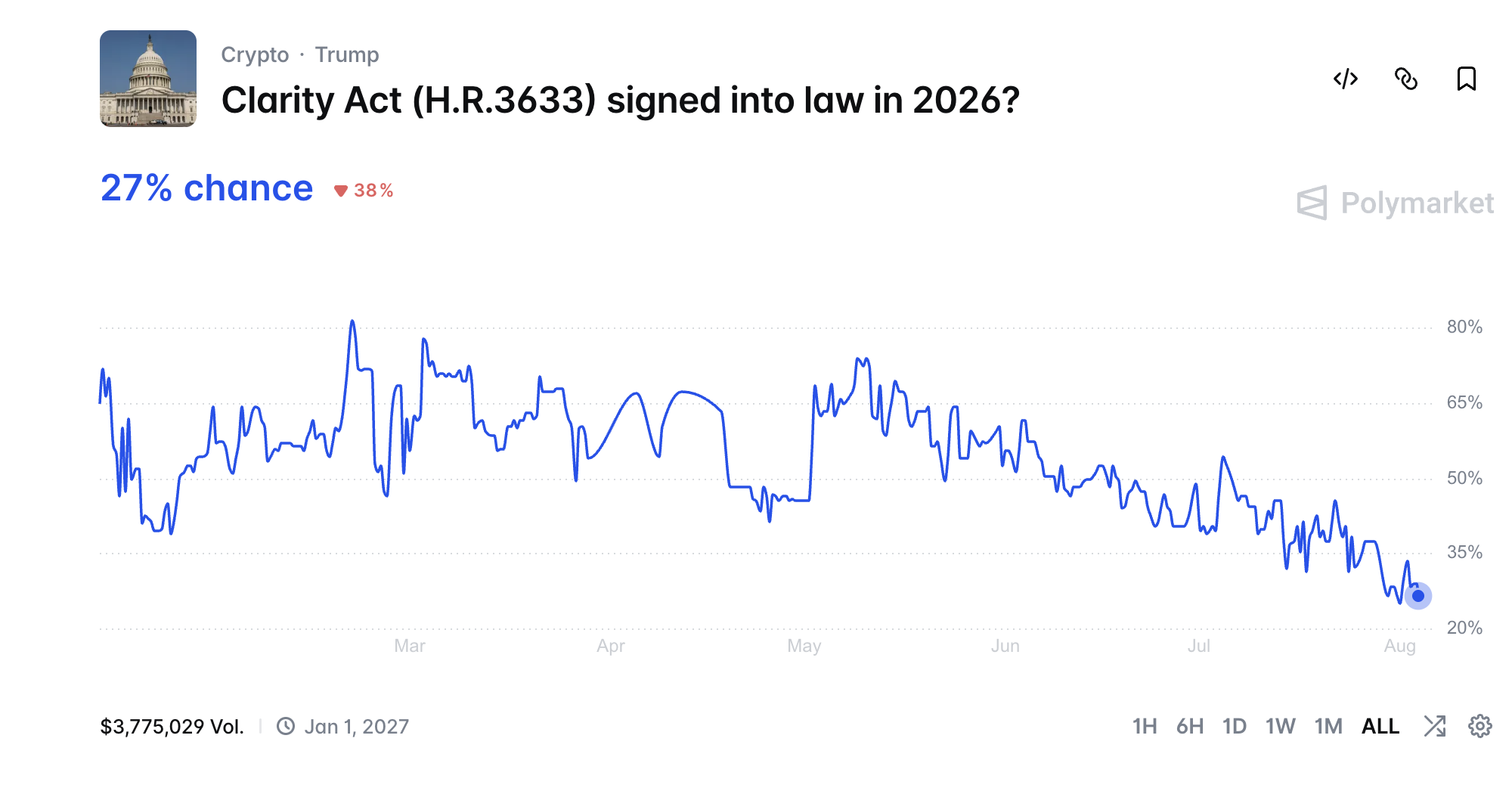
Looking ahead, the window to pass this landmark cryptocurrency market structure bill before the August 7th congressional recess is rapidly closing. Unless Senate Republicans make substantial concessions to Democrats on contentious ethical safeguard issues—specifically those concerning conflict-of-interest rules for executive branch officials—and address banking associations' objections regarding stablecoin yields, the bill will fall far short of the 60 votes needed to overcome a filibuster.
If the bill is delayed until the fall, its chances will diminish further, as the midterm election campaign will dominate the legislative calendar and force lawmakers to reintroduce the bill in an unpredictable post-election Congress.