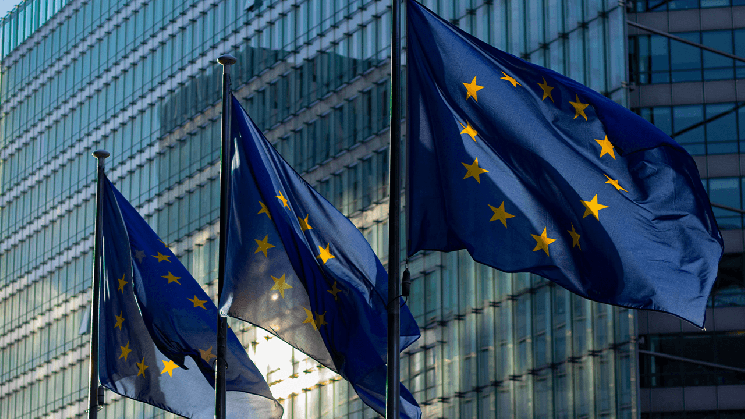
Bank of Russia Limits Cryptocurrency Share in Market Brokers' Portfolios to 25%

cryptonews.ruPublished on 2026-08-18Last updated on 2026-08-18

Abstract

The Central Bank of Russia has published a new draft decree setting requirements for professional market participants, such as brokers, trust managers, Forex dealers, and cryptocurrency exchanges, regarding the inclusion of crypto assets on their balance sheets. These assets, if admitted for trading on exchanges, can constitute up to 25% of a firm's total declared equity capital (prudential limit). To be counted, crypto assets must also be registered with cryptocurrency depositories for state verification. The bank stated that this measure aims to account for crypto-related credit and market risks in capital adequacy assessments, helping ensure the financial stability of intermediaries engaged in cryptocurrency operations. This step is seen as part of Russia's ongoing process of crypto legalization, allowing users to evaluate the reliability of regulated entities based on their crypto holdings. It also marks the beginning of deeper state oversight and control over domestic crypto transactions by operators, while keeping the role of crypto assets in the Russian economy limited. The draft follows the State Duma's approval of comprehensive crypto regulations, which permit both qualified and non-qualified investors to trade cryptocurrencies domestically, though non-qualified investors are limited to annual purchases of up to 300,000 rubles (approx. $3,800). The use of cryptocurrencies for domestic payments remains prohibited, while exporters and importers can use them without r...

The Bank of Russia has published a new draft regulation defining the requirements that professional market participants must follow when including crypto assets in their balance sheets.

According to the new regulation, professional market participants such as brokers, trust managers, Forex dealers, and cryptocurrency exchanges will have to account for crypto assets when calculating their own funds. These crypto assets, which can be included in the balance sheet if they are admitted for trading on exchanges, can reach a prudential limit of 25% of the total declared value of their own capital.

Additionally, to be included in these calculations, crypto assets must be registered in cryptocurrency depositories, allowing the state to confirm their existence.

Regarding the purpose of this set of rules, the bank explained that this ratio will be considered when assessing credit and market risks and will ensure these companies' ability to cover potential losses.

"Thanks to the new approach, these ratios will take into account the risks associated with cryptocurrencies and will help ensure the financial stability of intermediaries conducting cryptocurrency operations," the bank concluded.

This step is seen as a continuation of the process of legalizing cryptocurrencies in Russia, opening up the possibility for users to assess the reliability of regulated market participants based on their crypto assets, but also marks the beginning of an era of deeper state supervision, enhanced control over the internal cryptocurrency operations of operators, and the preservation of limited participation of crypto assets in the Russian economy.

This draft regulation follows the State Duma's approval of comprehensive cryptocurrency regulation, allowing both qualified and non-qualified investors to trade cryptocurrencies in the country, but limiting the latter to purchasing up to 300,000 rubles (about $3,800) per year.

However, the use of cryptocurrencies as a means of domestic settlement is prohibited, while exporters and importers can still use them without restrictions in cross-border settlements, allowing them to legally use stablecoins and other digital assets to circumvent secondary sanction risks.

Trending Cryptos

Related Questions

QWhat is the main limit set by the Bank of Russia regarding cryptocurrencies in the portfolios of market participants?

AThe Bank of Russia set a prudential limit that cryptocurrency assets in the portfolio of market professionals, such as brokers, cannot exceed 25% of the total declared value of their own capital.

QWhat condition must cryptocurrency assets meet to be included in the capital calculations of market participants?

ATo be included in the calculations, cryptocurrency assets must be registered in cryptocurrency depositories to allow the state to verify their existence.

QWhat is the stated purpose of the new prudential ratios introduced by the Bank of Russia?

AThe stated purpose is for these ratios to account for credit and market risks, ensuring the companies' ability to cover potential losses and maintain financial stability when conducting cryptocurrency operations.

QWhat was the previous legislative step mentioned that this new draft decree follows?

AIt follows the State Duma's approval of comprehensive cryptocurrency regulations, which allows both qualified and non-qualified investors to trade cryptocurrencies domestically, but limits non-qualified investors to purchases up to 300,000 rubles (about $3,800) per year.

QWhat are the current rules in Russia regarding the use of cryptocurrencies for domestic payments and for cross-border settlements?

AUsing cryptocurrencies as a means of internal payment is prohibited. However, exporters and importers are still allowed to use them without restrictions in cross-border settlements, which legally enables them to use stablecoins and other digital assets to circumvent secondary sanctions risks.

Related Reads

Uniswap Founder: Why AMM Could Become the Core Engine of Financial Markets

In this article, Uniswap founder Hayden Adams argues that Automated Market Makers (AMMs) have the potential to become the core engine of future financial markets, drawing parallels to the disruptive rise of index funds 50 years ago. He posits that asset tokenization is more than just an infrastructure upgrade; it enables programmable markets and changes who can provide liquidity. AMMs like Uniswap have already found product-market fit in long-tail crypto assets and stablecoin pairs, where passive strategies can outcompete traditional market makers due to lower capital costs. The traditional market-making model is vertically integrated, creating high barriers to entry. Blockchain technology dismantles this by decoupling execution, custody, and settlement into competitive, open layers. In this new landscape, capital is the scarcest resource, and advantage goes to those with the lowest cost of holding assets—such as asset issuers or long-term holders who naturally have exposure. A key emerging pattern is "correlated pairs" (e.g., an asset trading against a related index like SPY instead of USD). When two assets are correlated, passive AMM strategies perform much closer to active ones, and liquidity providers bear less risk. This structure naturally organizes markets for efficiency, with passive AMMs dominating correlated pairs and active players competing on the fewer, high-volatility "bridging pairs" (like SPY/USD). Early examples already exist, such as tokenized stocks trading directly against SPY on Uniswap. Adams concludes that, much like passive index funds eventually outperformed most active managers, passive liquidity provision via AMMs is on a path to win by dramatically lowering the cost and complexity of creating and accessing markets.

marsbit14m ago

Uniswap Founder: Why AMM Could Become the Core Engine of Financial Markets

marsbit14m ago

Trading

Spot

Hot Articles

What is $BANK

Bank AI: A Revolutionary Step in the Future of Banking Introduction In an era marked by rapid advancements in technology, Bank AI stands at the intersection of artificial intelligence (AI) and banking services. This innovative project seeks to redefine the financial landscape, enhancing operational efficiency, security measures, and customer experiences through the power of AI. As we embark on this exploration of Bank AI, we will delve into what the project entails, its operational dynamics, its historical context, and significant milestones. What is Bank AI? At its core, Bank AI represents a transformative initiative aimed at integrating artificial intelligence into various banking operations. This project harnesses the capabilities of AI to automate processes, improve risk management protocols, and enhance customer interaction through personalised services. The primary objectives of Bank AI include: Automation of Banking Functions: By leveraging AI technologies, Bank AI aims to automate routine tasks, reducing the burden on human resources and enhancing efficiency. Enhanced Risk Management: The project utilises AI algorithms to predict and identify risks, thereby fortifying security measures against fraud and other threats. Personalisation of Banking Services: Bank AI focuses on offering tailored financial products and services by analysing customer data and behaviours. Improving Customer Experience: The implementation of AI-driven solutions, such as chatbots and virtual assistants, aims to provide users with more human-like interactions, revolutionising the way customers engage with banks. With these goals, Bank AI positions itself as a crucial player in rendering banking more efficient, secure, and user-centric. Who is the Creator of Bank AI? Details regarding the creator of Bank AI remain unknown. As such, no specific individual or organisation has been identified in the available information. The anonymity surrounding the project's inception raises questions but does not detract from its ambitious vision and objectives. Who are the Investors of Bank AI? Similar to the project's creator, specific information regarding the investors or supporting organisations of Bank AI has not been disclosed. Without this information, it is challenging to outline the financial backing and institutional support that might be propelling the project forward. Nevertheless, the importance of having a robust investment foundation is pivotal for sustaining development in such an innovative field. How Does Bank AI Work? Bank AI operates on several innovative fronts, focusing on unique factors that differentiate it from traditional banking frameworks. Below are key operational features: Automation: By applying machine learning algorithms, Bank AI automates various manual processes within banks. This results in reduced operational costs and allows human workers to redirect their efforts towards more strategic activities. Advanced Risk Management: The integration of AI into risk management practices equips banks with tools to accurately predict potential threats such as fraud, ensuring that customer information and assets remain secure. Tailored Financial Recommendations: Through continuous learning from customer interactions, the AI systems develop a nuanced understanding of user needs, enabling them to offer tailored advice on financial decisions. Enhanced Customer Interactions: Utilizing chatbots and virtual assistants powered by AI, Bank AI enables a more engaging customer experience, allowing users to have their queries resolved quickly, thus reducing wait times and improving satisfaction levels. Together, these operational features position Bank AI as a pioneer in the banking sector, establishing new benchmarks for service delivery and operational excellence. Timeline of Bank AI Understanding the trajectory of Bank AI requires a look at its historical context. Below is a timeline highlighting important milestones and developments: Early 2010s: The conceptualisation of AI integration into banking services began to gain attention as banking institutions recognised the potential benefits. 2018: A marked increase in the implementation of AI technologies occurred when banks started using AI tools like chatbots for basic customer service and risk management systems for improved security handling. 2023: The sophistication of AI continued to advance, with generative AI being introduced for more complex tasks such as document processing and real-time investment analysis. This year marked a significant leap in the capabilities afforded to banks by AI technology. 2024-Current Status: As of this year, Bank AI is on an upward trajectory, with ongoing research and developments poised to further enhance capabilities in banking operations. Continued exploration of AI applications hints at exciting developments yet to come. Key Points About Bank AI Integration of AI in Banking: Bank AI focuses on adopting artificial intelligence to streamline banking processes and improve user experiences. Automation and Risk Management Focus: The project strongly emphasises these areas, aiming to shift the burden of routine tasks while enhancing security frameworks through predictive analytics. Personalised Banking Solutions: By harnessing customer data, Bank AI enables tailored banking services that cater to individual user needs. Commitment to Development: Bank AI remains committed to ongoing research and development efforts, ensuring its adaptability and ongoing relevance as technology continues to evolve. Conclusion In summary, Bank AI exemplifies a crucial step forward in the banking industry, leveraging artificial intelligence to reshape operational paradigms, enhance security, and promote customer satisfaction. Despite gaps in information surrounding the creator and investors, the clear objectives and functional mechanisms of Bank AI provide a strong foundation for its ongoing evolution. As AI technology continues to advance and merge with the banking sector, Bank AI is well-positioned to significantly impact the future of financial services, enhancing the way we understand and interact with banking.

397 Total ViewsPublished 2024.04.06Updated 2024.12.03

What is $BANK

Discussions

Welcome to the HTX Community. Here, you can stay informed about the latest platform developments and gain access to professional market insights. Users' opinions on the price of BANK (BANK) are presented below.

活动图片