mRNA Vaccine Too Slow, Dog Owner Loses Beloved Pet, World's First AI-Customized Dog Cancer Vaccine Arrives

marsbitPublished on 2026-08-24Last updated on 2026-08-24

Abstract

A heartbreaking story from Australia showcases the intersection of AI, love, and loss. Paul Conyngham, an AI expert, lost his beloved bull terrier Rosie to cancer in 2024. Refusing to accept her prognosis, he used his machine learning skills, ChatGPT, and AlphaFold to design a personalized mRNA vaccine targeting her specific cancer mutations. The first vaccine dose, synthesized with help from university scientists, shrank Rosie's tumor by 75%, granting her a temporary reprieve. However, the cancer recurred with new mutations, requiring a second, updated vaccine. The traditional, slow production process couldn't deliver it in time, and Rosie passed away. Determined to prevent similar tragedies, Paul founded Gamgee, a startup named after a "Lord of the Rings" character. Backed by $4 million in seed funding from Founders Fund, Y Combinator, and others, Gamgee aims to industrialize and democratize personalized canine cancer vaccines. Their vision is an end-to-end platform where veterinarians submit tumor samples, AI algorithms rapidly identify target mutations, and customized mRNA vaccines are produced. The goal is to slash the design time to 48 hours and the total cost to around $2,000 per treatment. The addressable market is vast, with about 6 million dogs diagnosed with cancer annually in the US alone. Beyond pets, Gamgee's "N-of-1" medicine approach, validated in dogs, paves the way for similar ultra-personalized cancer therapies for humans, a field recently energized by M...

Remember the viral story of the "real-life Drug God" from a few months ago?

An Australian AI expert with no professional background, in order to save his terminally ill dog from cancer, taught himself genomics. Relying on ChatGPT and AlphaFold, he single-handedly created the world's first custom-made mRNA cancer vaccine.

After one injection, the tennis ball-sized tumor on the dog's leg miraculously shrank by 75%, successfully extending its life.
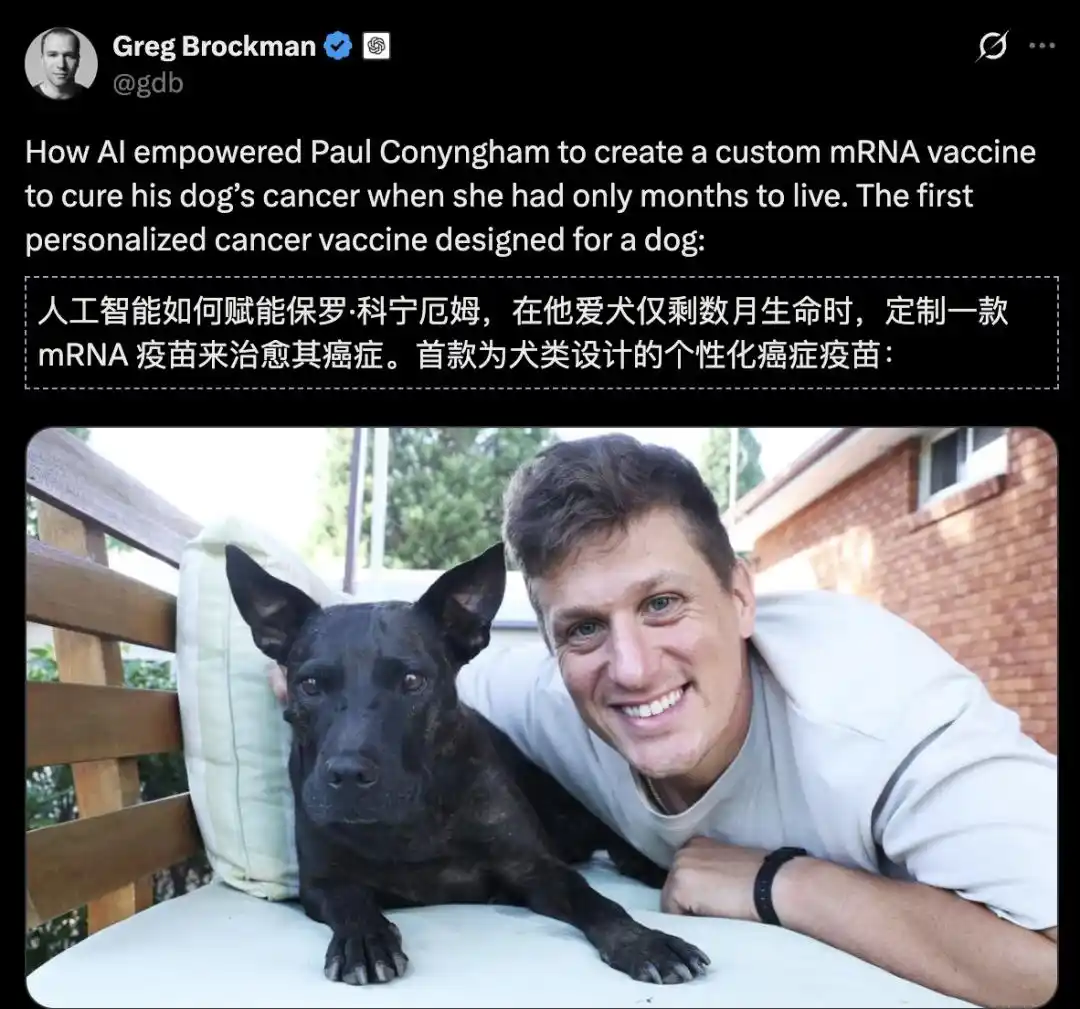
However, the latest outcome of the story unexpectedly broke hearts.

Today, Paul Conyngham announced heartbreaking news: his beloved dog Rosie has returned to the dog star.

This wasn't because the AI vaccine was ineffective, but because the vaccine production speed couldn't outrun Death.

Unable to manufacture the next dose of personalized mRNA cancer vaccine quickly enough, Rosie ultimately passed away.

But the story hasn't reached its conclusion.

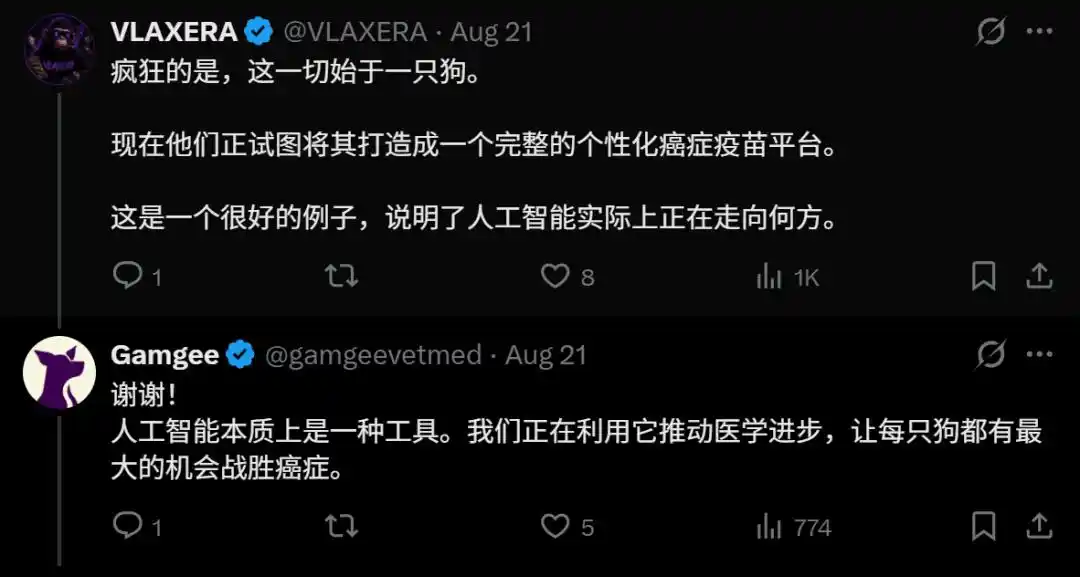
Just now, Paul announced: the formal establishment of the startup Gamgee, which has already completed a $4 million seed round led by Founders Fund with participation from Y Combinator (YC).
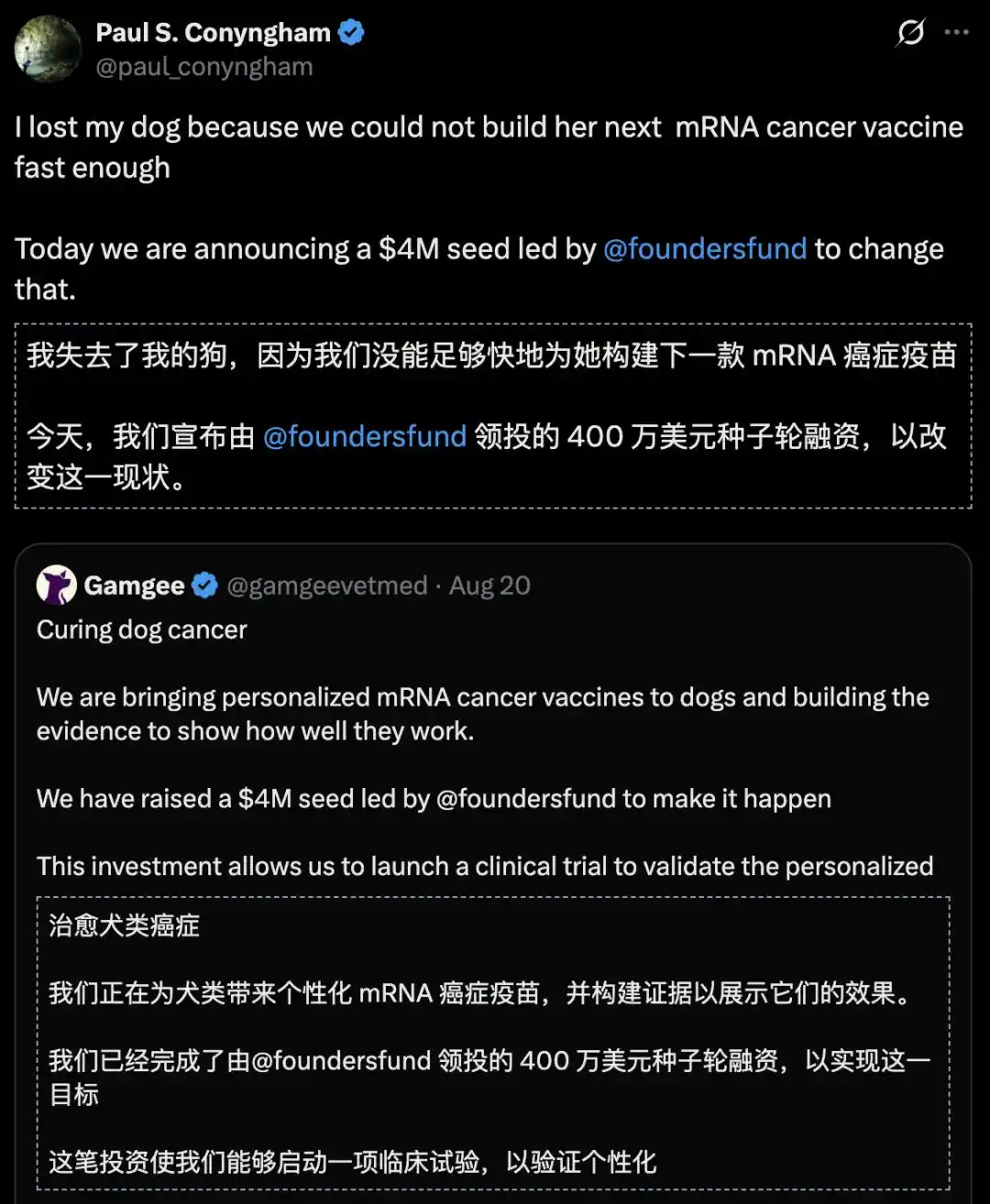
Although his own dog is gone, this "father" aims to create a clinically validated and scalable dog cancer vaccine for dogs worldwide.

A Worldwide Sensation: A "Medical Miracle"

In 2024, 8-year-old bull terrier Rosie was diagnosed with "mast cell cancer." The vet said: only a few months left.

Surgery, chemotherapy, immunotherapy... all methods failed. Paul, with 17 years of machine learning experience, decided: I'm going to save her my own way!

Spending just $3,000 on DNA sequencing of the tumor and healthy blood, Paul fed the massive genetic data into his own program. He consulted ChatGPT on biological principles, used AlphaFold for 3D modeling of mutated proteins, and finally pinpointed the specific attack targets tailored to Rosie's tumor.

AlphaFold's 3D modeling for Rosie's cancer
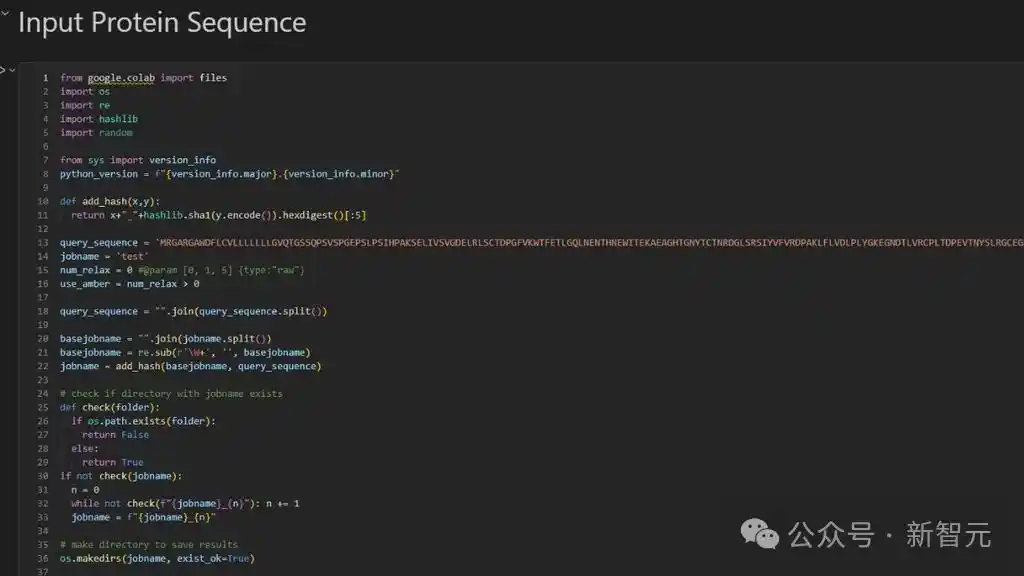
Part of the code for creating the mRNA therapy

With this AI-generated "vaccine formula" in hand, he ran around tirelessly, finally convincing scientists at the University of New South Wales and the University of Queensland to synthesize one dose of the vaccine.

In December 2025, after the first injection, a miracle occurred.

The massive tumor on Rosie's leg shrunk by 50%-75%.
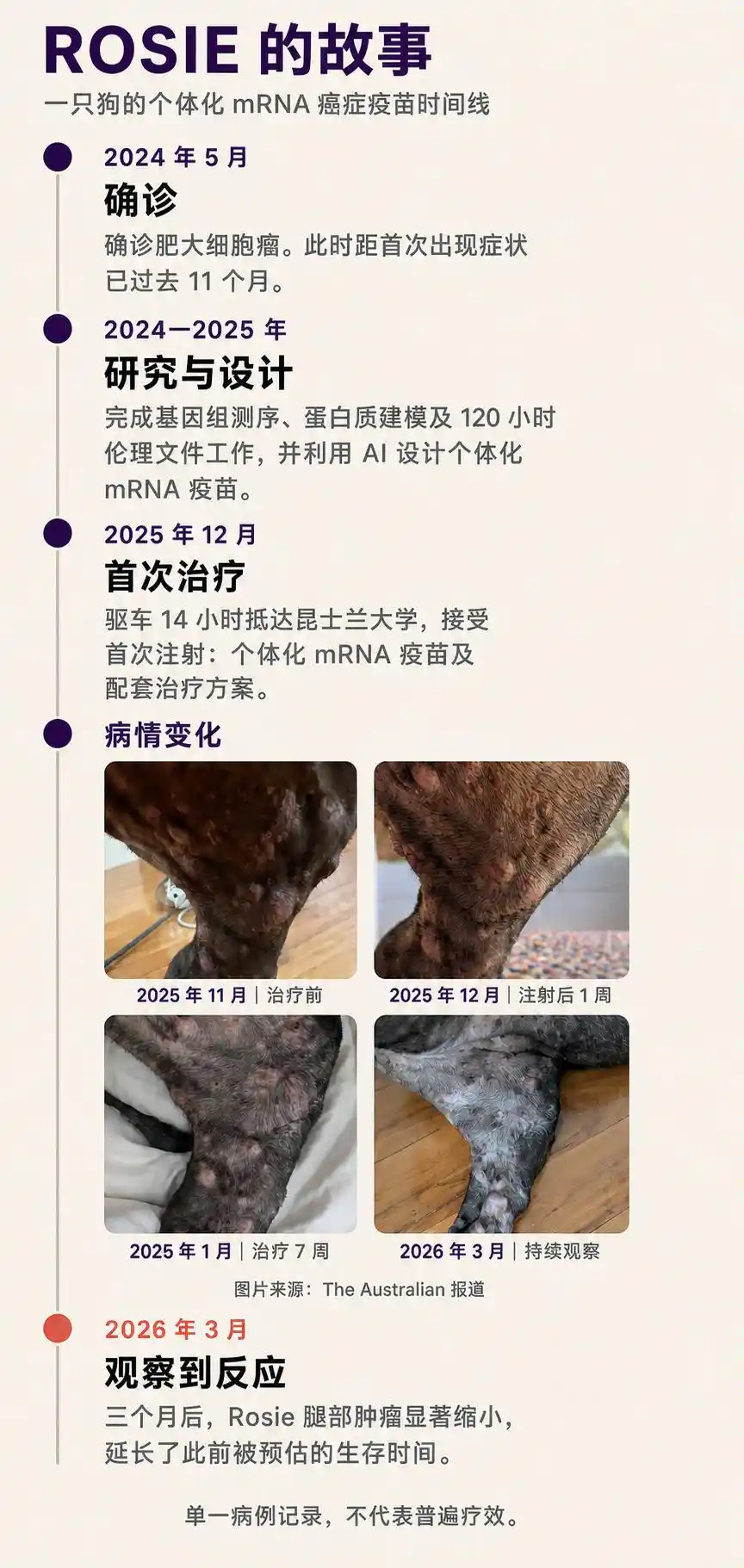
Microscopic analysis showed that large numbers of immune cells (macrophages and T cells) were vigorously attacking the cancer cells. Rosie regained her vitality; she could even jump fences again and chase rabbits.

The world was ecstatic: the era of personalized vaccines was at hand!

However, reality was far crueler than the movies.

The cancer cells were too cunning; they mutated and developed drug resistance—Rosie's cancer relapsed.

At this point, she urgently needed a second-generation mRNA vaccine customized based on the latest mutations.

Yet, the speed of traditional labs, the cumbersome manual production process, and the lengthy approval mechanisms couldn't get the vaccine to Rosie in time.

"I lost my dog because we couldn't make the next mRNA cancer vaccine fast enough," Paul wrote with anguish.

As an ordinary person, even with AI knowledge, trying to quickly customize an mRNA vaccine within a month or two within the existing medical-industrial system remained an almost impossible task.

"I shouldn't be the only person who can do this. Having a machine learning background and months of working through the night shouldn't be the barrier to accessing life-saving drugs."

Rosie is gone, but the legacy she left behind is just beginning to take root and sprout.
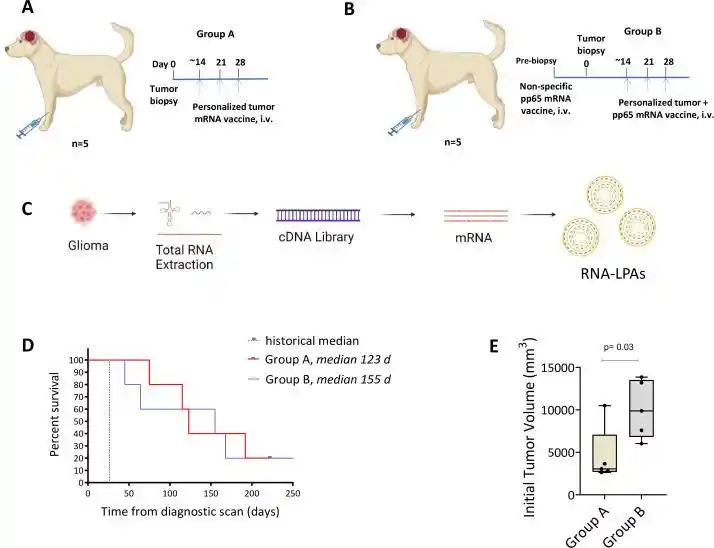
The "Father" Founds Gamgee for His Beloved Dog,

Making Exorbitant Vaccines Accessible

To prevent the tragedy from repeating, Paul founded Gamgee, a name derived from "The Lord of the Rings."

Gamgee's vision is: to cure canine cancer and bring personalized mRNA cancer vaccines to dogs all over the world.
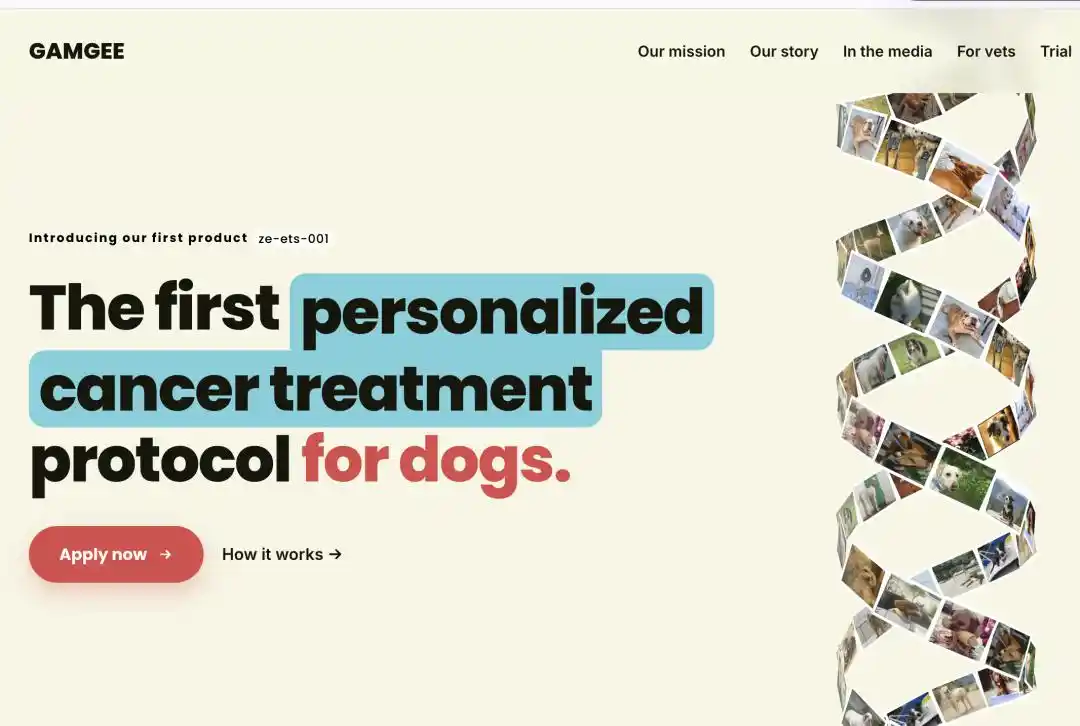
Currently, they have launched their first prototype for personalized cancer treatment customized for dogs.
Founders Fund, founded by Peter Thiel, didn't hesitate to lead the $4 million seed round. Top global incubator Y Combinator (YC), Loyal CEO Celine Halioua, Dropbox co-founder Arash Ferdowsi, and a host of other big names have also joined the investment.

Why would top-tier Silicon Valley VCs invest in a project "to save dogs"?

Because what Gamgee aims to do is solve the fatal problem that led to Rosie's death: speed and cost.

It took Paul a whole year and $20,000 to navigate the entire process.

Now, Gamgee is turning this process into an industrialized SaaS assembly line.

They have built an "end-to-end" closed-loop platform. Ordinary dog owners no longer need to run around like Paul did. All you need to do is follow these steps.

1. Input the Tumor: Gamgee will send you a collection kit. Your veterinarian extracts samples of the dog's tumor and healthy tissue and sends them back.

2. AI Deciphers at Lightning Speed: The samples go directly for DNA and RNA sequencing, and Gamgee's software system takes over everything. AI algorithms sift through the massive data to accurately identify and rank the actionable cancer cell mutation targets worth attacking, preserving evidence for every decision.

3. Output the Vaccine: The system automatically outputs the mRNA vaccine design ready for manufacturing. Gamgee coordinates production, cold-chain logistics, until the veterinarian administers the personalized vaccine to the dog.
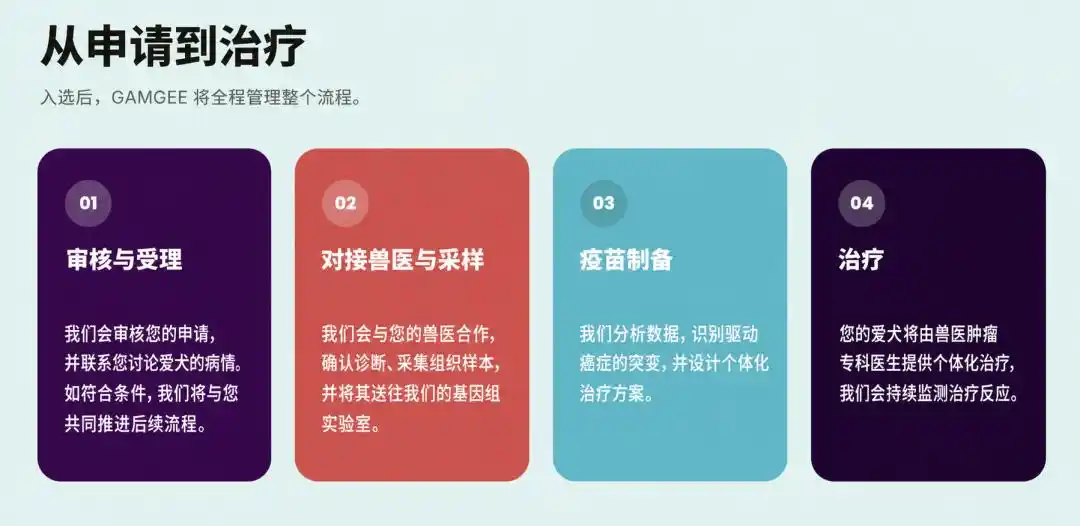
Gamgee has set an audacious KPI: aiming to compress vaccine design time to within 48 hours and reduce the end-to-end cost of a full treatment course to $2,000!

"Genome sequencing, protein modeling, mRNA synthesis—the tools are all there. What I built for Rosie wasn't new science; it was new access," Paul stated.

This is nothing short of a revolutionary upheaval in the industry.

Saving 6 Million Cancer-Stricken Dogs Worldwide

In terms of commercial prospects, Gamgee demonstrates a strong Silicon Valley-style "data flywheel" mindset.

First, why dogs?

This is an enormous and heartbreaking market with urgent needs.

In the United States alone, approximately 6 million dogs are diagnosed with cancer each year.

Cancer is the leading cause of death in adult dogs. The vast majority of dog owners have no choice but to spend thousands of dollars on painful chemotherapy, radiation, or surgery.

More importantly, from a biological and AI algorithm training perspective, dogs are the perfect subjects for validating personalized cancer vaccines.

They have pure genetic pools.

Many modern pet dog breeds were developed over the past few centuries from small founder populations, resulting in relatively closed gene pools. This genetic concentration leads many breeds (like Golden Retrievers, Labradors) to be highly susceptible to specific cancers.
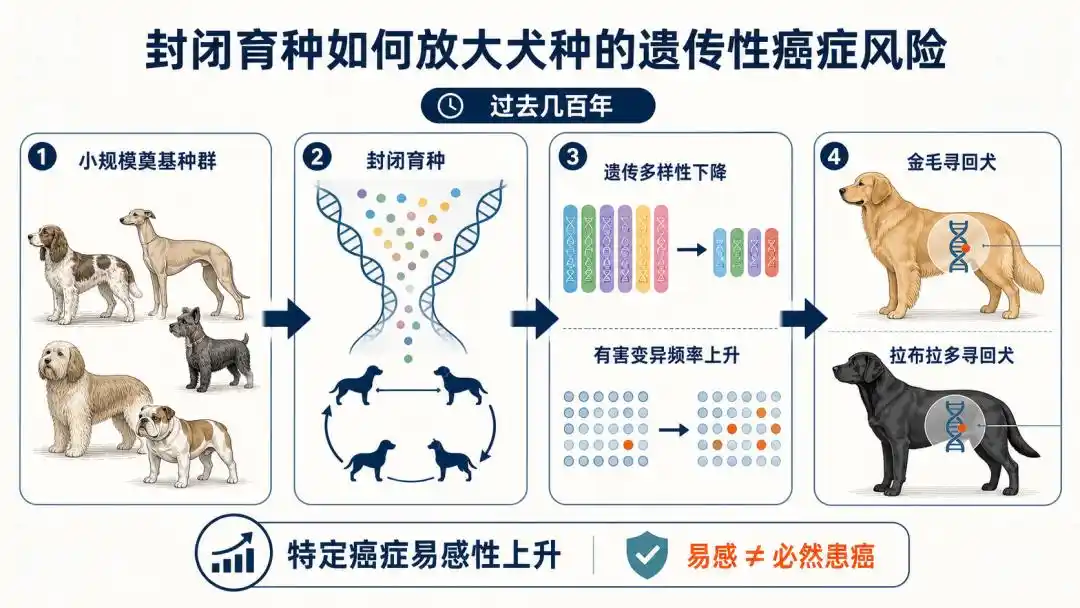
This makes it easier for AI to find patterns in mutations.

Additionally, pet dog cancers occur naturally, unlike those artificially induced in lab mice. Their immune systems are intact, and their disease progression timelines are well-suited for rapid clinical validation.

And the snowball effect of data is Gamgee's core moat.

Currently, datasets on animal genomes and immune responses are still extremely scarce. Every dog Gamgee treats yields a precious set of "sequencing + immune response + clinical outcome" data.

Once this data flywheel starts turning, it will become unstoppable.

Acquire data -> Optimize AI target selection models -> Produce next-generation, more potent vaccines -> Generate better treatment data -> Attract more dogs for treatment.

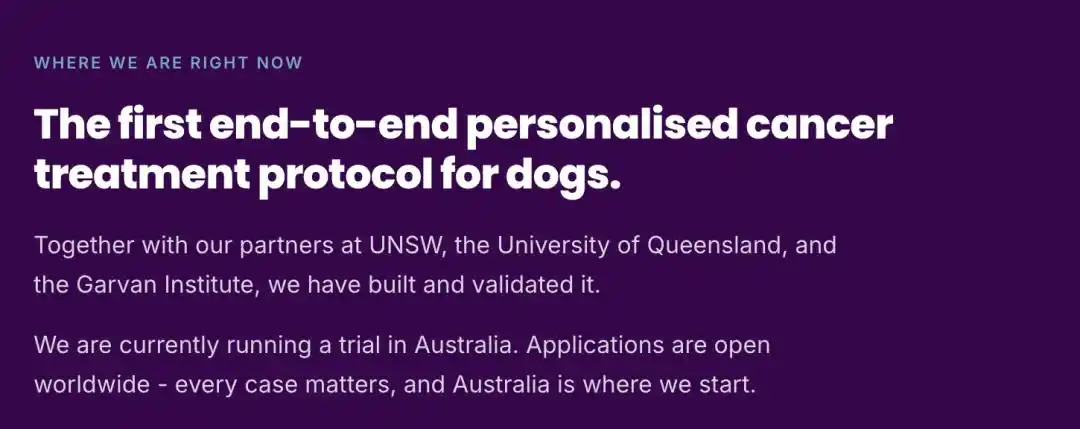
Currently, the $4 million seed funding has officially launched clinical trials. The first clinical trials are underway in Australia, in collaboration with top institutions like the University of New South Wales and the University of Queensland.

This trial will recruit 30 dogs with cancer. Eligible dogs will participate in the trial for free and receive the personalized vaccine.

Simultaneously, Gamgee is now accepting case registrations globally, with a waitlist already exceeding 300 dogs.
The Ultimate Vision: Starting with Rosie, Healing All of Humanity

But Gamgee's ambition extends far beyond canines.

For top-tier investors, what they see is not just the pet healthcare market, but the dawn of "N-of-1" medicine (i.e., extreme personalized medicine for a single patient).

Gamgee's ultimate goal is to establish a better treatment model based on "N-of-1," transcending species barriers, all the way to humans.
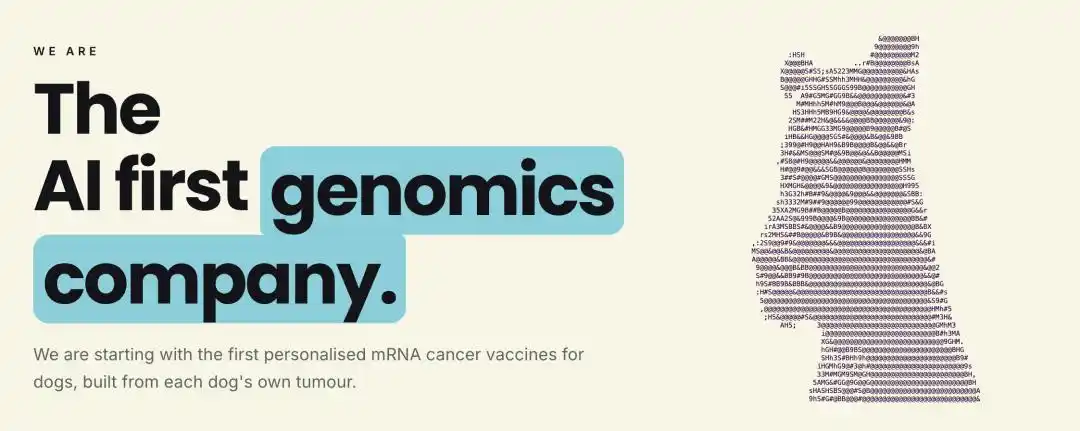
Imagine: if Gamgee can, through thousands of dogs, industrialize the process of "tumor sequencing -> AI design -> mRNA vaccine synthesis within 48 hours," soon, this technology will benefit humans.

As David Thomas, Director of the Centre for Molecular Oncology at UNSW, said: "If we can do this in dogs, why wouldn't we roll it out to all humans with cancer?"

Today, over 1,600 cancer therapeutics and vaccines are in development globally. The wave of mRNA and precision medicine has swept across the world.

And just a few days ago, Moderna and Merck jointly announced—

The world's first mRNA cancer therapy deeply involved with AI in its design, "privately customized" based on a patient's own cancer cell gene mutations, achieved historic success in a global Phase III clinical trial for high-risk melanoma!
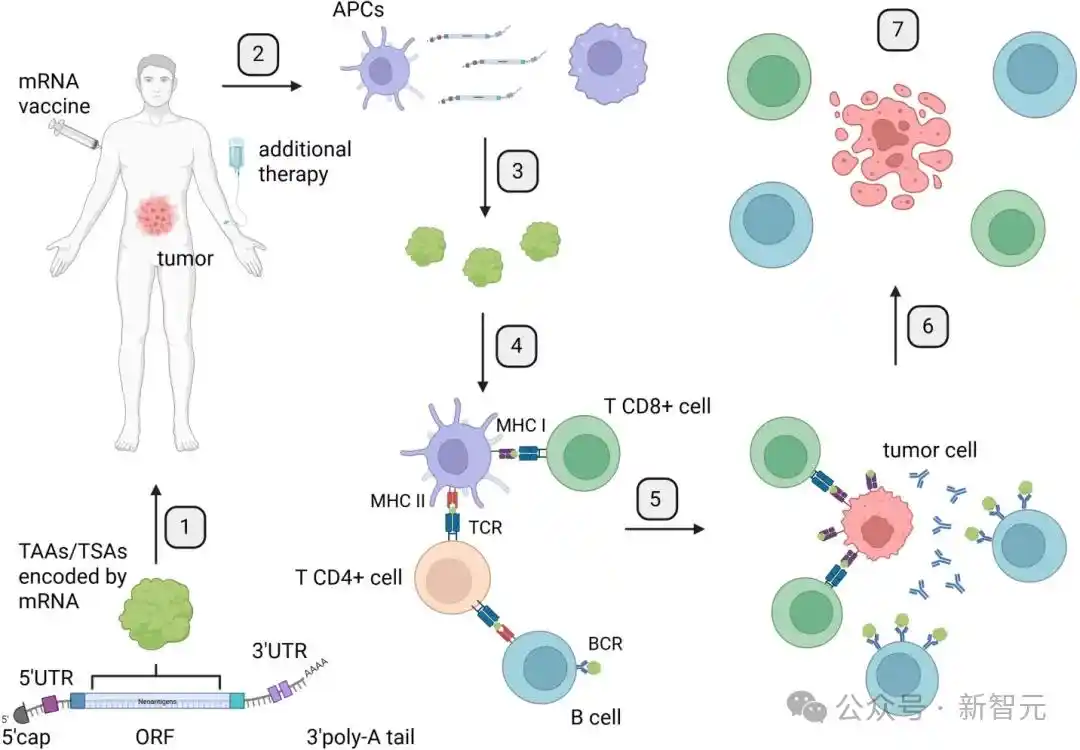
This process is essentially the "human premium version" of Paul's effort to save Rosie!

Similarly, tumor tissue is excised for genetic sequencing; similarly, AI models take the stage, running simulations within hours to precisely identify the most lethal "34 unique targets" from thousands of mutations.

The latter therapy has already significantly prolonged recurrence-free survival and markedly reduced the risk of tumors metastasizing to distant sites like the lungs, brain, and liver.

Moderna's clinical victory proves that the path of "tumor sequencing -> AI neoantigen selection -> custom mRNA -> immune activation" is entirely viable for human cancer.
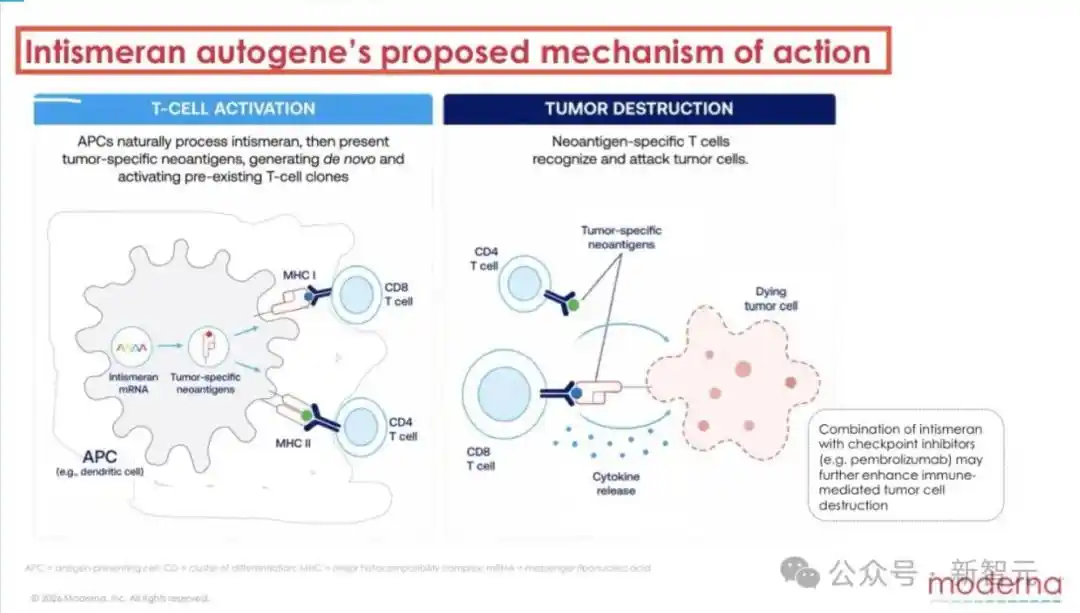
Clearly, we are on the eve of AI curing cancer.

The Legacy of Love

Rosie ultimately didn't get to receive the second vaccine dose.

But her story has given hope to 6 million dogs diagnosed with cancer each year.

In the tweet announcing Gamgee's funding, Paul ended with five words: "I love you, Rosie."

"We built Gamgee so that no other dog ever has to wait for that hope again."

Although Rosie has closed her eyes forever, the legacy she left may illuminate the path for millions of dogs, and even help humanity conquer cancer.

References:https://www.gamgee.io/https://x.com/paul_conyngham/status/2090502003449590254

https://x.com/paul_conyngham/status/2036940410363535823

This article is from the WeChat public account "New Zhiyuan," author: ASI Apocalypse, Editor: Aeneas


Trending Cryptos

Related Questions

QWhat was the main reason why Rosie, the dog, ultimately passed away despite the initial success of the custom mRNA vaccine?

ARosie ultimately passed away because the production of the next personalized mRNA cancer vaccine could not be completed fast enough to keep pace with the aggressive recurrence and evolution of her cancer. The traditional lab processes and regulatory hurdles were too slow.

QWhat is the name of the startup founded by Paul Conyngham, and what is its primary mission?

AThe startup is named Gamgee. Its primary mission is to create and scale personalized mRNA cancer vaccines for dogs, aiming to make them accessible and affordable to prevent other dogs from suffering the same fate as Rosie.

QHow does Gamgee plan to drastically reduce the time and cost of creating a personalized dog cancer vaccine?

AGamgee plans to create an industrialized SaaS platform that automates the process from tumor sampling to vaccine delivery. Their goal is to compress the vaccine design time to within 48 hours and reduce the end-to-end cost of a full treatment course to around $2000.

QAccording to the article, why are dogs considered a perfect model for validating personalized cancer vaccines from a biological and AI training perspective?

ADogs are ideal because many breeds have a closed gene pool due to selective breeding, making them prone to specific, predictable cancers. Their cancers occur naturally (not artificially induced), and their intact immune systems and disease timelines provide excellent, fast data for clinical validation and AI model training.

QWhat is the broader, long-term vision for the technology being developed by Gamgee, as mentioned in the article?

AThe long-term vision is to establish a proven, industrialized 'N-of-1' (highly personalized) medical treatment model for cancer. By perfecting the process in dogs, the goal is to eventually adapt and apply this technology to create effective, rapid, and personalized mRNA cancer therapies for humans.

Related Reads

The 'Saving U.S. Treasuries' Baton Pass: Bessent Fumbled Last Week, This Week It's Wash's Turn

"Rescuing US Treasuries" Relay: After Bessent's Miss, All Eyes Are on Walsh Last week, US Treasury Secretary Bessent's announcement to at least double long-term Treasury buybacks failed to sustainably lower yields, which quickly rebounded. The market response saw a drop in the dollar alongside surges in gold and Bitcoin, interpreted as a "pressure release valve" for anxiety. The focus now shifts to Fed Chairman Walsh's upcoming Jackson Hole speech. Markets are highly sensitive to his message, seeking clarity on the Fed's policy response to stubborn inflation and worsening fiscal conditions. Analysts warn that a lack of new guidance could disappoint markets and worsen the sell-off in long-dated bonds. Analysts question the scale of Bessent's operations, noting they are too small relative to the overall debt market and do not constitute quantitative easing. A key issue is the Fed's massive holdings of long-term bonds, which distorts the market. With the Fed holding low-yielding short-term bonds that are losing money relative to its policy rate, discussion is growing around a potential Fed-led "Operation Twist." This would involve selling short-term bonds to buy long-term ones, aiming to lower long-end yields without expanding the balance sheet. The upcoming PCE inflation data will set the stage for Walsh's speech. However, the window for action is narrowing amid political pressures. A critical threshold is the 30-year yield at 5%; holding above it could increase stress on the dollar and leveraged sectors. Overall, the article suggests that without coordinated Fed action to anchor inflation expectations, Treasury interventions may ultimately fail, with investors increasingly looking to assets like gold as hedges.

marsbit13m ago

The 'Saving U.S. Treasuries' Baton Pass: Bessent Fumbled Last Week, This Week It's Wash's Turn

marsbit13m ago

Hyperliquid's Compliance Journey: From Permissionless to Permissioned via HIP-3

Hyperliquid’s Compliance Path: From Permissionless to Permissioned HIP-3 Hyperliquid currently blocks U.S. access because its permissionless, on-chain infrastructure conflicts with U.S. market structure laws, which restrict futures trading to registered exchanges, clearinghouses, and brokers. Through its Hyperliquid Policy Center (HPC), the project is advocating for regulatory modernization, proposing that regulated entities be allowed to build products on HyperCore (its exchange and clearing layer) while fulfilling their compliance obligations. The platform’s modular stack separates roles like a traditional exchange (DCM), clearinghouse (DCO), and broker (FCM), but reconstructs them on-chain with code. This enables permissionless access, self-custody, and 24/7 global trading, but clashes with U.S. rules requiring KYC, specific margin models, and custodial arrangements. To resolve this, HPC is engaging with U.S. regulators (CFTC, SEC) to seek clarity that deploying on-chain software does not itself trigger licensing, and to establish exemptions allowing non-custodial wallets to route users to regulated derivatives. Recent political signals suggest openness to this approach. On the technical side, Hyperliquid Labs has introduced permissioned HIP-3 deployers on testnet. These allow regulated entities to launch markets, perform KYC, and whitelist compliant users. While these create separate order books, whitelisted market makers can bridge liquidity between them, ensuring deep, shared liquidity across the same L1. Features like payload-based “PA” permissions enable DEX-level account controls (e.g., reduce-only orders), mirroring traditional broker authorities. The strategy is not to open the native, permissionless front-end to U.S. users, but to position Hyperliquid as neutral infrastructure that U.S. regulated firms can use while meeting their legal duties. This paves a compliant path for U.S. investor access while preserving the protocol’s core, permissionless nature.

marsbit37m ago

Hyperliquid's Compliance Journey: From Permissionless to Permissioned via HIP-3

marsbit37m ago

Two Funding Rounds in Three Months: The Chinese Version of Palantir is on Fire

Investment Community AI has learned that Beijing Zhongshu Ruizhi Technology Co., Ltd., a domestic industrial-grade causal intelligence and high-reliability decision-making AI company, has recently completed a strategic financing round worth hundreds of millions of RMB. This round saw participation from China Internet Investment Fund, Suzhou Chuangtou National Social Security Fund, Financial Street Capital, ICBC Capital, Kunlun Capital, among others, with existing shareholders also increasing their investment. This follows a Series B funding round in the hundreds of millions completed just three months prior. The rapid succession of two major funding rounds signifies strong market recognition of the company's underlying original technology and scaled commercial implementation. Often referred to as the "Chinese version of Palantir," Zhongshu Ruizhi is entering a new phase of accelerated technological iteration, widespread scenario replication, and scaled performance release, mirroring the explosive growth of China's AI market. Founded in April 2020 by Dr. Han Han, a Tsinghua University Ph.D. and former core drafter of national AI policies, the company is mission-driven to "move AI from the digital world to the physical world." It focuses on the high-reliability, strong-decision industrial AI track and enterprise-grade AI Agent full-stack infrastructure. The team tackles the challenge of applying AI to China's vast and complex industrial and energy systems by developing a new intelligent operating system from scratch. Its core technological breakthrough lies in three proprietary底层 technologies: meta-causal cognitive theory, causal models, and a dynamic ontology engine. These address critical pain points of generative large models in industrial settings—such as AI hallucinations, insufficient reasoning, lack of temporal logic, unverifiable decisions, and multi-source rule conflicts—thereby providing trustworthy, explainable, and executable智能决策 capabilities. Commercially, Zhongshu Ruizhi has achieved scaled deployment, serving over 50 central state-owned enterprises and industrial groups in sectors like power, petroleum, and aerospace, with implementations in more than 800 highly complex production scenarios. The company reported doubled revenue in 2025, demonstrating strong self-sufficiency and a viable business model—a rarity among new-generation AI firms. The latest funds will be allocated towards advancing foundational theoretical research, replicating successful application models to expand market presence (including overseas), and attracting top-tier talent. Lead investor China Internet Investment Fund highlighted that in the current shift from general AI capability contests to deep industrial empowerment, industrial-grade causal intelligence is crucial for building China's modern digital foundation and fostering new quality productive forces. They expressed support for the company's efforts to define decision-making paradigms and trustworthy standards for industrial intelligence, aiming to secure a rule-making voice in the global physical AI arena.

marsbit48m ago

Two Funding Rounds in Three Months: The Chinese Version of Palantir is on Fire

marsbit48m ago

The Biggest Political Economy Question in the AI Era: As Robots Become More Capable, How Do Humans Share the Value?

In the AI era, the most pressing political economy question is: as machines become increasingly capable, how can humanity share in the value they create? An article originally critiquing China's tech focus has sparked a deeper debate on this global challenge. Historically, industrial progress improved efficiency but still relied on human labor for wealth creation and distribution. AI is fundamentally different—it is now replacing cognitive and knowledge work. As AI and robots take over more tasks, economic growth may continue while direct human participation in value creation shrinks, creating a core tension between productivity gains and widespread income generation. The issue is not unique to China. While leading tech companies amass enormous wealth, labor's share of income is declining globally. The core problem is a broken link: technological innovation and corporate profits are not translating into sufficient consumer income and demand. Three potential paths forward are outlined: a traditional capitalist model where profits primarily go to capital owners; a state-capitalist approach with public investment in AI; and more innovative models like digital sovereign wealth funds, universal shareholding, or AI-era basic income schemes to directly distribute AI-generated value. The future competitive advantage may lie not just in technological supremacy, but in which society can build a new, inclusive distribution system for the intelligent economy. The ultimate challenge is ensuring that as AI creates value, humans have a means to obtain income and share in the resulting widespread social benefits.

marsbit58m ago

The Biggest Political Economy Question in the AI Era: As Robots Become More Capable, How Do Humans Share the Value?

marsbit58m ago

Generating Profits for Seven Consecutive Quarters, Emerging Markets Carry Trade Outperforms Everything

For the seventh consecutive quarter, dollar-funded emerging market carry trades have delivered positive returns, marking the longest winning streak since 2008. According to Bloomberg's index, this strategy has gained approximately 22% since late 2024, outperforming U.S. Treasuries, emerging market sovereign, and corporate dollar debt. The core of the trade involves borrowing low-interest currencies like the U.S. dollar, euro, or yen to invest in high-yielding emerging market assets, such as Turkish lira bonds offering over 40% returns. Returns were amplified by favorable currency moves, with the dollar weakening against most emerging market currencies and other traditional funding currencies. For instance, the trade gained 48% on the Colombian peso in the past year. A key test came in August 2024 with a historic joint U.S.-Japan currency intervention, which caused only a modest 1% dip in the carry trade risk premium as investors shifted funding from the yen to the euro and Swiss franc. Looking ahead, the primary risk is the timing of Federal Reserve policy changes. While persistent inflation allows the Fed to hold rates, a rapid rise in long-term U.S. yields could threaten the trade. Another concern is crowding, as massive inflows increase vulnerability to a sudden reversal. High interest rates in regions like Latin America and Eastern Europe, supported by external factors like Middle East tensions and energy prices, continue to sustain the opportunity. Major investors remain engaged, favoring currencies like the Mexican peso, South African rand, and Turkish lira.

marsbit1h ago

Generating Profits for Seven Consecutive Quarters, Emerging Markets Carry Trade Outperforms Everything

marsbit1h ago

Trading

Spot

Hot Articles

What is SONIC

Sonic: Pioneering the Future of Gaming in Web3 Introduction to Sonic In the ever-evolving landscape of Web3, the gaming industry stands out as one of the most dynamic and promising sectors. At the forefront of this revolution is Sonic, a project designed to amplify the gaming ecosystem on the Solana blockchain. Leveraging cutting-edge technology, Sonic aims to deliver an unparalleled gaming experience by efficiently processing millions of requests per second, ensuring that players enjoy seamless gameplay while maintaining low transaction costs. This article delves into the intricate details of Sonic, exploring its creators, funding sources, operational mechanics, and the timeline of significant events that have shaped its journey. What is Sonic? Sonic is an innovative layer-2 network that operates atop the Solana blockchain, specifically tailored to enhance the existing Solana gaming ecosystem. It accomplishes this through a customised, VM-agnostic game engine paired with a HyperGrid interpreter, facilitating sovereign game economies that roll up back to the Solana platform. The primary goals of Sonic include: Enhanced Gaming Experiences: Sonic is committed to offering lightning-fast on-chain gameplay, allowing players and developers to engage with games at previously unattainable speeds. Atomic Interoperability: This feature enables transactions to be executed within Sonic without the need to redeploy Solana programmes and accounts. This makes the process more efficient and directly benefits from Solana Layer1 services and liquidity. Seamless Deployment: Sonic allows developers to write for Ethereum Virtual Machine (EVM) based systems and execute them on Solana’s SVM infrastructure. This interoperability is crucial for attracting a broader range of dApps and decentralised applications to the platform. Support for Developers: By offering native composable gaming primitives and extensible data types - dining within the Entity-Component-System (ECS) framework - game creators can craft intricate business logic with ease. Overall, Sonic's unique approach not only caters to players but also provides an accessible and low-cost environment for developers to innovate and thrive. Creator of Sonic The information regarding the creator of Sonic is somewhat ambiguous. However, it is known that Sonic's SVM is owned by the company Mirror World. The absence of detailed information about the individuals behind Sonic reflects a common trend in several Web3 projects, where collective efforts and partnerships often overshadow individual contributions. Investors of Sonic Sonic has garnered considerable attention and support from various investors within the crypto and gaming sectors. Notably, the project raised an impressive $12 million during its Series A funding round. The round was led by BITKRAFT Ventures, with other notable investors including Galaxy, Okx Ventures, Interactive, Big Brain Holdings, and Mirana. This financial backing signifies the confidence that investment foundations have in Sonic’s potential to revolutionise the Web3 gaming landscape, further validating its innovative approaches and technologies. How Does Sonic Work? Sonic utilises the HyperGrid framework, a sophisticated parallel processing mechanism that enhances its scalability and customisability. Here are the core features that set Sonic apart: Lightning Speed at Low Costs: Sonic offers one of the fastest on-chain gaming experiences compared to other Layer-1 solutions, powered by the scalability of Solana’s virtual machine (SVM). Atomic Interoperability: Sonic enables transaction execution without redeployment of Solana programmes and accounts, effectively streamlining the interaction between users and the blockchain. EVM Compatibility: Developers can effortlessly migrate decentralised applications from EVM chains to the Solana environment using Sonic’s HyperGrid interpreter, increasing the accessibility and integration of various dApps. Ecosystem Support for Developers: By exposing native composable gaming primitives, Sonic facilitates a sandbox-like environment where developers can experiment and implement business logic, greatly enhancing the overall development experience. Monetisation Infrastructure: Sonic natively supports growth and monetisation efforts, providing frameworks for traffic generation, payments, and settlements, thereby ensuring that gaming projects are not only viable but also sustainable financially. Timeline of Sonic The evolution of Sonic has been marked by several key milestones. Below is a brief timeline highlighting critical events in the project's history: 2022: The Sonic cryptocurrency was officially launched, marking the beginning of its journey in the Web3 gaming arena. 2024: June: Sonic SVM successfully raised $12 million in a Series A funding round. This investment allowed Sonic to further develop its platform and expand its offerings. August: The launch of the Sonic Odyssey testnet provided users with the first opportunity to engage with the platform, offering interactive activities such as collecting rings—a nod to gaming nostalgia. October: SonicX, an innovative crypto game integrated with Solana, made its debut on TikTok, capturing the attention of over 120,000 users within a short span. This integration illustrated Sonic’s commitment to reaching a broader, global audience and showcased the potential of blockchain gaming. Key Points Sonic SVM is a revolutionary layer-2 network on Solana explicitly designed to enhance the GameFi landscape, demonstrating great potential for future development. HyperGrid Framework empowers Sonic by introducing horizontal scaling capabilities, ensuring that the network can handle the demands of Web3 gaming. Integration with Social Platforms: The successful launch of SonicX on TikTok displays Sonic’s strategy to leverage social media platforms to engage users, exponentially increasing the exposure and reach of its projects. Investment Confidence: The substantial funding from BITKRAFT Ventures, among others, emphasizes the robust backing Sonic has, paving the way for its ambitious future. In conclusion, Sonic encapsulates the essence of Web3 gaming innovation, striking a balance between cutting-edge technology, developer-centric tools, and community engagement. As the project continues to evolve, it is poised to redefine the gaming landscape, making it a notable entity for gamers and developers alike. As Sonic moves forward, it will undoubtedly attract greater interest and participation, solidifying its place within the broader narrative of blockchain gaming.

2.4k Total ViewsPublished 2024.04.04Updated 2024.12.03

What is SONIC

What is $S$

Understanding SPERO: A Comprehensive Overview Introduction to SPERO As the landscape of innovation continues to evolve, the emergence of web3 technologies and cryptocurrency projects plays a pivotal role in shaping the digital future. One project that has garnered attention in this dynamic field is SPERO, denoted as SPERO,$$s$. This article aims to gather and present detailed information about SPERO, to help enthusiasts and investors understand its foundations, objectives, and innovations within the web3 and crypto domains. What is SPERO,$$s$? SPERO,$$s$ is a unique project within the crypto space that seeks to leverage the principles of decentralisation and blockchain technology to create an ecosystem that promotes engagement, utility, and financial inclusion. The project is tailored to facilitate peer-to-peer interactions in new ways, providing users with innovative financial solutions and services. At its core, SPERO,$$s$ aims to empower individuals by providing tools and platforms that enhance user experience in the cryptocurrency space. This includes enabling more flexible transaction methods, fostering community-driven initiatives, and creating pathways for financial opportunities through decentralised applications (dApps). The underlying vision of SPERO,$$s$ revolves around inclusiveness, aiming to bridge gaps within traditional finance while harnessing the benefits of blockchain technology. Who is the Creator of SPERO,$$s$? The identity of the creator of SPERO,$$s$ remains somewhat obscure, as there are limited publicly available resources providing detailed background information on its founder(s). This lack of transparency can stem from the project's commitment to decentralisation—an ethos that many web3 projects share, prioritising collective contributions over individual recognition. By centring discussions around the community and its collective goals, SPERO,$$s$ embodies the essence of empowerment without singling out specific individuals. As such, understanding the ethos and mission of SPERO remains more important than identifying a singular creator. Who are the Investors of SPERO,$$s$? SPERO,$$s$ is supported by a diverse array of investors ranging from venture capitalists to angel investors dedicated to fostering innovation in the crypto sector. The focus of these investors generally aligns with SPERO's mission—prioritising projects that promise societal technological advancement, financial inclusivity, and decentralised governance. These investor foundations are typically interested in projects that not only offer innovative products but also contribute positively to the blockchain community and its ecosystems. The backing from these investors reinforces SPERO,$$s$ as a noteworthy contender in the rapidly evolving domain of crypto projects. How Does SPERO,$$s$ Work? SPERO,$$s$ employs a multi-faceted framework that distinguishes it from conventional cryptocurrency projects. Here are some of the key features that underline its uniqueness and innovation: Decentralised Governance: SPERO,$$s$ integrates decentralised governance models, empowering users to participate actively in decision-making processes regarding the project’s future. This approach fosters a sense of ownership and accountability among community members. Token Utility: SPERO,$$s$ utilises its own cryptocurrency token, designed to serve various functions within the ecosystem. These tokens enable transactions, rewards, and the facilitation of services offered on the platform, enhancing overall engagement and utility. Layered Architecture: The technical architecture of SPERO,$$s$ supports modularity and scalability, allowing for seamless integration of additional features and applications as the project evolves. This adaptability is paramount for sustaining relevance in the ever-changing crypto landscape. Community Engagement: The project emphasises community-driven initiatives, employing mechanisms that incentivise collaboration and feedback. By nurturing a strong community, SPERO,$$s$ can better address user needs and adapt to market trends. Focus on Inclusion: By offering low transaction fees and user-friendly interfaces, SPERO,$$s$ aims to attract a diverse user base, including individuals who may not previously have engaged in the crypto space. This commitment to inclusion aligns with its overarching mission of empowerment through accessibility. Timeline of SPERO,$$s$ Understanding a project's history provides crucial insights into its development trajectory and milestones. Below is a suggested timeline mapping significant events in the evolution of SPERO,$$s$: Conceptualisation and Ideation Phase: The initial ideas forming the basis of SPERO,$$s$ were conceived, aligning closely with the principles of decentralisation and community focus within the blockchain industry. Launch of Project Whitepaper: Following the conceptual phase, a comprehensive whitepaper detailing the vision, goals, and technological infrastructure of SPERO,$$s$ was released to garner community interest and feedback. Community Building and Early Engagements: Active outreach efforts were made to build a community of early adopters and potential investors, facilitating discussions around the project’s goals and garnering support. Token Generation Event: SPERO,$$s$ conducted a token generation event (TGE) to distribute its native tokens to early supporters and establish initial liquidity within the ecosystem. Launch of Initial dApp: The first decentralised application (dApp) associated with SPERO,$$s$ went live, allowing users to engage with the platform's core functionalities. Ongoing Development and Partnerships: Continuous updates and enhancements to the project's offerings, including strategic partnerships with other players in the blockchain space, have shaped SPERO,$$s$ into a competitive and evolving player in the crypto market. Conclusion SPERO,$$s$ stands as a testament to the potential of web3 and cryptocurrency to revolutionise financial systems and empower individuals. With a commitment to decentralised governance, community engagement, and innovatively designed functionalities, it paves the way toward a more inclusive financial landscape. As with any investment in the rapidly evolving crypto space, potential investors and users are encouraged to research thoroughly and engage thoughtfully with the ongoing developments within SPERO,$$s$. The project showcases the innovative spirit of the crypto industry, inviting further exploration into its myriad possibilities. While the journey of SPERO,$$s$ is still unfolding, its foundational principles may indeed influence the future of how we interact with technology, finance, and each other in interconnected digital ecosystems.

436 Total ViewsPublished 2024.12.17Updated 2024.12.17

What is $S$

What is AGENT S

Agent S: The Future of Autonomous Interaction in Web3 Introduction In the ever-evolving landscape of Web3 and cryptocurrency, innovations are constantly redefining how individuals interact with digital platforms. One such pioneering project, Agent S, promises to revolutionise human-computer interaction through its open agentic framework. By paving the way for autonomous interactions, Agent S aims to simplify complex tasks, offering transformative applications in artificial intelligence (AI). This detailed exploration will delve into the project's intricacies, its unique features, and the implications for the cryptocurrency domain. What is Agent S? Agent S stands as a groundbreaking open agentic framework, specifically designed to tackle three fundamental challenges in the automation of computer tasks: Acquiring Domain-Specific Knowledge: The framework intelligently learns from various external knowledge sources and internal experiences. This dual approach empowers it to build a rich repository of domain-specific knowledge, enhancing its performance in task execution. Planning Over Long Task Horizons: Agent S employs experience-augmented hierarchical planning, a strategic approach that facilitates efficient breakdown and execution of intricate tasks. This feature significantly enhances its ability to manage multiple subtasks efficiently and effectively. Handling Dynamic, Non-Uniform Interfaces: The project introduces the Agent-Computer Interface (ACI), an innovative solution that enhances the interaction between agents and users. Utilizing Multimodal Large Language Models (MLLMs), Agent S can navigate and manipulate diverse graphical user interfaces seamlessly. Through these pioneering features, Agent S provides a robust framework that addresses the complexities involved in automating human interaction with machines, setting the stage for myriad applications in AI and beyond. Who is the Creator of Agent S? While the concept of Agent S is fundamentally innovative, specific information about its creator remains elusive. The creator is currently unknown, which highlights either the nascent stage of the project or the strategic choice to keep founding members under wraps. Regardless of anonymity, the focus remains on the framework's capabilities and potential. Who are the Investors of Agent S? As Agent S is relatively new in the cryptographic ecosystem, detailed information regarding its investors and financial backers is not explicitly documented. The lack of publicly available insights into the investment foundations or organisations supporting the project raises questions about its funding structure and development roadmap. Understanding the backing is crucial for gauging the project's sustainability and potential market impact. How Does Agent S Work? At the core of Agent S lies cutting-edge technology that enables it to function effectively in diverse settings. Its operational model is built around several key features: Human-like Computer Interaction: The framework offers advanced AI planning, striving to make interactions with computers more intuitive. By mimicking human behaviour in tasks execution, it promises to elevate user experiences. Narrative Memory: Employed to leverage high-level experiences, Agent S utilises narrative memory to keep track of task histories, thereby enhancing its decision-making processes. Episodic Memory: This feature provides users with step-by-step guidance, allowing the framework to offer contextual support as tasks unfold. Support for OpenACI: With the ability to run locally, Agent S allows users to maintain control over their interactions and workflows, aligning with the decentralised ethos of Web3. Easy Integration with External APIs: Its versatility and compatibility with various AI platforms ensure that Agent S can fit seamlessly into existing technological ecosystems, making it an appealing choice for developers and organisations. These functionalities collectively contribute to Agent S's unique position within the crypto space, as it automates complex, multi-step tasks with minimal human intervention. As the project evolves, its potential applications in Web3 could redefine how digital interactions unfold. Timeline of Agent S The development and milestones of Agent S can be encapsulated in a timeline that highlights its significant events: September 27, 2024: The concept of Agent S was launched in a comprehensive research paper titled “An Open Agentic Framework that Uses Computers Like a Human,” showcasing the groundwork for the project. October 10, 2024: The research paper was made publicly available on arXiv, offering an in-depth exploration of the framework and its performance evaluation based on the OSWorld benchmark. October 12, 2024: A video presentation was released, providing a visual insight into the capabilities and features of Agent S, further engaging potential users and investors. These markers in the timeline not only illustrate the progress of Agent S but also indicate its commitment to transparency and community engagement. Key Points About Agent S As the Agent S framework continues to evolve, several key attributes stand out, underscoring its innovative nature and potential: Innovative Framework: Designed to provide an intuitive use of computers akin to human interaction, Agent S brings a novel approach to task automation. Autonomous Interaction: The ability to interact autonomously with computers through GUI signifies a leap towards more intelligent and efficient computing solutions. Complex Task Automation: With its robust methodology, it can automate complex, multi-step tasks, making processes faster and less error-prone. Continuous Improvement: The learning mechanisms enable Agent S to improve from past experiences, continually enhancing its performance and efficacy. Versatility: Its adaptability across different operating environments like OSWorld and WindowsAgentArena ensures that it can serve a broad range of applications. As Agent S positions itself in the Web3 and crypto landscape, its potential to enhance interaction capabilities and automate processes signifies a significant advancement in AI technologies. Through its innovative framework, Agent S exemplifies the future of digital interactions, promising a more seamless and efficient experience for users across various industries. Conclusion Agent S represents a bold leap forward in the marriage of AI and Web3, with the capacity to redefine how we interact with technology. While still in its early stages, the possibilities for its application are vast and compelling. Through its comprehensive framework addressing critical challenges, Agent S aims to bring autonomous interactions to the forefront of the digital experience. As we move deeper into the realms of cryptocurrency and decentralisation, projects like Agent S will undoubtedly play a crucial role in shaping the future of technology and human-computer collaboration.

1.1k Total ViewsPublished 2025.01.14Updated 2025.01.14

What is AGENT S

Discussions

Welcome to the HTX Community. Here, you can stay informed about the latest platform developments and gain access to professional market insights. Users' opinions on the price of S (S) are presented below.

活动图片