3% Cashback, 6% Annual Interest, and a Debit Card: Elon Musk Launches X Money in the US

cryptonews.ruPublished on 2026-07-28Last updated on 2026-07-28

Abstract

On July 27, 2026, the social media platform X (formerly Twitter) launched its integrated financial service, X Money, initially available only to US-based Premium and Premium+ subscribers. Founder Elon Musk emphasized the launch's significance for the platform. US residents over 18 with a verified X account can use the service. X Payments LLC is not a bank; user funds are held in FDIC-insured accounts at Cross River Bank, with insurance potentially extended up to $10 million through a cash sweep program across partner banks. The core of the service is the X Card, a virtual or physical metal Visa debit card. Key features include: 3% cashback on most purchases (with some exclusions), free instant peer-to-peer payments, worldwide ATM fee reimbursement, no foreign transaction fees, and support for Apple/Google Pay. The service offers interest on account balances, up to 6.00% APY. Premium+ users get this rate immediately, while Premium users must meet a qualifying direct deposit requirement. Additional features include early direct deposit, wire transfers, bill pay, and paper check ordering. Security features include passkey login, customizable transaction limits, and Visa's Zero Liability Policy for fraud. The public launch followed a limited beta test with select Premium+ users in late June 2026. The launch marks X's continued evolution from a social network into a broader digital platform combining communication with everyday financial operations.

Social network X (formerly Twitter) announced on July 27, 2026, the launch of its built-in financial service, X Money. Currently, access is only available to US subscribers of Premium and Premium+ plans.

The official account @XMoney described the new feature as a way to manage money directly within "the world's most powerful network." X's founder, Elon Musk, briefly reacted to the announcement, emphasizing its significance for the platform.

The service will be available to US residents over 18 years old with a verified X account. An important nuance: X Payments LLC itself is not a bank. User funds are held in accounts at Cross River Bank (Member FDIC) and are insured under the standard FDIC scheme for up to $250,000. Additionally, through the Cash Sweep program, funds are automatically distributed among several partner banks, which, under certain conditions, can raise the total insurance coverage to $10 million.

What the X Card Does and How Interest is Earned

The key element of the ecosystem is the X Card debit card. It is issued in both virtual and physical metal variants with the owner's handle and is accepted wherever Visa works. Among the announced features:

  • Free instant transfers between X users with no limits on amount;
  • 3% cashback on most purchases (exceptions include, in particular, precious metals, jewelry, bets, and lotteries);
  • Free cash withdrawals at ATMs worldwide with reimbursement of third-party fees;
  • No fees for foreign transactions;
  • Support for Apple Pay and Google Pay.

Separately, the service offers interest accrual on the account balance — up to 6.00% annual percentage yield (APY). Premium+ subscribers receive this rate immediately, while Premium plan users need to meet a condition for regular salary deposits (qualifying direct deposit) to reach the maximum rate. The company clarifies that the rate is valid as of July 27, 2026, and is subject to change.

Furthermore, X Money includes the ability to receive salary early — up to two days ahead of the standard payday, if the employer transfers money via direct deposit. From the app, users can also send wire transfers, order paper checks by mail, and pay bills without switching to third-party services.

Security and Background of the Launch

Regarding data protection, developers have opted for login via passkeys — which replace traditional passwords with confirmation via fingerprint, facial recognition, or device PIN. There are also customizable transaction limits and the standard Visa cardholder Zero Liability Policy for fraudulent transactions.

It is worth noting that the current public launch was preceded by limited beta testing, which the company conducted among a portion of Premium+ subscribers from the end of June 2026.

Thus, X continues to transform the platform from a purely social network into a broader digital product combining communication and everyday financial operations — transfers, savings, and card payments — in one app.

AI Opinion

From a machine data analysis perspective, attempts by major technology platforms to integrate financial services into a social network have occurred before, and not always successfully. Meta, recognized as extremist in Russia, once launched the Novi digital wallet as part of the Diem project (formerly Libra), but regulatory pressure led the company to shut down the service less than a year after launch. The key difference of X Money is the abandonment of its own cryptocurrency in favor of traditional banking infrastructure through partner Cross River Bank, which reduces regulatory risks but does not eliminate them entirely: the scale of operations involving user funds will inevitably attract the attention of US financial supervisory authorities.

end-content
Trending Cryptos

Related Questions

QWhat are the eligibility requirements for accessing the X Money financial service in the US?

ATo access X Money in the US, a user must be a resident of the United States, at least 18 years old, have a verified X account, and be a subscriber to either the X Premium or Premium+ plan.

QWhat is the advertised APY (Annual Percentage Yield) for the X Money account and who can get the maximum rate?

AThe advertised APY is up to 6.00%. Premium+ subscribers get this maximum rate immediately. Premium subscribers can also achieve the maximum 6.00% APY if they meet the qualifying direct deposit requirement.

QName three key features of the X Card, the debit card offered by X Money.

A1) 3% cashback on most purchases. 2) Free instant transfers between X users without amount limits. 3) Free ATM withdrawals worldwide with reimbursed third-party fees.

QHow does X Money ensure the safety of user deposits, and what is the maximum potential FDIC insurance coverage?

AUser deposits are held by partner bank Cross River Bank (Member FDIC) and are FDIC insured up to $250,000 per standard coverage. Through the Cash Sweep program which distributes funds across multiple partner banks, the potential aggregate insurance coverage can reach up to $10 million.

QAccording to the AI opinion section, how does X Money's approach differ from Meta's (Facebook) previous attempt with its Diem/Novi project?

AThe key difference is that X Money avoids creating its own cryptocurrency (like Meta's Diem/Libra). Instead, it relies on traditional banking infrastructure through its partner, Cross River Bank. This approach aims to reduce regulatory risks.

Related Reads

From 'Western Learning Ants' to Korean Pension Funds: Why Does Korean Capital Continue to Flow to the US?

Summary: "From 'Western Ants' to National Pension: Why Korean Capital Continues to Flow to the U.S.?" South Korea’s capital is increasingly moving toward U.S. markets, driven by two key investor groups. Individual retail investors, known as "Western Ants," actively trade U.S. stocks overnight, seeking exposure to major tech firms and higher returns often unavailable in Korea’s concentrated domestic market. Simultaneously, the National Pension Service (NPS), managing over $1.16 trillion in assets, is expanding its global investment footprint. Facing demographic pressures and the sheer size of its fund, NPS has steadily increased overseas allocations, with over half its financial assets now invested abroad. A recent memorandum of understanding with six top U.S. venture capital firms (including Sequoia and a16z) marks a strategic extension into Silicon Valley’s private investment ecosystem, aiming to access growth-stage tech opportunities while leveraging external managers’ expertise. While both flows reflect limitations of Korea’s home market, their risk profiles differ sharply: retail investors often pursue speculative, concentrated bets, whereas NPS must ensure long-term, diversified returns for national retirement security. This outward shift also creates macroeconomic tensions, as demand for dollars from both groups pressures the Korean won, prompting coordinated measures between NPS and the central bank to mitigate currency volatility. Ultimately, Korea’s growing financial integration with global markets—especially the U.S.—signals a broader structural shift where citizens’ wealth and pension sustainability are increasingly tied to worldwide economic dynamics.

marsbit4m ago

From 'Western Learning Ants' to Korean Pension Funds: Why Does Korean Capital Continue to Flow to the US?

marsbit4m ago

This Strategy Earned Hefei One Trillion Yuan

This article analyzes the "Hefei Model" that enabled a municipal state-owned investment to generate paper profits exceeding one trillion yuan through the 2026 IPO of ChangXin Memory Technologies (CXMT). It argues against framing this success as a "lucky gamble," instead presenting it as the result of a deliberate institutional system designed to enable long-term industrial investment. The system comprises three core components. First, a **quantified risk-tolerance mechanism**, including a 40% loss allowance for venture funds and a clear "duty-fulfilled exemption" list, decouples project failure from personal career risk for decision-makers, allowing them to focus on industrial potential rather than personal liability. Second, **strategic investment in critical supply chain gaps**: Hefei doesn't just invest in "good" projects, but targets "missing" links essential for its key industries (appliances, displays, cars). The investment in CXMT aimed to fill the critical DRAM memory chip gap, subsequently attracting over 450 upstream and downstream firms and creating a full semiconductor cluster. Third, **institutional authorization for counter-cyclical investment**: Protected by the risk-tolerance framework, Hefei supported CXMT with increased investment during the 2023 global memory industry downturn, enabling it to scale production and capitalize on the 2025 AI-driven demand surge. The article concludes that the true lesson is not the specific investment but building the institutional infrastructure—quantified risk tolerance, deep industry chain analysis, and counter-cyclical mandates—that makes such long-term, strategic bets possible. It notes the final challenge is perfecting the exit mechanism to complete the investment cycle and transform paper gains into sustainable fiscal returns and reinvestment capacity.

marsbit18m ago

This Strategy Earned Hefei One Trillion Yuan

marsbit18m ago

Silicon Valley VC's On-the-Ground Observations of Chinese Entrepreneurship: A Harsher Capital Environment Breeding Fiercer Companies

A Silicon Valley VC's on-the-ground observations of China's startup ecosystem reveal a harsher capital environment forging more aggressive and execution-driven companies. Unlike Silicon Valley's patient capital focused on long-term growth, China's venture landscape is characterized by intense pressure for exits. Startups often face "equity in name, debt in reality" terms with strict timelines and personal founder liability, pushing IPO as the nearly mandatory exit path due to a virtually non-existent M&A market. This high-stakes system, while potentially fostering short-termism, cultivates extreme cost discipline, rapid execution, and formidable commercialization skills—traits evident as these companies expand overseas. The funding ecosystem comprises three main pools: local RMB funds (often government-backed with economic development mandates), domestic USD funds (more founder-friendly, like Sequoia China), and dwindling direct foreign capital. Financial Advisors (FAs) play a crucial intermediary role, packaging deals and navigating China's opaque, relationship-based business networks where platforms like LinkedIn haven't taken root. Underpinning it all is significant state influence through industrial policy, directing capital and incentives toward strategic sectors like semiconductors and AI. The result is a distinct, parallel innovation model—less forgiving than Silicon Valley's, but capable of concentrating resources, accelerating iteration, and producing fiercely competitive companies in targeted industries.

marsbit24m ago

Silicon Valley VC's On-the-Ground Observations of Chinese Entrepreneurship: A Harsher Capital Environment Breeding Fiercer Companies

marsbit24m ago

SharpLink's Helm: Buying Only, Never Selling, Making ETH Generate Profits Through the Cold Winter

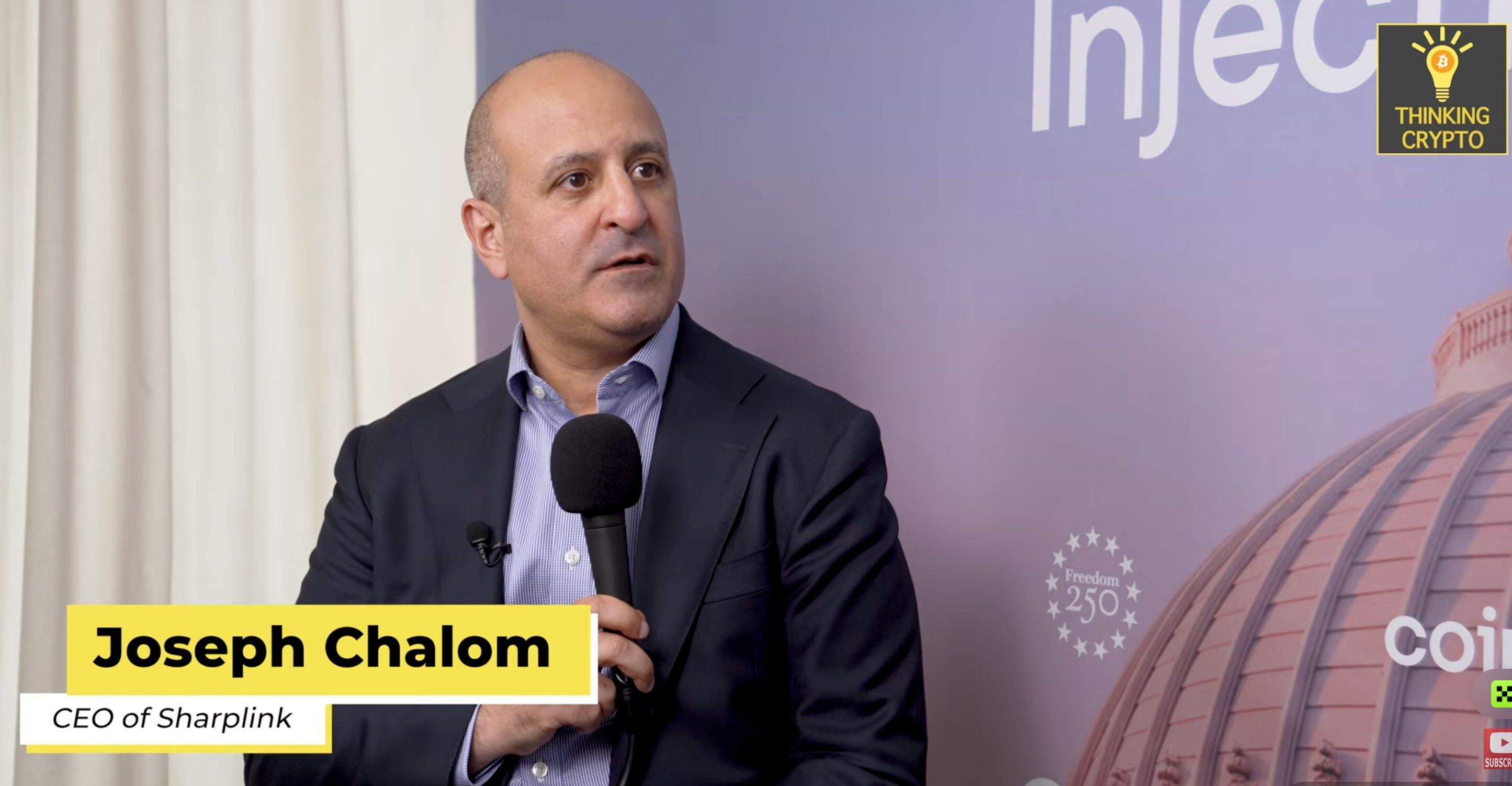
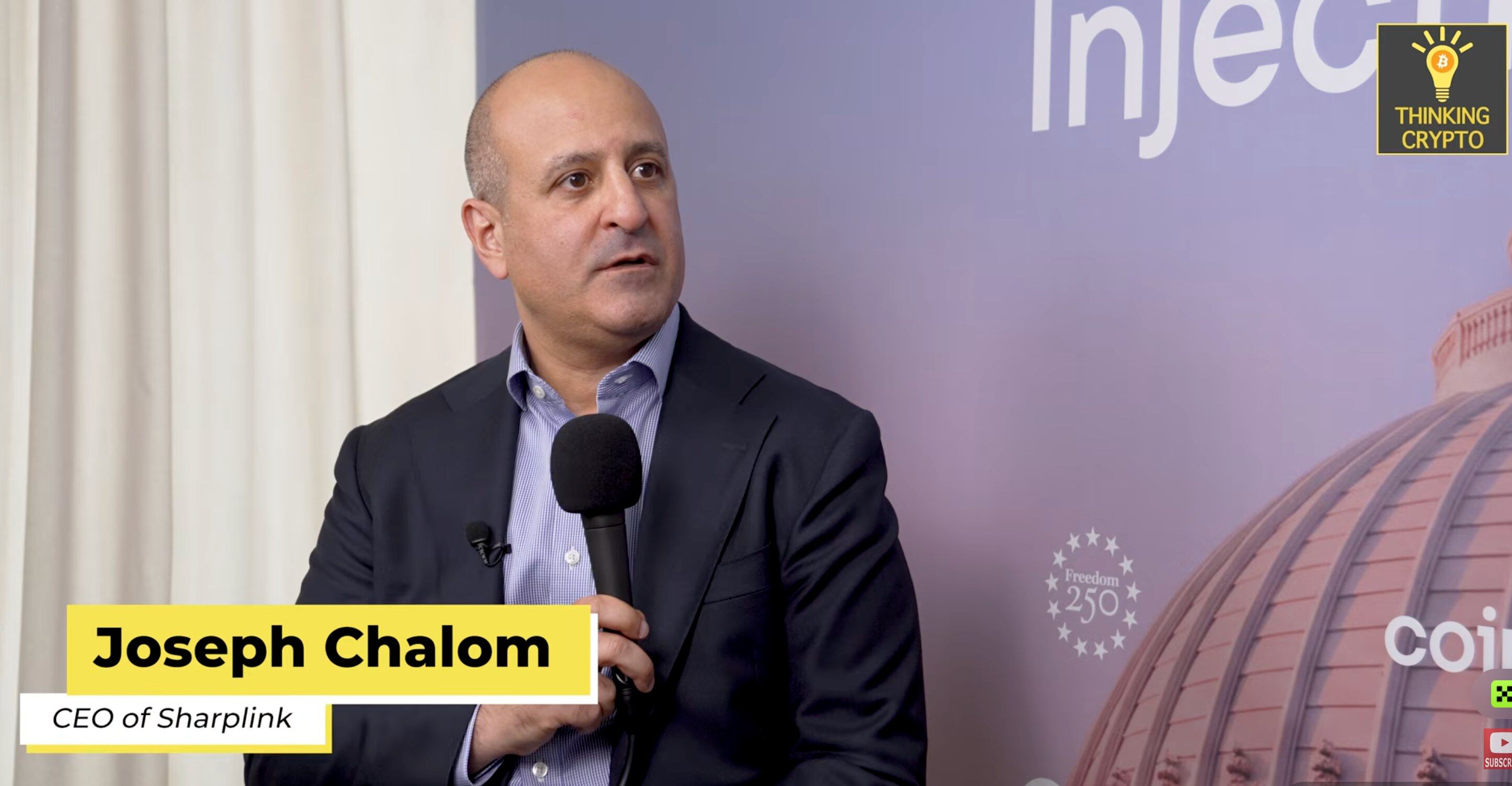
SharpLink co-CEO Joseph Chalom shares his bullish outlook on Ethereum during the recent "Injective Summit 2026." Despite prevailing negative market sentiment, Chalom argues that fundamentals and data tell a different story: Ethereum dominates with over 50% of stablecoin transaction volume, nearly 60% of tokenized real-world assets (RWA), and remains the uncontested leader in DeFi. He attributes the communication gap and lack of confidence partly to the Ethereum Foundation's restructuring. In response, SharpLink, alongside ConsenSys and Bitmain, is funding three key spin-off teams from the Foundation: ETH Labs (for institutional-scale scalability), Ethereum Institutional (for business development and marketing), and EthSystems (for next-gen privacy and compliance solutions). Chalom emphasizes these are critical for accelerating institutional adoption. Regarding SharpLink's strategy, Chalom details a conservative, yield-focused approach. The firm holds 886,725 ETH, acquired with zero leverage or debt. They generate revenue by staking ETH and strategically deploying capital into DeFi protocols via a dedicated fund, aiming for returns above the native staking yield. This contrasts with some Bitcoin-focused firms that have become net sellers. On the broader institutional adoption of tokenization, Chalom sees current progress as just the beginning. He breaks it down into layers: stablecoins as the currency/value layer, tokenized assets as the exposure layer, and DeFi as the execution layer. He predicts regulatory clarity, like the potential Clarity Act, will be a major catalyst. A key future inflection point will be when fiduciary managers prefer tokenized, 24/7 tradable digital assets over traditional "analog" versions due to their programmability and instant settlement. In conclusion, Chalom positions SharpLink not just as an ETH accumulator and yield generator, but as an active "ecosystem steward," funding essential development and marketing initiatives to support Ethereum's long-term growth, which he believes is directly aligned with shareholder interests.

Odaily星球日报24m ago

SharpLink's Helm: Buying Only, Never Selling, Making ETH Generate Profits Through the Cold Winter

Odaily星球日报24m ago

Trading

Spot

Hot Articles

How to Buy ELON

Welcome to HTX.com! We've made purchasing Dogelon Mars (ELON) simple and convenient. Follow our step-by-step guide to embark on your crypto journey.Step 1: Create Your HTX AccountUse your email or phone number to sign up for a free account on HTX. Experience a hassle-free registration journey and unlock all features.Get My AccountStep 2: Go to Buy Crypto and Choose Your Payment MethodCredit/Debit Card: Use your Visa or Mastercard to buy Dogelon Mars (ELON) instantly.Balance: Use funds from your HTX account balance to trade seamlessly.Third Parties: We've added popular payment methods such as Google Pay and Apple Pay to enhance convenience.P2P: Trade directly with other users on HTX.Over-the-Counter (OTC): We offer tailor-made services and competitive exchange rates for traders.Step 3: Store Your Dogelon Mars (ELON)After purchasing your Dogelon Mars (ELON), store it in your HTX account. Alternatively, you can send it elsewhere via blockchain transfer or use it to trade other cryptocurrencies.Step 4: Trade Dogelon Mars (ELON)Easily trade Dogelon Mars (ELON) on HTX's spot market. Simply access your account, select your trading pair, execute your trades, and monitor in real-time. We offer a user-friendly experience for both beginners and seasoned traders.

3.6k Total ViewsPublished 2024.03.29Updated 2025.03.21

How to Buy ELON

Discussions

Welcome to the HTX Community. Here, you can stay informed about the latest platform developments and gain access to professional market insights. Users' opinions on the price of ELON (ELON) are presented below.

活动图片