BRICS Nations Explore Integration of Central Bank Digital Currencies and Payment Systems, Says RBI Governor

cryptonews.ruPublished on 2026-08-11Last updated on 2026-08-11

Abstract

BRICS nations are exploring plans to integrate their central bank digital currencies (CBDCs) and fast payment systems, aiming to reduce the costs of cross-border money transfers within the bloc, stated Reserve Bank of India (RBI) Governor Sanjay Malhotra. He emphasized that cheaper cross-border payments are a shared priority, but noted discussions are at a very early stage, with various options under consideration. Linking the CBDCs of member countries could enable more direct and simplified payments by eliminating intermediary steps. This mechanism would leverage existing domestic channels to expedite international transfers for consumers and businesses, while also expanding the reach of currencies like the Indian rupee. India is actively pushing for the internationalization of the rupee and promoting the use of local currencies in trade. The RBI has reportedly asked the government to include the topic of linking CBDCs on the agenda for the 2026 BRICS summit, which India will host. Separately, Governor Malhotra also urged Indian financial institutions to catalog their AI models and implement board-approved AI governance policies.

BRICS members are exploring plans to link their Central Bank Digital Currencies (CBDCs) and fast payment systems, which could reduce the cost of transferring money between the bloc's economies, Reserve Bank of India Governor Sanjay Malhotra said on Tuesday.

Malhotra spoke at an event in Mumbai, naming cross-border remittances as a priority the group keeps returning to. However, he cautioned that the talks are at a very early stage. "Various options are being looked at, but they are still at a discussion stage, including central bank digital currencies (CBDCs) and integration of fast payment systems," he said.

The governor stated the reason for this focus is cost savings: "Cross-border payments are of interest to all of us, including the BRICS nations, because we feel there is great scope to reduce costs here."

Why Linking BRICS Nations' CBDCs Could Reduce Costs

Central Bank Digital Currencies (CBDCs) are digital forms of countries' official currencies, issued directly by their central banks. Creating a channel between these currencies would allow payments to be made in a more direct and simpler way between countries. This would remove the intermediaries money typically passes through and lower the cost of each transfer.

A payment mechanism using linked CBDCs would function differently, but its goal is to speed up the transfer of money abroad for consumers and businesses through already existing domestic channels. These channels would also expand the reach of the Indian rupee.

India Aims for Rupee Internationalization

RBI Governor Malhotra said the central bank will continue to work on internationalizing the rupee and promoting local currencies for trade and payments across borders. India is hosting the BRICS summit this year, an annual event bringing together the five countries: Brazil, Russia, India, China, and South Africa.

Earlier, the Reserve Bank of India had asked the Indian government to include a proposal on linking Central Bank Digital Currencies (CBDCs) on the summit's agenda in early 2026. The country's drive to internationalize its currency is one of the main reasons for pushing forward with efforts to link CBDCs within BRICS.

The governor also spoke at the event about Indian banks and financial institutions and their use of artificial intelligence. He urged them to catalog all AI models already operating in their institutions and to adopt an AI governance policy approved by their boards.

Trending Cryptos

Related Questions

QWhat initiative are BRICS countries studying according to the governor of the Reserve Bank of India?

ABRICS countries are studying plans to link their Central Bank Digital Currencies (CBDCs) and fast payment systems.

QWhat is one of the main goals mentioned for linking BRICS CBDCs and payment systems?

AThe main goal is to reduce the cost of cross-border money transfers between the economies of the bloc.

QAccording to Governor Sanjay Malhotra, what is the current stage of negotiations on linking CBDCs?

AThe negotiations are at a very early stage and various options are still under discussion.

QHow could a mechanism using linked Central Bank Digital Currencies potentially work for cross-border payments?

AIt would allow payments to be made in a more direct and simple way between countries, using already established domestic channels, potentially eliminating intermediaries and speeding up transfers.

QWhat is one of India's key motivations for pursuing the linking of CBDCs within BRICS?

AA key motivation for India is the internationalization of the Indian rupee and promoting local currencies for cross-border trade and payments.

Related Reads

OpenClaw Founder Peter Steinberg's Latest Speech: The Life and Death Revelation of an Open Source Project, How OpenClaw Emerged from the Eye of the Storm

Peter Steinberg, founder of the wildly popular open-source AI agent project OpenClaw, reflects on its turbulent journey from creation to near-collapse and resurgence. It began in late 2024 from his personal frustration with sending prompts from phone to computer. He built a WhatsApp relay that felt "magical," but initial excitement was limited to friends. After adding Discord support and launching a public server, the project exploded virally overnight, attracting massive attention, rebranding requests (from "Claudis" to OpenClaw), and even praise from NVIDIA's CEO. The intense scrutiny and pressure nearly broke Steinberg. The biggest technical crisis came from over-optimizing for a specific AI model provider, which suddenly canceled subscriptions, forcing a rushed shift to open-weight models. OpenClaw's weekly downloads plummeted before surging to a record high after being "declared dead." Steinberg realized he had stopped enjoying the build process and using his own product, making it a duty rather than a passion. His key lesson: "Fun is speed." Recovery came by refocusing on building for himself, forming a non-profit, and receiving crucial support (e.g., from NVIDIA for security). The team is now using OpenClaw to build OpenClaw itself, emphasizing its core value: a private, open alternative where "your agent, your machine, your life." He shares insights: the first user should be yourself; balance bug fixes with new features to maintain interest; the current bottleneck is reliable toolchains, especially for Mac testing. His story underscores that creation thrives on personal need, endures through storms when the joy of building returns, and persists by "living in the future and building what's missing."

marsbit14m ago

OpenClaw Founder Peter Steinberg's Latest Speech: The Life and Death Revelation of an Open Source Project, How OpenClaw Emerged from the Eye of the Storm

marsbit14m ago

US Stocks and Gold Rise Together, Bitcoin Rebound Absent, Have Bottom Signals Appeared?

While traditional assets like U.S. stocks and gold have rebounded strongly, Bitcoin continues to consolidate without following the uptrend. Since hitting an all-time high near $126,000 in October last year, Bitcoin has remained in a corrective phase, trading between $62,000 and $66,000 over the past month. Although U.S. spot Bitcoin ETFs have seen renewed net inflows recently—with the past week marking the best performance since mid-April—this buying pressure has been insufficient to counter persistent selling from miners and crypto companies. For instance, miner-linked wallets have seen their BTC balance drop by about 72% since late 2021. Some long-term indicators are showing early signs of a potential bottom. Metrics such as Reserve Risk, BTC price relative to its 2-year moving average, and the AHR999 index have entered historically oversold territory, suggesting improved long-term value. However, key indicators like MVRV Ratio, NUPL, and the Fear & Greed Index have not yet reached the extreme levels typically seen at major cycle lows. Furthermore, over 53% of Bitcoin supply remains in profit, and stablecoin liquidity is still contracting, indicating the market may need more time for a full capitulation phase. In summary, while select bottom signals are emerging, Bitcoin lacks the broad-based confirmation needed to declare a definitive cycle low. A sustained recovery will likely depend on continued ETF inflows, a reduction in structural selling pressure, and further deterioration in key on-chain metrics toward historical extremes.

marsbit15m ago

US Stocks and Gold Rise Together, Bitcoin Rebound Absent, Have Bottom Signals Appeared?

marsbit15m ago

After Yushu Got Hot, a 68-Year-Old Auto Parts Boss Bet 1.85 Billion

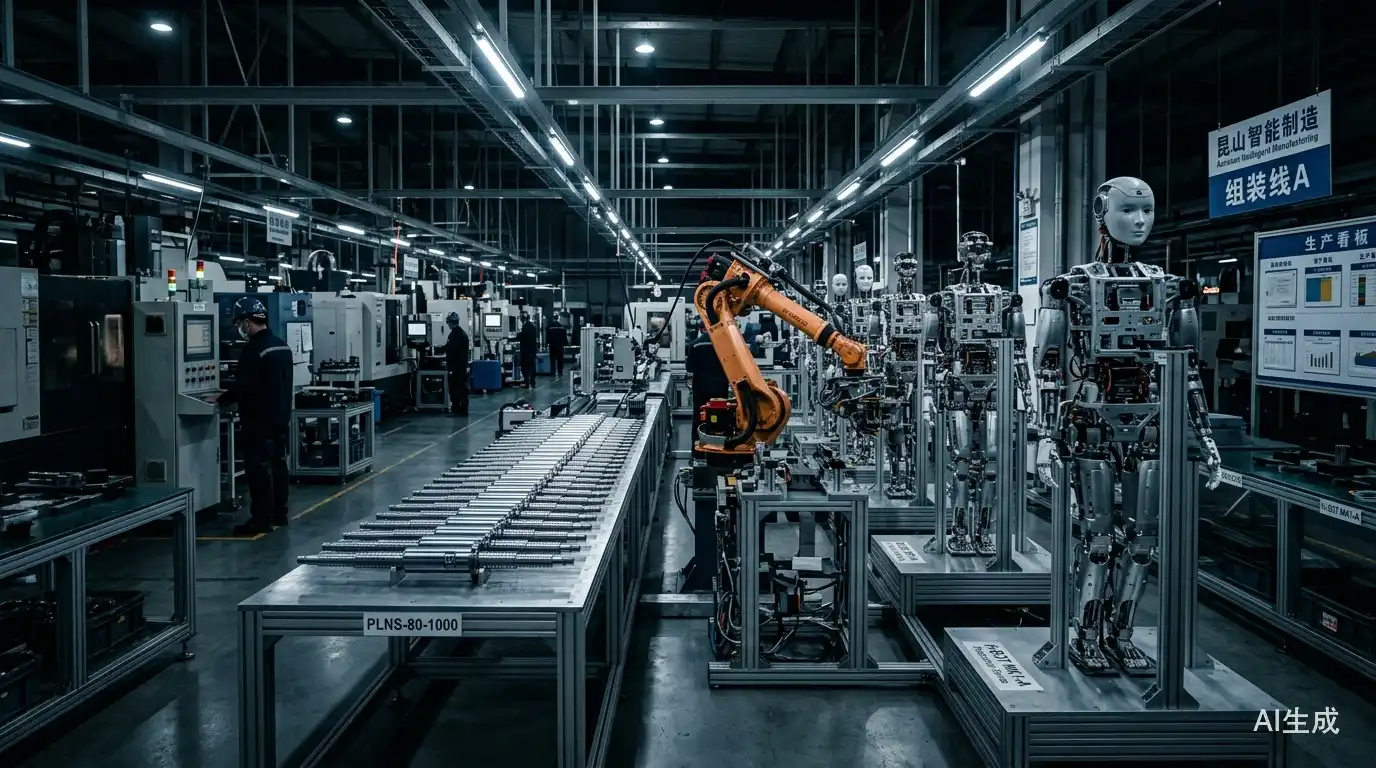
After staying relatively low-profile for years, Shanghai Bate Technology, a traditional auto parts supplier, has recently been thrust into the spotlight as a leading humanoid robotics concept stock. This shift is largely tied to the impending IPO of robotics company Unitree, with which Bate collaborates on prototype development. Bate's founder, 68-year-old Jin Kun, is making a bold bet on this new frontier. The company is investing 1.85 billion yuan to build a major R&D and production base in Kunshan for planetary roller screws—a key component in robot joints. With an annual capacity of 2.6 million sets planned, plus overseas expansion, this represents a massive, forward-looking commitment from a firm whose 2025 revenue of 2.3 billion yuan still relies almost entirely on its traditional automotive business (over 98%). The investment highlights a strategic pivot. Bate aims to leverage decades of expertise in metal processing, precision manufacturing, and heat treatment from the automotive sector and apply it to the burgeoning robotics industry. However, this move carries significant risk. The company has not yet secured formal supplier contracts or begun mass deliveries for its roller screws. It is essentially betting on future demand in a market that remains nascent. The broader industry context adds to the uncertainty. While multiple Chinese manufacturers are racing to invest in similar robotics component capacity (totaling over 6 billion yuan), the downstream humanoid robot market is still in its early stages. Estimates put 2025 global shipments at only around 18,000 units, primarily for entertainment, education, and data collection rather than large-scale industrial use. This creates a critical mismatch: the speed of upstream component factory construction and capital investment is far outpacing the commercialization and adoption of the robots themselves. Bate's story, driven by Jin Kun's decisive gamble, encapsulates the high-stakes transition facing traditional manufacturers seeking a "second growth curve" in robotics—a future full of potential but currently backed more by market anticipation than concrete financial results.

marsbit19m ago

After Yushu Got Hot, a 68-Year-Old Auto Parts Boss Bet 1.85 Billion

marsbit19m ago

EIP-8363 Explained: Burning Staking Rewards to Save Ethereum? Independent Node Operators Might Be the First to Leave

Analysis of EIP-8363: A Proposal to Burn Staking Rewards and its Potential Impacts on Ethereum A new Ethereum Improvement Proposal, EIP-8363, has sparked significant debate. Its core mechanism is to progressively burn validator consensus rewards, aiming to reduce the issuance rate to 0% once 50% of the total ETH supply is staked. Proponents argue this would cap the staked ETH ratio, enhancing credible neutrality and censorship resistance by discouraging excessive centralization among large staking operators and liquid staking token (LST) providers. However, a critical analysis suggests the proposal may create more problems than it solves. While it compresses the ETH staking range where profitability turns negative (from 70-100 million ETH down to 50-60 million ETH), it does not fundamentally alter the competitive disadvantage of independent stakers. Due to economies of scale, large operators would still retain advantages in costs and MEV opportunities. Independent stakers are predicted to be the first to face negative real returns under the new curve. The economic repercussions could be severe. A sharp decline in base staking yield would disrupt DeFi ecosystems built around this yield, potentially reversing incentives for borrowing ETH and triggering large-scale unwinding of leveraged staking strategies. This could lead to significant selling pressure on ETH as professional staking operations become unprofitable and exit. The proposal is criticized for being based on uncertain future market equilibriums and for potentially imposing costs that outweigh its stated benefits, without fully addressing the underlying issues of centralization it aims to solve.

marsbit20m ago

EIP-8363 Explained: Burning Staking Rewards to Save Ethereum? Independent Node Operators Might Be the First to Leave

marsbit20m ago

Trading

Spot

Hot Articles

What is $BANK

Bank AI: A Revolutionary Step in the Future of Banking Introduction In an era marked by rapid advancements in technology, Bank AI stands at the intersection of artificial intelligence (AI) and banking services. This innovative project seeks to redefine the financial landscape, enhancing operational efficiency, security measures, and customer experiences through the power of AI. As we embark on this exploration of Bank AI, we will delve into what the project entails, its operational dynamics, its historical context, and significant milestones. What is Bank AI? At its core, Bank AI represents a transformative initiative aimed at integrating artificial intelligence into various banking operations. This project harnesses the capabilities of AI to automate processes, improve risk management protocols, and enhance customer interaction through personalised services. The primary objectives of Bank AI include: Automation of Banking Functions: By leveraging AI technologies, Bank AI aims to automate routine tasks, reducing the burden on human resources and enhancing efficiency. Enhanced Risk Management: The project utilises AI algorithms to predict and identify risks, thereby fortifying security measures against fraud and other threats. Personalisation of Banking Services: Bank AI focuses on offering tailored financial products and services by analysing customer data and behaviours. Improving Customer Experience: The implementation of AI-driven solutions, such as chatbots and virtual assistants, aims to provide users with more human-like interactions, revolutionising the way customers engage with banks. With these goals, Bank AI positions itself as a crucial player in rendering banking more efficient, secure, and user-centric. Who is the Creator of Bank AI? Details regarding the creator of Bank AI remain unknown. As such, no specific individual or organisation has been identified in the available information. The anonymity surrounding the project's inception raises questions but does not detract from its ambitious vision and objectives. Who are the Investors of Bank AI? Similar to the project's creator, specific information regarding the investors or supporting organisations of Bank AI has not been disclosed. Without this information, it is challenging to outline the financial backing and institutional support that might be propelling the project forward. Nevertheless, the importance of having a robust investment foundation is pivotal for sustaining development in such an innovative field. How Does Bank AI Work? Bank AI operates on several innovative fronts, focusing on unique factors that differentiate it from traditional banking frameworks. Below are key operational features: Automation: By applying machine learning algorithms, Bank AI automates various manual processes within banks. This results in reduced operational costs and allows human workers to redirect their efforts towards more strategic activities. Advanced Risk Management: The integration of AI into risk management practices equips banks with tools to accurately predict potential threats such as fraud, ensuring that customer information and assets remain secure. Tailored Financial Recommendations: Through continuous learning from customer interactions, the AI systems develop a nuanced understanding of user needs, enabling them to offer tailored advice on financial decisions. Enhanced Customer Interactions: Utilizing chatbots and virtual assistants powered by AI, Bank AI enables a more engaging customer experience, allowing users to have their queries resolved quickly, thus reducing wait times and improving satisfaction levels. Together, these operational features position Bank AI as a pioneer in the banking sector, establishing new benchmarks for service delivery and operational excellence. Timeline of Bank AI Understanding the trajectory of Bank AI requires a look at its historical context. Below is a timeline highlighting important milestones and developments: Early 2010s: The conceptualisation of AI integration into banking services began to gain attention as banking institutions recognised the potential benefits. 2018: A marked increase in the implementation of AI technologies occurred when banks started using AI tools like chatbots for basic customer service and risk management systems for improved security handling. 2023: The sophistication of AI continued to advance, with generative AI being introduced for more complex tasks such as document processing and real-time investment analysis. This year marked a significant leap in the capabilities afforded to banks by AI technology. 2024-Current Status: As of this year, Bank AI is on an upward trajectory, with ongoing research and developments poised to further enhance capabilities in banking operations. Continued exploration of AI applications hints at exciting developments yet to come. Key Points About Bank AI Integration of AI in Banking: Bank AI focuses on adopting artificial intelligence to streamline banking processes and improve user experiences. Automation and Risk Management Focus: The project strongly emphasises these areas, aiming to shift the burden of routine tasks while enhancing security frameworks through predictive analytics. Personalised Banking Solutions: By harnessing customer data, Bank AI enables tailored banking services that cater to individual user needs. Commitment to Development: Bank AI remains committed to ongoing research and development efforts, ensuring its adaptability and ongoing relevance as technology continues to evolve. Conclusion In summary, Bank AI exemplifies a crucial step forward in the banking industry, leveraging artificial intelligence to reshape operational paradigms, enhance security, and promote customer satisfaction. Despite gaps in information surrounding the creator and investors, the clear objectives and functional mechanisms of Bank AI provide a strong foundation for its ongoing evolution. As AI technology continues to advance and merge with the banking sector, Bank AI is well-positioned to significantly impact the future of financial services, enhancing the way we understand and interact with banking.

347 Total ViewsPublished 2024.04.06Updated 2024.12.03

What is $BANK

Discussions

Welcome to the HTX Community. Here, you can stay informed about the latest platform developments and gain access to professional market insights. Users' opinions on the price of BANK (BANK) are presented below.

活动图片