Revolving Door Deal Exposed: Who Tailored the U.S. Stablecoin Bill for Tether?

Foresight NewsPublished on 2026-07-27Last updated on 2026-07-27

Abstract

"Revolving Door' Dealings Exposed: How Tether Shaped US Stablecoin Legislation This investigation reveals how former Trump advisors Howard Lutnick and Bo Hines secured favorable terms for Tether, the world's largest stablecoin issuer, within the 'GENIUS Act'—a landmark US crypto regulation bill. Lutnick, then CEO of Cantor Fitzgerald (Tether's asset manager), lobbied against stricter bills before becoming Commerce Secretary. Bo Hines, a White House aide, later pressured lawmakers during final negotiations, framing Tether's demands as 'red lines' for the administration. Both men received substantial financial benefits from Tether: Lutnick's firm secured deeply discounted rights to Tether equity, while Hines was hired as a Tether executive weeks after the bill was signed. The final legislation includes provisions critics call 'loopholes,' allowing foreign issuers like Tether to potentially operate under 'equivalent' foreign oversight (e.g., from El Salvador) and granting a three-year compliance grace period. Despite Tether's USDT being widely used by sanctioned entities and criminals, the new rules may permanently shield its core product from direct US jurisdiction. Tether denies any improper lobbying, stating the law applies uniformly to all issuers."


Authors: Anthony Cormier, David Kocieniewski, Annie Massa, Bloomberg

Compiled by: Saoirse, Foresight News


This event is seen as a landmark in the crypto industry and represents the first legislative achievement in Trump's agenda to position the United States as the 'global crypto capital.'


A year ago in the same month, Trump signed the formal legislation of the GENIUS Act into law in the White House East Room, witnessed by a group of congressmen and industry executives. He called the bill a crucial step in integrating digital assets into the mainstream U.S. financial system.


The bill established the first federal regulatory framework for stablecoins, aiming to restore market confidence in this $300 billion sector. It requires issuers to disclose accounts and prevent financial fraud. It also plans to bring stablecoin issuers under U.S. regulatory jurisdiction regardless of their registration location, addressing a long-standing industry pain point: criminals, terrorist organizations, and sanctioned entities persistently using stablecoins to move funds.


However, extensive interview records and court documents reveal the inside story of the negotiations: in the months before and after Trump's inauguration, his advisors Howard Lutnick and Bo Hines worked behind the scenes to weaken regulatory constraints. The final version of the bill tilted in favor of Tether, the world's largest stablecoin issuer. Multiple sources involved in the consultations stated that among Trump's advisors, Lutnick and Hines had a decisive influence on the legislative direction, and the final bill incorporated several provisions beneficial to Tether. Dozens of industry executives, lobbyists, and current and former U.S. officials who provided information for this report requested anonymity as they were not authorized to disclose negotiation details.
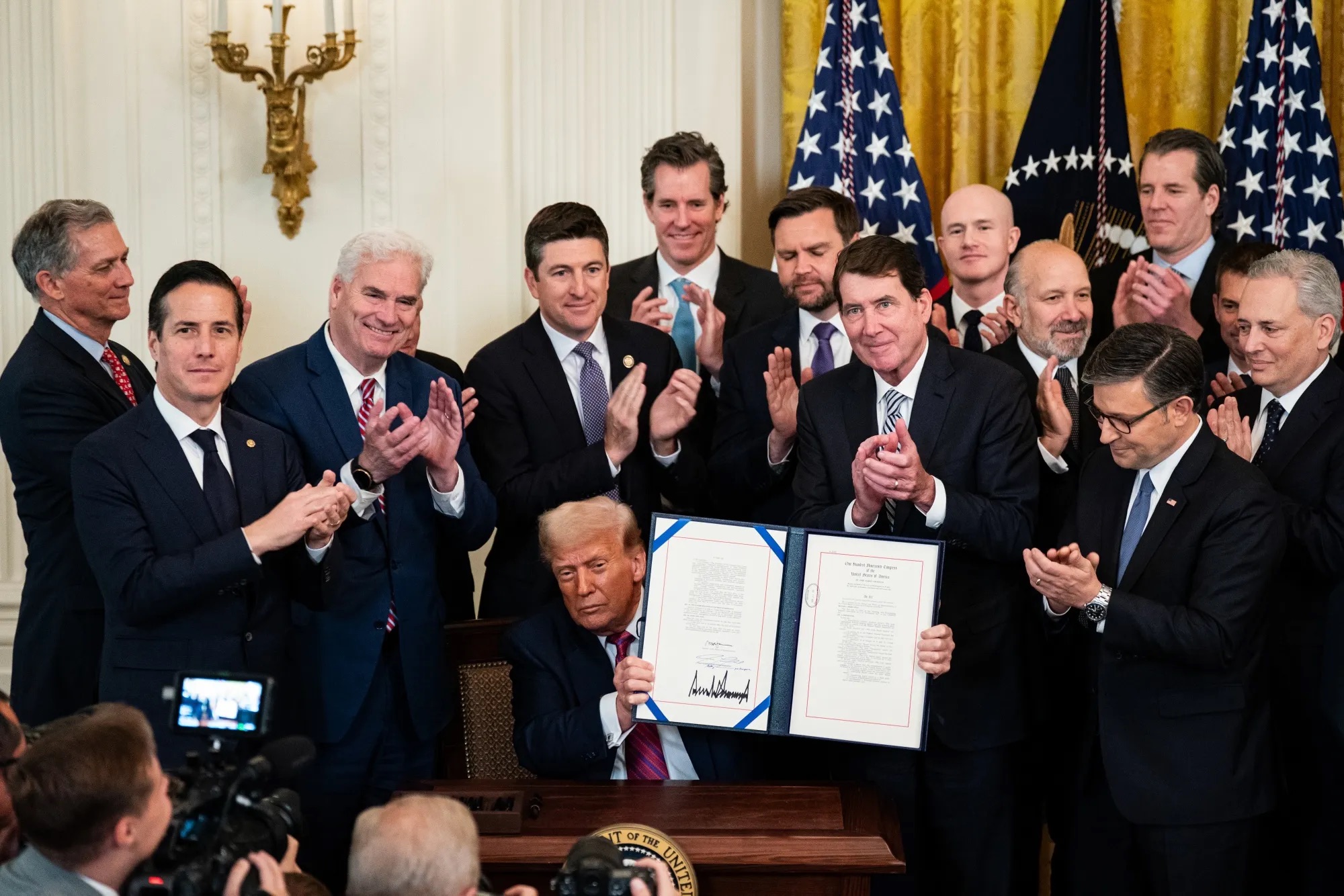

July 18, 2025: Trump signs the GENIUS Act at the White House. He called the bill a "major advance in solidifying America's dominance in global finance and crypto technology." Photo: Al Drago/Bloomberg


Before becoming Trump's Commerce Secretary, Howard Lutnick was the Chairman and CEO of the Wall Street investment bank Cantor Fitzgerald, which is entrusted with managing Tether's reserve assets. Congressional lobbying records, federal court filings, and a source familiar with the matter confirm: throughout 2024, Lutnick acted as Tether's crisis management lead, quelling various negative publicity and lobbying lawmakers to resist bills not endorsed by Tether.


After Trump took office, Bo Hines was responsible for the final stage of legislative maneuvering. The 29-year-old White House aide is a North Carolina-based entrepreneur and crypto investor who ran as a Republican in the 2022 and 2024 congressional elections but lost both. He called himself the "tough enforcer" for the White House on this bill. Three sources revealed that as negotiations neared conclusion, Hines conveyed externally that the provisions Tether sought to implement were non-negotiable "red lines" for the White House.


This report traces the complete legislative process, exposing previously undisclosed operations: first Howard Lutnick, then Bo Hines, brokered deals to secure favorable rules for Tether, which holds about 60% of the global stablecoin market share. The report also clearly shows how policy-making in this administration is deeply intertwined with the personal financial interests of officials. Both Hines and Lutnick received substantial benefits from Tether.


Starting in 2024 and continuing until shortly after the GENIUS Act's passage, over 18 months, Tether executives completed a series of business moves:


  • April 2024: Granted a call option for company shares worth tens of billions of dollars to Howard Lutnick's financial institution for a transaction price of just $600 million. Tether's Chairman reportedly told partners the price was "ridiculously low."
  • December 2024: Invested $775 million in the persistently loss-making Rumble Inc. This streaming media company collaborates with the company operating Trump's Truth Social platform, and several Trump allies are among its investors.
  • August 2025: Hired Bo Hines as an executive, just one month after the bill was signed.
  • October 2025: Provided a loan to a trust whose beneficiaries are Howard Lutnick's children, who were acquiring their father's multi-billion dollar business assets at the time.


Under the federal ethics agreement all cabinet officials must sign, Howard Lutnick had pledged to divest his Cantor Fitzgerald holdings and recuse himself from all matters involving conflicts of interest. A U.S. Department of Commerce spokesperson did not respond to the details of this article, stating only that Lutnick complied with ethics commitments, divested all assets including those related to Tether, and "was not involved in any work on the stablecoin-related provisions of the GENIUS Act."


Bo Hines did not respond to interview requests, and the White House also declined to comment.


Tether issued an official statement vehemently denying any improper conduct regarding its lobbying activities with policymakers on stablecoin legislation. The company stated it has long legally and transparently communicated with regulators, lawmakers, and law enforcement, a practice common among many market participants. Tether also emphasized that the GENIUS Act contains no special favors for Tether, and the new rules will uniformly apply to all stablecoin issuers wishing to operate under its framework.


The bill triggered intensive lobbying across the financial industry, with crypto exchanges, credit card companies, and community banks all participating. But Tether is undoubtedly the absolute industry leader; its closest competitor is only half its size, giving Tether the highest stakes during the 2025 bill negotiations.


Since the law took effect, El Salvador-registered Tether has continued to expand. The company launched a new compliant token for the U.S. market, but its core product remains the world's most widely circulated stablecoin. Multiple industry research firms and government data show: USDT has long been used by terrorists, North Korean hackers, and sanctioned entities from Iran and Russia. According to the GENIUS Act provisions, this core USDT token may permanently escape direct jurisdiction by U.S. regulators.


The final version of the GENIUS Act contained several provisions favoring Tether, significantly different from earlier stablecoin regulatory drafts by members of Congress. Stablecoins combine convenience and pseudonymity: blockchain wallet addresses are permanently public but cannot directly trace to a user's real identity.


Trump's Core Aides Influencing Crypto Legislation


As early as 2023-2024, bipartisan lawmakers drafted bills with stringent requirements: foreign stablecoin firms (like Tether) wishing to operate in the U.S. must accept U.S. regulatory oversight and implement a full set of anti-money laundering rules.


The GENIUS Act significantly relaxed these constraints. A clause criticized as the "regulatory equivalence loophole" states: as long as the U.S. Treasury Secretary determines that El Salvador's regulatory standards are roughly equivalent to those of the U.S., Tether's USDT can be supervised by El Salvador, a country Tether plans to move its headquarters to. Implementation rules for this equivalence determination are still being drafted.


Another adjustment narrows the liability boundary for stablecoin issuers, known in the industry as the "DeFi loophole": issuers are not required to track token misuse in secondary decentralized finance (DeFi) markets. Users can bypass banks and exchanges, trading peer-to-peer directly on the blockchain without verifying identity or stating the purpose of funds.


The bill also provides a three-year compliance grace period: stablecoin issuers entering the U.S. market are not forced to meet all compliance requirements for three years. During legislative negotiations, some Democratic lawmakers proposed shortening the grace period to 18 months. Sources said Tether insisted on keeping the three-year term, with Bo Hines stepping in at a critical moment to forcefully secure it.


During negotiations, Bo Hines conveyed to various parties that Tether was significant to the White House and Republicans should hold their ground. Three sources relayed that Hines explicitly stated that preserving the three-year transition period was a non-negotiable red line.


Bo Hines, appointed by Trump as Executive Director of the Presidential Digital Assets Advisory Council, led the charge to push the GENIUS Act through Congress. Photo: Tierney L. Cross/Bloomberg


Many financial experts warn that these clauses will weaken the U.S.'s ability to combat money laundering by criminals and sanctioned entities, while also hindering Trump's goal of establishing global leadership in digital currency.


Timothy Massad, former Assistant Secretary of the Treasury under the Obama administration, expressed concerns: regulatory loopholes could create unfair competition. U.S.-based crypto firms face high compliance costs, while foreign issuers could evade stringent anti-money laundering rules, potentially damaging the U.S. dollar's status as the global reserve currency. Timothy Massad also served as Chairman of the U.S. Commodity Futures Trading Commission from 2014–2017.


"If we want the dollar to remain the world's core reserve currency, we cannot allow terrorists, sanctioned individuals, and criminals to anonymously move dollar funds," Timothy Massad said.


Any currency carries the risk of illicit use. However, since launching USDT in 2014, Tether has faced persistent skepticism that its user due diligence is insufficient. Tether previously argued that being based overseas protected it from what it called U.S. "over-regulation." But its stance later shifted: In December 2023, Tether implemented rules to proactively freeze wallet addresses associated with individuals and entities on the U.S. Treasury Department's sanctions list.


Investigative bodies have continuously gathered evidence showing USDT being used for Mexican fentanyl smuggling and aiding Russian sanctions evasion. A January 2024 United Nations report noted that Southeast Asian crypto money laundering groups primarily use USDT. Two sources revealed that in 2024, the Biden administration's National Security Council even discussed completely banning Tether tokens from the U.S. market.


Ultimately, that plan was shelved, with law enforcement agencies reasoning that they could still track USDT-related illicit funds through on-chain transactions. In the long term, federal law enforcement also acknowledged that Tether's willingness to cooperate in freezing assets involved in cases had improved.


A Tether spokesperson responded to the interview: "The company has built one of the most effective law enforcement collaboration mechanisms in the global financial sector." The company stated its commitment to combating financial crime and that the GENIUS Act would further strengthen this work.


Nevertheless, throughout the bill negotiations and after its passage, USDT remains frequently used by illicit groups.


Data from blockchain analytics firm Elliptic shows: In 2025, the sanctioned Central Bank of Iran purchased $507 million worth of USDT. In July of the same year, the month Trump signed the bill, Elliptic detected nearly $2.5 billion in USDT flowing into wallets of several Russia-linked companies; the U.S. Treasury Department identified these companies as building cross-border channels to help parties evade sanctions.


This year alone, over $4 billion worth of USDT has circulated in black markets operated by Chinese fraud rings for crimes like pig butchering scams, impersonation fraud, and sextortion, also according to Elliptic.


Court records show: Since July 2025, federal prosecutors nationwide have filed dozens of lawsuits seeking seizure of USDT involved in cases, totaling at least $172 million.


Tether's circulating supply is more than double that of its top competitor, Circle Internet Group Inc., but it employs less than half the staff, outsourcing much of its suspicious transaction analysis to third parties. Tether declined to disclose the size of its compliance team but stated: "We continuously collaborate with over 340 law enforcement agencies across 67 jurisdictions globally to identify, freeze, and assist in recovering assets linked to illegal activities."


A company spokesperson said: "This is not just compliance on paper, but practical, quantifiable collaboration that most traditional financial institutions struggle to match."


Howard Lutnick's Lobbying Strategy


Cantor Fitzgerald has been entrusted with managing Tether's reserve assets since 2021, a time when the investment banker had already known Trump for decades. Trump had just finished his first presidential term and was preparing to return to the White House. Tether was highly profitable but its market reputation was controversial. In 2024, Howard Lutnick campaigned for both Trump's election and Tether.


Independent audits are crucial for investors to trust that tokens are fully backed by reserves, but Tether has never released a complete, independent reserve audit report. In 2021, Tether and its affiliated exchange paid $61 million to settle charges brought by federal regulators and New York state, who alleged Tether misrepresented its reserves and misled investors; Tether did not admit wrongdoing in the settlement. Under the GENIUS Act, stablecoin issuers must provide annual audit reports; Tether announced this year it hired an auditor but hasn't disclosed a timeline for releasing a full audit report.
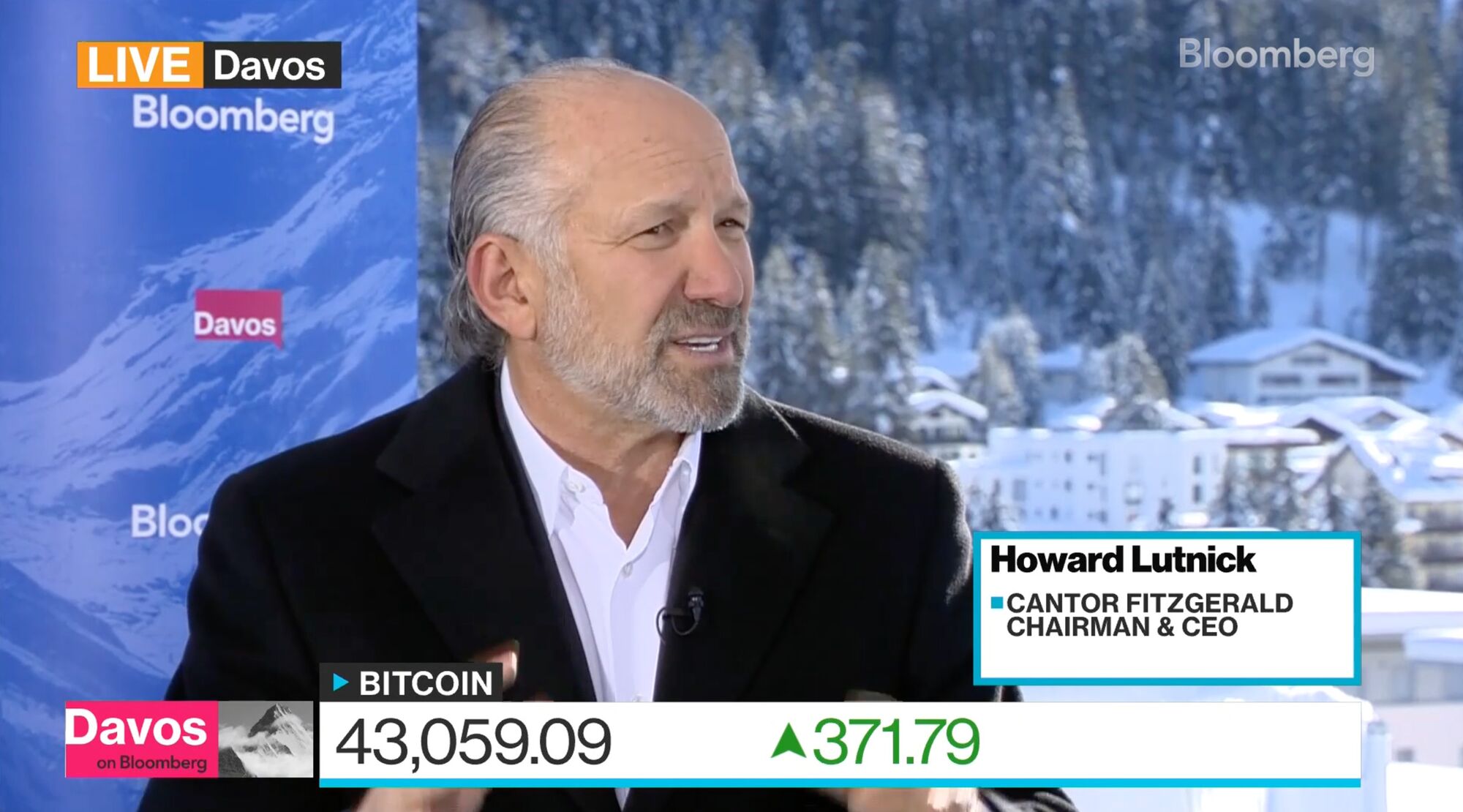

Howard Lutnick (then Chairman and CEO of Cantor Fitzgerald) attends the World Economic Forum in Davos, Switzerland, January 2024. Source: Bloomberg


When market skepticism about Tether's reserves persisted, Howard Lutnick publicly stepped up to defend it. In January 2024, he went to the Davos forum and stated on a Bloomberg TV broadcast: "They have the reserves they say they have."


The following month, Howard Lutnick visited El Salvador, meeting with Tether Chairman Giancarlo Devasini and the country's president, Nayib Bukele, a strong supporter of the crypto industry who calls himself the "world's coolest dictator." Tether later announced plans to move its headquarters to the capital, San Salvador.


In April 2024, Cantor Fitzgerald invested $600 million in convertible bonds, obtaining a call option for a 5% equity stake in Tether. This transaction wasn't publicly disclosed until November of that year, after Trump won the election. Based on Tether's own financial reports, the deal was heavily discounted: Tether's net profit in 2024 was approximately $13 billion. Using valuation logic from listed financial institutions, the company's valuation would be at least $130 billion. By this estimate, the paper value of the equity corresponding to Cantor's investment exceeded $6 billion.


Bitcoin entrepreneur Cory Klippsten, who met with Tether executives and Howard Lutnick in 2024, relayed that Tether Chairman Giancarlo Devasini described the deal as "ridiculously cheap."


Cory Klippsten had a business collaboration with Tether that later fell apart, leading to litigation. Klippsten alleges in court filings that Tether executives poached employees, stole program code and trade secrets, and tore up cooperation agreements; Tether countersued, alleging Klippsten improperly used Tether's investment as collateral for other trades. During the lawsuit, Klippsten sought to subpoena Howard Lutnick and obtain documents regarding Cantor Fitzgerald's dealings with Tether. Lutnick's lawyers argued in court that the Commerce Secretary was unrelated to the dispute and the subpoena was merely to "harass and embarrass Lutnick."


In March court filings, Cory Klippsten stated he kept complete records of his conversations with Giancarlo Devasini, including the excerpt "the price is ridiculously cheap." The filing argued that Cantor's convertible bond was essentially hidden compensation for Lutnick acting as Tether's representative in Washington and media circles.


The Aborted Early Regulatory Bills


Members of Congress have long been wary of Tether. In late 2023, Wyoming Republican Senator Cynthia Lummis co-signed a public letter urging the Department of Justice to investigate whether Tether provided substantial financial support to terrorist organizations like Hamas during the October 2023 attack on Israel. In April 2024, Cynthia Lummis, along with New York Democratic Senator Kirsten Gillibrand, introduced a bill requiring all stablecoin issuers operating in the U.S. to comply with U.S. anti-money laundering rules and disclosure obligations.


Cynthia Lummis stated clearly at the time: If Tether wants to enter the U.S. market, it must follow U.S. regulations. After the bill's introduction, she told CoinDesk: "If Tether chooses to remain overseas and is willing to accept other regulatory oversight, that's a business decision. But if it wants U.S. market recognition, we want it to complete U.S. compliance."


In July of the same year, at the Nashville Bitcoin Conference, Howard Lutnick again publicly defended Tether. Trump also delivered a keynote speech at the event. Lutnick said emotionally: "We would never work with any company involved in jihadist terrorism. I am disgusted by it." He reminded the audience that in the 2001 World Trade Center attack, over 650 Cantor Fitzgerald employees were killed, including his brother.
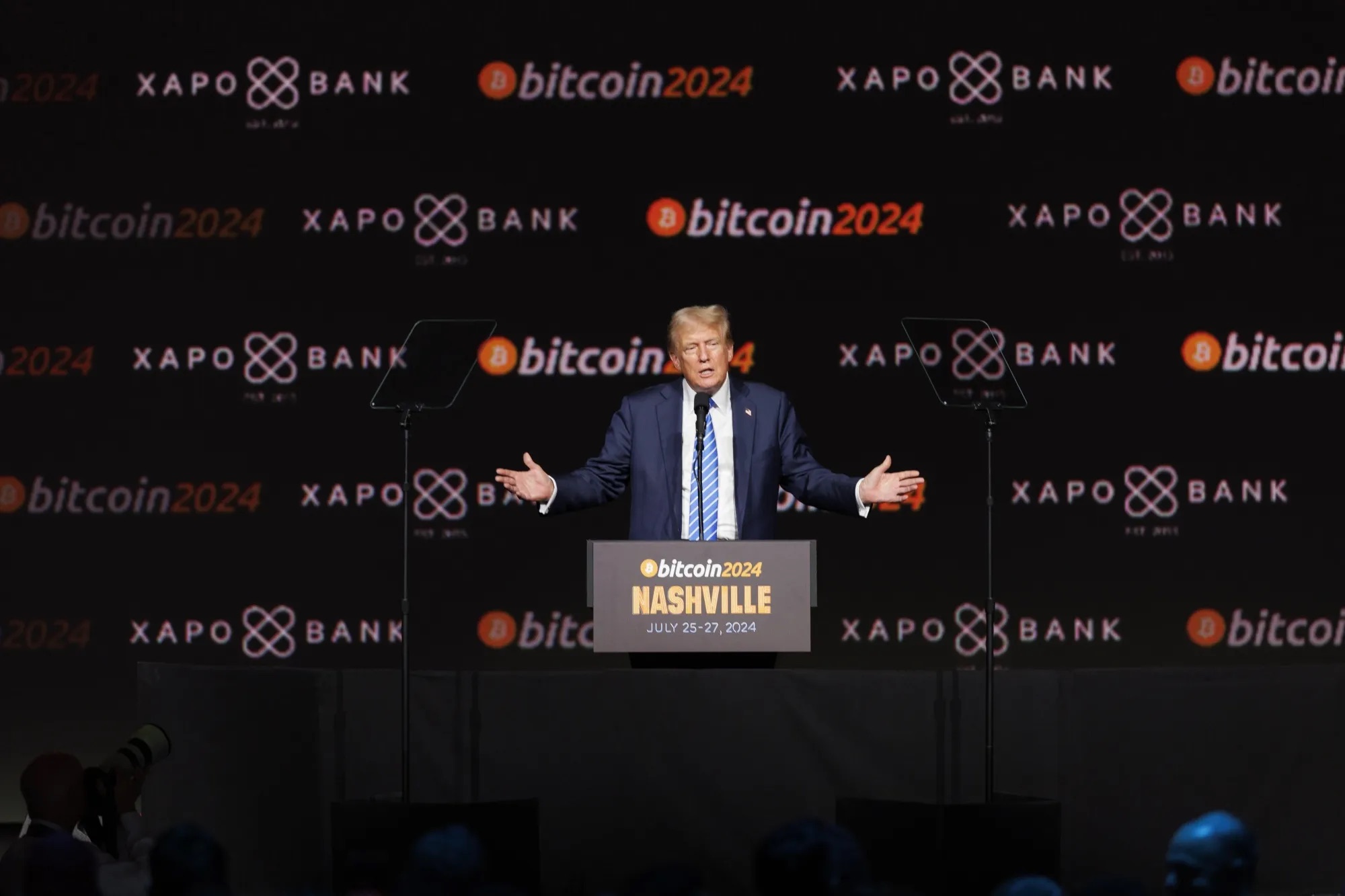

July 2024: Trump speaks at the Bitcoin Conference in Nashville, Tennessee. Photo: Brett Carlsen/Bloomberg


After this speech, Trump, who had shifted from a crypto skeptic to a supporter, invited Howard Lutnick onto his campaign plane, appointing him co-chair of the presidential transition committee. The group flew to Minnesota, where Lutnick gave a warm-up speech, followed by Ohio Senator JD Vance (a known crypto supporter).


According to Cory Klippsten's notes, Trump's rising poll numbers significantly boosted Tether executives' confidence. "They saw a new opportunity to fly to New York, go on CNBC. That's the platform Trump could bring."


In 2024, Howard Lutnick went to Washington. Lobbyists hired by Cantor Fitzgerald communicated with members of the House and Senate regarding multiple pending stablecoin bills. Sources said Lutnick met with then-House Financial Services Committee Chairman Patrick McHenry to discuss how new laws would affect foreign companies like Tether. Patrick McHenry did not respond to interview requests. In September of the same year, Lutnick met with Cynthia Lummis; a spokesperson for the senator said the meeting mainly discussed presidential transition team preparations, only briefly touching on her concerns about Tether's involvement in financial crime.


The spokesperson emphasized: "No one persuaded Cynthia Lummis to abandon pushing her own bill. Secretary Lutnick and his team never pressured her in any way to modify the provisions."


Court filings cite Cory Klippsten's records, quoting Tether Chairman Giancarlo Devasini: "Howard told me he has blocked all bills related to stablecoins and cryptocurrencies. There's still time before Congress adjourns, and Howard believes no policies unfavorable to us will be passed."


Those bills ultimately all stalled. The following year, both Cynthia Lummis and Kirsten Gillibrand voted in favor of the new GENIUS Act, including the provision allowing foreign entities to be supervised under equivalent regulation. Kirsten Gillibrand's spokesperson declined to comment on the vote; Cynthia Lummis's spokesperson stated that lawmakers often vote for bills that don't perfectly align with their ideal proposals. This year, Cynthia Lummis is leading efforts in the Senate to draft legislation creating a regulatory framework for crypto assets beyond stablecoins.


After Trump's victory in November 2024, Cantor Fitzgerald facilitated a new round of Tether investment, further linking Tether to Trump's business circles. Around Christmas, Tether invested $775 million in Rumble Inc. This conservative video streaming platform provides cloud services and advertising support for Trump's Truth Social.
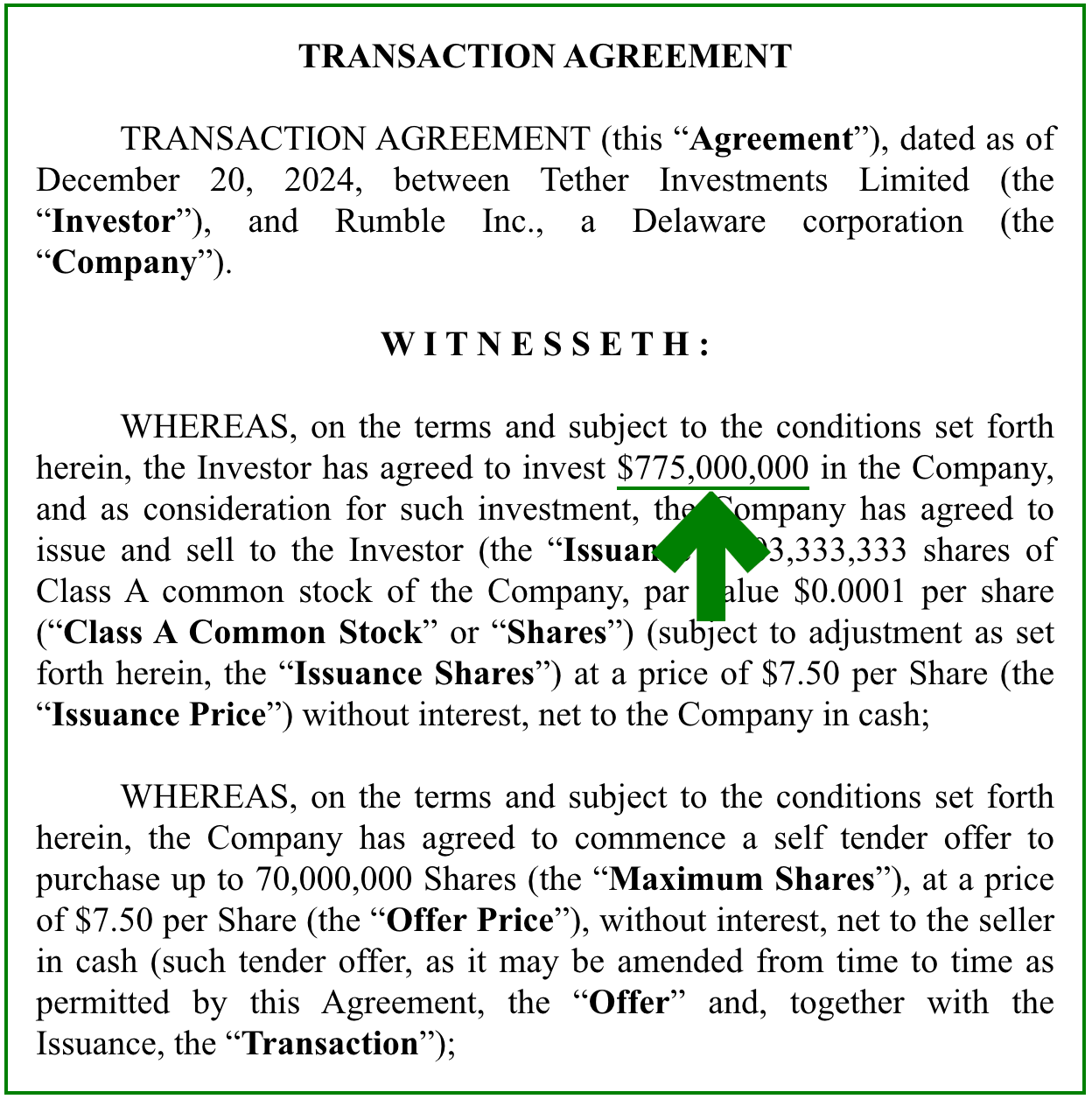

Excerpt from the December 20, 2024 transaction agreement

Investor Tether Investment Limited and Delaware-incorporated Rumble Inc. sign an agreement: The investor contributes $775 million, and the company issues 103,333,333 Class A common shares at $7.50 per share. The company also initiates a voluntary tender offer to repurchase up to 70 million shares at the same price of $7.50 per share. Source: U.S. Securities and Exchange Commission filing, December 2024.


The timing of this investment was noteworthy: that year, Rumble accumulated losses of $338 million. The platform, which positions itself as a free-speech alternative to mainstream video sites, has investors including several Trump allies who later joined Trump's second administration, including Vice President JD Vance, former FBI Deputy Director Dan Bongino, and former White House Special Advisor on AI and Crypto David Sacks.


After Tether's investment was announced, Rumble's stock price surged in the short term, closing at $16.27 on December 26, a 126% increase from the announcement day. Rumble is now renamed RUM Group. Of the funds Tether invested, $525 million (about 68%) was used to repurchase shares from core management. Tether has continued to increase its holdings, with its current stake valued at approximately $875 million.


Tether CEO Paolo Ardoino stated at the time: "Tether's investment in Rumble stems from a shared belief in decentralization, transparent operations, and the fundamental right to free speech." The company said about $250 million would be used for business expansion, including building a crypto payments platform.


During the formation of Trump's second administration, the White House assigned the task of advancing stablecoin legislation to a former college football player. His first encounter with cryptocurrency came from participating in the 2014 "Bitcoin St. Petersburg Bowl" football game.


"Hey, Bo!"


Entering Washington politics, Bo Hines's resume couldn't match the crypto giants and seasoned congressional staffers he dealt with daily. But the 6-foot-1, 205-pound young man possessed qualities valued by the Trump White House: photogenic, a firm MAGA supporter, and with a public record of not acknowledging the 2020 presidential election results. Additionally, in the fall of 2024, a company he co-owned with his father spent $1 million on billboards to fund a political action committee supporting Trump's campaign.


Appointed by the president, Bo Hines headed the newly established Presidential Digital Assets Advisory Council, responsible for several tasks: studying the creation of a federal crypto asset reserve, drafting regulatory guidance for the crypto industry, with the core mission of getting the GENIUS Act passed.


In early February 2025, the bill text circulated within Washington. In late February, crypto executives and lawmakers gathered at the Willard Hotel to discuss the bill. Two attendees confirmed that Tether CEO Paolo Ardoino unexpectedly appeared. Ardoino told those present that the company was seriously implementing anti-money laundering work.


In March, Paolo Ardoino posted photos on social media visiting Congress and the White House. He told The New York Times that after Howard Lutnick officially became Commerce Secretary in February, he deliberately avoided meeting him to avoid potential conflicts of interest.


That same month, Tether hired Washington lobbyist Jeff Miller. This person had been representing Cantor Fitzgerald on stablecoin-related matters since 2024. Jeff Miller served as a core member of Trump's inauguration committees for both terms. His consulting firm saw rapid business growth during Trump's first term. In 2025, Miller Strategies received a total of $570,000 in fees, with $480,000 from Cantor and $90,000 from Tether. Paolo Ardoino said in a Bloomberg TV interview: "It's crucial for the industry's voice to be fully heard."


Meanwhile, Bo Hines steadily advanced the work. Sources said he believed lawmakers had no right to go against the president's will and pressured all sides to reach consensus quickly. He also argued that the risks of digital tokens being used illegally were overstated. In an April interview with Bitcoin Magazine, Bo Hines said: "It's not wise for bad actors to use digital assets for crime. In most scenarios, transaction records are publicly traceable."


The earliest version of the GENIUS Act drew strong opposition from Tether's competitors and Democratic lawmakers, as it was significantly less restrictive compared to the 2024 drafts.


In May, a group of Democratic lawmakers (including crypto policy moderates) united in opposition, temporarily halting the bill's progress. Two sources revealed that New York Senator Chuck Schumer, in a closed-door Democratic meeting, urged colleagues to review intelligence on Tether's operations compiled by Biden's national security agencies to ensure the GENIUS Act had sufficient safeguards to prevent U.S. adversaries from using crypto channels for money laundering.


That same month, Massachusetts Senator Elizabeth Warren urged her Democratic colleagues to reject the latest version of the bill. She believed the provisions deliberately relaxed regulations to specifically benefit Tether.
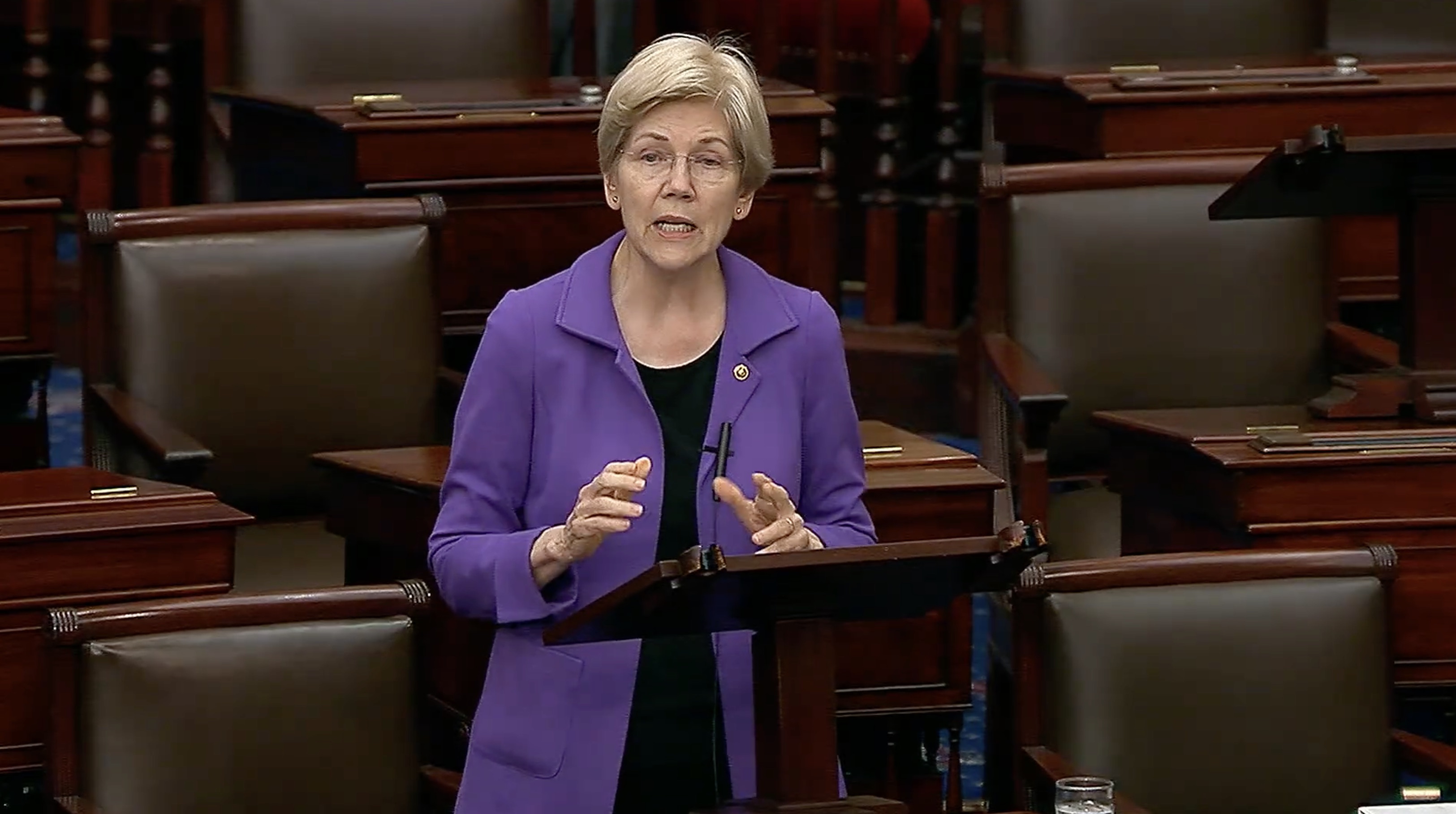

Senator Elizabeth Warren questions provisions of the GENIUS Act. Source: Elizabeth Warren YouTube Official Account


Sources said Bo Hines ignored such concerns, frequently citing Trump's desire for the bill to pass quickly. Republican congressional leadership continued to advance the legislative agenda.


The final bargaining point focused on the length of the compliance transition period. In private negotiations, Bo Hines insisted Republicans could not give up the three-year grace period, rejecting the Democratic proposal to shorten it to 18 months. In multiple internal meetings, he clearly told parties this was Tether's demand.


Ultimately, Bo Hines prevailed. At the July bill signing ceremony, the bill's main supporters gathered at the White House.


Trump stood on stage, scanned the crowd, and asked: "Where's Bo Hines? Hey, Bo! Bo was a hell of a football player, right? Top college football player in the country. That's how I met him, through football." (Bo Hines was a wide receiver at North Carolina State University before transferring to Yale; a shoulder injury ended his football career.)

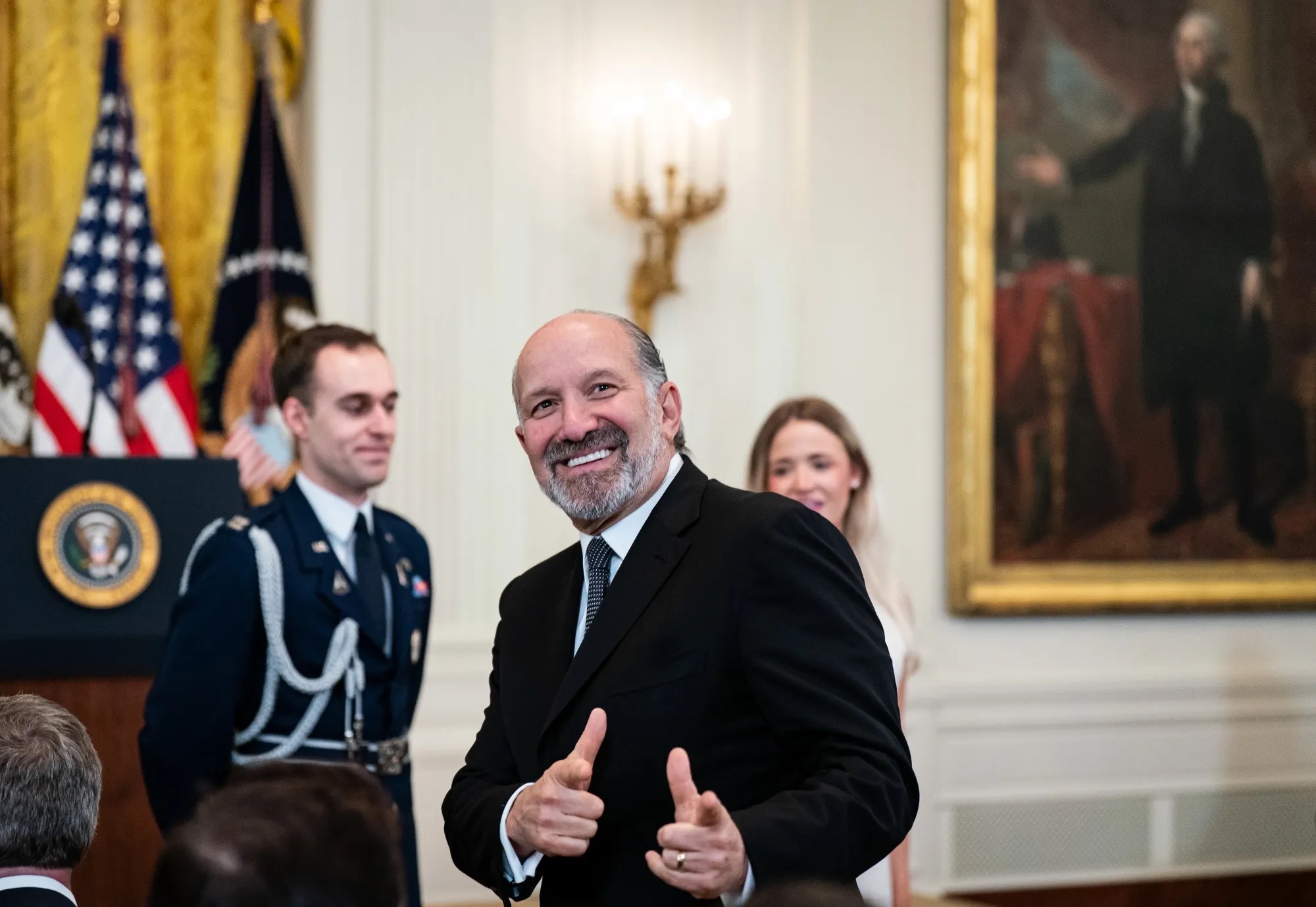

Hines and Lutnick attend the GENIUS Act signing ceremony.


Bo Hines stood up to accept applause and then sat down. Seated directly in front of him was Tether CEO Paolo Ardoino. Just one month later, Tether announced hiring Bo Hines as an advisor; soon after, Bo Hines was promoted to CEO of Tether's new U.S. compliant token, USAT. This new token has limited circulation, totaling about $186 million. Bo Hines spoke at a crypto industry conference last year, stating that both USAT and USDT would comply with GENIUS Act regulatory standards.


In the front row at the signing ceremony, between Bo Hines and Vice President JD Vance, sat Howard Lutnick. Trump gestured for him to stand and receive applause, praising his work on tariff negotiations: "Howard, you've done a fantastic job."


Three months later, Howard Lutnick completed a transaction selling Cantor Fitzgerald to a beneficiary trust set up for his children. The day after the deal closed, a filing in New York showed Tether provided an undisclosed loan to one of the trusts.


Howard Lutnick declined to disclose the transaction amount for his children's acquisition of the assets and did not state whether the Tether loan was used to pay for the purchase. That same year, Tether contacted investors about a funding round based on a $500 billion valuation. If this valuation materializes, the paper value of Cantor Fitzgerald's potential 5% equity stake would reach $25 billion.

Trending Cryptos

Related Questions

QAccording to the article, what are the key provisions in the GENIUS Act that were reportedly favorable to Tether?

AThe article states several key provisions in the GENIUS Act that were favorable to Tether: 1) A 'reciprocal regulatory loophole' allowing stablecoin issuers like Tether, if based in countries like El Salvador, to be regulated by their home jurisdiction if deemed 'substantially equivalent' by the US Treasury Secretary. 2) A 'DeFi loophole' limiting issuer liability for token misuse in decentralized finance secondary markets. 3) A three-year compliance grace period for new entrants into the US market, which Tether reportedly insisted on maintaining.

QWho are Howard Lutnick and Bo Hines, and what roles did they play in shaping the GENIUS Act, as described in the article?

AHoward Lutnick, later Trump's Commerce Secretary, was the CEO of Cantor Fitzgerald, which managed Tether's reserves. He reportedly acted as Tether's crisis manager and lobbied against unfavorable bills before joining the administration. Bo Hines, a former Trump White House aide, was appointed to lead the President's Digital Asset Advisory Committee and was the 'hard enforcer' for the bill's final negotiations. The article claims both worked behind the scenes to weaken regulatory constraints in the act, with Hines specifically advocating for provisions Tether wanted.

QWhat financial or business connections between Tether and Trump's associates are highlighted in the article?

AThe article highlights several financial connections: 1) In April 2024, Cantor Fitzgerald (led by Howard Lutnick) secured an option for 5% of Tether's equity for $6 billion, a deal described as 'ridiculously cheap.' 2) In December 2024, Tether invested $775 million in the conservative streaming platform Rumble Inc., which hosts Trump's Truth Social and has several Trump allies as investors. 3) In August 2025, one month after the GENIUS Act was signed, Tether hired Bo Hines as an executive. 4) In October 2025, Tether provided a loan to a trust benefiting Lutnick's children during their acquisition of his multibillion-dollar business assets.

QWhat concerns do critics, including former officials and lawmakers, have about the GENIUS Act and Tether's operations?

ACritics express several concerns: They warn that loopholes in the GENIUS Act could weaken the US's ability to combat money laundering by criminals, terrorists, and sanctions evaders. Former CFTC Chairman Timothy Massad argued it creates unfair competition, imposes high costs on US firms, and could undermine the dollar's status. Lawmakers like Senators Elizabeth Warren and Cynthia Lummis initially raised alarms about Tether's potential use by illicit actors and the need for strong US oversight. The article also cites data showing continued significant use of USDT by sanctioned entities and criminal groups after the act's passage.

QHow does Tether respond to the allegations and concerns presented in the article?

ATether issued a statement firmly denying any wrongdoing in its lobbying activities. The company stated it lawfully and transparently communicates with regulators, lawmakers, and law enforcement, like many market participants. It emphasized that the GENIUS Act does not provide special treatment for Tether and applies uniformly to all stablecoin issuers. Tether also highlighted its compliance efforts, claiming to have a 'world-leading' law enforcement collaboration mechanism, working with over 340 agencies globally to freeze assets linked to illicit activity.

Related Reads

Lei Jun Earns 7 Billion in One Day from CXMT's IPO? Xiaomi Executive Responds

On July 28th, Changxin Technology's stock price on the Sci-Tech Innovation Board experienced minor fluctuations. The company had made a historic market debut the previous day, becoming the first A-share stock to record a single-day trading volume exceeding 1 trillion yuan. This led to significant paper gains for its strategic investors. Among them, Xiaomi's wholly-owned subsidiary was allocated 18.24 million shares with an initial investment of approximately 158 million yuan. Reports estimated a paper profit of 717 million yuan for Xiaomi founder Lei Jun based on his shareholding structure. However, a Xiaomi executive clarified that this was a corporate investment and should not be conflated with personal wealth. Other major beneficiaries included Alibaba and Nio. Alibaba, an early investor, held nearly a 5% stake through two entities, with an estimated paper gain exceeding 160 billion yuan. Nio, participating in the strategic placement, also saw substantial paper returns. Additionally, state-owned banks and insurance institutions that invested in Changxin recorded potential gains in the hundreds of billions. Conversely, companies like Country Garden reportedly missed out on nearly 50 billion yuan in potential gains after divesting their stakes before the IPO due to liquidity pressures. The article notes that these are paper profits based on the listing price, as the allocated shares are subject to lock-up periods, and final realized gains will depend on future stock performance. An employee from Changxin Technology commented that ordinary staff remain focused on their salaries and benefits rather than the market hype.

marsbit5m ago

Lei Jun Earns 7 Billion in One Day from CXMT's IPO? Xiaomi Executive Responds

marsbit5m ago

Selling Tokens or Selling Outcomes: Several Paradoxes of the AI Business Model

"The Token vs. Outcome Sale: Key Paradoxes in the AI Business Model By mid-2026, the AI industry shows rapid growth in revenue and token usage, yet the underlying business models differ significantly. This article analyzes four structural paradoxes defining the current landscape, all pointing to the commoditization of intelligence and the concentration of profits in few segments. **The Cost Paradox: Cheaper Tokens, Heavier Bills** Despite a >95% price drop for equivalent AI capability since 2023, total spending has skyrocketed due to the Jevons Paradox: lower prices expand usage into previously uneconomical tasks. Furthermore, the shift to autonomous agents operating 24/7 multiplies consumption. However, efficiency gains often remain unrealized due to unchanged organizational workflows (the Solow Paradox). The focus is shifting from optimizing token price to optimizing the task itself. **The Hierarchy Paradox: The App is King vs. The App is Dead** While conventional wisdom holds that value accrues at the application layer, the AI stack is inverted. Infrastructure (chips) captures ~70% of industry revenue and ~80% of gross profit, while application-layer margins are thin (0-30%). Fast-evolving base models threaten "thin" apps. Sustainable applications are those that embed intelligence into specific contexts, possessing private data, workflows, or delivery capabilities that become more valuable as the base model improves. **The Responsibility Paradox: Profit Follows Accountability** Growth rates alone don't guarantee profit. A key differentiator is a company's willingness and ability to take responsibility for specific outcomes. Selling by the token competes for IT budgets; selling by the outcome (e.g., a resolved support ticket) taps into larger human labor budgets. Low-responsibility, high-volume tasks (e.g., generic客服) face commoditization. High-stakes, regulated domains (e.g., law, healthcare) where vendors assume heavier liability for results command higher margins, as seen with companies like Harvey in legal tech. **The Open-Source Paradox: Open Wins Traffic, Closed Wins Revenue** Open-source models dominate in usage share and developer adoption, often being 5-20x cheaper. However, closed-source models still capture the majority of enterprise spending (~89%). Enterprises pay a premium for closed-source reliability, support, compliance, and accountability. The total cost of ownership (TCO) is converging as closed-source prices fall faster than open-source builds trust, leading to hybrid deployments. Profit is migrating from the model layer itself to upstream (compute) and downstream (orchestration, data, services)."

marsbit6m ago

Selling Tokens or Selling Outcomes: Several Paradoxes of the AI Business Model

marsbit6m ago

Ethereum's 2030 Blueprint: 200x Speed Increase, Quantum-Resistance, and Native Privacy

Ethereum's 2030 Roadmap: 200x Speed, Quantum-Resistant, Native Privacy Ethereum, now in its 11th year, is guided by the "Lean Ethereum" vision, a unified development blueprint aiming to streamline the network. This plan, outlined in the evolving "Strawmap" document, targets five core goals for 2030. **1. Fast L1:** Ethereum aims for near-instant finality and faster block times. By using Zero-Knowledge (ZK) proofs to aggregate validator votes, final confirmation could drop from ~15 minutes to seconds. Block times are slated to decrease from 12 seconds to 6 seconds (2027-28) and eventually 4 seconds (2029-30). The minimum staking requirement may also lower to 1 ETH, enhancing decentralization. **2. 1 Billion Gas L1:** To break the scalability-decentralization trade-off, L1 ZK-EVM will replace redundant transaction execution with ZK proofs. This allows nodes (even on phones) to verify blocks without re-running computations, paving the way to increase L1 throughput ~200x to 1 billion gas per second. **3. Trillion-Gas L2:** Ethereum will become a high-capacity settlement layer for Layer 2 networks (L2s). Planned upgrades, like PeerDAS and subsequent optimizations, target 1 GB per second of data bandwidth for L2s (Blobs), enabling a massive ecosystem of high-throughput rollups for specialized use cases. **4. Quantum-Resistant L1:** To counter future quantum computing threats, Ethereum plans to migrate its cryptographic signatures (ECDSA, BLS) to quantum-resistant, hash-based schemes. This multi-upgrade transition is targeted for completion by 2029, securing the network in the post-quantum era. **5. Privacy-Native L1:** For the first time, native transaction privacy is an official goal. Using ZK proofs, transactions could hide sender, receiver, and amount while proving compliance with rules. This infrastructure is tentatively planned, though details remain fluid and subject to regulatory landscapes. Driven by a broader ecosystem beyond the core Foundation, this ambitious roadmap seeks to make Ethereum faster, more scalable, quantum-secure, and private, while preserving its core tenets of neutrality and trustlessness. All plans remain subject to ongoing research, audits, and community consensus.

marsbit20m ago

Ethereum's 2030 Blueprint: 200x Speed Increase, Quantum-Resistance, and Native Privacy

marsbit20m ago

Trading

Spot

Hot Articles

What is LINON

Linde plc Tokenized Stock (Ondo): Revolutionizing Traditional Equity Access Through Blockchain Innovation The emergence of Linde plc Tokenized Stock (Ondo), represented by the ticker $LINON, signifies a monumental shift in the fusion of traditional financial structures and decentralized finance (DeFi). This innovative financial instrument showcases the tremendous potential of blockchain technology to democratize access to traditional equity markets while ensuring the security and regulatory compliance necessary for institutional-grade financial products. Through Ondo Finance's pioneering tokenization platform, $LINON provides a seamless pathway for global investors to engage with one of the world's leading industrial gas companies, Linde plc, creating a blockchain-native representation of the underlying equity. Introduction to Linde plc Tokenized Stock The landscape of financial markets is witnessing a groundbreaking transformation through the tokenization of real-world assets. Linde plc Tokenized Stock (Ondo) epitomizes this revolutionary approach by bridging the gap between conventional stock ownership and blockchain-enabled financial infrastructure. The $LINON token allows investors to gain exposure to one of the prominent industrial companies worldwide through decentralized technology. Operating within Ondo Finance's comprehensive ecosystem, $LINON symbolizes a practical application of tokenization technology that enhances accessibility, efficiency, and global connectivity in traditional financial markets. By leveraging blockchain infrastructure, this tokenized stock enables international investors to participate in U.S. equity markets, overcoming traditional barriers associated with cross-border investing. The significance of $LINON goes beyond technological innovation; it represents a fundamental shift in asset structuring, distribution, and trading in the digital age. This tokenized stock maintains all the economic benefits associated with traditional Linde plc shares while offering improved liquidity, programmable compliance features, and seamless integration with decentralized finance protocols. The development of $LINON indicates a growing acceptance of blockchain technology as a viable means for traditional finance, exemplifying how even well-established assets like Linde plc can integrate into blockchain systems. This approach preserves the core attributes that appeal to investors while introducing advanced capabilities that enhance the overall investment proposition. Project Overview and Objectives Linde plc Tokenized Stock (Ondo) encapsulates a strategic effort to democratize access to traditional equity markets through advanced blockchain technologies. The primary objective of $LINON is to provide approved global investors seamless access to the economic exposure associated with Linde plc shares, furthering an effort to create a more inclusive financial ecosystem. Beyond the digital representation of traditional assets, $LINON endeavors to eliminate barriers of geography and time zones that limit investor participation. Its design ensures that blockchain technology can elevate traditional investment vehicles without undermining the security or compliance requirements expected by investors. Key goals of the project include enhanced liquidity provision, programmable compliance mechanisms, and interoperability with other blockchain networks. Each $LINON token is fortified by actual Linde plc securities housed at U.S.-registered broker-dealers, allowing holders to reap economic advantages akin to traditional stockholders, such as dividend reinvestment. Furthermore, $LINON aims to establish new industry standards for institutional-grade tokenized securities, paving the way for traditional assets to embrace blockchain technology while remaining compliant with regulatory frameworks. By associating itself with a company as reputable as Linde plc, the project opens avenues for exploring tokenized equities catering to both conservative institutional players and daring retail investors. Project Creator and Development Team The vision for Linde plc Tokenized Stock (Ondo) comes from Nathan Allman, founder and CEO of Ondo Finance. His background in traditional finance coupled with expertise in blockchain technology positions him uniquely to navigate the complexities of asset tokenization. Allman's academic journey began at Brown University, focusing on Economics and Biology, equipping him with valuable analytical skills. His time at Goldman Sachs in the Digital Assets division strengthened his understanding of the interplay between financial institutions and emerging technologies, laying the groundwork for his later endeavors in alternative investment strategies. Under Allman's guidance, Ondo Finance has emerged as a leader in asset tokenization, launching $LINON as a flagship example of the company's larger mission towards revolutionizing traditional financial systems using blockchain technology. His commitment to leveraging blockchain for creating institutional-grade financial products has shaped the landscape of real-world asset tokenization. Investment and Funding Structure The growth of Ondo Finance, the platform powering Linde plc Tokenized Stock (Ondo), is bolstered by robust financial backing from prestigious venture capital firms and strategic investors. This strong investment foundation underpins the development of the key infrastructure essential for compliant tokenized securities like $LINON. In August 2021, Ondo Finance secured $4 million in seed funding led by a major venture capital firm, which enabled the company to commence platform development and establish the necessary regulatory processes for tokenizing real-world assets. This early investment cemented Ondo Finance's credibility within the industry. The Series A funding round followed, garnering $20 million with participation from renowned firms committed to transformative technology companies. This backing demonstrated substantial institutional confidence in Ondo Finance's vision, allowing it to hone its approach to asset tokenization through mechanisms that ensure compliance and accessibility. Noteworthy contributors, including institutional investors and experienced partners, have added significant value to Ondo Finance’s development efforts. Their involvement underscores the confidence across sectors in Ondo Finance's approach to bridging traditional finance with blockchain innovations. Technical Infrastructure and Innovation The technical architecture that underpins Linde plc Tokenized Stock (Ondo) represents a sophisticated melding of traditional finance systems and cutting-edge blockchain technology. The architecture's foundation is built on the Ethereum network, renowned for its security and programmability—both critical for intricate financial instruments. The $LINON tokenization process comprises creating a blockchain-native representation of Linde plc shares that preserves economic benefits while augmenting investor capabilities. Each token corresponds to actual shares held at U.S.-registered broker-dealers, creating a compliant custody structure that legitimizes the asset's existence and value. Automated compliance systems are integrated into the tokenization process, managing critical components such as know-your-customer (KYC) verification and anti-money laundering (AML) protocols. This incorporation of programmable compliance empowers $LINON to uphold regulatory standards essential for institutional proliferation. Cross-chain interoperability characterizes the advanced technical features of $LINON. While initially deployed on Ethereum, the framework is designed for expansion to other networks such as Solana and BNB Chain. This adaptability enhances liquidity and accessibility, allowing investors to select their preferred blockchain ecosystems. Historical Timeline and Development Crafting the history of Linde plc Tokenized Stock (Ondo) unfolds in parallel with the evolution of Ondo Finance's tokenization platform. The timeline's inception dates back to March 2021 when Nathan Allman laid the foundations for creating institutional-grade financial products on blockchain infrastructure. The initial funding round in August 2021 provided crucial resources for developing the platform and establishing partnerships necessary for effective tokenization. By January 2023, Ondo Finance launched its tokenized treasury products, establishing mechanisms that would facilitate future tokenized equities such as $LINON. A pivotal milestone arose in February 2025 when Ondo Chain—a Layer 1 blockchain designed specifically for asset tokenization—was introduced. This infrastructure enhances capabilities vital for institutional markets, demonstrating Ondo Finance's long-term commitment to tokenization. Subsequently, the launch of Ondo Global Markets in September 2025 marked the official debut of $LINON. This milestone showcased the successful transition from development to active trading, enabling investors around the world to access American financial markets seamlessly. Ongoing development plans include a targeted expansion of available tokenized assets to over 1,000 by the end of 2025, pointing to a bright future for Ondo Finance's ecosystem and its mission to broaden tokenized equity accessibility. Regulatory Compliance and Legal Framework The legal architecture governing Linde plc Tokenized Stock (Ondo) emphasizes a sophisticated approach to regulatory compliance, allowing tokenized securities to be implemented within a blockchain-based framework. The legal structure governing $LINON spans multiple jurisdictions while maintaining a robust legal footing. Compliance systems ensure that only eligible investors can access the token, enforced through automated verification that aligns with international regulations. This innovative regulatory technology promises real-time enforcement of complex requirements, considerably enhancing efficiency in operating within the regulatory landscape. The custody framework undergirding $LINON ensures that the underlying shares are securely held at U.S.-registered broker-dealers, complying with necessary regulations while delivering blockchain-driven access to investors. The token maintains its economic equivalency and security through this carefully structured custody arrangement. KYC and AML compliance systems are embedded within the smart contract architecture, ensuring integrity and adherence to regulatory practices while fostering transparency for investors. The jurisdictional restrictions mark a commitment to navigating the evolving landscape of international securities laws. Market Impact and Industry Significance The advent of Linde plc Tokenized Stock (Ondo) holds profound implications for the broader financial landscape, symbolizing a clear shift towards blockchain-enabled markets. $LINON serves as a proof-of-concept for integrating traditional companies into blockchain ecosystems, showcasing the potential benefits such as broader accessibility and improved efficiency. The market's response to $LINON indicates a growing acceptance of tokenization among institutional investors, contributing to the emergence of an expanding sector wherein traditional assets can be interconnected with blockchain innovations. The success of $LINON further solidifies market confidence, indicating an overarching shift towards recognizing asset tokenization as a transformative force in finance. Future Development and Expansion Plans The future trajectory for Linde plc Tokenized Stock (Ondo) centers around the expansion of the tokenization ecosystem and enhanced infrastructure supporting blockchain-enabled financial services. Plans for cross-chain integration usher in new opportunities for liquidity and flexibility within the investment framework, with existing capabilities poised for continuous enhancement. With the introduction of Ondo Chain, Ondo Finance aims to transition $LINON to an optimized blockchain environment specifically designed for asset tokenization. This new infrastructure heralds exciting prospects for the development of institutional-grade financial products, ensuring ongoing compatibility with contemporary investment strategies. Further integration with decentralized finance protocols signifies a commitment to empowering $LINON holders through advanced financial strategies. The anticipated expansion of available tokenized assets promises to broaden investor access, enhancing the utility and appeal of the platform. In alignment with ambitions for regulatory expansion, ongoing efforts to secure approvals for new jurisdictions will enhance investor access, further positioning $LINON at the forefront of the burgeoning tokenization market. Conclusion Linde plc Tokenized Stock (Ondo), as represented by the $LINON token, stands at the intersection of traditional finance and blockchain innovation. It embodies a transformative milestone in how financial assets are structured, distributed, and engaged within modern investment ecosystems. The technical sophistication behind $LINON, combined with its regulatory compliance framework, illustrates that asset tokenization can improve financial infrastructure rather than simply digitizing existing products. This pioneering effort not only enhances investor access to U.S. equity markets but also signifies an evolution of how traditional financial services can integrate blockchain technology. As the asset tokenization market grows exponentially, with prospects suggesting significant valuation increases, $LINON paves the way for a future where tokenized securities become standard fixtures in the financial landscape. The trajectory of $LINON will undoubtedly influence how traditional finance adapts to a transformed, blockchain-powered world.

3.6k Total ViewsPublished 2025.12.05Updated 2025.12.05

What is LINON

What is CRMON

Salesforce Tokenized Stock (Ondo): Revolutionising Traditional Equity Access Through Blockchain Innovation The emergence of Salesforce Tokenized Stock (CRMON) marks a pivotal advancement in integrating traditional financial markets with blockchain technology. This innovative approach offers investors unprecedented access to equity exposure through tokenisation. Developed by Ondo Finance, CRMON provides tokenholders with economic exposure equivalent to holding Salesforce stock (CRM) while automatically reinvesting dividends. This effectively bridges the gap between conventional equity markets and decentralised finance (DeFi). Introduction and Comprehensive Overview of Salesforce Tokenized Stock In recent years, the financial landscape has dramatically transformed due to blockchain technology, fundamentally altering how investors access and interact with traditional assets. The development of Salesforce Tokenized Stock (CRMON) is a prime example of this evolution, representing a sophisticated fusion of conventional equity markets with cutting-edge distributed ledger technology. CRMON is a tokenised version of Salesforce stock, emerging from the innovative work of Ondo Finance, a leading platform in the real-world asset tokenisation sector that positions itself as a bridge between traditional finance and decentralised systems. Designed to provide tokenholders with economic exposure that mirrors the performance of the underlying Salesforce stock, CRMON incorporates automatic dividend reinvestment mechanisms. This eliminates many traditional barriers associated with international equity investment, such as complex brokerage relationships, currency conversion challenges, and restricted trading hours. The tokenisation process reimagines stock ownership as a blockchain-native asset while maintaining its economic equivalence with the underlying security, offering enhanced portability and integration capabilities within decentralised finance ecosystems. CRMON transcends its individual utility as an investment instrument to represent a fundamental shift in how financial markets can operate in an increasingly digital world. By maintaining full backing through U.S.-registered broker-dealers and implementing robust compliance frameworks, CRMON demonstrates that tokenised securities can achieve the regulatory standards necessary for institutional adoption while delivering the technological advantages of blockchain infrastructure. Understanding Tokenized Real-World Assets and CRMON's Strategic Position Tokenised real-world assets signify one of the most significant innovations in modern finance, fundamentally reimagining how traditional securities are represented, traded, and utilised within digital ecosystems. CRMON operates as a tokenised equity instrument correlating directly with Salesforce stock while optimising accessibility and efficiency. This aligns with Ondo Finance's broader mission to democratise access to institutional-grade financial products through innovative tokenisation strategies. The tokenisation process guarantees complete economic equivalence with the underlying Salesforce equity. Each CRMON token represents a proportional claim on Salesforce stock held by qualified custodians, with dividend payments automatically reinvested to maintain continuous exposure to total return performance. This structure simplifies dividend management and ensures that tokenholders receive the full economic benefit of their equity exposure, encompassing both capital appreciation and income generation. Ondo Finance's strategy in tokenising Salesforce stock demonstrates its expertise in creating compliant, institutional-grade products that meet traditional financial markets' stringent requirements. The platform’s focus on merging regulatory compliance with blockchain benefits positions it at the forefront of decentralised finance, captivating both institutional and retail investors seeking blockchain-native solutions. The Technology and Innovation Framework Behind CRMON The technological infrastructure supporting CRMON integrates blockchain technology with traditional financial mechanisms, delivering institutional-grade security and compliance while maintaining the operational advantages of decentralised systems. Built on the Ethereum blockchain, CRMON utilises robust smart contract capabilities to ensure transparent, secure operations. The smart contract architecture incorporates layered security and compliance mechanisms, enabling automated compliance checks and real-time asset backing verification. Integration with oracle services maintains accurate pricing and dividend information, ensuring CRMON reflects the underlying Salesforce stock's accurate performance. This architecture delivers automated dividend reinvestments and other corporate actions, eliminating manual processing requirements and directly enhancing tokenholder benefits. Ondo Finance ensures CRMON's security structure includes daily third-party verification of holdings, independent collateral agents, and a multiple-layer custody system through partnerships with established financial institutions. This framework safeguards tokenholder interests against operational risks while providing robust asset backing. The user interface enhances integration capabilities, allowing seamless interaction between CRMON and various decentralised finance protocols, as well as cryptocurrency exchanges. This interoperability enables users to leverage their tokenised equity across multiple platforms, creating sophisticated investment strategies that marry traditional equity characteristics with blockchain-native innovation. Leadership and Corporate Structure of Ondo Finance The leadership team behind CRMON and Ondo Finance blends expertise from traditional finance and blockchain technology, presenting a robust combination of skills essential for successfully bridging conventional markets with decentralised finance. Nathan Allman, the founder and CEO, emerged from a distinguished financial background before establishing Ondo Finance in 2021. Allman's experience includes notable roles at major financial institutions, including significant contributions to developing cryptocurrency market services. His insights into regulatory compliance were paramount in developing products like CRMON that successfully unify traditional securities with blockchain technology. With a team of professionals boasting substantial experience in both conventional finance and blockchain sectors, Ondo Finance's leadership comprises diverse expertise that covers every aspect of tokenised asset development. Justin Schmidt serves as President and COO, contributing unique operational expertise, while Chris Tyrell brings essential compliance knowledge. Investment Landscape and Funding History The investment landscape surrounding Ondo Finance reflects significant institutional confidence in its mission to tokenise real-world assets. The company has raised substantial funds through various investment rounds, attracting leading venture capital firms and strategic investors that recognise the transformative potential of tokenised securities like CRMON. Notably, Ondo Finance completed a successful Series A funding round in 2022, led by well-known venture capital firms. This funding success validates Ondo Finance's innovative approach to creating compliant, institutional-grade tokenised products. In total, Ondo Finance has successfully secured substantial funding, raising significant capital for product development and market expansion, including a noteworthy token sale that reinforced its governance structure through the establishment of the ONDO token. The diverse composition of investors reflects broad market confidence in Ondo Finance's business model, demonstrating support from both traditional and blockchain-native organisations. Operational Mechanics and Technical Implementation The operational framework supporting CRMON exemplifies sophisticated integration of traditional financial mechanisms with blockchain technology. The technical implementation introduces multiple layers of security, compliance, and operational efficiency to meet institutional standards while enhancing accessibility. The tokenisation process begins by acquiring actual Salesforce stock through U.S.-registered broker-dealers, ensuring each CRMON token maintains direct correlation with the underlying equity performance. Smart contracts automate operational processes, including dividend reinvestment and corporate action processing, facilitating a streamlined user experience. The Minting and redemption processes allow authorised participants to manage CRMON tokens effectively. During U.S. trading hours, institutions can mint new tokens by depositing stablecoins that are used to purchase corresponding Salesforce equity. This structure maintains a tight correlation with underlying assets, enhancing liquidity and price discovery. Additionally, the infrastructure supports twenty-four-hour token transfer capabilities, providing CRMON holders with operations outside traditional market hours. This represents a significant advantage over conventional securities ownership, thus promoting integration with decentralised finance applications. Plans for cross-chain compatibility through partnerships signal further ambitions for CRMON's market reach. By expanding to other blockchain networks, Ondo Finance aims to enhance accessibility and user engagement with tokenised equity products. Timeline and Historical Development of Tokenized Equity Innovation The timeline of CRMON's development and Ondo Finance's broader tokenised capabilities demonstrates a systematic innovation process beginning with the company's founding in 2021. 2021: Ondo Finance is founded by Nathan Allman and co-founders, launching initial products focused on structured vault offerings on the Ethereum blockchain. 2022: The company completes substantial funding rounds—both equity and token sales—totaling significant capital and launching initial tokenised U.S. Treasury products. 2023-2024: Ondo Finance experiences substantial growth, establishing partnerships with major financial institutions while expanding its product offerings beyond fixed-income securities. February 2025: Ondo Global Markets is announced, marking the transition into equity tokenisation with plans for accessing over one hundred U.S. stocks and ETFs. September 2025: The official launch of Ondo Global Markets includes CRMON alongside other tokenised equity offerings, marking a significant evolution in Ondo Finance's product ecosystem. This timeline highlights the organisation's rapid growth and its capability to adapt its technological and compliance frameworks to accommodate different asset classes effectively while maintaining security and regulatory integrity. Regulatory Framework and Compliance Approach Ondo Finance's regulatory framework showcases a sophisticated compliance strategy, essential for achieving institutional adoption in the tokenised securities market. The company's strong partnerships with U.S.-registered broker-dealers promote adherence to Securities and Exchange Commission regulations and apply robust investor protections. Acquisitions, such as Oasis Pro—a registered broker-dealer—significantly enhance Ondo Finance's compliance capabilities, ensuring thorough alignment with existing regulatory structures. The company employs independent verification procedures that foster transparency, aiming for a solid performance standards reputation. Furthermore, Ondo Finance's commitment extends to international regulatory compliance, ensuring token access remains restricted to eligible investors while adhering to pertinent cross-border securities regulations. Comprehensive attention to tax implications and reporting requirements fortifies the security and compliance landscape of CRMON, ensuring that investor obligations remain manageable. Future Prospects and Market Positioning The forward-looking landscape for CRMON and Ondo Finance illustrates substantial growth opportunities driven by institutional adoption of blockchain technology and escalating demand for efficient alternatives to conventional securities ownership. Market projections indicate the tokenised asset sector could value multiple trillion dollars by 2030. With plans to scale CRMON offerings significantly and integrate it with a dedicated blockchain infrastructure—Ondo Chain—Ondo Finance aims to elevate its institutional-grade tokenised asset operations. Additionally, the development of strategic partnerships enhances distribution capabilities while establishing the company's credibility in the financial market. Furthermore, the integration of tokenised equity with decentralised finance protocols offers new potential for innovative financial products and strategies previously impossible with traditional securities. These factors underscore CRMON's positioning to effectively capture increased market share and deliver innovative solutions for international investment exposure. Conclusion Salesforce Tokenized Stock (CRMON) symbolises a transformative development within financial markets, successfully bridging traditional equity ownership with blockchain technology to create unprecedented accessibility for global investors. Through Ondo Finance's sophisticated tokenisation framework, CRMON provides complete economic exposure to Salesforce equity performance while enhancing operational advantages that exceed traditional ownership. The launch of CRMON reflects the broader evolution of financial markets towards blockchain infrastructures that maintain regulatory compliance while delivering increased efficiency. Ondo Finance's extensive approach to regulatory adherence, institutional-grade security, and technological innovation solidifies CRMON as a model for future tokenised securities, delivering access previously unattainable in conventional brokerage structures. As the tokenised asset sector continues to develop, CRMON is well-positioned to address historical inefficiencies in capital markets while providing investors with innovative solutions for accessing traditional securities. The outlook for CRMON looks exceptionally promising, supported by ambitious expansion plans, technological innovations, and strategic partnerships, thereby representing a pioneering model of modern financial infrastructure evolving through blockchain integration.

3.7k Total ViewsPublished 2025.12.05Updated 2025.12.05

What is CRMON

What is SHOPON

Shopify Tokenized Stock (Ondo): A Comprehensive Analysis of Real-World Asset Tokenization in Web3 This article delves into the Shopify Tokenized Stock (Ondo), recognised by its ticker symbol $SHOPON, exploring its implications at the intersection of traditional finance and blockchain technology. As a part of Ondo Finance's tokenized securities platform, Shopify’s tokenized stock exemplifies advancements in democratizing access to global capital markets through innovative digital assets. Introduction and Overview of Shopify Tokenized Stock (Ondo) Shopify Tokenized Stock (Ondo), or $SHOPON, portrays a pivotal innovation in the realm of tokenized securities, allowing investors to gain economic exposure akin to directly owning shares of Shopify Inc. This token, developed under the umbrella of Ondo Finance, not only provides investors with the ability to hold digital representations of the company’s stock but also integrates features such as automatic reinvestment of dividends. This advancement represents a substantial shift in the landscape of decentralized finance (DeFi), linking conventional equity markets with blockchain solutions designed to enhance accessibility, transparency, and liquidity. By eliminating geographical barriers and enabling 24/7 trading capabilities, $SHOPON is positioned as a bridge connecting traditional financial instruments and the emerging Web3 ecosystem. What is Shopify Tokenized Stock (Ondo), $SHOPON? The $SHOPON token serves as a digital manifestation of Shopify Inc.'s shares, engineered to provide a direct correlation to the underlying asset's performance. Through the utilization of blockchain technology, the token gives holders a mechanism to participate in the economic benefits associated with equity ownership, including capital appreciation and dividend distribution. The unique aspect of $SHOPON lies in its automatic dividend reinvestment mechanism, which allows returns to compound without necessitating active management by the investor. This feature inherently enhances its attractiveness as an investment vehicle, particularly for individuals seeking passive income growth alongside exposure to high-performing equities. The tokenization process is facilitated by the custody of actual Shopify shares through regulated intermediaries, ensuring that every $SHOPON token is verifiably backed by real equity. This structure empowers investors with the dual advantages of both traditional financial characteristics and the innovative benefits tied to blockchain technology. Who is the Creator of Shopify Tokenized Stock (Ondo)? The creator of Shopify Tokenized Stock (Ondo), Nathan Allman, is an experienced figure in the finance sector, formerly associated with Goldman Sachs. His rich background includes significant expertise in digital asset development, bridging the gap between traditional finance and cryptocurrencies. Allman’s educational journey, marked by studies at Brown University, provided him with a deep understanding of economics and biology, equipping him with analytical skills that inform his strategic vision. In 2021, he founded Ondo Finance, committing to developing tokenized securities that meet institutional-grade standards while leveraging blockchain's transformative capabilities. Under Allman's leadership, Ondo Finance has focused on creating compliant and innovative financial products that empower a diverse investor base. Who are the Investors of Shopify Tokenized Stock (Ondo)? The investment landscape surrounding Shopify Tokenized Stock (Ondo) is notably robust, underpinned by significant institutional support. Primarily, Pantera Capital stands out as a strategic partner through the Ondo Catalyst initiative, a $250 million commitment aimed at accelerating the development of on-chain capital markets. This partnership not only signifies institutional confidence in the potential of tokenized assets but also reinforces Ondo Finance's operational capabilities and market positioning. The funding pathways have included earlier rounds that amassed millions in seed funding and further structural investments, solidifying relationships with both venture capital firms and private investors. Moreover, the financial framework is complemented by strategic partnerships with established financial institutions and technology companies, enhancing Ondo’s infrastructure and operational expertise. How Does Shopify Tokenized Stock (Ondo), $SHOPON Work? At the core of $SHOPON's operational framework is a sophisticated system integrating traditional finance mechanisms with blockchain technology. The custody of actual Shopify shares ensures that token holders retain authentic economic exposure, safeguarding their investments in line with recognized legal structures. The smart contracts employed in managing $SHOPON handle various functions, including automatic dividend reinvestment and ownership transfer, offering instant settlement and increased liquidity, marking a significant departure from conventional trading systems plagued by multi-day settlement delays. By providing interoperability with other decentralized finance applications, $SHOPON empowers holders with potentially lucrative opportunities for advanced investment strategies, including lending and automated market making. This complex integration presents a unique value proposition, catering to both traditional and crypto-native investors. The innovative structure of $SHOPON also allows for real-time settlements and transactions documented on the blockchain, delivering unparalleled transparency and security—a major advancement over standard equity trading practices. Timeline of Shopify Tokenized Stock (Ondo) March 2021: Nathan Allman establishes Ondo Finance, initially focusing on decentralized finance yield optimization. August 2021: Completion of a $4 million seed funding round led by Pantera Capital. January 2023: Launch of initial tokenized treasury security products, laying the groundwork for future equity tokenization. July 2025: Announcement of the Ondo Catalyst initiative, a strategic investment program valued at $250 million, aimed at propelling the development of tokenization in capital markets. September 3, 2025: Launch of Ondo Global Markets featuring over 100 tokenized U.S. stocks and ETFs, including $SHOPON. Technical Implementation and Blockchain Infrastructure Shopify Tokenized Stock (Ondo) operates on a technical architectural framework that marries blockchain protocols with traditional financial custody arrangements. The ecosystem leverages Ethereum's smart contract capabilities, providing seamless transaction management while ensuring compliance with regulatory standards through established financial custodians. Central to this architecture are security measures and transparent transaction records that affirm the legitimacy of each tokenholder's economic stake. With automated features managed by intricate smart contracts, $SHOPON not only streamlines ownership transfers but also allows for the tactical reinvestment of dividends—a hallmark of modern investment strategies. Moreover, the incorporation of LayerZero technology facilitates cross-chain interoperability, making $SHOPON accessible across multiple blockchain environments while preserving its functional robustness. This forward-thinking technical design positions $SHOPON as an adaptable asset within the larger DeFi milieu. Regulatory Framework and Compliance Architecture $SHOPON's regulatory framework is built upon the meticulous navigation of existing financial regulations that govern securities. The custody arrangements for the underlying Shopify shares are managed by U.S.-regulated broker-dealers, ensuring compliance and protection for investors. By maintaining a separation between the blockchain tokenization process and traditional custody, $SHOPON adheres to legal requirements while offering innovative functionalities that challenge conventional constraints. This dual-layered compliance approach enhances investor confidence and underscores Ondo Finance's commitment to regulatory integrity. Notably, the availability of $SHOPON is tailored to international investors from regions such as Asia-Pacific, Europe, and Africa, as regulatory parameters in the U.S. and U.K. present challenges in accessing tokenized securities. Market Access and Global Distribution Strategy The distribution strategy of $SHOPON is keenly designed to optimize global access while conforming to regulatory standards. The platform aims to establish comprehensive coverage for eligible investors across multiple regions, effectively dismantling traditional barriers through the implementation of blockchain technology. Integration with various cryptocurrency wallets and exchanges also promotes user-friendliness and accessibility, establishing a streamlined experience for investors to manage their holdings. Moreover, the 24/7 trading capabilities afforded by the tokenized model allow participants to react promptly to market shifts, fundamentally transforming how global equities are accessed and traded. Technology Integration and Cross-Chain Functionality The remarkable technological underpinnings of $SHOPON propagate its multi-chain functionality, set to expand its reach beyond Ethereum to networks such as Solana and BNB Chain. Such cross-chain capabilities allow users flexibility when navigating between blockchains, concurrently leveraging distinct network attributes to optimize their trading experience. LayerZero serves as the backbone for ensuring decentralized transfers between networks while providing the requisite security and speed, quintessential for maintaining investor trust. This comprehensive interoperability illustrates $SHOPON's commitment to being a versatile, user-centric asset in the evolving investment landscape. Ecosystem Integration and DeFi Compatibility Incorporating $SHOPON into broader DeFi protocols signifies its potential beyond traditional stock ownership. Token holders can leverage their holdings for various sophisticated strategies and applications, enhancing investment returns and liquidity management. By establishing a presence in lending protocols and automated trading systems, $SHOPON effectively democratizes access to advanced financial strategies previously limited to institutional investors. Such integration contributes to a more competitive and dynamic financial landscape, where individual investors can capitalize on tools typically reserved for larger entities. Risk Management and Security Framework Security remains paramount in the operational infrastructure of $SHOPON. The tokenization framework employs multiple layers of protection—beginning with regulated custody of the underlying Shopify shares. The operational protocols establish rigorous auditing, key management, and transaction monitoring standards, thus safeguarding against potential vulnerabilities. Moreover, meticulous adherence to evolving regulatory requirements provides an extra layer of security, fortifying investor protections and institutional compliance. Market Impact and Industry Implications The introduction of Shopify Tokenized Stock (Ondo) heralds a transformative shift in how financial markets operate, emphasizing the potential of tokenized securities to reshape traditional investment paradigms. The successful integration of $SHOPON encapsulates the efficiencies inherent in blockchain technology and opens avenues for new user demographics previously barred from extensive market participation. The impact extends beyond the immediate benefits to token holders, indicating broader trends that may challenge the status quo of investment services, particularly in addressing geographic restrictions and operational costs typically associated with traditional brokerage platforms. Undeniably, $SHOPON encapsulates the potential for traditional institutions to innovate further, leveraging the increasing demand for seamless blockchain access to complement existing financial infrastructure. Future Development Roadmap and Strategic Vision As Ondo Finance looks forward, the trajectory of $SHOPON rests on ambitious goals aimed at broadening the spectrum of available tokenized assets significantly. Over the next few years, plans are in place to expand to more than 1,000 tokenized securities, further enhancing market participation and investment options for individuals worldwide. Continued integration with traditional financial actors, development of specialized institutional products, and enhancements in automated trading capabilities will ensure that $SHOPON maintains its position at the forefront of financial innovation. Regulatory collaboration will also remain a focal point, establishing a framework that not only supports the compliance requirements but also promotes a healthy environment for tokenized asset proliferation. Conclusion and Market Significance In summary, Shopify Tokenized Stock (Ondo), represented by the ticker $SHOPON, is more than merely a tokenized equity offering; it embodies the innovation possible when traditional finance collides with modern blockchain applications. With a robust technical architecture, a commitment to compliance, and a clear strategic vision, $SHOPON exemplifies the potential for tokenized assets to enhance liquidity, accessibility, and functionality in capital markets. As the global investment landscape evolves, the transformative implications of $SHOPON extend beyond individual investors to revolutionize how financial instruments are perceived, traded, and utilized within both traditional and decentralized frameworks.

3.7k Total ViewsPublished 2025.12.05Updated 2025.12.05

What is SHOPON

Discussions

Welcome to the HTX Community. Here, you can stay informed about the latest platform developments and gain access to professional market insights. Users' opinions on the price of BILL (BILL) are presented below.

活动图片