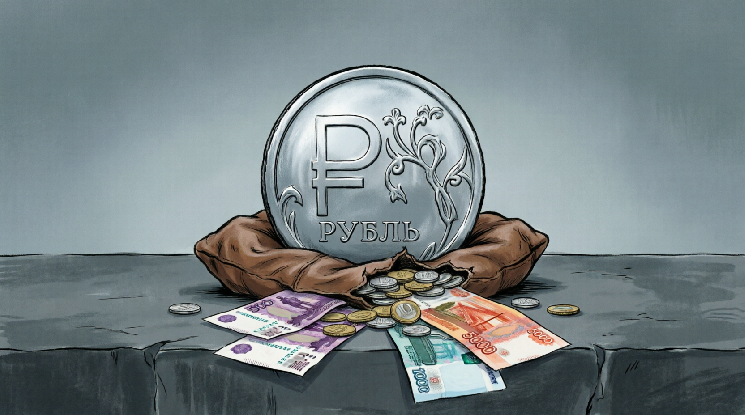
All 12 systemically important banks in Russia will be ready to provide clients with the opportunity to open digital ruble accounts and conduct transactions with them starting September 1, 2026. This was stated in an interview with RIA Novosti by Alla Bakina, Director of the National Payment System Department of the Bank of Russia. According to her, these banks cover more than 80% of the country's payment market.
"The digital ruble is the same ruble used in everyday life, only in a new form," Bakina noted. She explained the difference between forms of money: there is cash — banknotes and coins in a wallet, and there is non-cash — money in bank accounts. The digital ruble is essentially the same non-cash money, only it will reside in the user's wallet on the Bank of Russia platform.
Who Else Will Connect to the System
Access to the digital ruble must also be provided by banks recognized as significant in the payment services market — there are currently nine such organizations. Most of them are already participating in the pilot project and plan to complete the connection by autumn 2026. Three banks that received this status only in February 2026 may require more time — the Bank of Russia will assist them in completing the integration by the end of the year.
- Sberbank, VTB, Gazprombank
- Alfa-Bank, T-Bank, PSB
- Rosselkhozbank, UniCredit Bank, Raiffeisenbank
- Sovcombank, MKB, Dom.RF
One of them, Alfa-Bank, has already implemented direct integration of the digital ruble into software for managing the finances of large businesses.
How Payment Will Work
The use of the digital ruble for citizens remains voluntary: an account can be opened through a bank's mobile application. Starting September 2026, major retail chains with annual revenue exceeding 120 million rubles will begin accepting payments in digital rubles. According to information on the Bank of Russia website, the largest banks are required to provide clients with the opportunity to work with the new form of money, and large sellers are required to accept it for payment.
Earlier research by a Central University estimated the potential economic effect from the introduction of the digital ruble at up to 423 billion rubles per year due to reduced costs.
The Path to Mass Launch
The project did not develop without delays: in February 2025, the Bank of Russia postponed the mass implementation of the digital ruble indefinitely, citing the need to complete the pilot phase. Later, in May 2025, a State Duma committee approved the bill on introducing the digital ruble, although the issue of smart contracts remained open.
Starting September 1, 2026, the pilot phase concludes with mass implementation: the largest banks open access to digital rubles for clients, and major retail transitions to accepting payments in the new form of money.
AI Opinion
From the perspective of the international context, the launch of the digital ruble by the largest banks fits into the global CBDC race: according to data from the Atlantic Council tracker, which Hash Telegraph previously cited, only three countries have fully launched CBDC projects, while about half a hundred states, including Russia, China, and India, are in the testing stage. China has gone further — since January 2026, the People's Bank of China began accruing interest on digital yuan balances, incentivizing citizens to transition from cash to the new form of money.
The Russian model is currently limited to basic account functionality without income accrual. The technical issue of the compatibility of the digital ruble platform with cross-border BRICS settlements is not addressed in the article, although it is precisely this topic that could define the international role of the new form of money. Will the digital ruble remain an internal tool or become part of a broader settlement architecture?