Cardano (ADA) Founder Charles Hoskinson Issues Critical Warning Regarding Bitcoin (BTC): "If It Cannot Adapt, It May Lose Its Leadership!"

cryptonews.ruPublished on 2026-07-27Last updated on 2026-07-27

Abstract

Charles Hoskinson, founder of Cardano (ADA), has issued a critical warning regarding Bitcoin (BTC). He stated that Bitcoin's most significant upcoming challenge will come from the advancement of quantum computing technology. Hoskinson argued that Bitcoin's governance model makes it difficult to implement major network upgrades, and if the network fails to adapt in time, it could lose its position as the world's leading cryptocurrency. In contrast, Hoskinson positioned Cardano as Bitcoin's "spiritual successor," designed to address technical shortcomings while preserving Bitcoin's core philosophy. He emphasized Cardano's on-chain governance system as a key advantage, claiming it allows the ADA community to vote and implement necessary protocol changes—such as quantum-resistant cryptography—more swiftly and cohesively. This adaptability, he suggests, could allow Cardano to better navigate future technological threats and potentially gain a long-term competitive edge.

Charles Hoskinson, the founder of Cardano and known as one of the most outspoken figures in the cryptocurrency market, has made significant statements about Bitcoin and $ADA.

In a recent appearance on The Starting Block program, Hoskinson stated that the most serious challenge for Bitcoin will be related to the development of quantum computing technology, and that if the network cannot make the necessary updates in time, it could lose its title as the world's largest cryptocurrency.

At this point, Hoskinson argues that Bitcoin's biggest shortcoming is its governance model. In this context, he contends that Bitcoin's governance model makes it difficult to implement substantial changes to the network, and that with the advancement of quantum computing, quantum computers could begin to threaten the existing cryptographic infrastructure.

Hoskinson acknowledged that since its creation, Bitcoin has overcome numerous difficulties, including pressure from regulators, market crashes, and the disappearance of its founder, Satoshi Nakamoto, but noted that quantum computing presents different risks. He stated that this threat can only be overcome through coordinated, network-wide technical upgrades.

In conclusion, Hoskinson notes that if the Bitcoin community cannot agree on the necessary updates, the network could lose its competitive edge and, in the long term, cede leadership to other blockchains.

Cardano Positions Itself as Bitcoin's Successor!

Drawing parallels between Bitcoin and Cardano, Charles Hoskinson argued that Cardano was designed to solve technical challenges that have emerged over time while preserving Bitcoin's core philosophy.

Hoskinson, who calls Cardano the "spiritual successor to Bitcoin," claims that Cardano has addressed some of the problems that Nakamoto was unable to solve due to a lack of experience and time constraints.

In conclusion, Hoskinson stated that the on-chain governance system is one of Cardano's most significant advantages. He explained that, should a transition to quantum-attack-resistant infrastructure become necessary, the $ADA community can quickly and easily make the required protocol changes through on-chain voting, and that such a structure will allow for faster adaptation to future technological threats.

*This is not investment advice.

end-content
Trending Cryptos

Related Questions

QWhat specific warning did Charles Hoskinson, founder of Cardano, issue regarding Bitcoin (BTC)?

ACharles Hoskinson warned that if Bitcoin cannot adapt, particularly to the development of quantum computing technology, it risks losing its position as the world's largest cryptocurrency.

QAccording to Hoskinson, what is Bitcoin's biggest drawback in facing future challenges like quantum computing?

AHoskinson stated that Bitcoin's biggest drawback is its governance model, which makes it difficult to implement substantial and necessary changes to the network in a timely manner.

QHow does Hoskinson position Cardano (ADA) in relation to Bitcoin?

AHoskinson positions Cardano as the 'spiritual successor' to Bitcoin, designed to address technical challenges that have emerged over time while maintaining Bitcoin's core philosophy, and claims it has solved issues Satoshi Nakamoto could not.

QWhat key advantage of Cardano does Hoskinson highlight for adapting to future technological threats?

AHoskinson highlights Cardano's on-chain governance system as a key advantage, allowing the ADA community to quickly and easily vote on and implement necessary protocol changes, such as transitioning to quantum-resistant cryptography.

QWhat specific future technological development does Hoskinson identify as the most serious test for Bitcoin?

AHoskinson identifies the development of quantum computing technology as the most serious future test for Bitcoin, as quantum computers could threaten its existing cryptographic infrastructure.

Related Reads

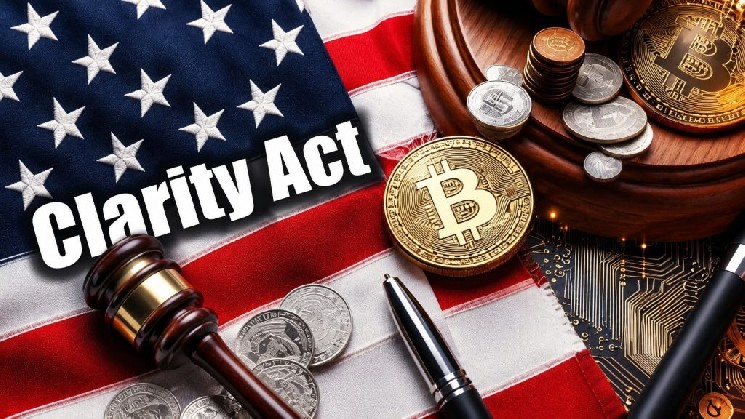
Uncertainty persists regarding cryptocurrency regulation, and there is a possibility of delay in passing the Clarity Act! Here are the details

The U.S. Senate's vote on the CLARITY Act, which aims to establish a legal framework for the crypto market, faces a potential delay. Priority on the Senate agenda is being given to a Russia sanctions bill and confirmations of federal officials, making a vote on the crypto bill after next week increasingly likely. Senate tradition of handling only one contentious bill at a time further complicates early consideration of the CLARITY Act. Key political disagreements persist, notably over provisions to restrict cryptocurrency trading by senior government officials and elected representatives, including potentially former President Donald Trump. A bipartisan consensus has not been reached. This uncertainty raises doubts about whether a vote can occur before the Senate's August recess. If disputes intensify, the bill's passage could be jeopardized not only for this year but potentially until 2026. Even if the Senate approves the bill, it would still require a revote in the House of Representatives and the President's signature to become law, potentially prolonging the establishment of a comprehensive regulatory framework long awaited by the crypto industry. The Clarity Act is considered crucial for clarifying which agencies will oversee digital assets, defining their legal status, and setting operational principles. Industry advocates argue its passage would boost institutional investor confidence and strengthen the U.S. position in the global digital asset market.

cryptonews.ru4m ago

Uncertainty persists regarding cryptocurrency regulation, and there is a possibility of delay in passing the Clarity Act! Here are the details

cryptonews.ru4m ago

SWIFT Shared Ledger Launches Live Pilot, How Will the 50-Year-Old Payment Network Reconstruct the Financial System?

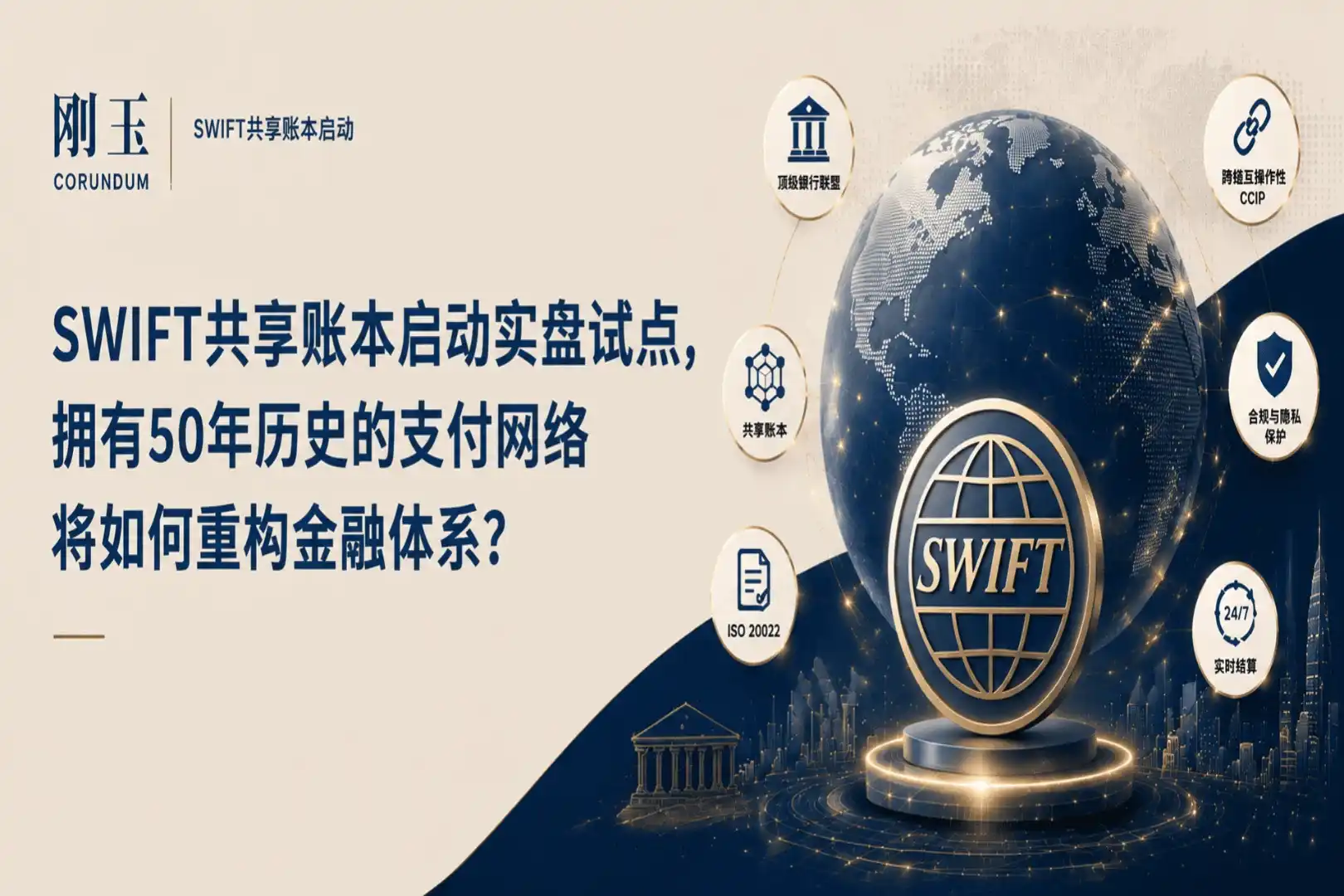
SWIFT, a global financial messaging provider with a 50-year history, has launched a live pilot of a blockchain-based "shared ledger" in July 2026, involving 17 major banks. This marks a direct move by traditional finance to upgrade its core payment infrastructure using blockchain technology, transforming SWIFT's role from a messaging channel to a "value orchestration layer" for digital payments. The system is built on Hyperledger Besu (EVM-compatible) and integrates Chainlink's CCIP for cross-chain interoperability. It deepens the fusion of the ISO 20022 messaging standard with smart contracts to automate compliance (KYC/AML). The primary settlement medium in this network is "tokenized deposits"—digital representations of traditional bank deposits, not independent stablecoins—preserving the existing two-tier banking system. The move introduces "atomic settlement" (24/7, instant) but requires banks to adopt "pre-funding" models, increasing demands on liquidity management. It presents direct competitive pressure on native blockchain payment tokens (e.g., XRP) by offering an efficient, bank-backed alternative for cross-border settlement. Significant regulatory hurdles remain, including legal jurisdiction over cross-border digital assets, legal definitions of "settlement finality" for smart contracts, and balancing blockchain transparency with data privacy/localization laws. Technologies like zero-knowledge proofs may be needed to resolve privacy-compliance conflicts. Industry views are mixed: participating banks and SWIFT emphasize extending trusted, compliant finance into the digital realm with real-time efficiency, while crypto analysts warn of potential "liquidity backlash" as capital flows back to the traditional, now-tech-enhanced banking system. This pilot signifies that traditional finance and crypto are entering a phase of direct competition and fusion at the infrastructure level, likely leading to a future of interconnected, highly regulated financial networks rather than a fully decentralized system.

marsbit14m ago

SWIFT Shared Ledger Launches Live Pilot, How Will the 50-Year-Old Payment Network Reconstruct the Financial System?

marsbit14m ago

Trading

Spot

Hot Articles

What is $BITCOIN

DIGITAL GOLD ($BITCOIN): A Comprehensive Analysis Introduction to DIGITAL GOLD ($BITCOIN) DIGITAL GOLD ($BITCOIN) is a blockchain-based project operating on the Solana network, which aims to combine the characteristics of traditional precious metals with the innovation of decentralized technologies. While it shares a name with Bitcoin, often referred to as “digital gold” due to its perception as a store of value, DIGITAL GOLD is a separate token designed to create a unique ecosystem within the Web3 landscape. Its goal is to position itself as a viable alternative digital asset, although specifics regarding its applications and functionalities are still developing. What is DIGITAL GOLD ($BITCOIN)? DIGITAL GOLD ($BITCOIN) is a cryptocurrency token explicitly designed for use on the Solana blockchain. In contrast to Bitcoin, which provides a widely recognized value storage role, this token appears to focus on broader applications and characteristics. Notable aspects include: Blockchain Infrastructure: The token is built on the Solana blockchain, known for its capacity to handle high-speed and low-cost transactions. Supply Dynamics: DIGITAL GOLD has a maximum supply capped at 100 quadrillion tokens (100P $BITCOIN), although details regarding its circulating supply are currently undisclosed. Utility: While precise functionalities are not explicitly outlined, there are indications that the token could be utilized for various applications, potentially involving decentralized applications (dApps) or asset tokenization strategies. Who is the Creator of DIGITAL GOLD ($BITCOIN)? At present, the identity of the creators and development team behind DIGITAL GOLD ($BITCOIN) remains unknown. This situation is typical among many innovative projects within the blockchain space, particularly those aligning with decentralized finance and meme coin phenomena. While such anonymity may foster a community-driven culture, it intensifies concerns about governance and accountability. Who are the Investors of DIGITAL GOLD ($BITCOIN)? The available information indicates that DIGITAL GOLD ($BITCOIN) does not have any known institutional backers or prominent venture capital investments. The project seems to operate on a peer-to-peer model focused on community support and adoption rather than traditional funding routes. Its activity and liquidity are primarily situated on decentralized exchanges (DEXs), such as PumpSwap, rather than established centralized trading platforms, further highlighting its grassroots approach. How DIGITAL GOLD ($BITCOIN) Works The operational mechanics of DIGITAL GOLD ($BITCOIN) can be elaborated on based on its blockchain design and network attributes: Consensus Mechanism: By leveraging Solana’s unique proof-of-history (PoH) combined with a proof-of-stake (PoS) model, the project ensures efficient transaction validation contributing to the network's high performance. Tokenomics: While specific deflationary mechanisms have not been extensively detailed, the vast maximum token supply implies that it may cater to microtransactions or niche use cases that are still to be defined. Interoperability: There exists the potential for integration with Solana’s broader ecosystem, including various decentralized finance (DeFi) platforms. However, the details regarding specific integrations remain unspecified. Timeline of Key Events Here is a timeline that highlights significant milestones concerning DIGITAL GOLD ($BITCOIN): 2023: The initial deployment of the token occurs on the Solana blockchain, marked by its contract address. 2024: DIGITAL GOLD gains visibility as it becomes available for trading on decentralized exchanges like PumpSwap, allowing users to trade it against SOL. 2025: The project witnesses sporadic trading activity and potential interest in community-led engagements, although no noteworthy partnerships or technical advancements have been documented as of yet. Critical Analysis Strengths Scalability: The underlying Solana infrastructure supports high transaction volumes, which could enhance the utility of $BITCOIN in various transaction scenarios. Accessibility: The potential low trading price per token could attract retail investors, facilitating wider participation due to fractional ownership opportunities. Risks Lack of Transparency: The absence of publicly known backers, developers, or an audit process may yield skepticism regarding the project's sustainability and trustworthiness. Market Volatility: The trading activity is heavily reliant on speculative behavior, which can result in significant price volatility and uncertainty for investors. Conclusion DIGITAL GOLD ($BITCOIN) emerges as an intriguing yet ambiguous project within the rapidly evolving Solana ecosystem. While it attempts to leverage the “digital gold” narrative, its departure from Bitcoin's established role as a store of value underscores the need for a clearer differentiation of its intended utility and governance structure. Future acceptance and adoption will likely depend on addressing the current opacity and defining its operational and economic strategies more explicitly. Note: This report encompasses synthesised information available as of October 2023, and developments may have transpired beyond the research period.

1.1k Total ViewsPublished 2025.05.13Updated 2025.05.13

What is $BITCOIN

Discussions

Welcome to the HTX Community. Here, you can stay informed about the latest platform developments and gain access to professional market insights. Users' opinions on the price of BTC (BTC) are presented below.

活动图片